Materials remember what architecture tries to forget.
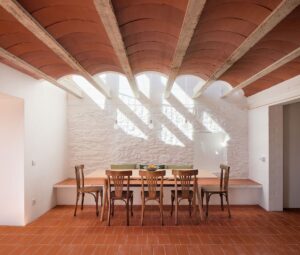
在這些作品裡,材料不是被覆蓋,而是被閱讀。石材的裂紋、灰泥的層次、木構的勞動痕跡構成了一種持續書寫的語言。Material as Narrative 關注那些讓建築保持可讀性的空間——時間沒有被抹除,而是被允許停留。這些建築不是追求完美的物件,而是承載生活、修補與記憶的結構,提醒我們空間真正的價值來自其被使用、被觸摸、被歲月雕刻的過程。
Materials are never neutral.
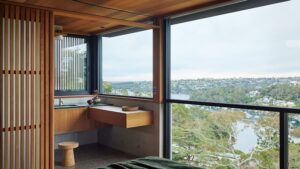
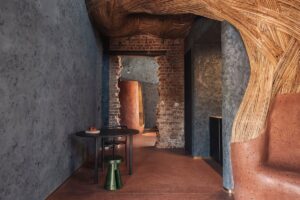
In these projects, concrete carries memory, bamboo becomes structure, wood reveals labour…
Materials are never neutral.
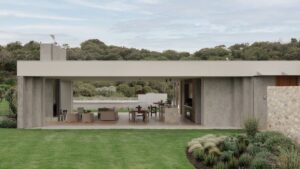
In these projects, concrete carries memory, bamboo becomes structure, wood reveals labour, and reuse turns necessity into language. Material as Narrative looks beyond surface aesthetics to trace how buildings are shaped by what they are made of — and why.
From low-cost ingenuity to crafted precision, these works treat material not as finish, but as a storyteller. Construction becomes a form of authorship, articulating place, economy, climate and culture through what is built, left exposed, or deliberately reused.
Here, material is not decoration.
It is evidence.
It is intention.
It is narrative.
Material extends beyond surface expression into systems of extraction, production, and distribution, revealing how oil-driven systems shape the role of materials within subsurface architecture.
- 廣東紅磚建築:材料、光與空間
- 紅磚圓柱與滲透立面:香氛博物館
- 再生混凝土與骨材紋理的建築實驗
- 木構空間:結構與室內一體化
- 清水混凝土住宅的時間與表面
- 陶土與在地工法的建築語言
- 3D列印泥土建築:低碳材料實踐
- 混凝土與光影:體量與感知
- 木材碳化(Shou Sugi Ban)立面應用
- 磚構細節:穿孔、浮雕與通風
- 材料對比:玻璃與磚的界面關係
- 材料作為空間經驗的主體
- 構造邏輯如何轉化為空間敘事
- 從工業材料到建築語言的轉譯
- 材料如何回應時間與氣候
Material is not only aesthetic but part of a broader environmental system.
Building Material Life Cycle Assessment
offers a more comprehensive way to understand its impact.