Building With Light: The Architectural Rise of Polycarbonate

Exploring the Boundaries of Polycarbonate: 25 Exemplary Projects Showcasing Its Versatility
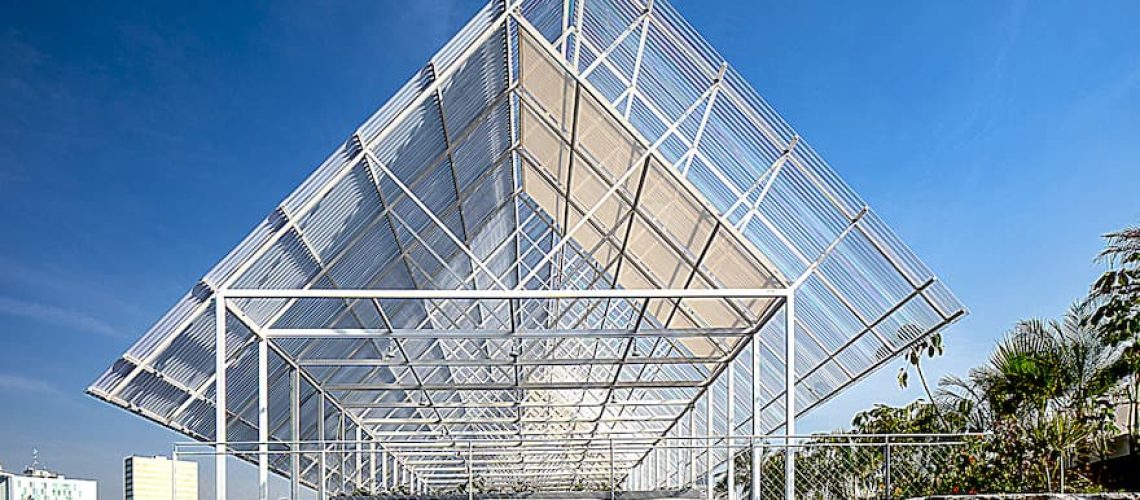
Polycarbonate was once an industrial afterthought — practical, translucent, and anonymous. Today, architects are reclaiming it as a spatial instrument: filtering light, softening boundaries, and turning structure into atmosphere. No longer just cladding, polycarbonate has become a medium through which buildings negotiate privacy, climate, and visual connection in contemporary architecture.


Polycarbonate, commonly used in roofing and industrial cladding, has gone beyond its initial applications to become a material widely used across various architectural typologies. Its combination of strength, lightness, easy installation, and ability to allow natural light to pass through has made it an attractive option for residential, educational, and even cultural architecture projects. In homes, polycarbonate not only helps create bright and comfortable environments but also allows for creative use of translucency to generate private spaces without sacrificing visual connection to the outdoors.


Exploring the Boundaries of Polycarbonate

More and more architects are exploring the potential of polycarbonate in other sectors, such as officessports centers, and even museums, where its ability to transform the spatial experience through light and transparency adds an expressive value to the design. Additionally, the use of polycarbonate maximizes natural light, improving indoor environmental quality and reducing the need for artificial lighting during the day]. [Its versatility in shapes and finishes makes it adaptable to innovative designs and sustainable projects, which aim to reduce energy consumption and promote thermal comfort.


top15_polycarbonate-applications


25 Exemplary Projects Showcasing Its Versatility

We present a selection of 25 works that stand out for their innovative use of polycarbonate. This list includes homes, schools, offices, industrial buildings, and libraries that exemplify how this material has become a lasting architectural trend.


The Vernacular Architecture Evolution of Naya

2-01_31polycarbonate-applications


2-01_30polycarbonate-applications


Greenhouse for the Coexistence of Plants and Humans

2-02_33polycarbonate-applications


FW JI·Huizhou Corridor

2-03_40polycarbonate-applications


2-03_43polycarbonate-applications


Infinite Openness

2-04_41polycarbonate-applications


Nightlight Shed

2-05_17polycarbonate-applications


2-05_08polycarbonate-applications


Circular Pavilion

2-06_46polycarbonate-applications


2-06_45polycarbonate-applications


Small Bamboo Recess

2-07_28polycarbonate-applications


2-08_17polycarbonate-applications


MKO Culture Café

2-08_17polycarbonate-applications


2-08_18polycarbonate-applications


Jokopi MERR Café

2-09_49polycarbonate-applications


Shed

2-10_26polycarbonate-applications


2-10_25polycarbonate-applications


The Orangery Renovation

2-23_32polycarbonate-applications.jpg


2-11_29polycarbonate-applications.jpg


Modus Operandi Merewether Brewery

2-12_20polycarbonate-applications


2-12_19polycarbonate-applications


Rooftop Prim

2-13_12polycarbonate-applications


2-13_10polycarbonate-applications


Espinosa Studios

2-14_05polycarbonate-applications


2-14_37polycarbonate-applications


House in Yanakacho

2-15_42polycarbonate-applications


2-15_36polycarbonate-applications


House of the Child

2-16_35polycarbonate-applications


2-16_38polycarbonate-applications


Miyagawa Bagel

2-17_02polycarbonate-applications


2-17_16polycarbonate-applications


L’Architecture est dans le Pré

2-18_14polycarbonate-applications


2-18_11polycarbonate-applications


Nest We Grow/College of Environmental Design UC Berkeley + Kengo Kuma & Associates

2-19_06polycarbonate-applications


2-19_07polycarbonate-applications


House in Shinkawa

2-20_44polycarbonate-applications


Casa Triângulo

2-21_47polycarbonate-applications.jpg


Schoolgarden “De Buitenkans”

2-22_22polycarbonate-applications.jpg


2-23_34polycarbonate-applications


House D/Fouquet Architecture Urbanisme

2-23_34polycarbonate-applications


2-23_32polycarbonate-applications


Seasonless House

2-24_24polycarbonate-applications


2-24_23polycarbonate-applications


Lan Din/Sher Maker

2-25_03polycarbonate-applications


2-25_13polycarbonate-applications


Editor’s note:
This article was updated on  1  December, 2024, by Kanika Ting Taylor.

cover01_polycarbonate-applications


kanikachic
Want your project to be featured? Showcase your work through Kanikachic and E-mail us your most inspiring moments.
All Photography, Styling, Fotos, Pictures and Videos Shared with Permission from the [Archdaily] Website
──────────────────────────────────────────────────────────────────────────
Per essere insostituibili bisogna sempre essere diverso. ▎Ci sono immagini affascinanti qui, e l’affascinante giornata di insieme!  xo  KanikaChic

碎片重組 2025 科莫湖設計節精彩亮點

2025 科莫湖設計節在材料與記憶之間重組碎片

在優雅與生產傳統並存的城市背景下,設計與景觀展開一場節奏緩慢卻深刻的對話。     科莫湖設計節呈現的是一種與主流設計盛會截然不同的節奏——緩慢、克制,且深深植根於地方感之中。設計在此不追逐聲量,而是與歷史、景觀與工藝展開對話。在森林覆蓋的山丘與美好年代別墅的環繞下,科莫湖的城市身分始終與優雅與生產緊密相連,從羅馬式石雕、理性主義建築,到曾經遍布歐洲的絲綢產業。正是在這樣的脈絡中,零散而精準的亮點重新拼組出 2025 科莫湖設計節的樣貌。 說到設計活動,很少有地方能在活動的密度方面與米蘭設計週相媲美。然而,剛從第七屆科莫湖設計節回來的我們意識到,與設計最能引起共鳴的邂逅並不總是來自規模,而是來自環境。科莫,以其多層次的魅力和手工傳統,提供了截然不同的東西:較慢的節奏和地方感,設計與歷史、景觀和工藝對話。在森林覆蓋的山丘和美好年代別墅的背景下,這座城市的身份始終與優雅和生產聯繫在一起——從羅馬式石雕和理性主義建築到曾經覆蓋歐洲的絲綢工廠。在這樣的背景下,藝術節在別墅、公園和廢棄的教堂中展開,其主題「碎片」不僅透過展出的物品迴盪,也透過城市本身迴盪,層層歷史構成了一幅城市掛毯,過去的碎片交織在當代日常中。     今年的主題恰逢其時。在一個飽受衝突與氣候劇變影響的世界裡,碎片化已成為日常現實。本屆科莫湖設計節邀請觀者將其視為一種重生契機,而非崩解。無論是對廢棄石材與木材的再利用,或是對歷史與個人敘事的層層疊加,展覽呈現出一種以 材料再利用 為核心的設計態度。我們的旅程從藝術節中心 Chilometro della Conoscenza 開始,這座線性公園串聯三棟歷史別墅,也成為設計碎片被重新拼接的空間載體。       許多作品以材料本身為敘事主角,保留其傷痕與不規則性。Sho Ota 與 Sam Henley 合作的

Palau Fugit A Hotel in Girona, Spain, Animates its Historic Premises with Comtemporary Art & Design

Palau Fugit Hotel

    ▏Palau Fugit A Hotel in Girona, Spain, Animates its Historic Premises with Comtemporary Art & Design     ▏Housed in an 18th-century palace

Facebook
Twitter
LinkedIn
Tumblr
0 0 votes
Article Rating
Subscribe
Notify of
guest
0 Comments
Oldest
Newest Most Voted
Inline Feedbacks
View all comments
Search