Osprey House

cover01-DCA-OSPREY


Tucked into its tree line is the Osprey House, a one-lane dirt road winds around the Preserve, culminating at this property at Cedar Island Cove.
 

Tucked into its tree line is the Osprey House, a one-lane dirt road winds around the Preserve, culminating at this property at Cedar Island Cove.


▏Living Within Nature

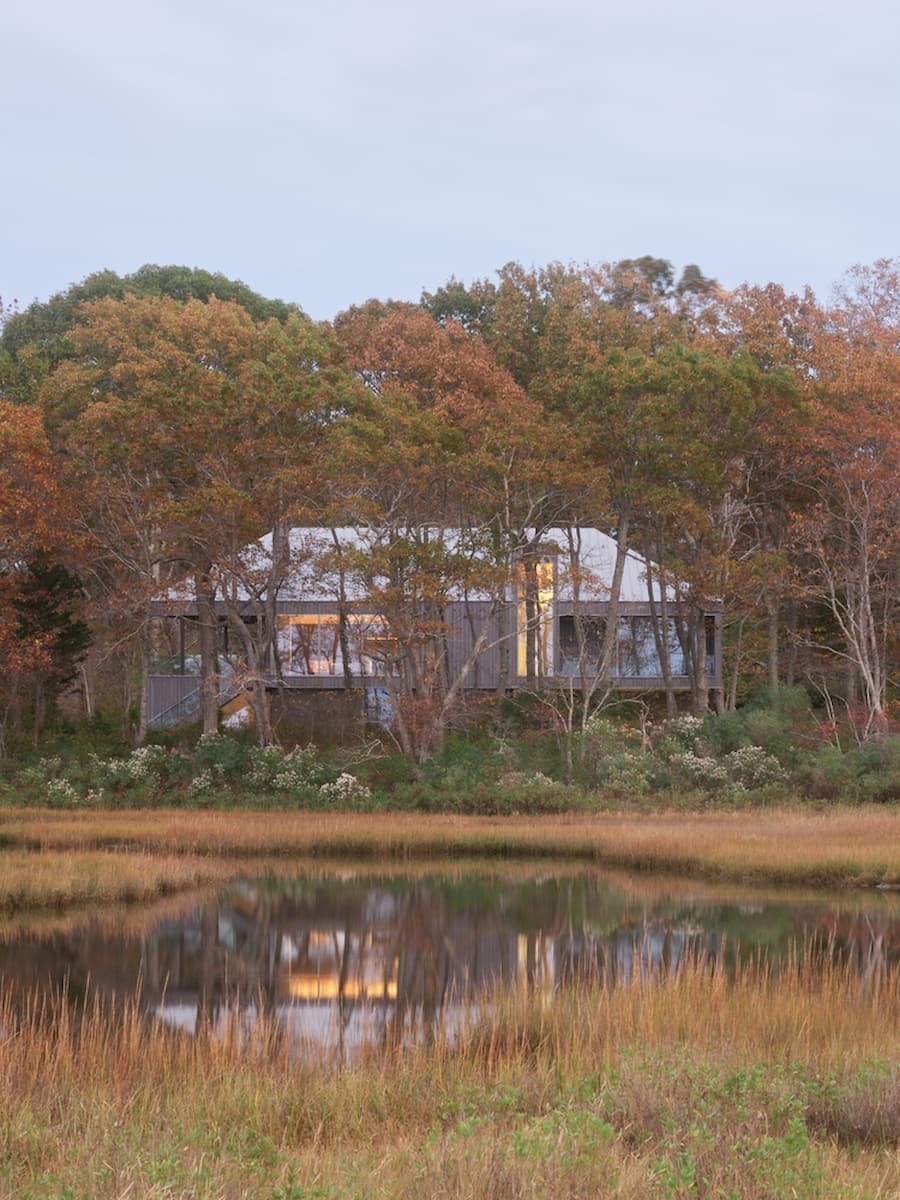
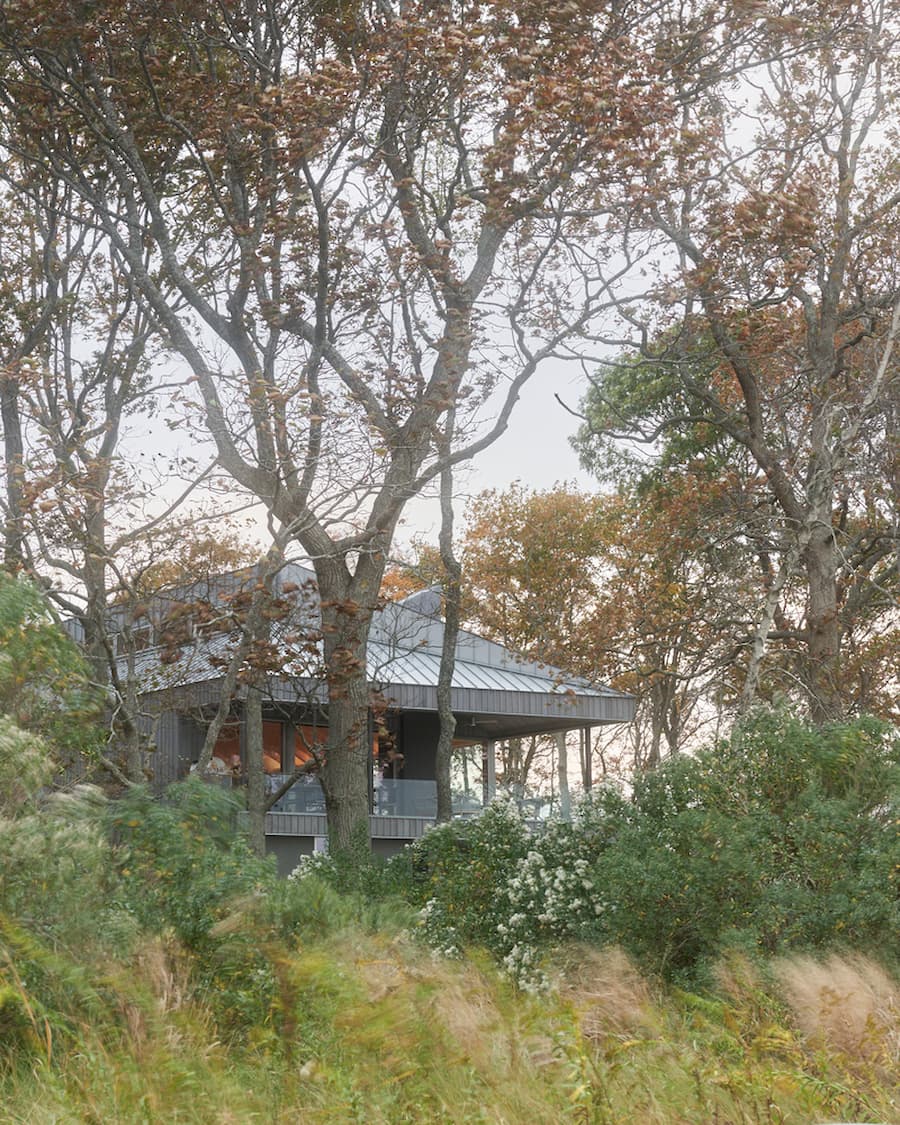
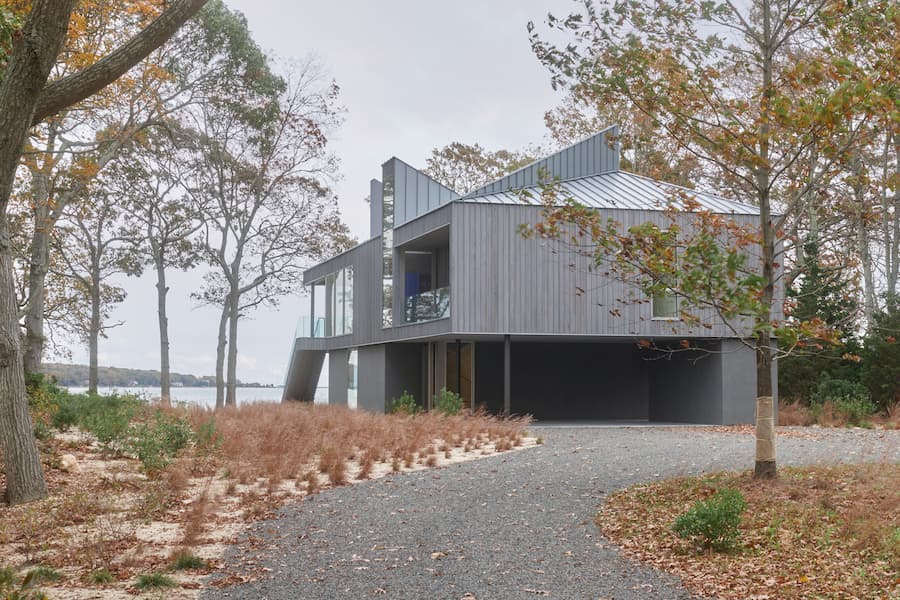
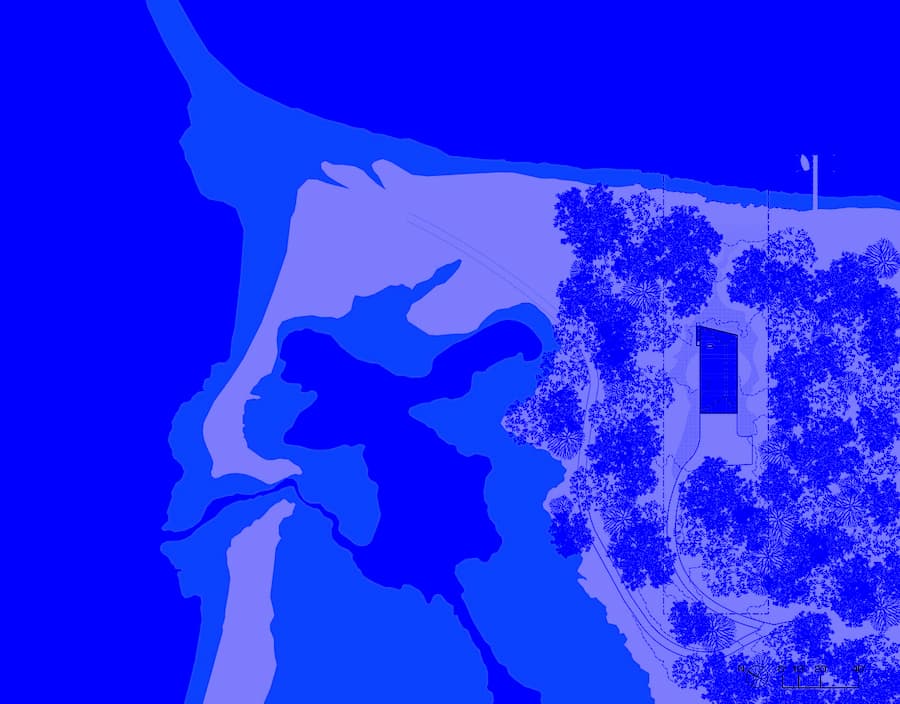
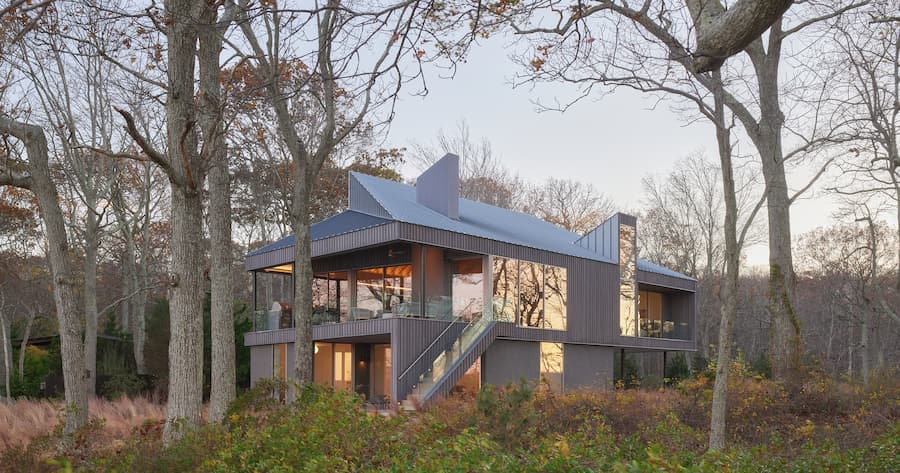
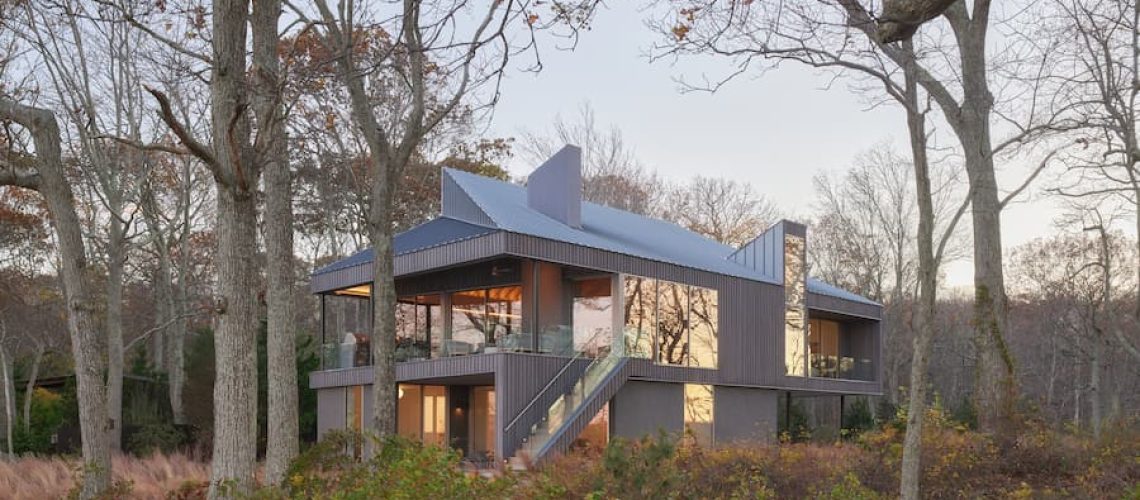
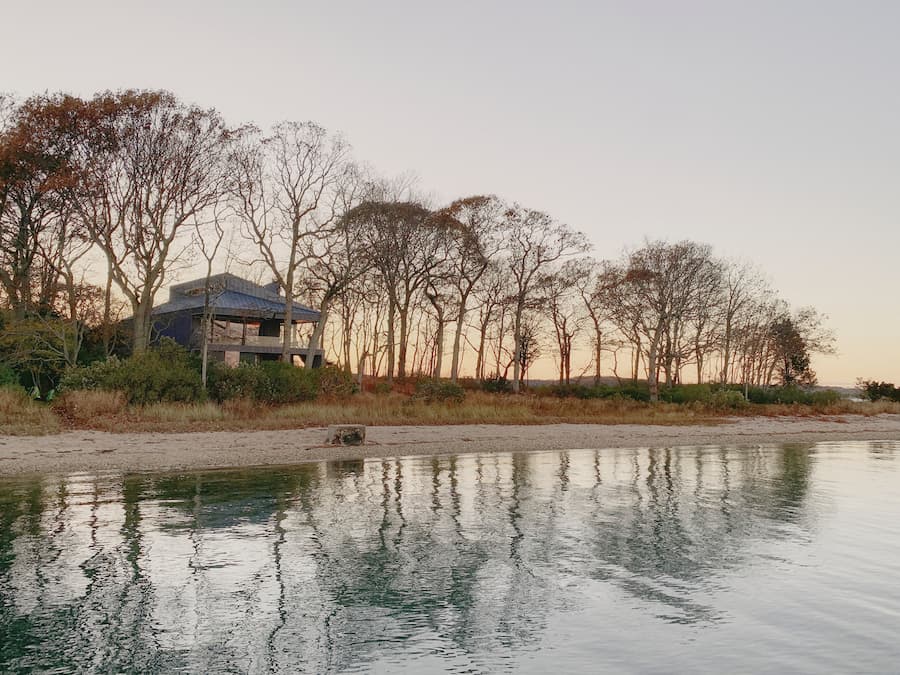
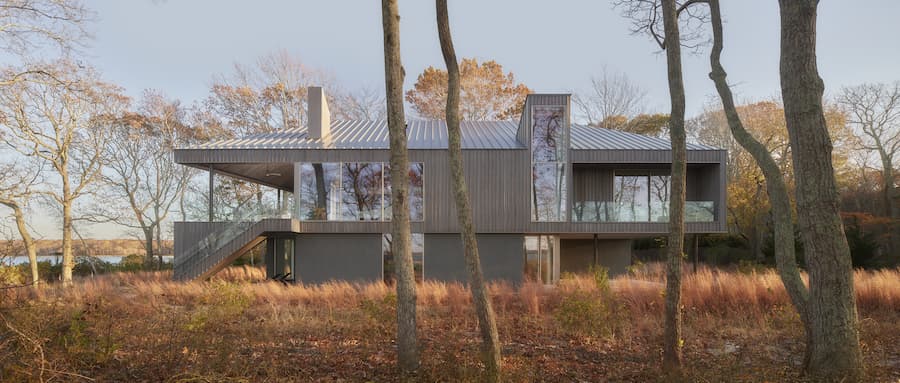
Wildlife thrives along the marshy shores of Shelter Island, and tucked into its tree line is the Osprey House– an architectural threshold at the edge of Mashomack Preserve. A one-lane dirt road winds around the Preserve, culminating at this property at Cedar Island Cove. Our client, Joe Quinn, wanted to build a home for his family here that would foster their love for beach walks, kayaking, and living within nature.
 

Tucked into its tree line is the Osprey House, a one-lane dirt road winds around the Preserve, culminating at this property at Cedar Island Cove.

▏Integration of Light, use of Materials, and Attention to detail – Native Osprey

Joe is a local builder from Sag Harbor who built two other projects for our clients over the past decade. When it came time to build his own home, Joe asked for our help, as he loved our design methodology, integration of light, use of materials, and attention to detail]. [The home was inspired by its neighbors- native osprey. Osprey thrives throughout the nature preserve and their nests are ubiquitous, appearing in treetops, telephone poles, and nautical piers. Their marine nature, adaptability, and high nesting places inspired the home’s materiality, organization, and relationship with the coast.
 

Tucked into its tree line is the Osprey House, a one-lane dirt road winds around the Preserve, culminating at this property at Cedar Island Cove.


Tucked into its tree line is the Osprey House, a one-lane dirt road winds around the Preserve, culminating at this property at Cedar Island Cove.


Tucked into its tree line is the Osprey House, a one-lane dirt road winds around the Preserve, culminating at this property at Cedar Island Cove.


▏The Marshland Ecosystem

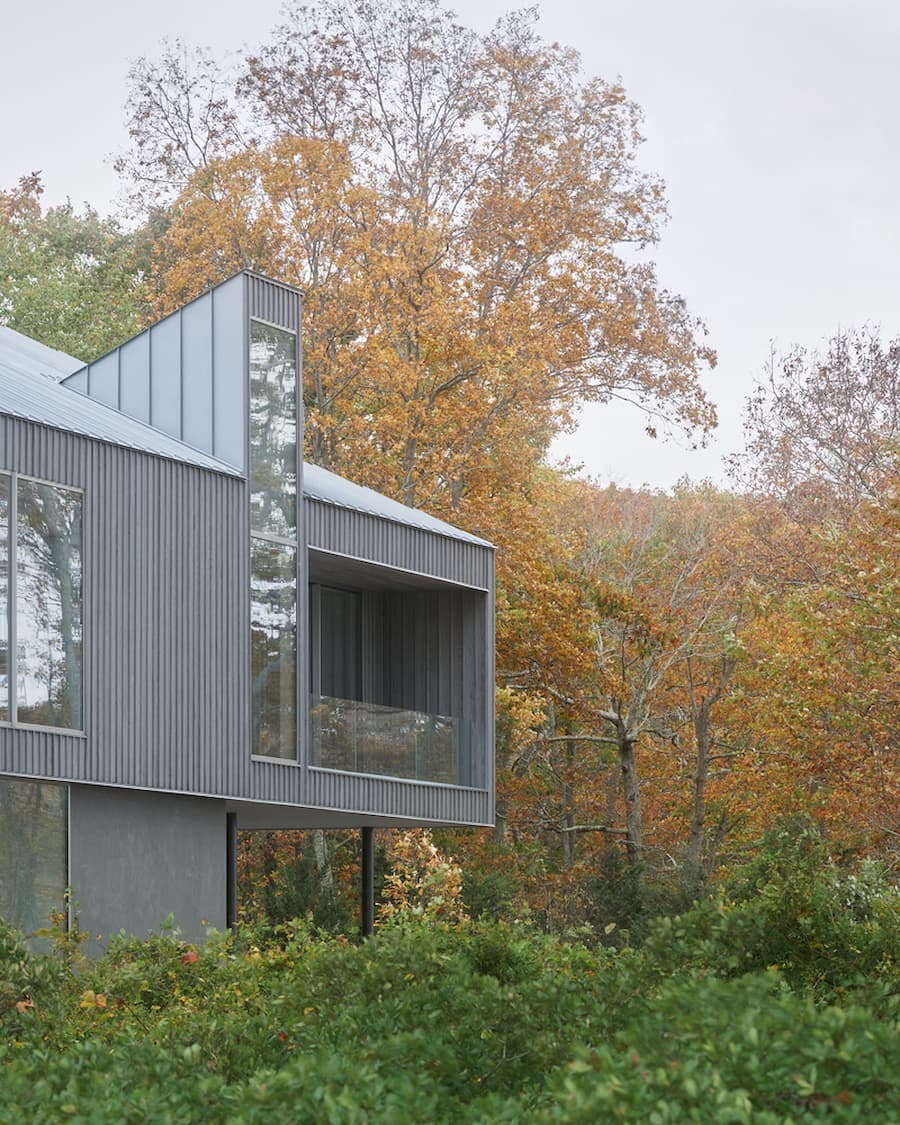
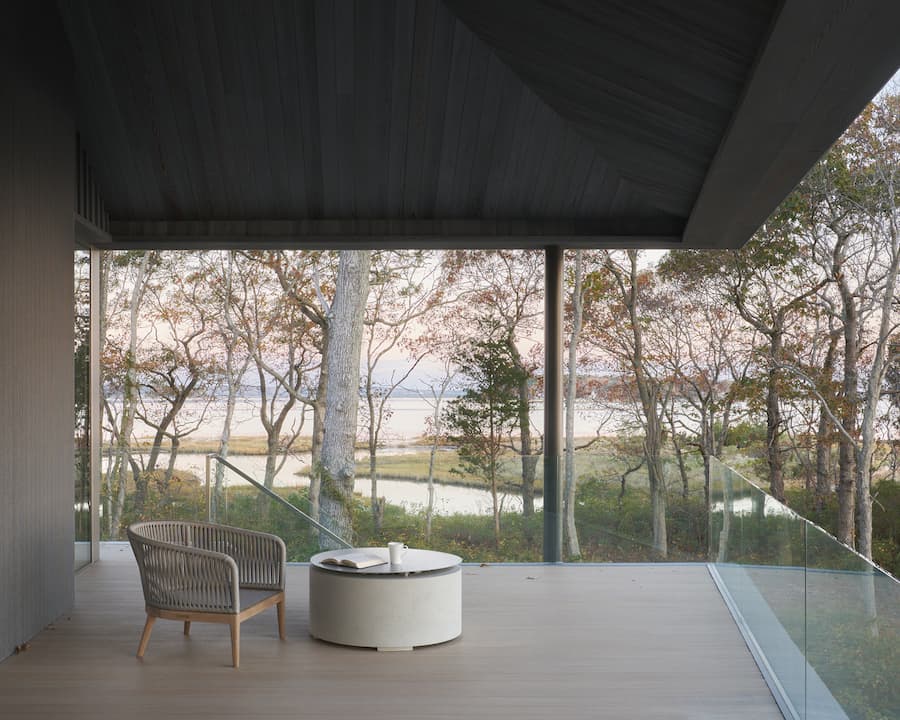
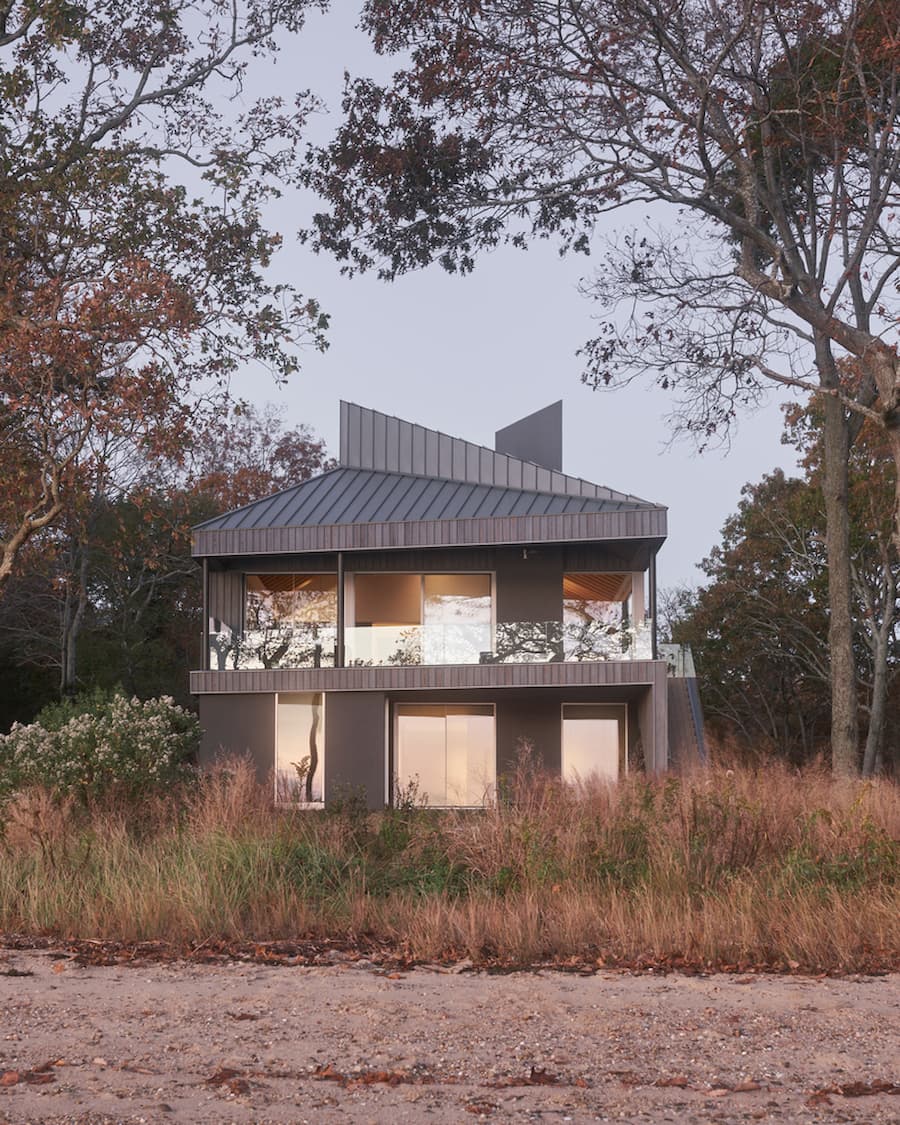
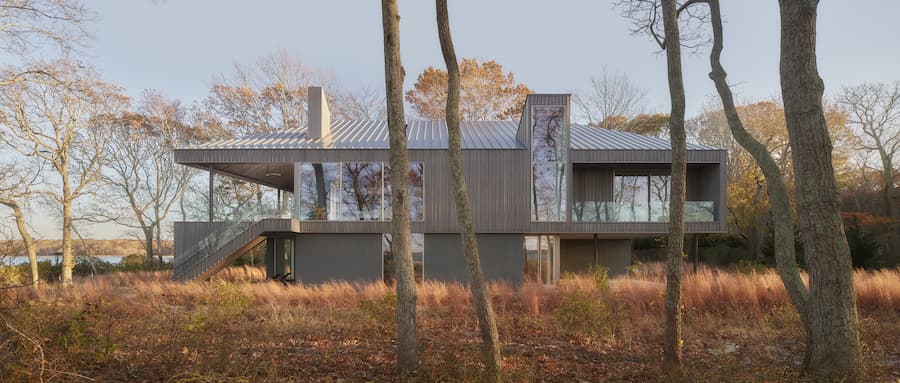
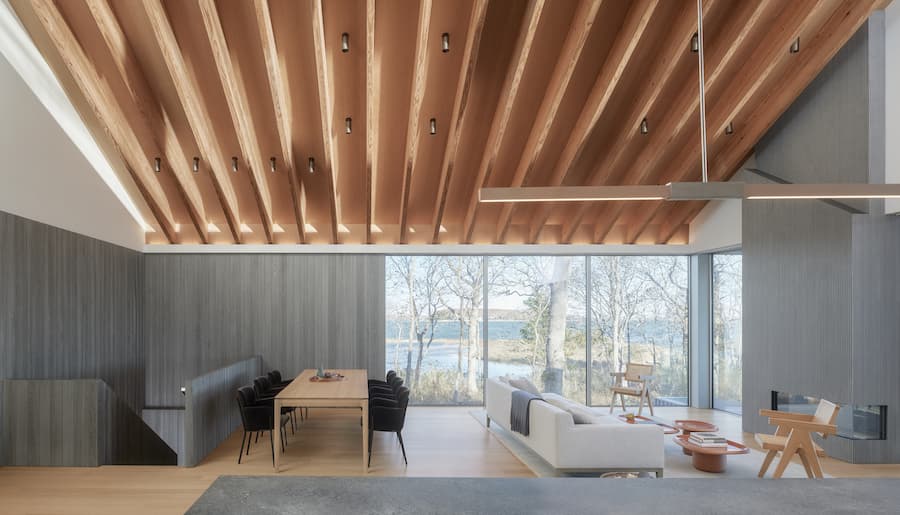
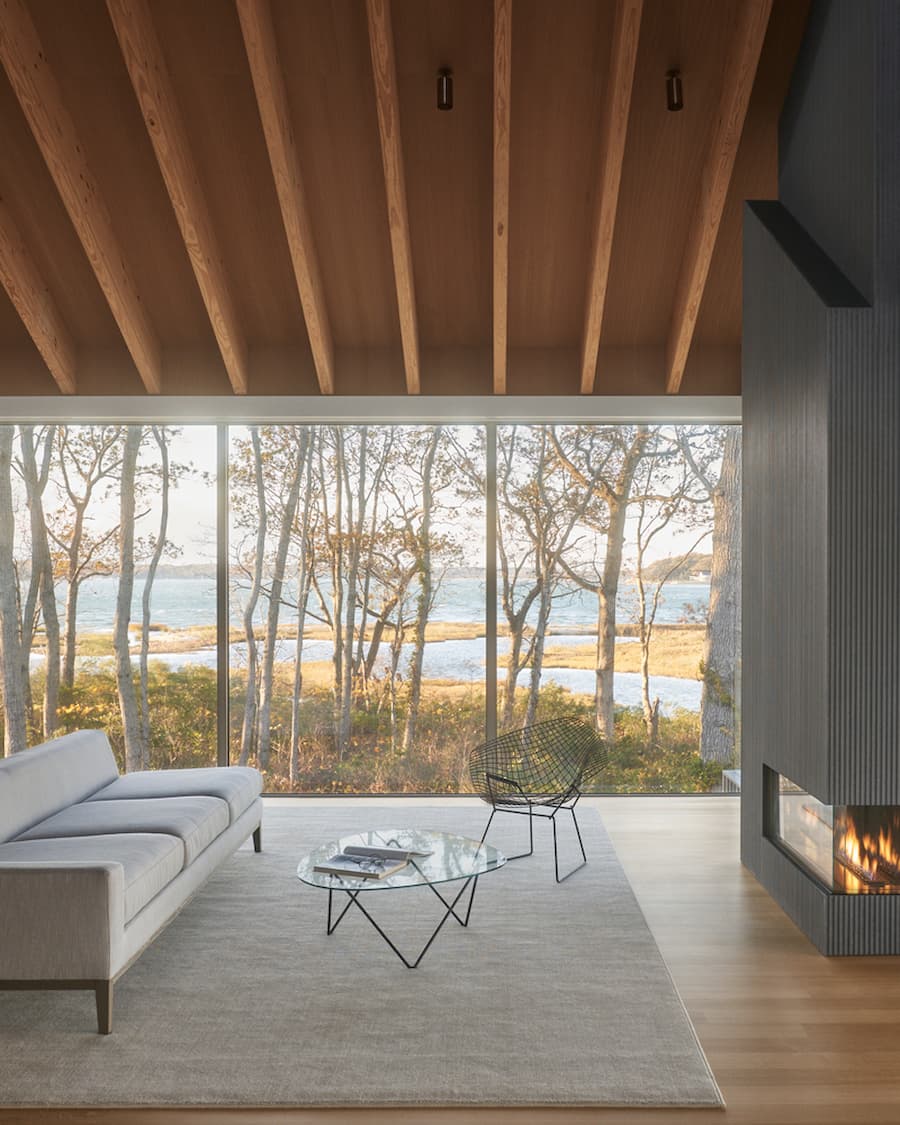
We designed Joe’s home with large communal living spaces and an outdoor terrace perched on the second floor in the spirit of an osprey nest, and similar to the local tradition of “upside-down” houses. This offers the raised gathering spaces expansive open views of the marshland ecosystem; the primary bedroom suite and the media room are also on the second floor. The entry vestibule, three bedrooms, and a family room are on the first floor, with beach grass offering privacy.
 

Tucked into its tree line is the Osprey House, a one-lane dirt road winds around the Preserve, culminating at this property at Cedar Island Cove.


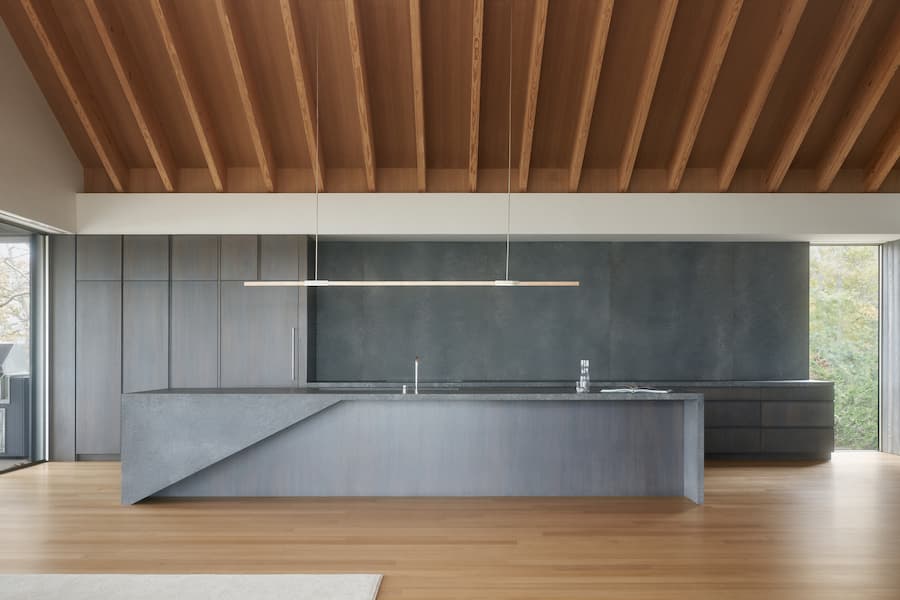
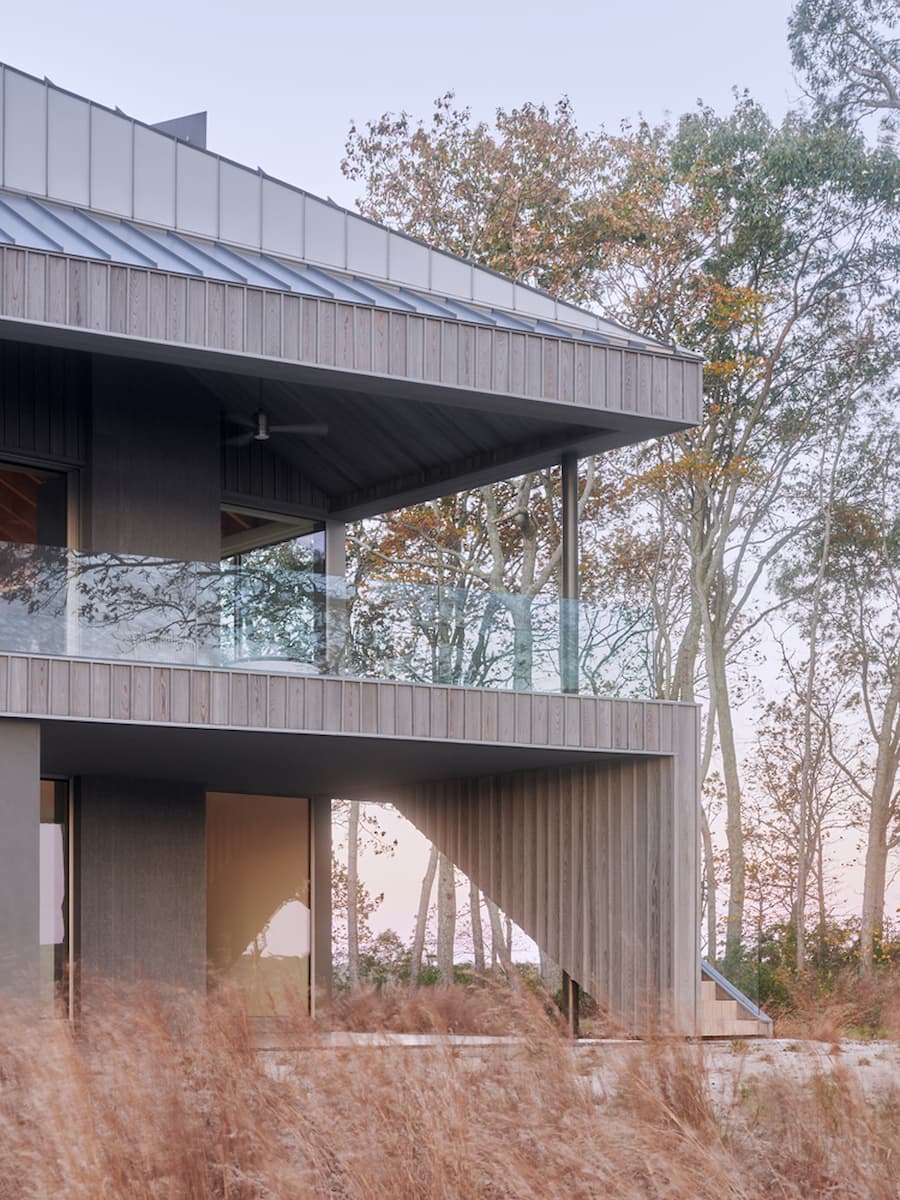
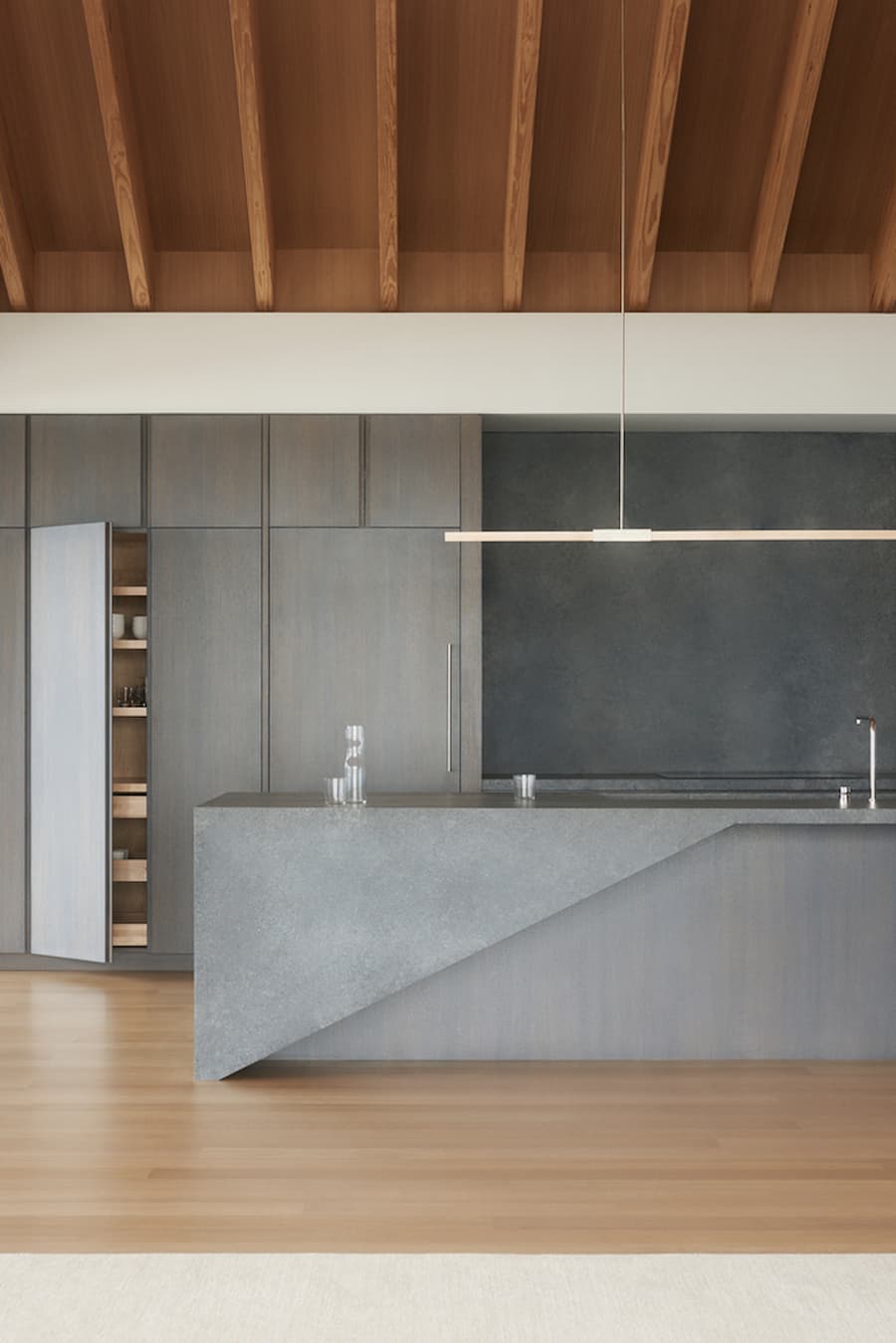
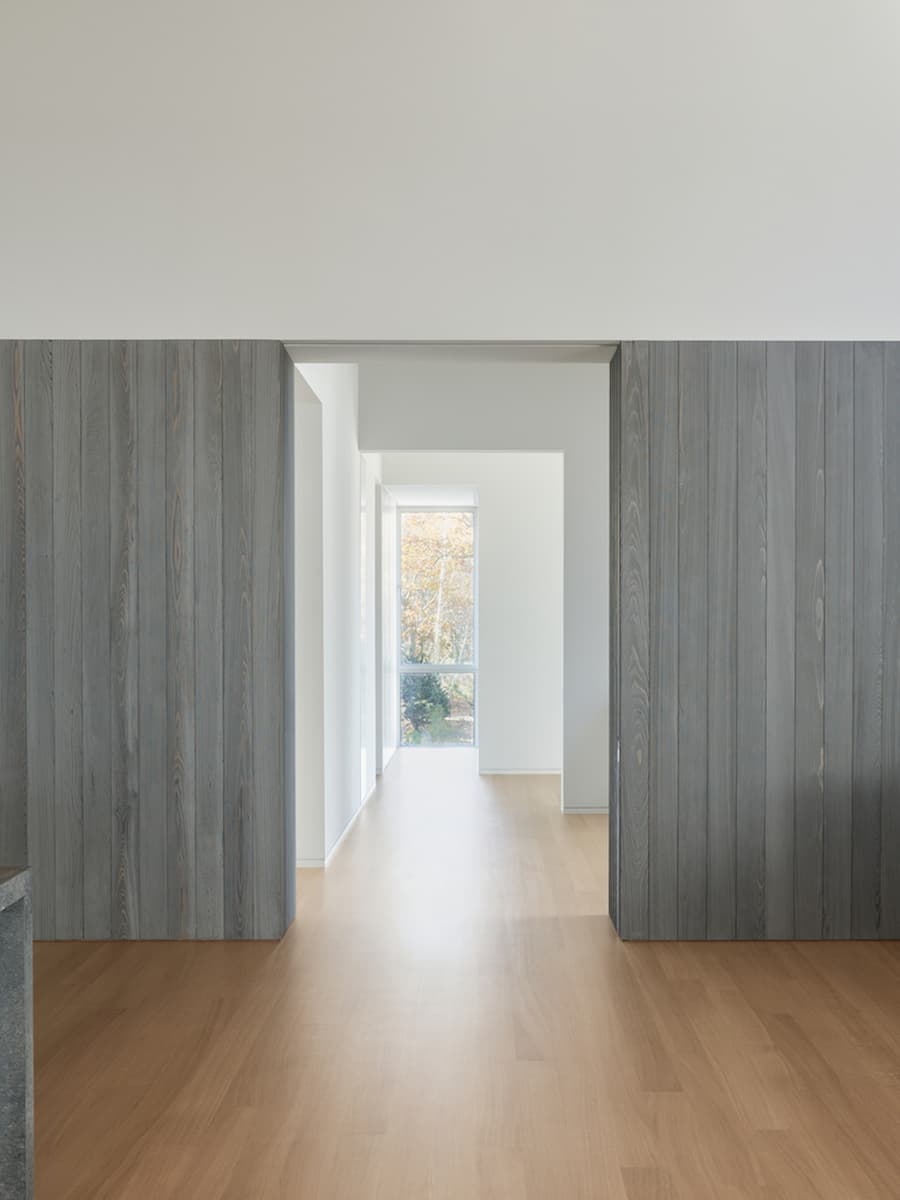
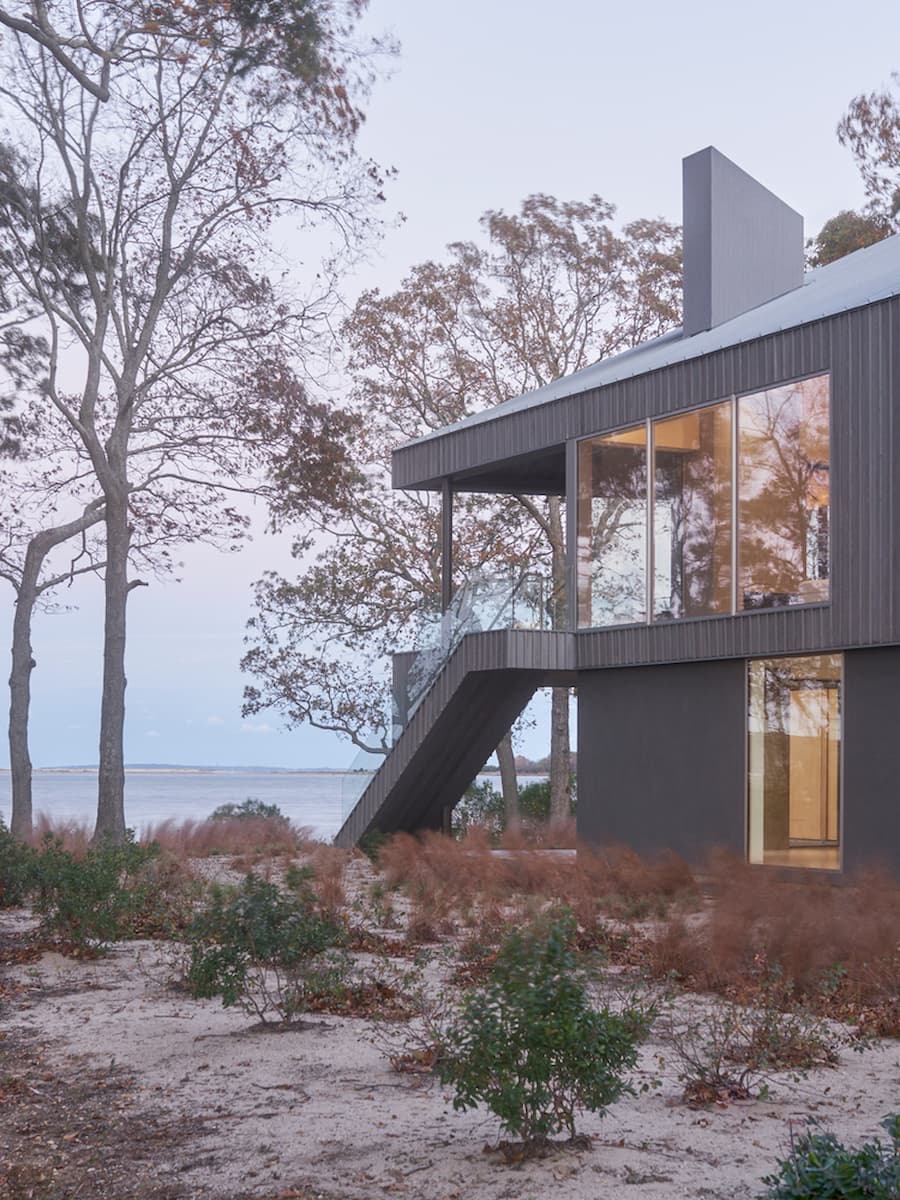
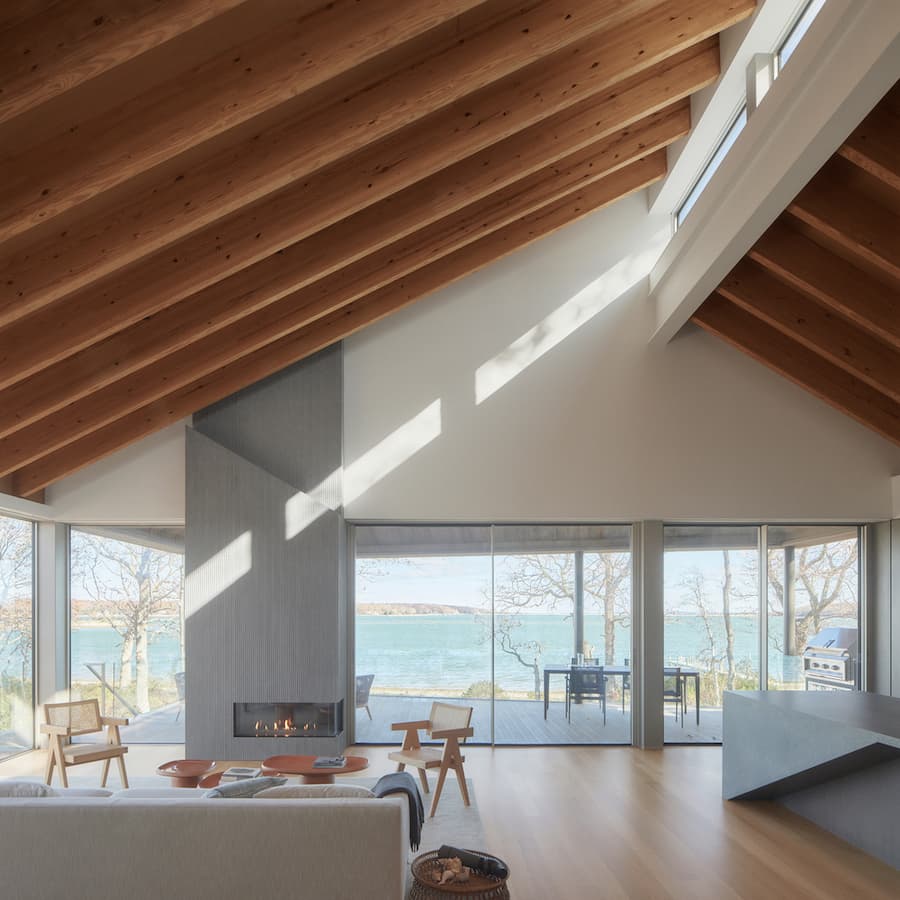
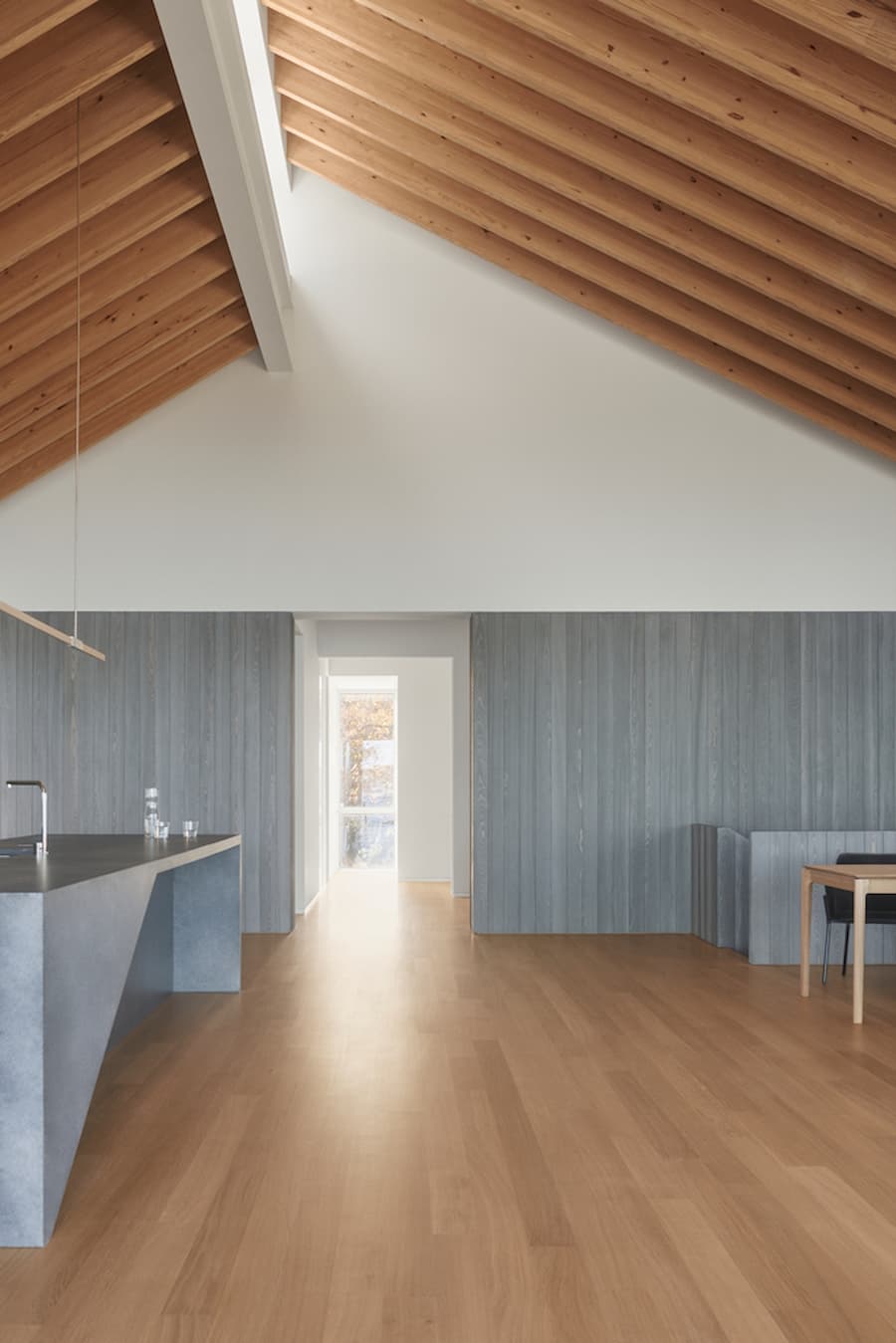
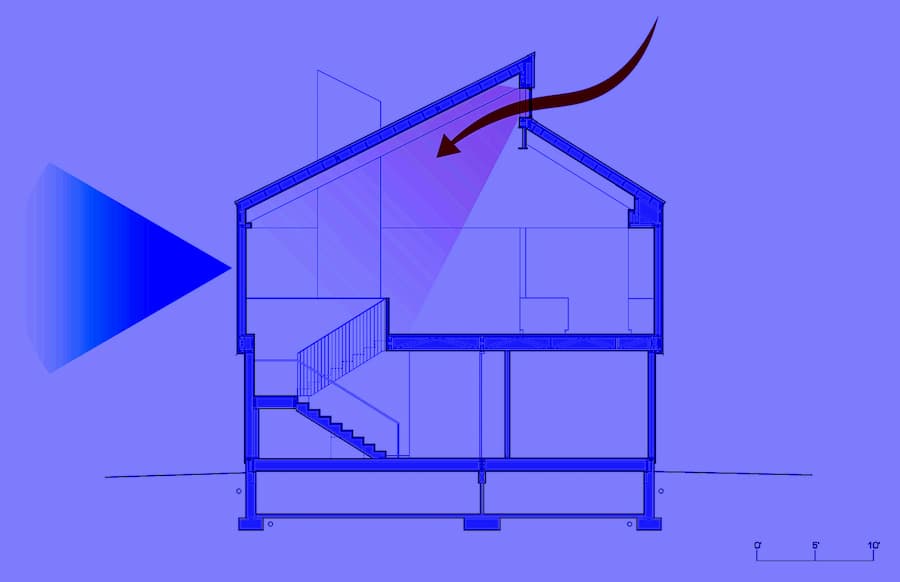
Inspired by the vertical slats of “bird blind” structures that populate the nature preserve, vertical, gray, siding allows the home to blend into the trees. The camouflaging effect minimizes visual disruptions for neighbors on the coast, encourages wildlife to occupy the lot, and allows occupants to inconspicuously observe nature from their perch. The siding has also been lightly charred in a technique known as ‘shou sugi ban.’ This traditional Japanese method of charring wood makes the façade resistant to fire, rot, and bugs, requires no maintenance, and increases the wood’s longevity and durability. The shou sugi ban siding offers a soft texture and color similar to that of driftwood found on the beach, bringing warmth and texture to the interior as it wraps along interior walls. Expansive glazing along the north façade brings in gentle light throughout the day, while a clerestory along the roof ridge allows the exposed beams to be washed with dramatic southern light.
 

Tucked into its tree line is the Osprey House, a one-lane dirt road winds around the Preserve, culminating at this property at Cedar Island Cove.


Tucked into its tree line is the Osprey House, a one-lane dirt road winds around the Preserve, culminating at this property at Cedar Island Cove.


Tucked into its tree line is the Osprey House, a one-lane dirt road winds around the Preserve, culminating at this property at Cedar Island Cove.


▏The Home’s Nautical Forms

Along the coast, the home’s nautical forms project toward the water like a ship’s bow, providing covered, outdoor gathering spaces on both the first and second floors. The east terrace is a visual and programmatic anchor to the site, with a stair dropping down from the second level to gracefully rest on the ground, connecting the social and private programs with each other, and the site.
 

Tucked into its tree line is the Osprey House, a one-lane dirt road winds around the Preserve, culminating at this property at Cedar Island Cove.


Tucked into its tree line is the Osprey House, a one-lane dirt road winds around the Preserve, culminating at this property at Cedar Island Cove.


▏Aesthetics centers in Kanikachic’s highlighting artist/designer experiences

Passionate perspectives on art, artists, contemporary architecture, and ideas that shape culture today
Want your project to be featured? Showcase your work through Kanikachic and (E-mail us: [email protected]) your most inspiring moments.
All Photography, Styling, Fotos, Pictures and Videos Shared with Permission from the [Archdaily] Website
──────────────────────────────────────────────────────────────────────────────────────────
Per essere insostituibili bisogna sempre essere diverso.  ▎Ci sono immagini affascinanti qui, e l’affascinante giornata di insieme!  xo  KanikaChic

彭博學生中心專為學生生活而建的設施

彭博學生中心重塑約翰霍普金斯校園公共節點

這座學生設施不只是建築,而是校園公共生活的再組織。     作為約翰霍普金斯大學 150 週年校慶的重要起點,彭博學生中心是校方首座專為學生生活打造的核心設施,回應了世代以來對公共聚集空間的渴望。這裡被構想為交流、社交、學生社團與表演藝術交織的場域,讓校園生活得以在學術之外展開。以校友邁克爾・R・彭博命名,這座建築不僅承載捐贈者的象徵意義,更標誌著一種以學生為中心的當代校園文化轉向。 作為約翰霍普金斯大學150週年校慶的一部分,新建的彭博學生中心不僅是一座設施,更是重新定義 校園空間結構 的節點,使社交、文化與學術生活得以在共享場域中交織。     這座佔地15萬平方英尺的新建築由BIG-Bjarke Ingels Group和室內建築Rockwell Group與執行建築師Shepley Bulfinch合作設計,景觀設計由Michael Van Valkenburgh Associates (MVVA)負責。該建築旨在滿足霍普金斯大學本科生和研究生不斷變化的需求,其特色包括:一個以當地攤位為特色的先進美食廣場、一間酒吧和咖啡館、一個可容納250人的靈活表演場地、一個設有開放式座位的中央中庭、舞蹈工作室、俱樂部會議室、錄音室、靈活的聚會場所、一個數位媒體中心,甚至還有一個電子競技休息室。彭博學生中心以霍普金斯大學校友邁克爾·R·彭博的名字命名。麥可·R·彭博是工程學1964屆畢業生,也是彭博有限合夥企業和彭博慈善基金會的創始人,曾任紐約市第108任市長。彭博學生中心旨在表彰他對支持約翰霍普金斯大學學生的傑出貢獻。     學生中心以開放流動的空間組織為核心,透過自然採光與室內綠化策略,使建築在使用與體驗層面呈現出對 光與空間 關係的高度敏感。

Facebook
Twitter
LinkedIn
Tumblr
0 0 votes
Article Rating
Subscribe
Notify of
guest
0 Comments
Oldest
Newest Most Voted
Inline Feedbacks
View all comments
Search