A Major Exhibition Materializes Surrealist Artist Remedios Varo’s Alchemical Visions
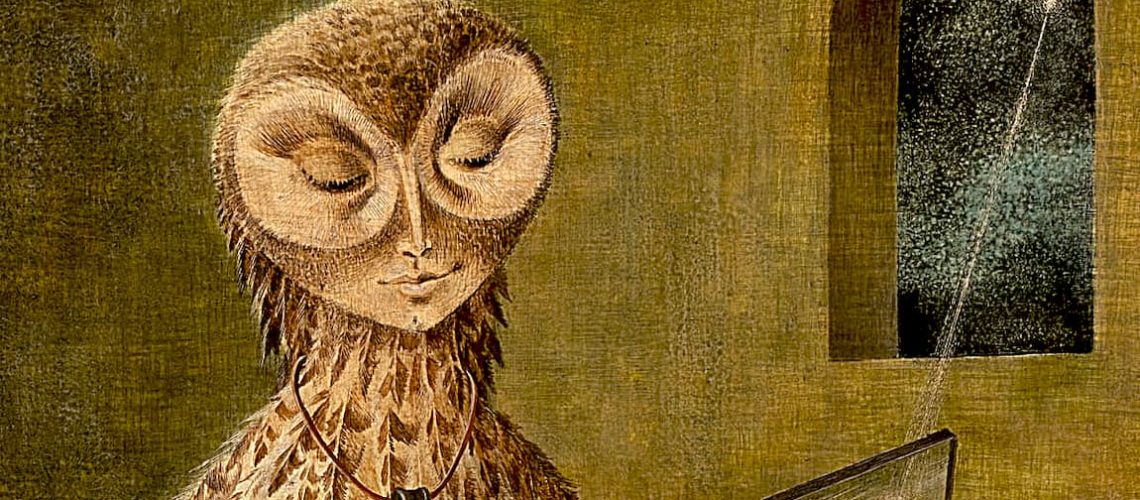
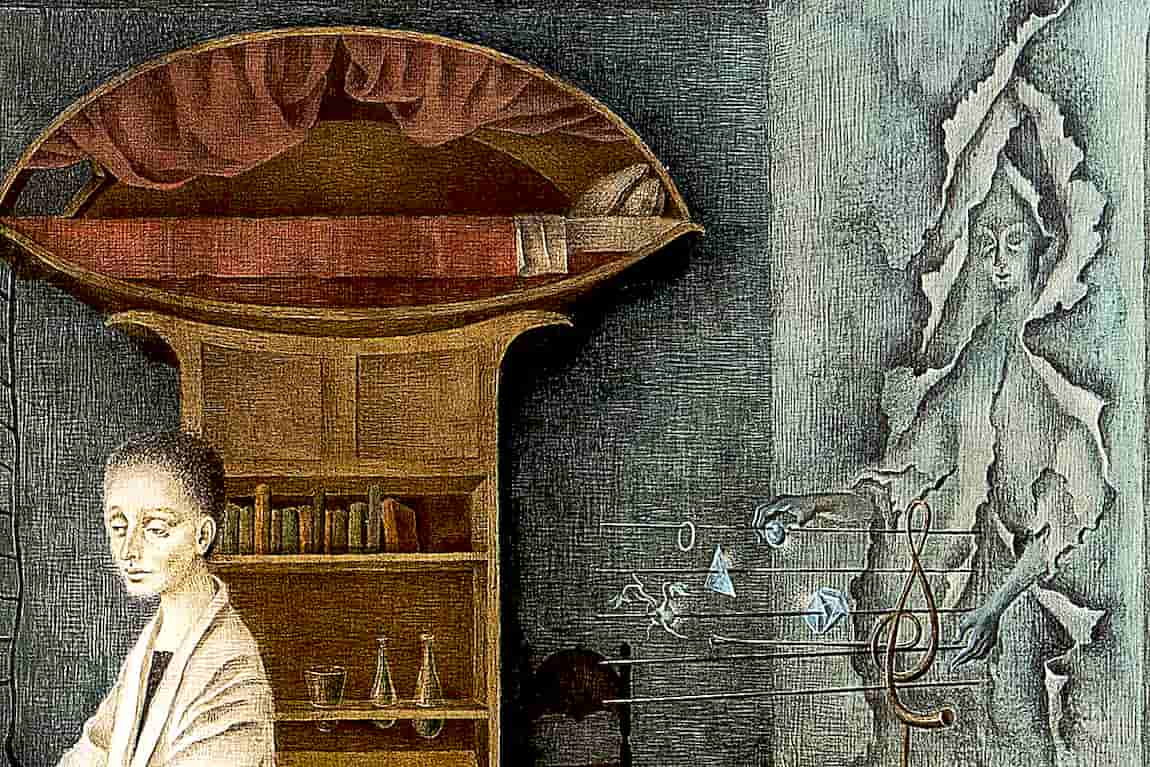
Alchemy and the depths of the occult manifest within Remedios Varo’s practice. The Spanish surrealist (1908-1963), whose works are on view at the Art Institute of Chicago, was a researcher at heart with a vast, insatiable curiosity for discovering the unseen and underrecognized. Interested in scientific disciplines like astronomy and ecology along with psychology, tarot, and feminism, Varo was intent on expanding the limits of human perception. “I deliberately set out to make a mystical work, in the sense of revealing a mystery, or better, of expressing it through ways that do not always correspond to the logical order, but to an intuitive, divinatory, and irrational order,” she’s quoted as saying.
Born María de los Remedios Alicia y Rodriga Varo y Uranga in Catalonia, the artist was a natural polymath, having taken a childhood interest in her father’s work as a hydraulic engineer while reading the sci-fi novels of French author Jules Verne. Her early experiences and desire to learn informed what became her artistic practice and ushered her entrance into Surrealism. After a few years of living and working in Paris, Varo, like many of her contemporaries, fled Europe before World War II and relocated to Mexico City, where she lived until she had a heart attack and died at age 54.
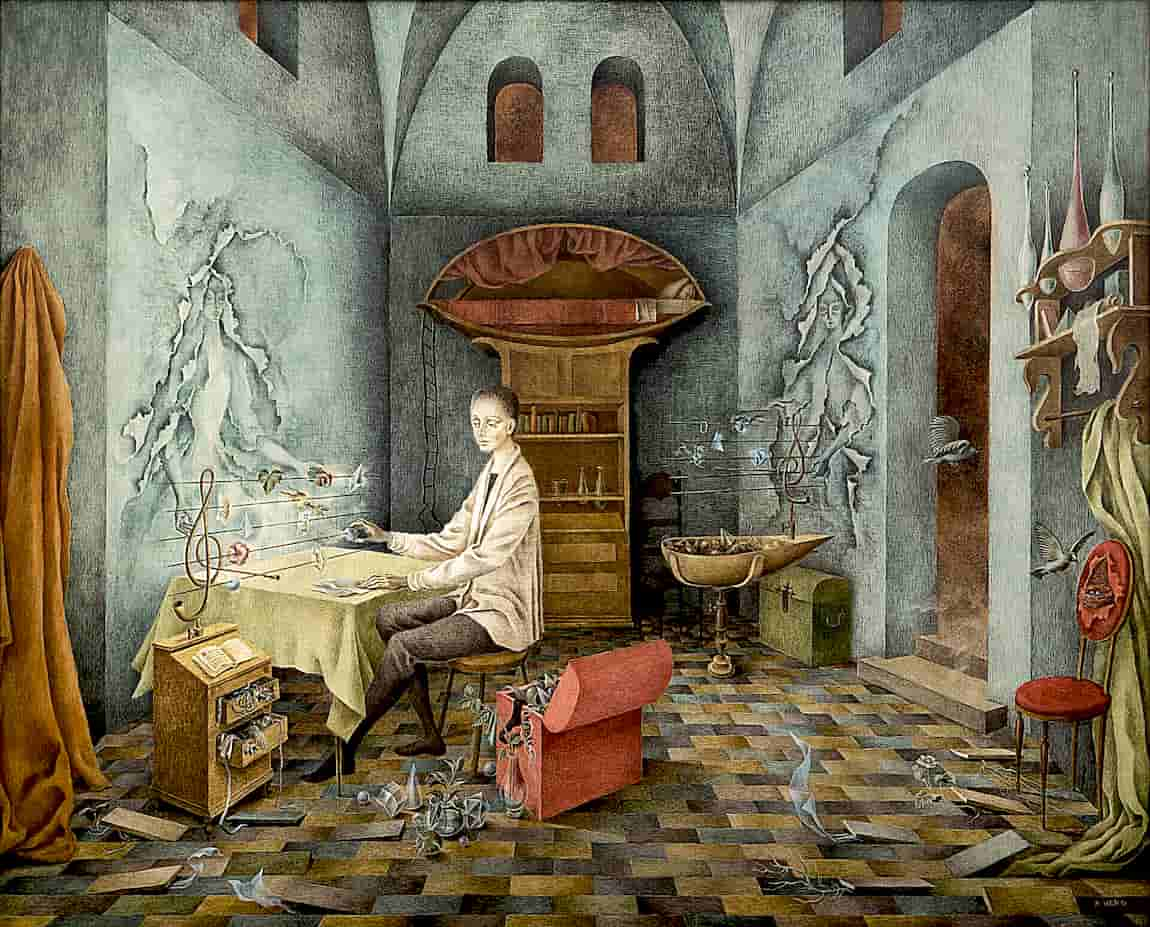
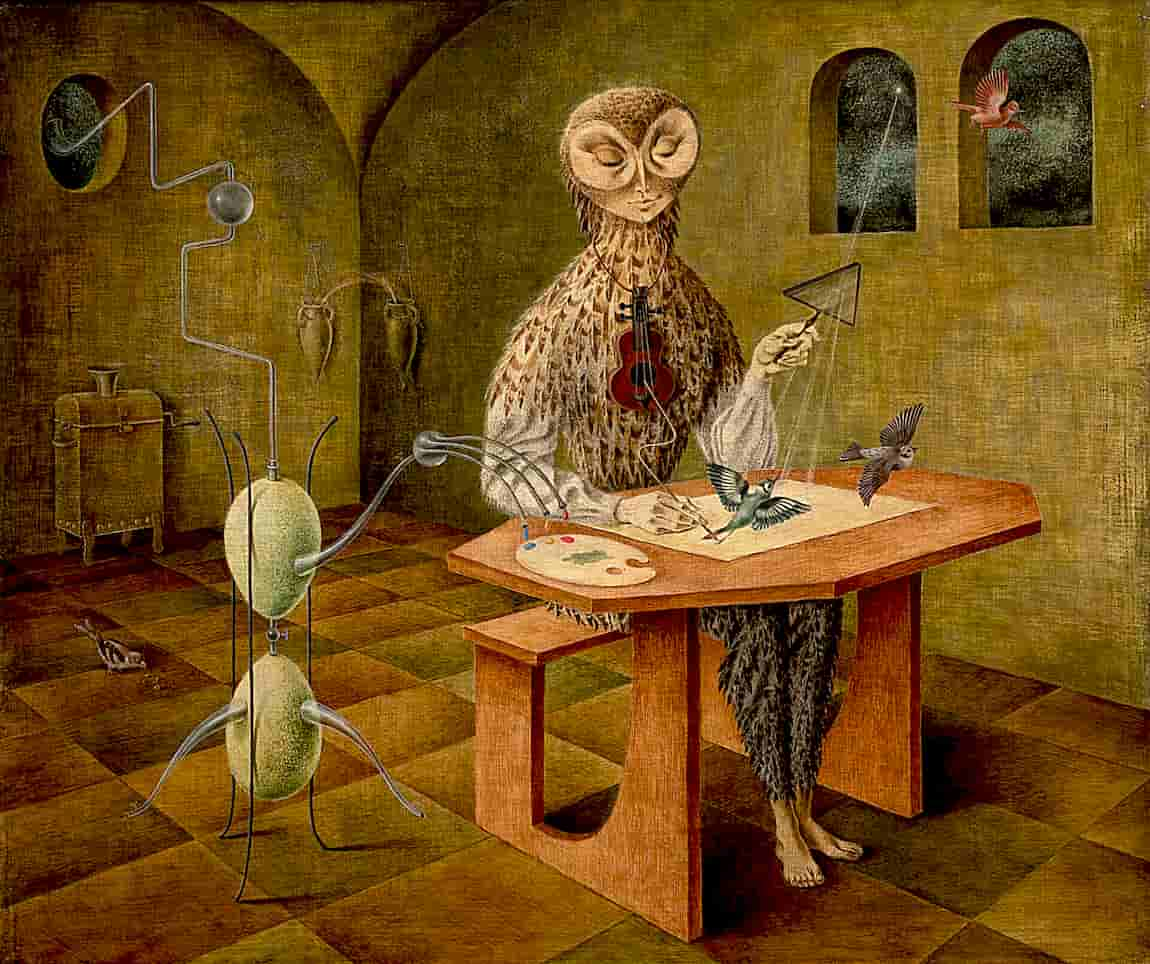
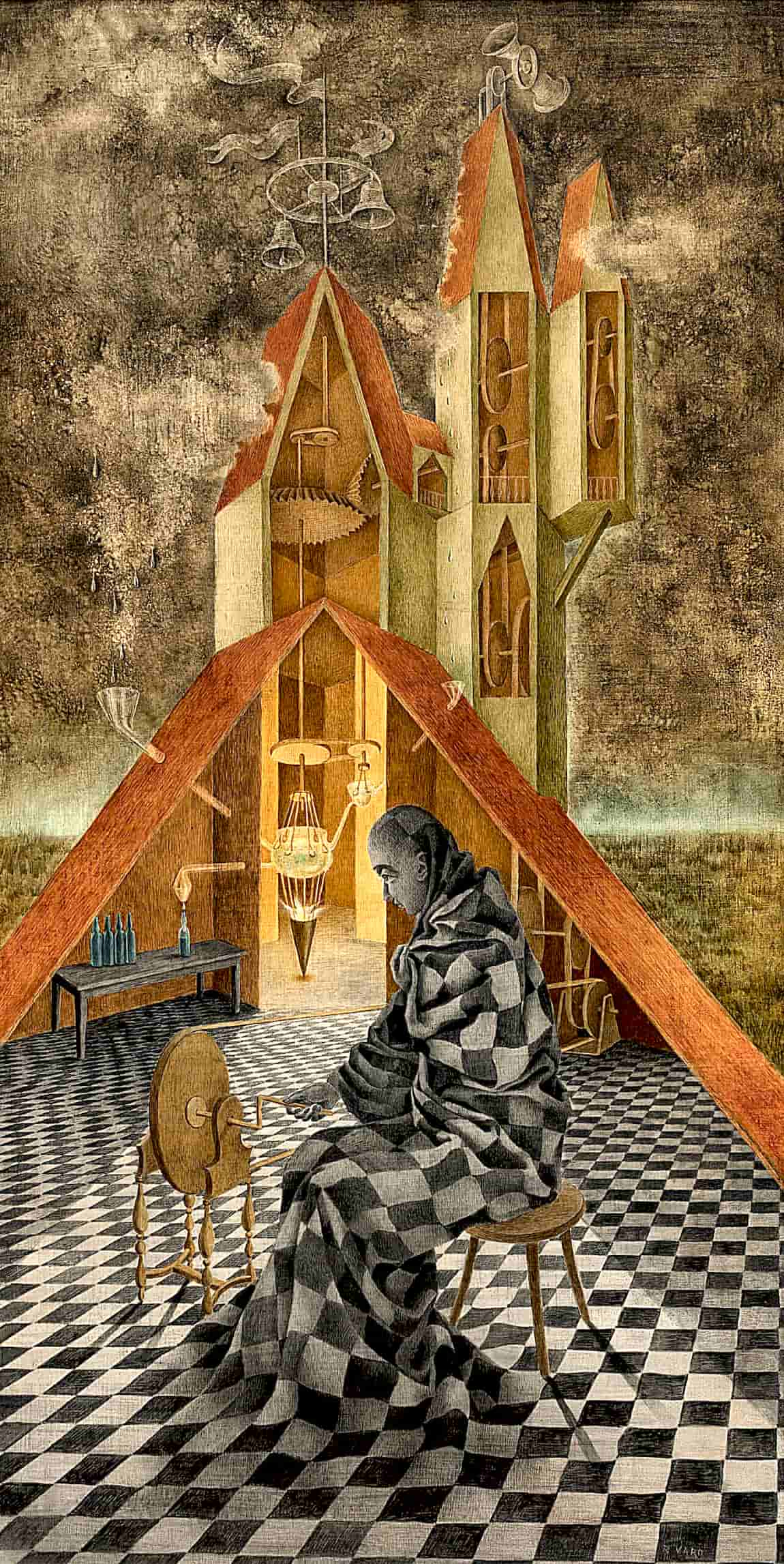
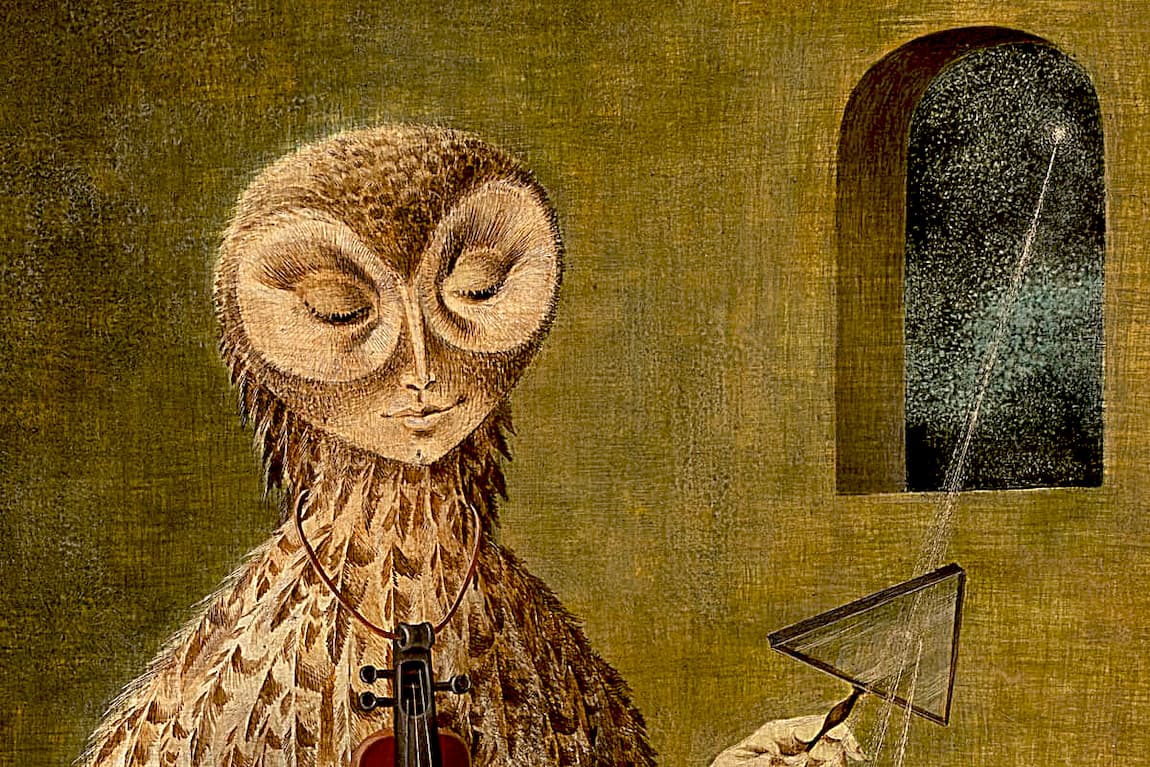
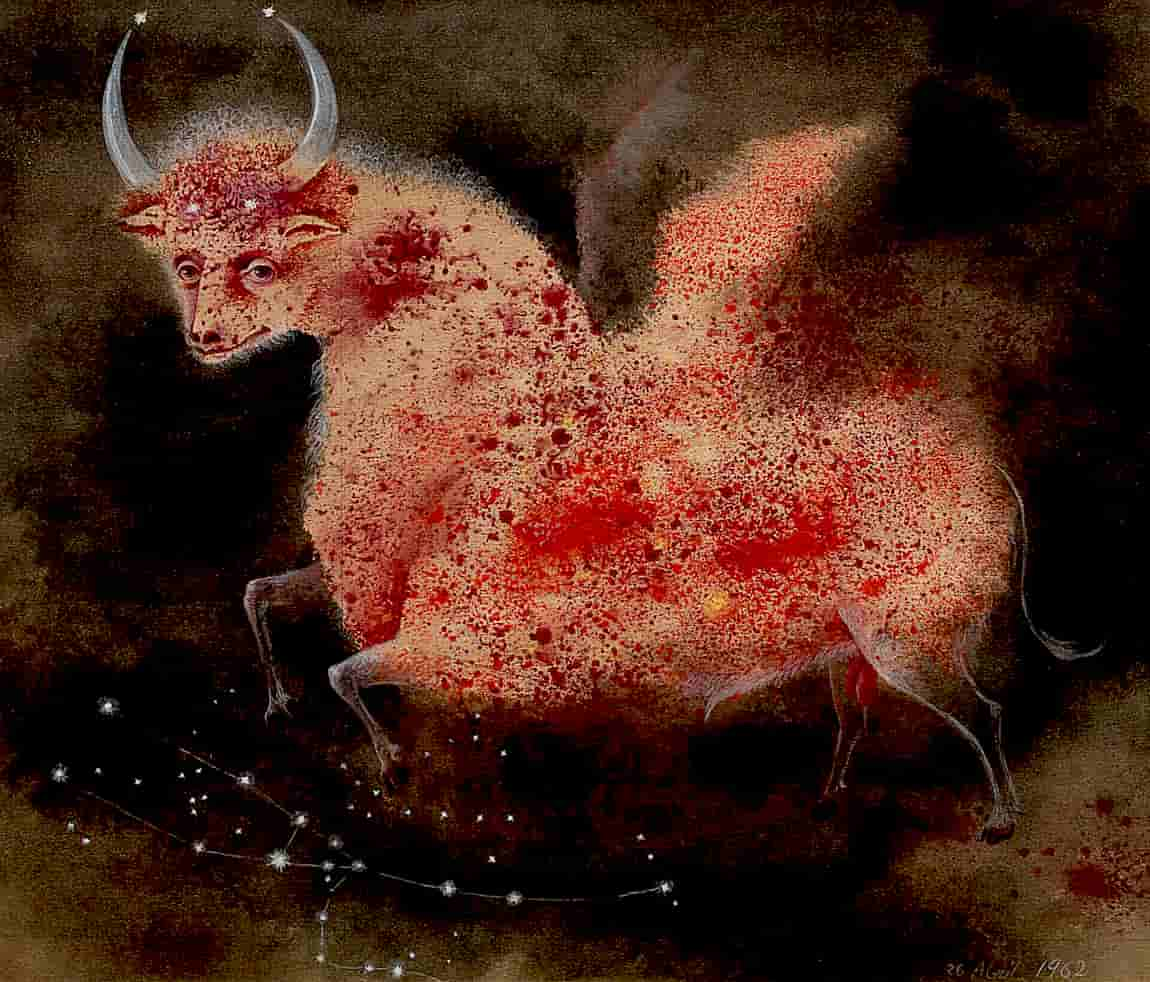
In Science Fictions, more than 60 of Varo’s paintings, sketches, and sculptures are on view at a U.S. museum for the first time in 23 years. The enchanting works evidence the artist’s esoteric affinities and are rife with unexpected magic. “Creation of the Birds,” for example, centers on a hybrid, owl-like character who appears to paint winged creatures that are brought to life by a stellar beam. Similarly, “Useless Science, or The Alchemist,” depicts a cloaked figure turning a crank that powers a towering apparatus of gears and pulleys, producing a pale green liquid at the base.
While Varo’s subject matter is often rooted in experimentation and discovery, so was her physical making process. She tended to produce cartoons, or full-scale preparatory drawings, that she would transfer to a panel or canvas. These renderings offered structural support to her more capricious techniques like blotting, scraping, and decalcomania, which involves pressing a painted material against another surface so that both are temporarily joined by a layer of wet paint. This creates organic, biomorphic planes when pulled apart. The vast quantity of textures adds to the cosmic, enchanting qualities of Varo’s works, which she produced layer by layer, sometimes embedding natural materials like mother-of-pearl within the compositions.
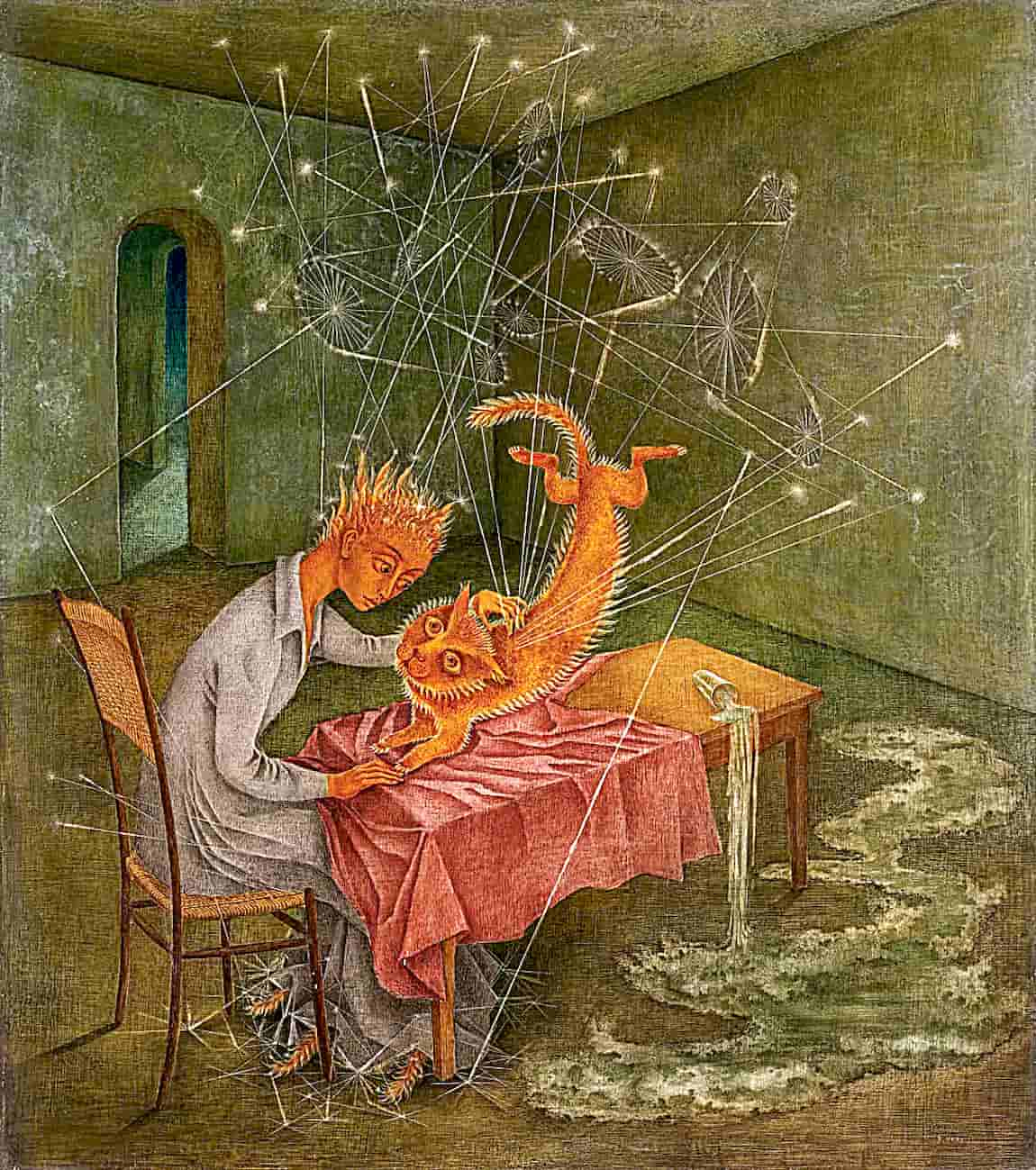
Although lesser known in the U.S., the artist is well-established in Latin America. Varo is part of a trio of artists dubbed “the three witches,” along with Leonora Carrington and photographer Kati Horna, and was active in Surrealist circles in Mexico. “Varo has been revered as a cult figure since the 1950s, her allure stemming from the enigmatic nature of her work, both in terms of its subject matter and technique,” said curator and art historian Tere Arcq, who helped organize the exhibition with Art Institute curator Caitlin Haskell. Presented in partnership with Museo de Arte Moderno, Science Fictions is widely lauded for recognizing and expanding access to Varo’s contributions to art history, both of which are long overdue.
Given her enduring search for transcendence and transformation, would Varo have considered the artworks themselves an act of alchemy? “That’s a fascinating question,” Haskell says. “She was certainly reading about alchemy, as we know from her library, and she was not alone among the artists in her circle to be thinking about analogies between art making and alchemy. In a metaphorical sense, yes.”
Remedios Varo: Science Fictions is on view through November 27.
Om onvervangbaar te zijn, moet je altijd anders zijn.
Er zijn fascinerende beelden hier, en de fascinerende dag van samen! xo
─────────────────────────────────────────────────────
Per essere insostituibili bisogna sempre essere diverso.
Ci sono immagini affascinanti qui, e l’affascinante giornata di insieme! xo KanikaChic