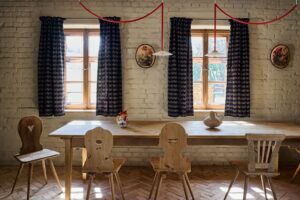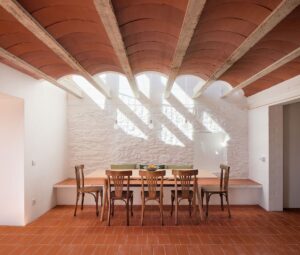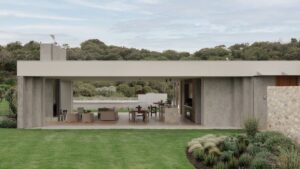
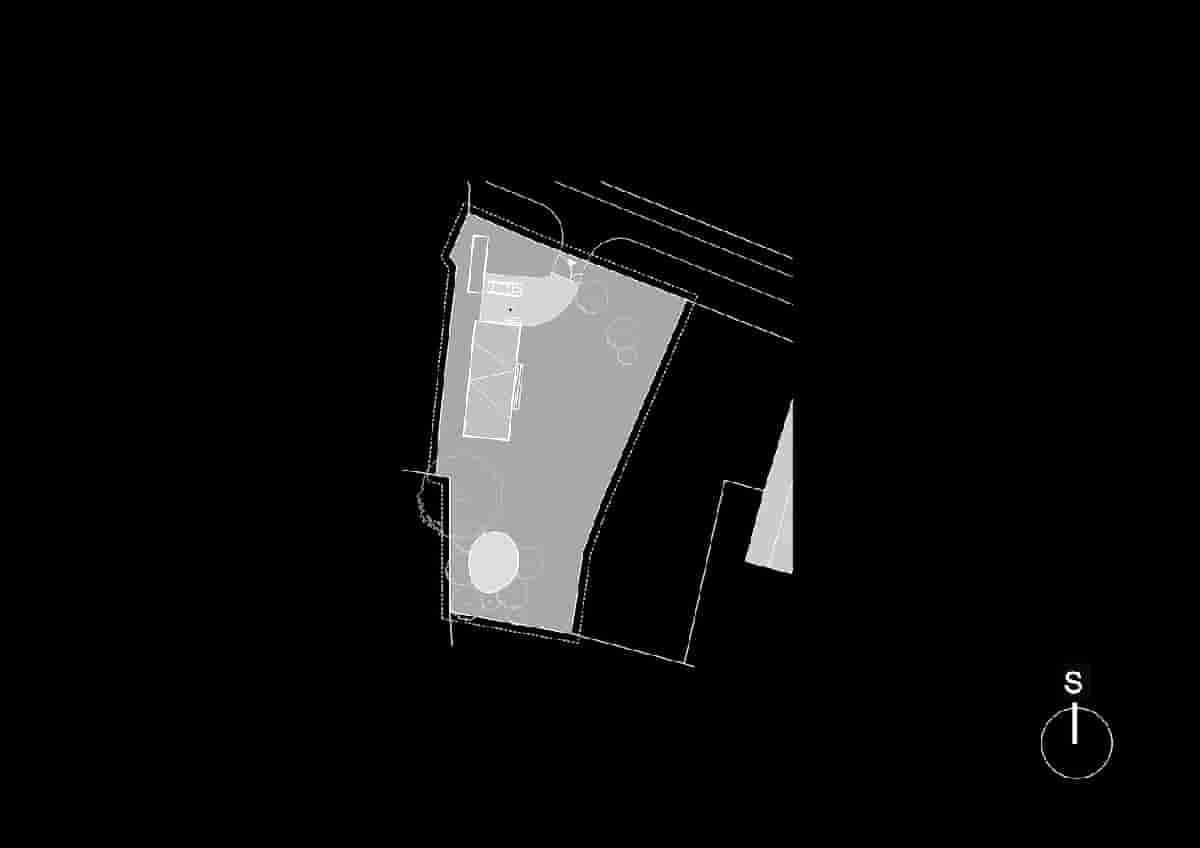
Design an open-plan, low-energy wooden house to improve the closeness of the family, the house Zilvar, is located on the outskirts of a small village in Eastern Bohemia, surrounded by fields and forests.
The client’s wish was to design an open-plan, low-energy wooden house to improve the closeness of all three members of the family while embracing principles of Sustainable Architecture.
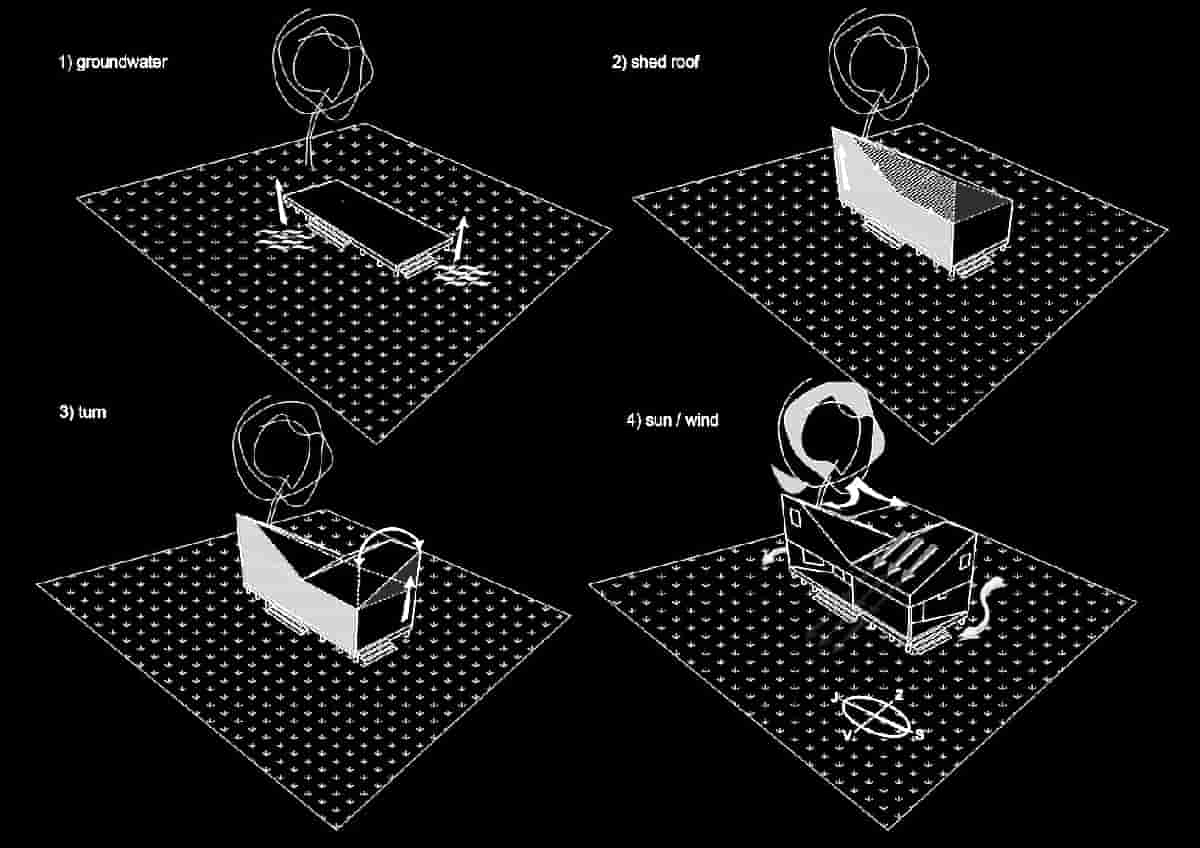
Wooden house a microclimate of frequent rain, strong western winds and eastern sun was taken into account, together with the need for calm and peace, away from the busy, modern world, to make for ideal year-long living. Its timber strategy reinforces how construction material becomes a narrative driver, aligning with Material as Narrative.
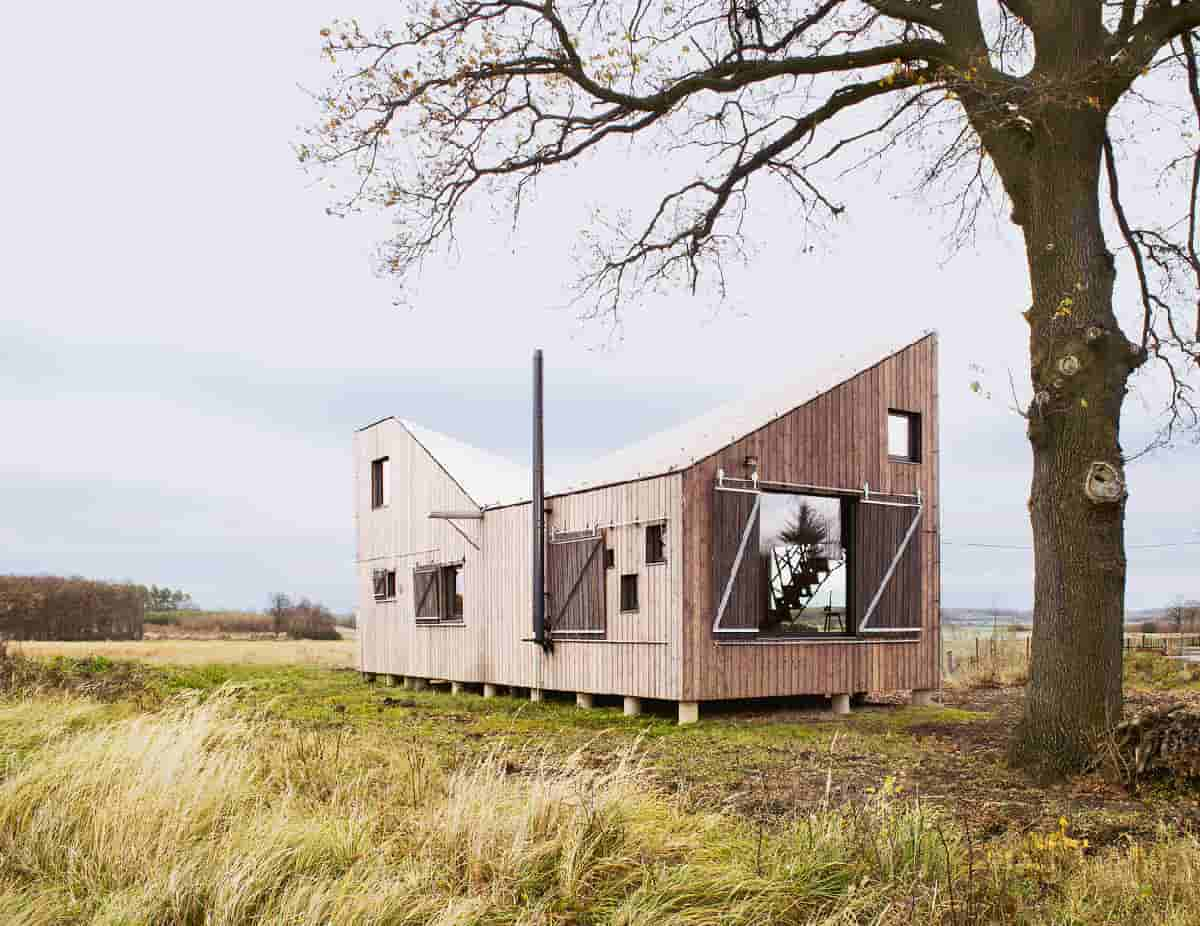
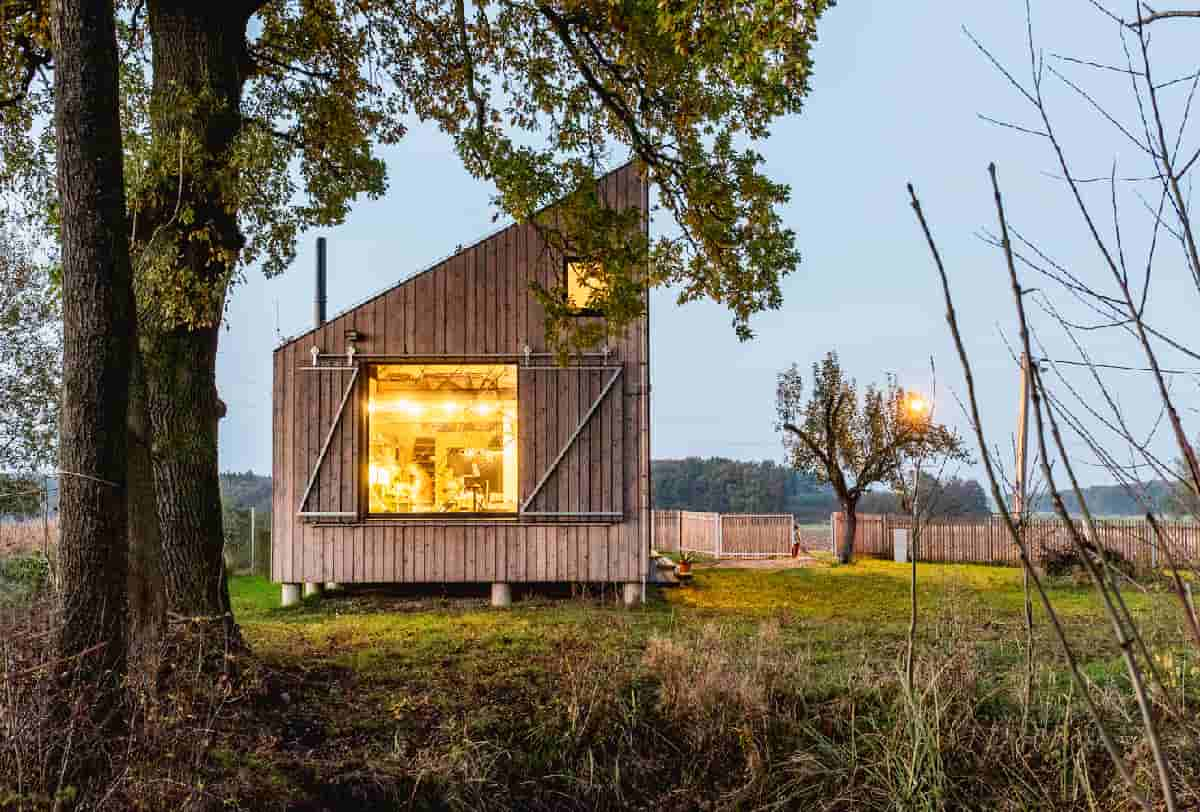
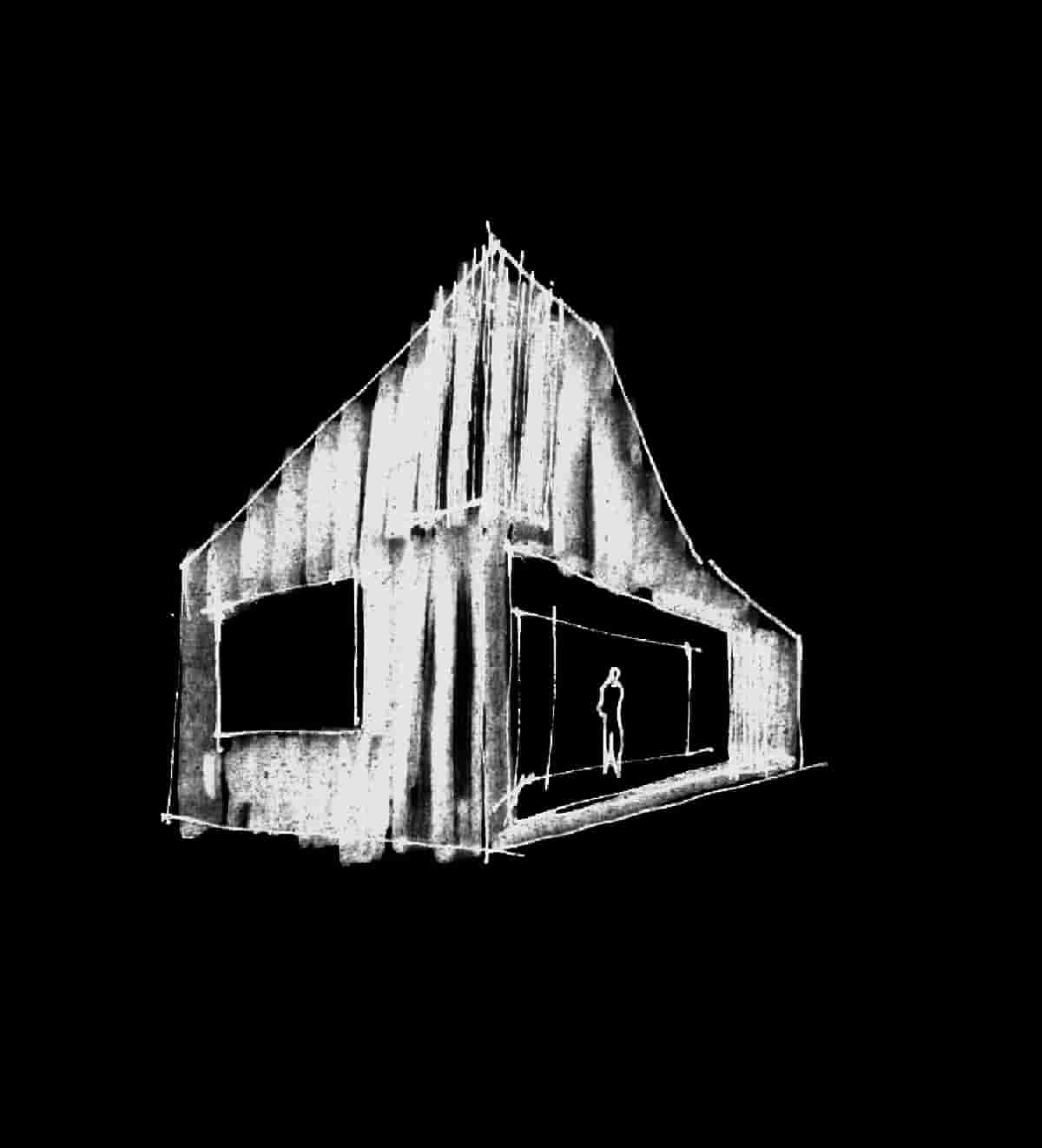
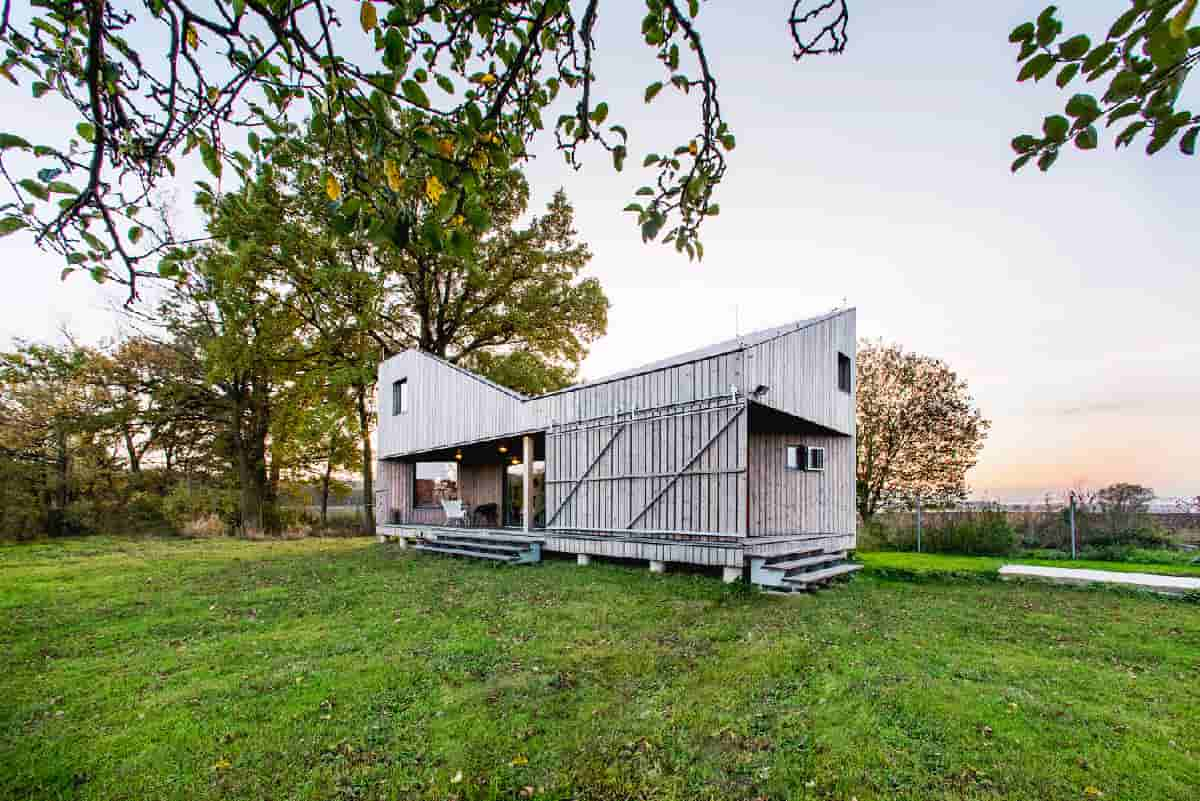
The inspiration for Zilvar’s shape came from the client’s 4 year-old son, who wanted the building to represent an anthropod, sloping towards the enormous oak tree.
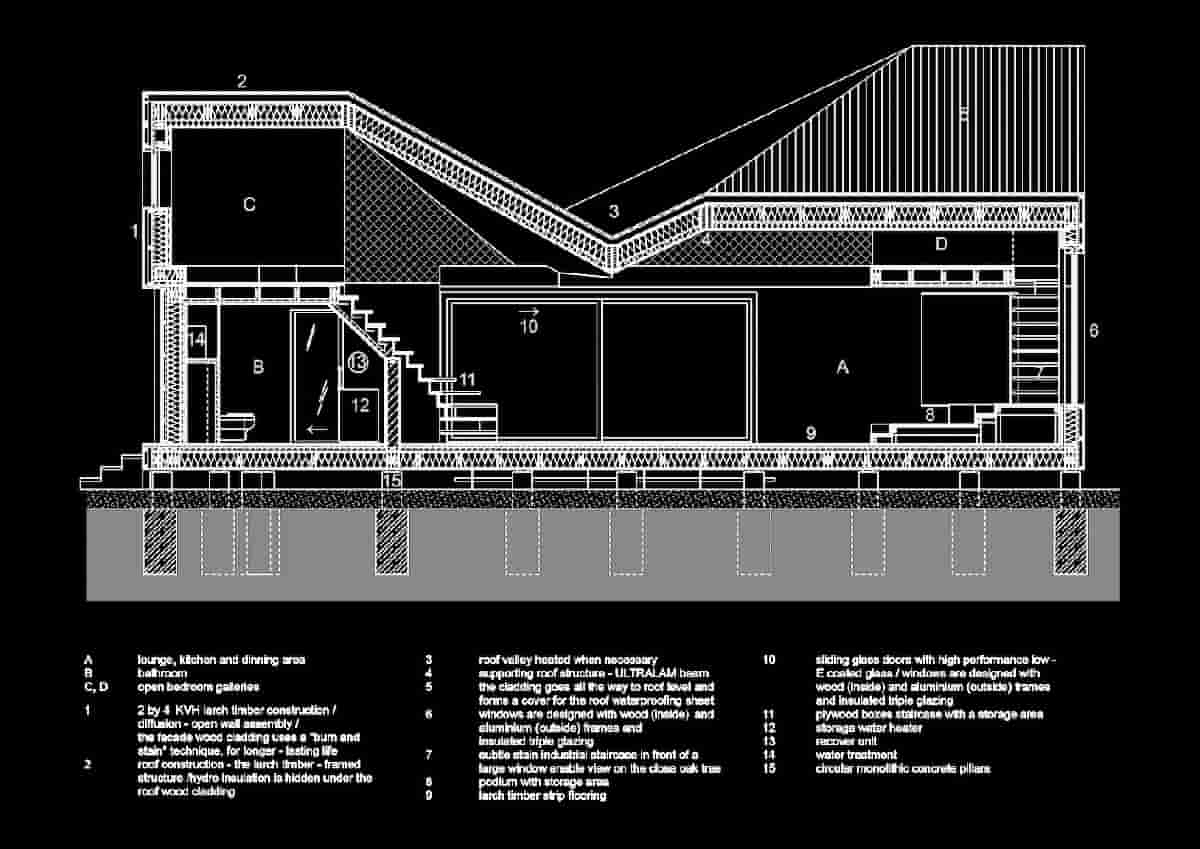

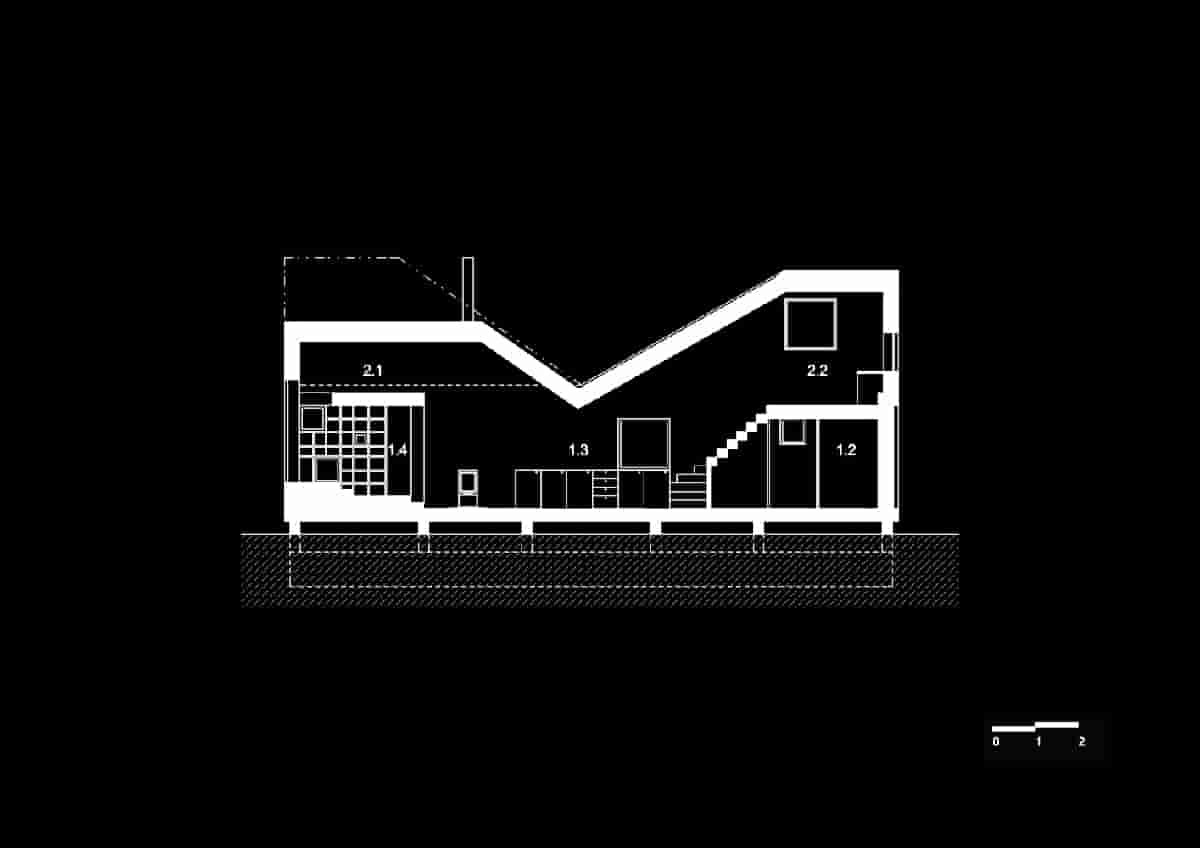
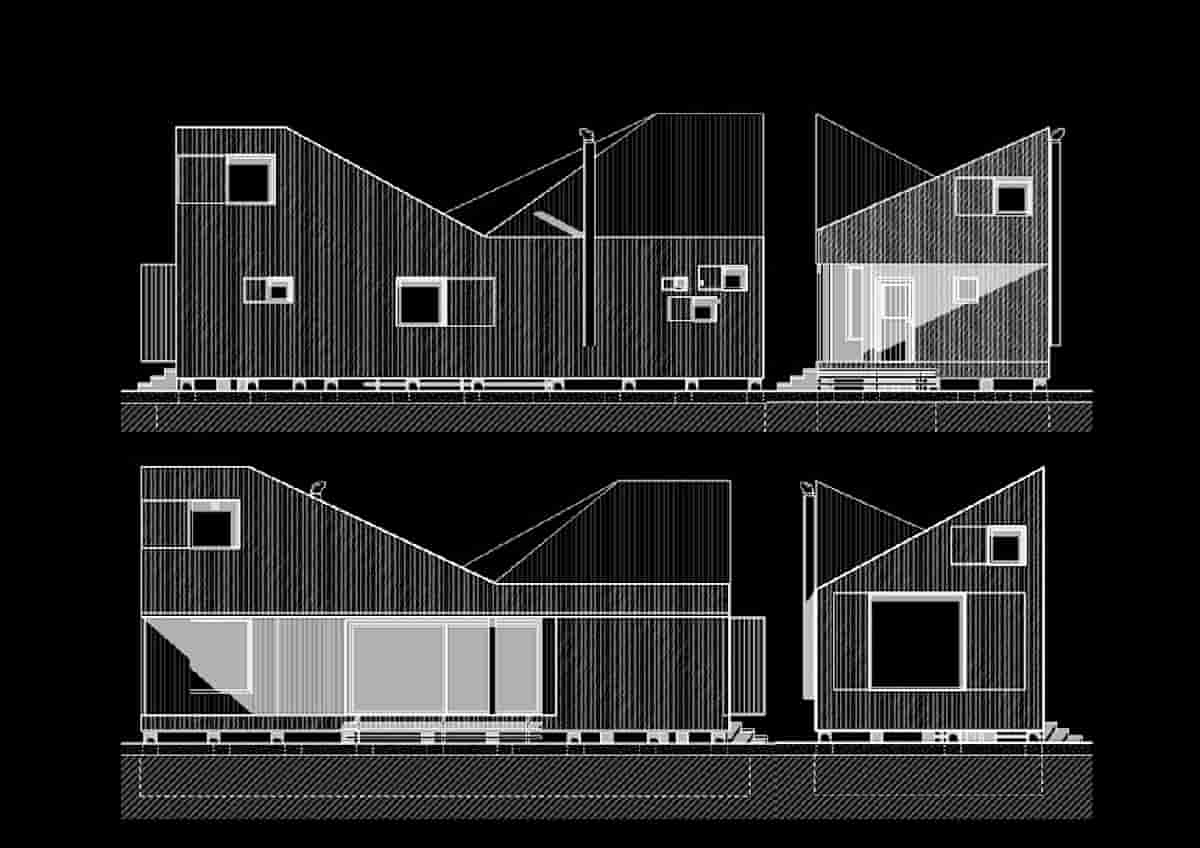
Design an Open-Plan, Low-Energy Wooden House to Improve the Closeness of The Family, All Sections of The House
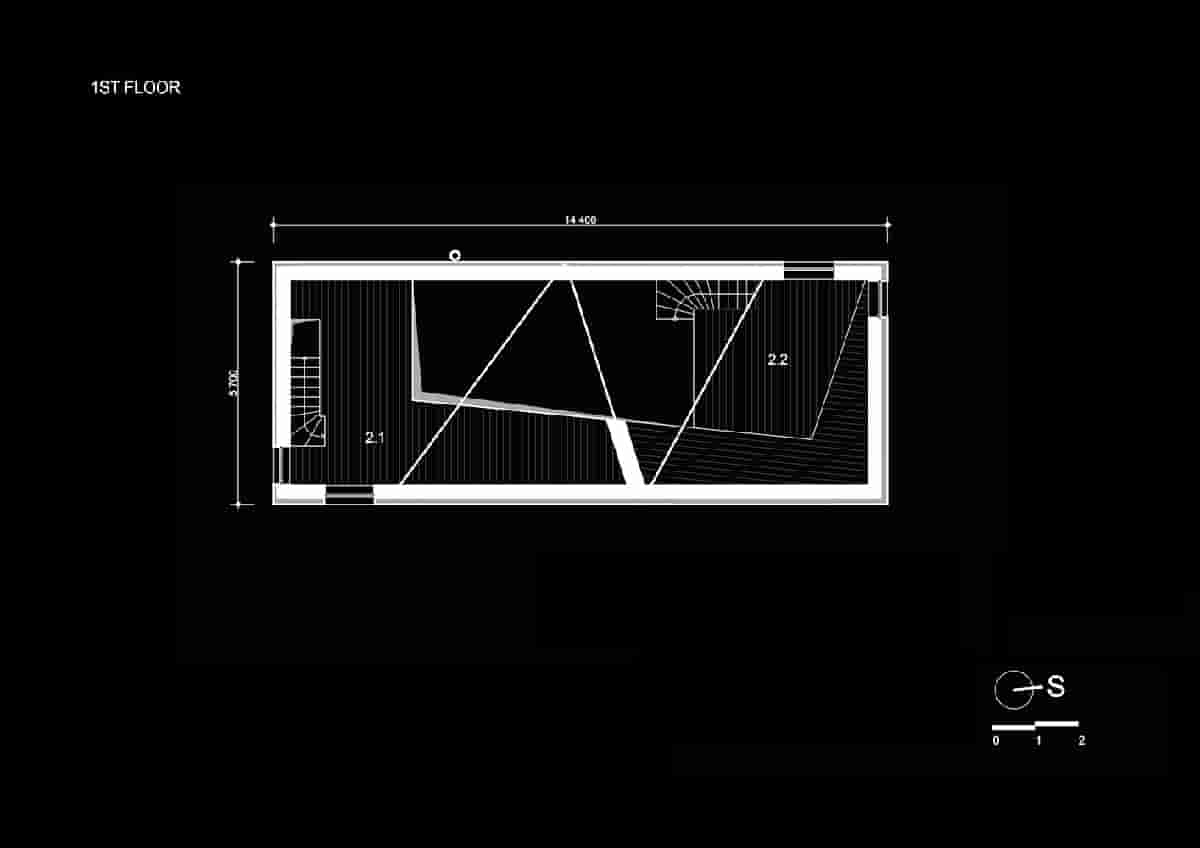
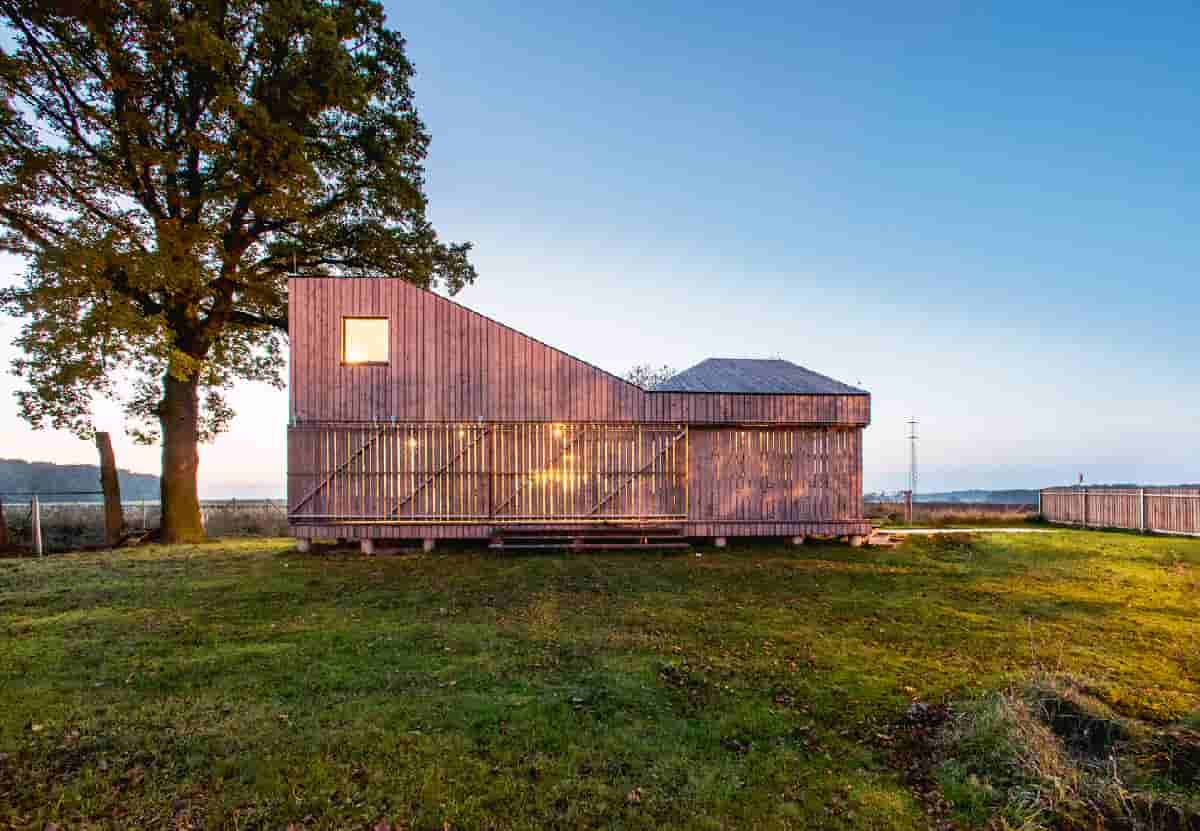
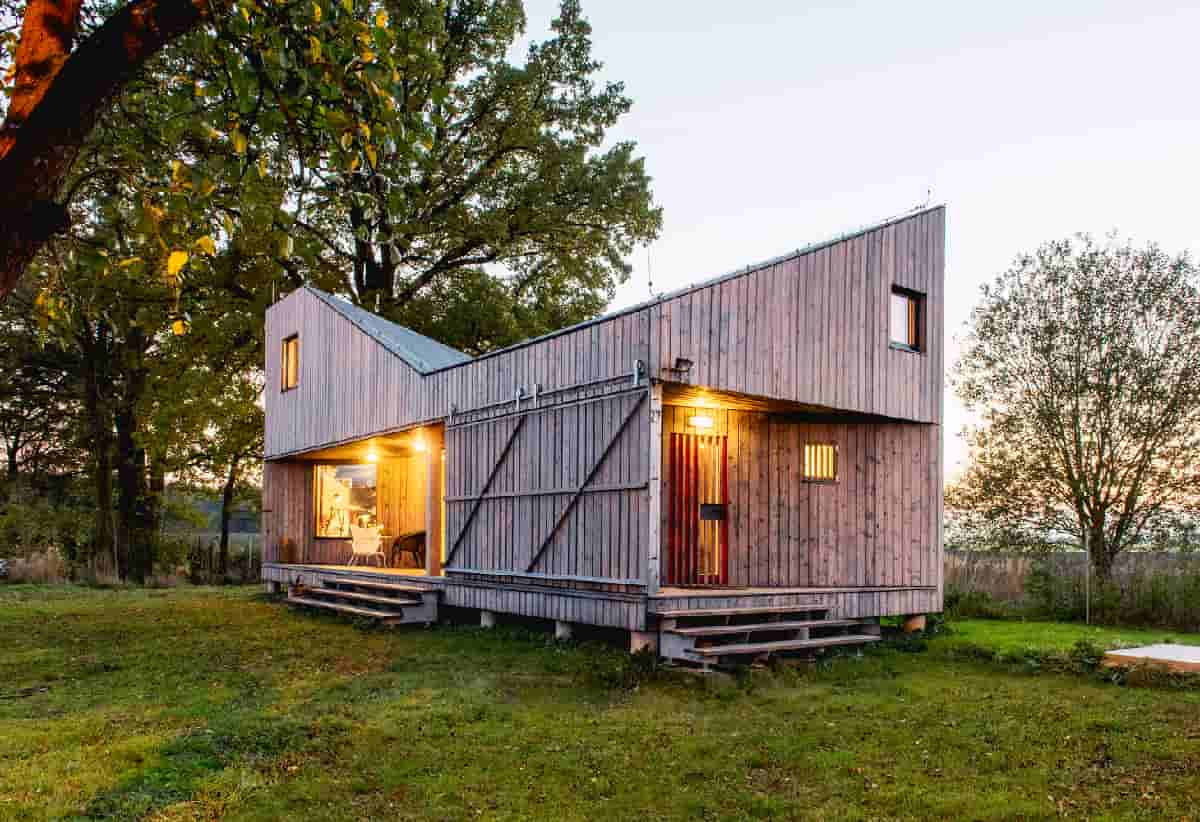
Design an open-plan the southern sloped-roof, leaning away from the crown of this oak, makes you feel you are in the tree itself, to improve the closeness of the family whereas the northern sloped-roof, turned in the opposite direction, provides a wonderful view over the distant countryside.
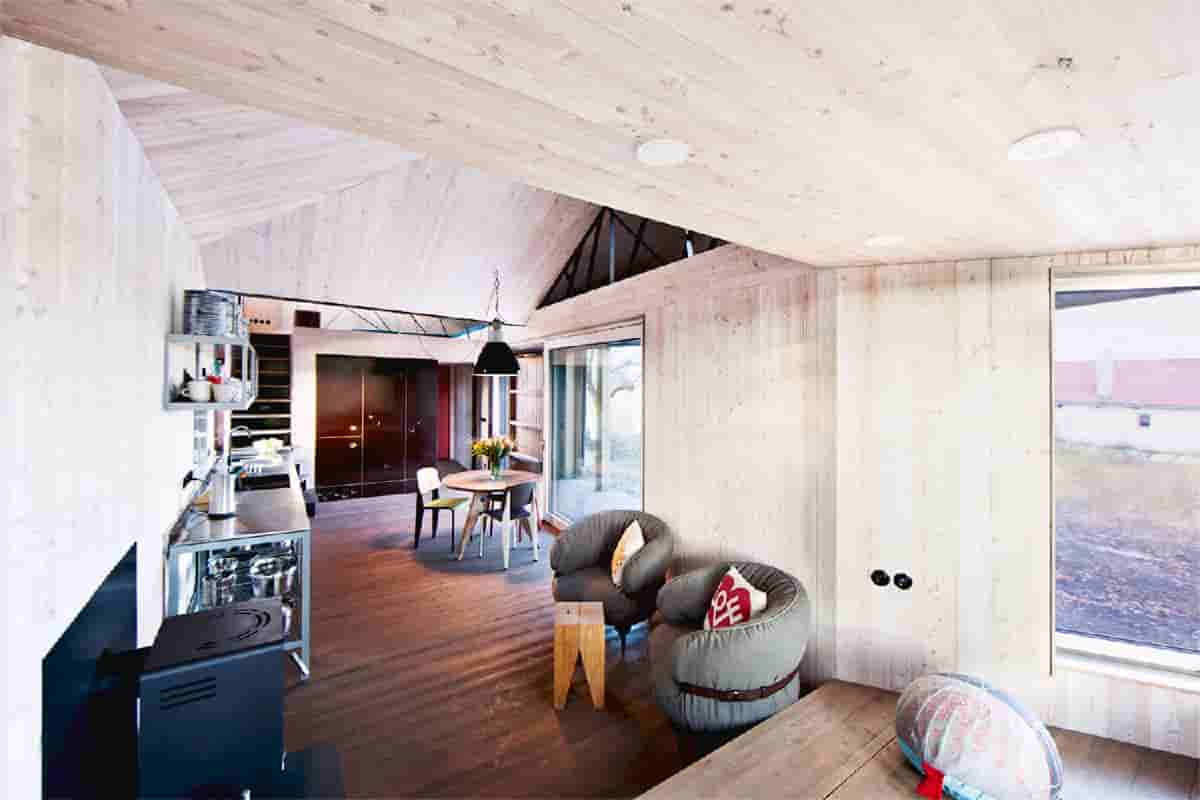
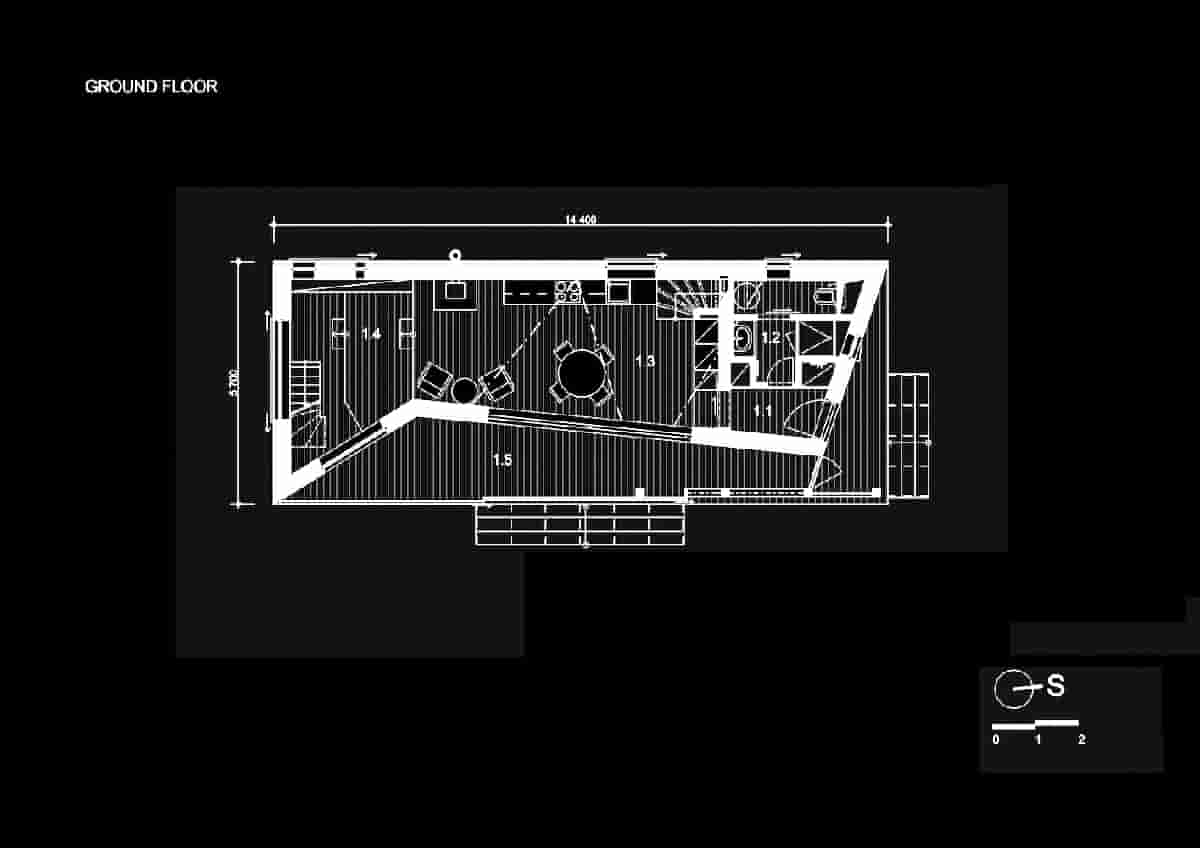
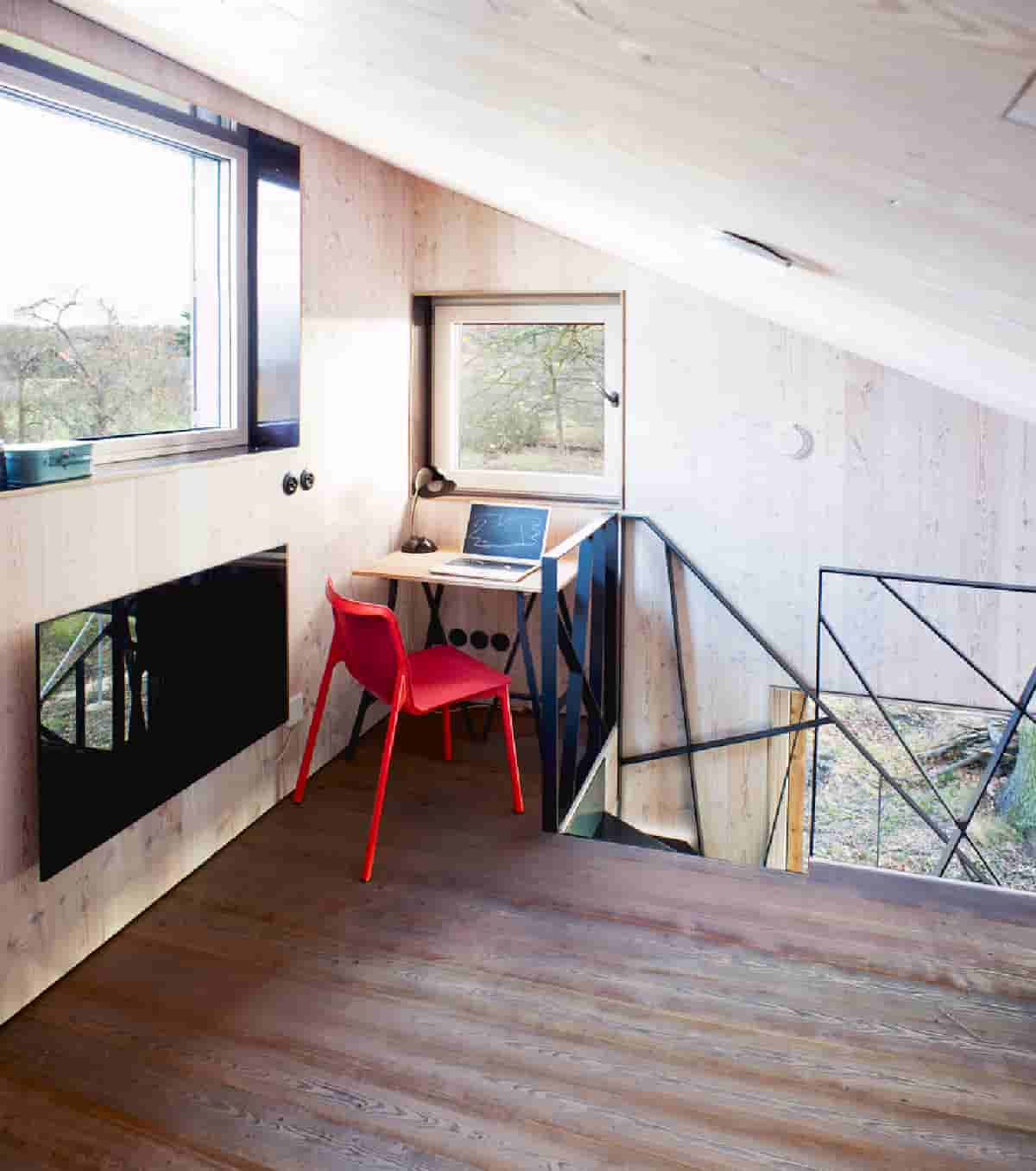
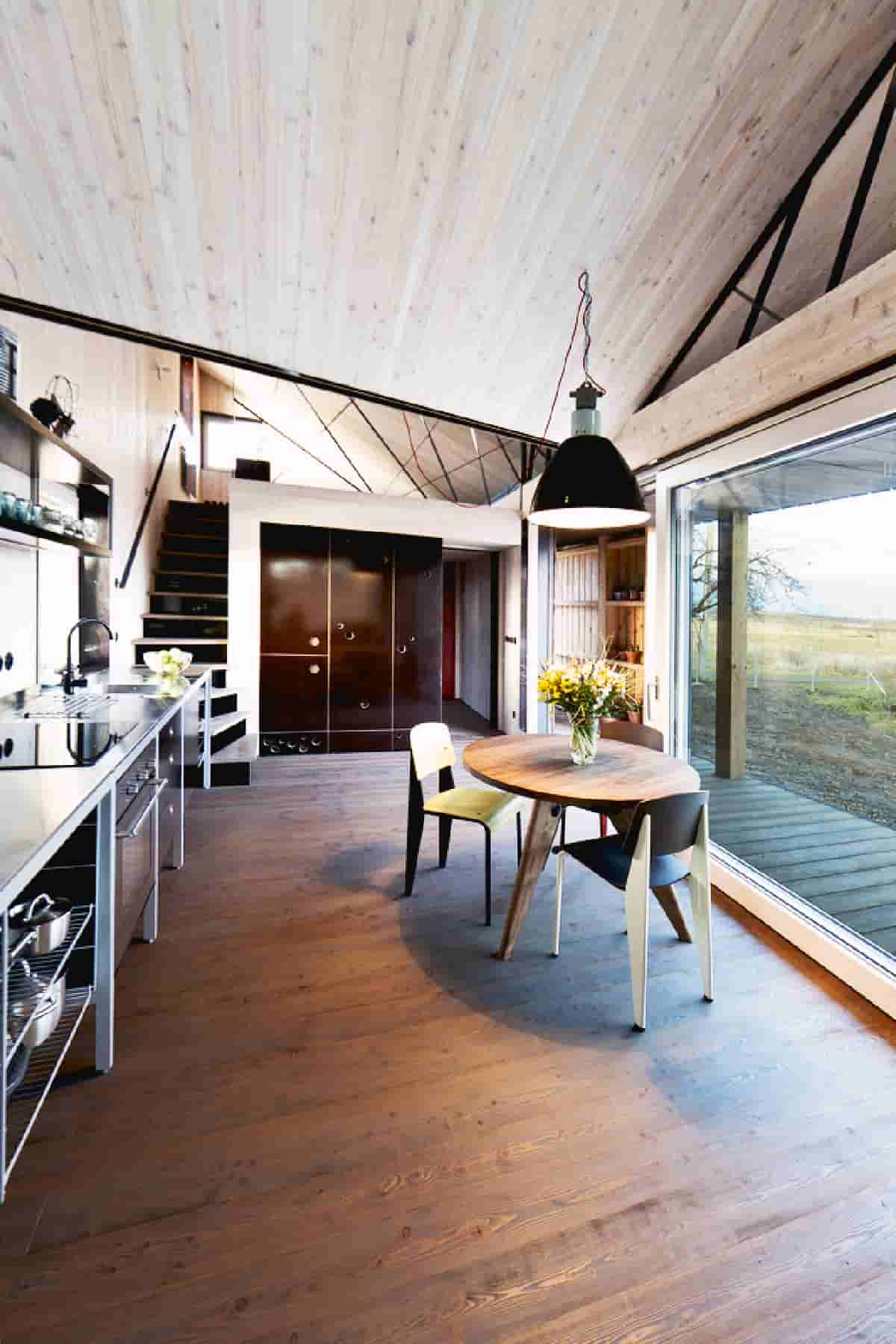
Design an open-plan, low-energy wooden house to improve the closeness of the family, all sections of the house. The open-plan house consists of a lounge, kitchen and dining area downstairs, which open out to the bedroom galleries at opposite ends of the house upstairs, by industrial-shaped staircases either end, providing communication between all sections of the house.
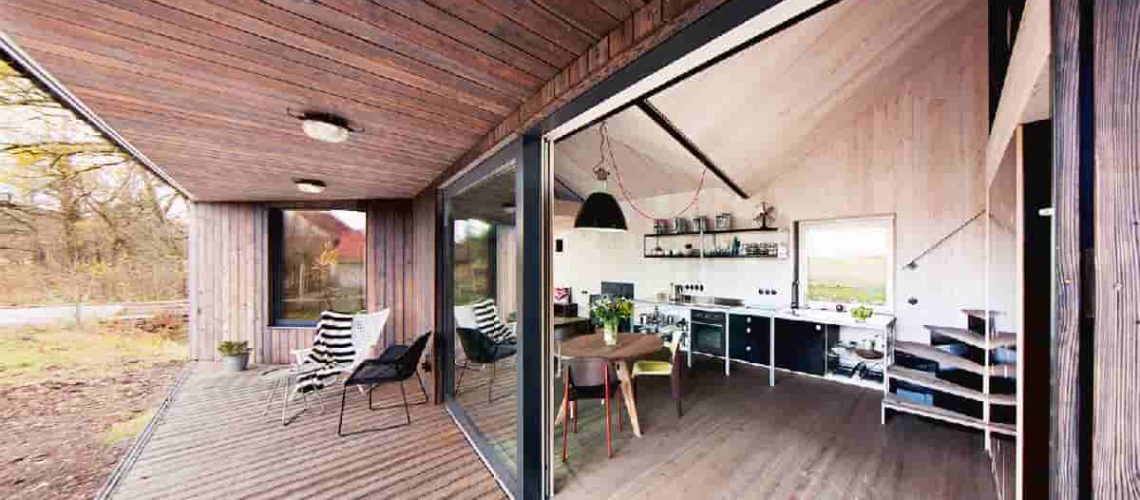
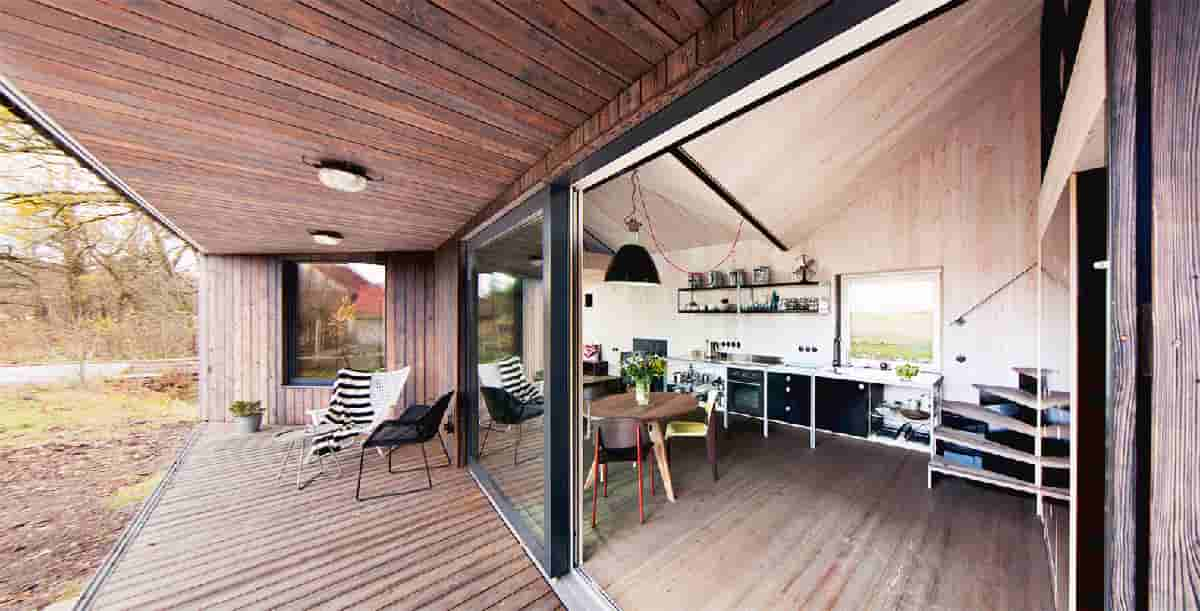
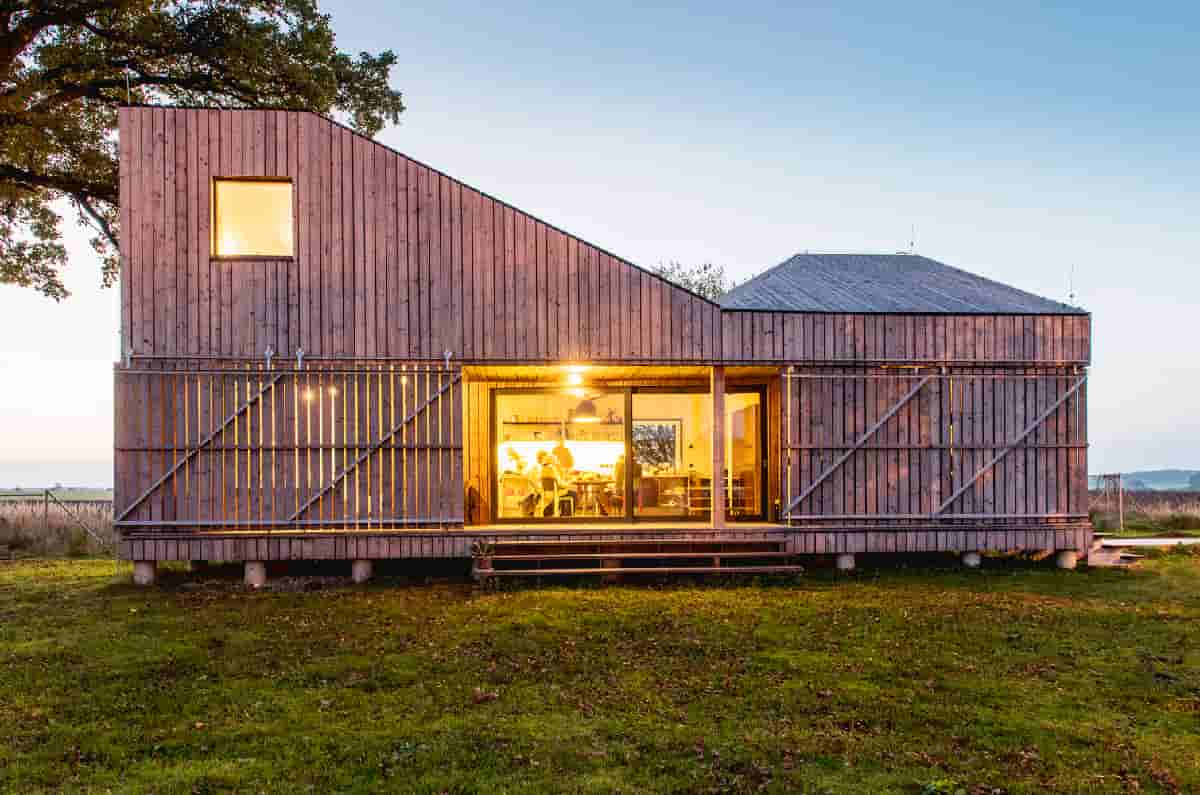
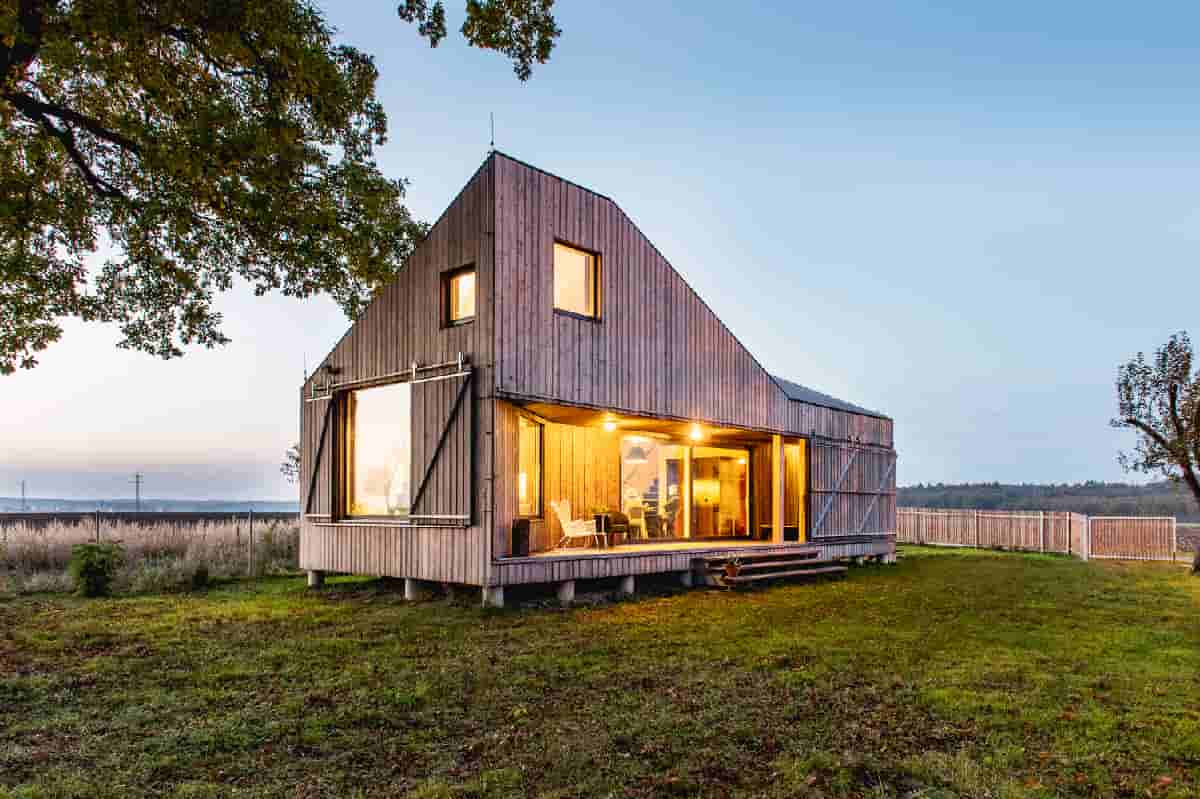
Moreover, an optical illusion of an even larger space is created by the very large glass panes and sliding doors, which link the living area inside to the eastern terrace outside and also by using the same flooring throughout.
An outdoor space, protected from the rain, surrounds the northern entrance and is graduated on the east side, providing a dry, outdoor area all year round.
Zilvar is designed as a low-energy house; the outer structure is a diffusion-open wall assembly. The larch timber-framed structure (2 by 4) is designed using KVH construction timber profiles.
The facade, roof and interior are all made of larch boards; however, the outside wood cladding uses a “burn and stain” technique, for longer–lasting life.
The main living space has large-format glazing to take advantage of solar gain in winter, whereas in summer, the large wooden sliding shutters provide protection against the sun radiation.
Each part, both inside and out, together with the sunlight, dramatically changes the shape of the house and makes you feel like an explorer in a canyon. It is a very refreshing and peaceful haven for its residents and their visitors design an open-plan, low-energy wooden house to improve the closeness of the family.




KaniKaChic is a Global Art and Swag Life Blog
KaniKaChic created W4Porn for billions of adult netizens around the world from art and swag life, I’ve got more swag than you do
tt-Artstudio is KaniKaChic‘s top swag-fashion-iconic image. At the same time, KaniKaChic created a revolutionary model of W4Porn for billions of adult netizens around the world. KaniKaChic’s top swag-fashion-iconic image is tt-Artstudio, and W4Porn’s revolutionary model is completely different from ordinary pornographic websites. Register at W4Porn is The Best Visual Entertainment for any Adult. KaniKaChic decentralizes W4Porn porn site on the Internet. W4Porn website is facing the internet public domain ecosystem, which is a very cool fashionable pioneering work. W4Porn is The Best Visual Entertainment for any Adult.
Why would you Spend 1 Euro/USD to Watch Pornographies at W4P/W4Porn.com from tt-Artstudio
tt-Artstudio is a Blog of Global Art and Trendy Life.
tt-Artstudio is a blog of global art and trendy life with the nomad offices in the two big cities, Antwerp, Belgium, and Milan, Italy, gathering the top art, craft, design, and trendy life in the world. tt-Artstudio collects the Internet ecology of billions of netizens worldwide. It is the blog with the largest number of daily visitors.
Om onvervangbaar te zijn, moet je altijd anders zijn.
Er zijn fascinerende beelden hier, en de fascinerende dag van samen! … xo KanikaChic
───────────────────────────────────────────────────────
Per essere insostituibili bisogna sempre essere diverso.
Ci sono immagini affascinanti qui, e l’affascinante giornata di insieme! …xo KanikaChic