History of the New at the Fine Art Society
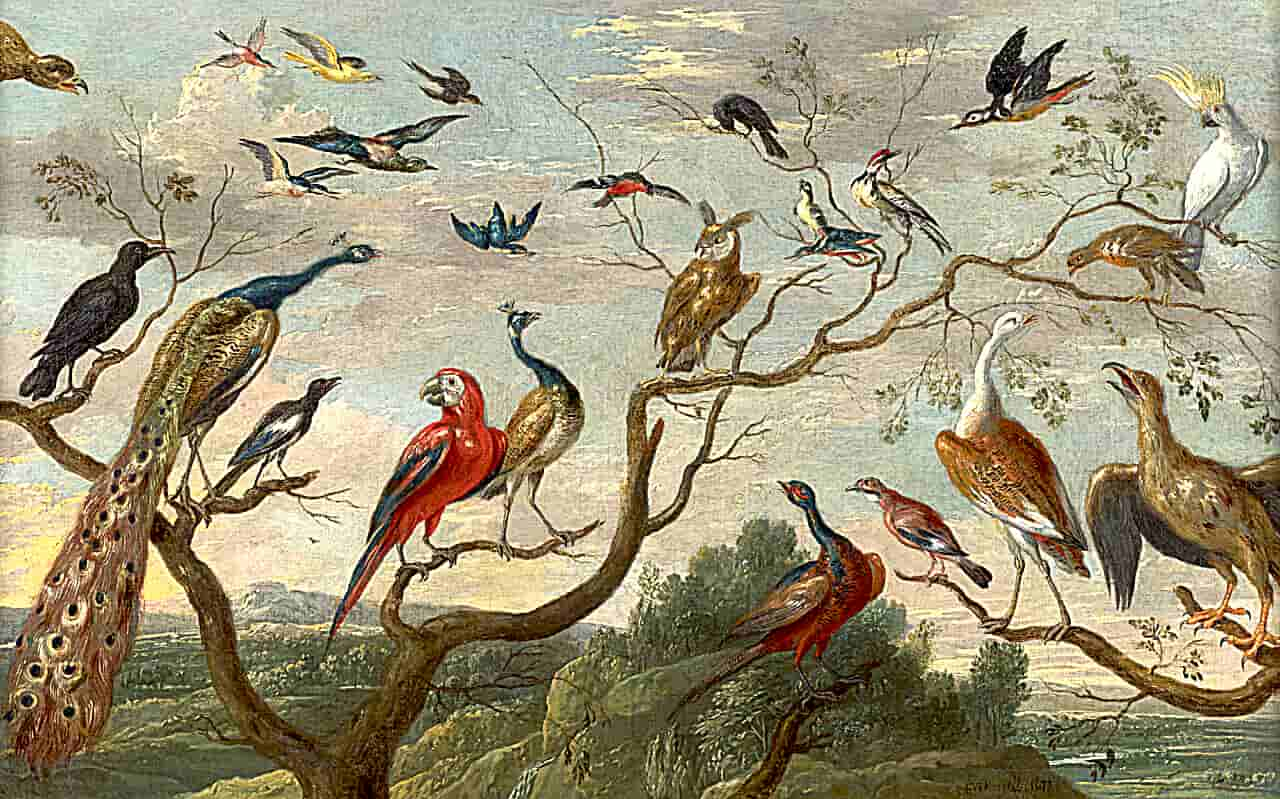 Jan van Kessel the Elder (1626-1679), Exotic Birds in Flight and Perched on Branches in a Mountainous Landscape, 1677, oil on canvas
The Fine Art Society’s summer exhibition will highlight the gallery’s specialisms and heritage, with the exhibition opening across both London and Edinburgh gallery spaces as they bring together an exquisite group of 40 works by pioneering British and Scottish artists who forged new ways of making art.
History of the New at The Fine Art Society includes an impressive collection of rarely-seen paintings, furniture and [decorative arts] from the 19th and 20th centuries. Notably, Sir John Lavery’s Portrait of a Lady in Grey and Black has not been seen in public since 1914 after it was bought 1901 by the present owner’s grandfather Nicol Paton Brown, a patron of the artist. Additionally, a devotional enamelware by Phoebe Traquair, the first woman member of the Royal Scottish Academy and leading figure within the Scottish Arts and Crafts movement who blurred the distinctions between fine and decorative arts, will form part of the exhibition highlights.
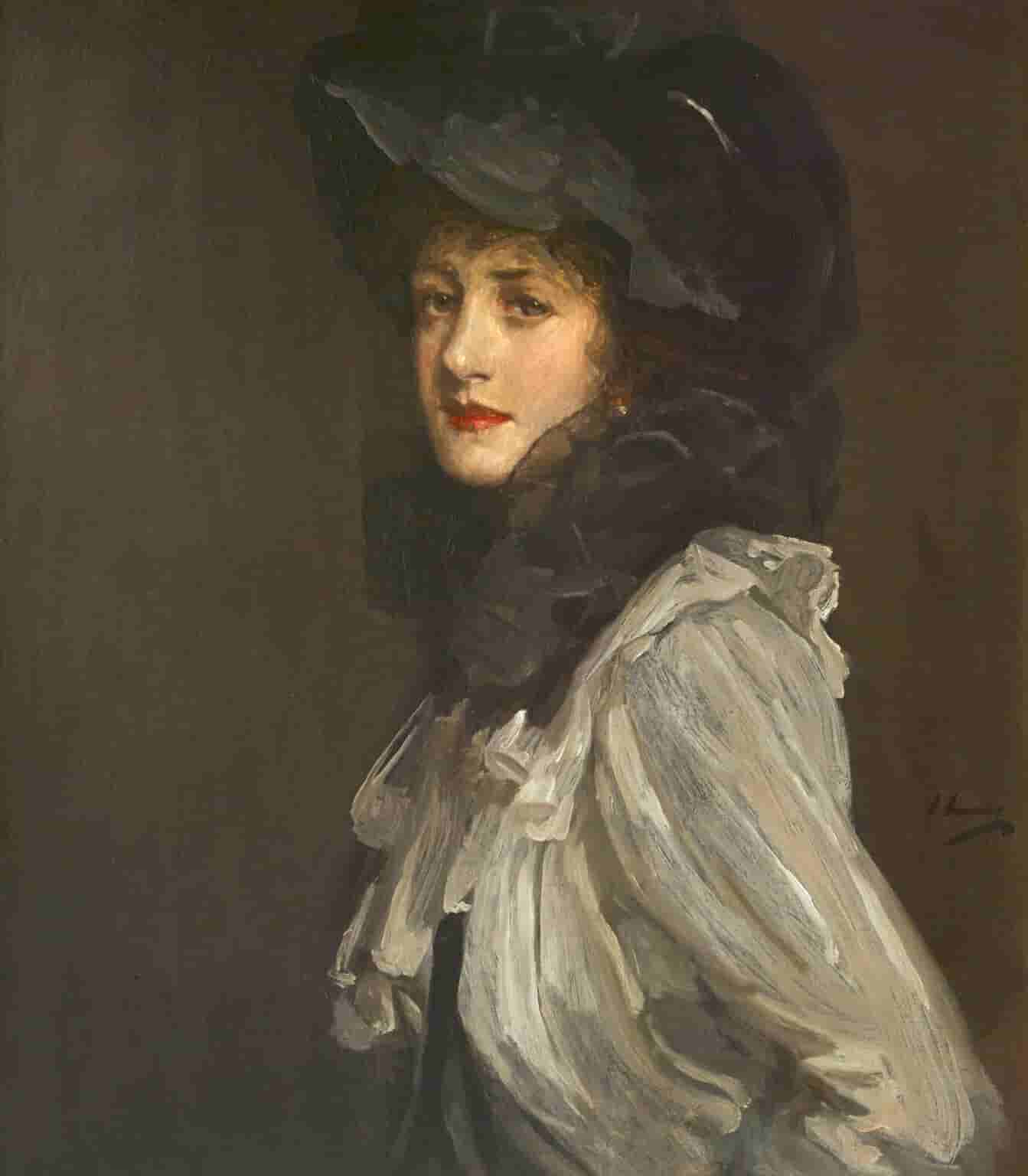 Sir John Lavery, Portrait of a Lady in Grey and Black, c.1902, Oil on Canvas
Alongside the outstanding work by British self-taught painter Keith Vaughan whose rare and early wartime gouache depicts a touching scene of a father and son in the Yorkshire dales, two large and impressionistic landscapes by William McTaggart – one of Scotland’s most daring nineteenth-century painters – show his evolution from a Victorian painter to an Impressionist and Expressionist. His idiosyncratically anticipates much of the development of modern art
Watercolours
Featuring a masterfully painted and fantastical oil painting by John Byrne from the late 1960s to important prints by Paul Nash and Kenneth Martin, radically modern watercolours by Arthur Melville and Charles Rennie Mackintosh, to a selection of paintings by the Glasgow Boys who defined the history of Scottish art and placed themselves at the forefront of British art, this exhibition showcases over 40 prominent Scottish and British artists as historical fine and decorative arts come together.
See also: Turner Prize 2023 Nominees Announced
Scottish art forms a critical part of History of the New at The Fine Art Society, with works by outstanding Scottish Colourist F.C.B Cadell and a striking gouache painting by George Henry which will be displayed alongside furniture by Daniel Cottier whose style came to define the Aesthetic Movement and is credited with the spread of Aestheticism in the United States.
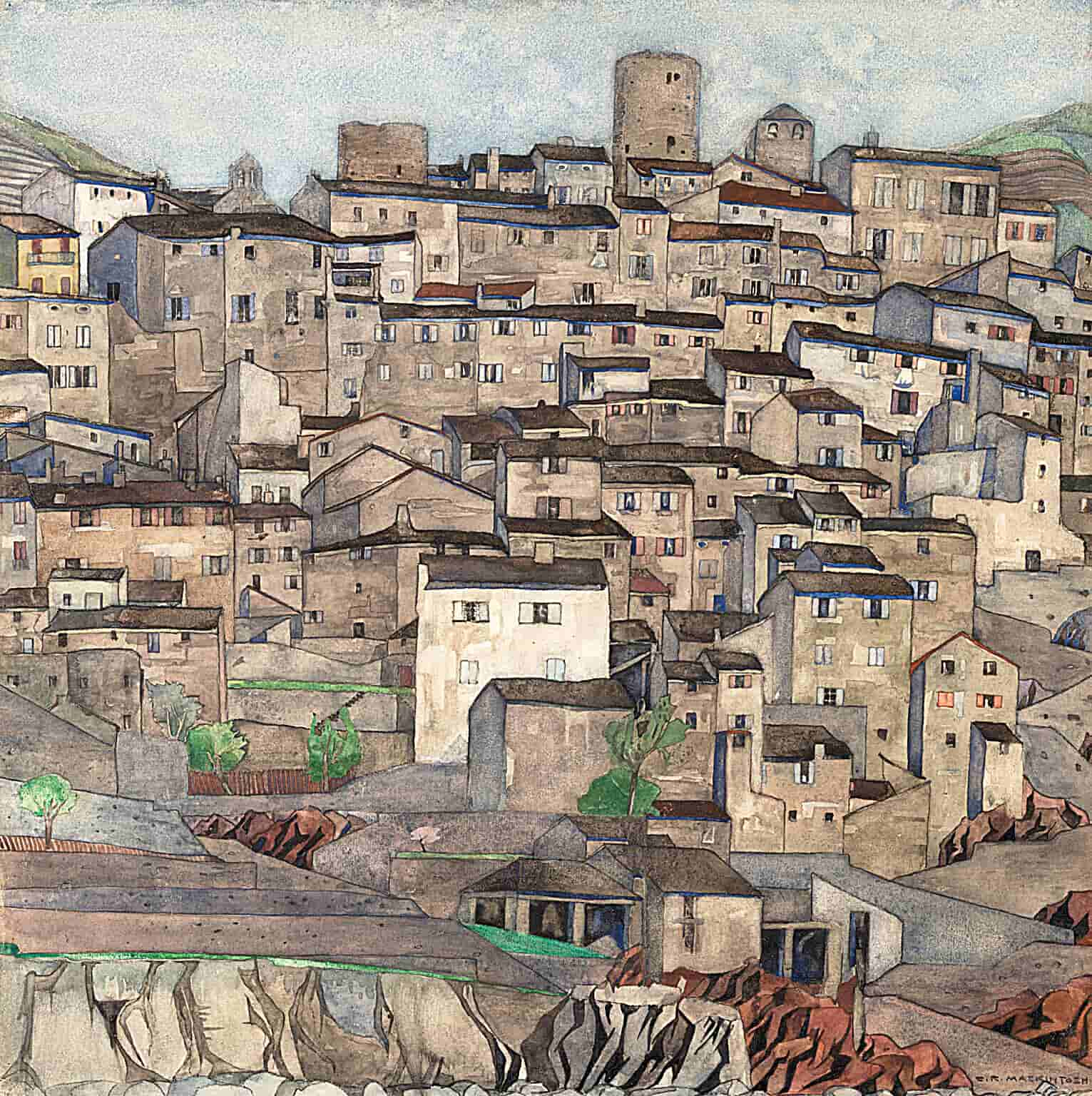 Charles Rennie Mackintosh, Palada, Pyrénées-Orientales, c. 1924-1927, Pencil and Watercolour
A rare and important watercolour painting by Charles Rennie Mackintosh will appear on the market for the first time after it was bought from the artist’s memorial exhibition in 1933. A tour de force amongst Mackintosh’s late watercolours of the South of France, it has been at the Scottish National Gallery of Modern Art for many years and is a testament to the international regard with which this artist is held.
Highlights also include a rare decorative works including an exceptional Glasgow-style metalwork door plate by Talwin Morris, a Persian style tile by [William de Morgan, and a jewel-like oil “La Lavandeuse” by founding member of the Camden Town Group Harold Gilman, as well as Joseph Crawhall‘s “In the Paddock” which has not been on the art market since the 1950s.
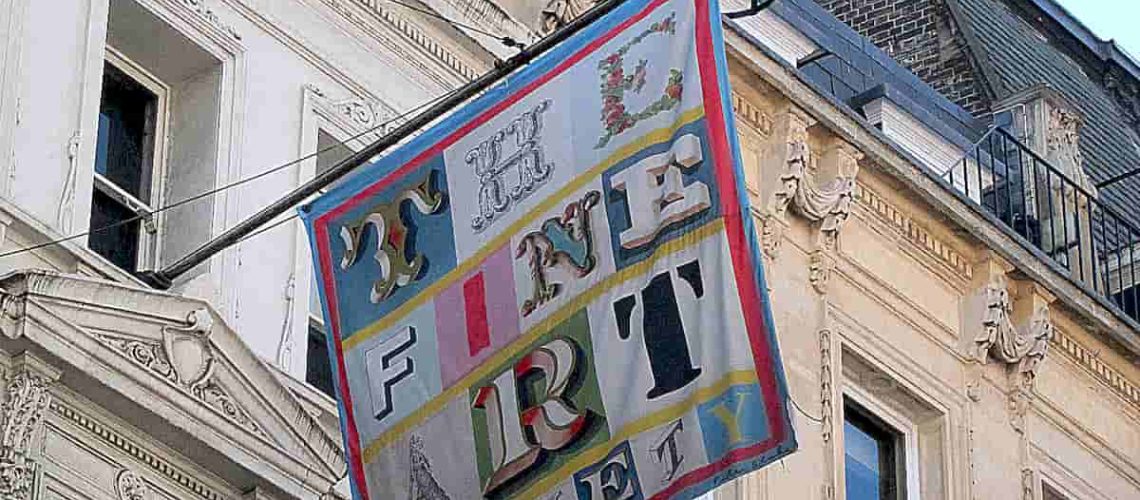
One of the UK’s oldest fine art dealers, The Fine Art Society, has an established reputation for its expertise in British art and design from the 19th and 20th centuries and Scottish art from the 17th century to today. The Fine Art Society’s integrated gallery spaces in both London and Edinburgh draws together the unique aesthetic and expertise of both physical galleries while also offering new digital initiatives. The exhibition will run from 2nd June – 29th July and will also be available to explore online.
Festival
History of the New at The Fine Art Society is part of the inaugural NT Art Month – a new festival in Edinburgh that celebrates the incredible arts quarter in Edinburgh’s New Town. This is an opportunity to enjoy these festivities further afield in London as History of the New will also be opening at The Fine Art Society’s Soho gallery. Just a stone’s throw away from the capital’s world-famous art district, the gallery space occupies a multi-storey Grade-II listed Georgian townhouse, which opened in October 2020.
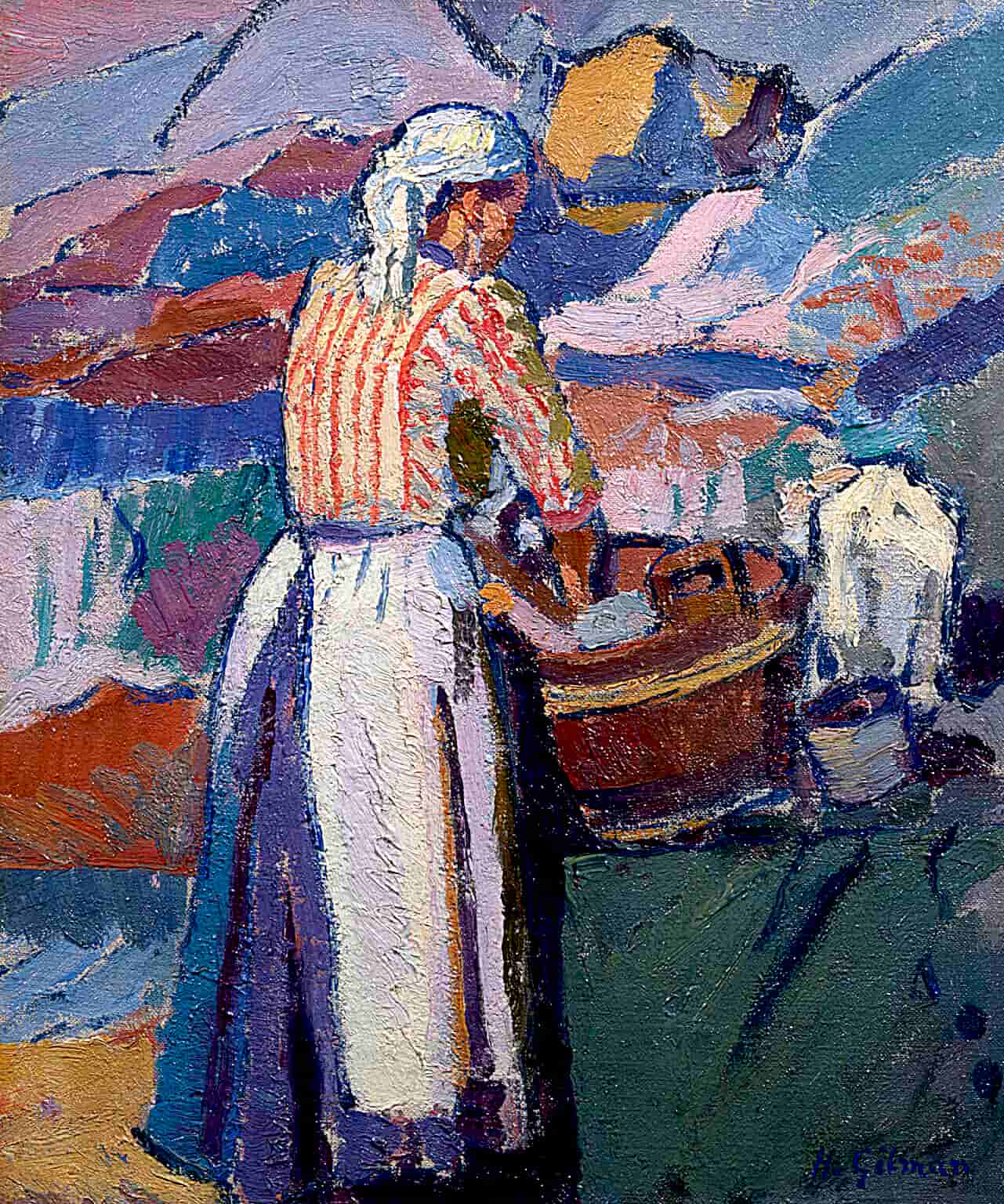 Harold Gilman, The Washerwoman (La Lavandeuse), c. 1911, Oil on Canvas.
Emily Walsh, Managing Director of The Fine Art Society, comments, “Our summer show brings together artists who found themselves working at the threshold of the modern. It was this self-awareness and urge to make it new that motivated them as individuals and, for some, brought them into movements. They rejected the received wisdom of their day in favour of forging new ways of making art. They saw the world around them differently and made their mark telling us how. Amongst the myriad paintings and objects that will be on display in our two galleries in Edinburgh and London this summer are works from the 19th and 20th centuries; British and Scottish artists who worked as pioneers and whose work came to define a moment.
About The Fine Art Society
Established in 1876, The Fine Art Society’s two gallery spaces in London and Edinburgh handle British and Scottish art, design, and decorative arts from the C18th to the post-war period. The Fine Art Society’s London premises in Soho is set over three floors of an elegant Georgian townhouse off Carnaby Street. An expansive gallery space over two floors is our Scottish base in the heart of Edinburgh’s New Town. It specialises in Scottish art from the seventeenth century to the present day and provides advice to collectors and public institutions on private sales, auction, framing and conservation.
History of the New at The Fine Art Society
Friday 2nd June – Saturday 29th July 2023
London: 25 Carnaby Street, London W1F 7DE
Edinburgh: 6 Dundas Street, Edinburgh EH3 6HZ
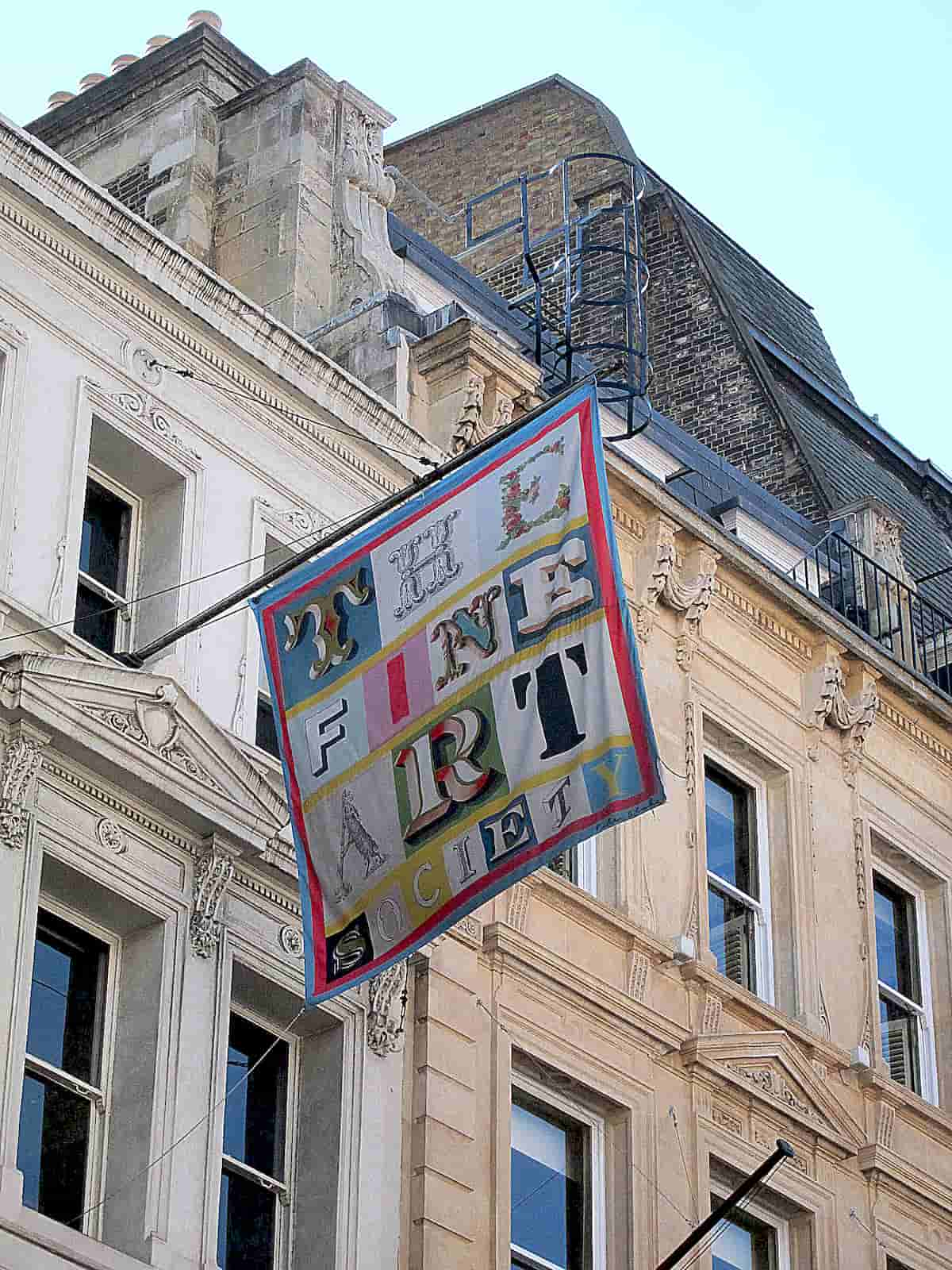 The Fine Art Society, London
Om onvervangbaar te zijn, moet je altijd anders zijn.
Er zijn fascinerende beelden hier, en de fascinerende dag van samen! xo
─────────────────────────────────────────────────────
Per essere insostituibili bisogna sempre essere diverso.
Ci sono immagini affascinanti qui, e l’affascinante giornata di insieme! xo KanikaChic