Celebrated as China’s “ceramic capital,” Yixing is a city with a rich history of pottery production, whose newly opened UCCA Clay Museum, artistry into the 21st century with artful bravado.
▏Celebrated as China’s “Ceramic Capital” Yixing
Celebrated as China’s “ceramic capital,” Yixing is a city with a rich history of pottery production that goes back over a millennium—its famed zisha (purple clay) teapots were the first designed specifically for brewing tea. And yet, as mass production eclipsed the artistry of hand-thrown pottery, this legacy risked fading into mere nostalgia. Enter Kengo Kuma & Associates, whose newly opened UCCA Clay Museum propels Yixing’s pottery artistry into the 21st century with artful bravado.
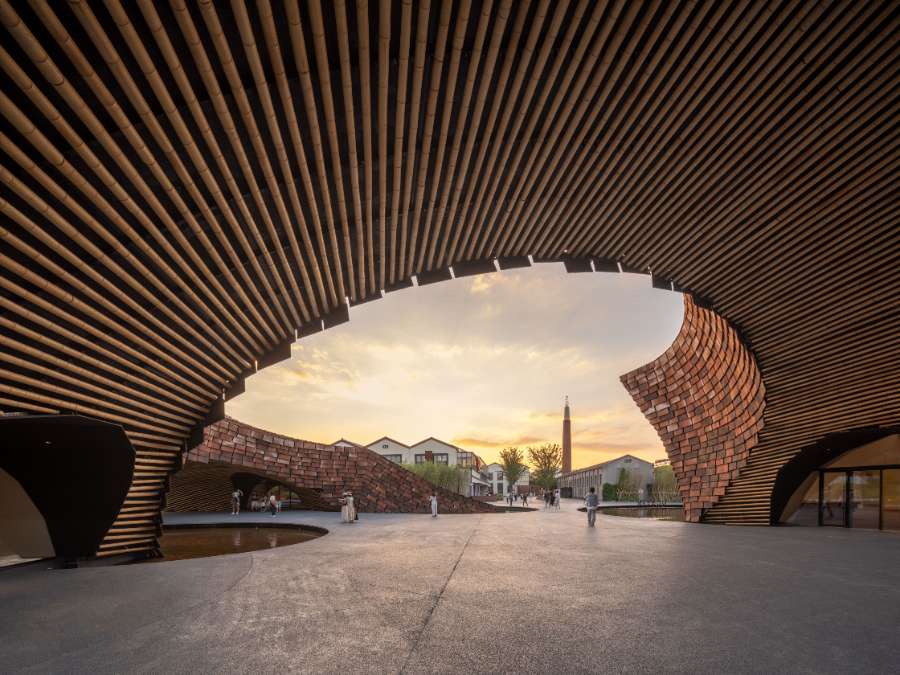
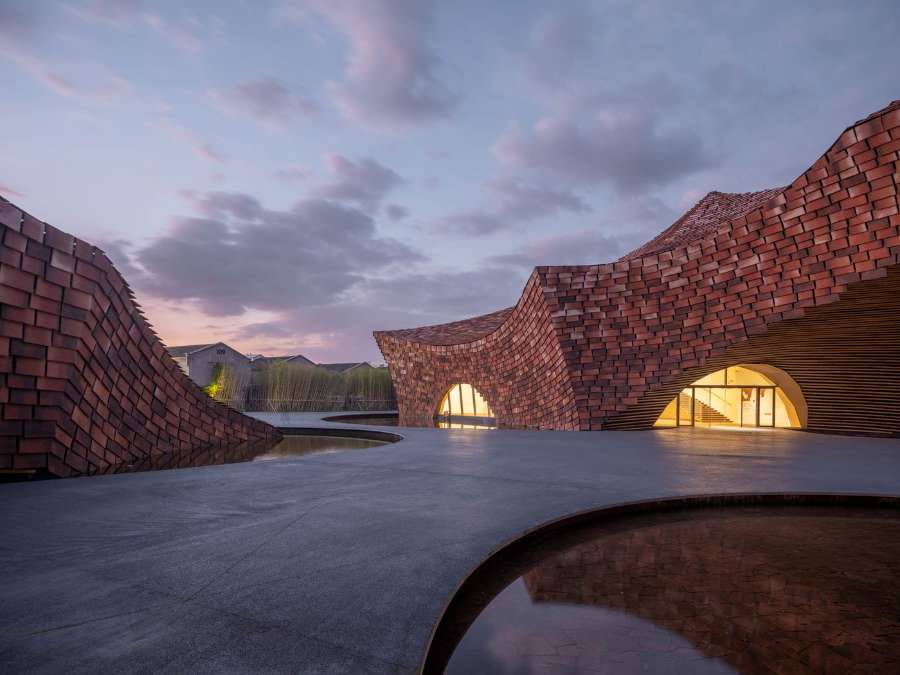
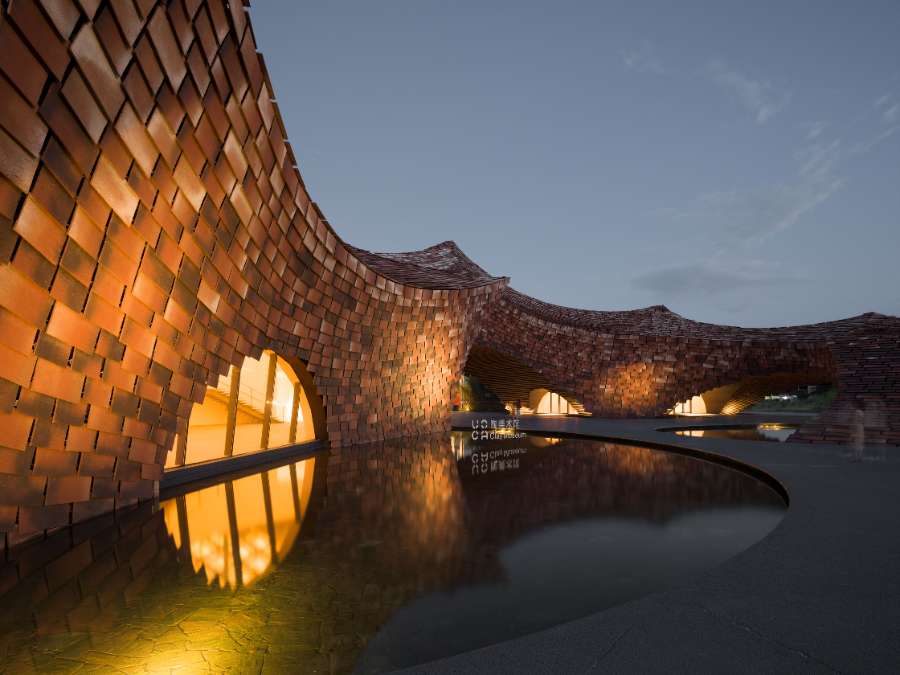
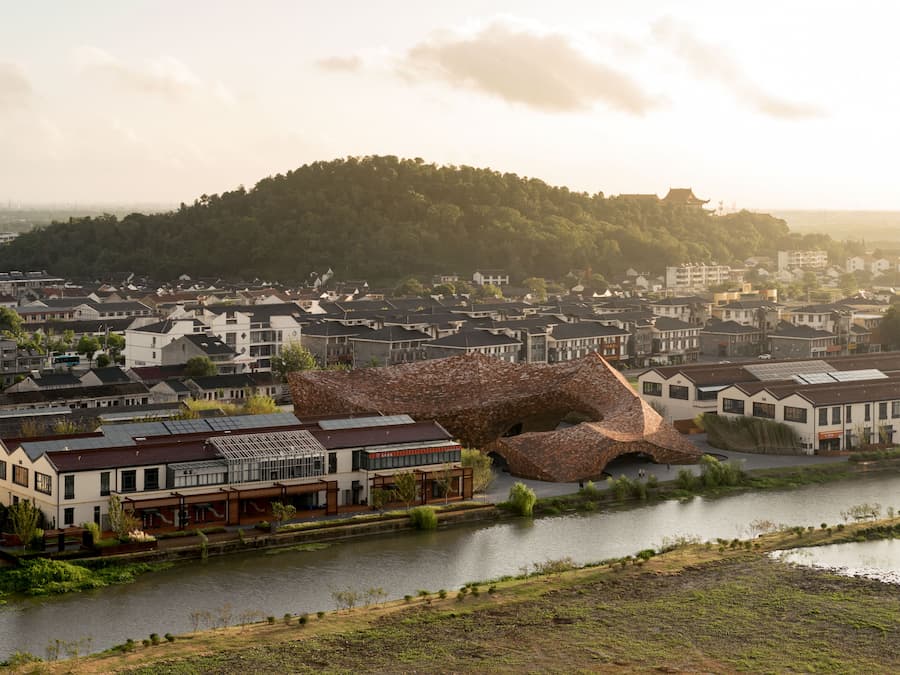
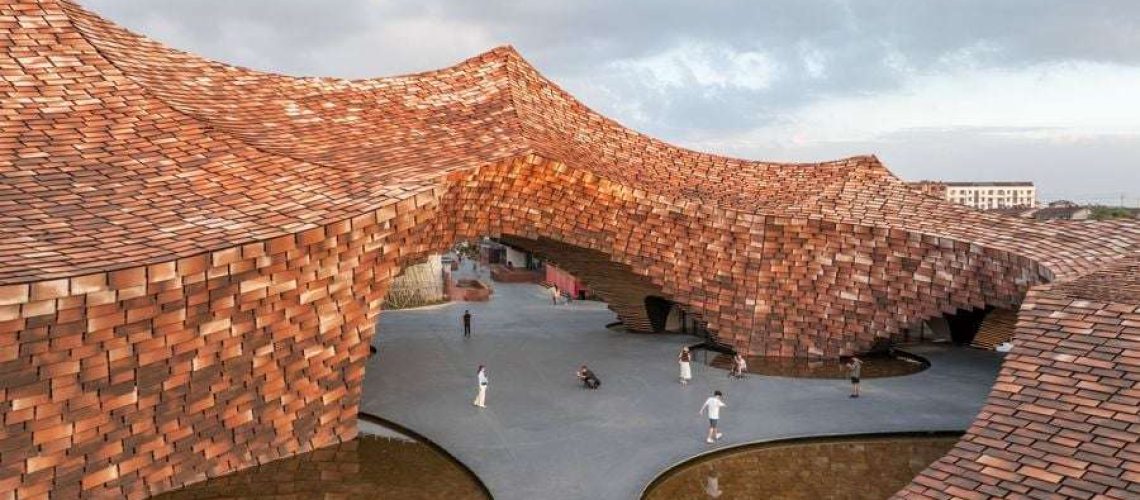
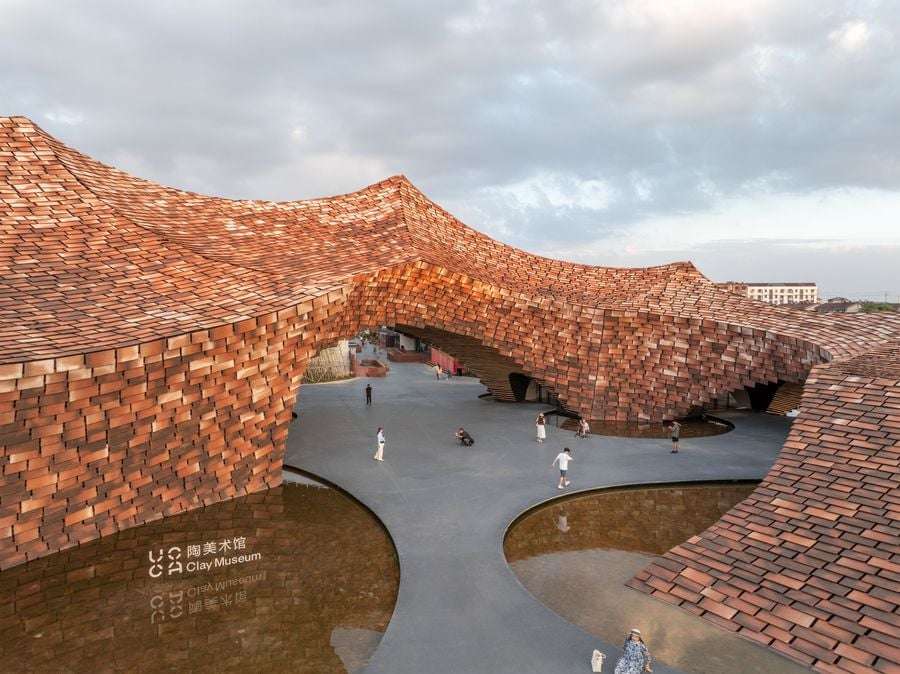
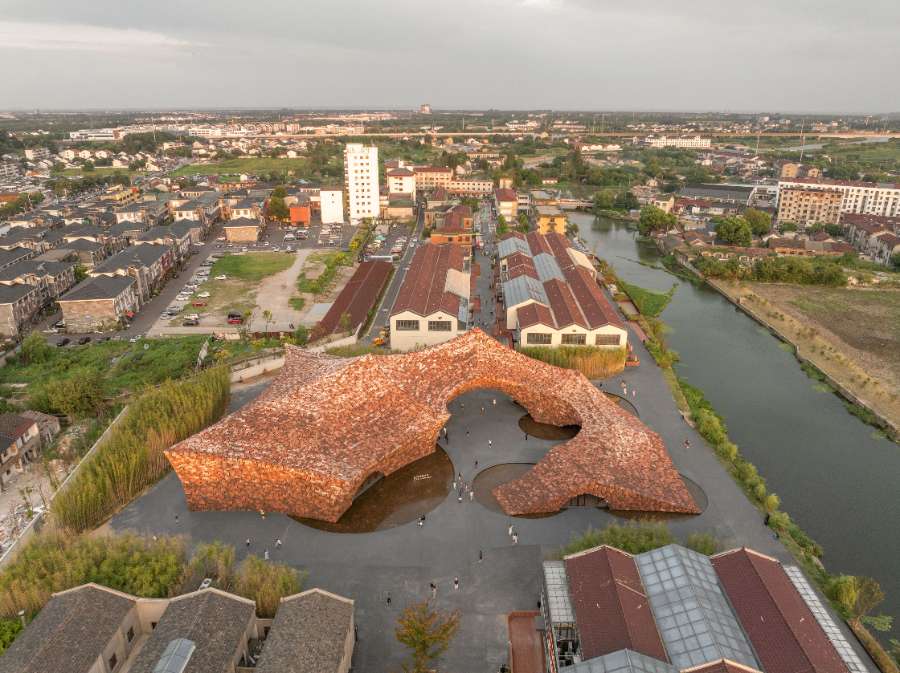
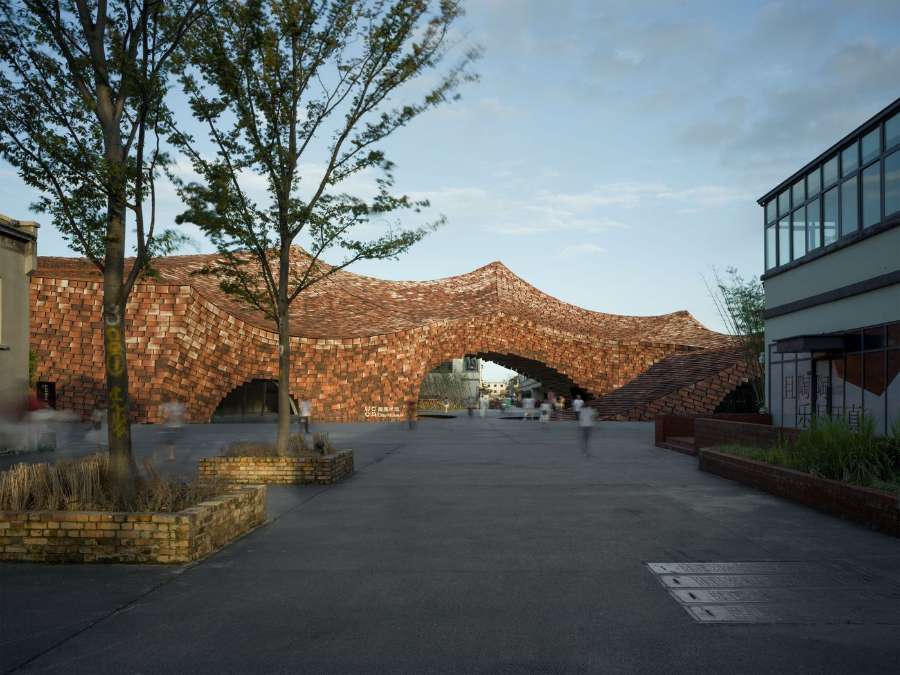
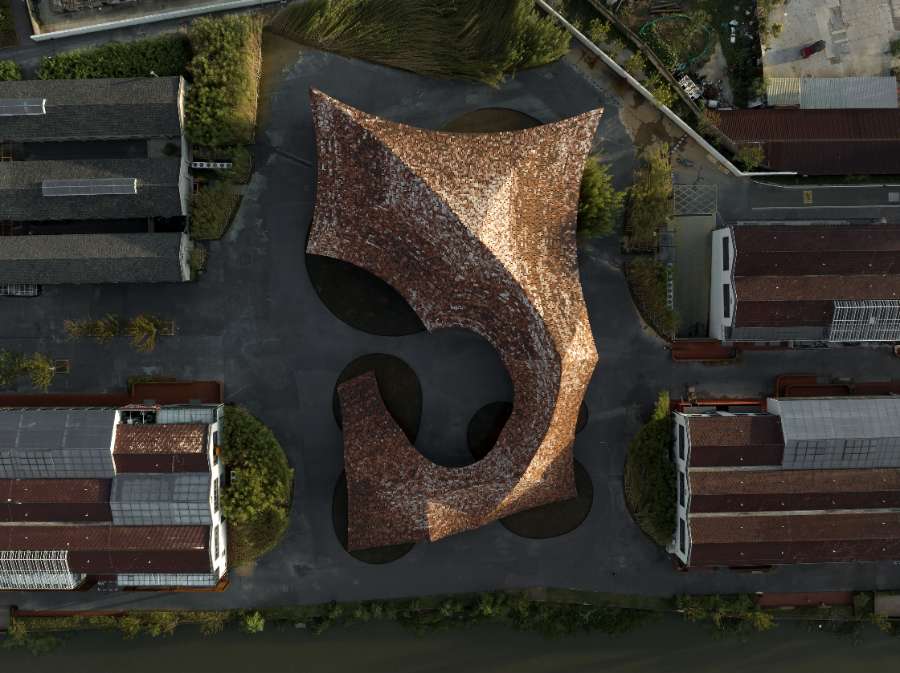
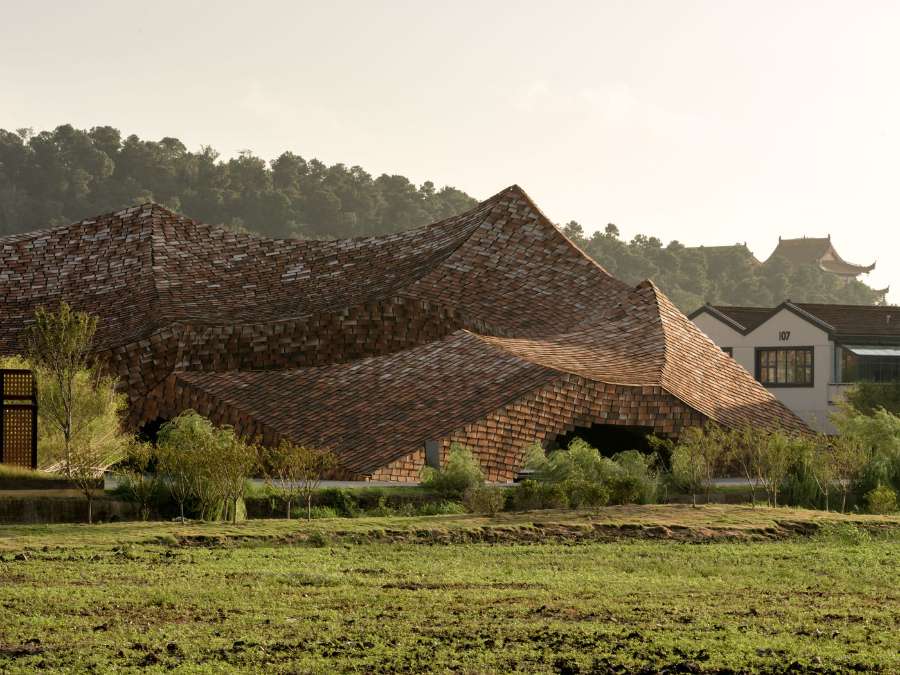
Located in a once-industrial area, the building’s wave-like form, described by the architects as “an inverted shell structure carved by virtual spheres”, stands out against the former factories. Appearing as if sculpted by water and wind over time, the building’s fluid volume is further enriched by the gradient of darker and lighter earthy tones of the ceramic tiles—the project’s defining characteristic.
▏A Mirage Rising Like a Blazing Kiln
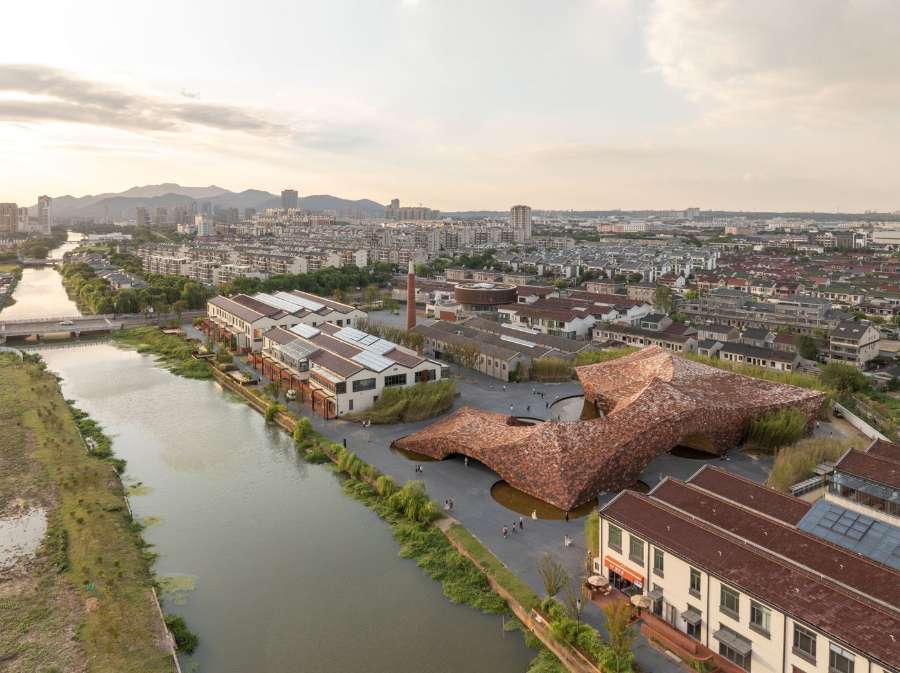
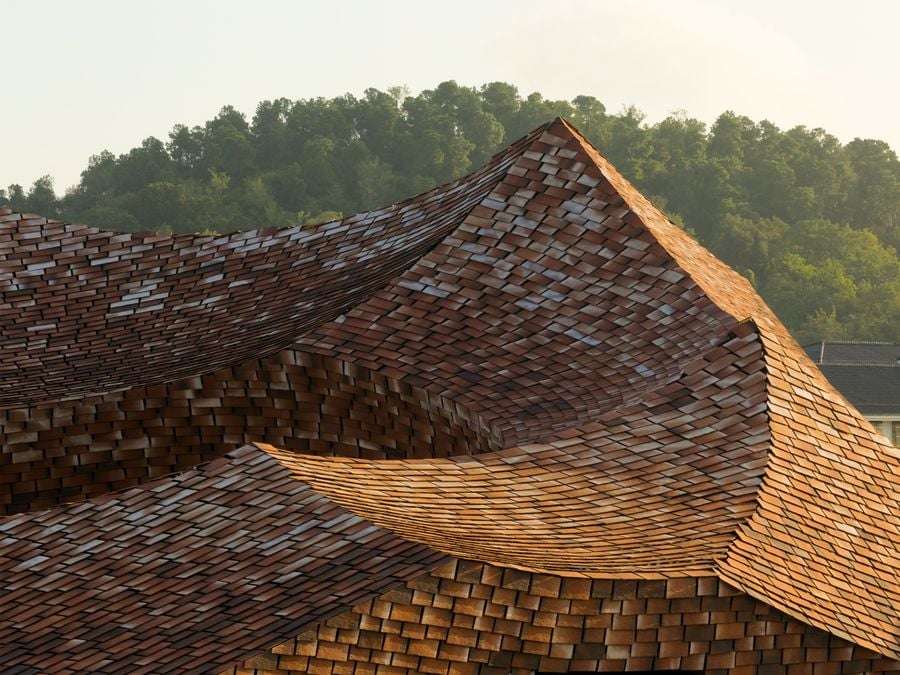
Kuma’s approach to architecture is not about imposing newness but about excavating the soul of a place and translating it into a built form as this project successfully attests. Rising like a kiln-fired mirage, the building’s undulating form echoes the silhouette of the nearby Shushan Mountain, while its earthy colour palette—the result of a gargantuan yet intricate composition totalling 3,600 ceramic tiles, all handcrafted in collaboration with local artisans—evokes the chromatic shifts that clay undergoes when fired. Designed using advanced digital tools, the Museum’s artisanal sensibility fosters a dialogue between both heritage and innovation, signalling that the past need not be preserved behind glass but be reimagined in ways that allow it to prove inspiring.
▏The Area’s Regeneration as a Culture Hub for a New Generation of Ceramists
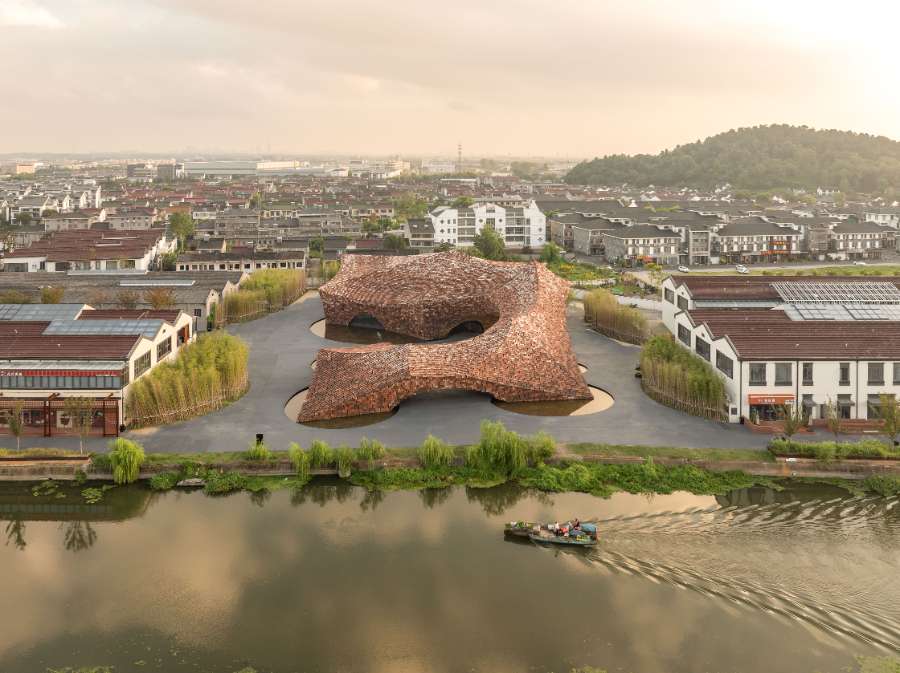
Kuma’s decision to opt for handmade instead of industrially produced tiles—by far the most challenging aspect of the project considering the vast number required—not only enhances the building’s soulful materiality but also evocatively aligns with the plans for the area’s regeneration as a culture hub for a new generation of ceramists. Moreover, the use of locally sourced tiles underscores the museum’s environmental consciousness, in reducing its carbon footprint while playing an important role in enhancing thermal performance through allowing the structure to regulate internal temperatures naturally.
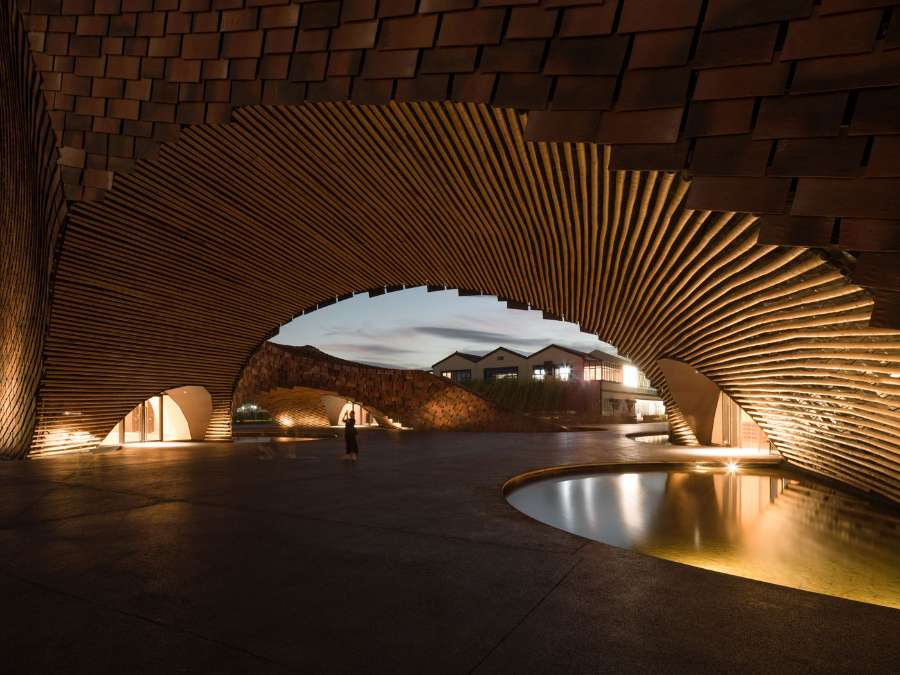
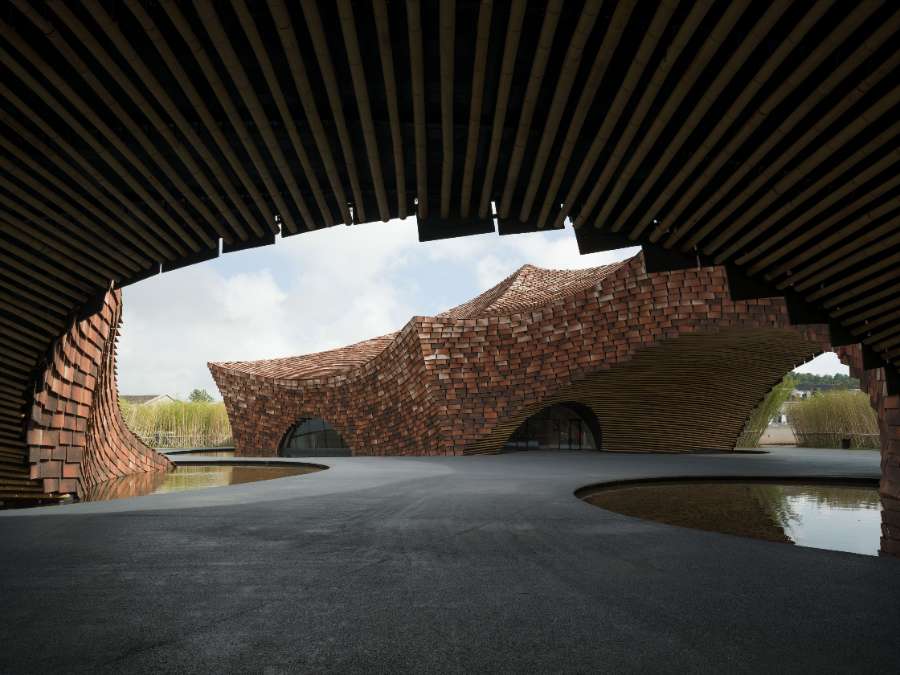
Featuring wide arched openings that frame views of the adjacent canal, the museum’s undulating structure encourages movement, inviting visitors to pass through, blurring the boundaries between the building and the public plaza it inhabits. Nestled beneath the mu flowing canopy are three distinct volumes—housing the lobby and exhibition hall, a multipurpose events space, and a café—connected by an arched passage lined with bamboo canes. Circular reflecting pools lined with left-over tiles, further enhance the building’s sculptural quality.
▏The Minimalist Interiors with a Ceramic Artefacts on Display
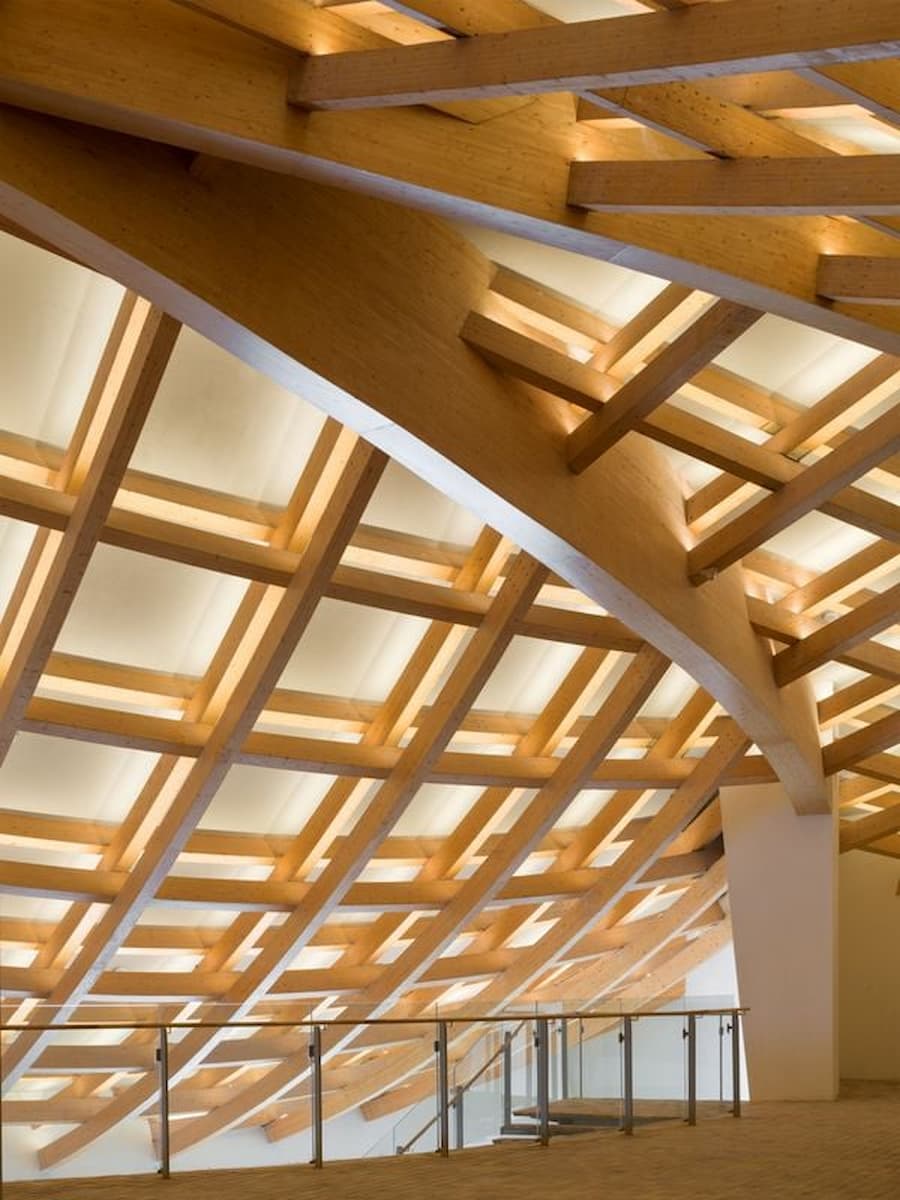
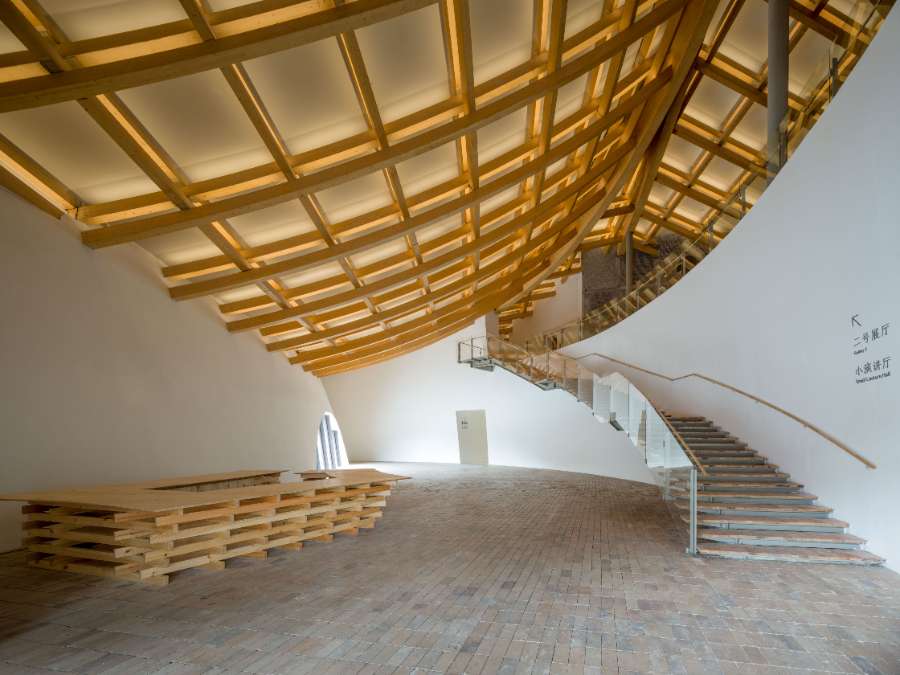
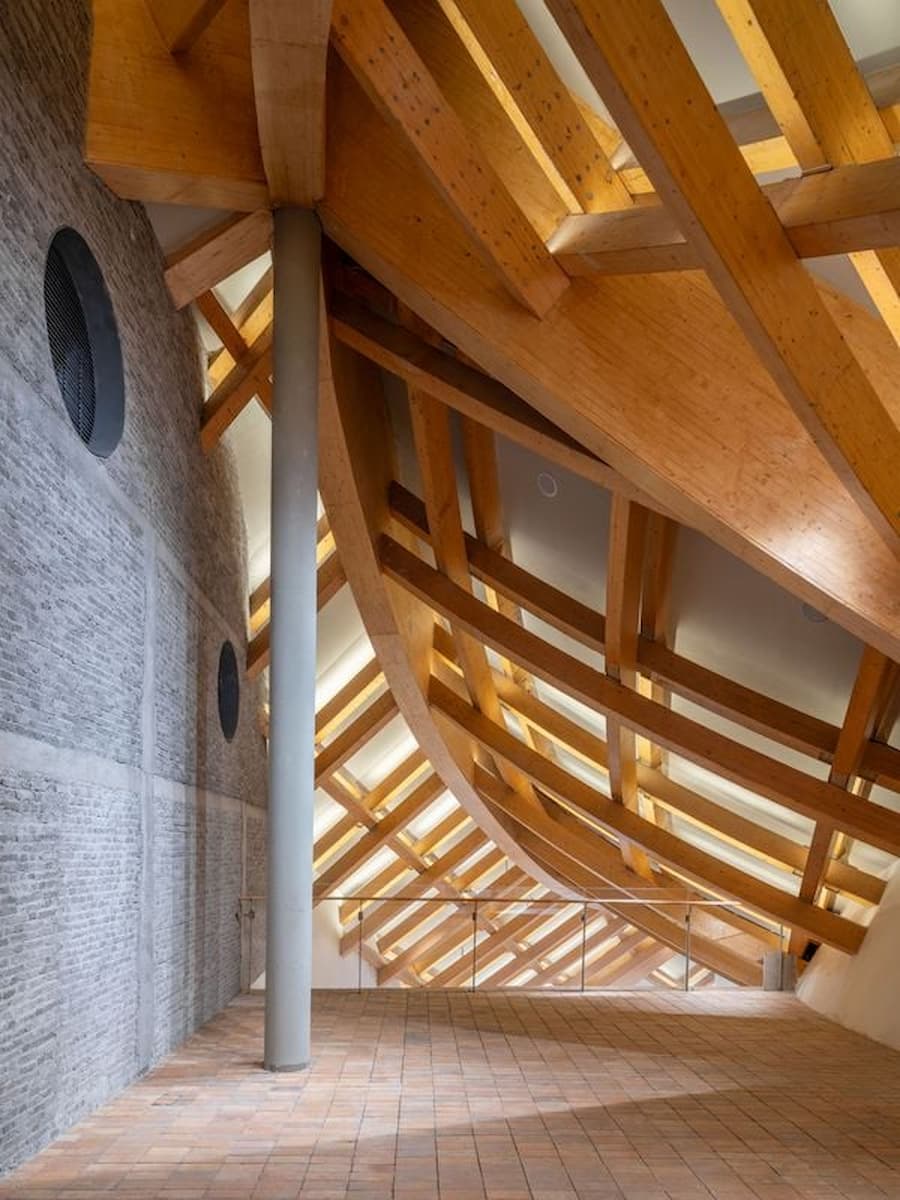
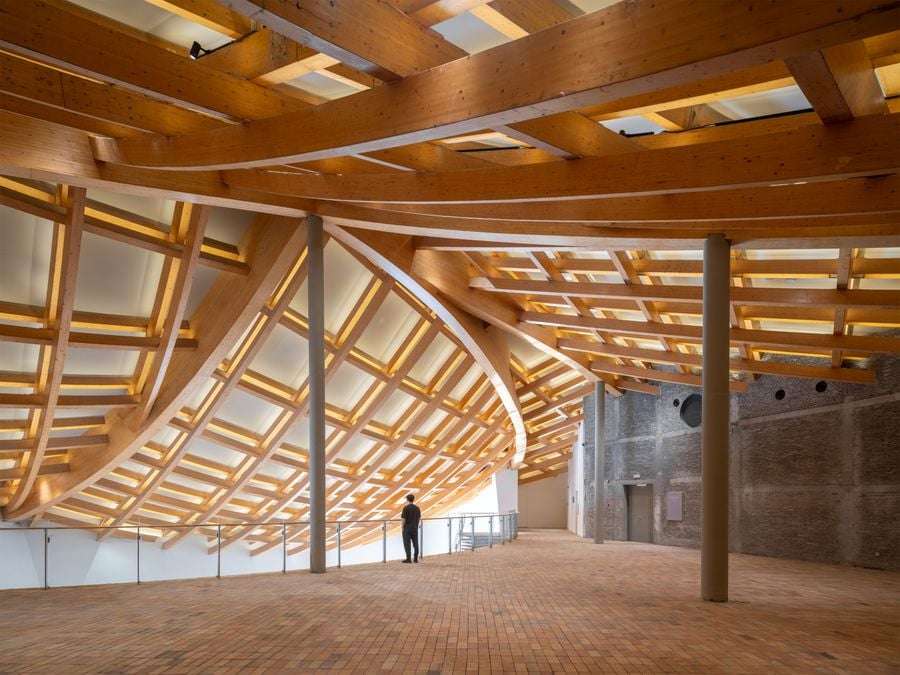
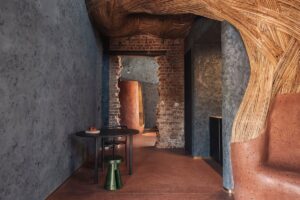
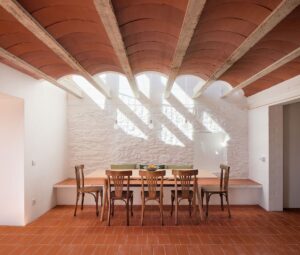
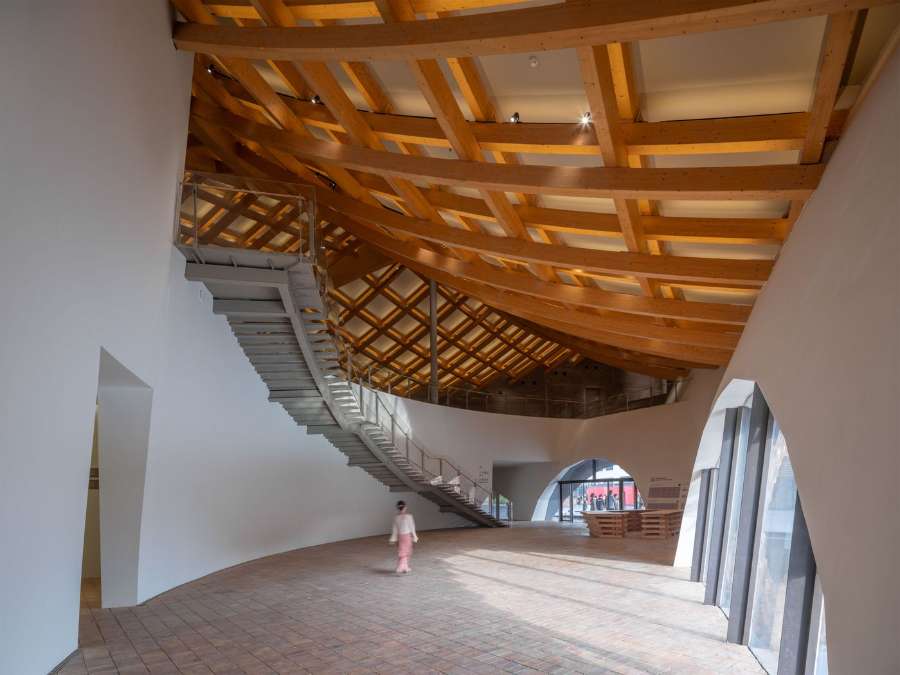
Inside, the museum’s spatial choreography is one of subtlety—natural light filters courtesy of carefully positioned skylights and arched glazed openings, cast shifting patterns across the floors, while the exposed wooden roof structure adds a sense of warmth and tactility. The later also imbues the otherwise ascetic, minimalist interiors with a subtle vernacular sensibility that complements the ceramic artefacts on display.
Kengo Kuma has long championed the belief that tradition and technology are not adversaries but accomplices. The UCCA Clay Museum embodies and embraces this ethos, promoting the idea that the future of design lies not in erasing the handmade, but in elevating it through technology.