MIRIN House, reinterprets the idea of house, not just as a shelter or a form, but as a sensory journey, It seeks to awaken all five senses: sight, sound, touch, smell, and even taste
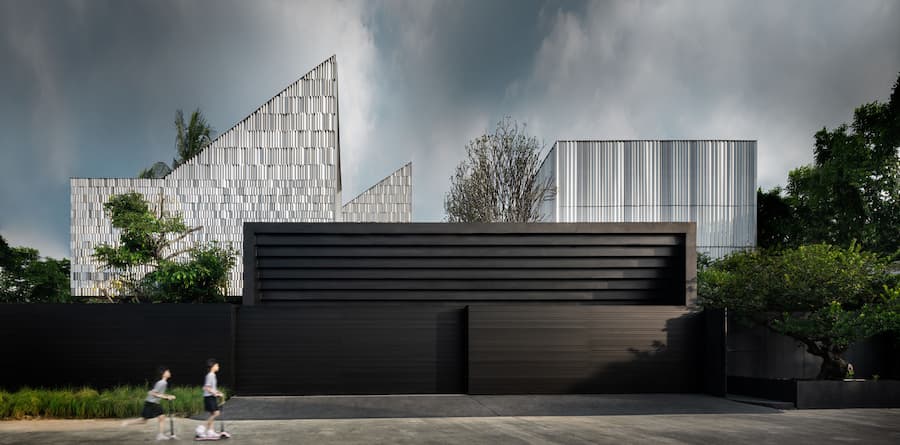
▏MIRIN House, Reinterprets the Idea of House
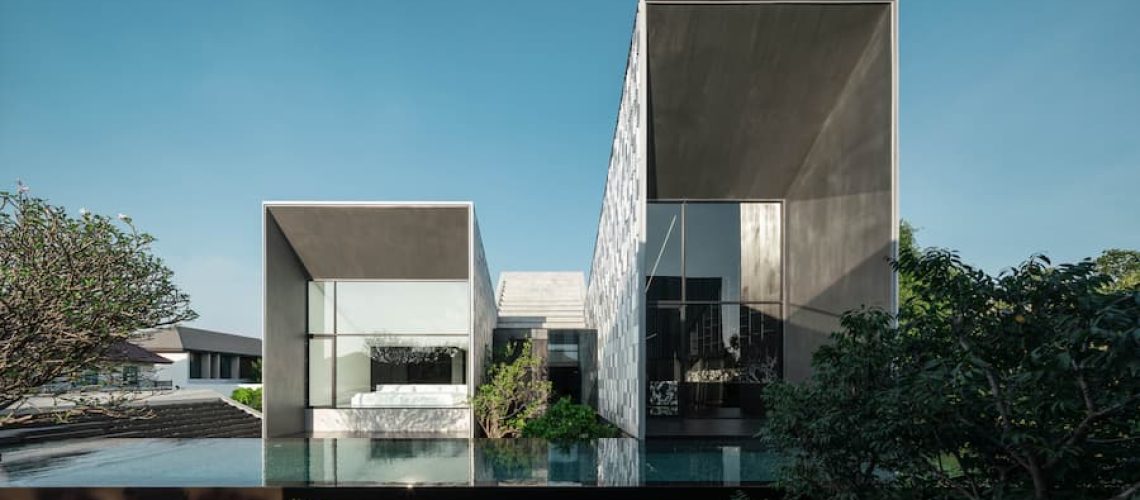
In the outskirts of Bangkok, Thailand, stands a house that didn’t begin with the usual question of “how should we live?” Instead, it began with something more profound: How can a house become an experience? MIRIN House, designed by famous Bangkok-based firm A A D design (Ayutt and Associates design), reinterprets the idea of house, not just as a shelter or a form, but as a sensory journey]. [It seeks to awaken all five senses: sight, sound, touch, smell, and even taste, crafting a space that’s not merely seen or used but deeply felt, a place where one can grow alongside the architecture.
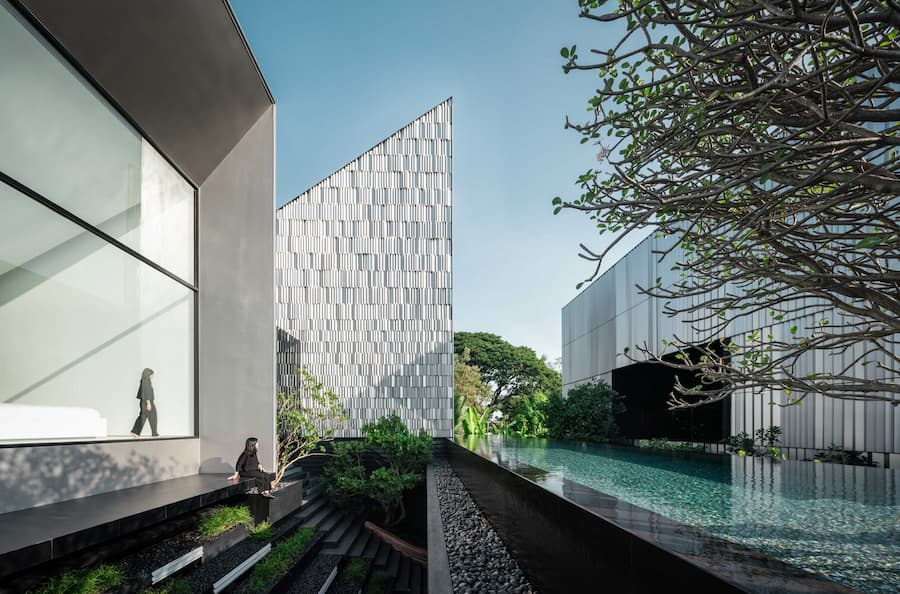
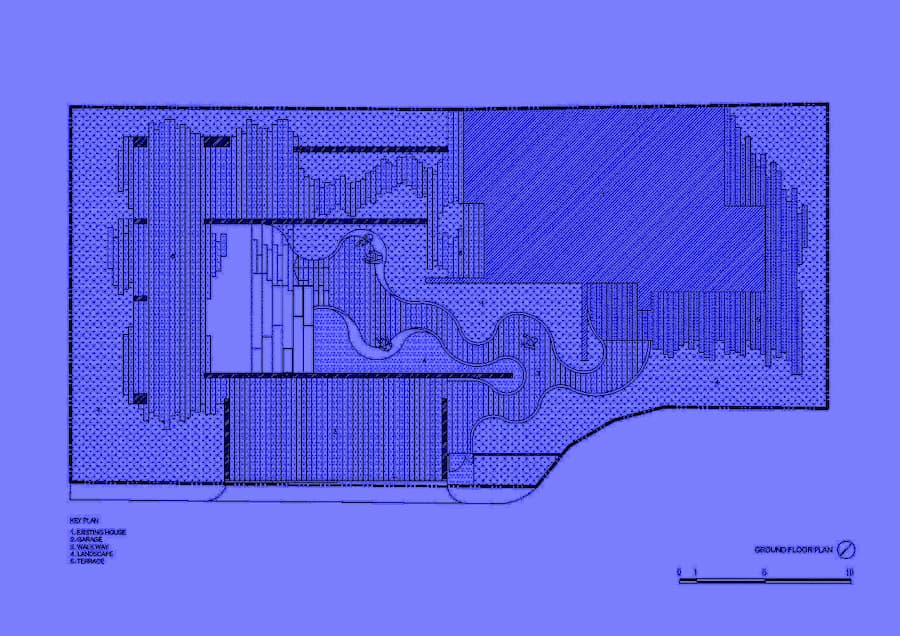
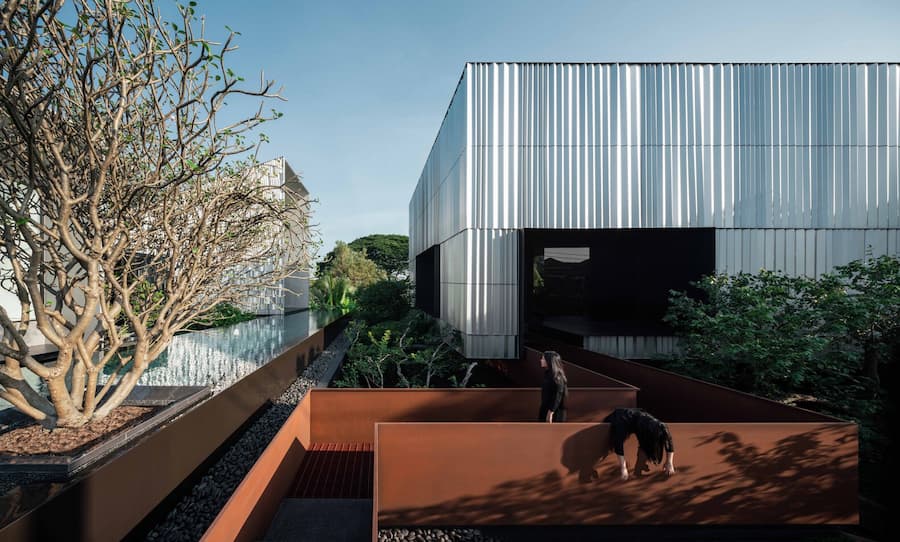
▏MIRIN House unfolds from the very first step onto the land
The house is named after the homeowner’s daughter, a dedicated medical specialist whose life in the bustling city rarely offers him moments of pause. To create a private sanctuary of calm, he acquired the land adjacent to his existing home, envisioning a new dwelling where time slows down. With a swimming pool and layers of greenery, this was meant to be a retreat. But for A A D design, it became something more: an opportunity to design an immersive experience of living.
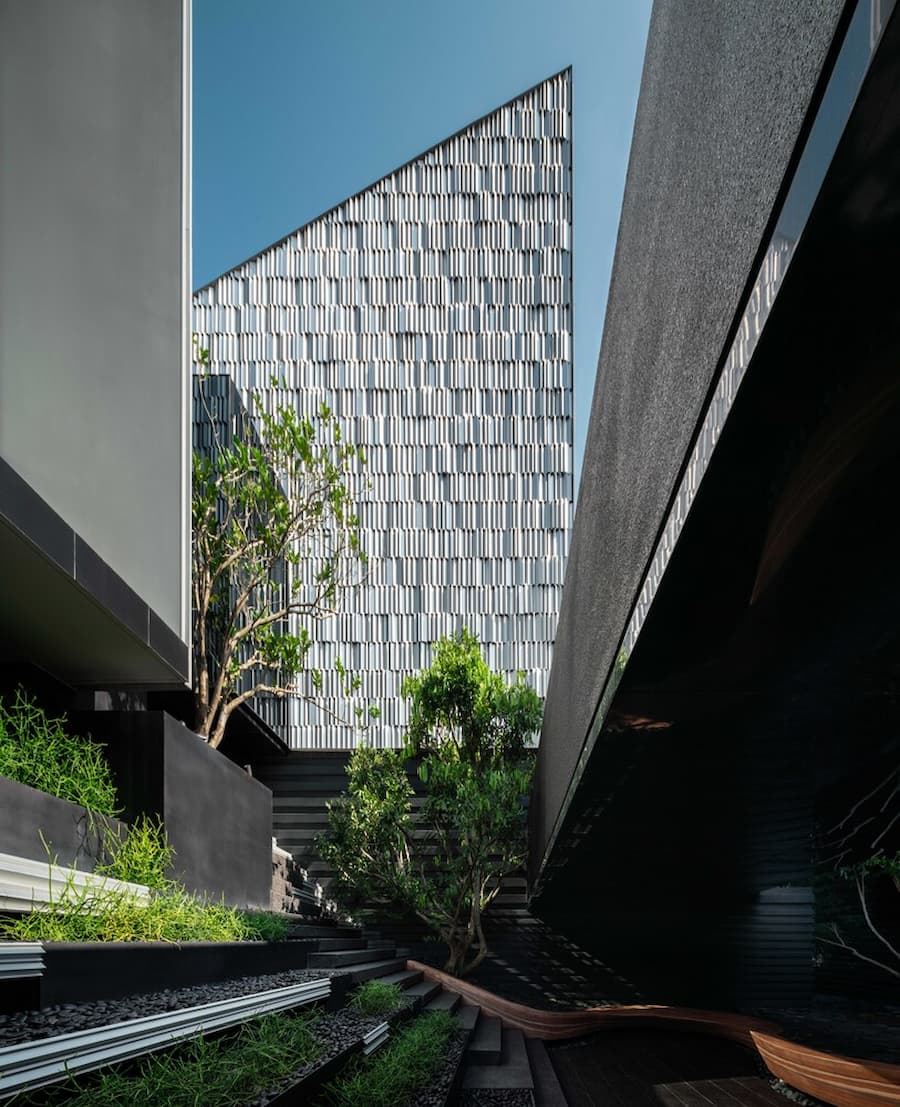
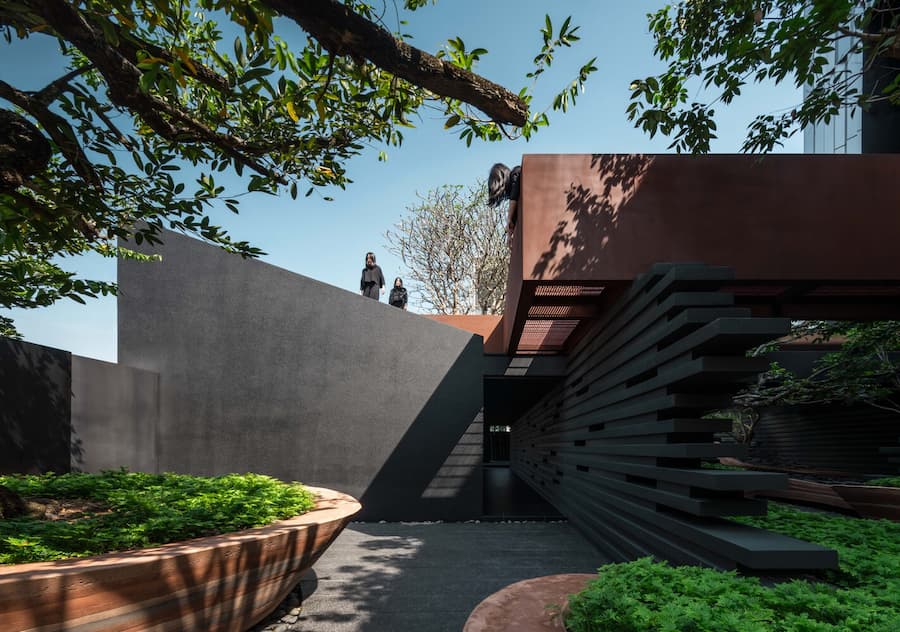
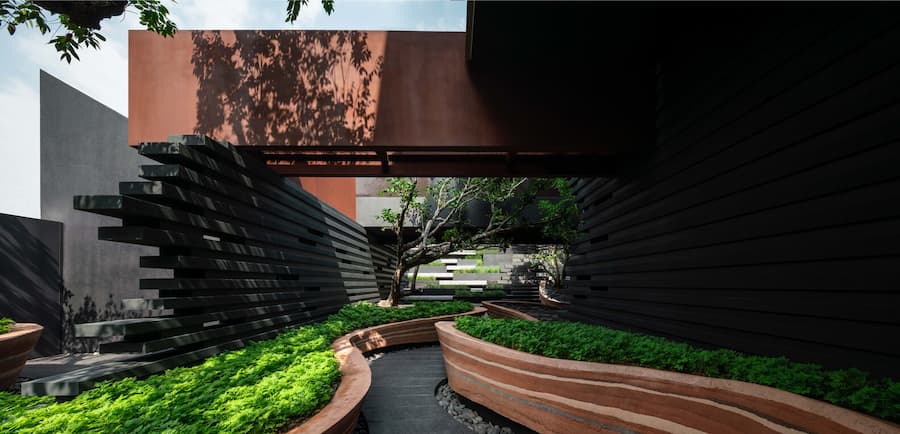
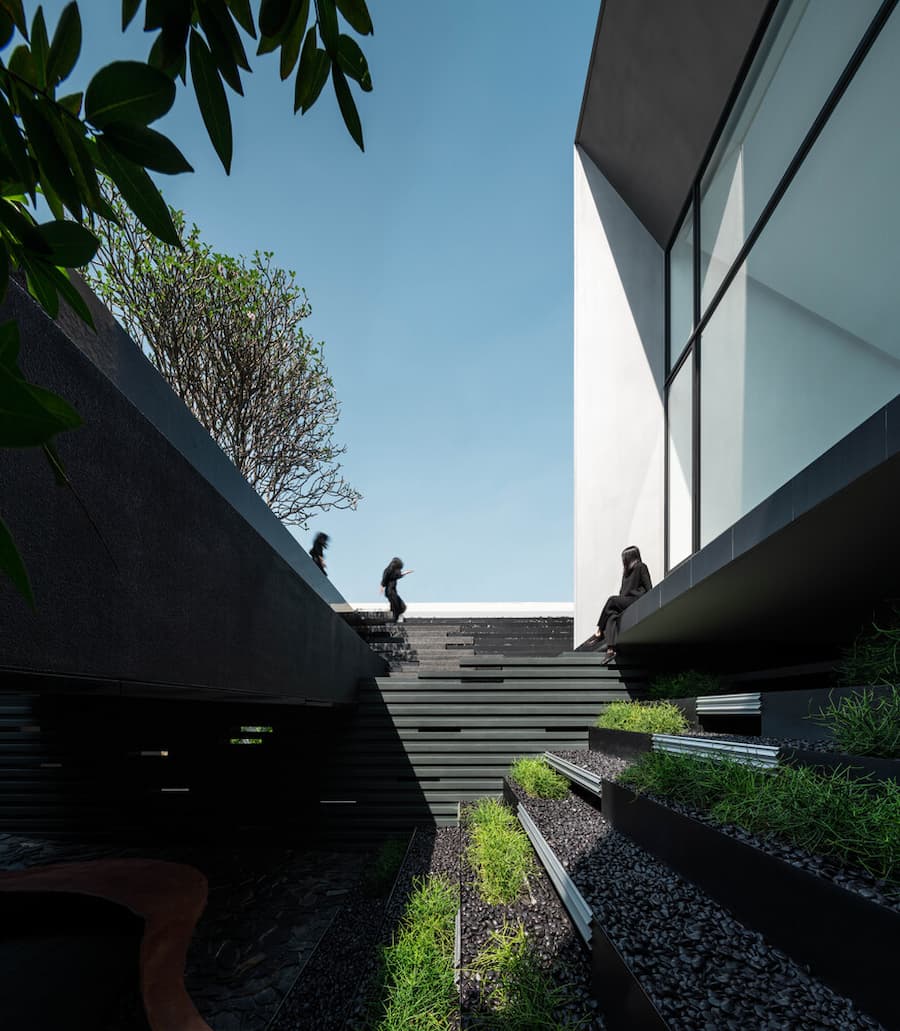
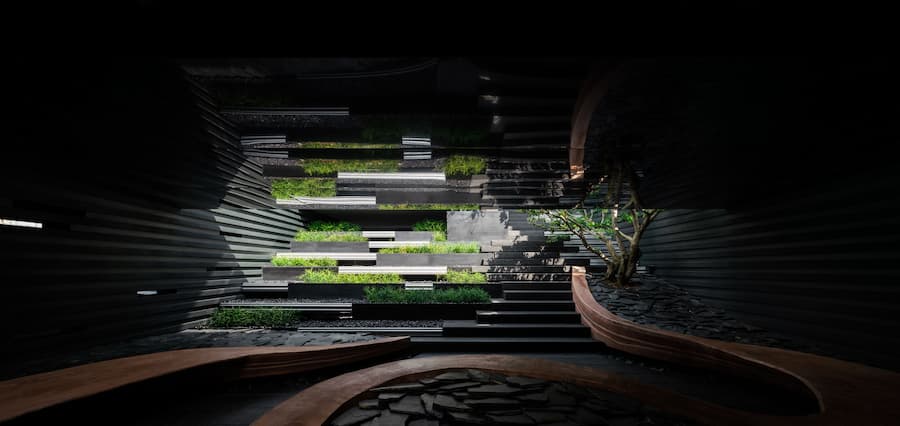
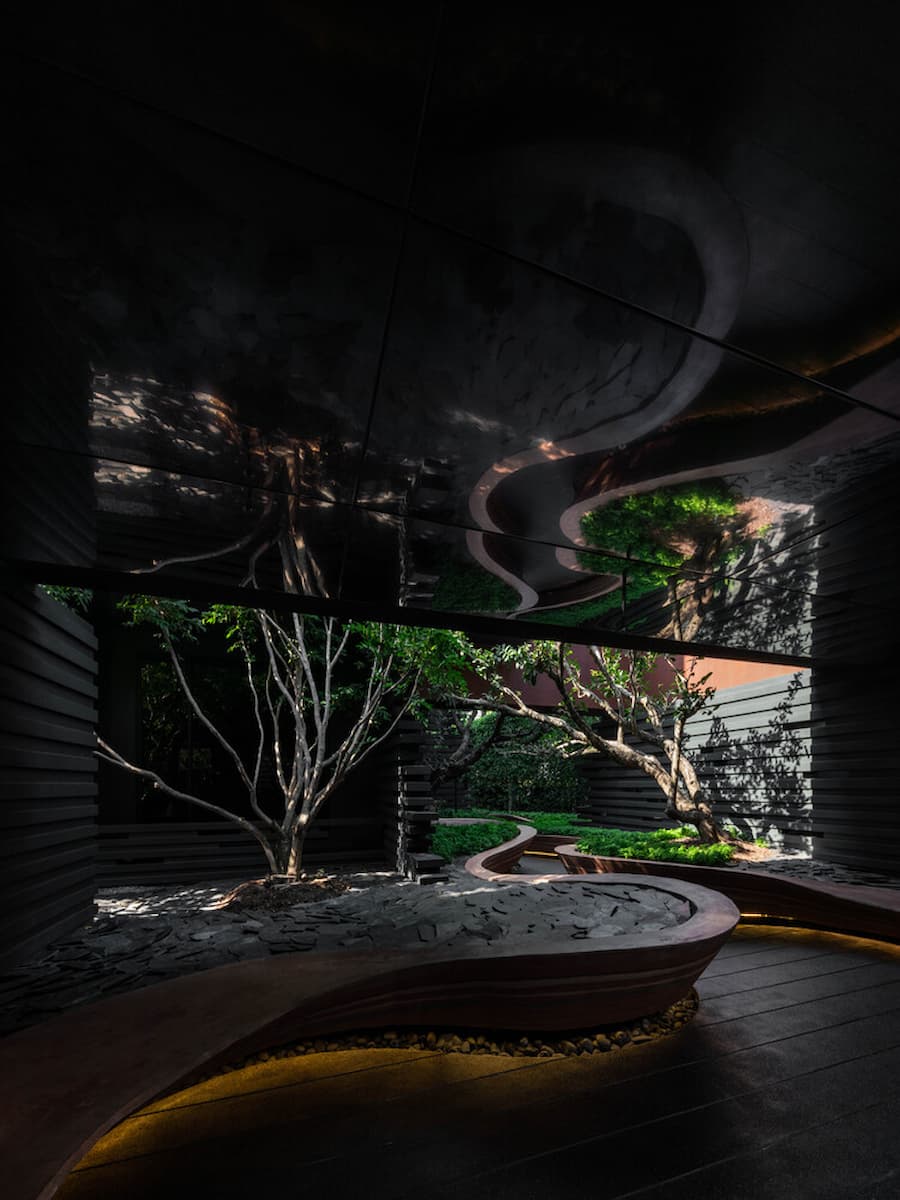
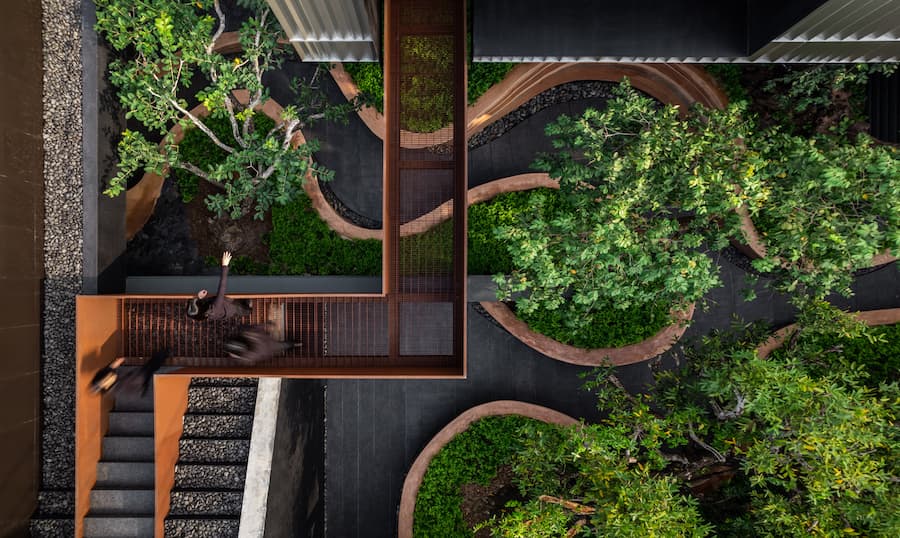
Rather than designing a standard pool villa, A A D design approached the house as a narrative told through landscape, pathways, light, wind, sound, and nature, woven into a seamless whole. MIRIN House unfolds from the very first step onto the land. A gradually ascending curved pathway guides visitors inward, serving as a gentle psychological transition from the chaos of the outside world to a peaceful internal realm. Every design element, the terrain, garden, lighting, water sounds, airflow, and shadows, plays a part in shaping the mood of this arrival journey.
The sloped landscape increases the surface area, allowing for more trees to be planted on the compact plot. The compressed-rammed earth walls double as planters and informal seating, inviting touch and interaction without stooping. This carefully choreographed promenade uses form, ventilation, light modulation, and sound to stimulate the senses. Even in rain, the sound of droplets hitting leaves and stone surfaces becomes part of the intended experience. The pathway doubles as a discreet water channel, reminiscent of a natural stream. Interestingly, the entrance to the house itself is hidden. Visitors instinctively understand the direction without being explicitly shown, experiencing a worm’s eye perspective that makes the house feel grander and more dimensional than its modest size, one-bedroom, one-living-room function.
▏The House Thus Offers Three Distinct Perceptual Layers
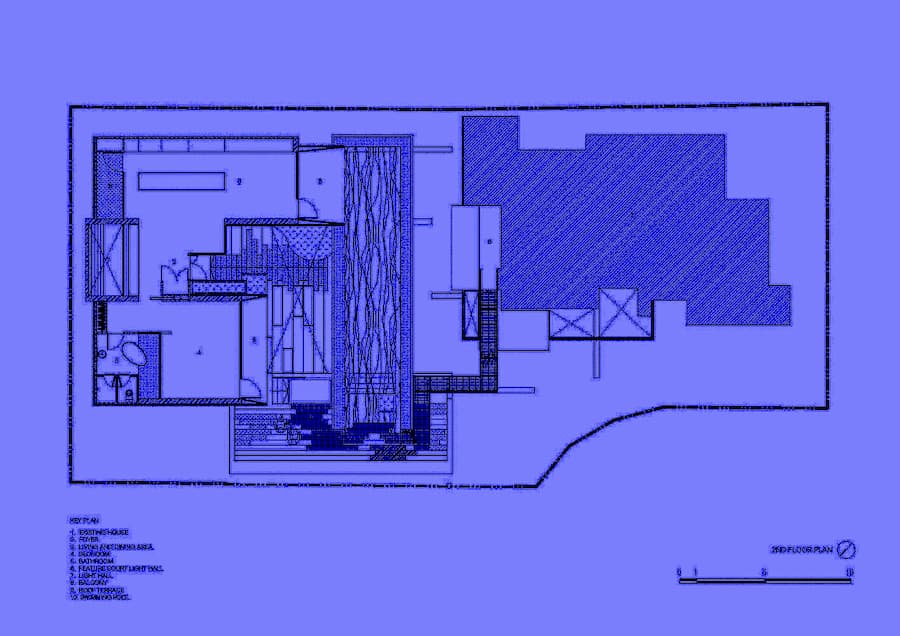
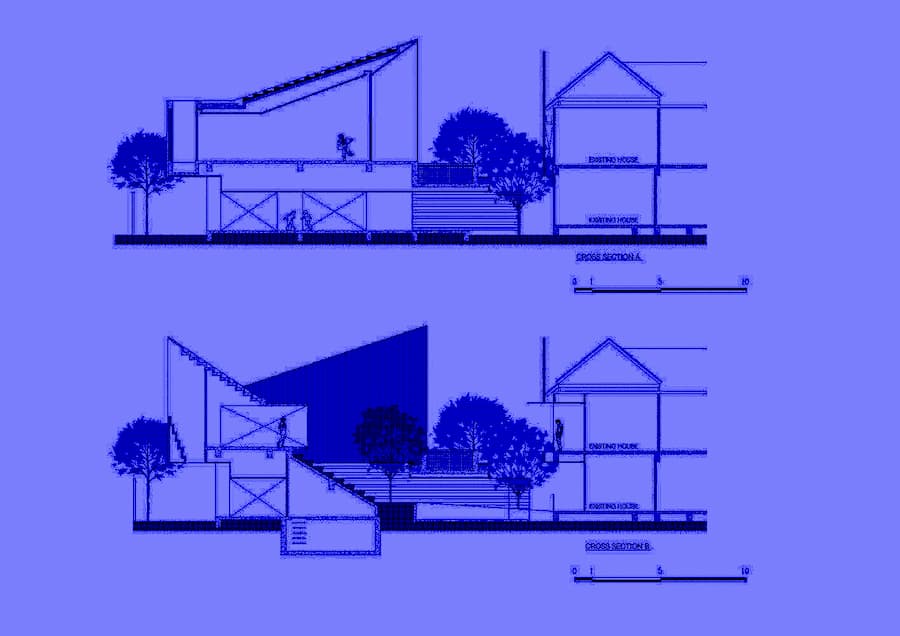
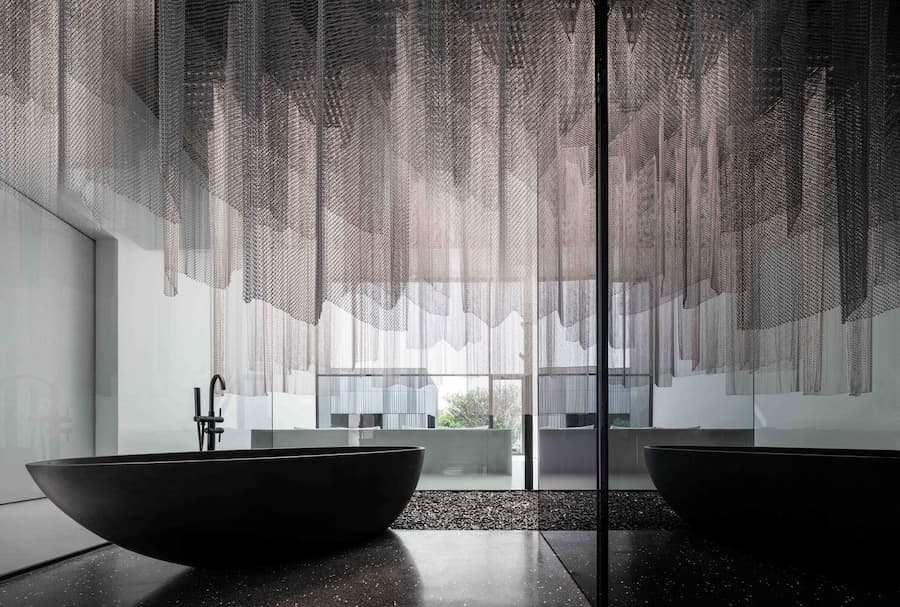
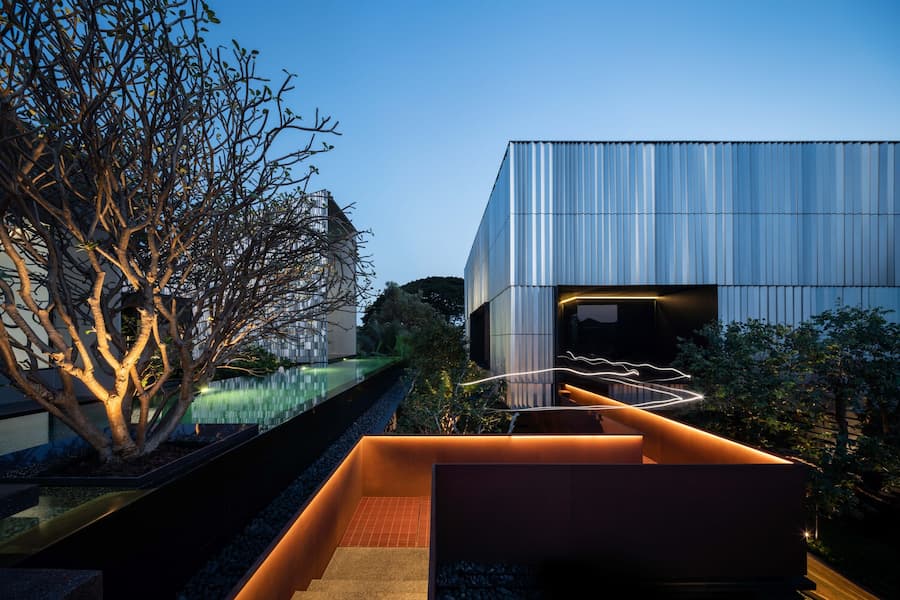
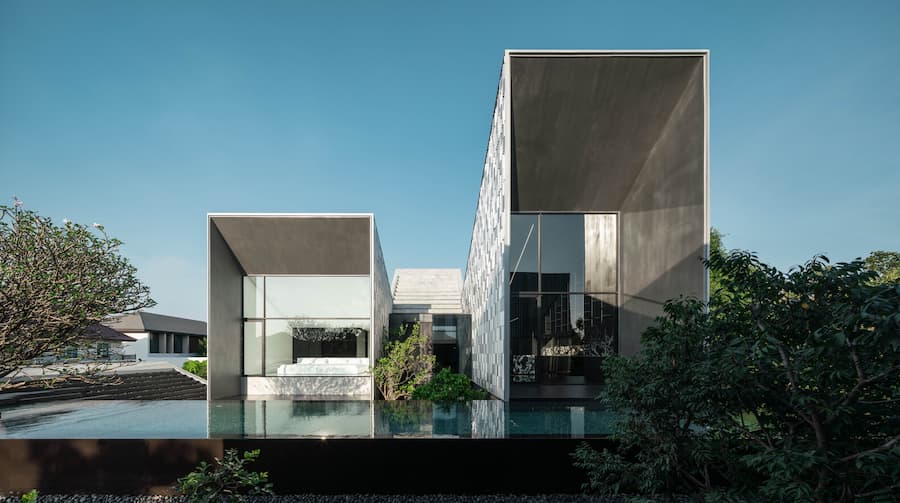
At MIRIN House, materials are not just for building – they’re mediums for sensory expression. Light and shadow shape what we see. Water and wind orchestrate what we hear. Natural textures convey temperature, dampness, and roughness. Earthy smells and edible herbs in the garden evoke scent and taste. The living quarters are lifted to the second floor, where the pool and treetop canopies define the view. Below, a shaded space echoes the underfloor openness of traditional Thai homes. From this raised vantage point, residents experience a bird’s eye perspective of the landscape, contrasting with the grounded perspective of arrival. The house thus offers three distinct perceptual layers – worm’s eye view, normal eye view, and bird’s eye view perspective – transforming a small home into a richly spatial experience.
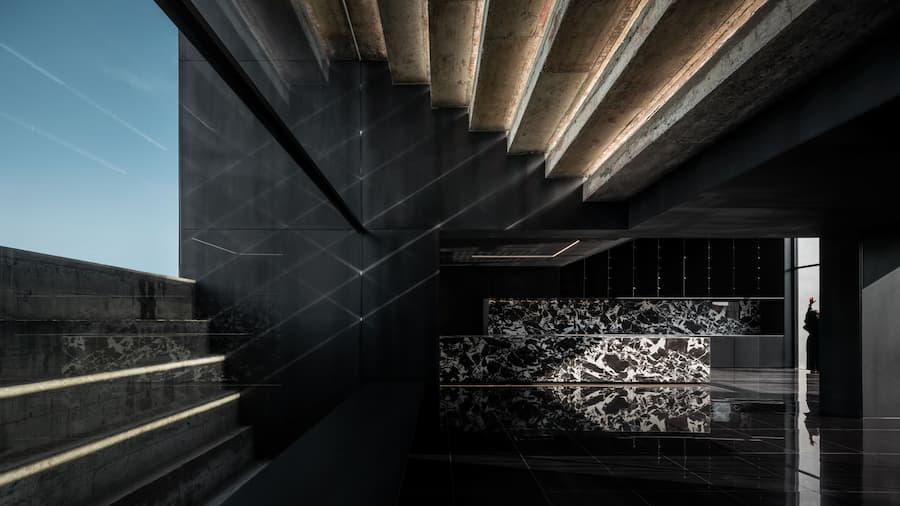
Light is meticulously choreographed like stage lighting, manipulating contrast and rhythm. From the carport to the house, light intensity gradually changes, dilating the pupils and heightening emotional anticipation. Inside, the mood shifts: darker, quieter, cooler. Natural light is modulated with deep shadows; indirect and mood lighting inside further softens the space. The result is a gentle contrast between the stimulating exterior and the meditative interior.
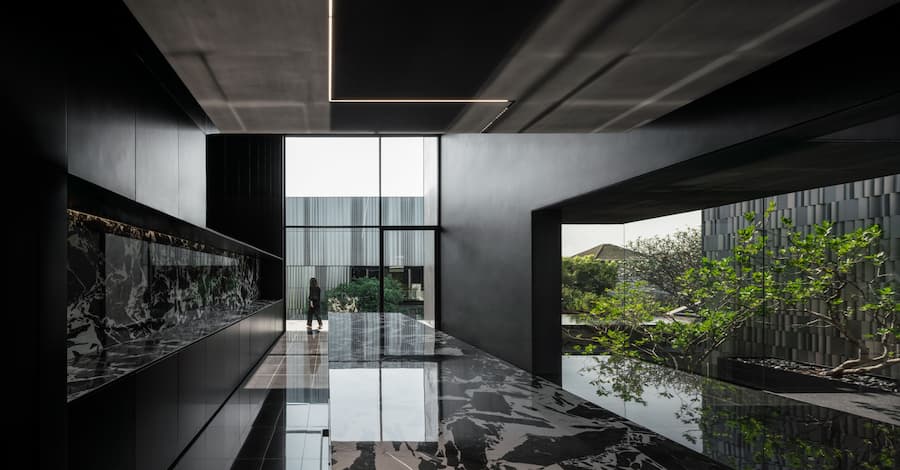
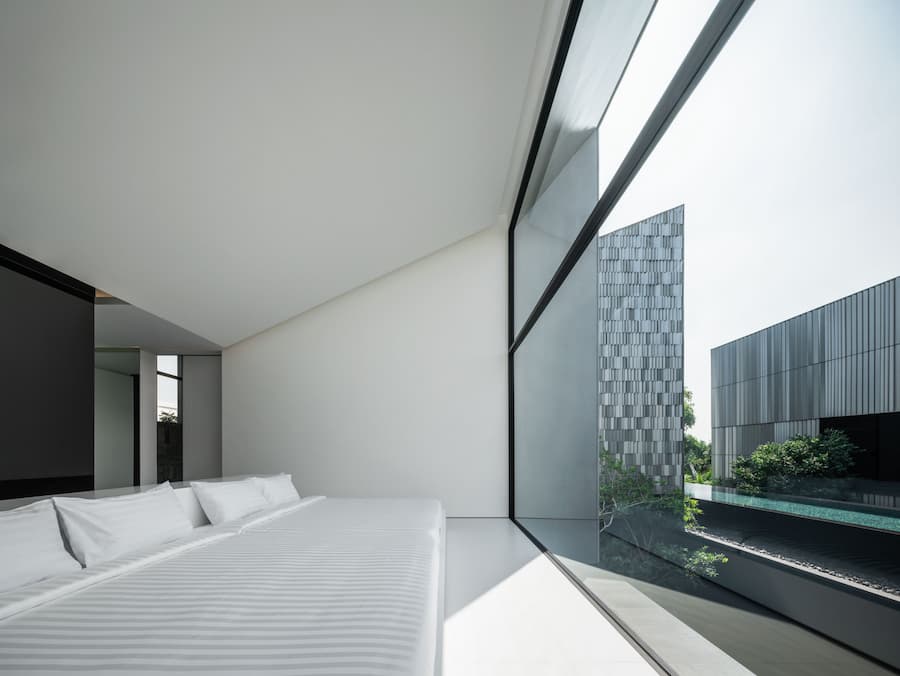
For the interior of the house, using dark tones absorbs light and muffles sounds, offering a cool, quiet ambiance – an antidote to Bangkok’s heat and noise. Full-height glass openings invite in the trees and sky, transforming the natural landscape into a dynamic artwork that changes with the seasons.
▏The Surrounding Community in Mind
A A D design’s vision extended beyond the house and into the community, and didn’t create MIRIN House solely for its owner; it was designed with the surrounding community in mind. The roof was intentionally angled to avoid obstructing the neighboring houses’ view of the sky, preserving their visual connection with nature. Portions of the home’s greenery were also made visible from the street, allowing passersby and nearby residents to share in the serenity of the landscape. In doing so, MIRIN House becomes a link between private space and public nature, not a secluded enclosure but a gentle offering to the community.
The garden doesn’t stop at the boundary wall. Given the limited size of the plot in a dense suburban development, the design borrows views of mature trees from neighboring properties, weaving them into the home’s visual tapestry. In return, MIRIN House gives back through rooftop gardens, a poolscape, and vertical greenery that soften the building’s mass and contribute to the local ecosystem.
This house does more than offer privacy to its owner; it fosters relationships between home and community, between architecture and nature, and between individual and city. It’s a design that encourages a new urban mindset – one where we not only coexist with nature but actively share it. Because in the end, a house is not just architecture, but community, life, a living bond. It’s not just a place to stay, but it’s a relationship with everything around it.
▏Aesthetics centers in Kanikachic’s highlighting artist/designer experiences
Passionate perspectives on art, artists, contemporary architecture, and ideas that shape culture today
Want your project to be featured? Showcase your work through Kanikachic and (E-mail us: [email protected]) your most inspiring moments.
All Photography, Styling, Fotos, Pictures and Videos Shared with Permission from the [Archdaily] Website
──────────────────────────────────────────────────────────────────────────────────────────
Per essere insostituibili bisogna sempre essere diverso. ▎Ci sono immagini affascinanti qui, e l’affascinante giornata di insieme! xo KanikaChic