The designers crafted a space that honours the character of the humble trattoria while delivering an environment that feels unmistakably contemporary
▏That Reimagines the Typology that it so Proudly Represents
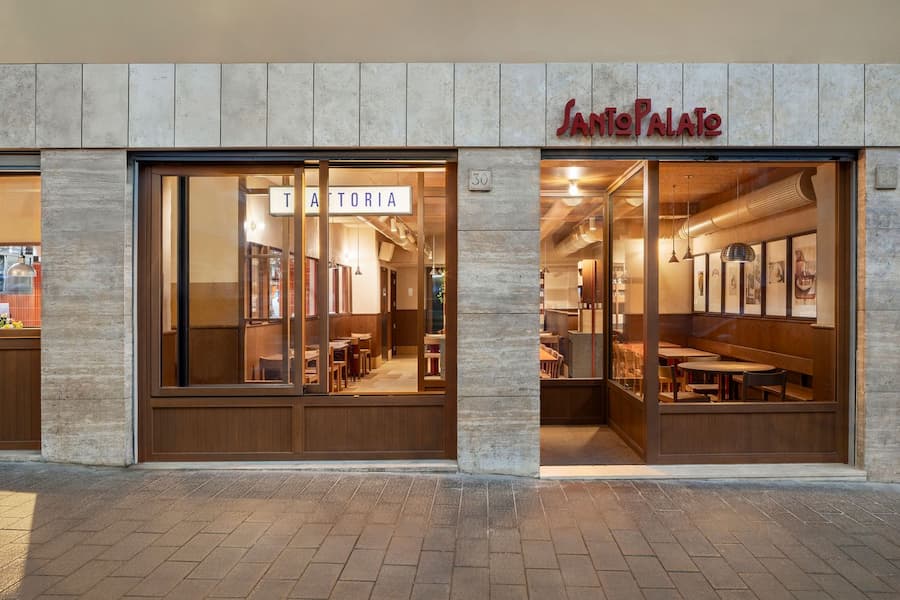
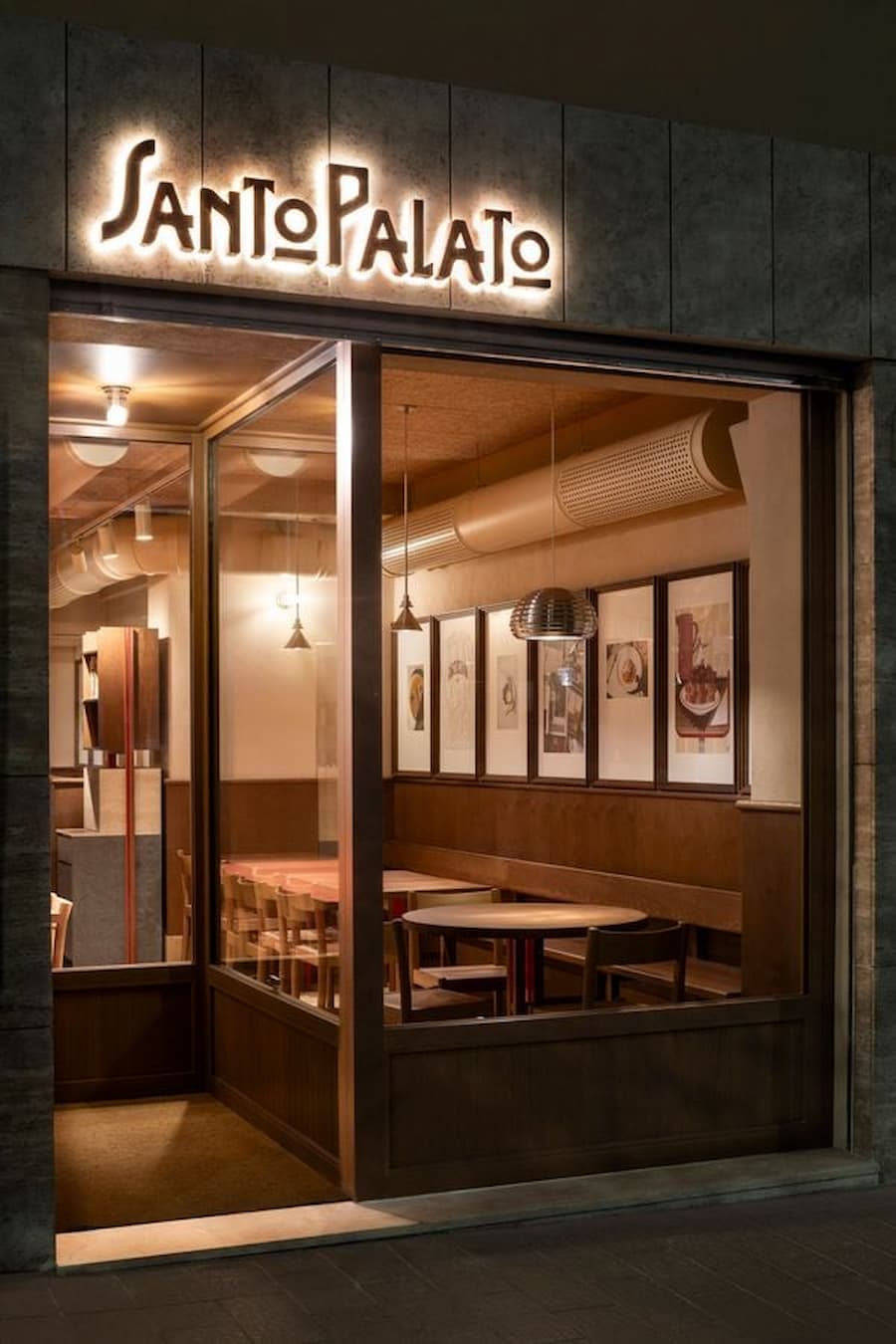
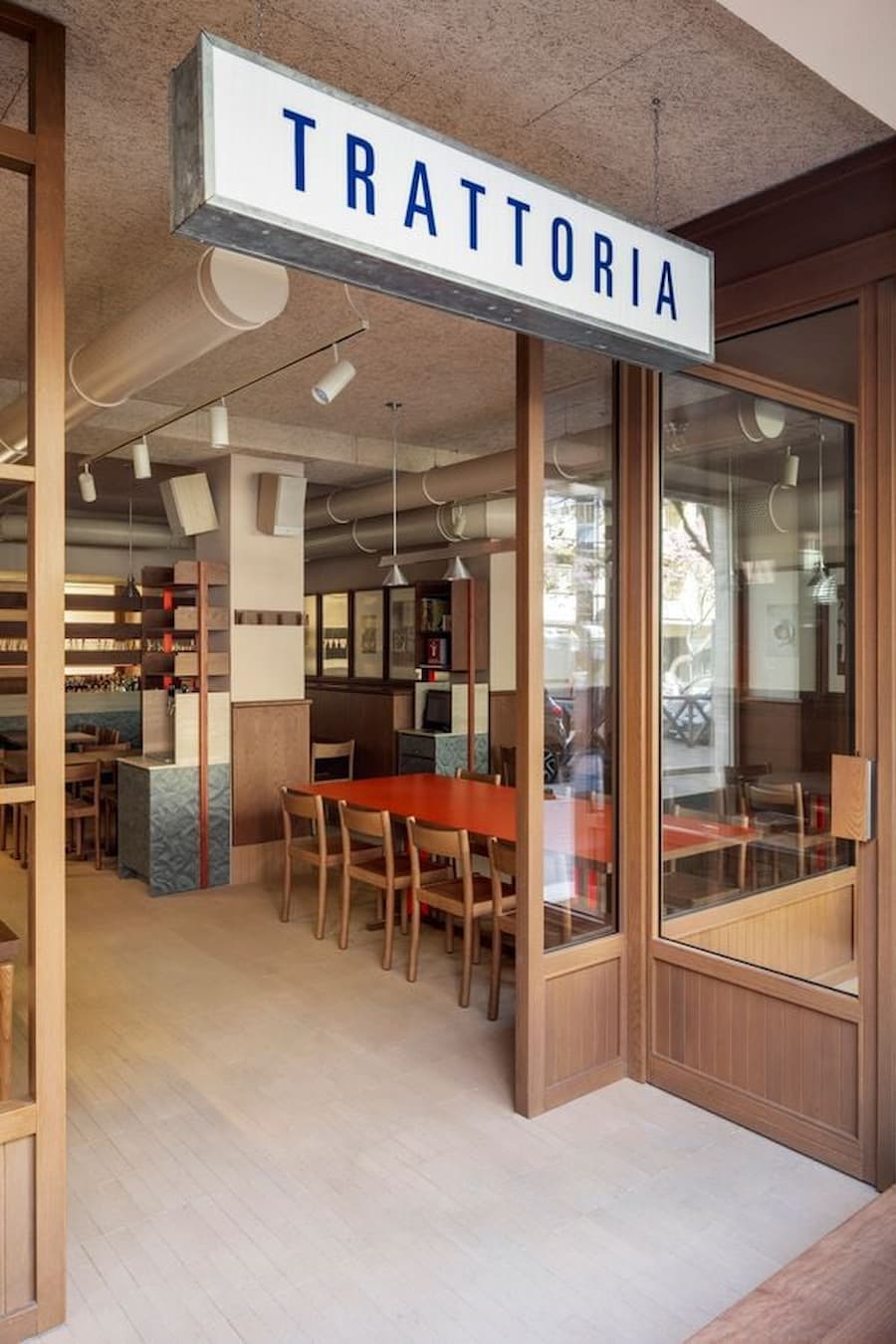
Located in Rome’s San Giovanni district, a few hundred metres away from its original location, Santo Palato, the beloved trattoria helmed by chef Sarah Cicolini, has reopened in a new space that reimagines the typology that it so proudly represents. Designed by Rome-based design studio Næssi, the relocation offered a rare opportunity to start from scratch, unbound by the constraints of a pre-existing interior, and to rethink what a trattoria represents in today’s world. By choosing which elements to carry forward and which to reinterpret, the designers crafted a space that honours the character of the humble trattoria while delivering an environment that feels unmistakably contemporary. The result is a dining experience that strikes a measured balance between familiarity and reinvention, embracing the spirit of the trattoria without lapsing into nostalgia.
▏As Democratic Spaces For Daily Nourishment
Traditionally modest and family-run, trattorias have long served as cornerstones of Italian culinary culture, valued not for refinement but for their warmth, generosity, and deep roots in local tradition. Unlike the more formal ristorante, they evolved as democratic spaces for daily nourishment, where recipes reflected seasonal rhythms and regional identities. In recent times, a wave of new-wave trattorias across Italy is renewing this format, blending fine-dining rigor with unpretentious hospitality, while updating familiar archetypes with contemporary sensibilities.
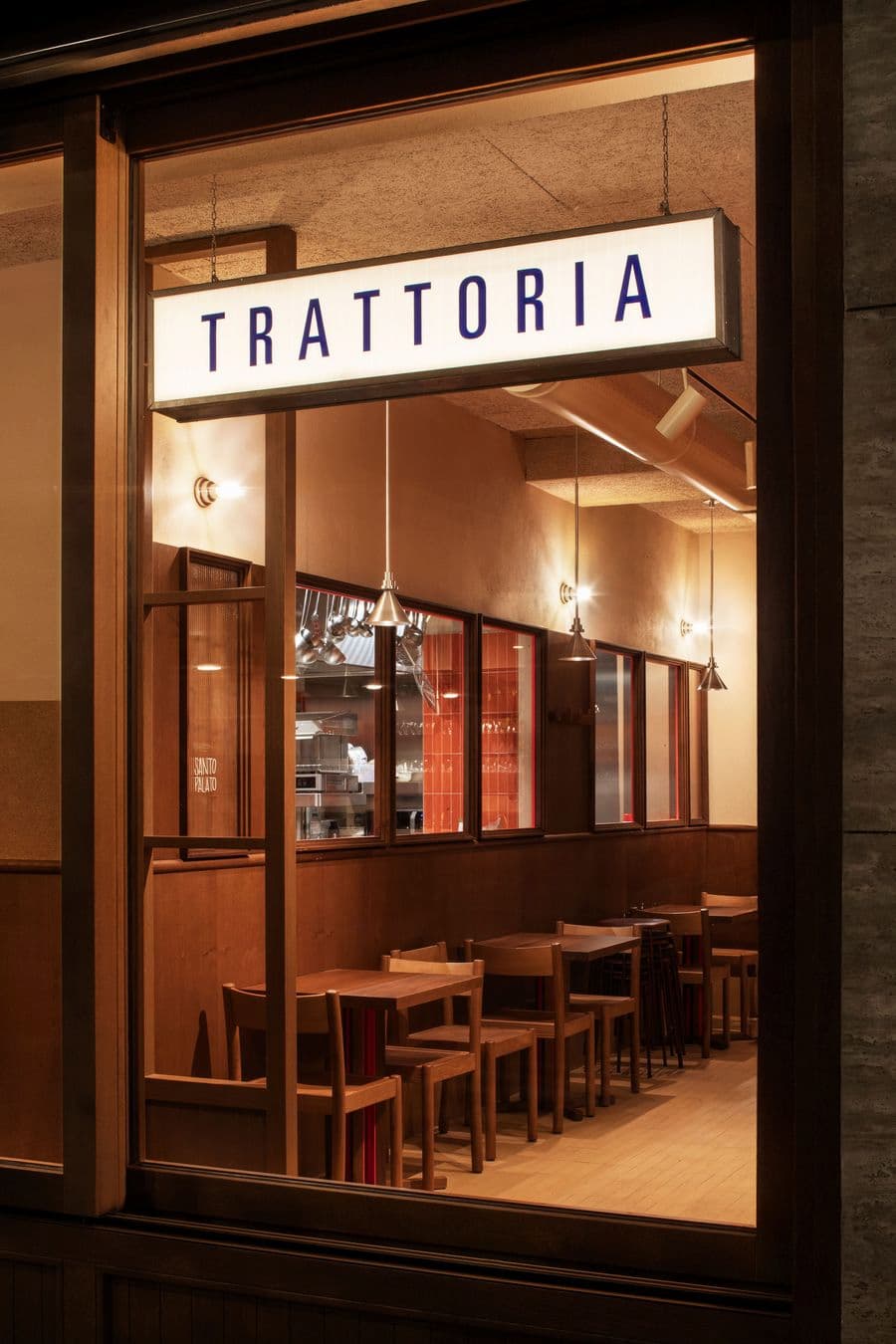
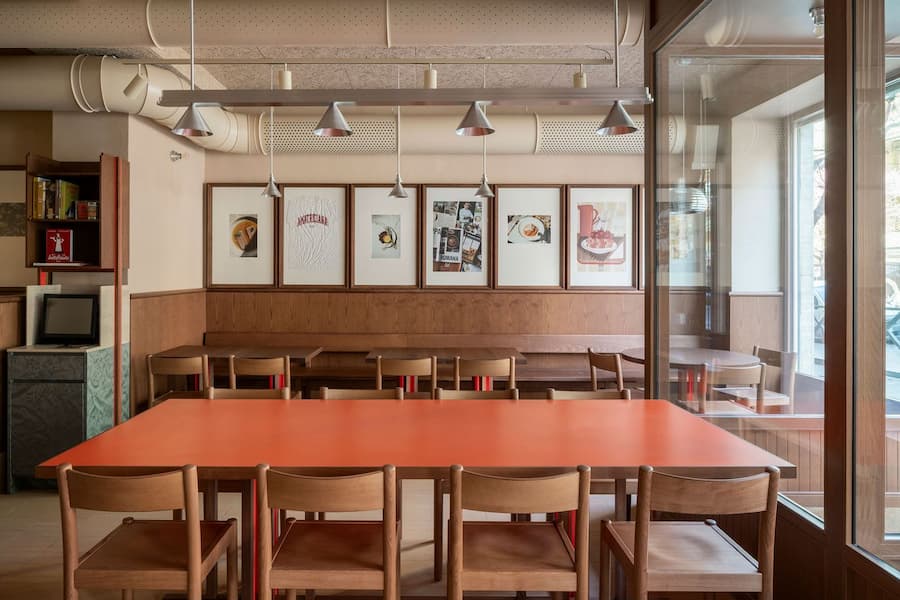
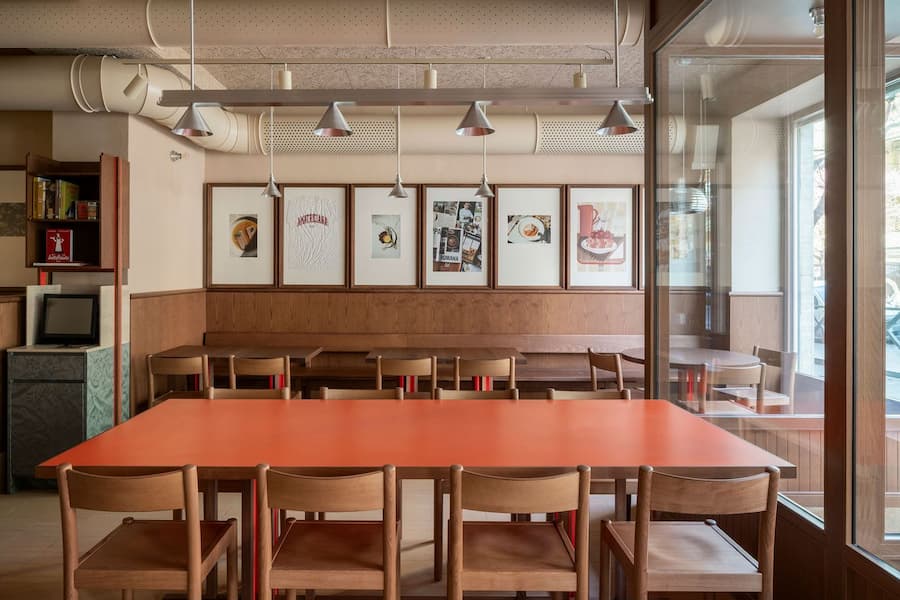
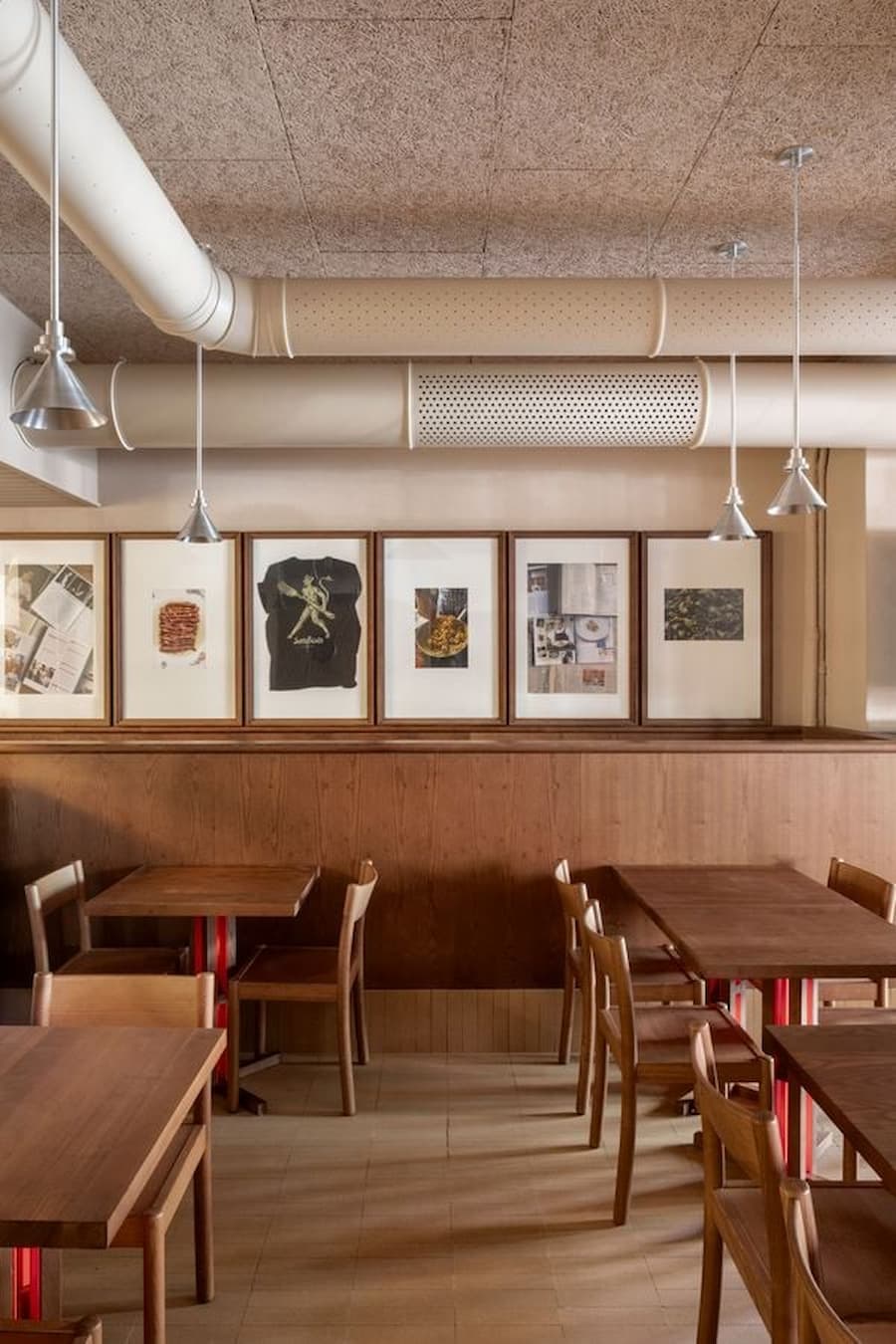
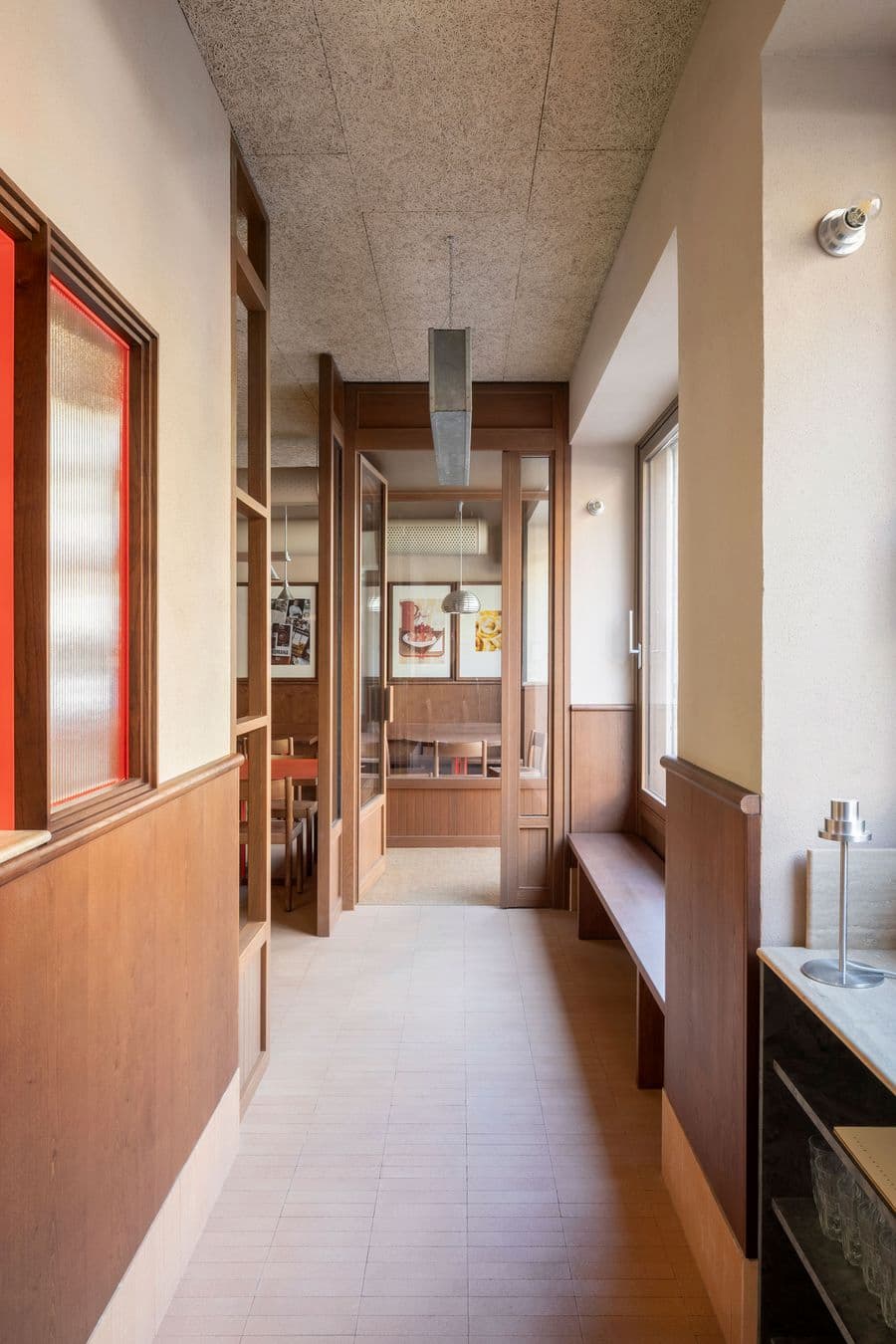
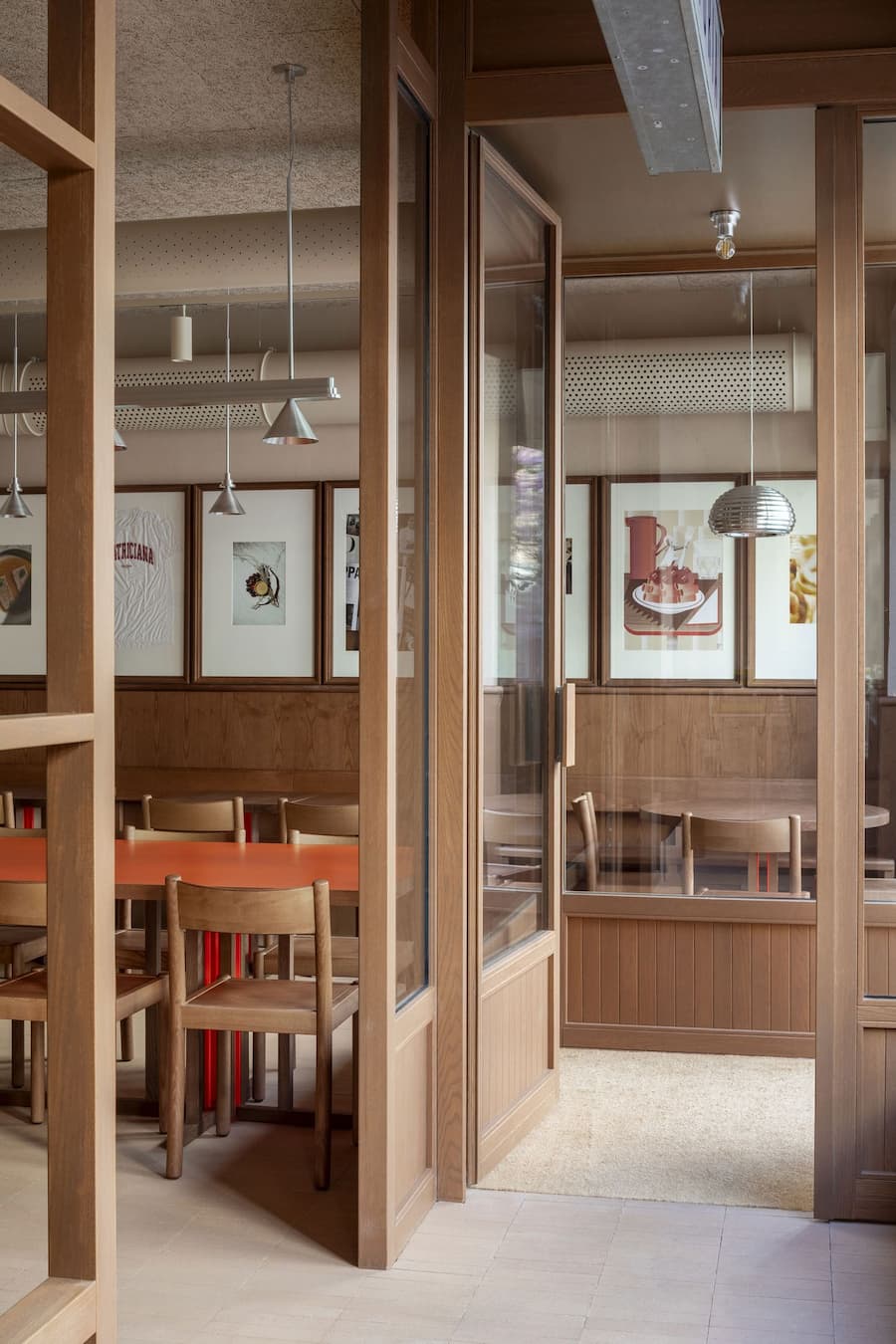
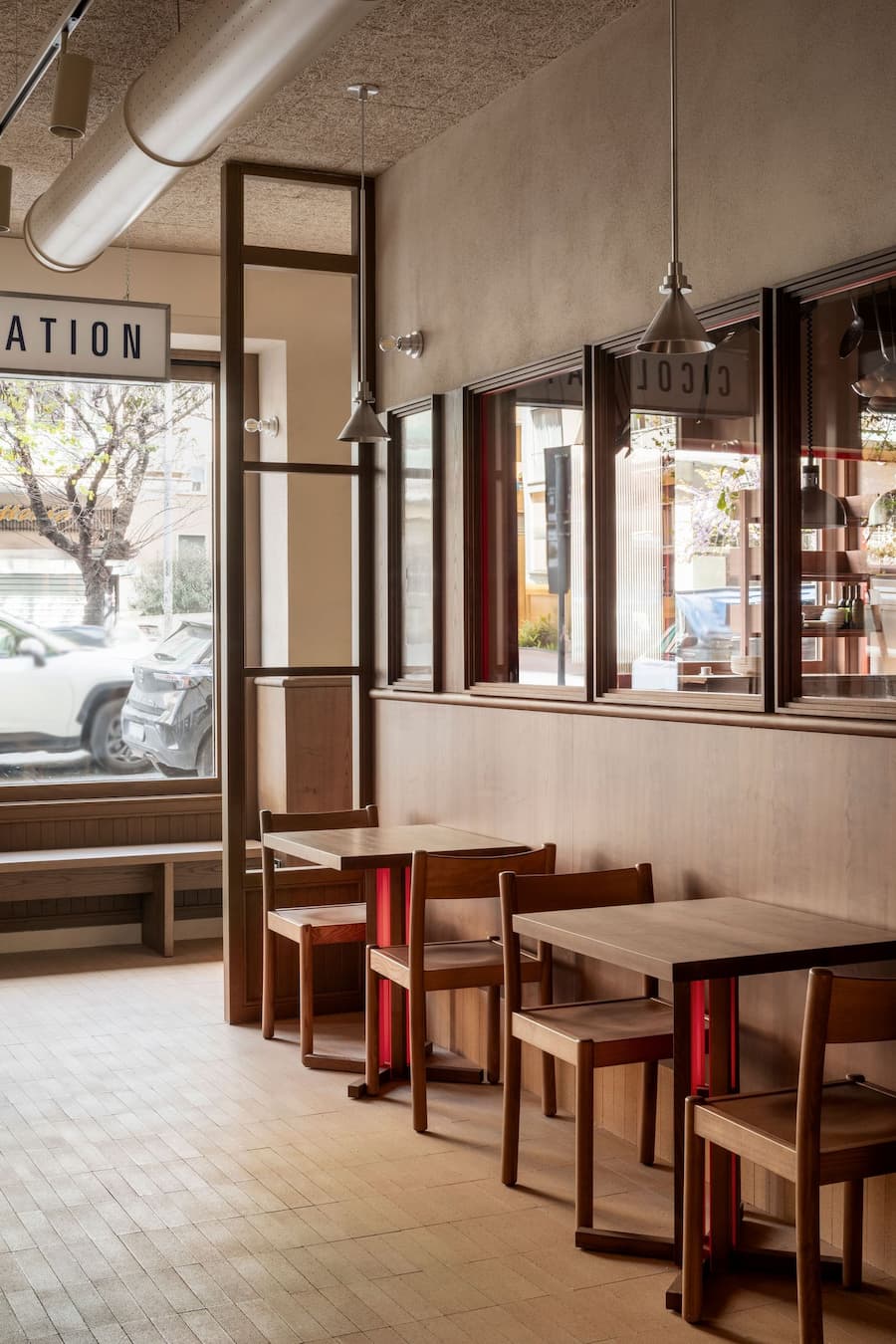
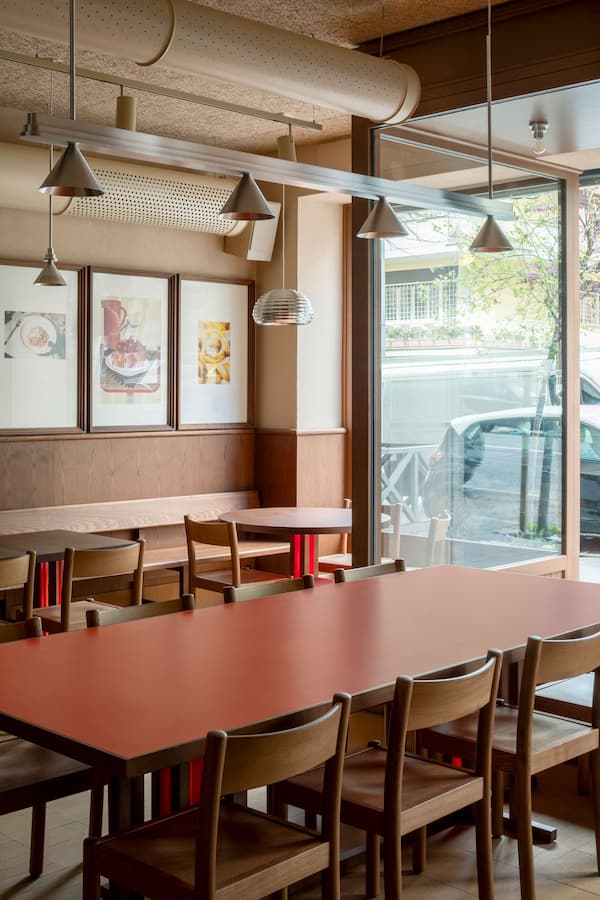
It was within this evolving landscape that Næssi approached the redesign of Santo Palato, not as a nostalgic exercise, but as a critical exploration of what a trattoria could mean today. Their process began with a close reading of the typology’s essential features and a willingness to challenge those that felt outdated or purely ornamental: wooden boiserie, warm timber tones, and framed imagery on the walls were in; tablecloths and refrigerated display cabinets were out. With the end goal being not to replicate the past but to distil its atmosphere, they deliberately avoided elements more commonly associated with bistro culture such as barstools and plush banquettes, opting instead for straight-backed chairs and austere benches, reinforcing the egalitarian nature of the trattoria.
▏Conceived as a Pastiche of Historical References
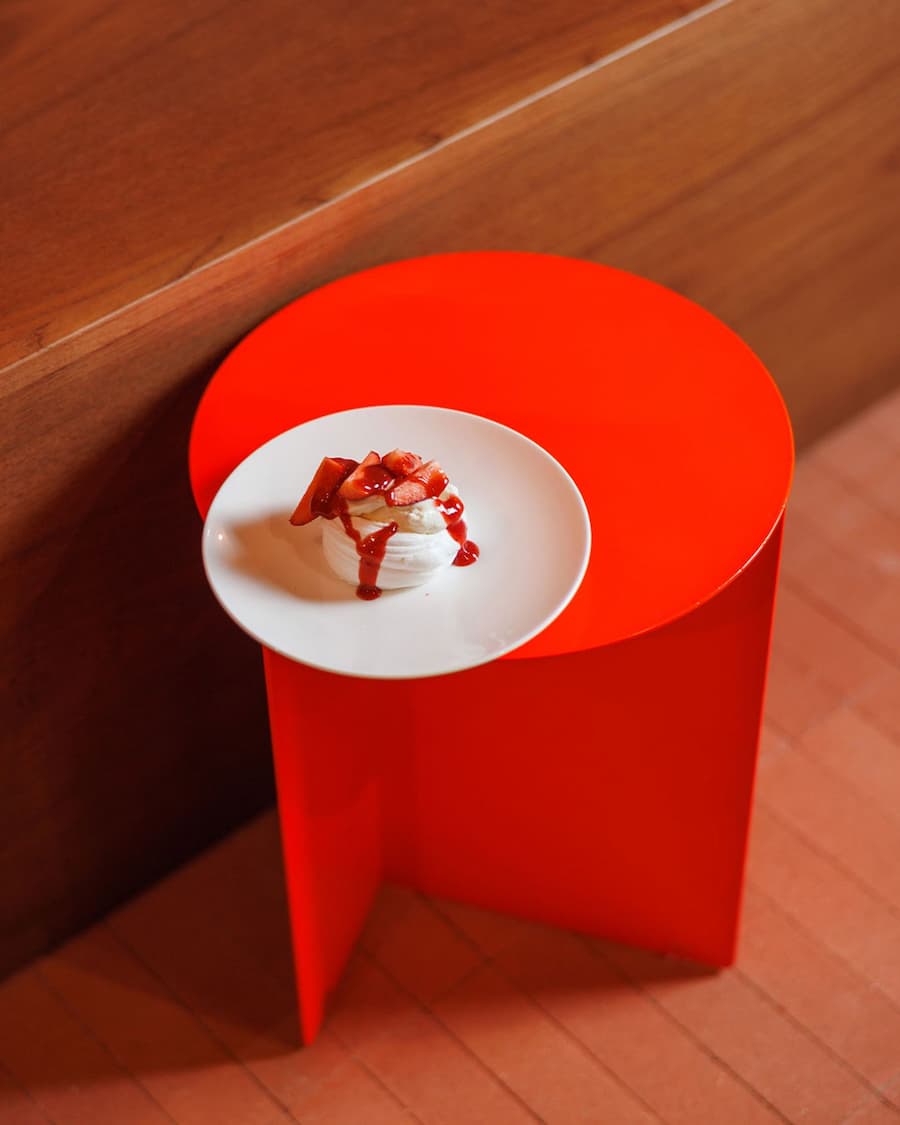
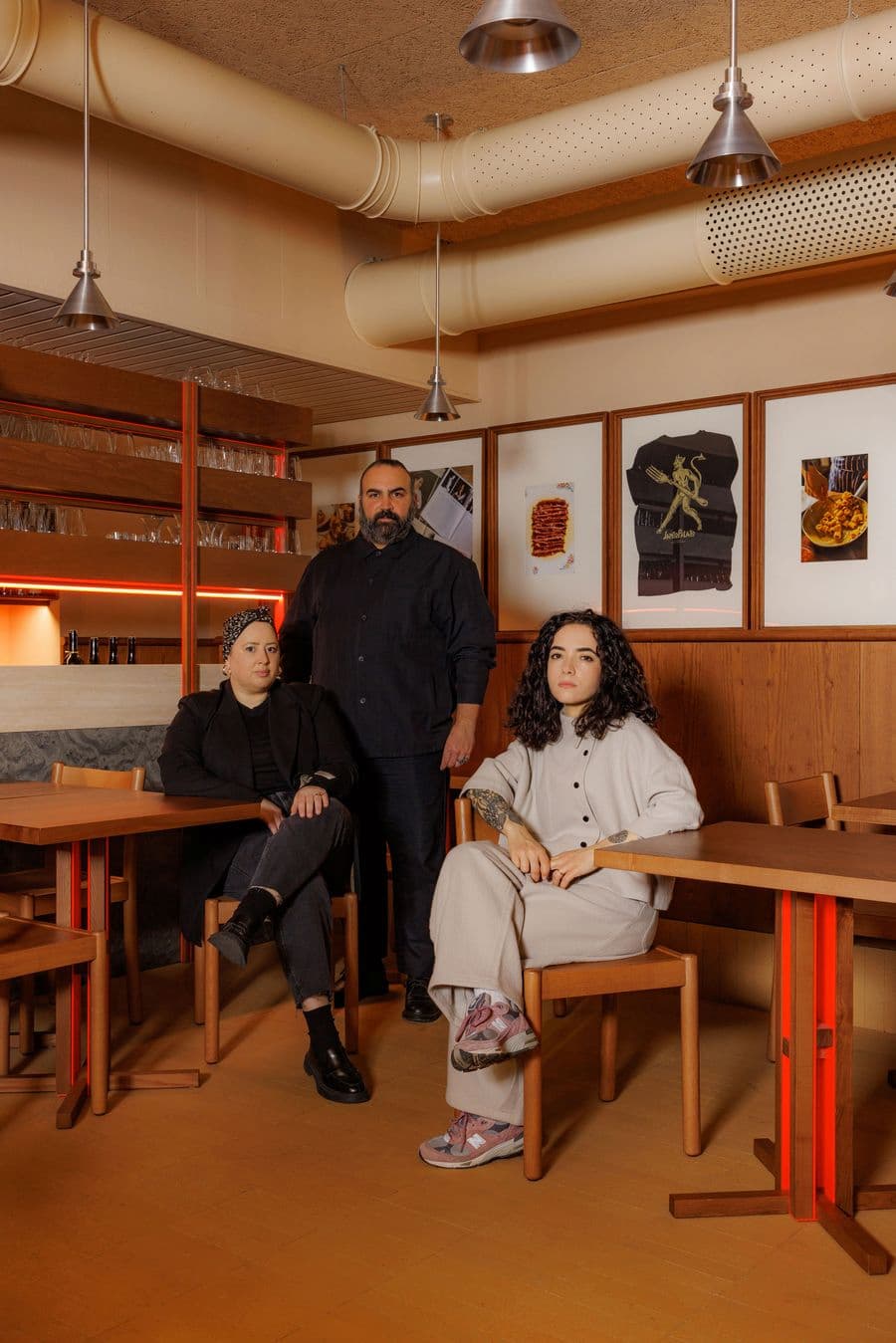
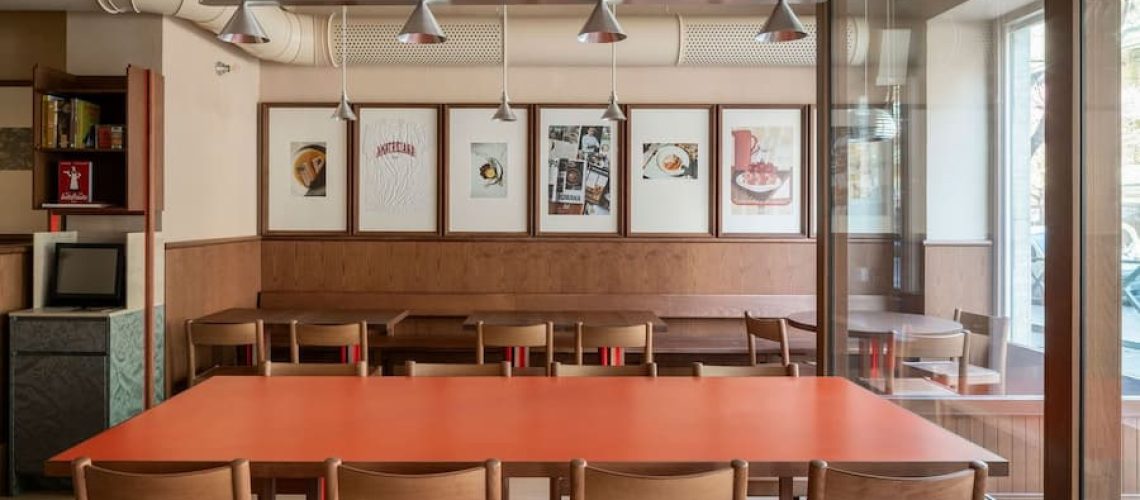
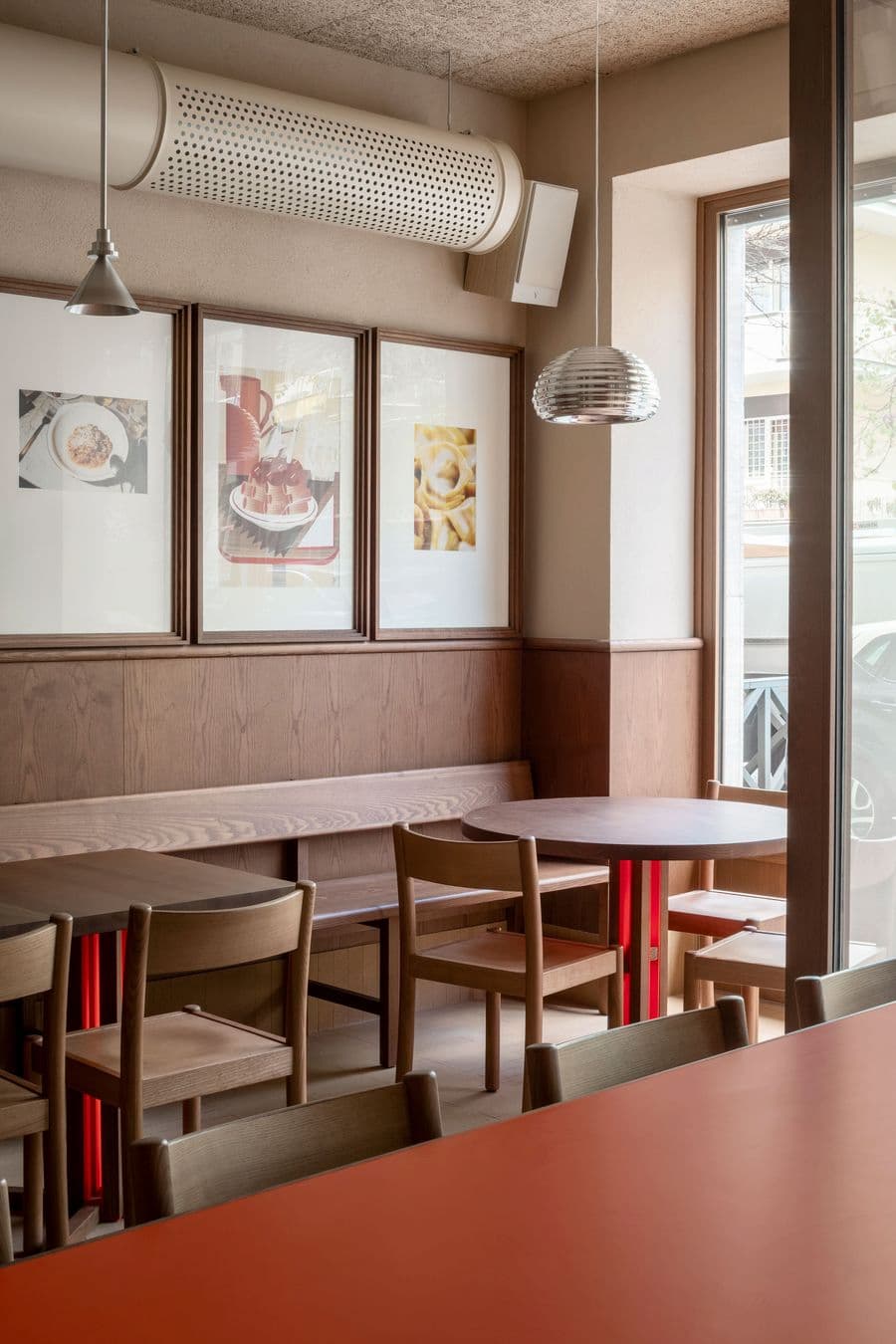
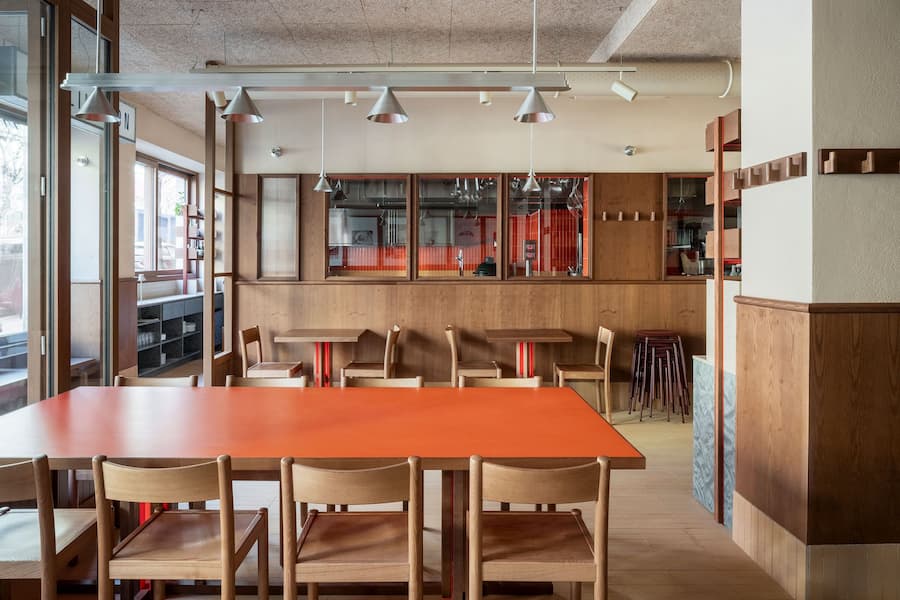
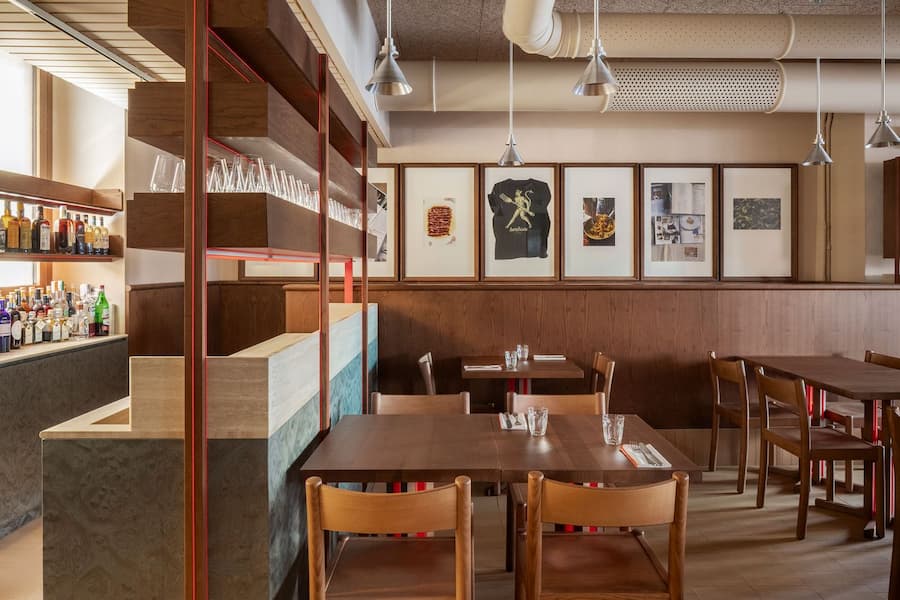
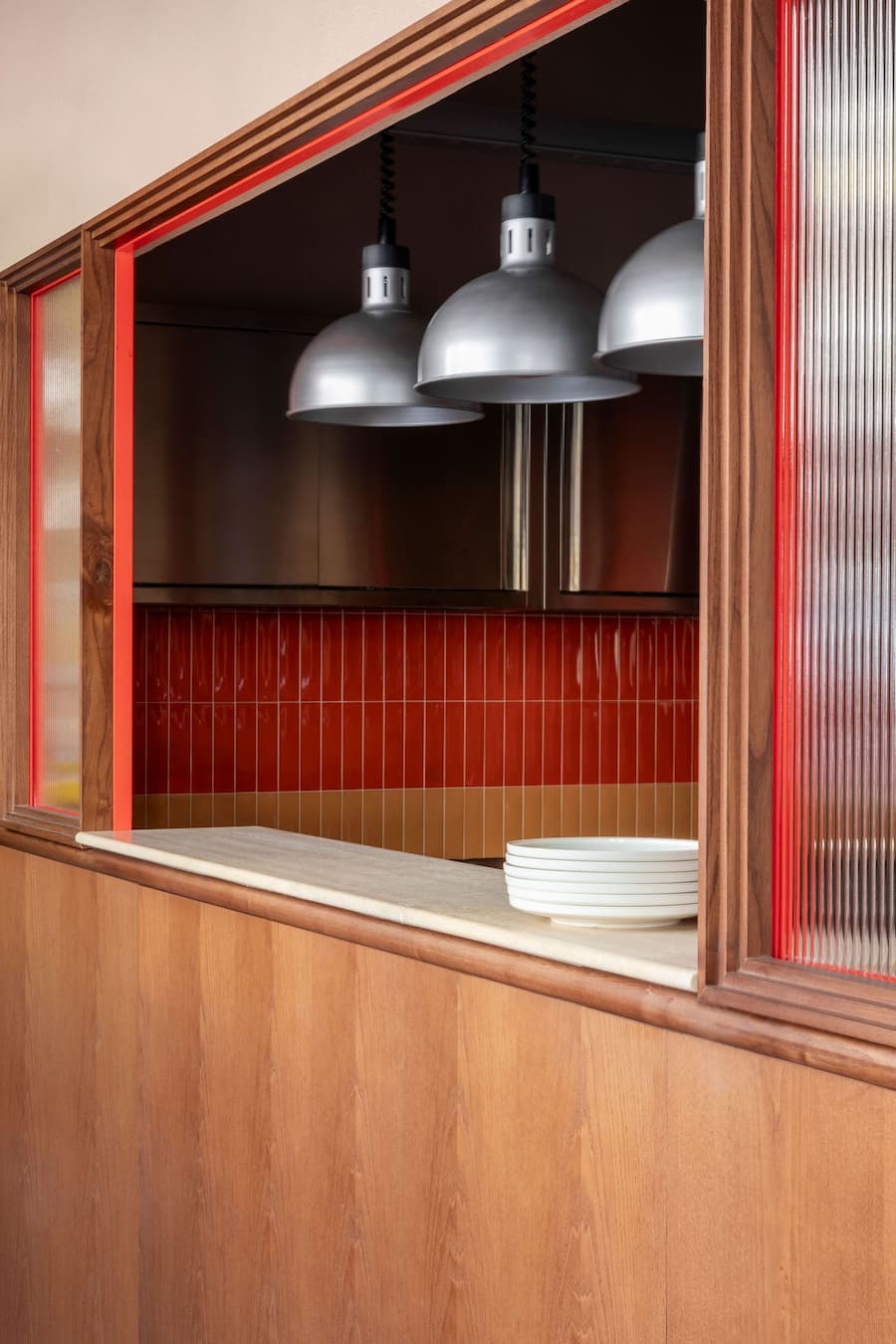
Encapsulating Næssi’s design approach, the use of walnut wood for the boiserie, tables, and chairs, an explicit nod to the classic trattoria aesthetic, is reimagined through streamlined forms and meticulous detailing, eschewing rusticity in favour of clarity and cohesion. That’s not to say that the space feels sombre or stark. On the contrary, vibrant red stripes lining the stems of pedestal tables—an echo of the restaurant’s brand identity—inject a fresh newness through the use of colour, rhythm and contrasting elements, also evident in the series of framed images on the walls, their orderly composition a deliberate counterpoint to the traditional trattoria’s more haphazard arrangements.
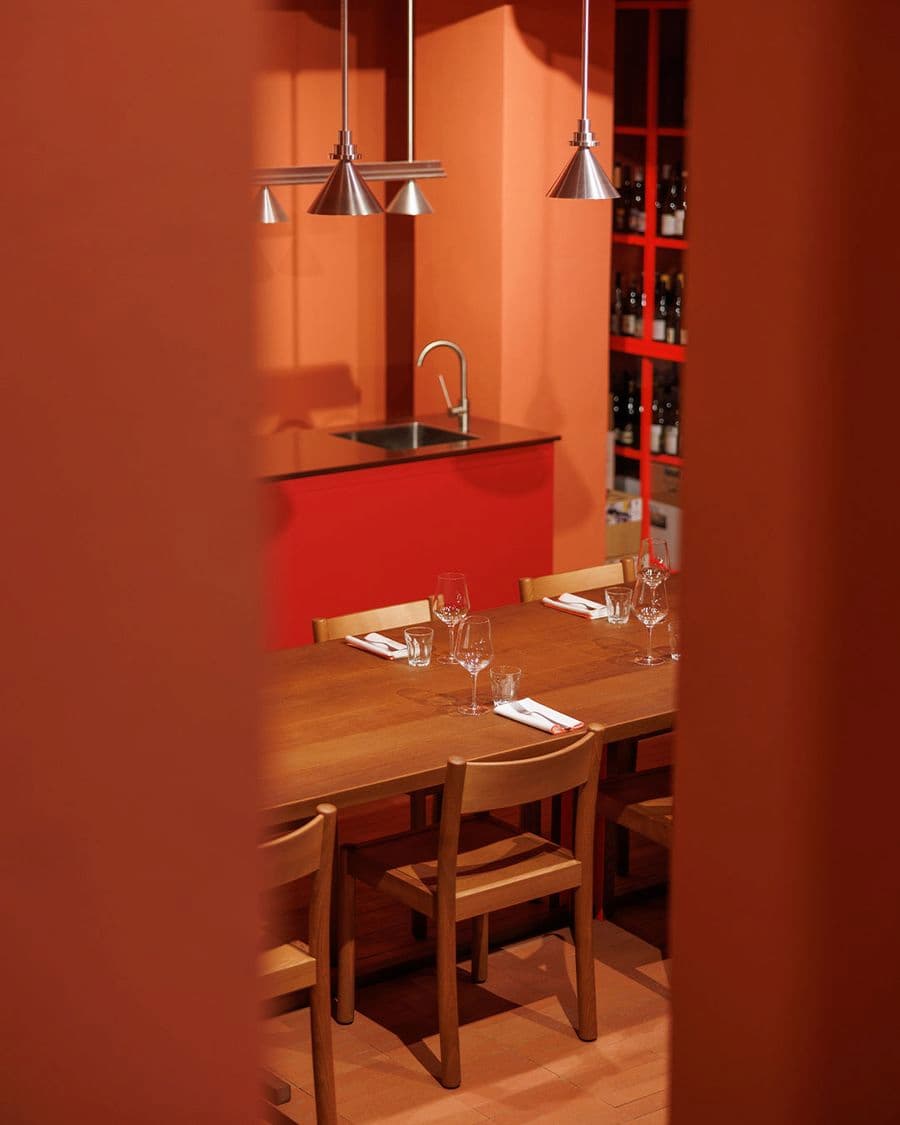
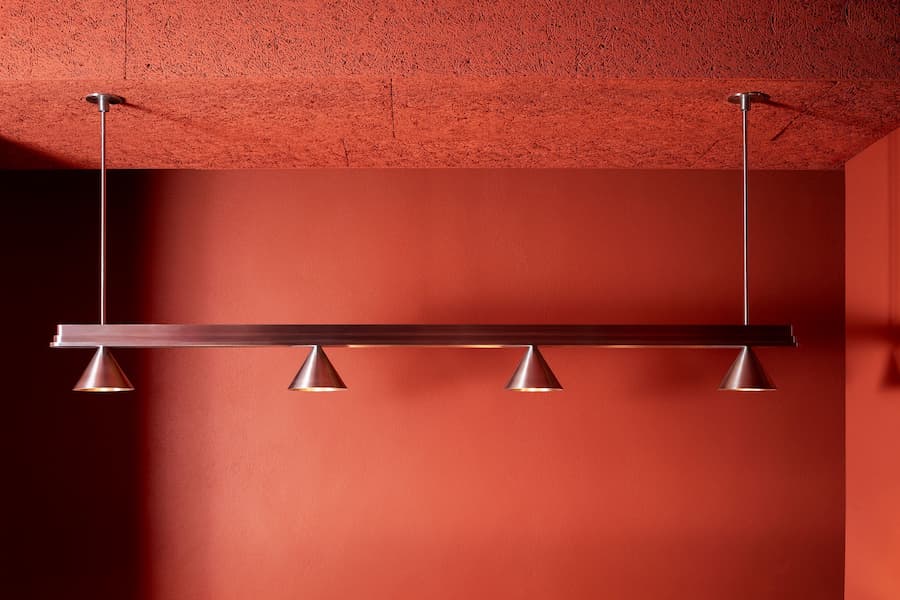
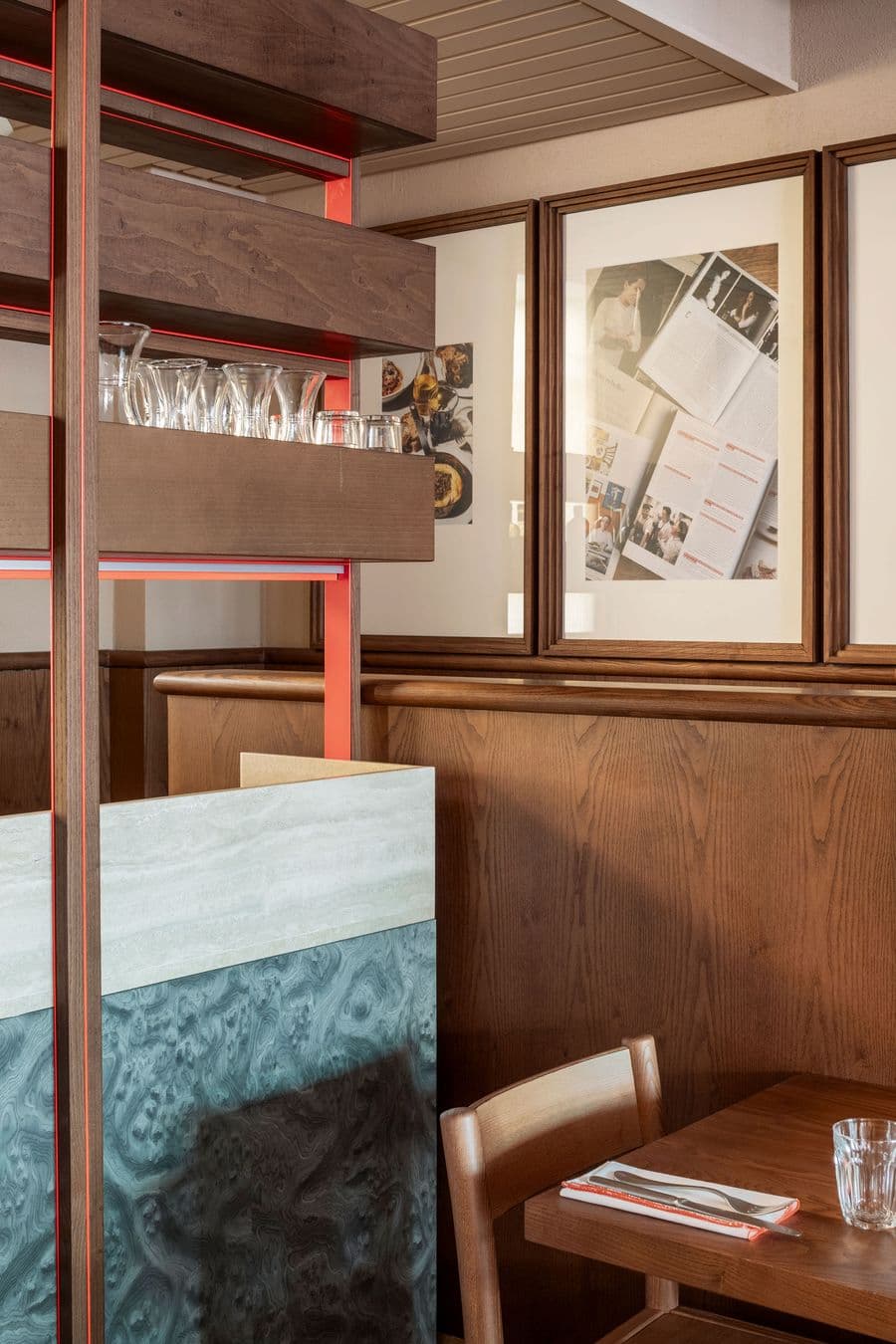
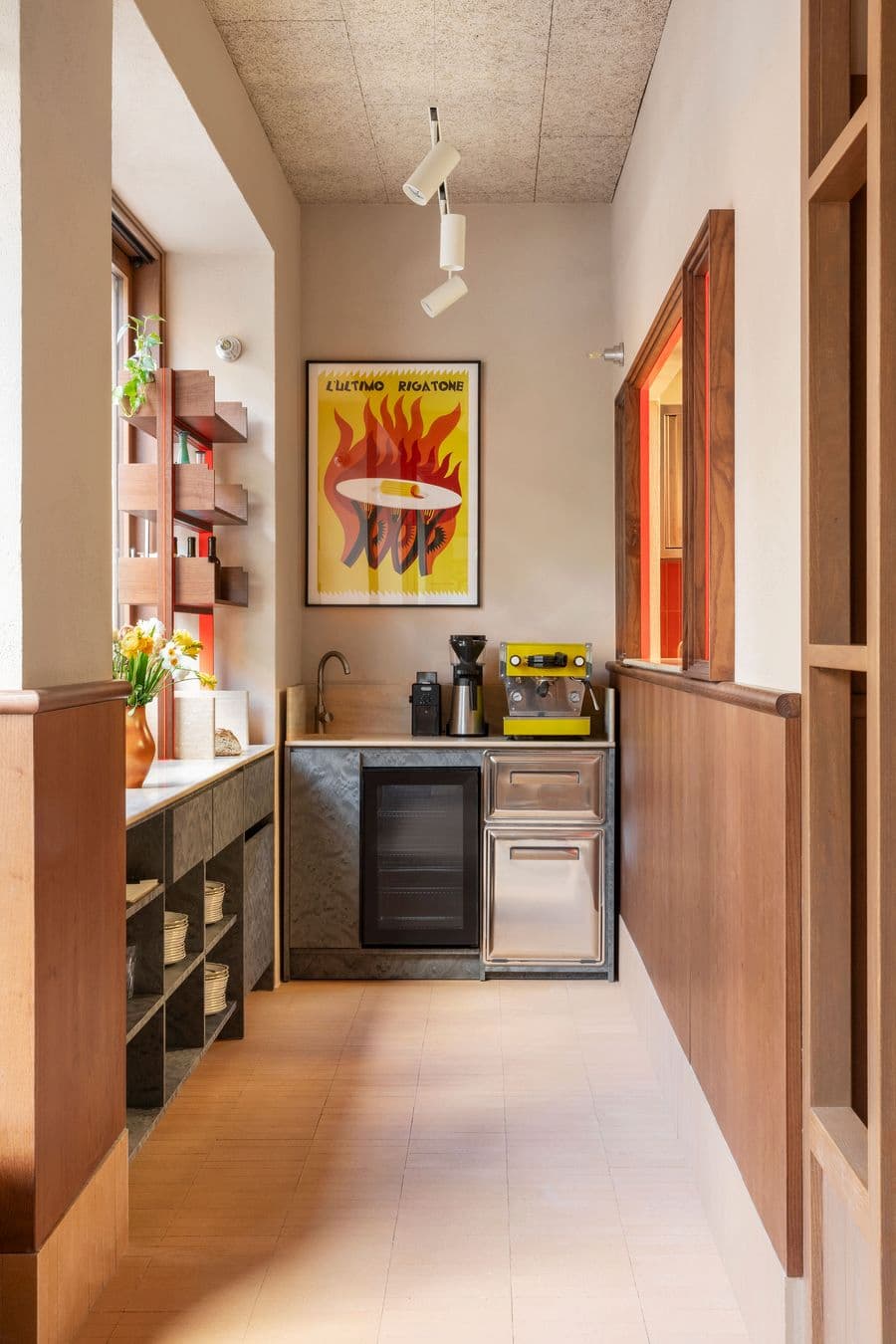
An ochre-toned communal table adds a sense of informality and shared conviviality, while the bar, wine and service counters speak to the studio’s layered design vocabulary. Conceived as a pastiche of historical references, these custom-made elements feature solid travertine countertops that recall the “wine fountains” of 1950s taverns (stone basins used for pouring wine from large carafes, often into customers’ own containers), shelves in wood and metal, and sideboards in grey briarwood reminiscent of vintage dish cabinets. Even the lighting contributes to this dialogue, with custom-spun aluminium pendant lights reworking the archetype of traditional trattoria lampshades into something contemporary yet familiar.
▏Imbue the Space with a Theatrical, Immersive Quality, Supporting Conviviality
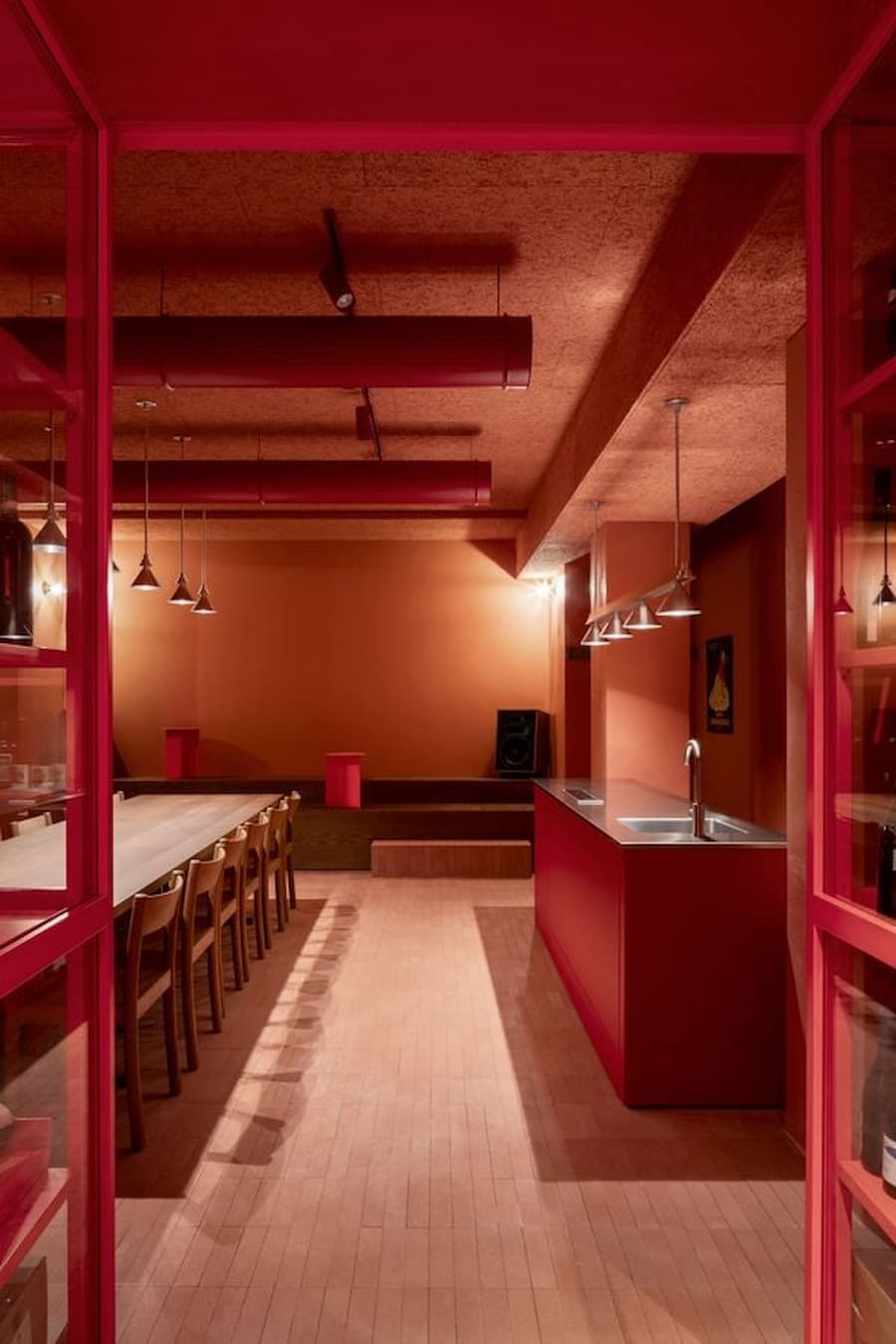
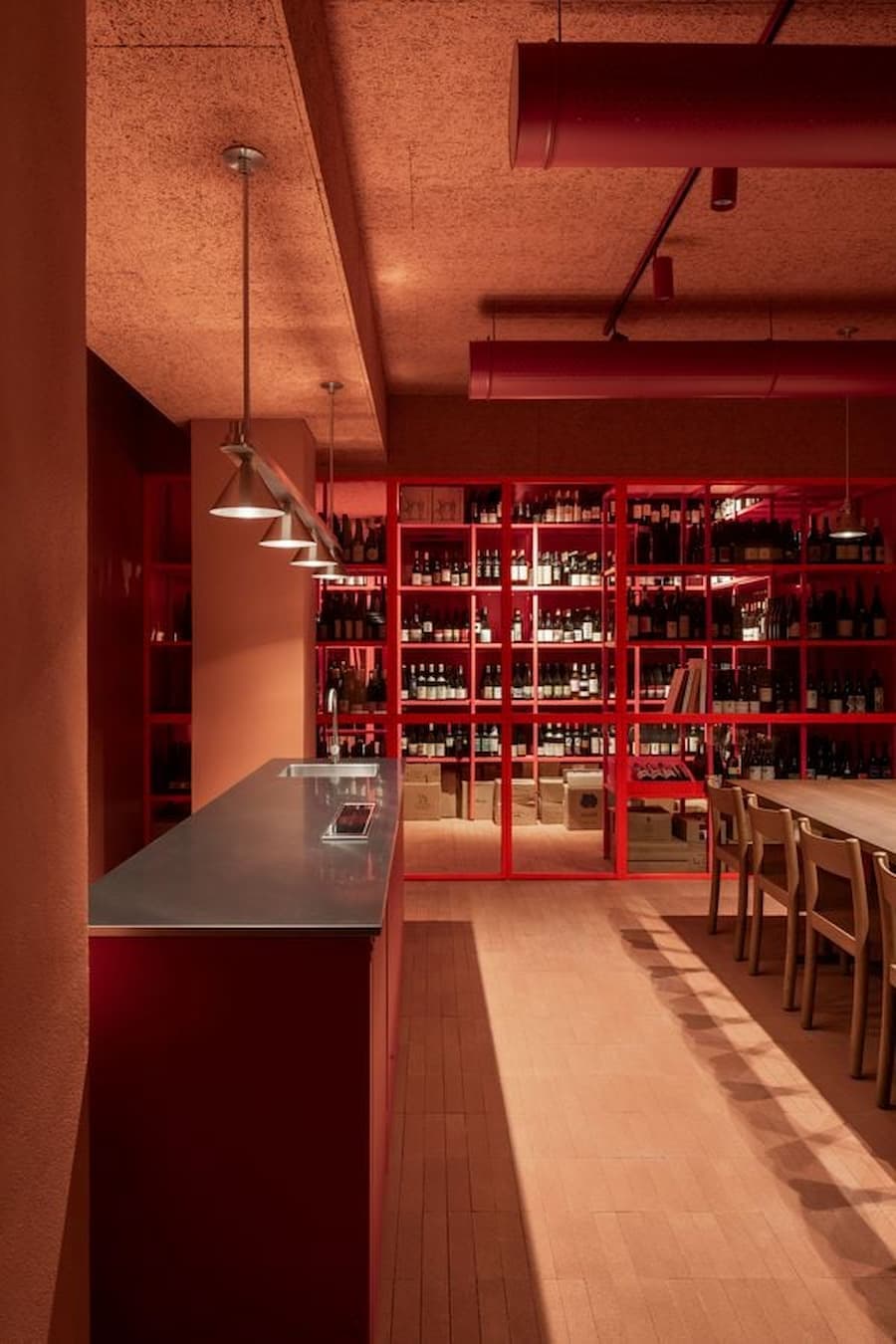
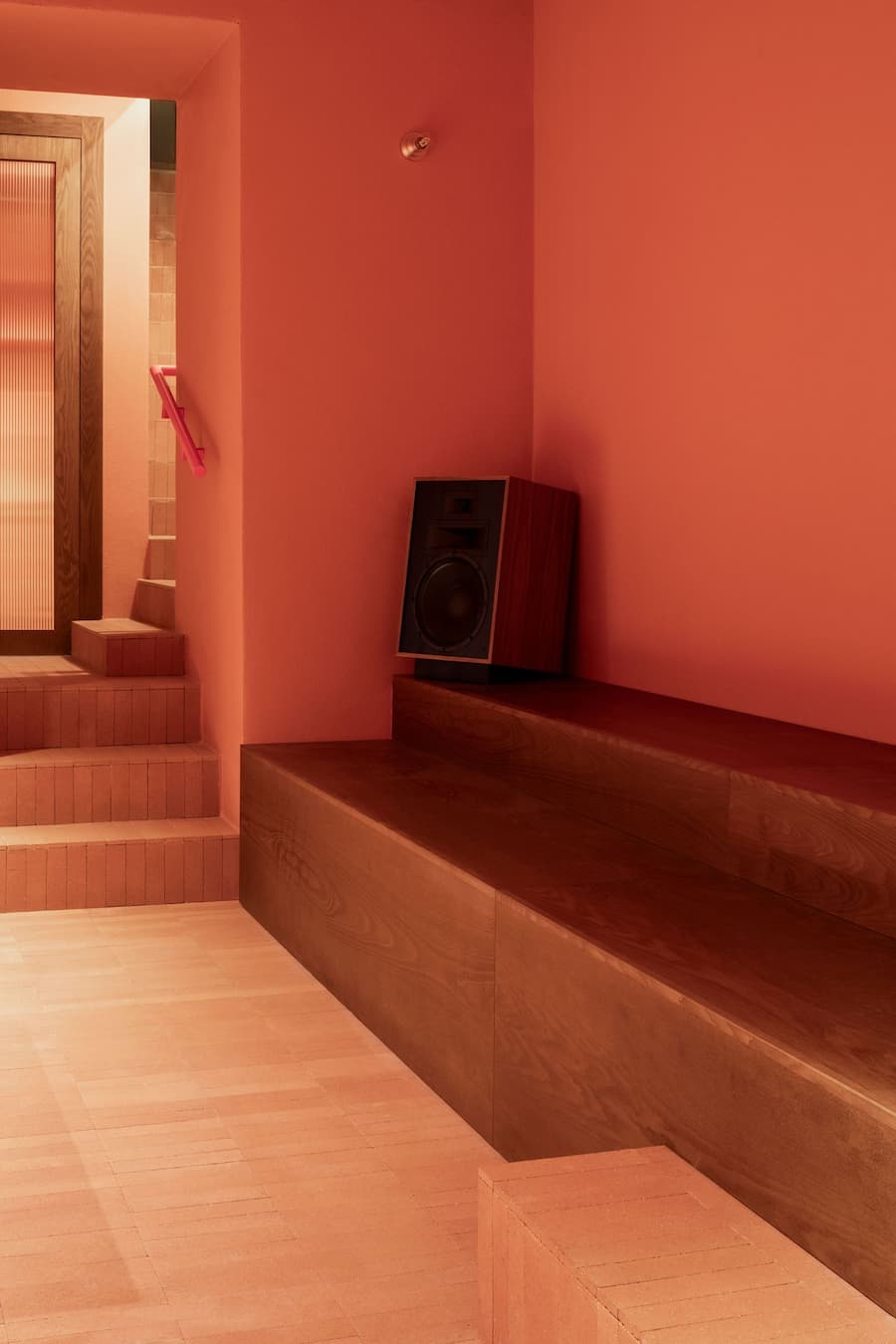
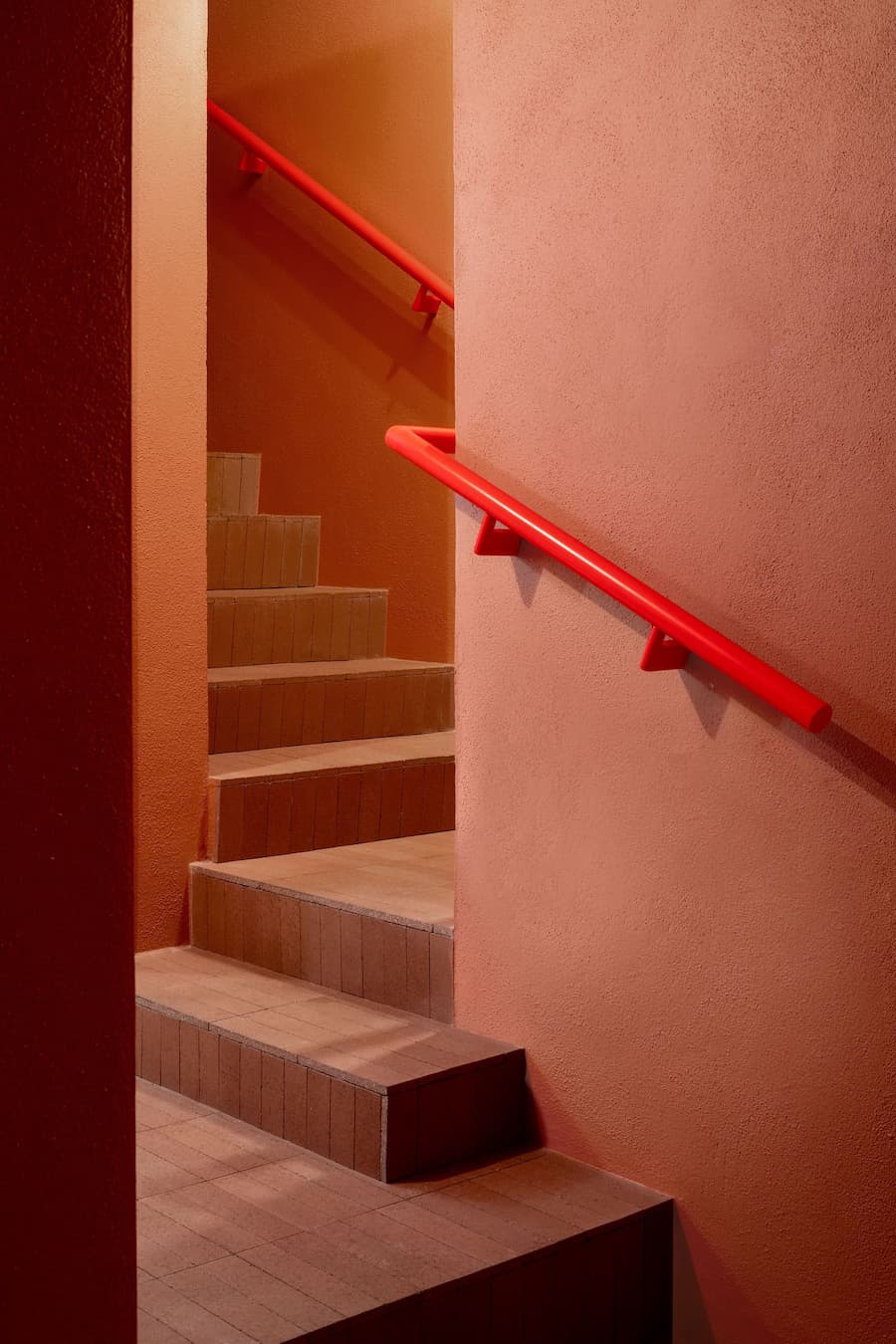
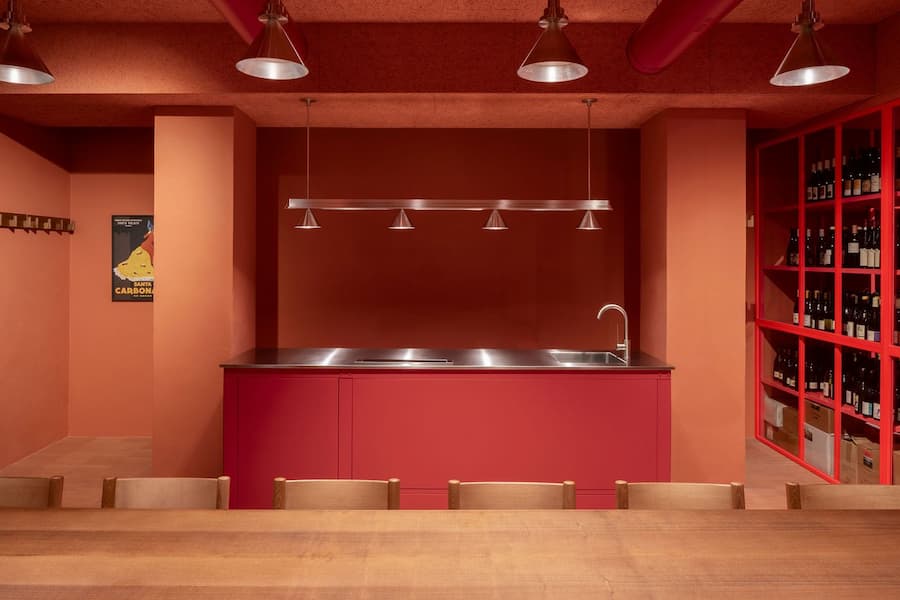
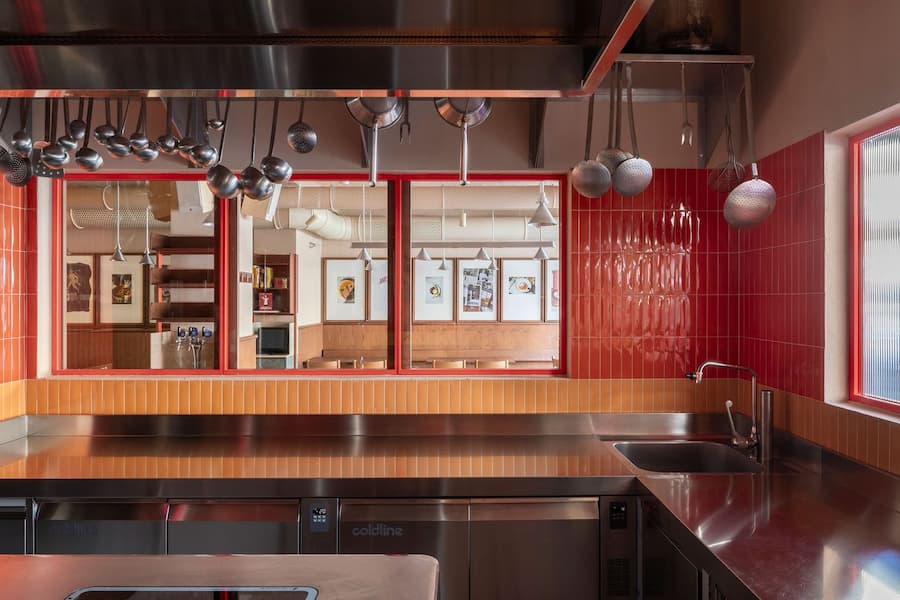
Beyond the dining room and down a few steps lies the “Santa Cantina”, a multipurpose space conceived and designed for tastings, workshops, and private events. A long communal table anchors the room, accompanied by a stainless-steel-topped kitchen counter and floor-to-ceiling wine-stacked shelves. Monochromatic terracotta walls, complemented by vibrant red accents, from shelving and cabinetry to stair railings and ceiling ducts, imbue the space with a theatrical, immersive quality, supporting conviviality, collaboration, and a fluid dialogue between food and wine.
In a moment when trattorias across Italy are having a renaissance, where fine-dining standards are being melded with daily conviviality, Santo Palato proves that heritage doesn’t have to be stifling. Through thoughtful design, today’s trattoria becomes elastic: able to stretch into the present without losing its essence.