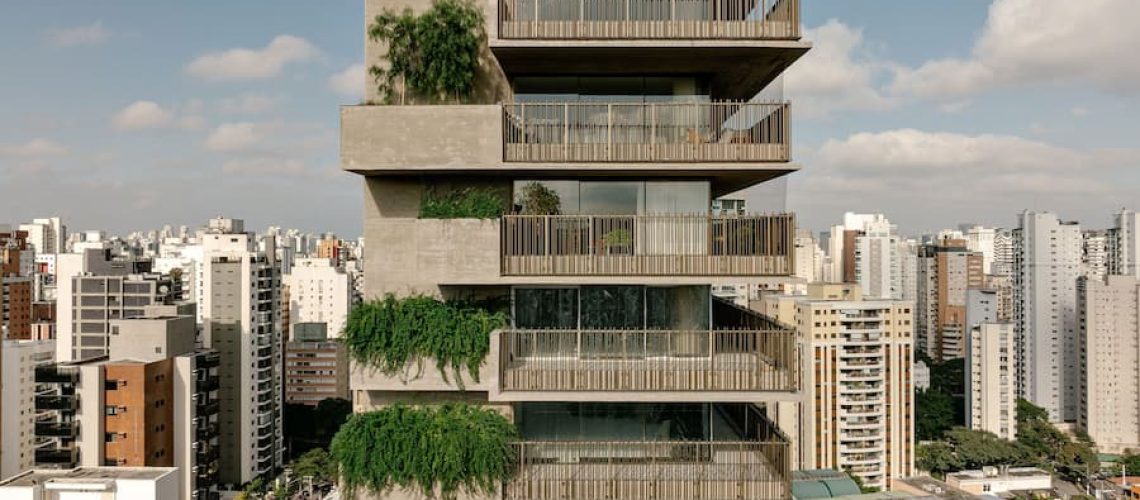
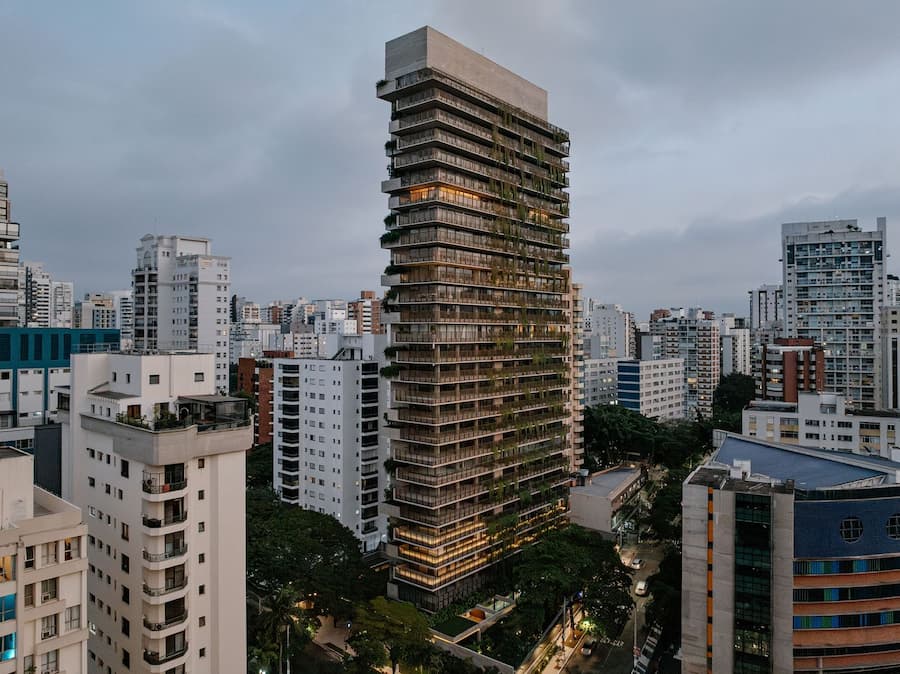
Rising above the leafy streets of Vila Nova Conceição, an upscale neighbourhood in São Paulo, Ibaté cuts a striking figure in the city’s skyline
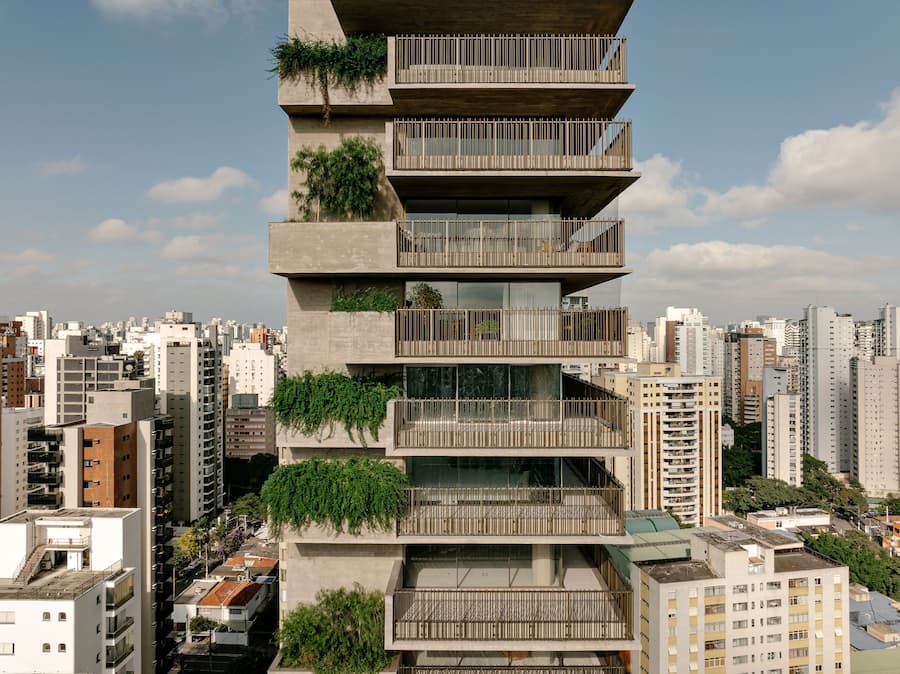
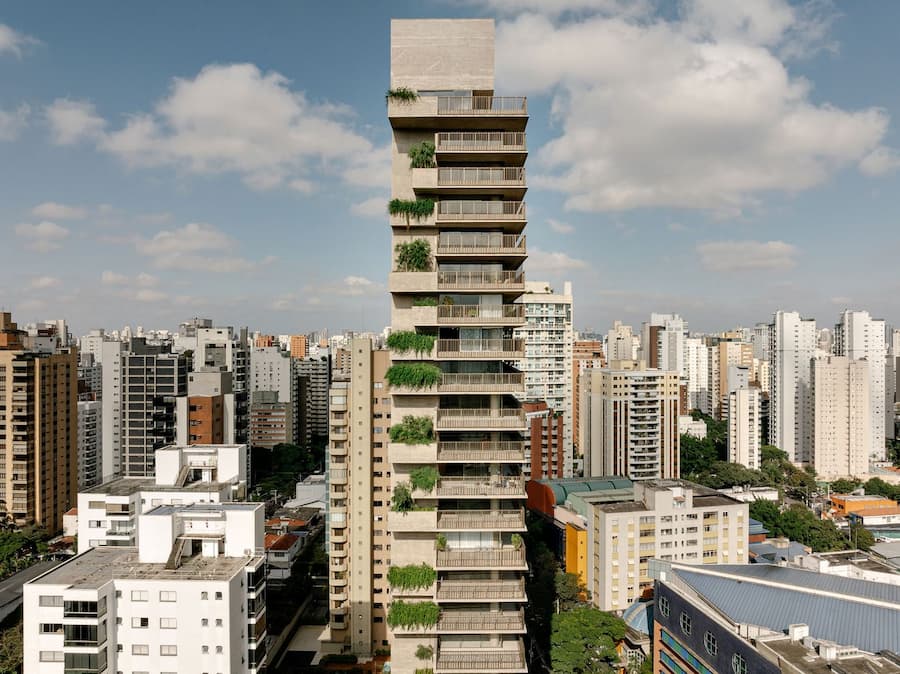
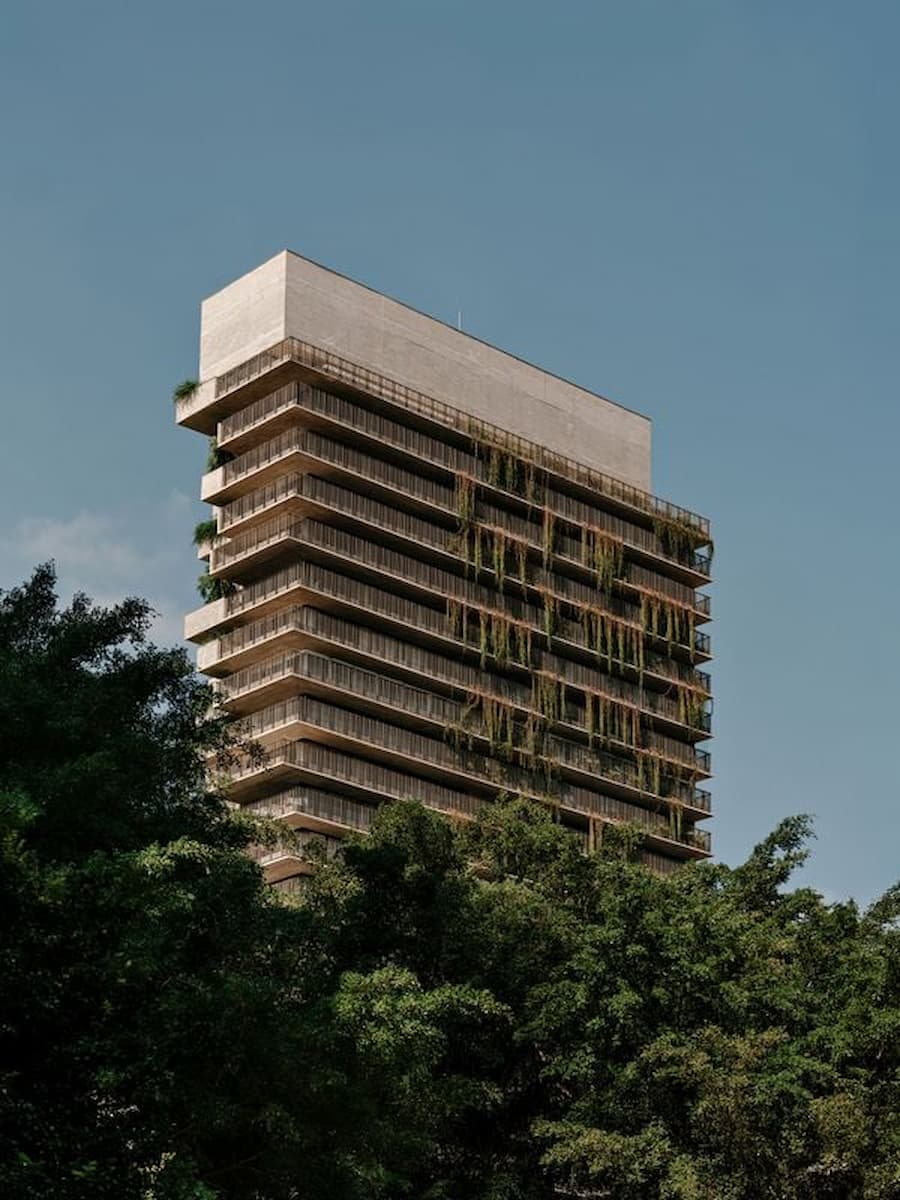
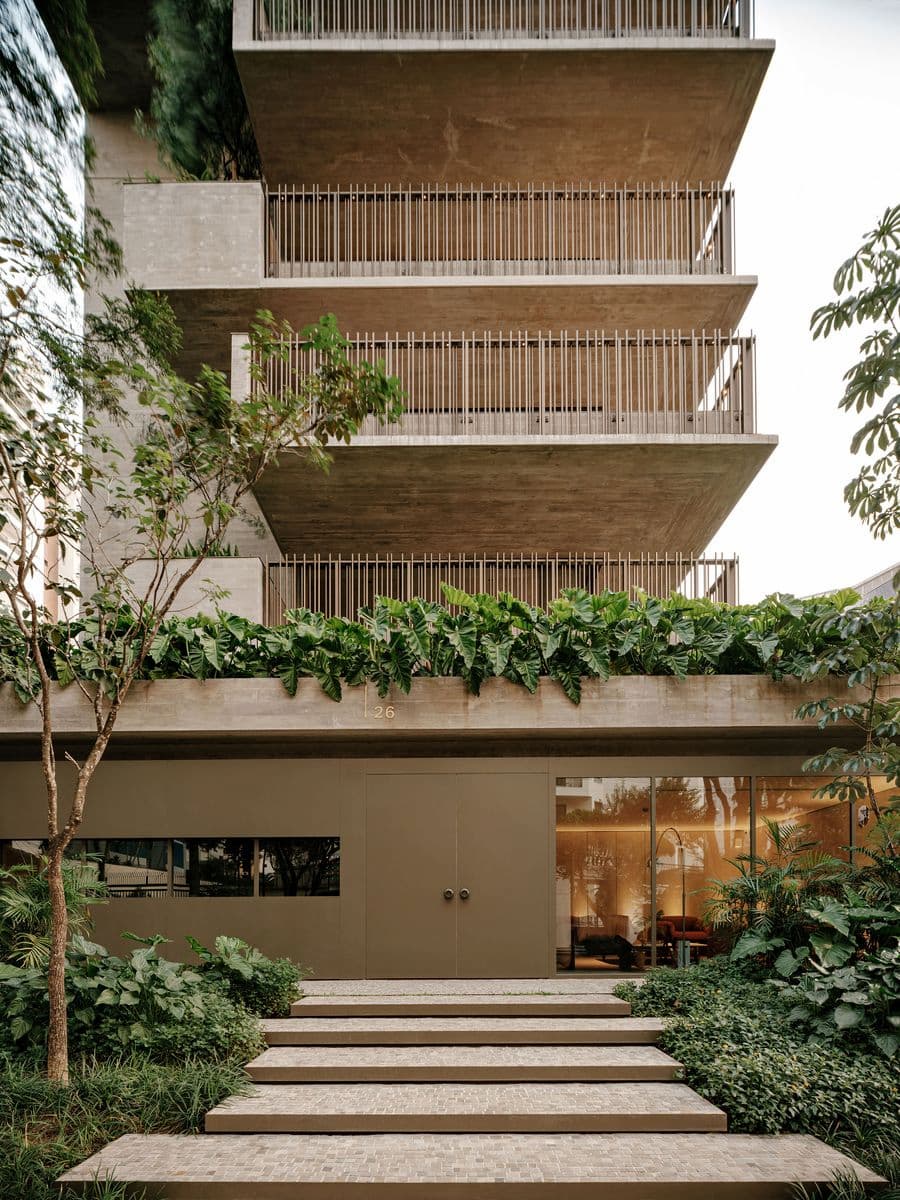
Rising above the leafy streets of Vila Nova Conceição, an upscale neighbourhood in São Paulo, Ibaté cuts a striking figure in the city’s skyline. Designed by acclaimed Brazilian architect Arthur Casas, the 21-storey residential tower stands out not for flamboyant gestures but for its slender, carefully proportioned form: a tall, narrow volume of ribbed concrete softened by cascading vegetation. At once monumental and porous, the building exemplifies Casas’ talent for reconciling the scale of the metropolis with the intimacy of domestic life.
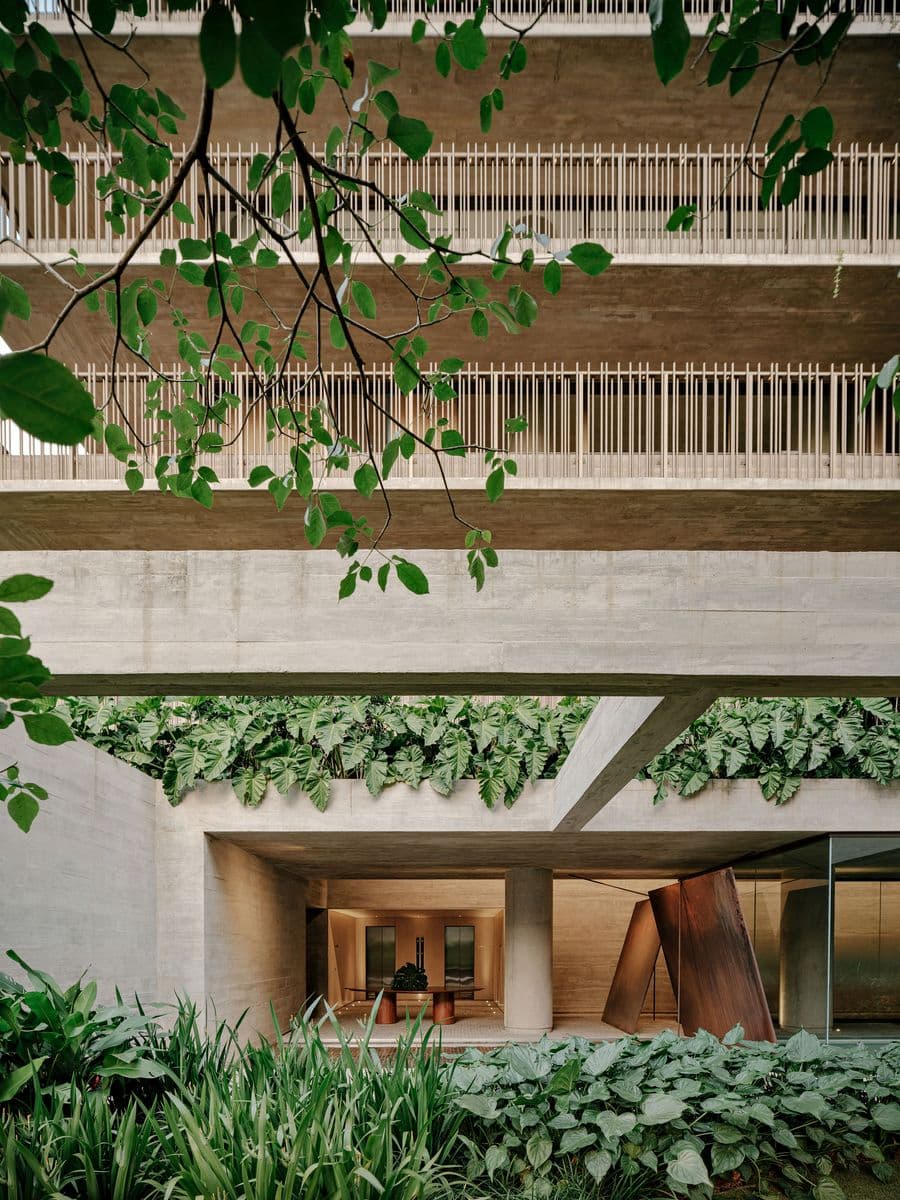
Casas’ work has always been marked by dialogue between scales, between modernist rigour and Brazilian sensibility, and between the city and nature. This project also mediates between São Paulo’s dense verticality and in this case, the neighbourhood’s quieter residential grid. The building is at once a vertical landmark and a porous urban gesture: rather than sealing itself off, it engages the street with an open, landscaped forecourt that doubles as a social threshold.
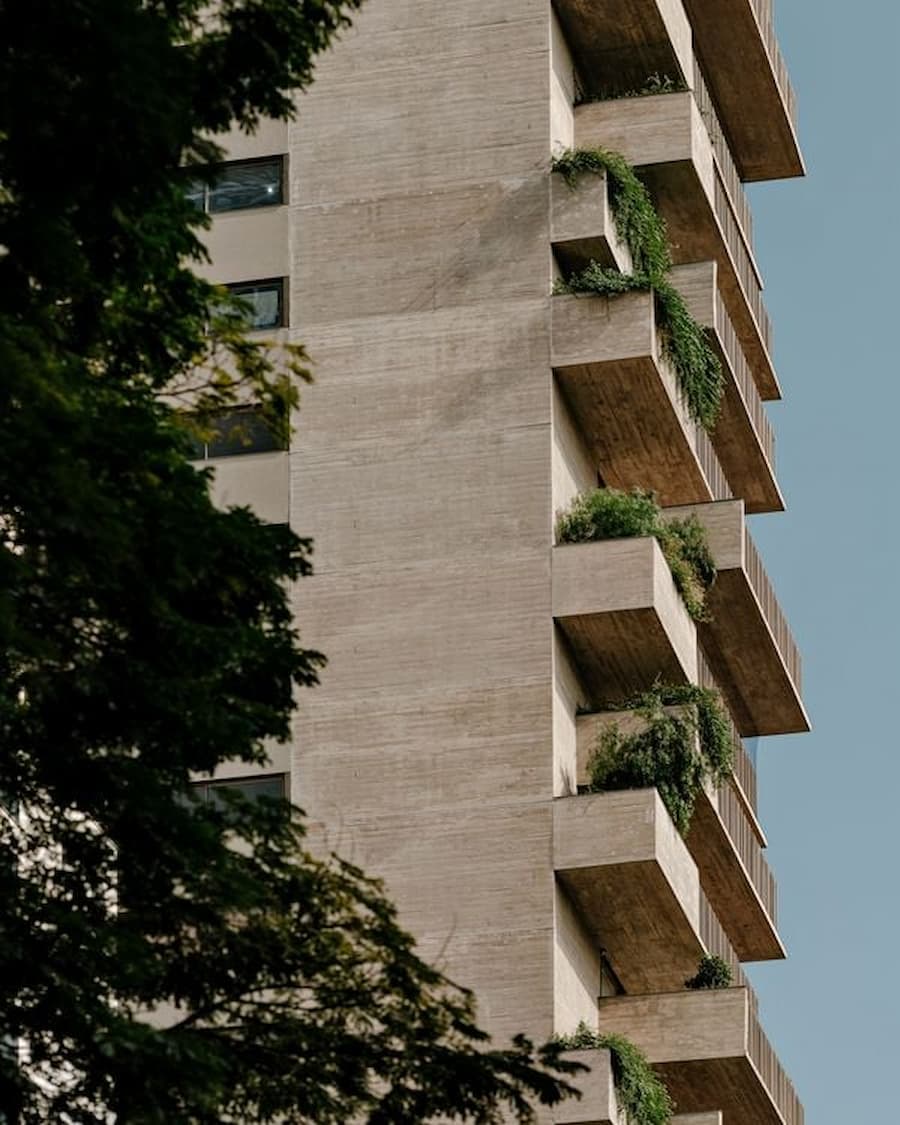
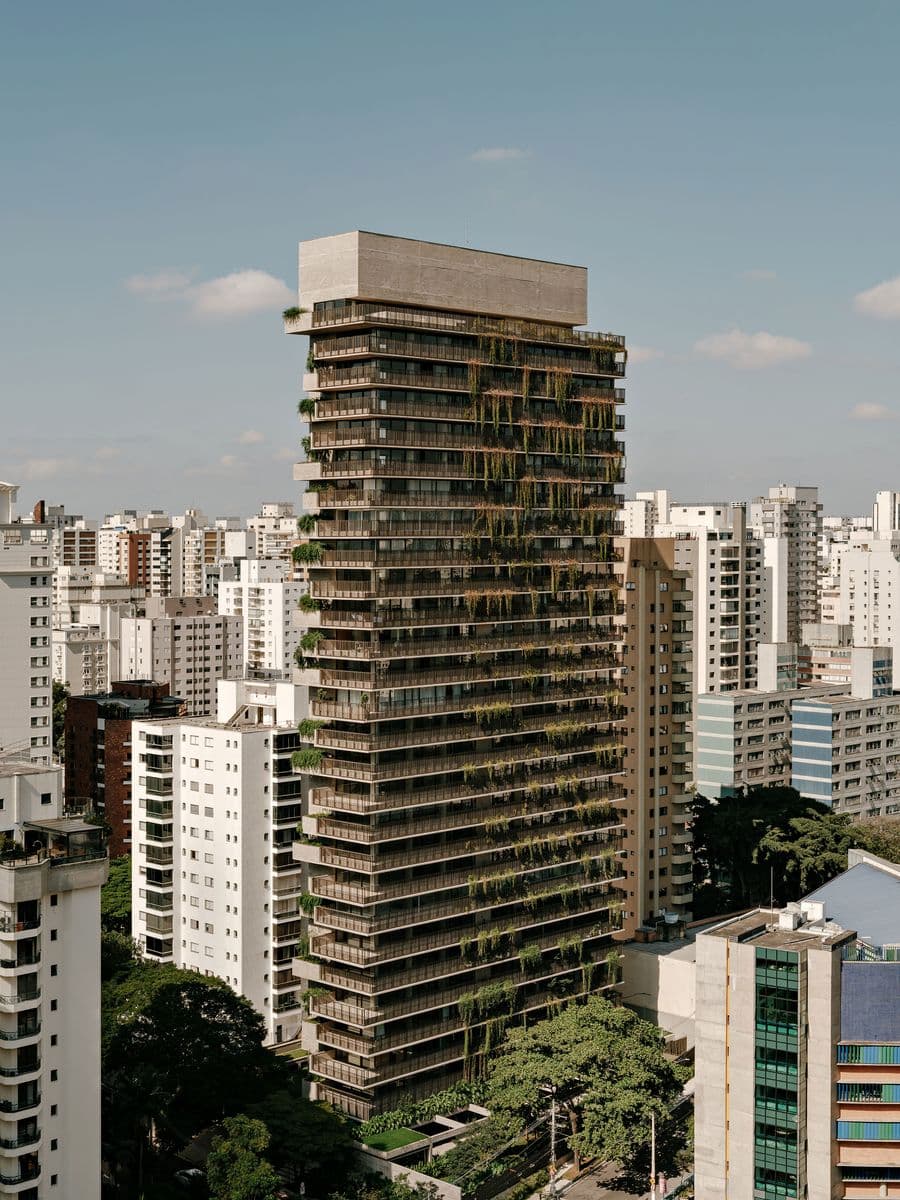
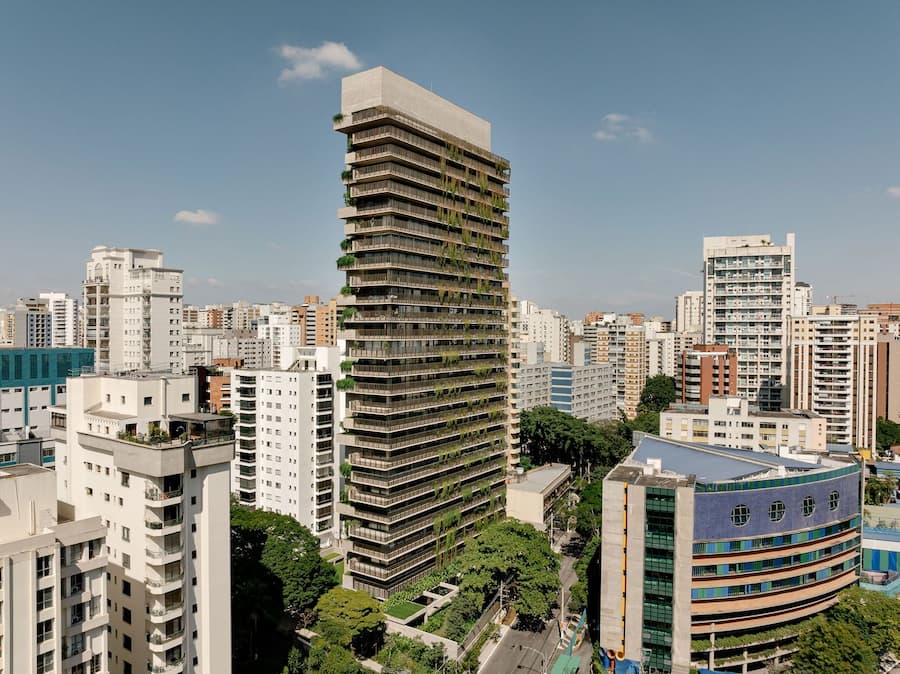
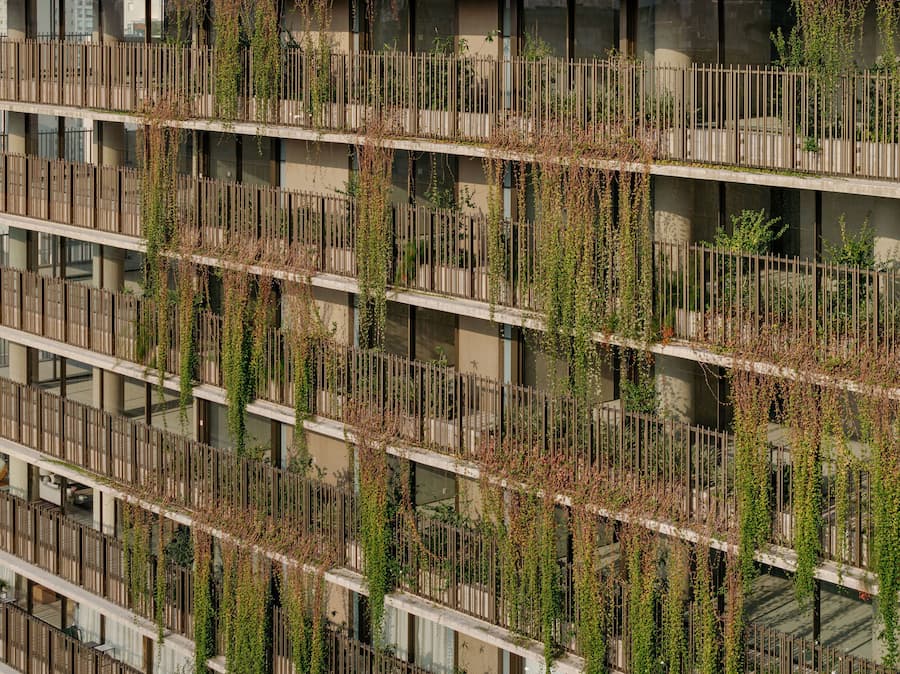
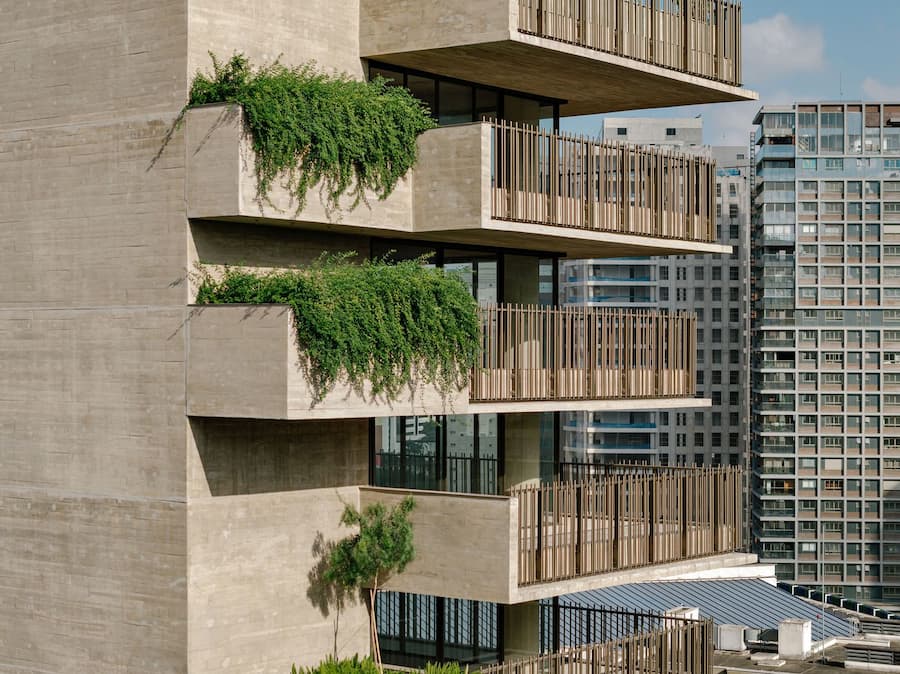
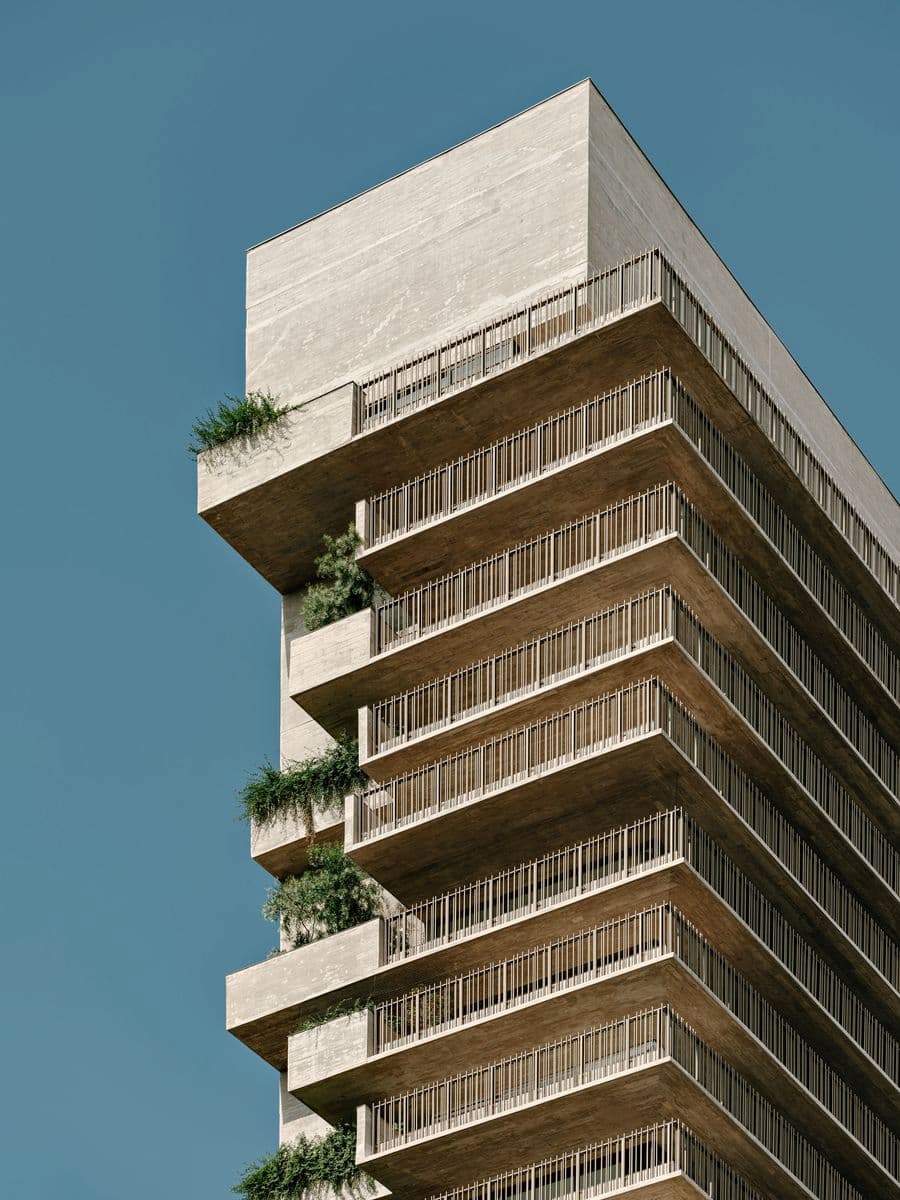
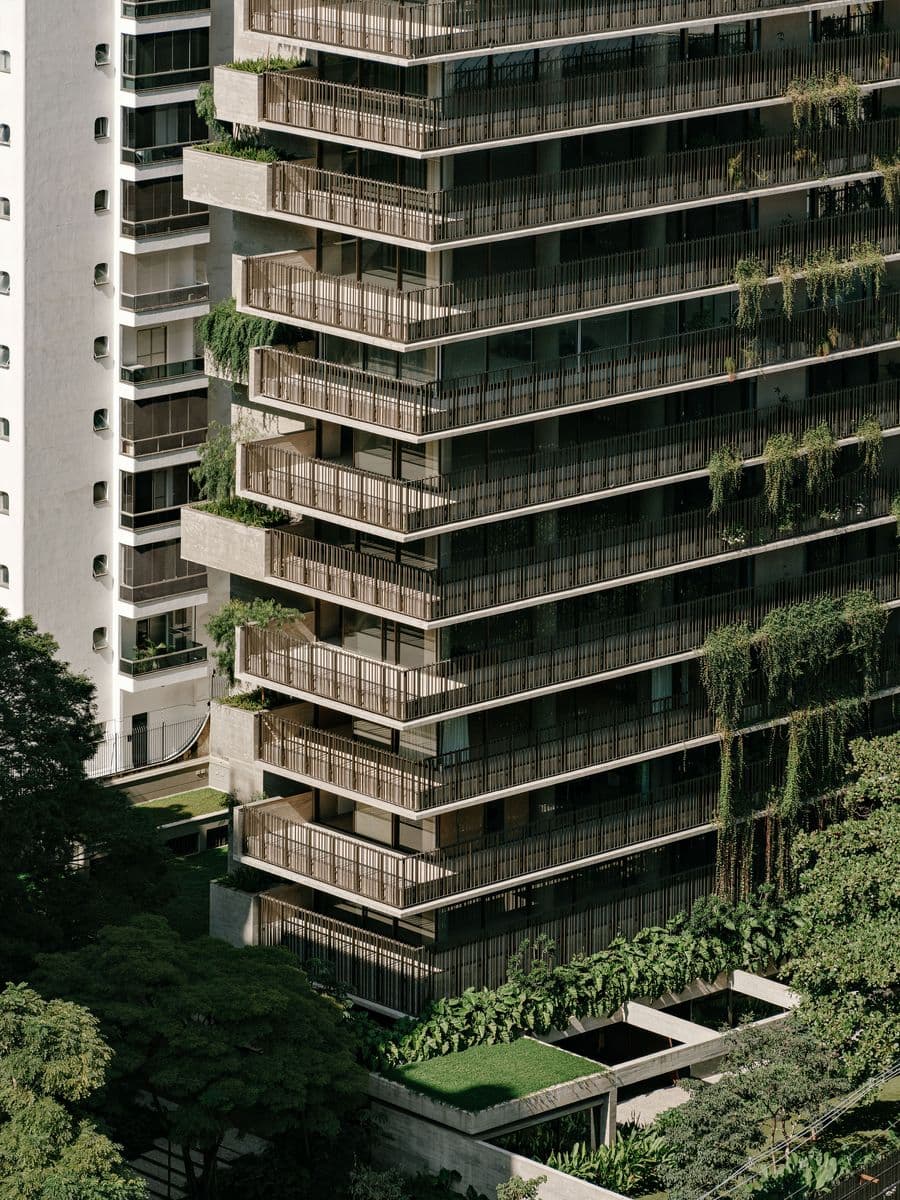
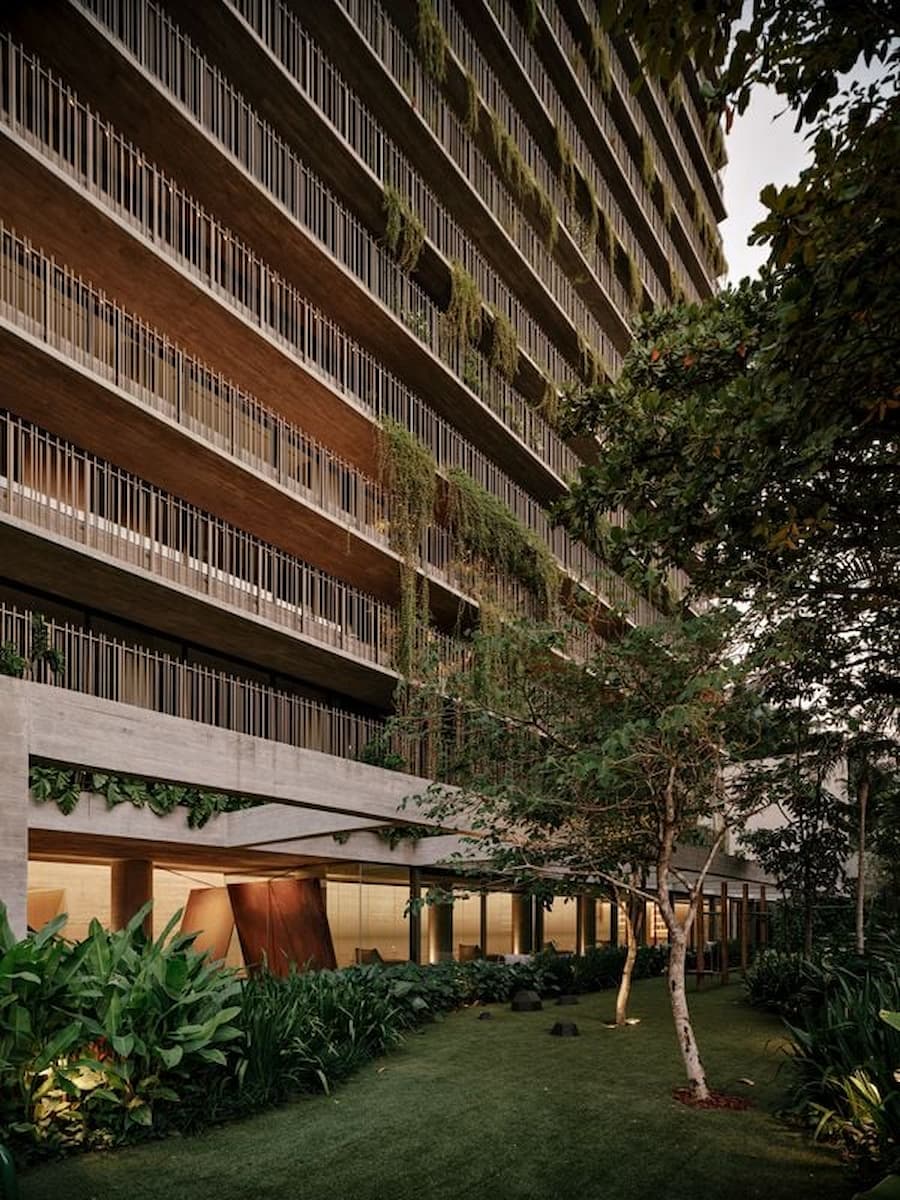
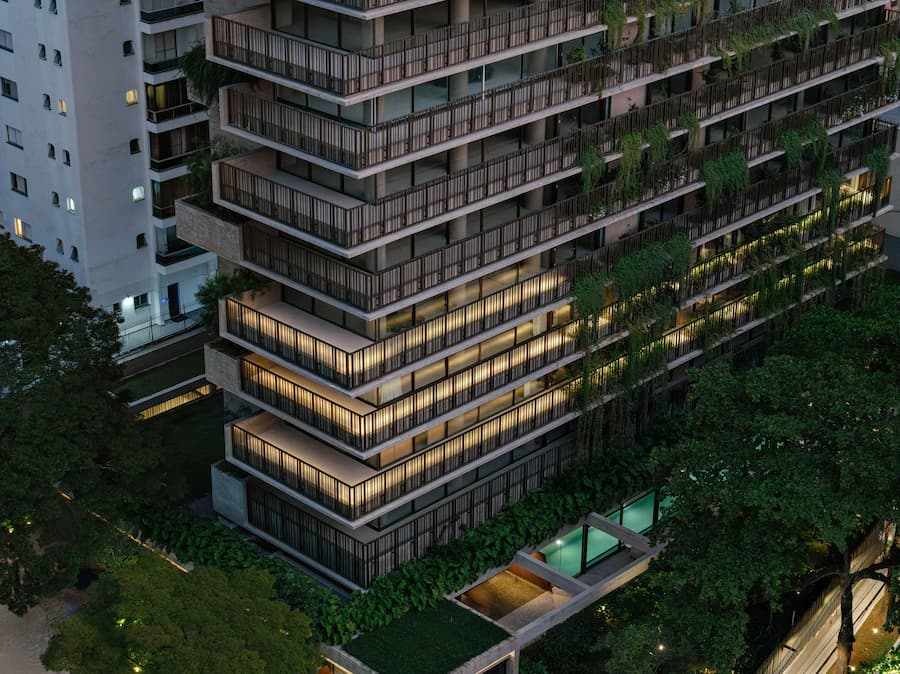
The most distinctive aspect of Ibaté is its elegant silhouette. Each floor accommodates a single 450-square-metre apartment, a layout that allows the building to remain unusually slim for its height. Continuous perimeter terraces wrap around every unit on two sides, punctuated by planters that alternate positions from floor to floor, a modulation that avoids monotony while introducing a subtle rhythm to the façades.
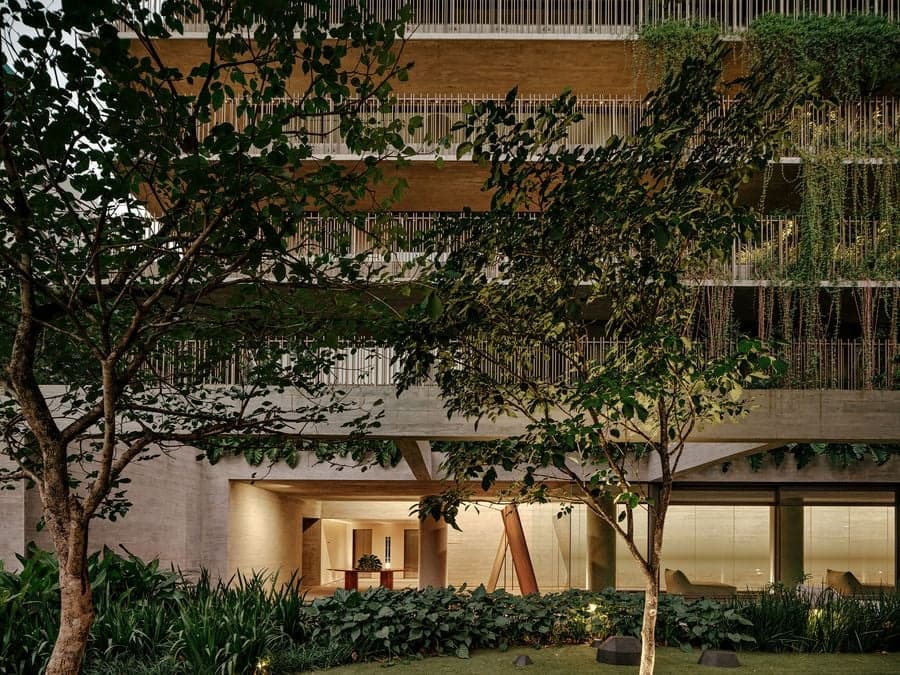
The decision to leave the structural concrete exposed, pigmented in warm tones and articulated with vertical ribs, reinforces the tower’s clarity of expression. Rather than cladding or embellishment, the material serves as both structure and surface, anchoring the building’s identity while accommodating the natural growth that animates it. Aluminium guardrails with a brass finish and large expanses of glazing complete the envelope, striking a balance between solidity and transparency. Over time, as climbing plants cascade down the ribbed concrete, the building’s stark volume will be softened by enveloping greenery.
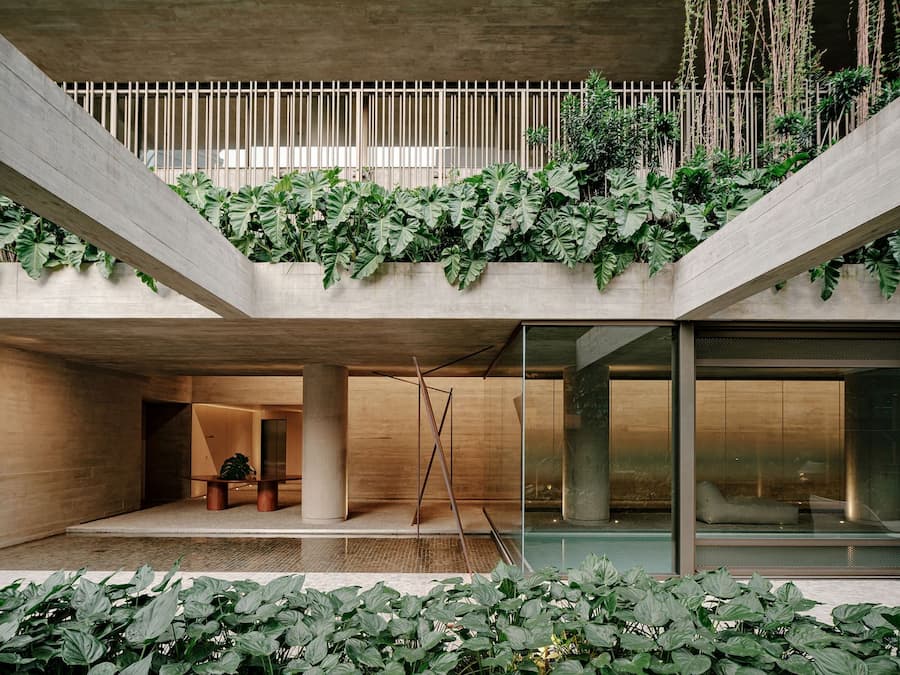
If the tower’s vertical presence commands attention, its ground-level public spaces quietly redefine the relationship between residential buildings and the city. Stepping inside, visitors enter a light-filled lobby that looks out onto the property’s landscaped gardens. A monumental corten steel structure by artist Túlio Pinto anchors the space, acting both as a sculptural focal point and as a subtle divider between the lobby and the indoor pool behind it. Running the length of the building, the pool’s slim, elongated form mirrors the tower’s footprint, with its enclosure of clear and translucent glass creating a permeable threshold that is neither fully inside nor outside.
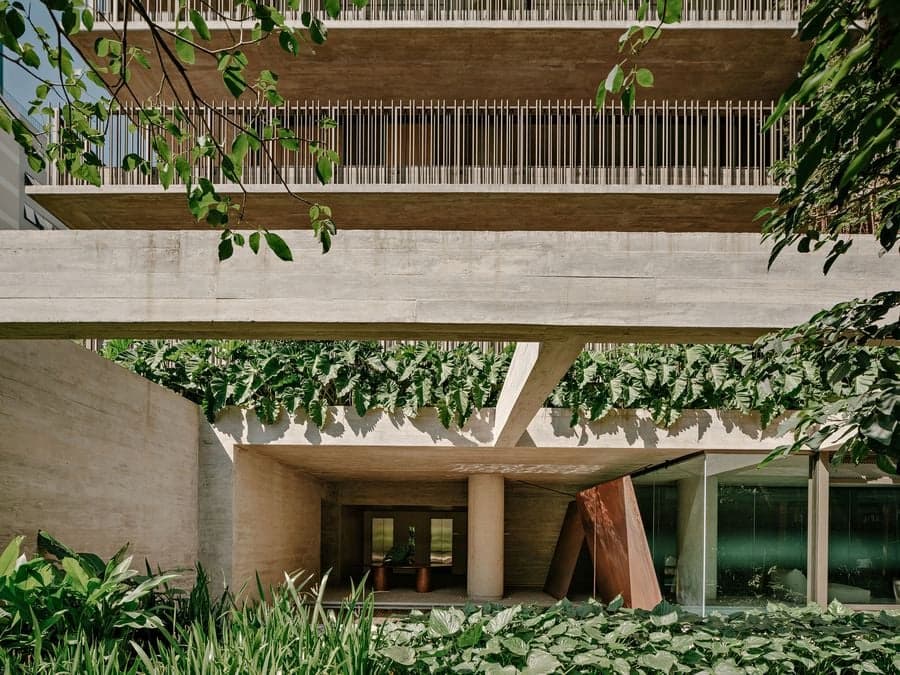
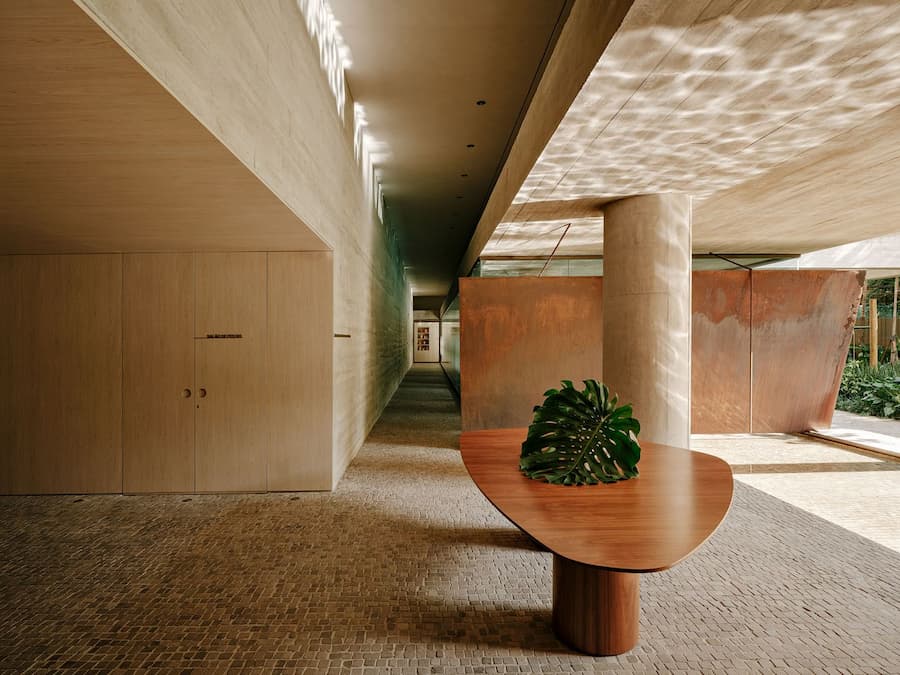
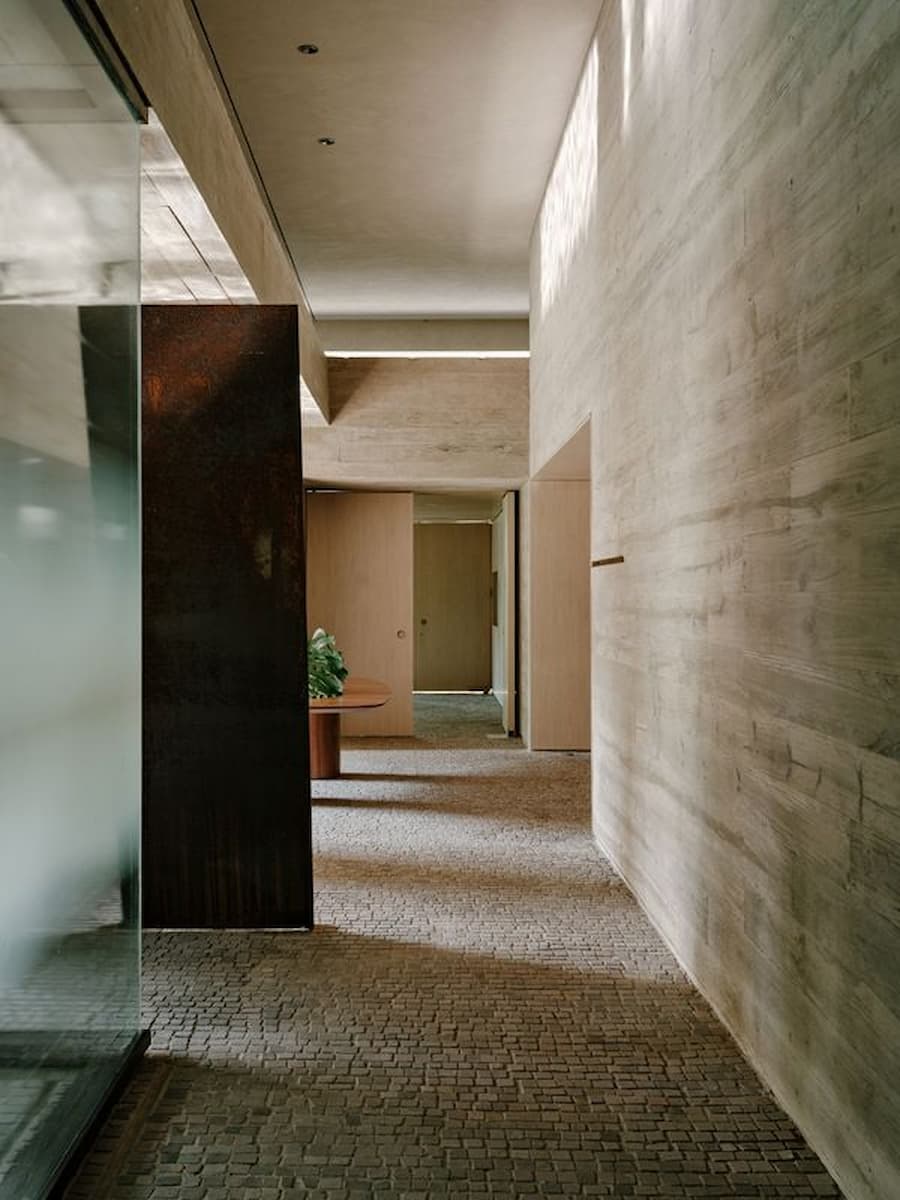
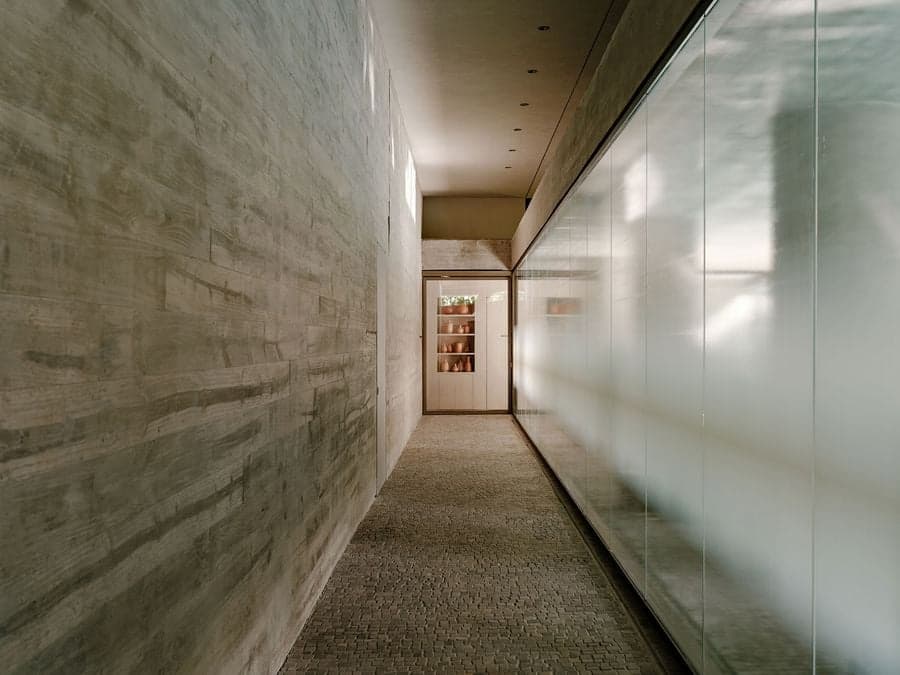
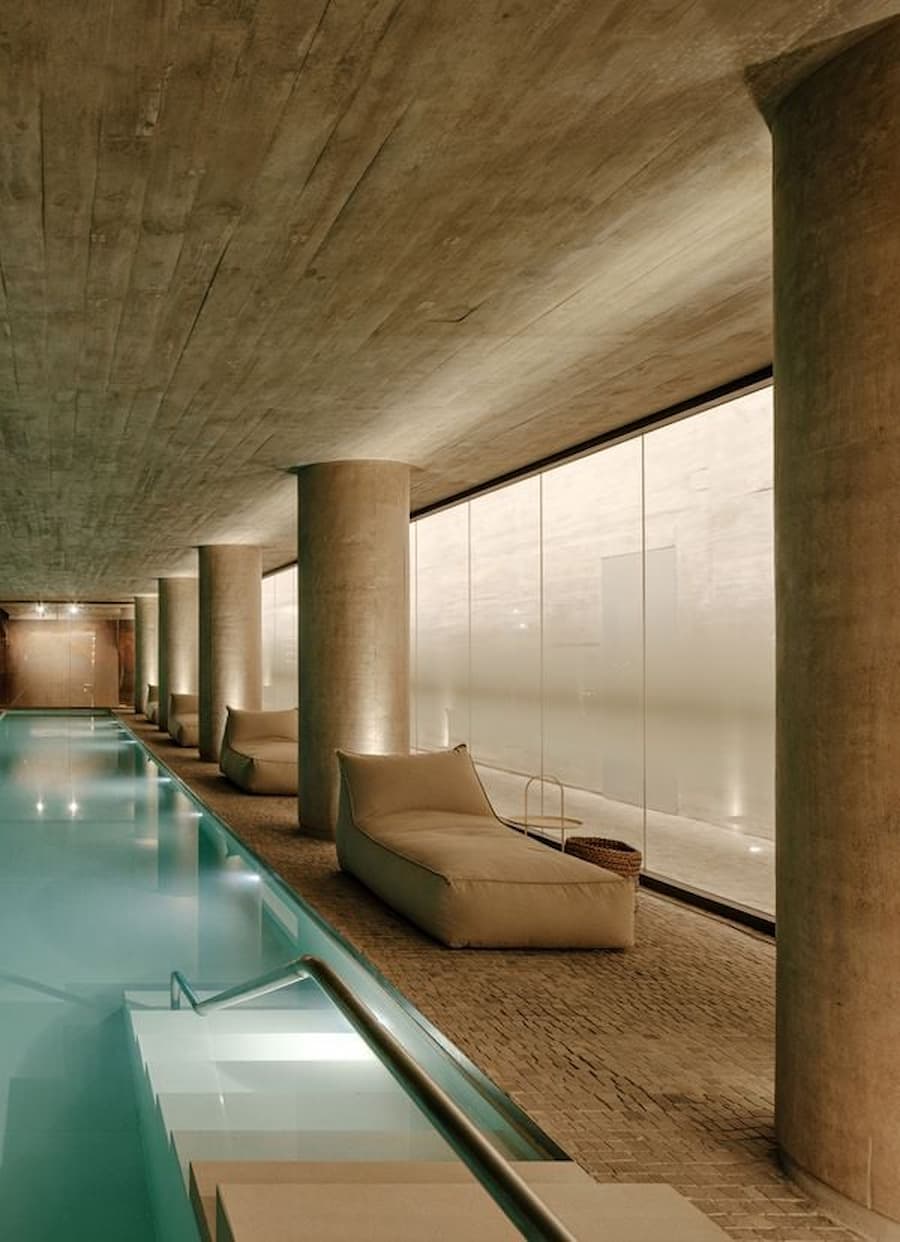
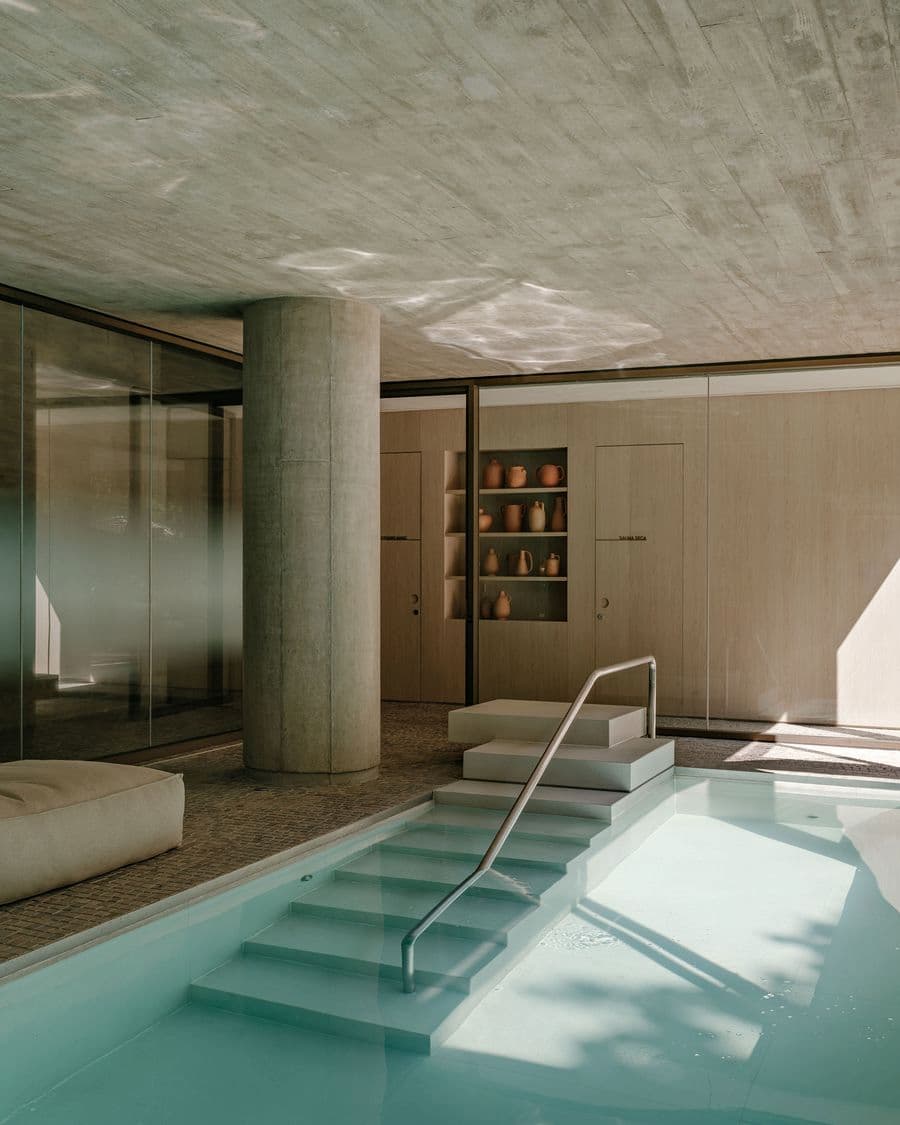
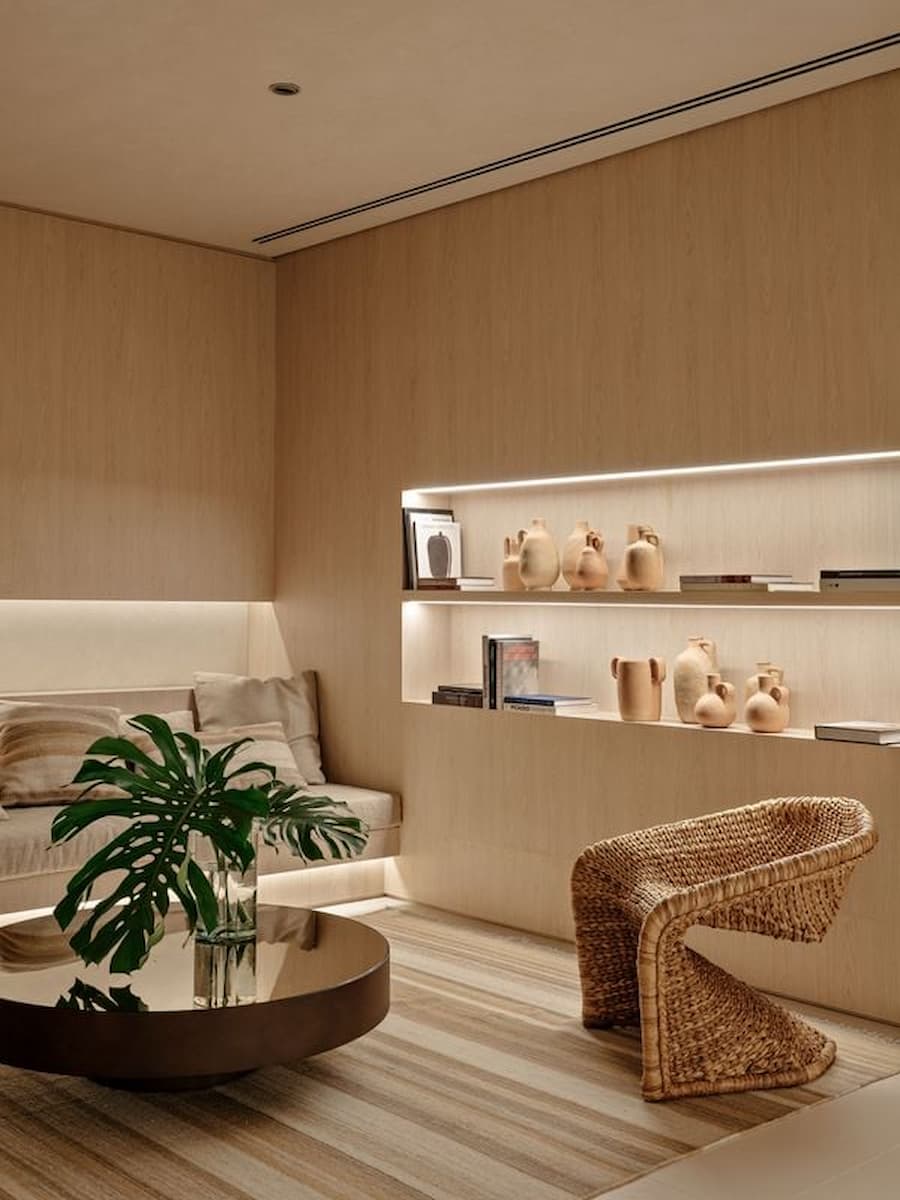
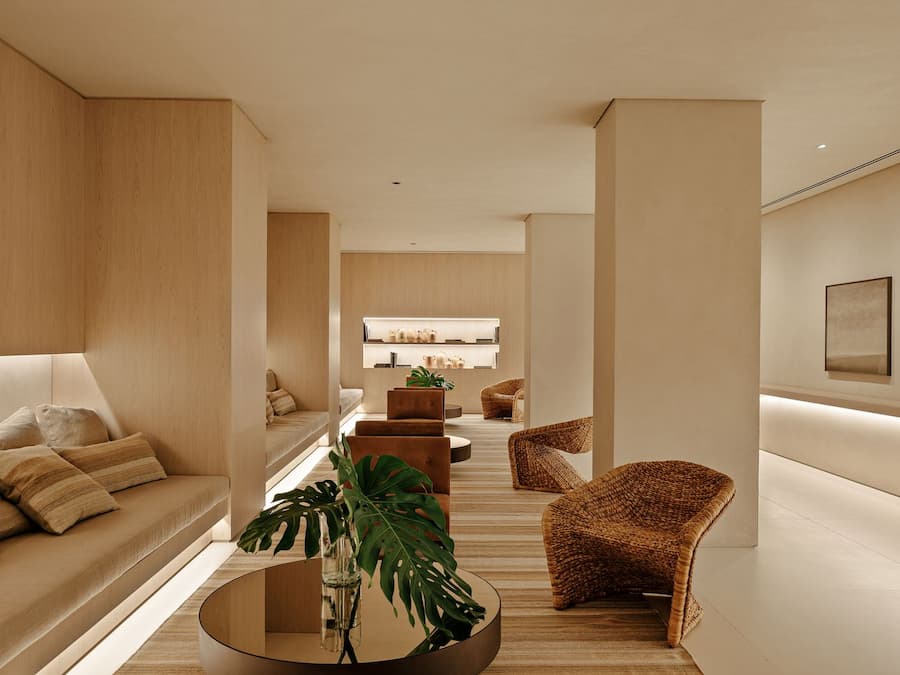
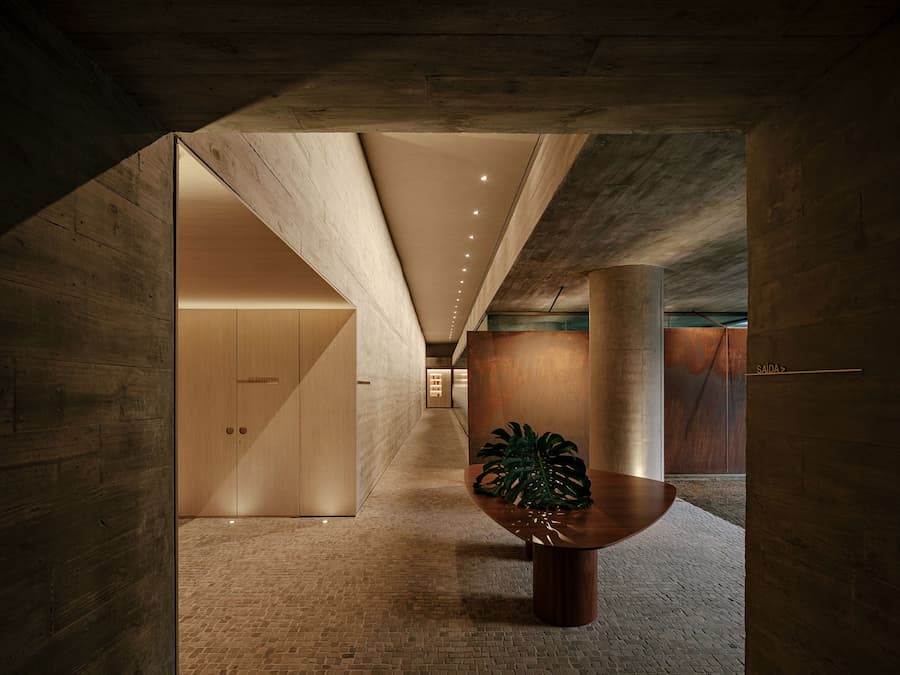
The interiors extend the architectural language with a restrained palette of concrete, wood, glass, and warm-toned metals. Here, the atmosphere is one of understated refinement: technical doors are disguised within seamless wood panels, while furniture by Arthur Casas appears alongside works by Jorge Zalszupin, Carlos Millan, and Marcelo Magalhães. Sunlight, filtered through water and glass, plays across concrete ceilings and cobblestone floors, imbuing the lobby and aforementioned pool with a contemplative calm.
For Arthur Casas, who has long moved fluidly between interior design, architecture, and product design, the Ibaté tower encapsulates the holistic ethos of his practice, including the importance of sustainability. The tower integrates solar panels for pool heating, water reuse systems, and electric vehicle infrastructure, underscoring Casas’ environmental commitment without diluting architectural clarity.
In a city where towers often compete for dominance, this project distinguishes itself through restraint and coherence. Its contribution lies less in spectacle than in synthesis in what is a convergence of constructive rationality, spatial generosity, and contextual sensitivity. By masterfully interweaving structure, material, and landscape, Casas has given São Paulo not just another high-rise, but a living, evolving presence in permanent dialogue with the city that sustains it.
▏Aesthetics centers in Kanikachic’s highlighting artist/designer experiences
Passionate perspectives on art, artists, contemporary architecture, and ideas that shape culture today
Want your project to be featured? Showcase your work through Kanikachic and (E-mail us: [email protected]) your most inspiring moments.
All Photography, Styling, Fotos, Pictures and Videos Shared with Permission from the [Yatzer] Website
──────────────────────────────────────────────────────────────────────────────────────────
Per essere insostituibili bisogna sempre essere diverso. ▎Ci sono immagini affascinanti qui, e l’affascinante giornata di insieme! xo KanikaChic