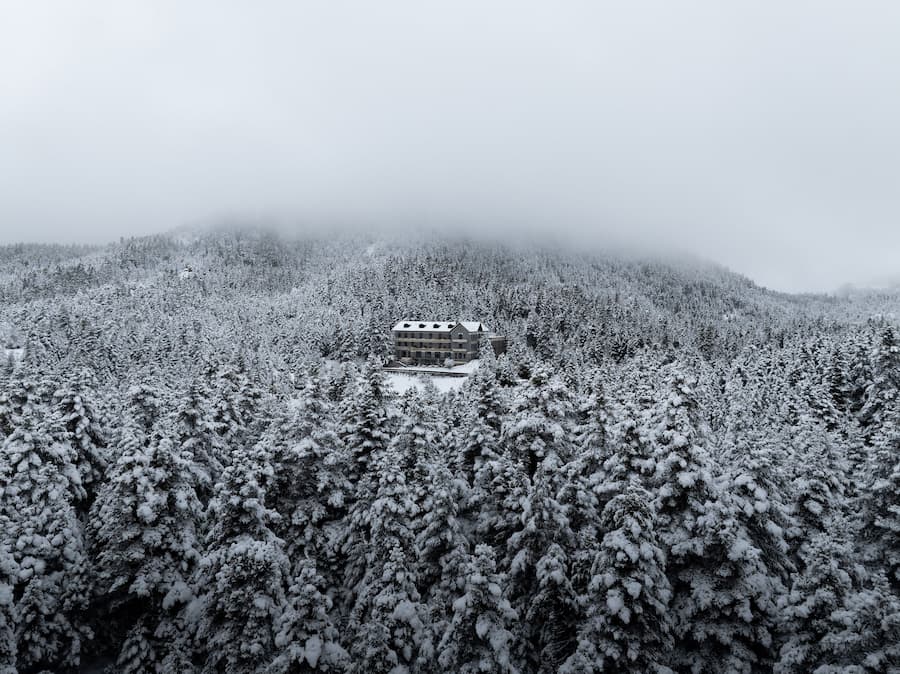
In The Magic Mountain, Thomas Mann suggests that certain places have the power to profoundly shape one’s inner world—a theme that resonates throughout the novel as its protagonist, Hans Castorp, is gradually transformed by the rarefied atmosphere of a mountaintop sanatorium. Though Mann’s “Berghof International Sanatorium” in the Swiss Alps is fictional, he might just as well have been describing MANNA, a five-star retreat nestled in the Arcadian forest of the Peloponnese. For here too, altitude alters perception, time slows, and the world below feels, mercifully, far away.
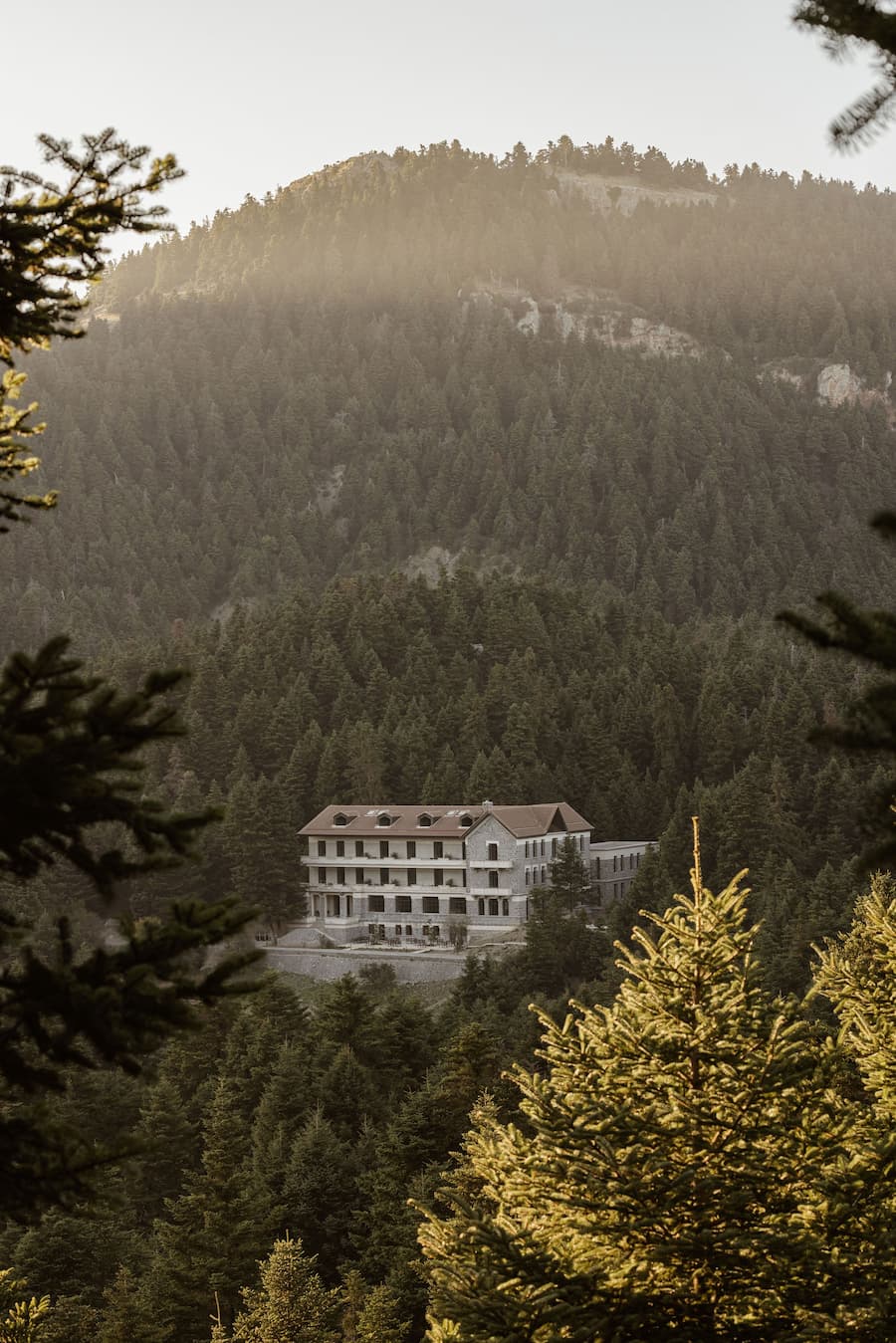
MANNA is no literary invention; it occupies a former tuberculosis sanatorium built in the late 1920s, left abandoned for over eight decades until revived by Athens-born entrepreneur Stratis Batagias. As a child, Batagias would camp in the nearby village of Magouliana and wander up to the crumbling structure, sensing even then what the building might one day become. That same intuition has since transformed into a mountain sanctuary where design, history, and nature converge.
The connection to The Magic Mountain deepens when considering MANNA’s location: Arcadia, a place that has long straddled myth and geography. In Greek mythology, it symbolised a pastoral utopia, where life was simple, harmonious, and untouched by the churn of civilisation. During the Renaissance, it came to represent the ideal of living in equilibrium with nature—a notion revived here not as nostalgic fantasy but as living practice. Much like Mann’s Magic Mountain, Arcadia offers a vantage point not just in space, but in thought, detached from all urgency, and tuned to deeper rhythms.
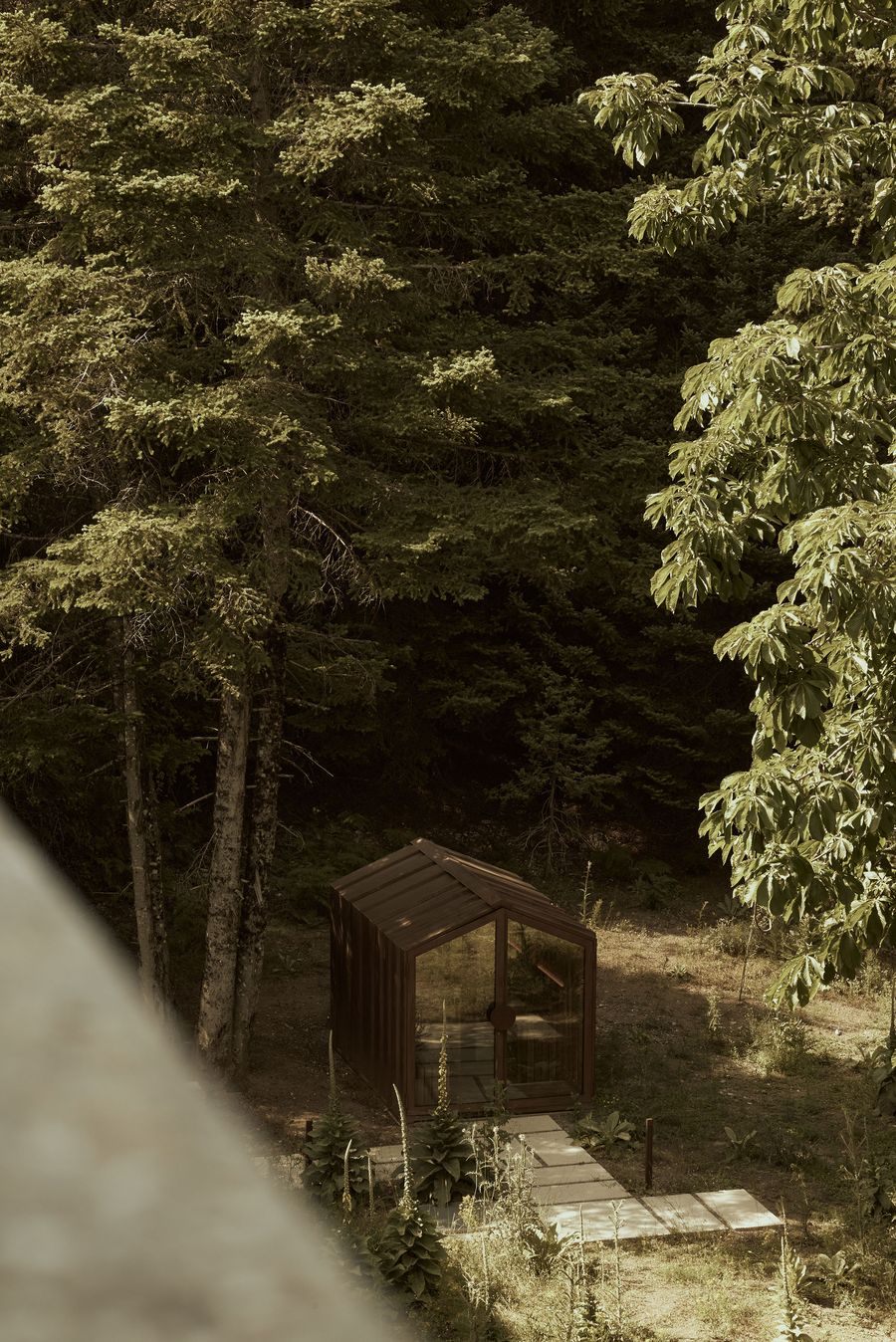
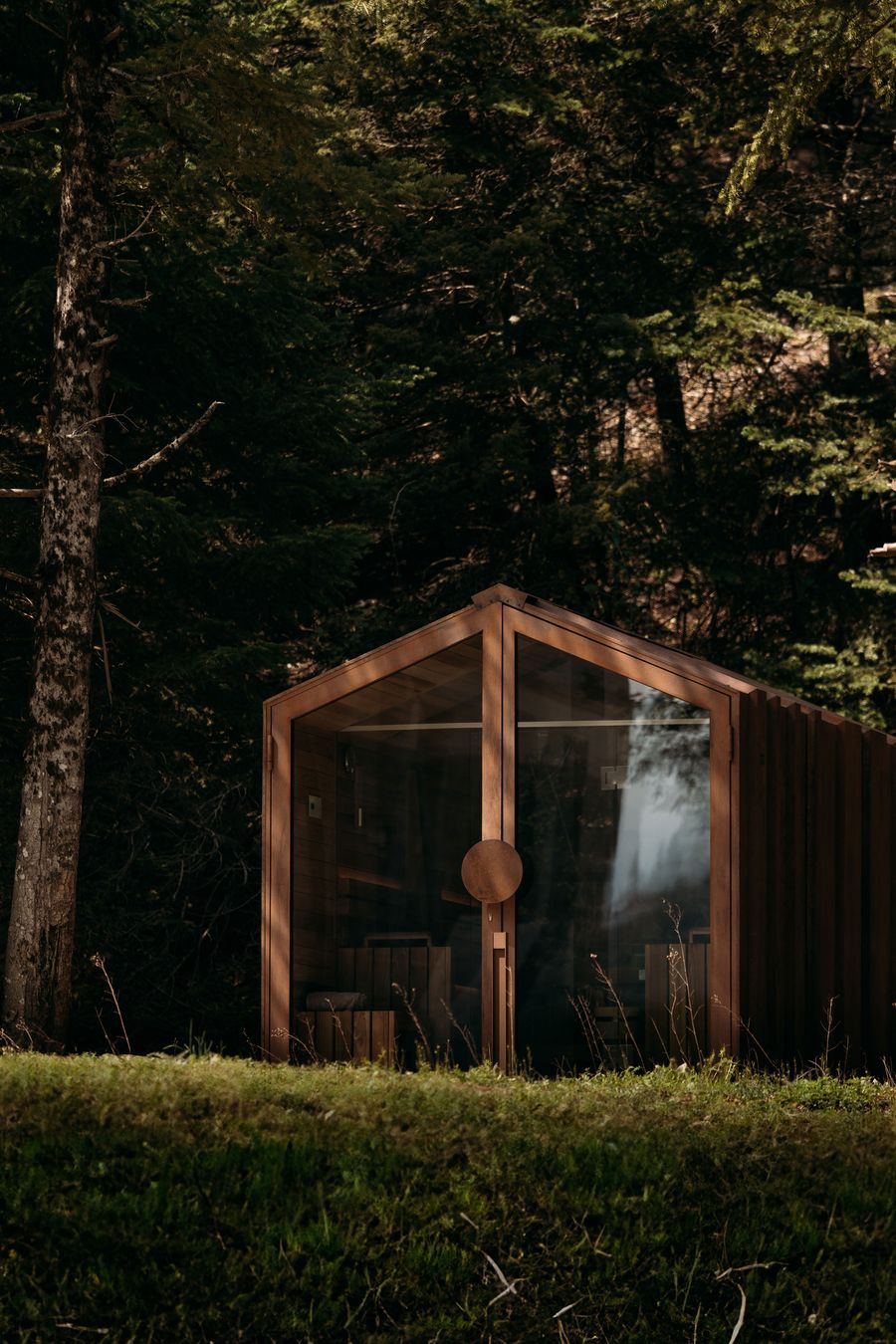
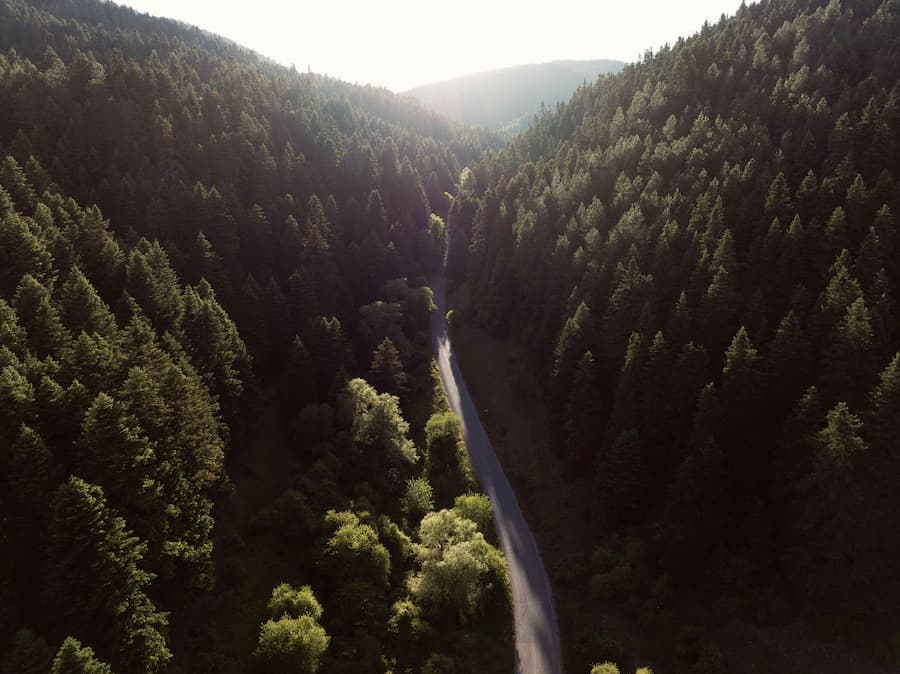
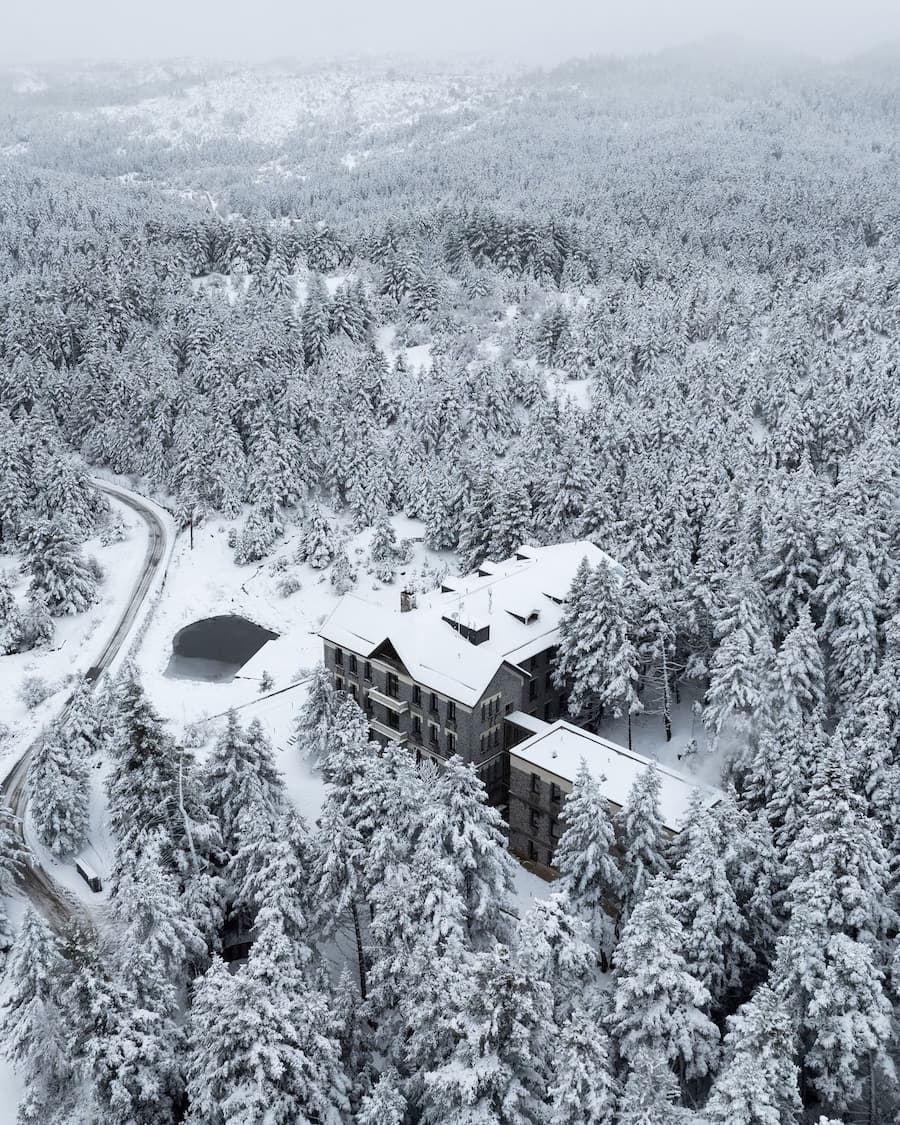
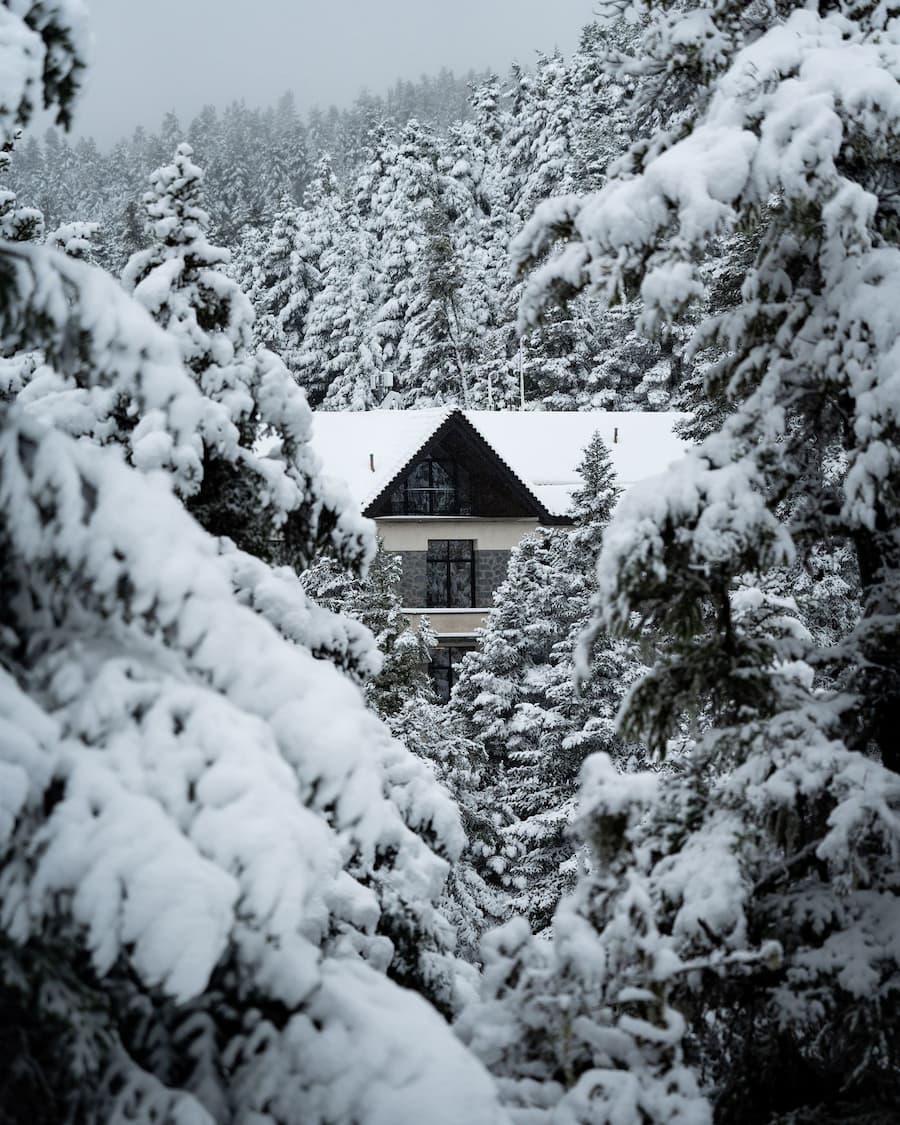
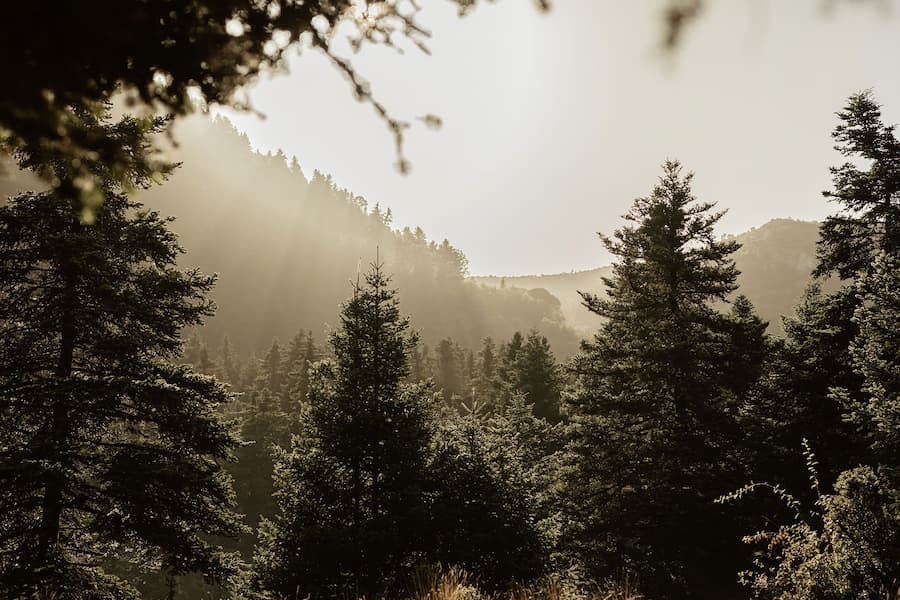
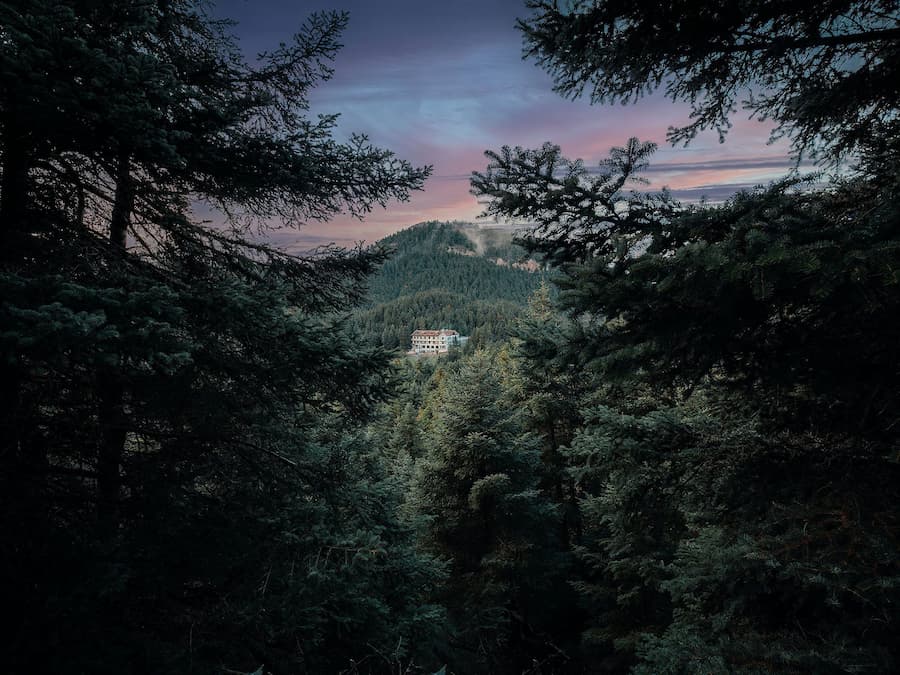
Set at an altitude of 1,200 metres amidst a pristine fir forest just two hours from Athens, MANNA unfolds across a restored heritage structure with 32 rooms and suites, a destination restaurant, and a subterranean wellness hub. But this is not a story of polished luxury grafted onto historic bones. It’s a story of recovery: of the land, the building, and perhaps even the self.
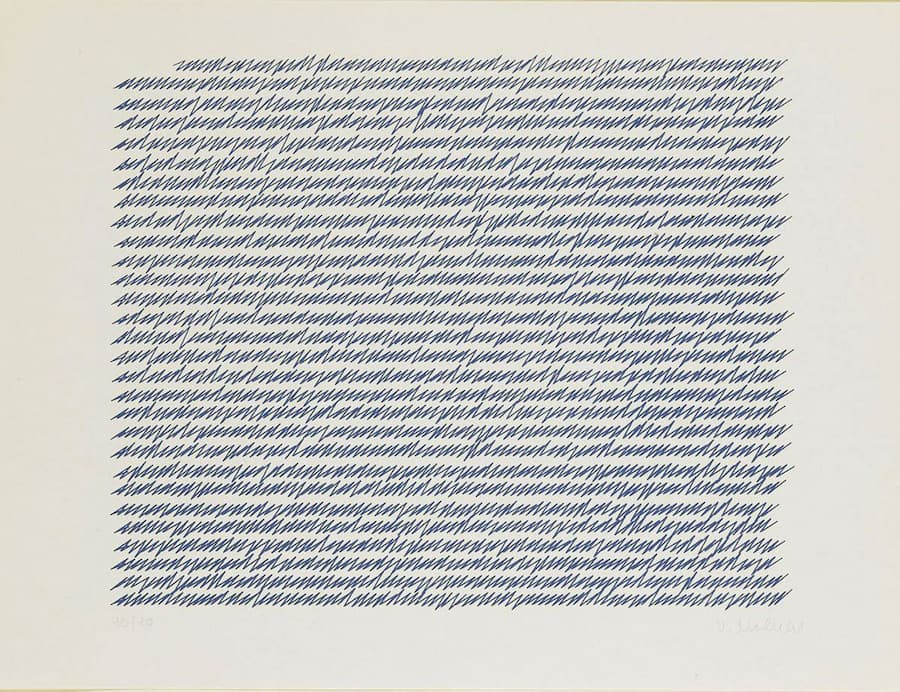
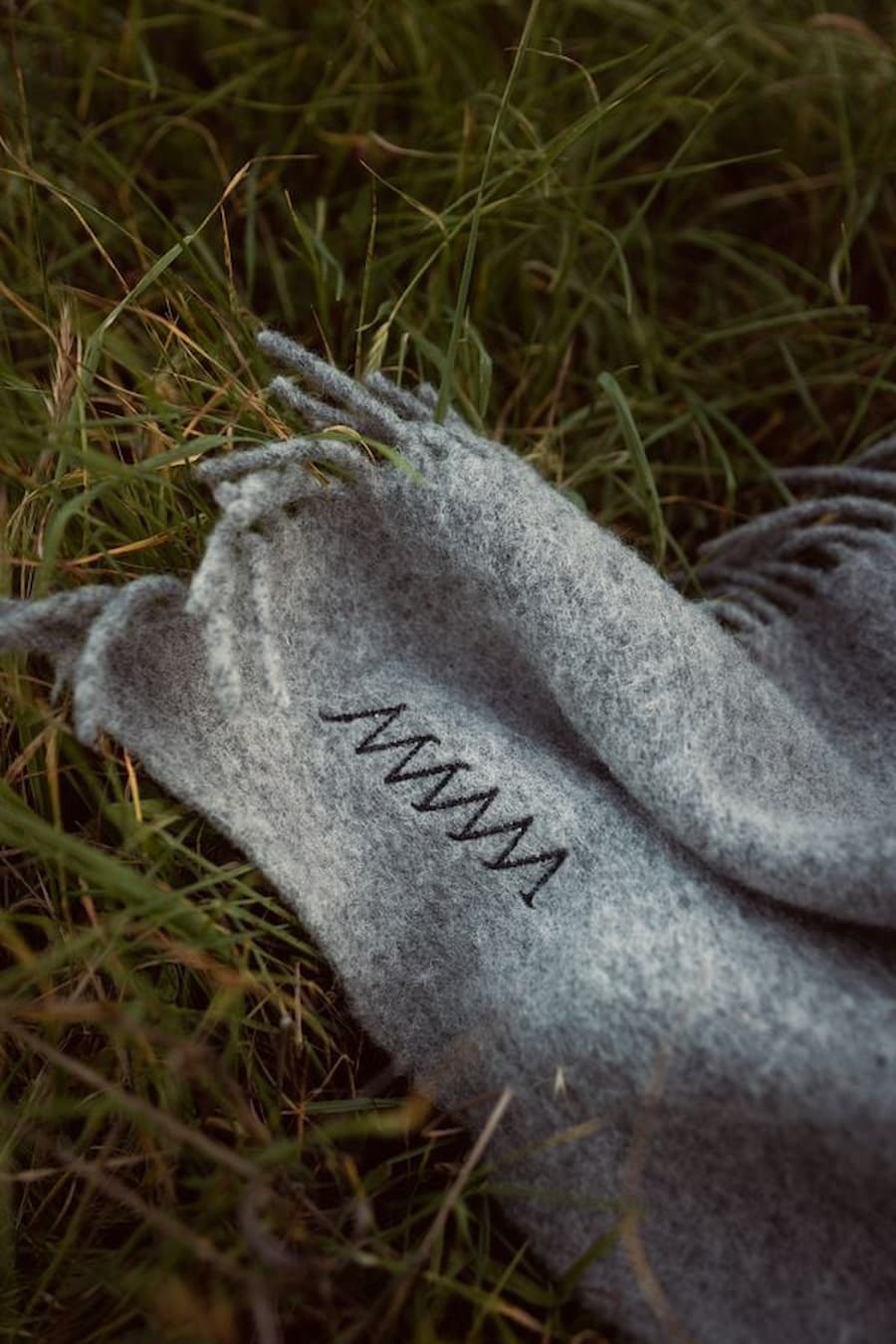
Opened in 1929, the Manna Sanatorium was named after its founder, Anna Mela, an aristocrat who devoted her life and fortune to caring for wounded soldiers and tuberculosis patients. Known affectionately as the “Soldier’s Mother” (mana means “mother” in Greek), her legacy lives on in the hotel’s name, which retains the original title with the addition of an ‘N’—a wordplay on her own name: M-Anna. Even the hotel’s brand identity reflects this layering of personal and cultural memory. Designed by Athenian studio MNP Athens, the hotel’s serrated logotype may have been inspired by the setting’s invisible energy and vibrations, but in our eyes, it recalls Vera Molnár’s “Letters from My Mother” series of computer-generated prints, an apt reference, considering that the works simulate the Hungarian artist’s elderly mother’s handwriting as it faltered with illness.
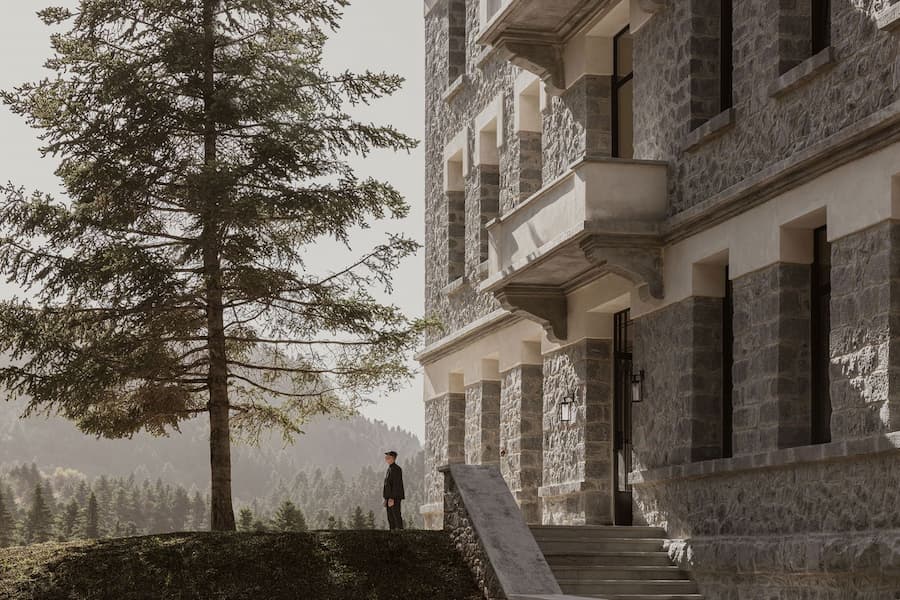
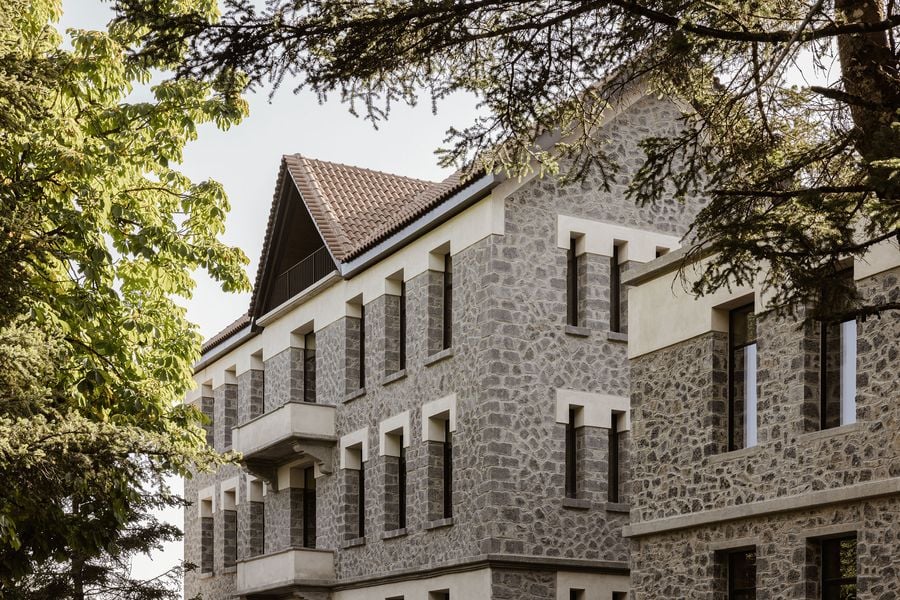
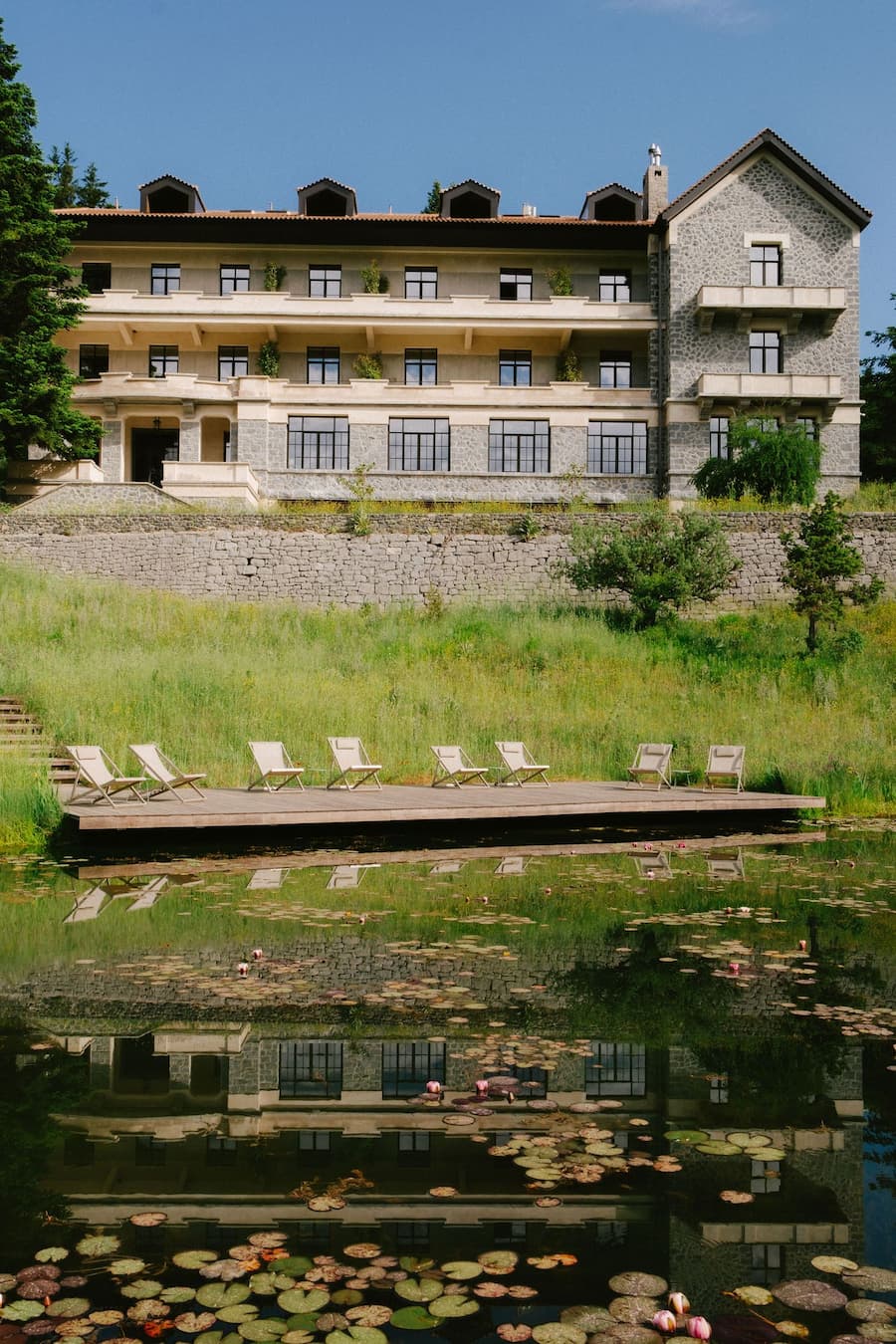
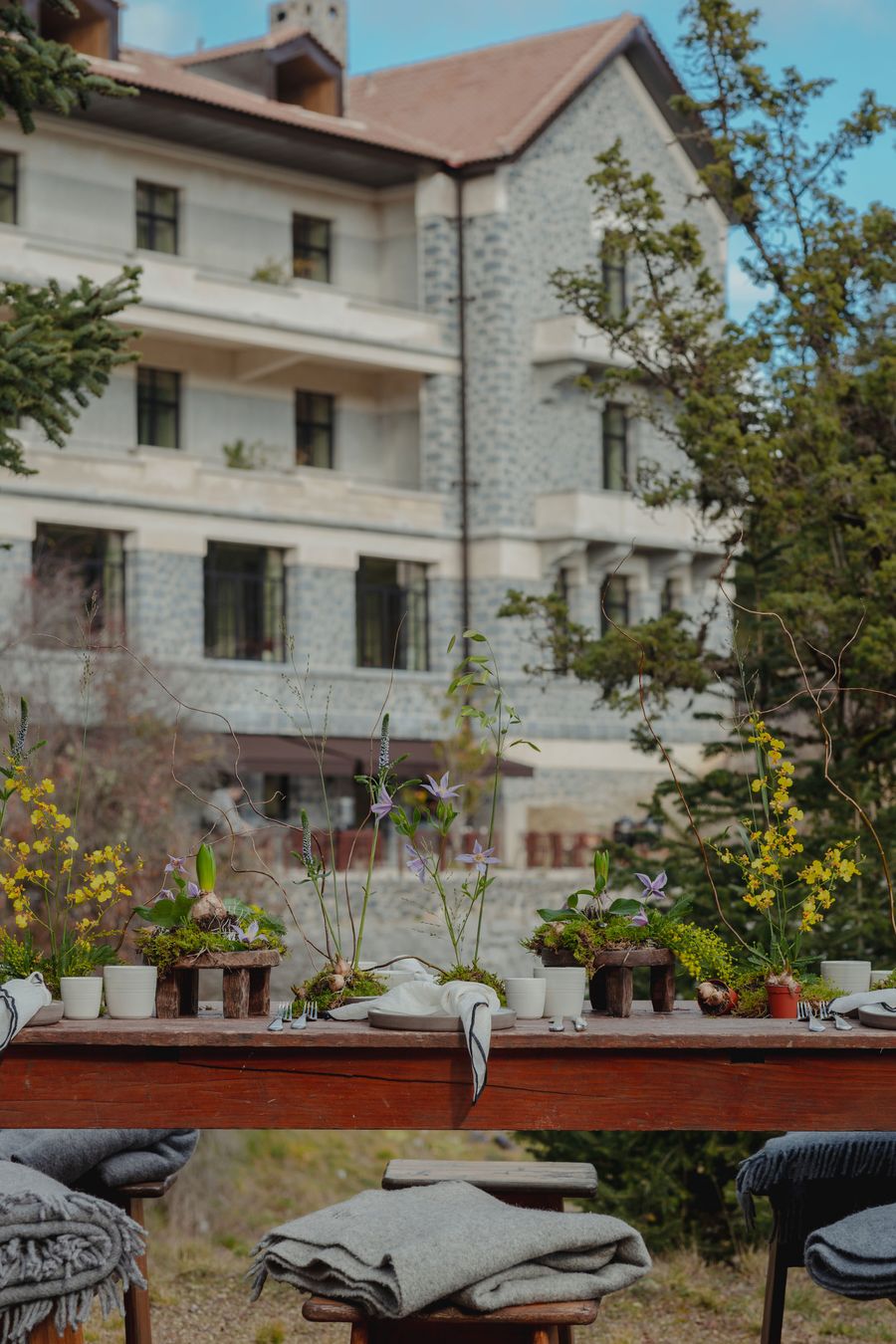
Originally designed by Swiss architects in the late 1920s, the sanatorium was unusual for Greece at the time; its stone-clad symmetry and high gables reflected Central European typologies rather than local neoclassicism. Regardless of its architectural merit, the arrival of penicillin in 1938 rendered the facility obsolete, and over time, it fell into slow decline. Stone sills were looted, wooden beams repurposed for a hospital in Tripoli, while the surrounding landscape gradually reclaimed the structure.
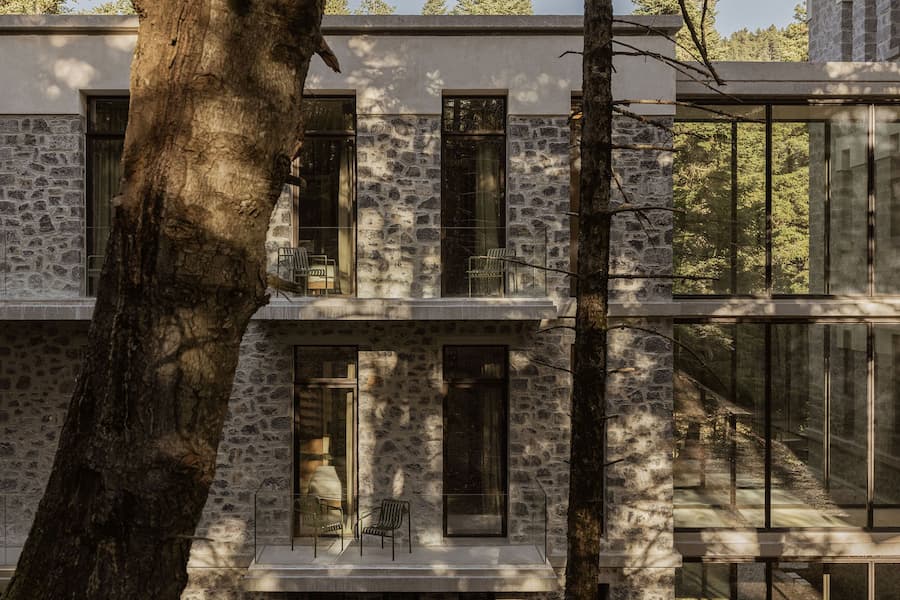
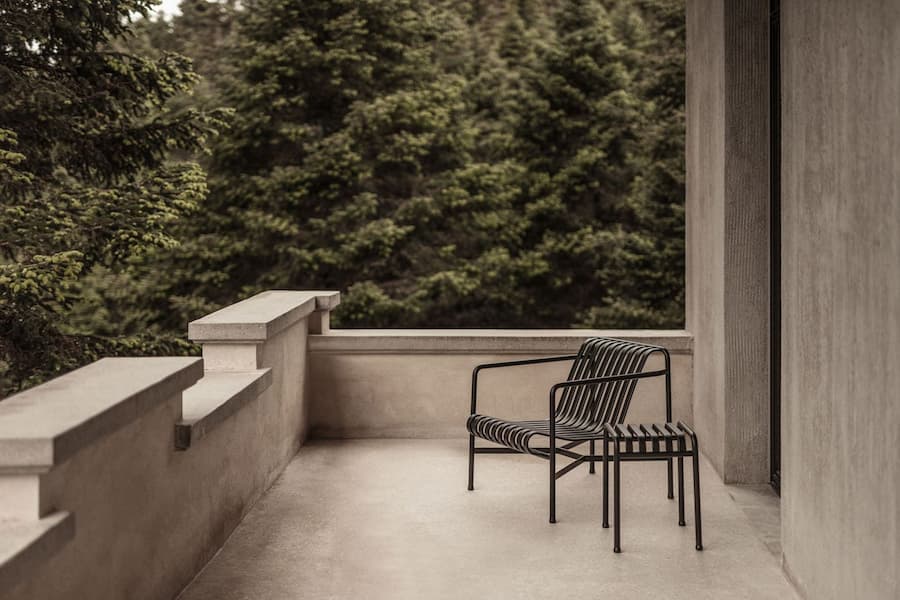
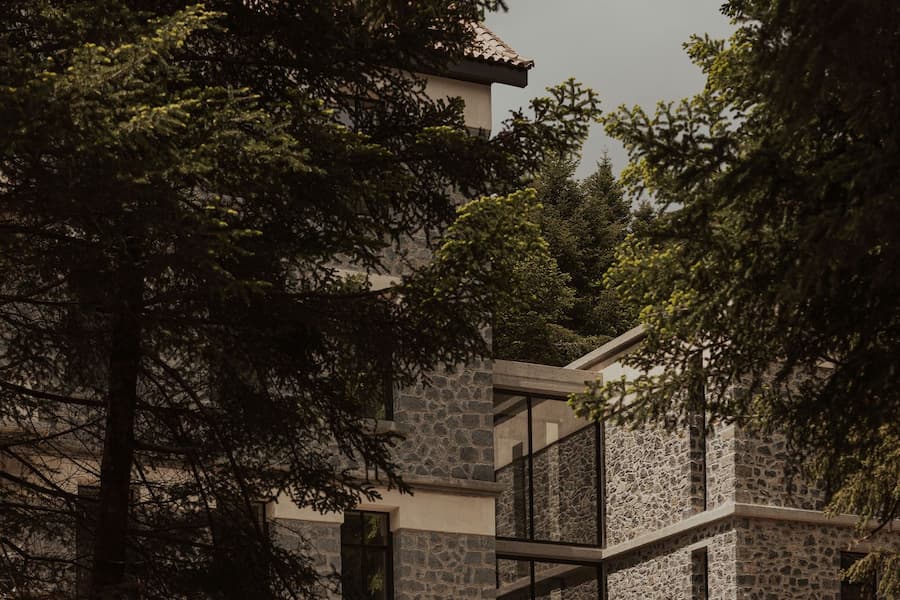
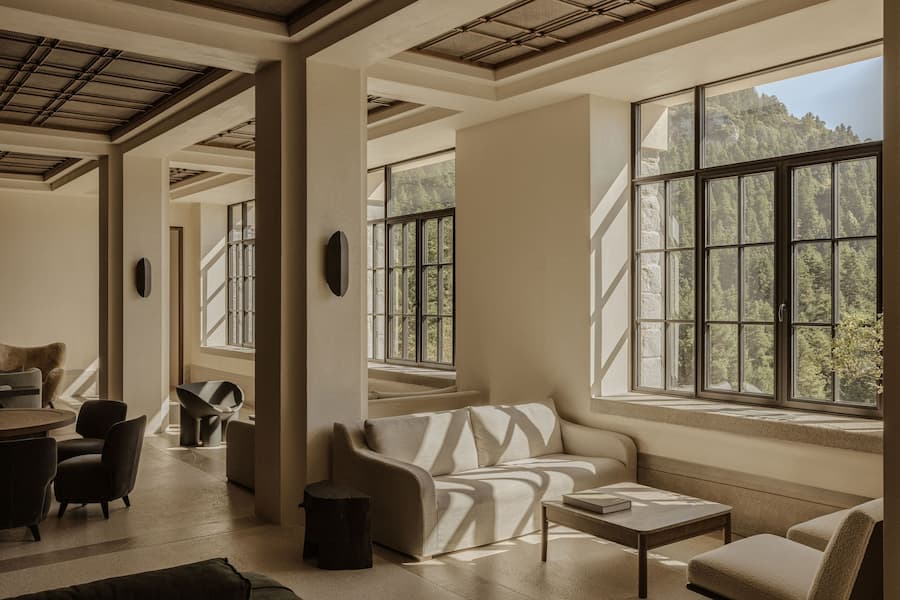
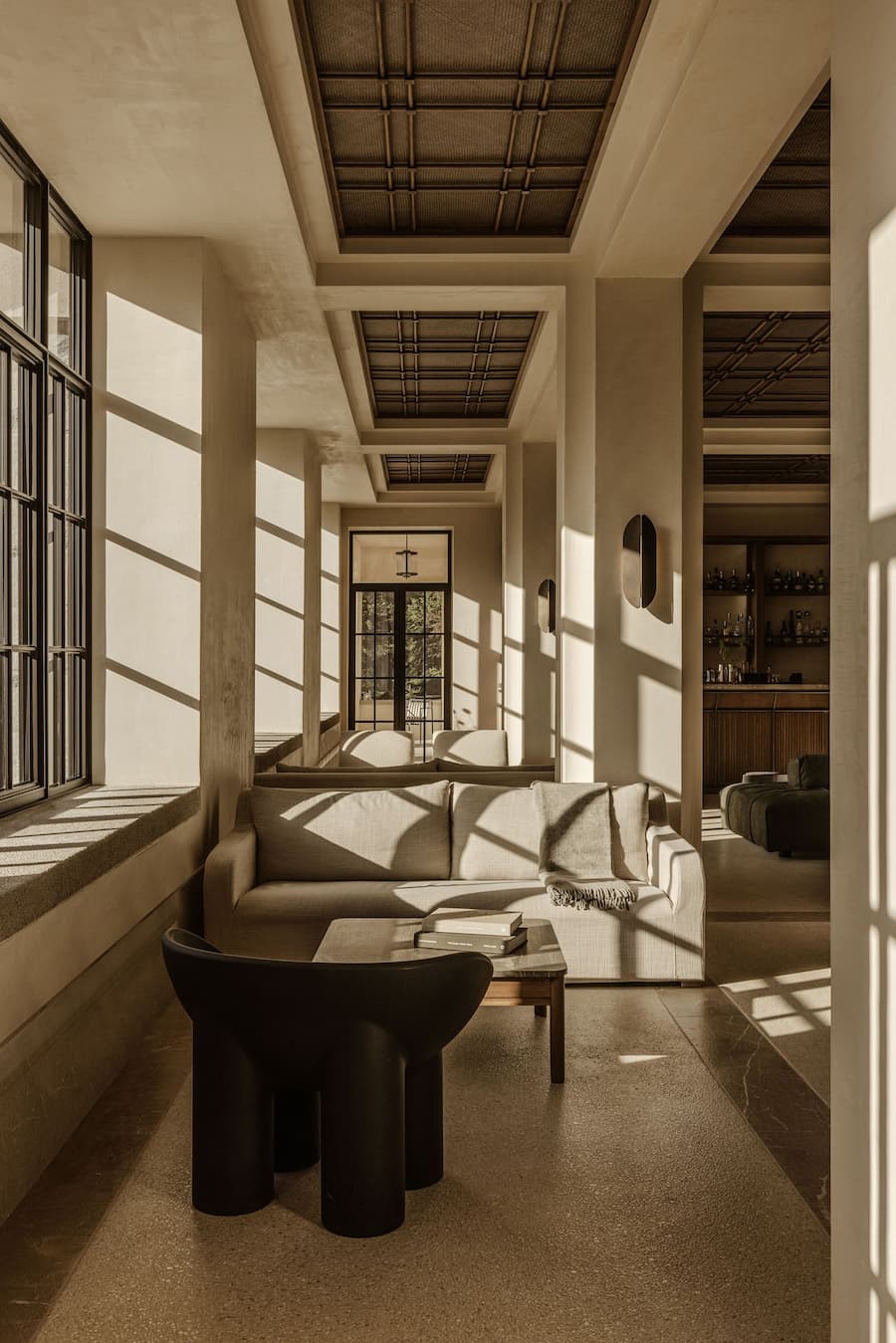
Decades later, Batagias enlisted K-Studio and Monogon to breathe life back into the abandoned edifice. Working closely with archaeological authorities, the teams traced the original design through archival research, preserving what could be salvaged and faithfully reconstructing what had been lost. Limestone, mosaic, and original iron details were carefully retained; worn decorative elements were replicated, and damaged terrazzo floors were replaced using locally sourced stone and gravel. Local craftsmen played a vital role throughout, contributing engraved stone grouting, bespoke joinery, and sculptural furniture pieces crafted from trees removed during the restoration.
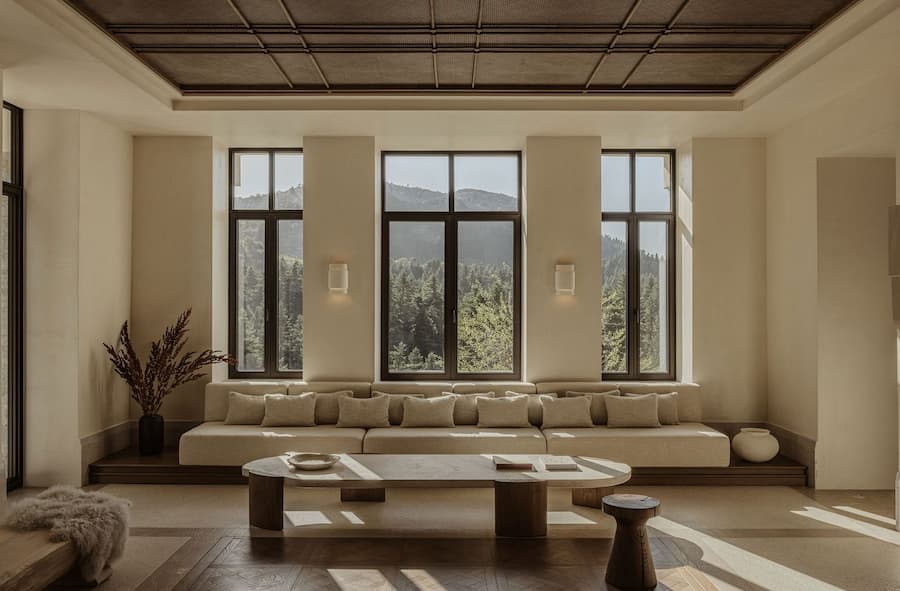
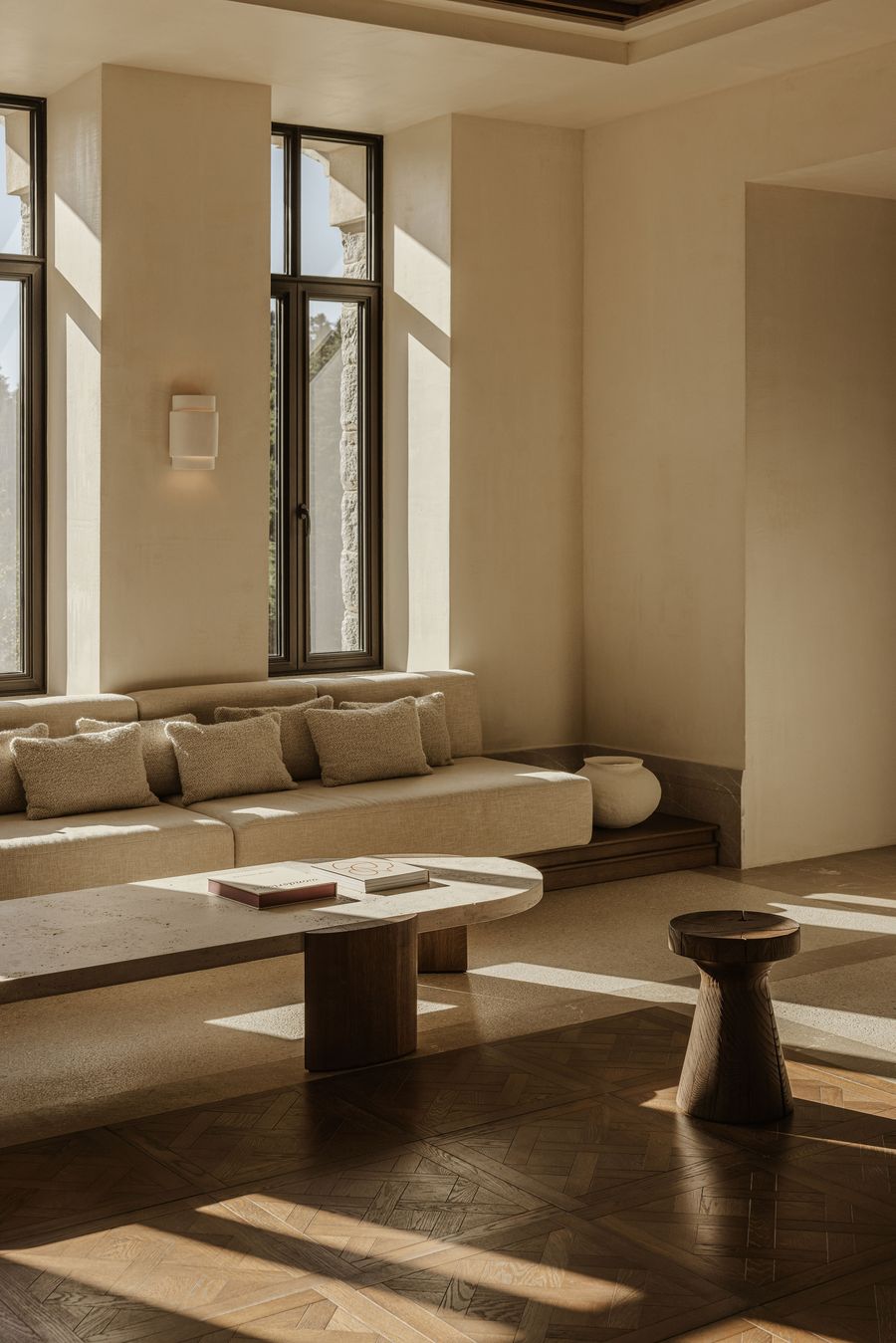
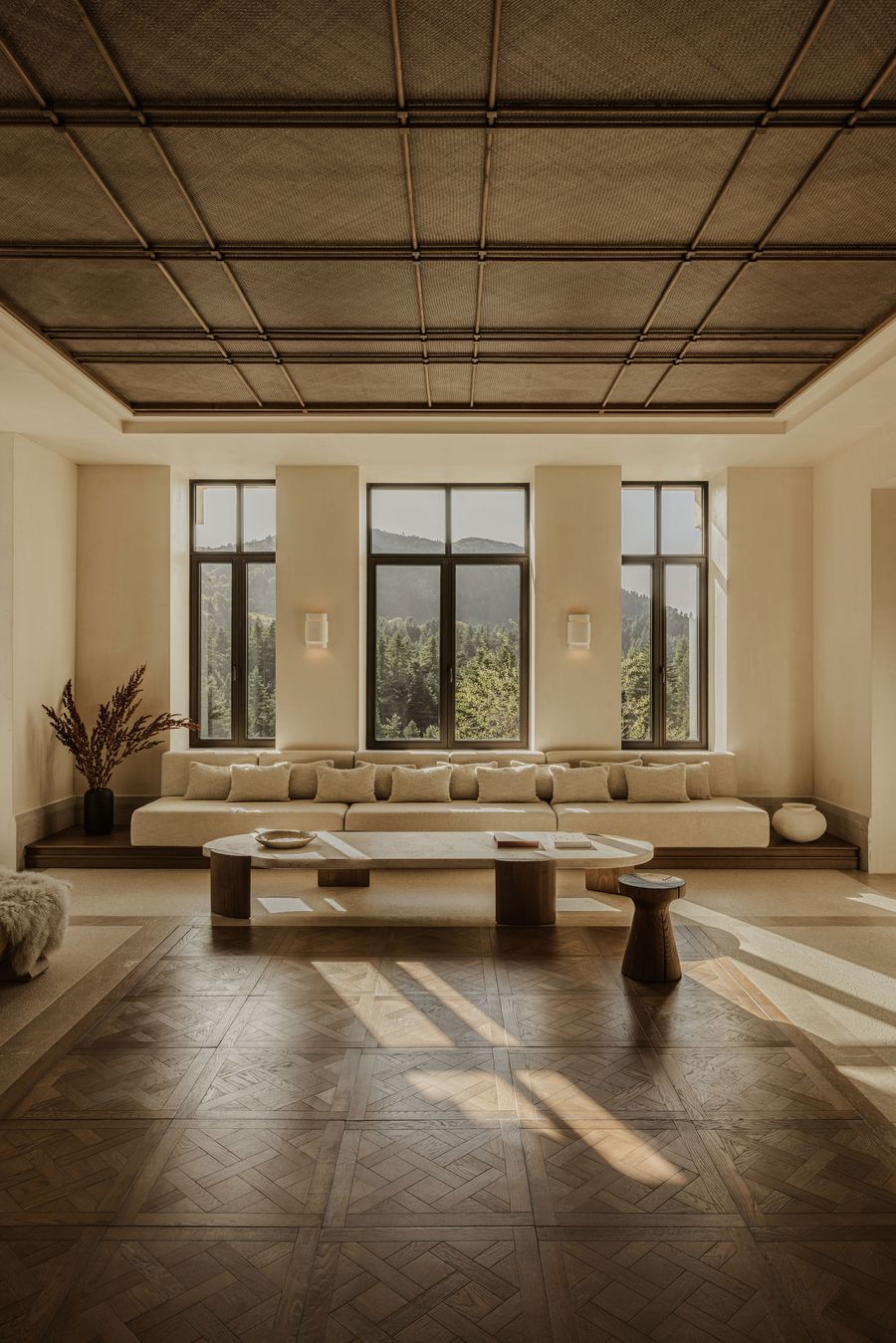
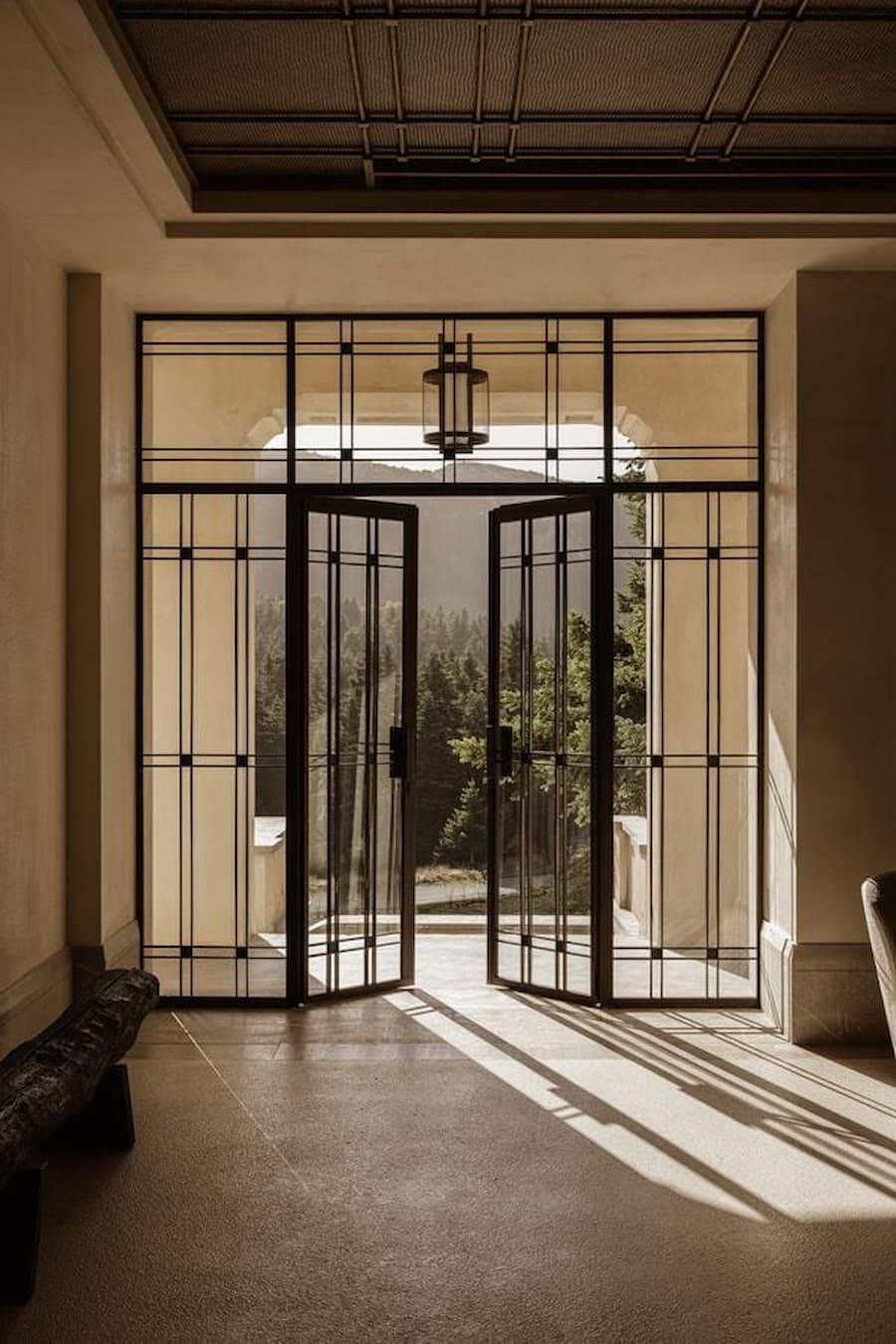
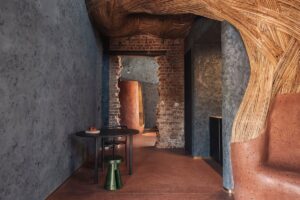
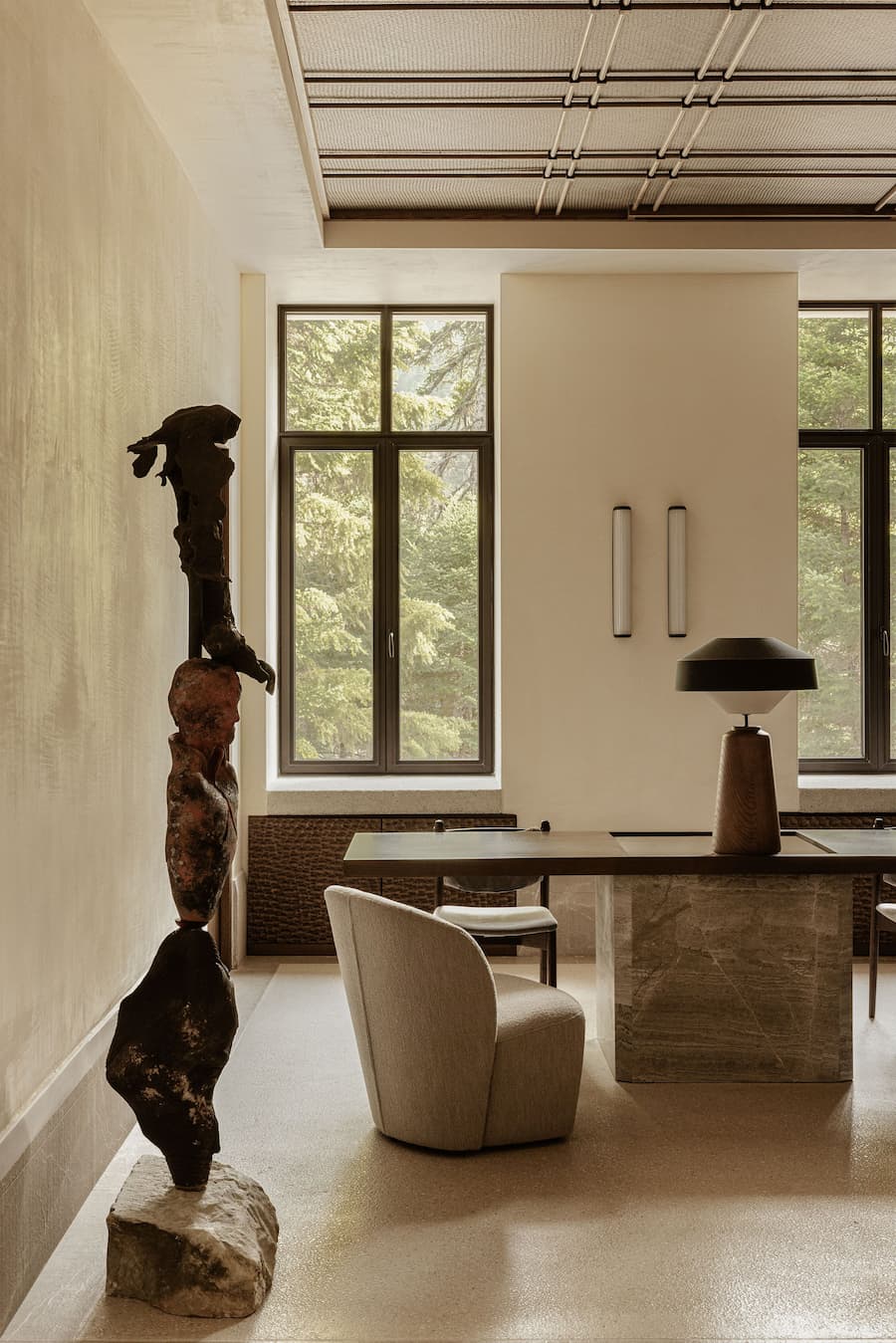
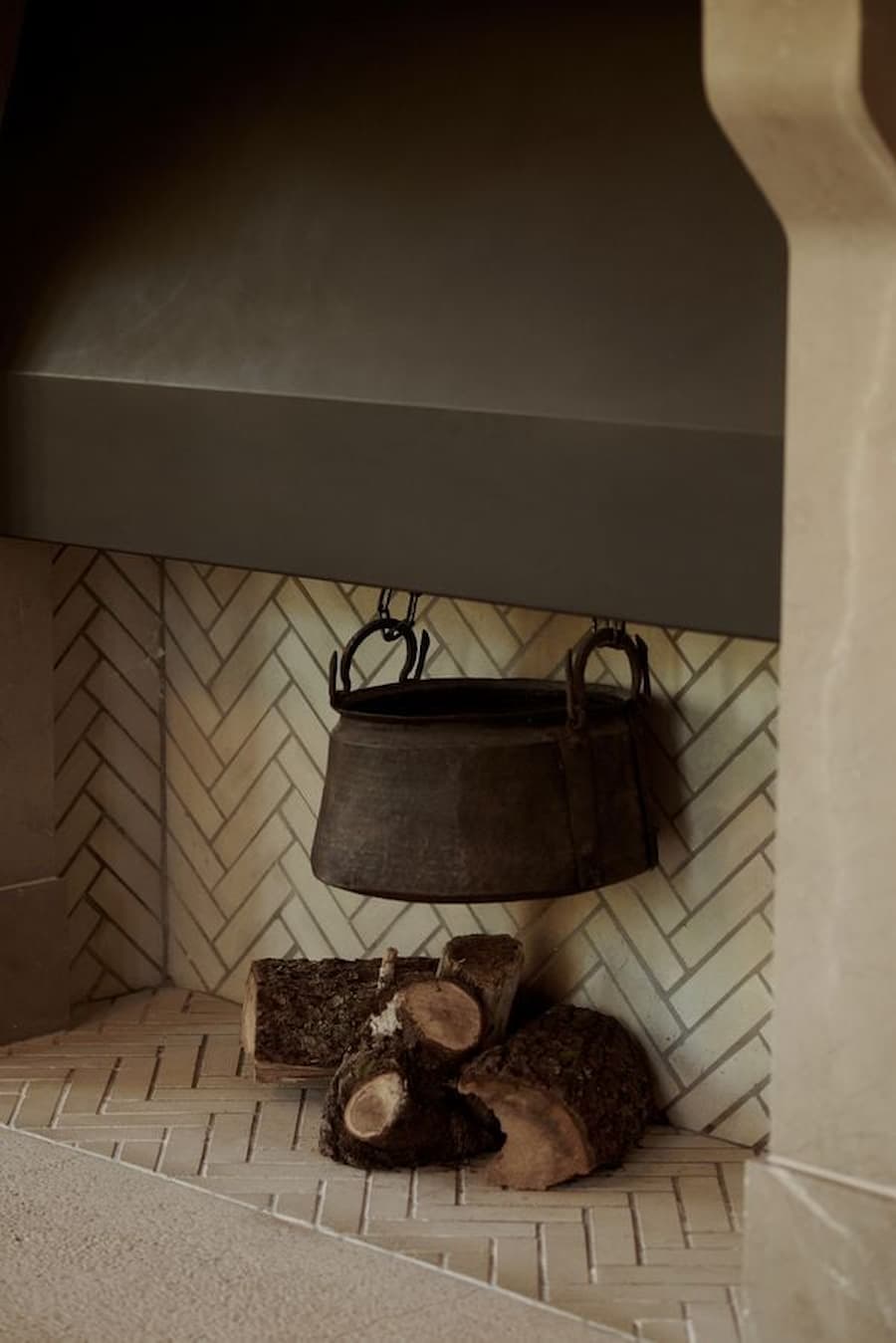
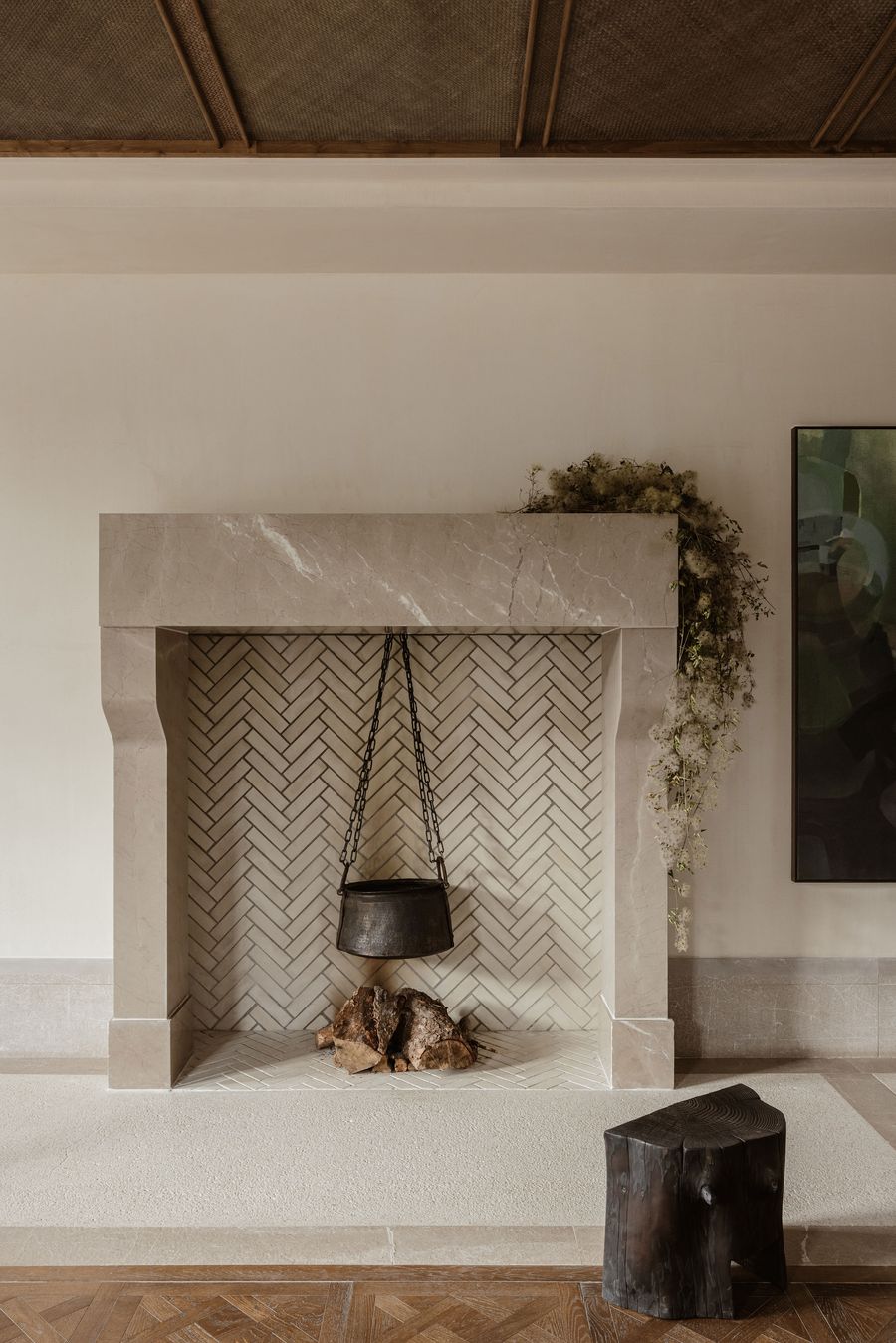
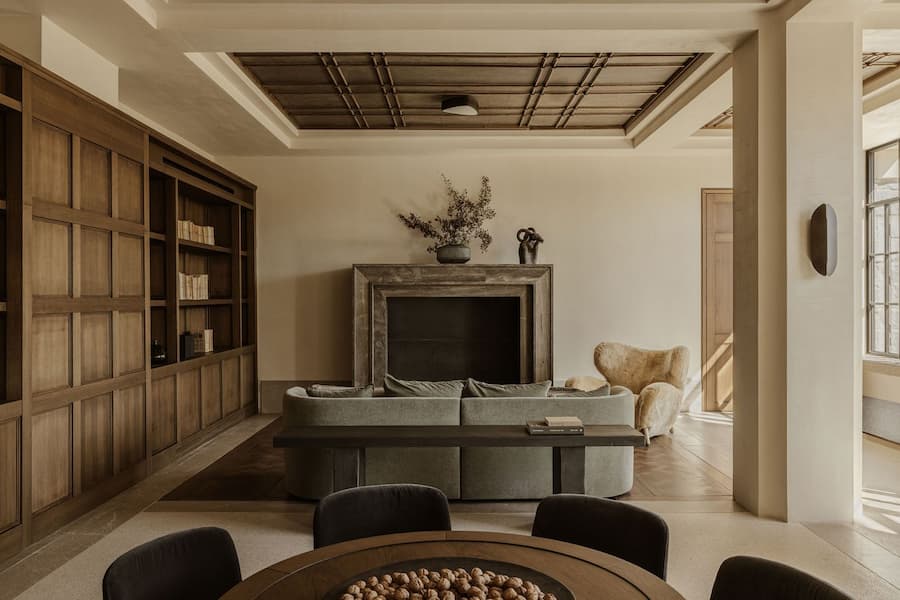
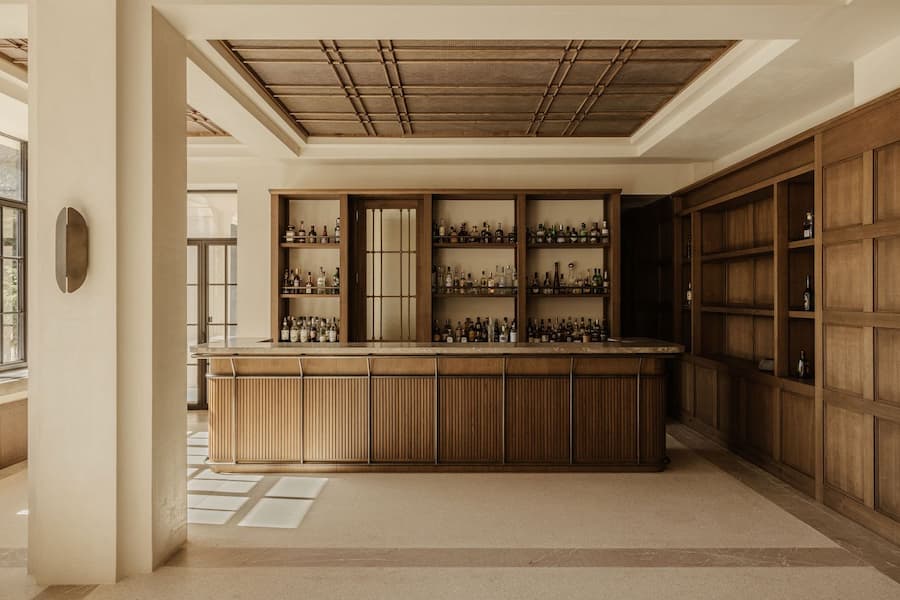
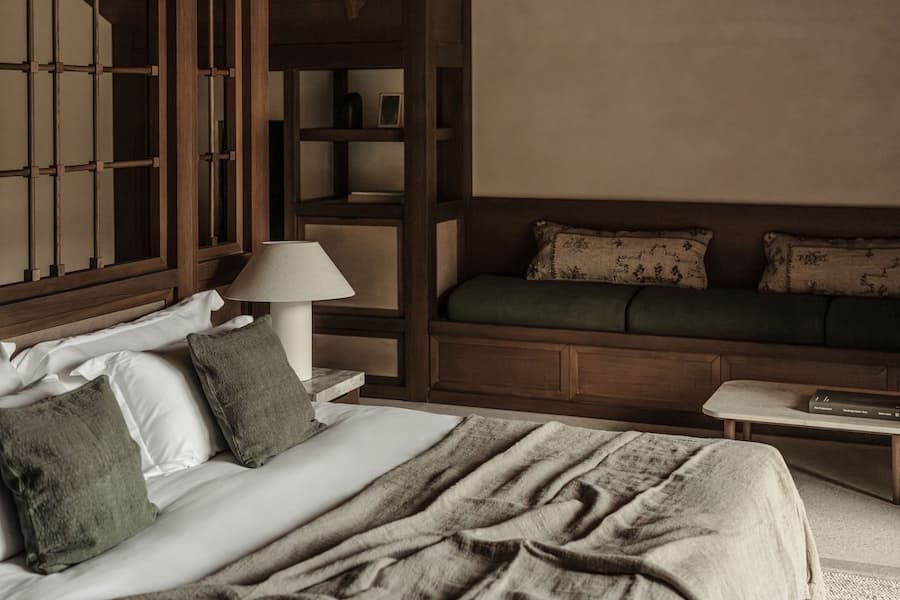
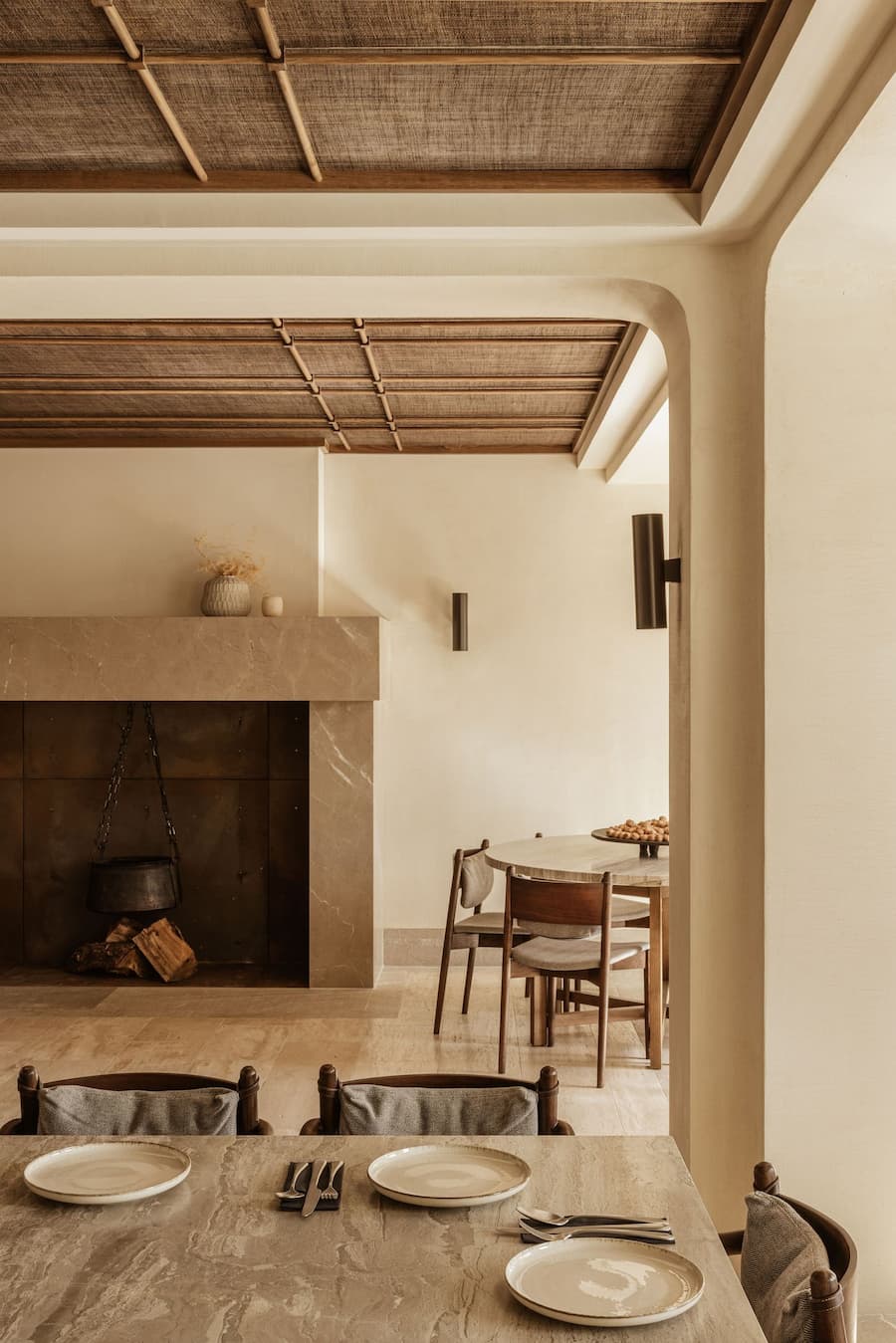
Despite the building’s historic weight, the interiors feel light and contemporary, thanks to K-Studio’s measured design language and spatial choreography. Public spaces are carefully calibrated to shift between open and convivial, and quiet and introspective. A lounge with a roaring fireplace encourages socialising, as does the nearby 19th-century apothecary-styled bar, a subtle nod to the building’s therapeutic origins, while tucked-away alcoves and garden-view reading nooks offer pockets of solitude. The intention is clear: this is a place for both conversation and contemplation.
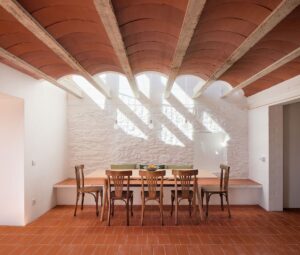
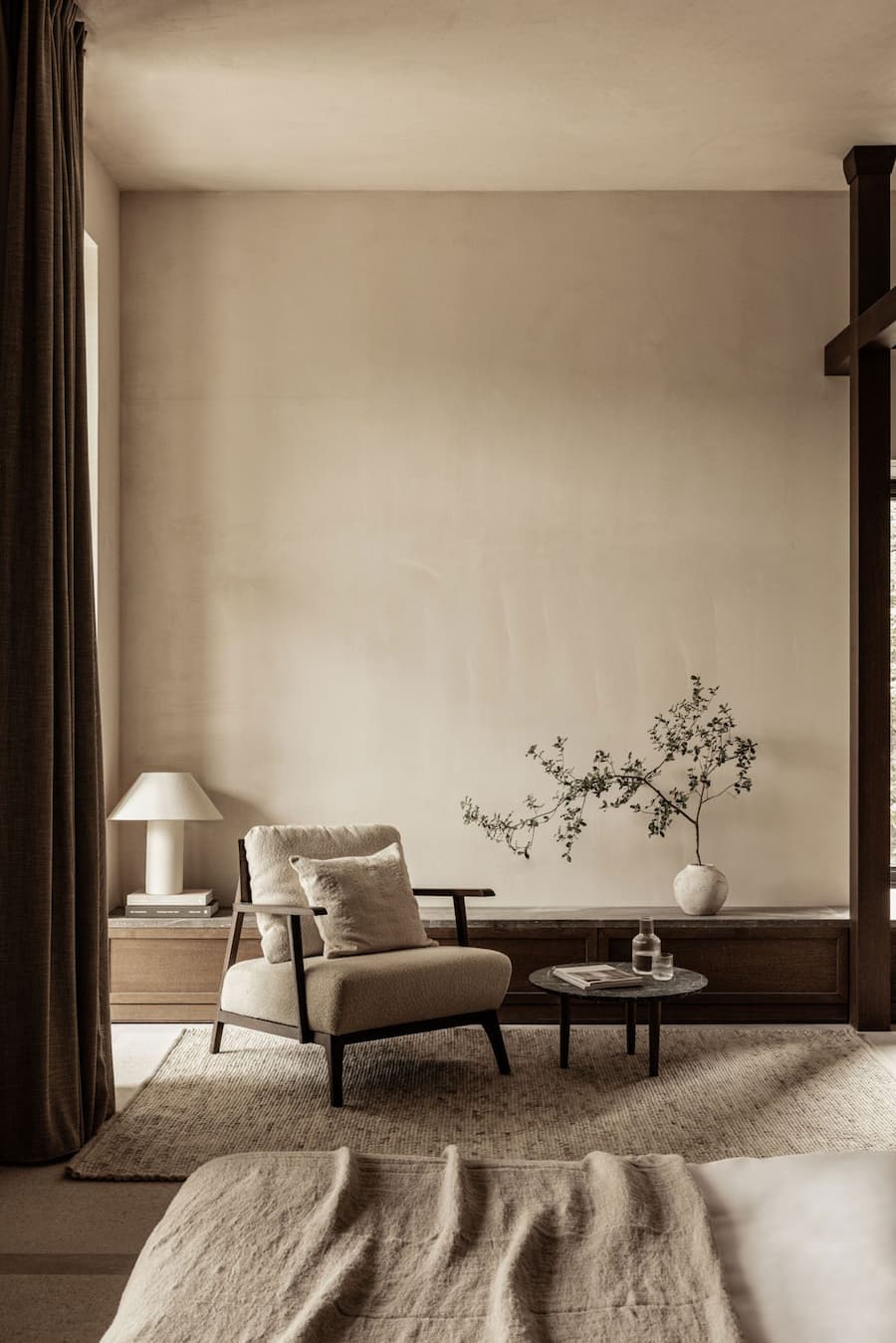
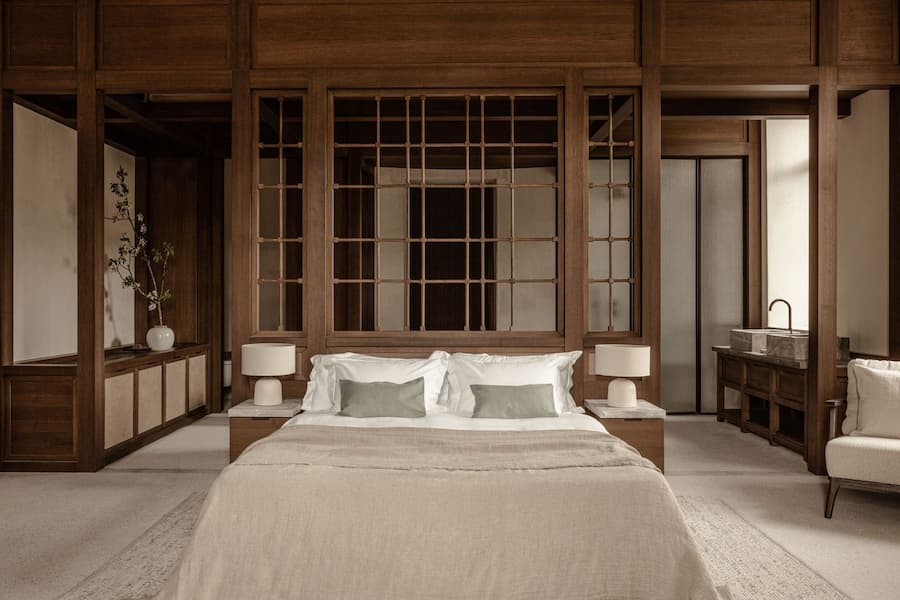
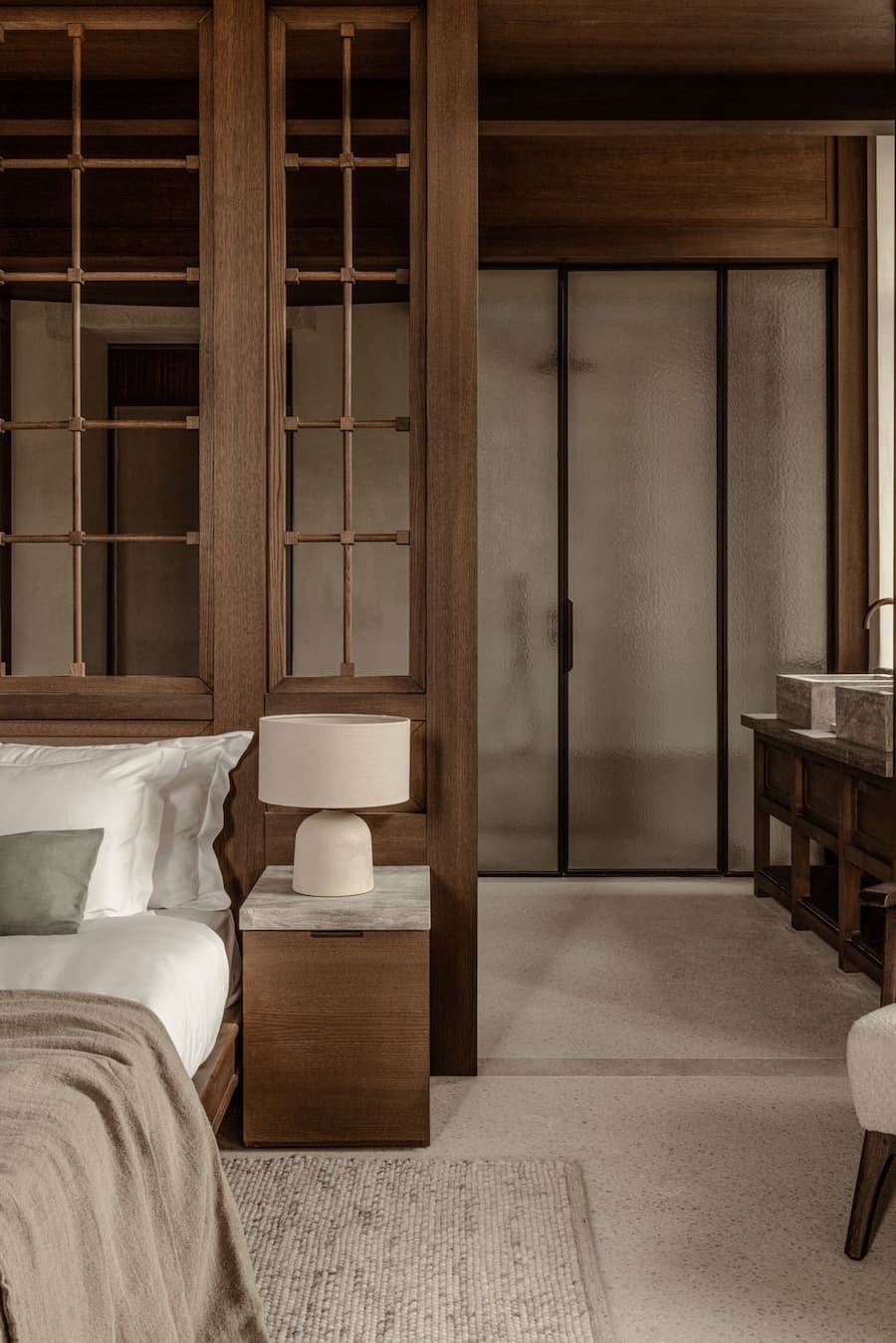
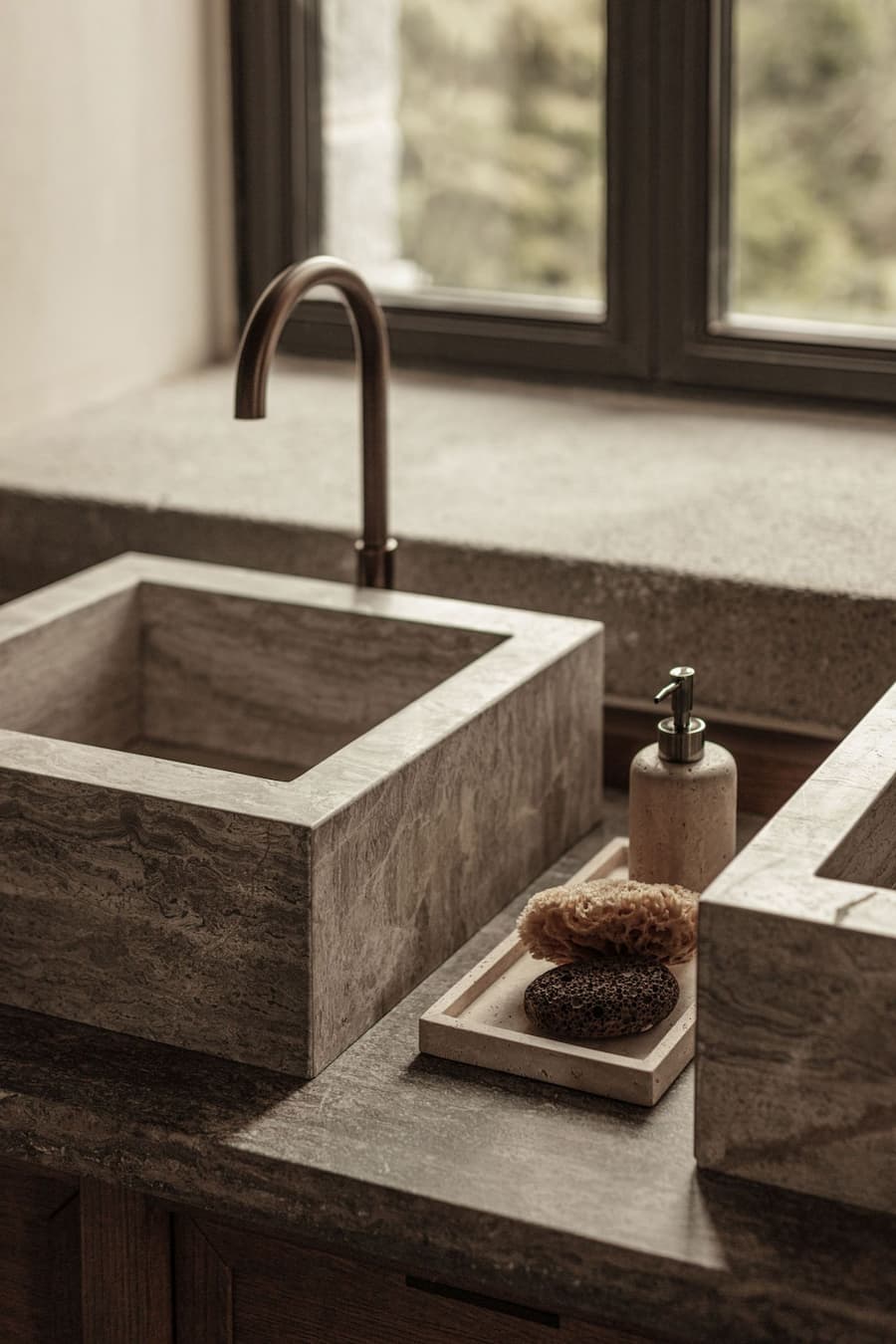
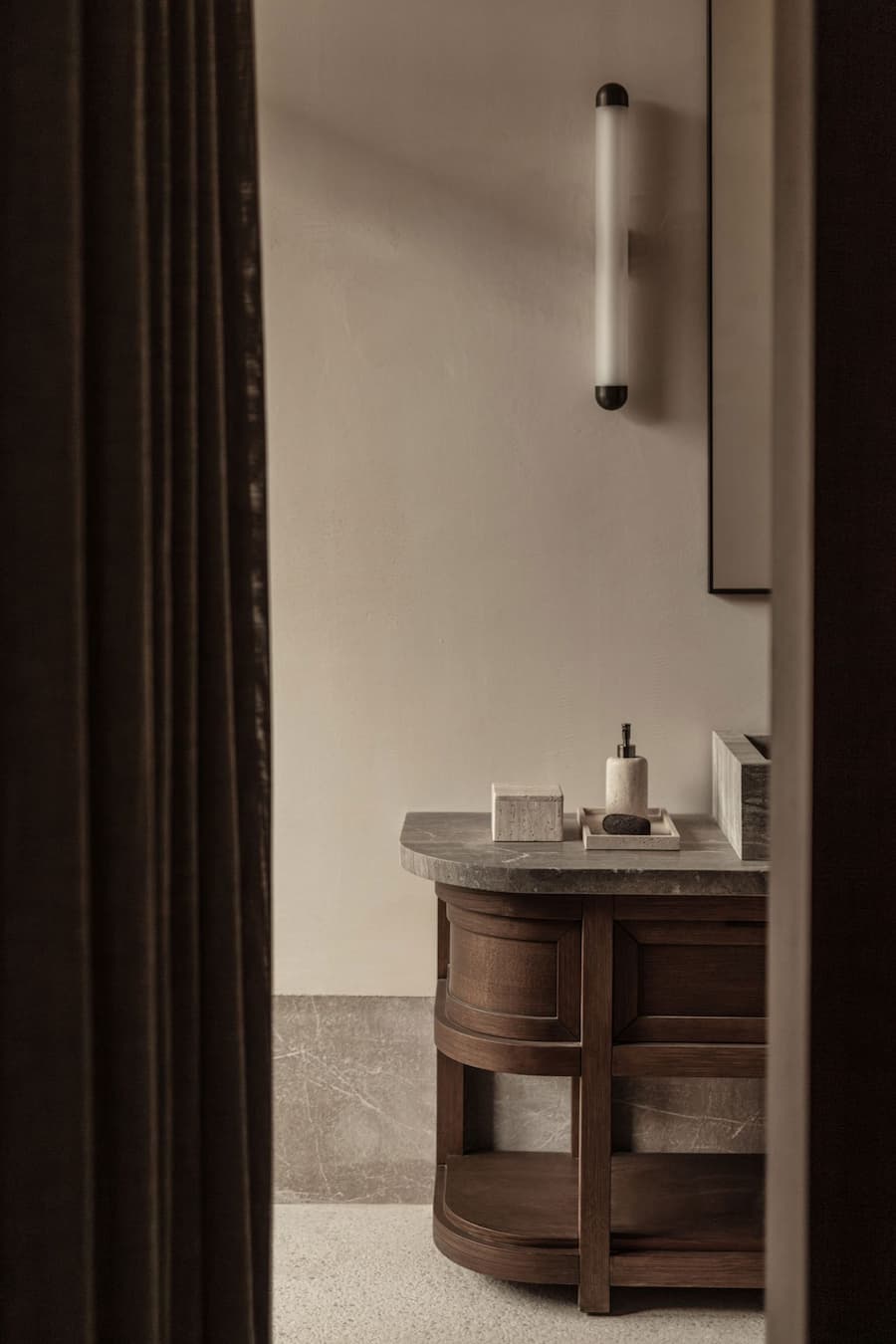
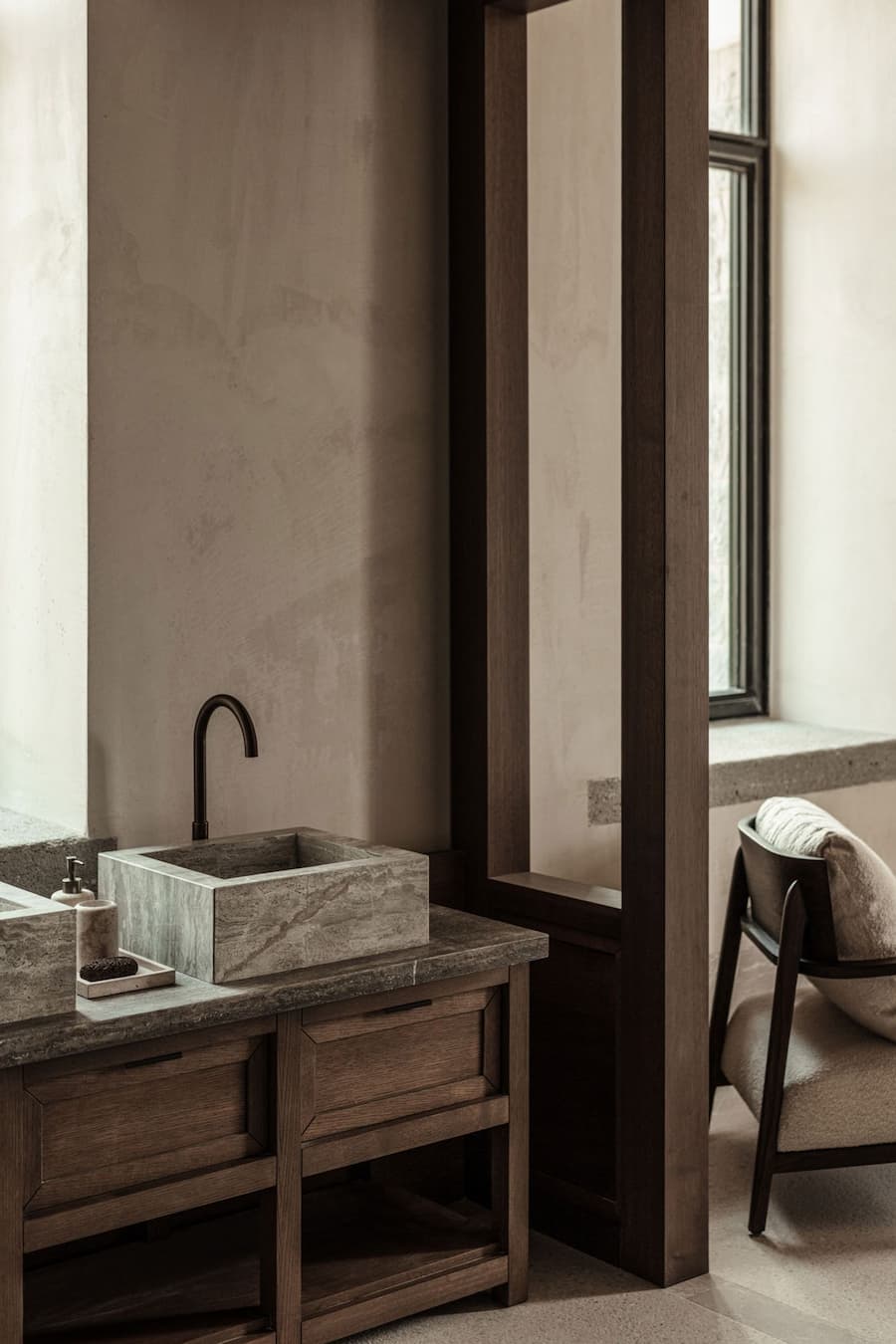
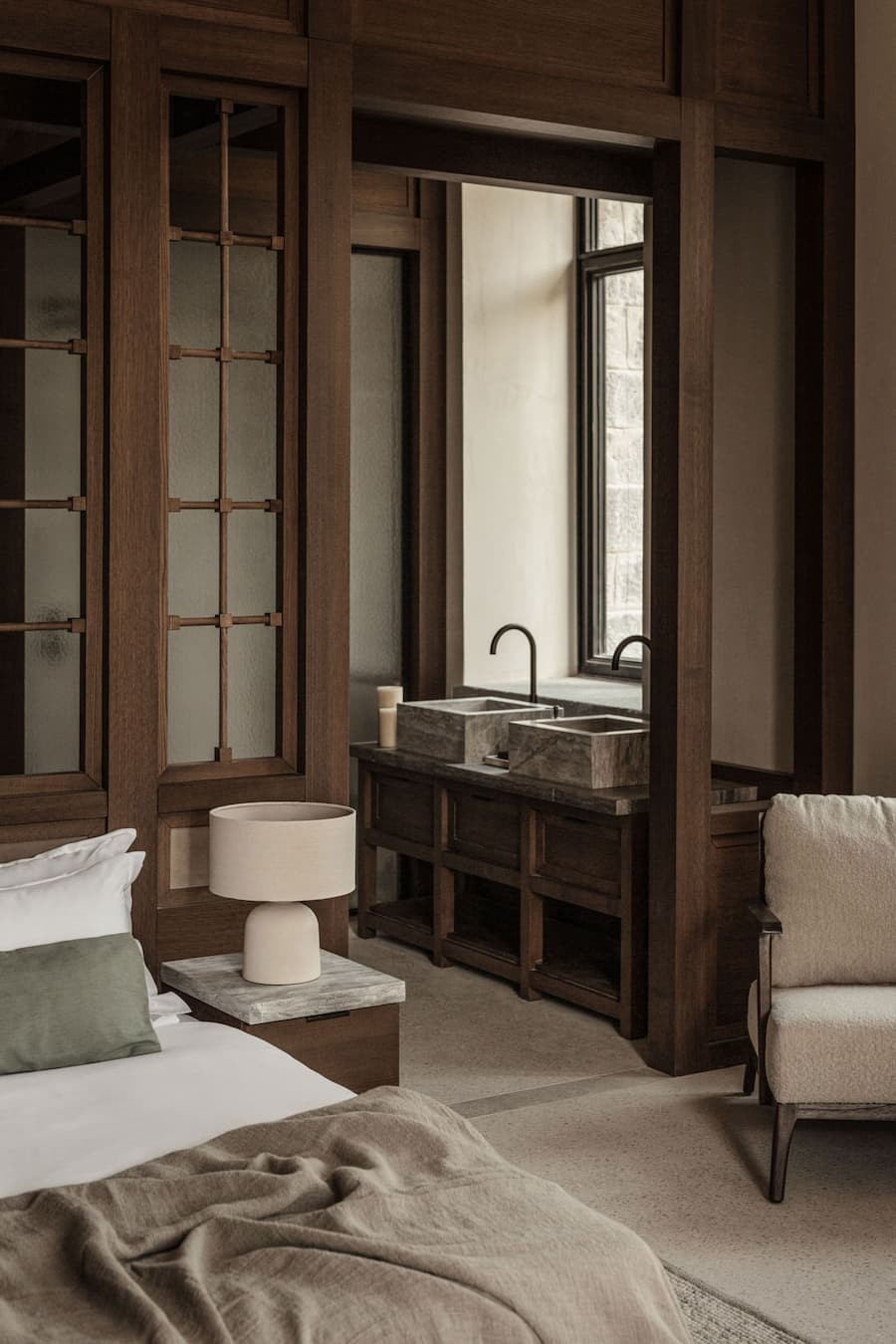
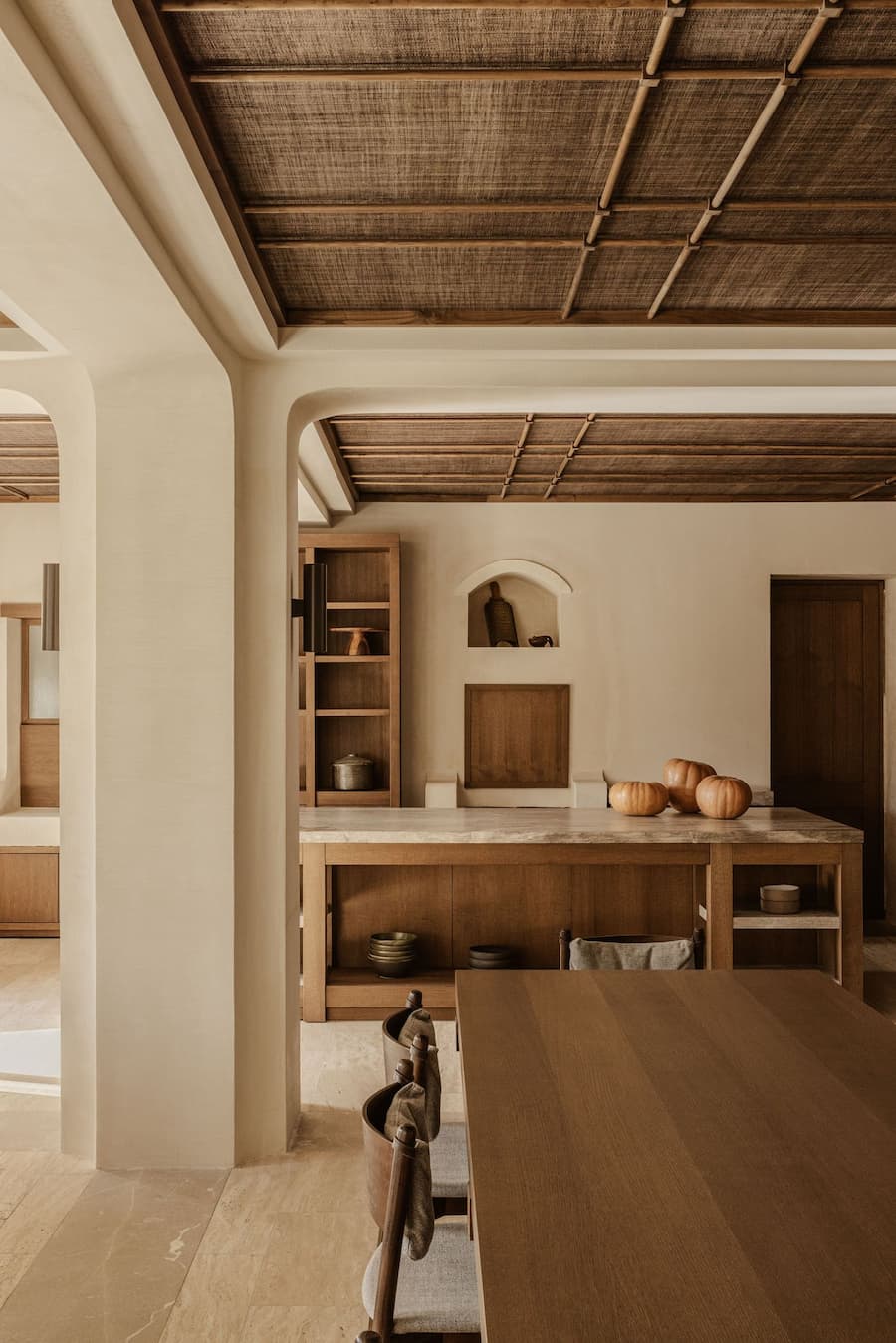
Underpinned by a muted palette of natural finishes and earthy hues, K-Studio’s scheme balances vernacular soulfulness with Nordic elegance. Coffered ceilings lined with brushed timber, chestnut panelling, and marble accents are softened by linen, wool, and sheepskin. Award-winning lighting by Eleftheria Deko further elevates the experience, drawing out the architecture’s textures and rhythms while reinforcing the retreat’s meditative calm. Such elements elegantly root the spaces in their mountainous setting, while maintaining a sense of understated sophistication.
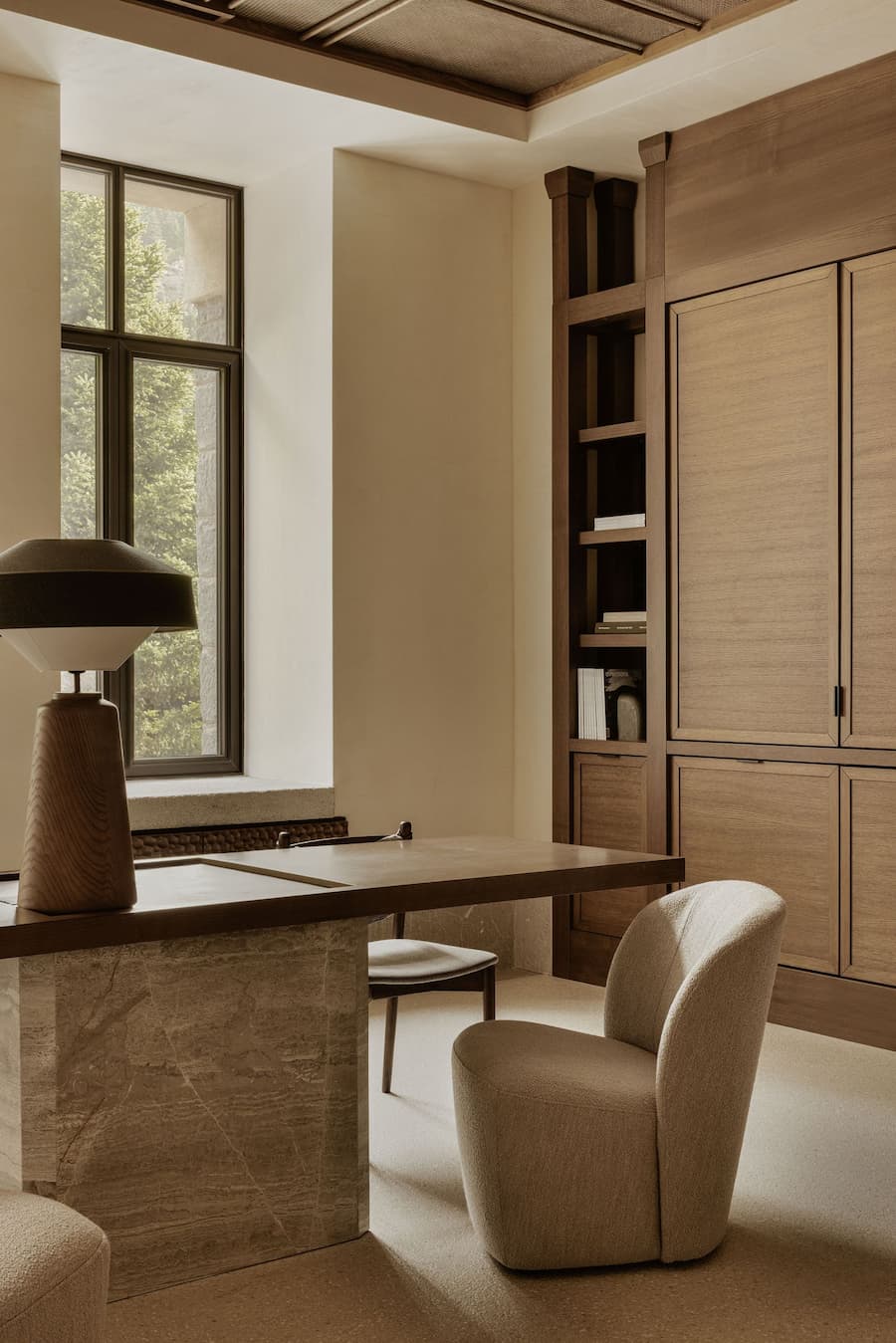
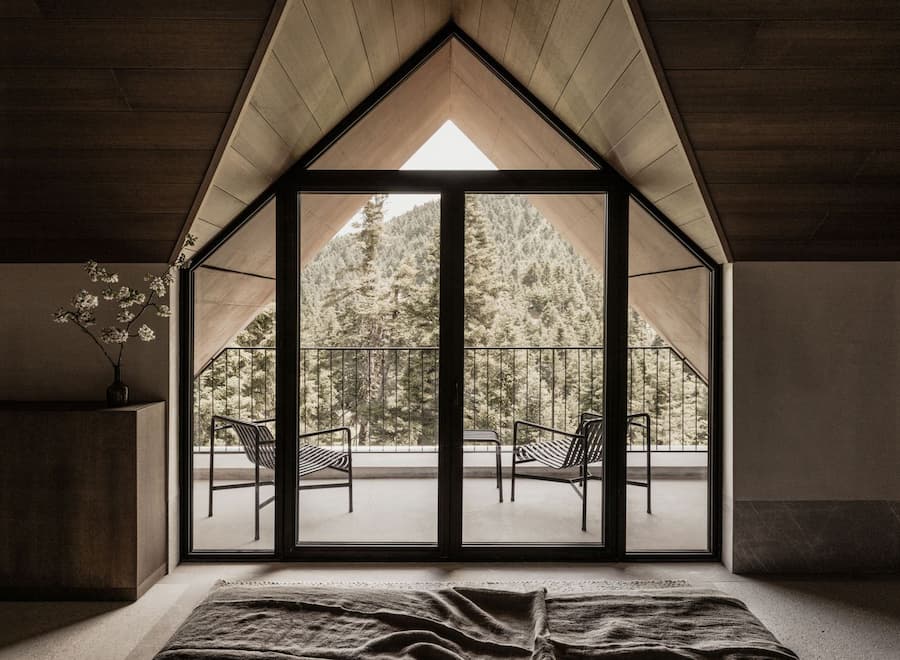
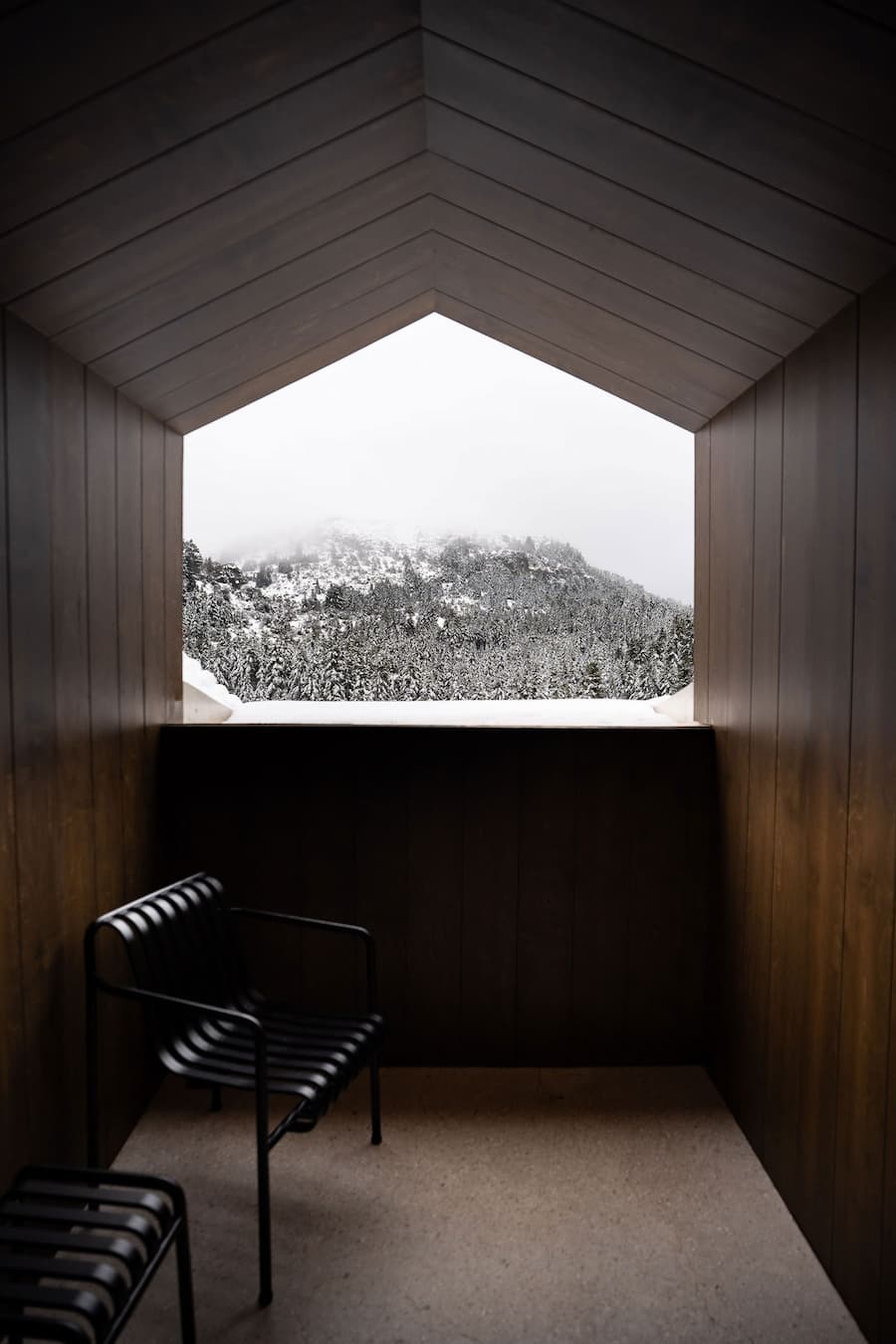
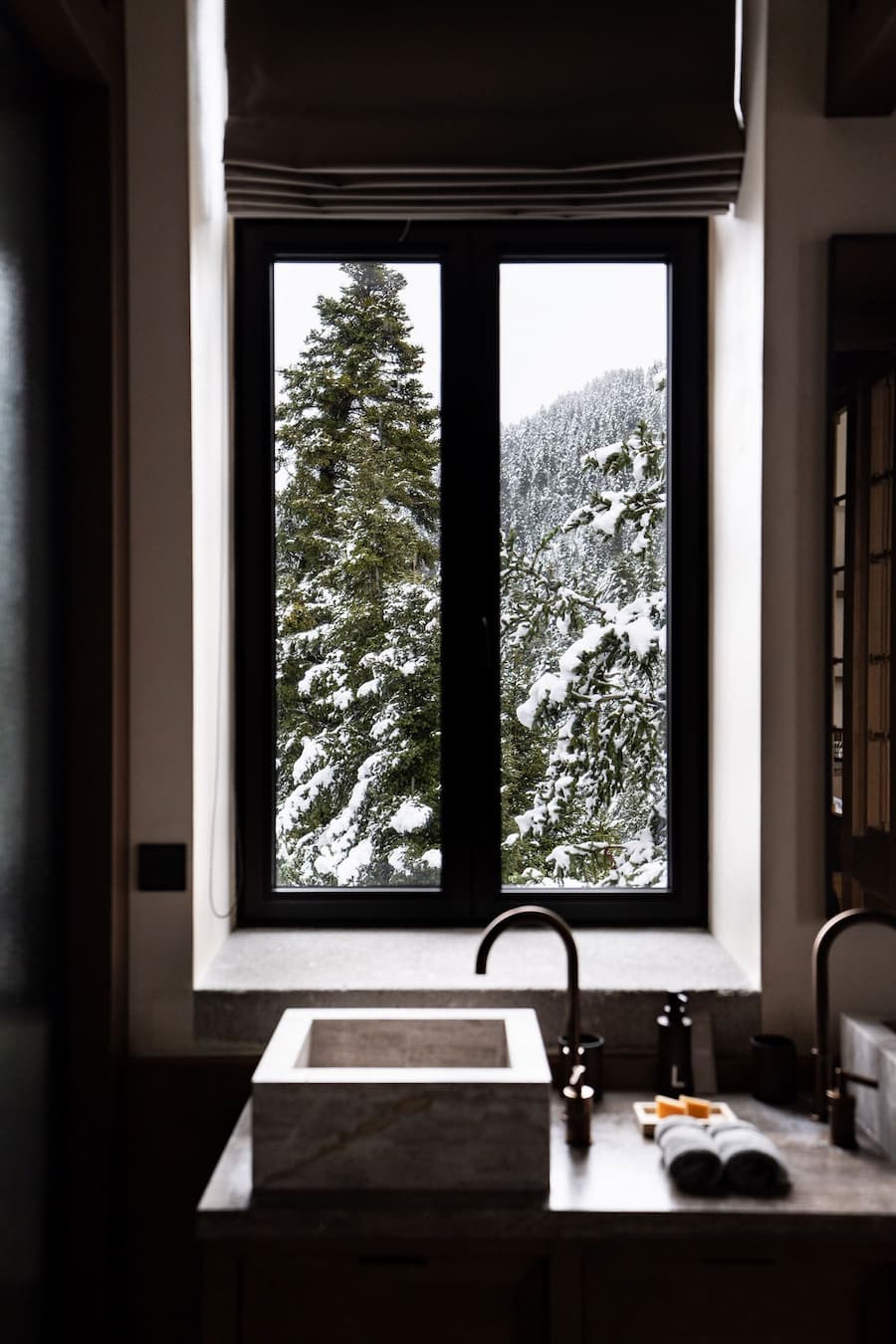
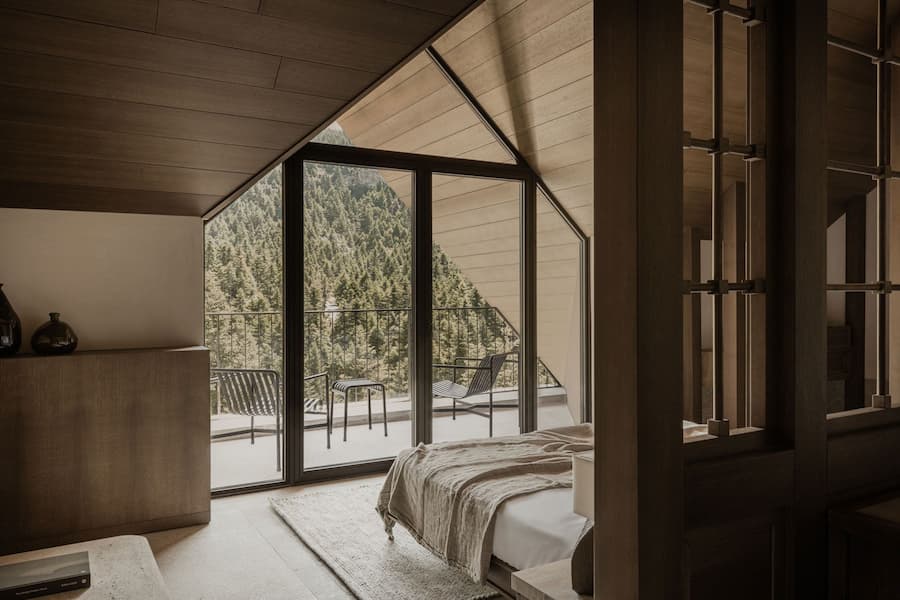
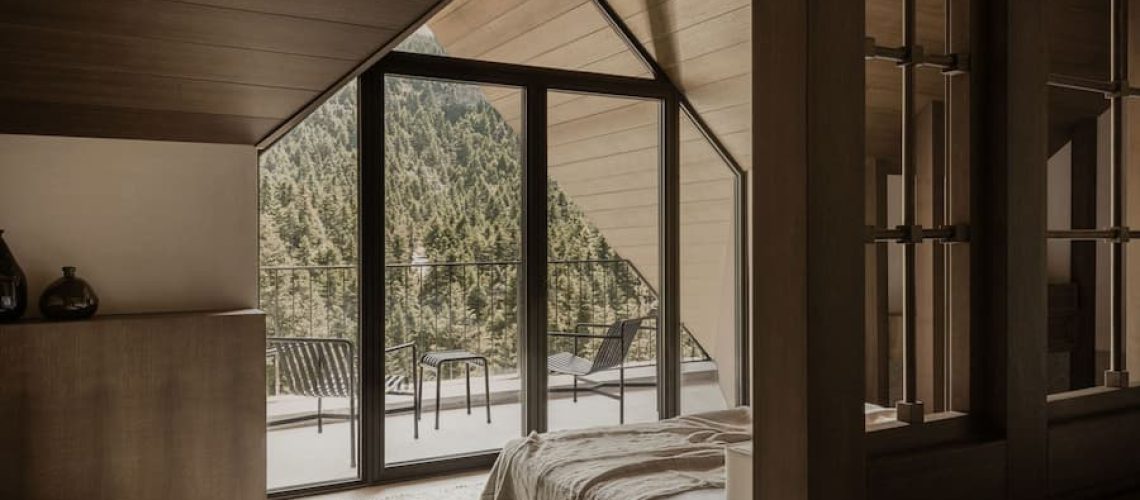
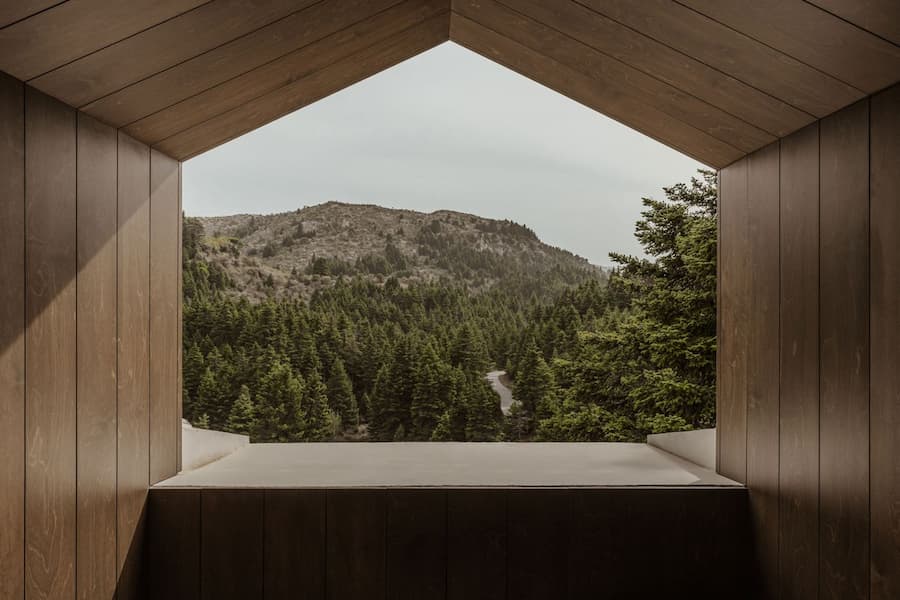
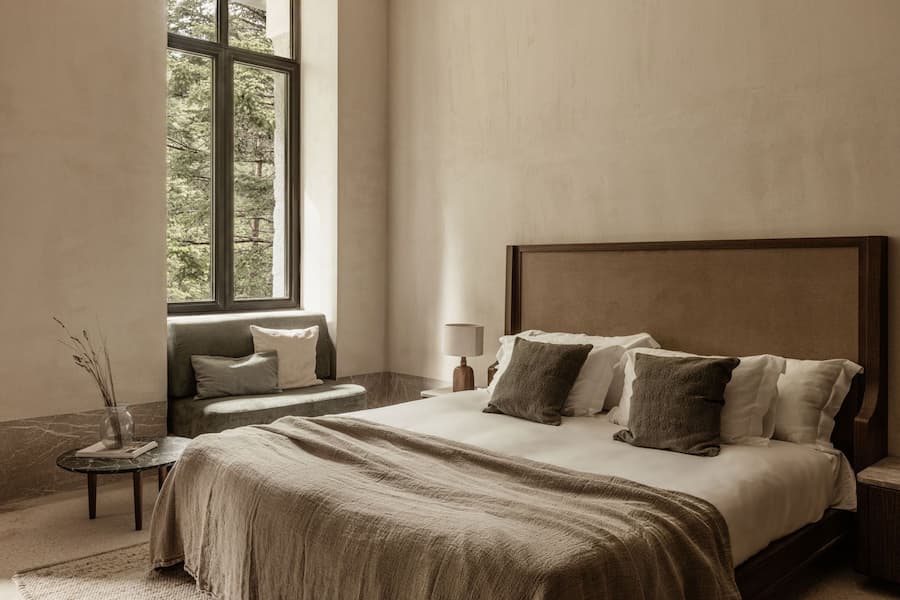
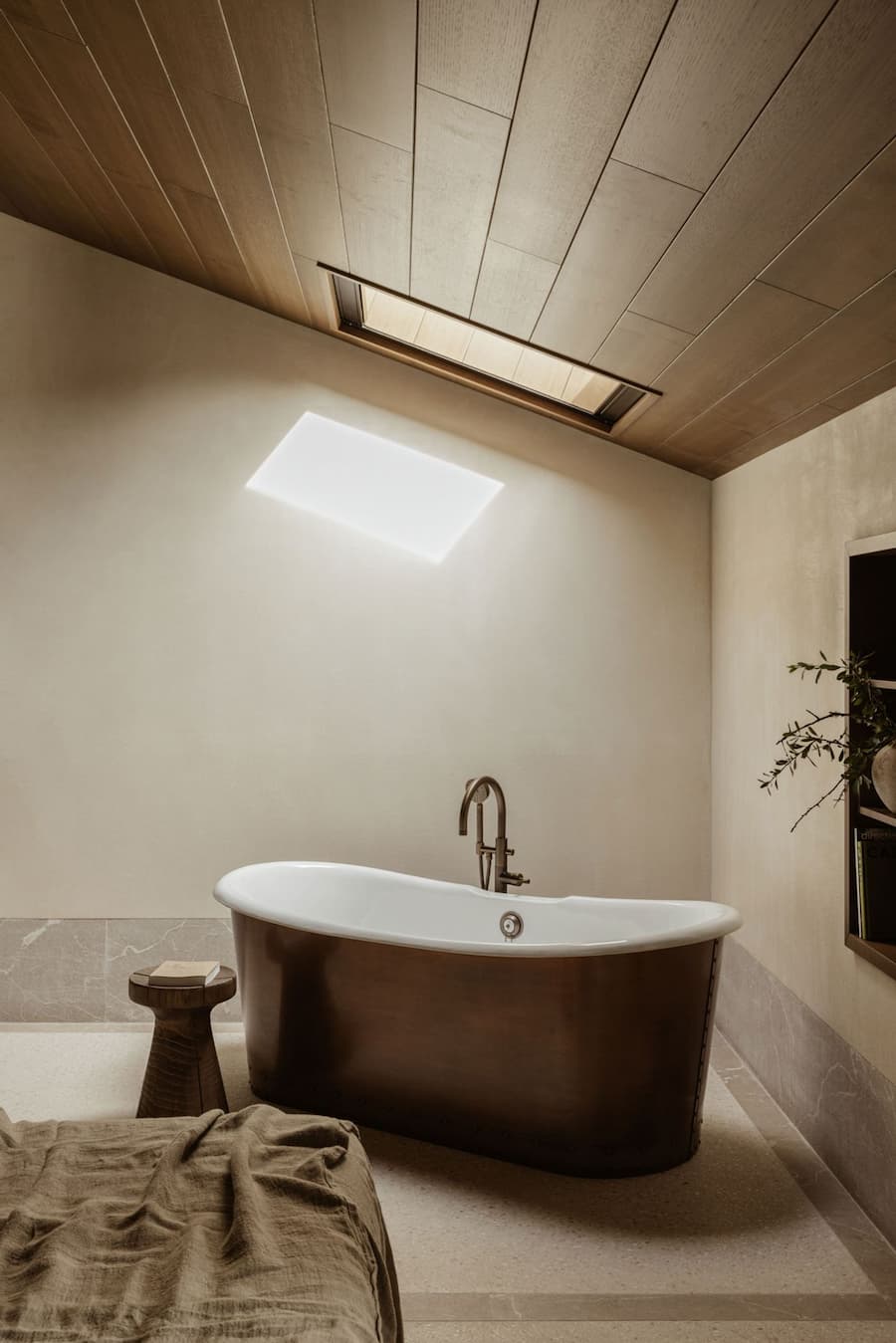
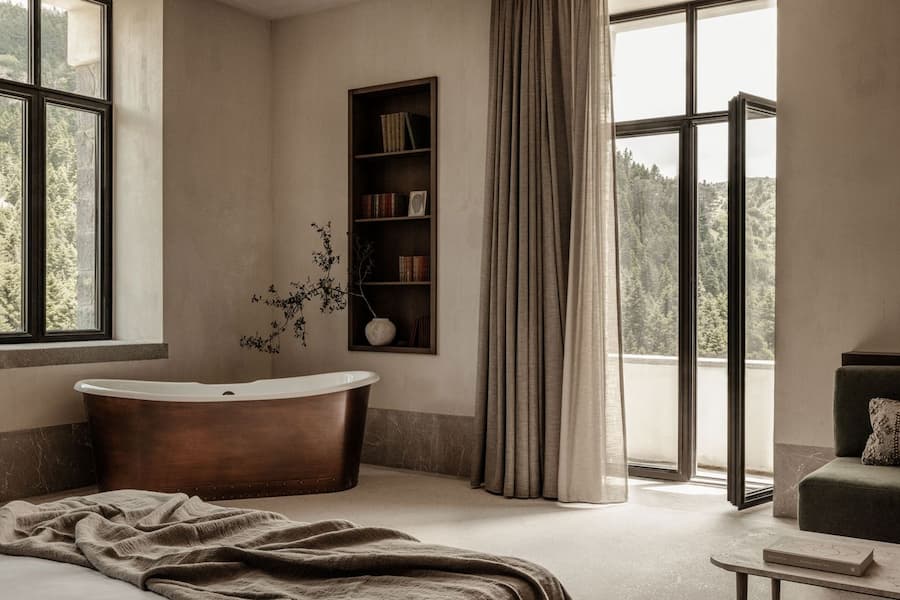
This considered approach continues in the 32 guest rooms, which retain the soaring ceilings of the original structure and open onto forest-facing terraces or balconies. Open wardrobes, copper soaking tubs, and carefully curated artworks by Greek painter Nikos Kanoglou, Greek weaver Maria Sigma, British artist Joanna Burtenshaw and French sculptor Diane Alexandre lend each space a soulful, personal texture, while details like organic Greek herb-based bath amenities, filtered water served in custom-made glass jugs, and a selection of organic herbal infusions further ground the experience in simplicity, well-being, and a deep respect for place.
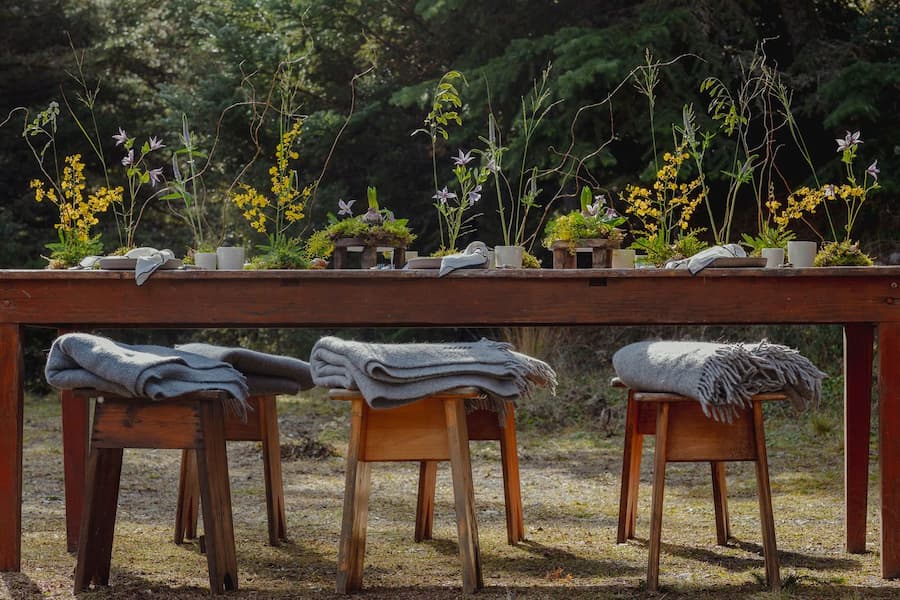
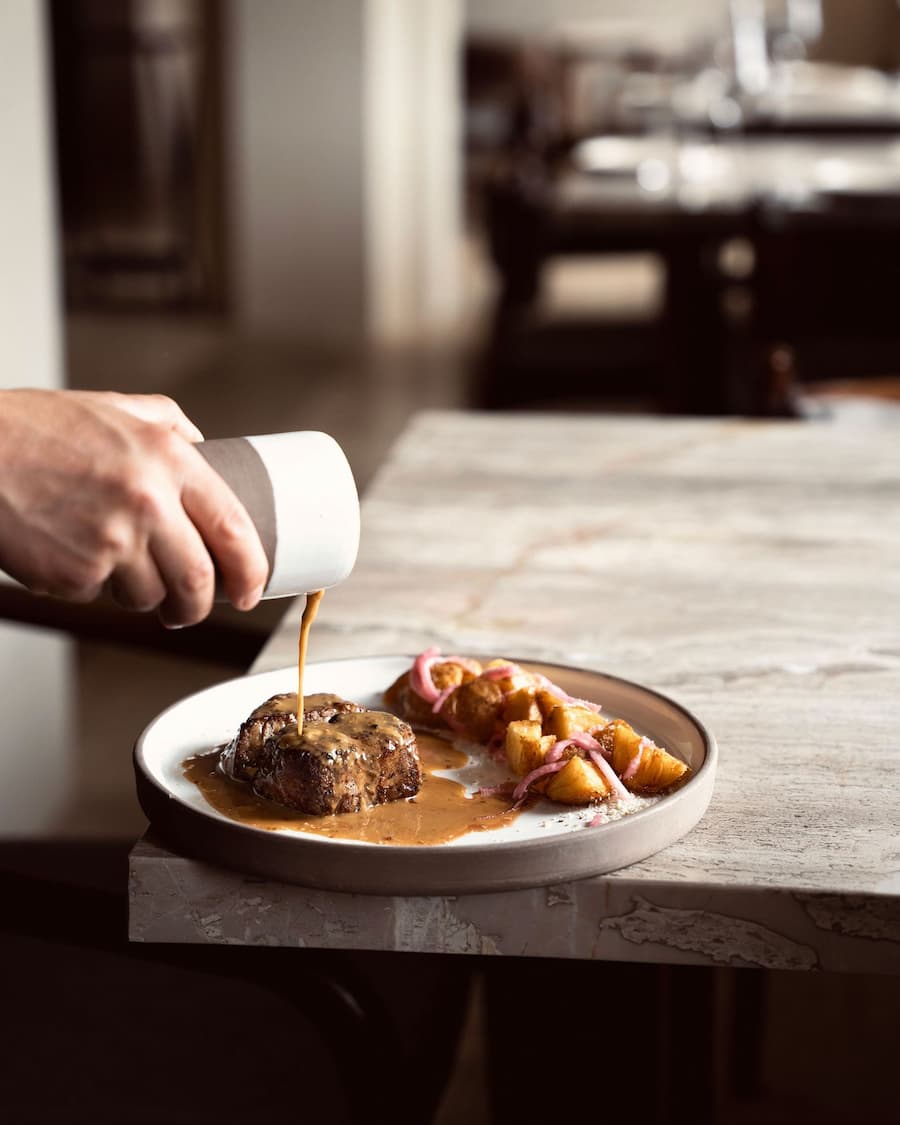
The same ethos carries through to the hotel’s culinary offering. The ground-floor restaurant, helmed by chef Athinagoras Kostakos, translates the surrounding terroir into a seasonal, sensorial menu. Local cheeses, meats, handmade pasta and foraged herbs underpin dishes that are as rooted as they are refined. When the weather allows, meals often spill out onto decks and terraces, further underscoring the between sustenance and setting.
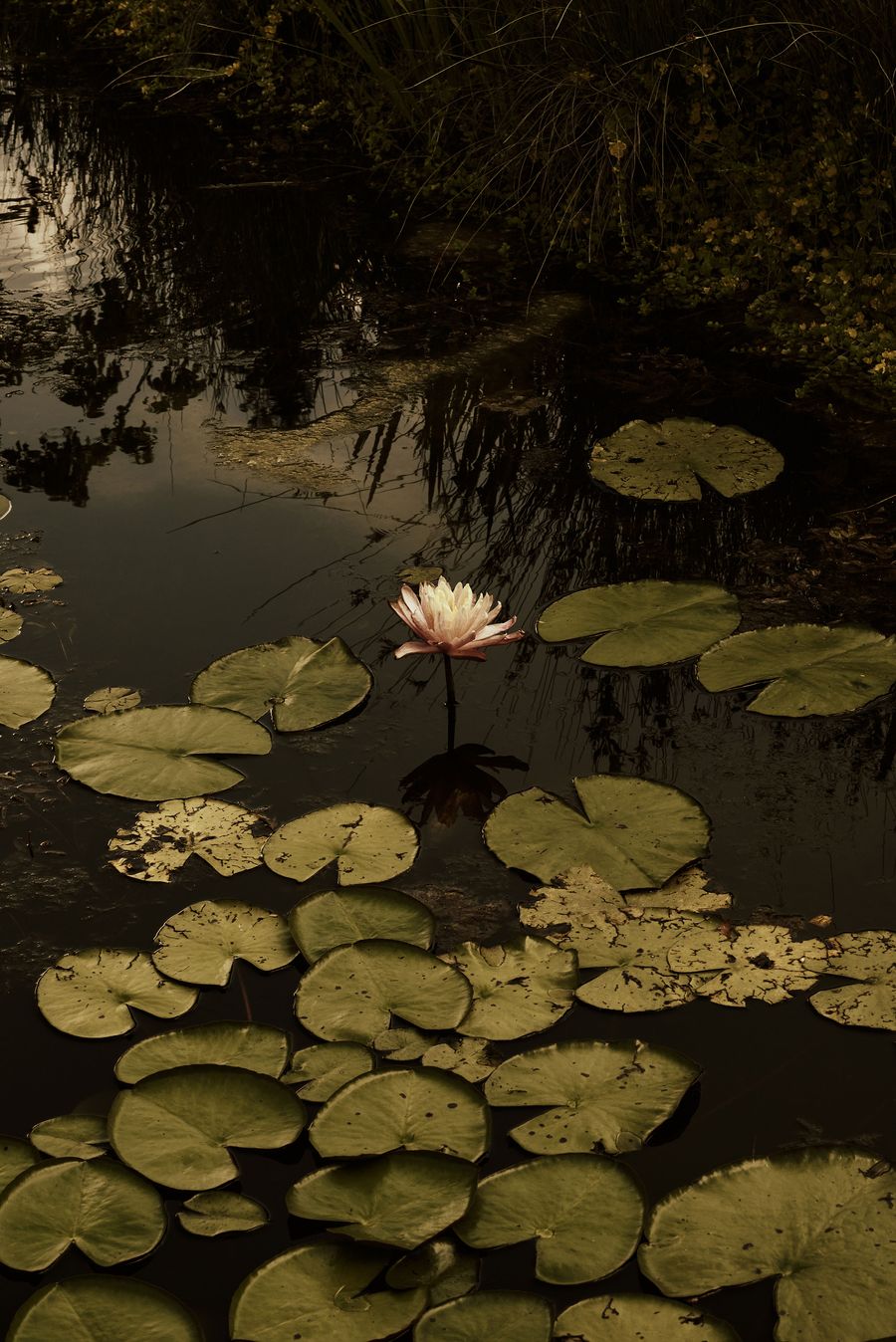
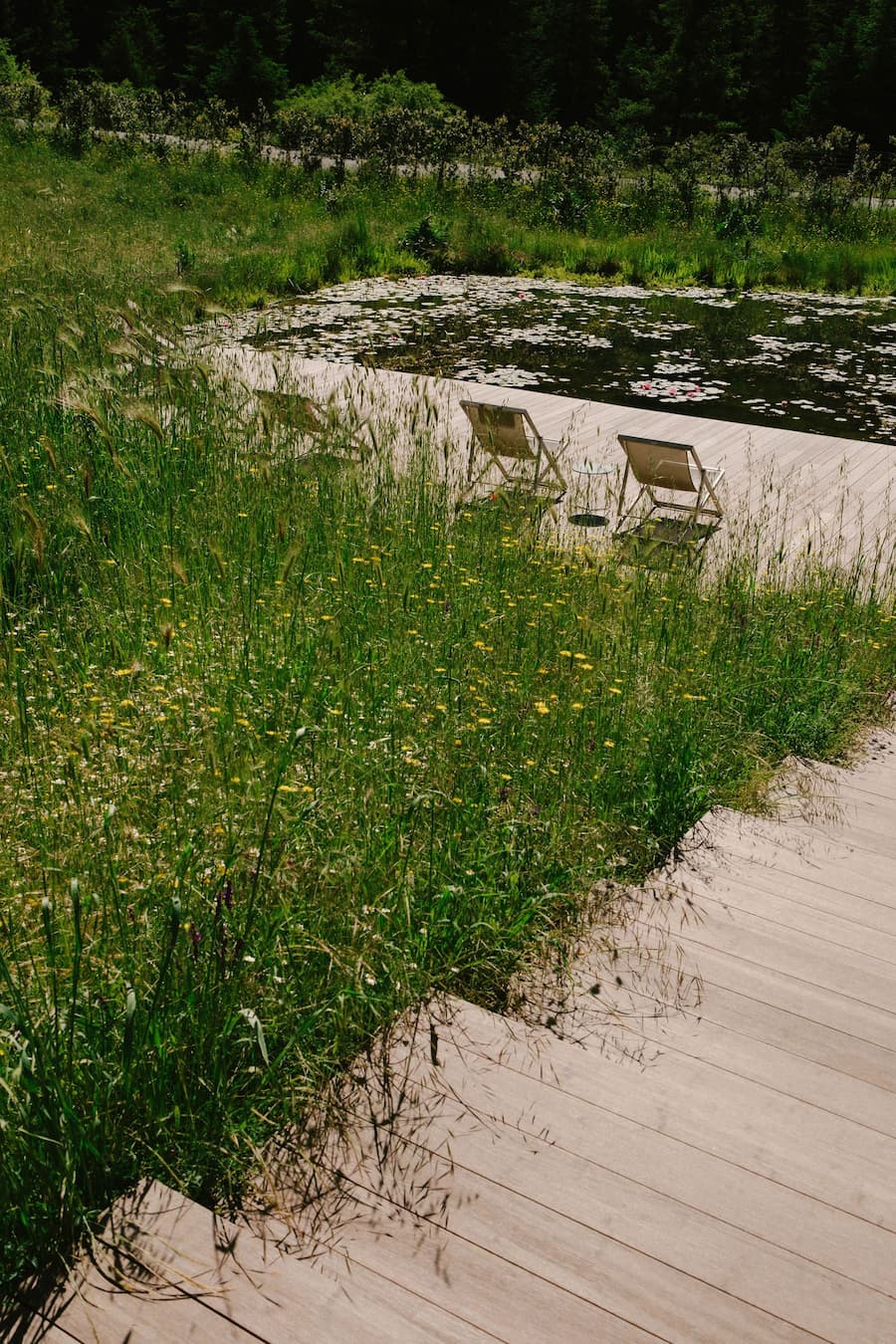
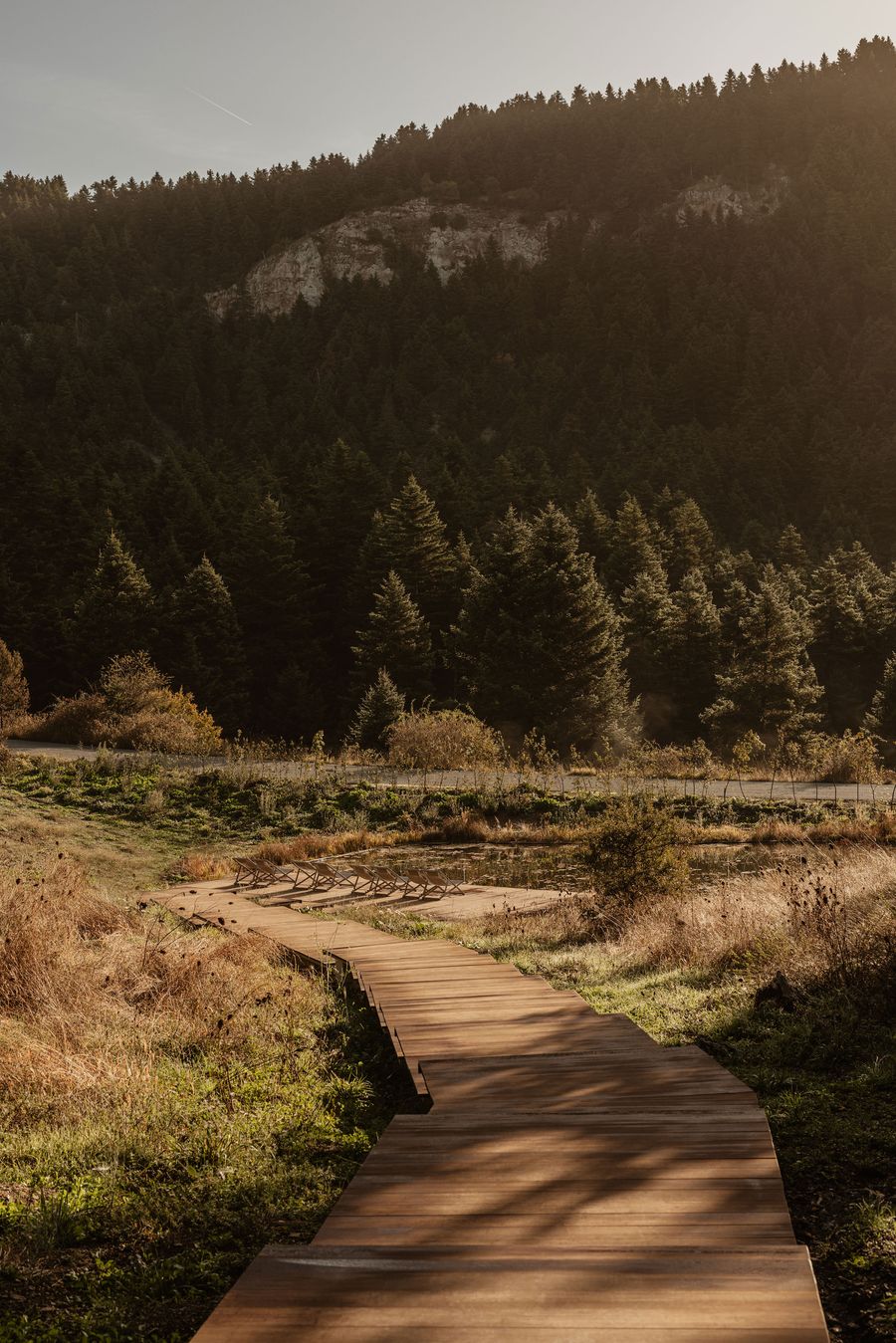
Wellness is also treated as a layered experience. In collaboration with CODAGE Paris, the Wellness Hub offers bespoke rituals and treatments alongside yoga, Pilates, and functional training. A “cave pool” with dappled skylight echoes the retreat’s subterranean spirit, while the gym swaps plastic for timber, aligning with the hotel’s sustainability ethos. Step outside, and you’ll find Elli Pangalou’s landscaped gardens inviting you to linger by the lily pond, on the star-gazing deck, or around a hilltop fireplace where time drifts easily by with the swirling smoke.
The surroundings are not just scenery; they’re central to the MANNA experience. Arcadia boasts one of Greece’s most extensive hiking trail networks, including the 75km-long Menalon Trail. Guests can embark on guided treks through fir forests scented with herbs and mushrooms, bike through hidden valleys, or saddle up for a ride beneath towering pines. An all-year destination, the region also offers rafting on the River Lousios in the summer and skiing at the Menalon Ski Resort during the winter season.
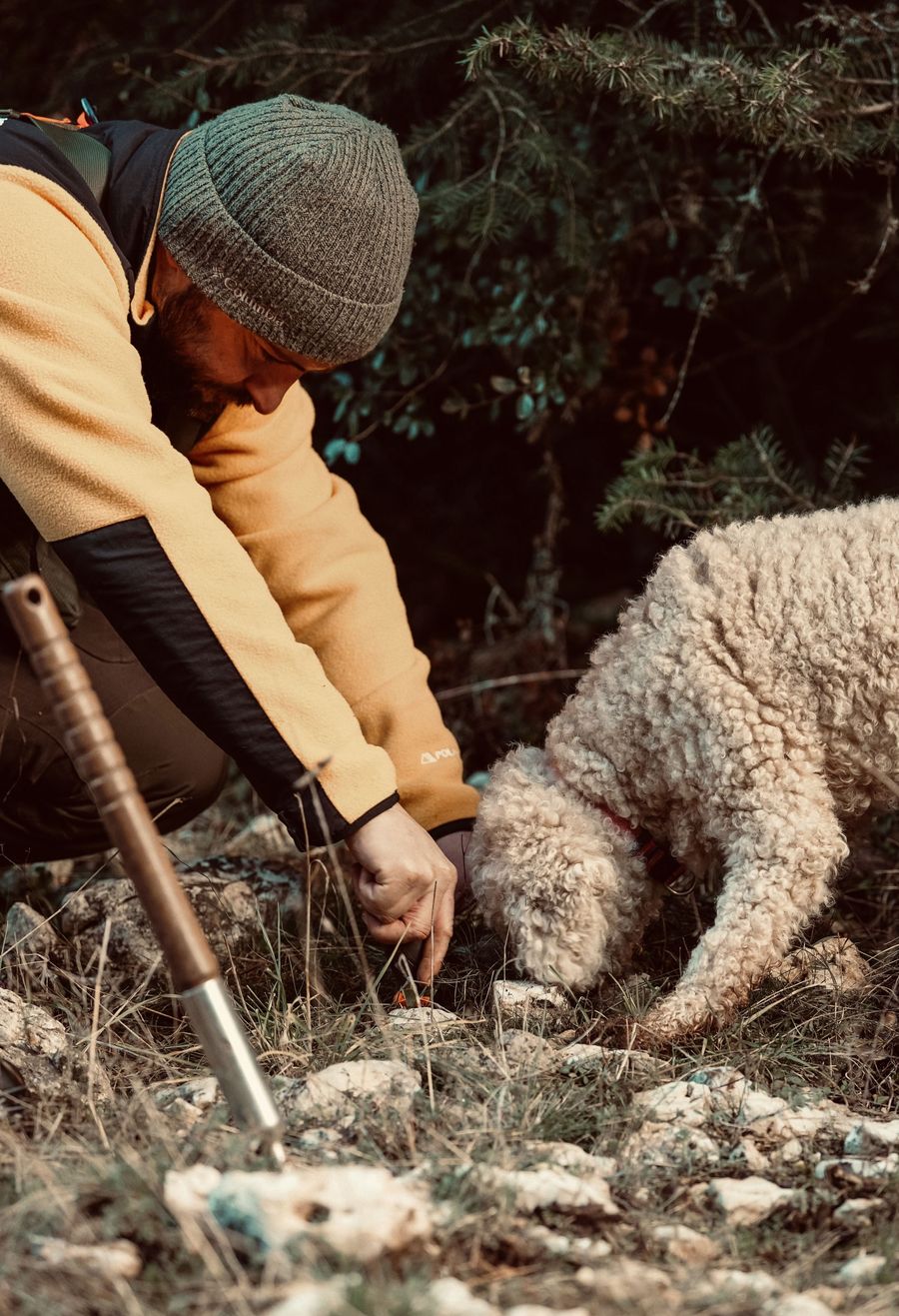
Those drawn to food and craft can hunt wild truffles with a trained Lagotto dog, join an open-air cooking class, or visit nearby farms, dairies, and wineries. Destinations like Vytina, Dimitsana, and the cliffside monasteries of Prodromos and Philosophos reward day trips with myth, history, and quiet awe.
In Arcadia, as in Mann’s Magic Mountain, altitude does more than oxygenate the lungs; it reorders the senses. At MANNA, that shift is both architectural and emotional. This is not a retreat in the trendy sense of escape; it is a return: to nature, to ourselves, and to the quiet power of a place that still believes that healing is possible.