廣東磚造房屋以材料構造與光影秩序重塑鄉土記憶與居住關係

brick house light well interior with vertical light and shadow


廣東磚造房屋以紅磚與混凝土構築清晰量體,透過材料構造與光影滲透,重塑鄉村建築與當代居住之間的秩序與關係,展現 材料敘事


brick house light well interior with vertical light and shadow
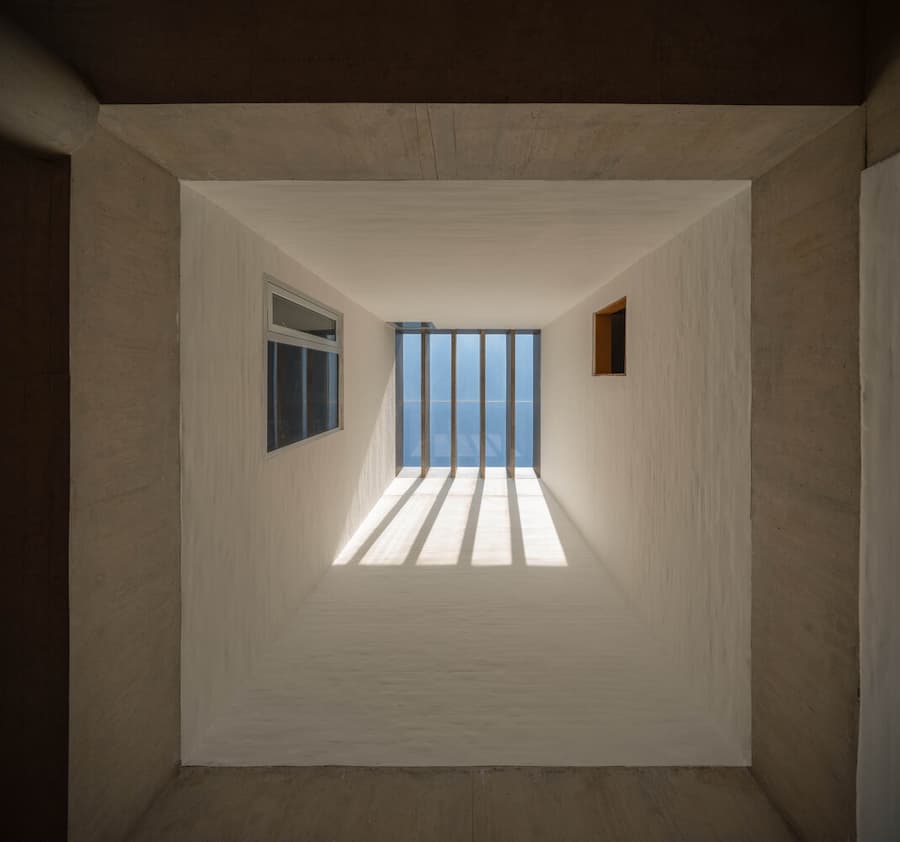
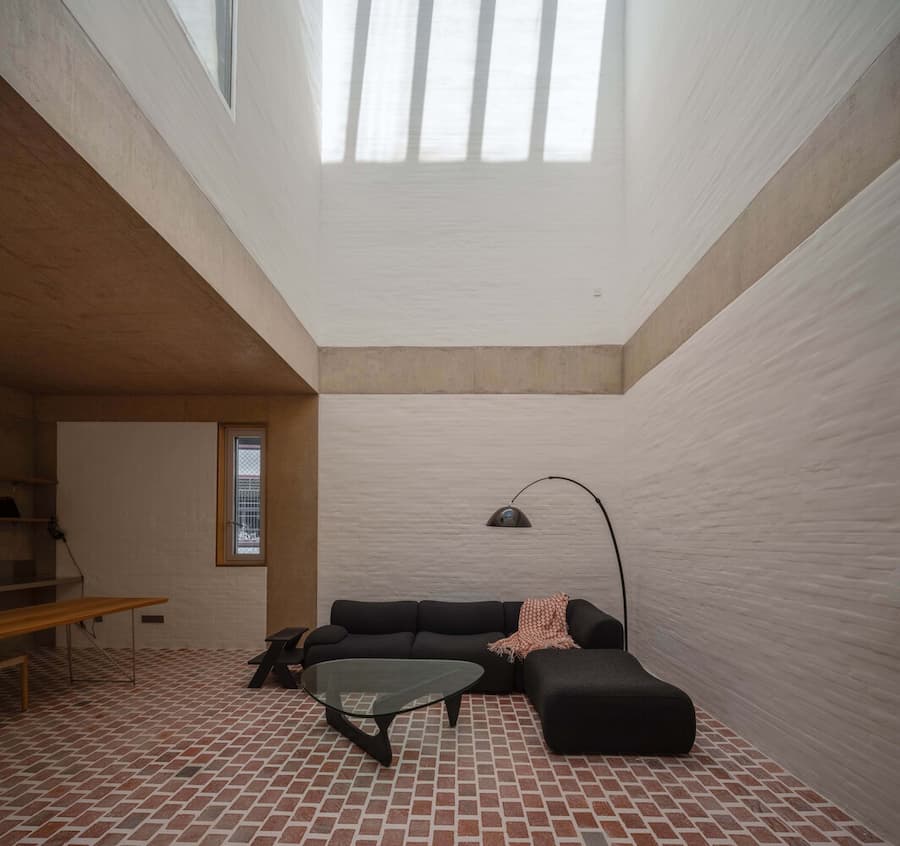
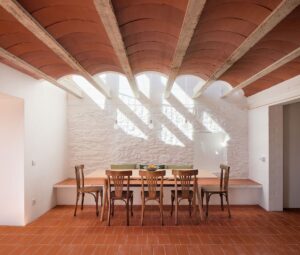
光井將自然光引入室內,使磚構空間在垂直尺度中建立清晰層次。


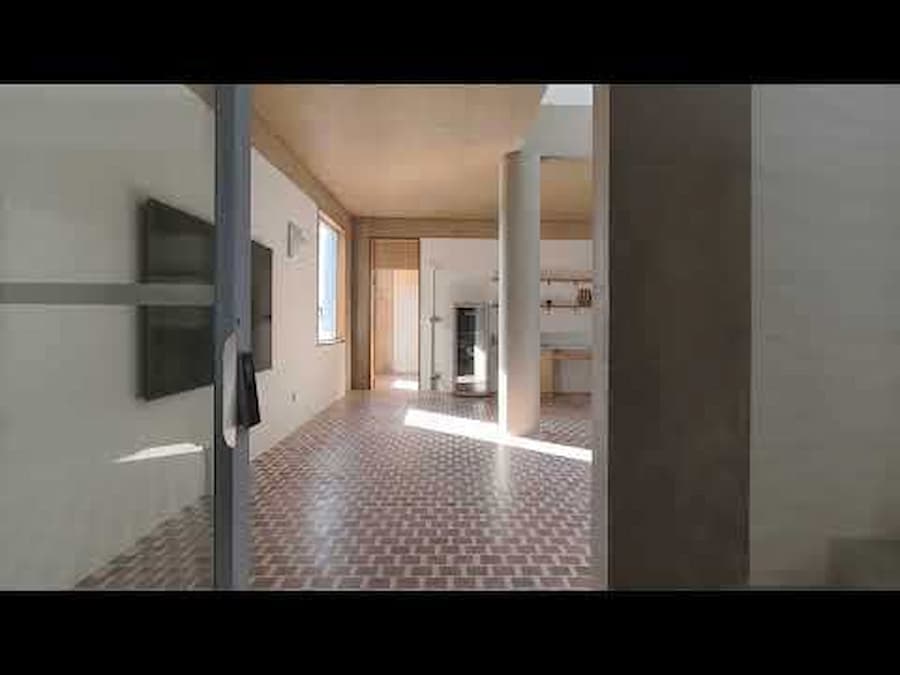
廣東磚造房屋以在地建材與構造邏輯回應鄉村建築的生成方式,重新界定居住、記憶與環境之間的關係。透過磚作為空間與結構的共同語言,建築在內外之間建立厚度與層次,展現 Material as Narrative 的敘事力量;同時藉由開口、進深與光井控制光線路徑,形塑具有時間性的 Light and Space 空間經驗。


鄉村建築並非被一次性設計完成,而是在長時間的使用、修補與增建之中逐步形成,呈現出一種帶有模糊邊界的秩序。這種秩序不依賴形式,而來自於與環境、氣候與生活方式的長期協調。
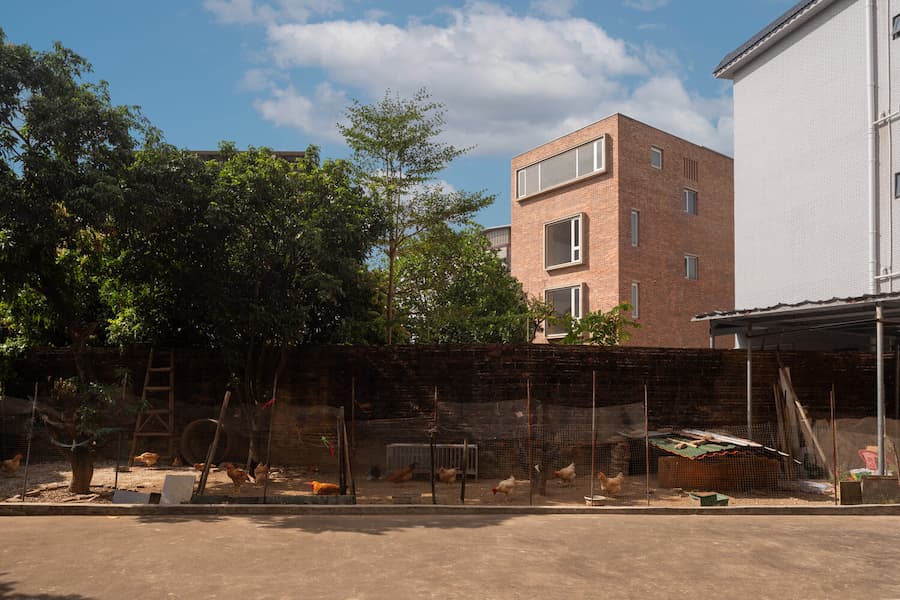
在此脈絡下,設計並未透過強烈的形式語彙介入,而是選擇降低建築的可見性,使其重新嵌入既有場域之中。業主希望這棟房子能讓下一代重新理解家鄉的存在,這使建築不只是空間的更新,而是一種記憶與歸屬的重新建立。同時,非日常居住的使用條件,也使設計在情感之外,必須精準回應成本與維護的現實限制。使建築不只是空間更新,更回到作為日常居住(domestic space)與家庭聚合的場所。
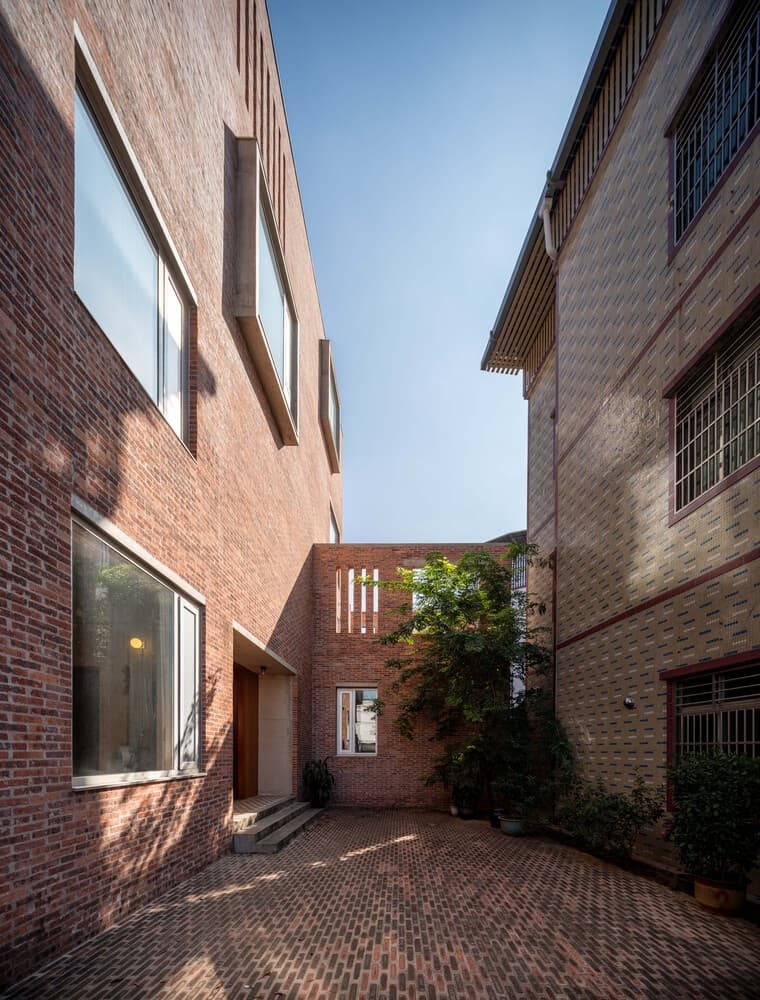
 

brick house facade at night with warm interior lighting


brick house courtyard exterior with layered volumes


磚的尺度與人的身體直接對應,使其在搬運與砌築過程中形成一種自然的節奏,這種節奏進一步被轉化為空間生成的基本單位。
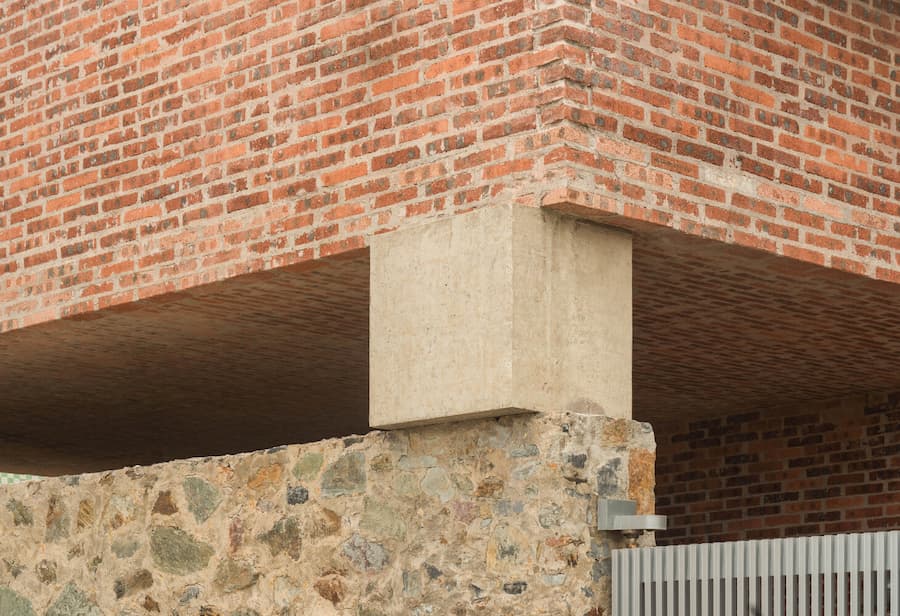
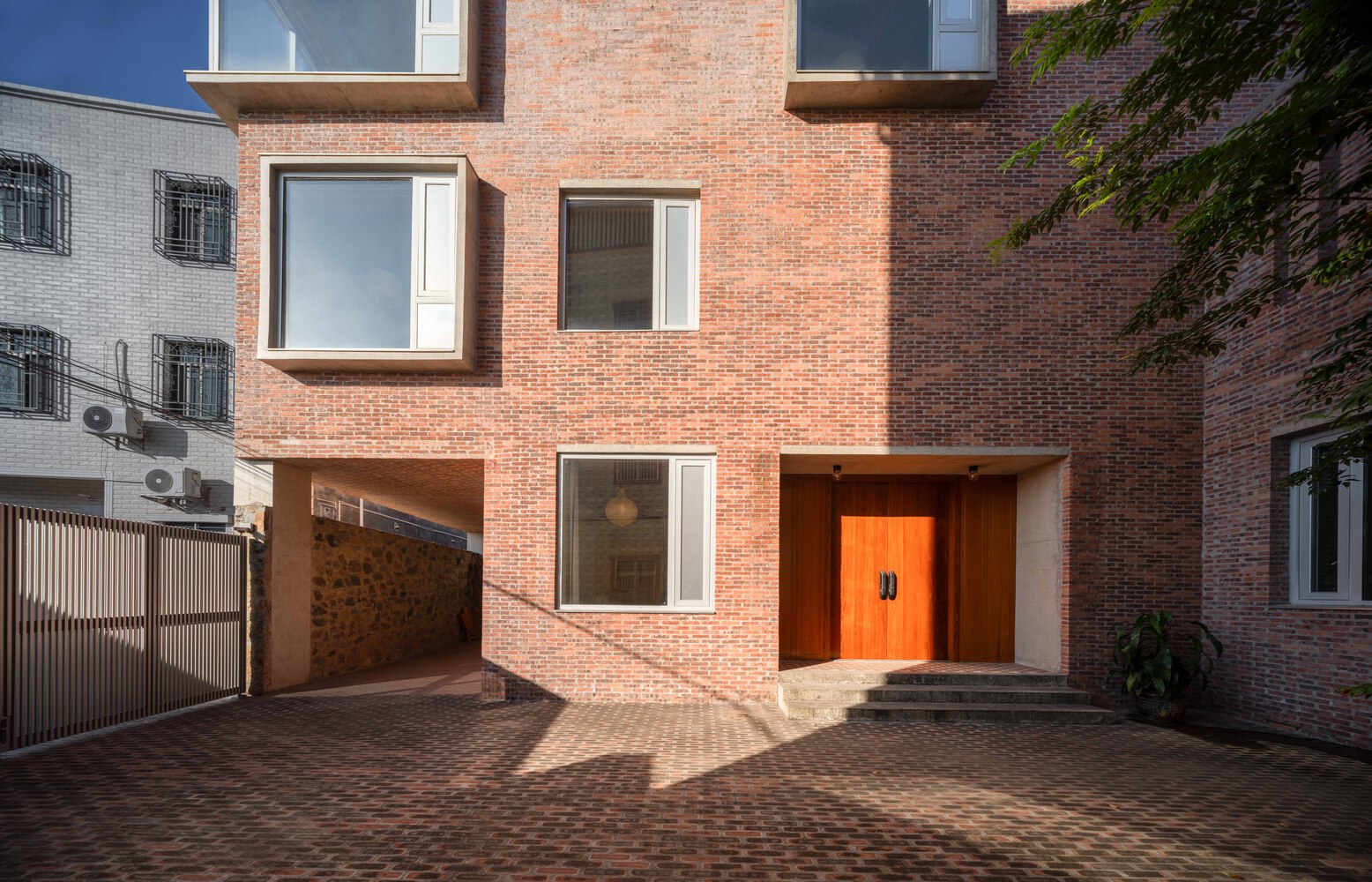
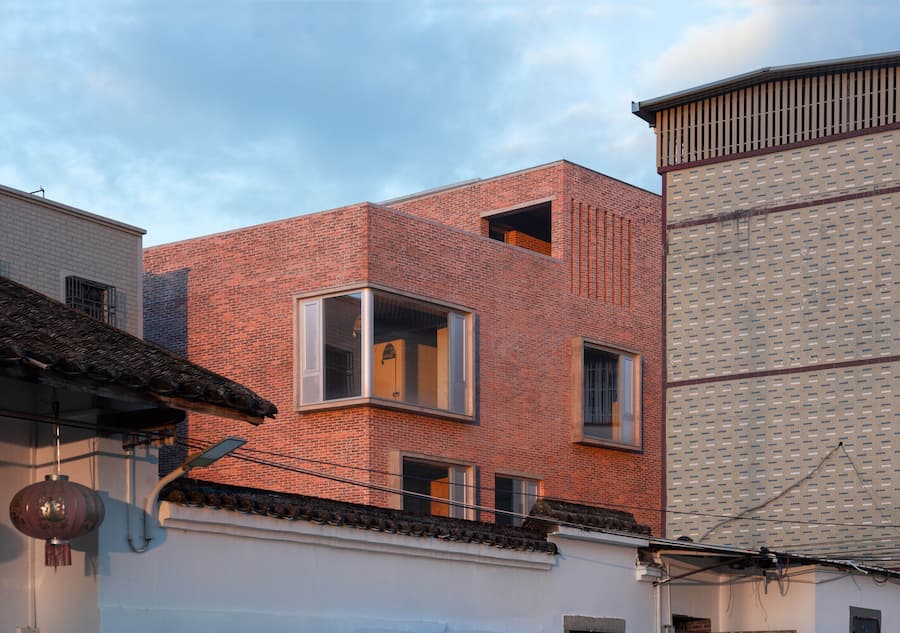
從單一磚塊到牆體,再到整體構造,建築呈現出一種由模組堆疊而成的秩序。鋼筋混凝土框架提供主要結構,內層牆體與其精準對齊,使承重與填充之間的關係被清楚揭示;外層則以連續磚面包覆,使結構退居於背景之中。這種內外之間的落差,讓建築同時具備可閱讀的構造邏輯與被隱藏的空間表情。


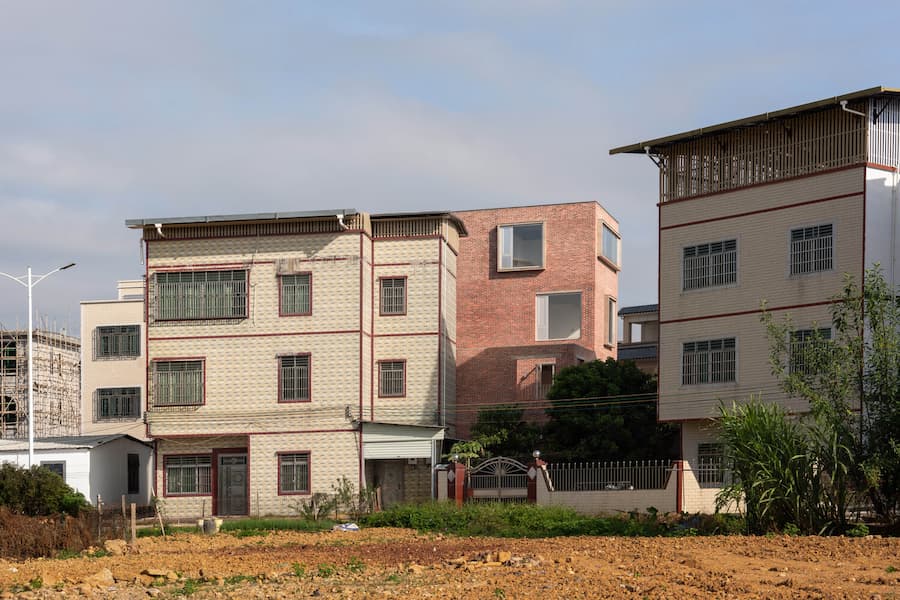
brick house in rural village context with surrounding landscape


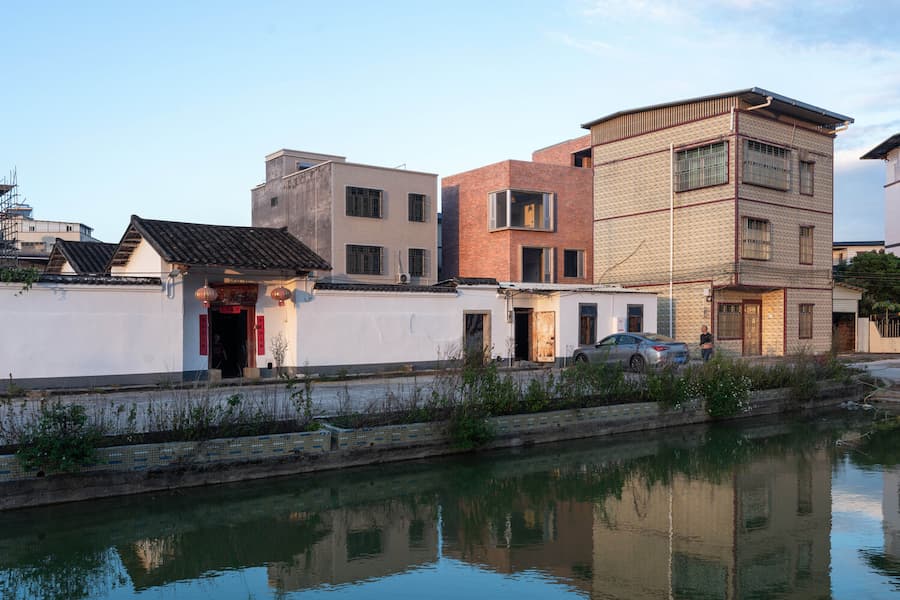
contrast between new brick house and traditional village buildings
新建量體在尺度與材料上回應既有村落,形成對話關係。


brick house distant view integrated with trees and environment


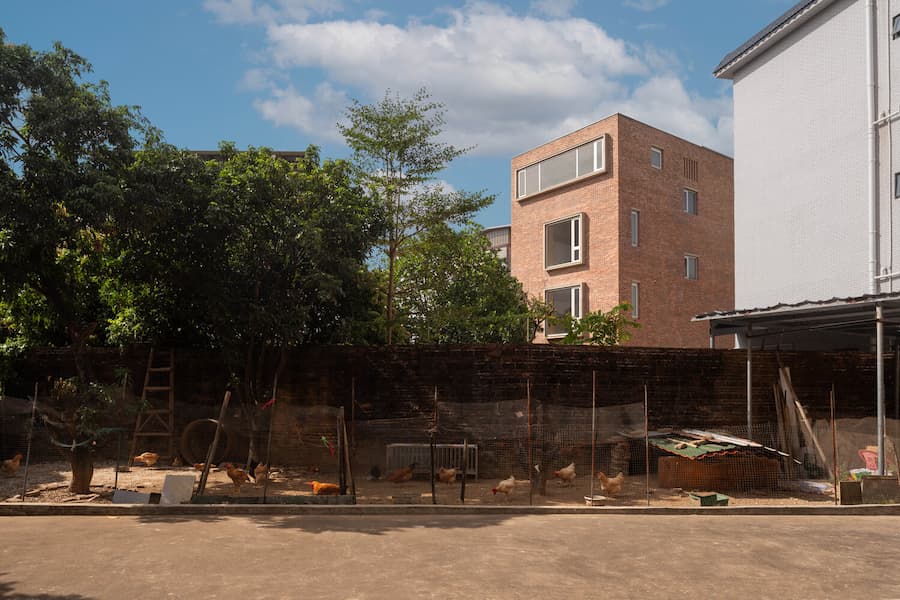
brick house integrated with daily village life and surroundings


雙層空心牆不僅是對氣候條件的回應,更在構造上建立起牆體的厚度,使空間在遮蔽、通風與熱調節之間形成一種可被感知的界面。
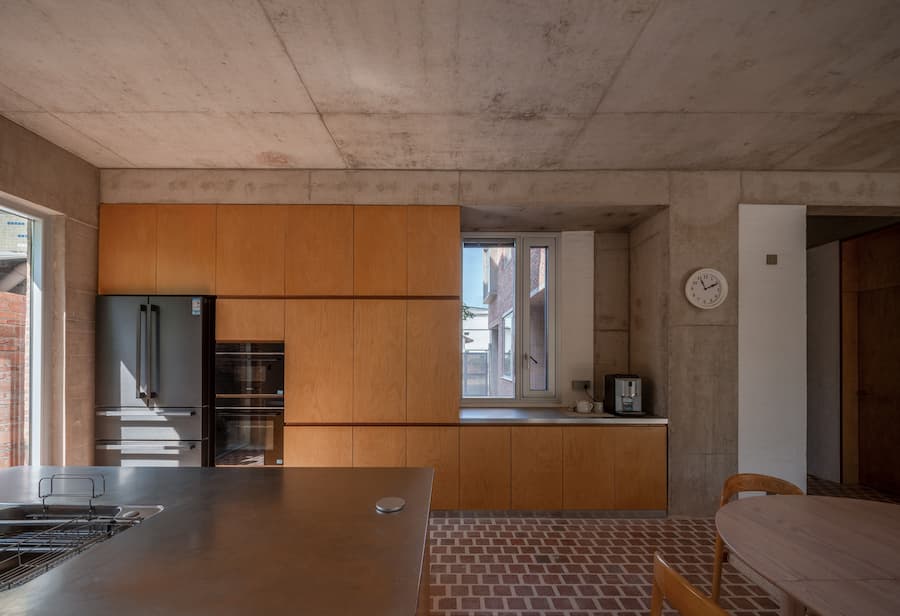
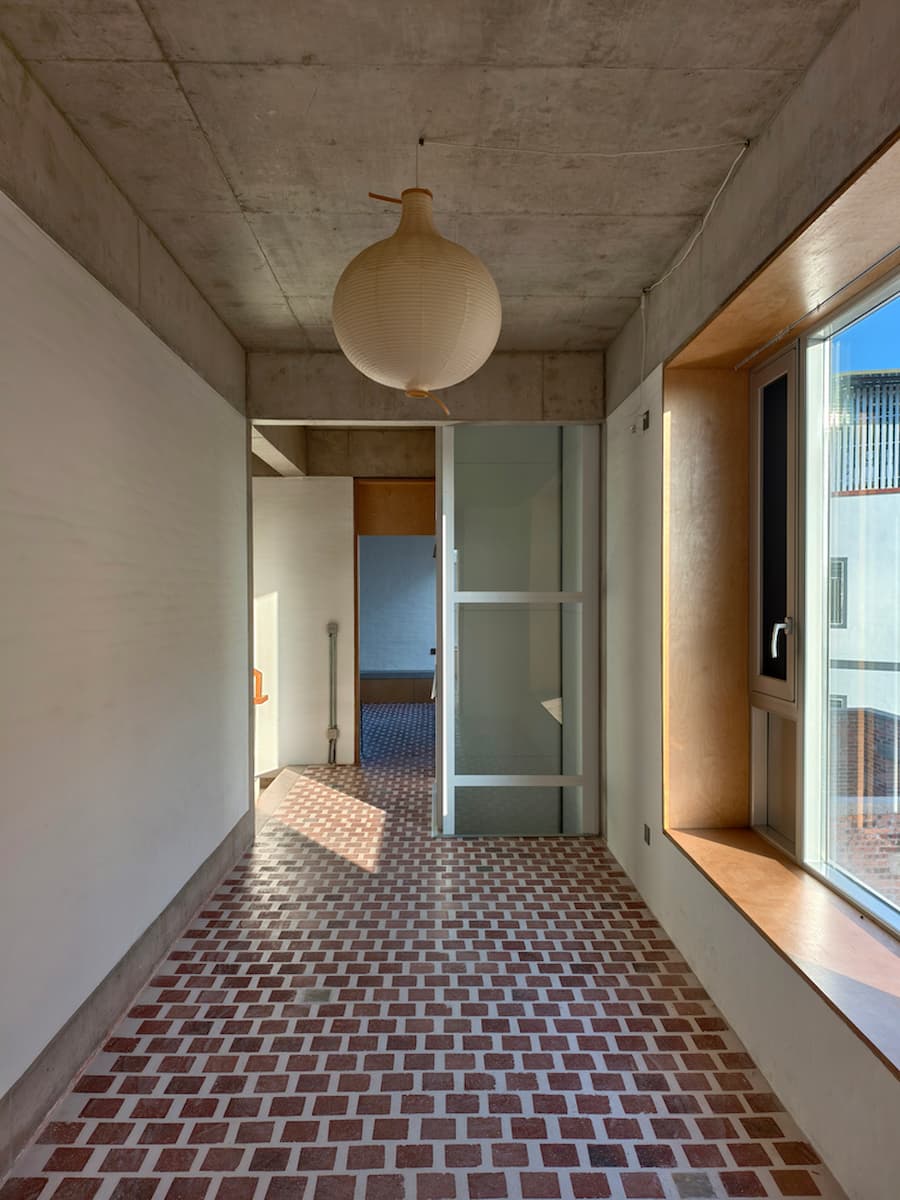
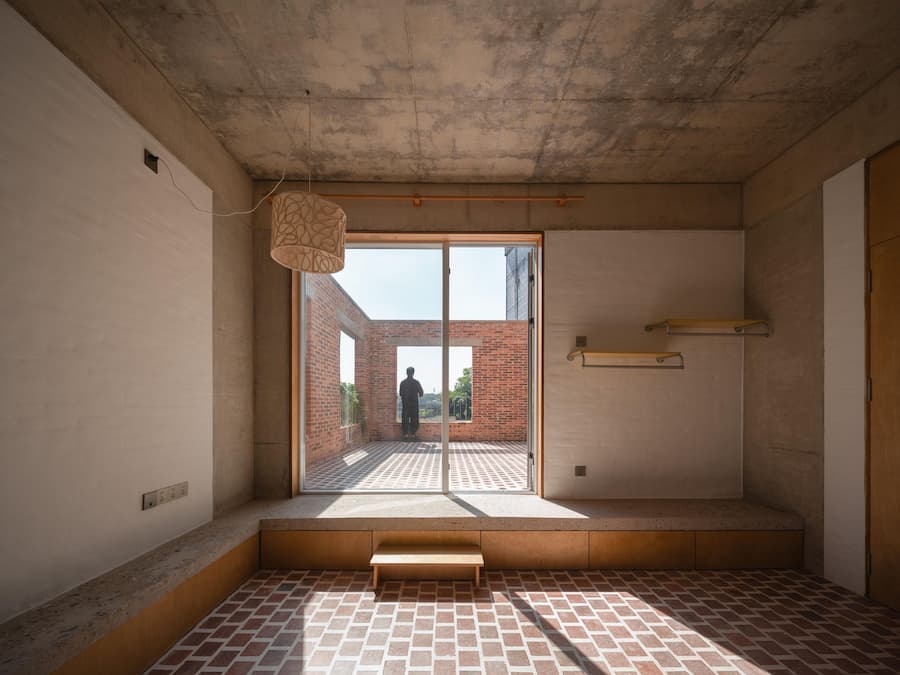
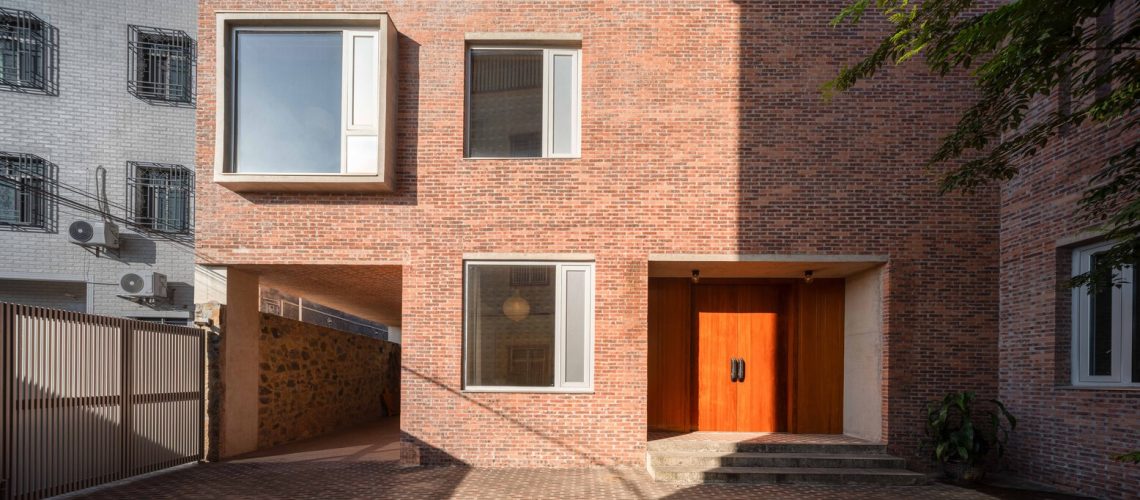
外部呈現為穩定且低調的紅磚量體,與混凝土窗框構成一種克制的立面秩序,使建築自然融入村落紋理;內部則反向揭示構造,使結構與填充成為空間的一部分。磚被延伸至屋頂、地面與戶外構築,使材料從構造單元轉化為空間語言,進而建立一種包覆性的整體經驗。同時,這種牆體構造也回應當地氣候條件,在遮陽、通風與熱調節之間取得平衡,使建築具備被動式調節(passive cooling)的性能。


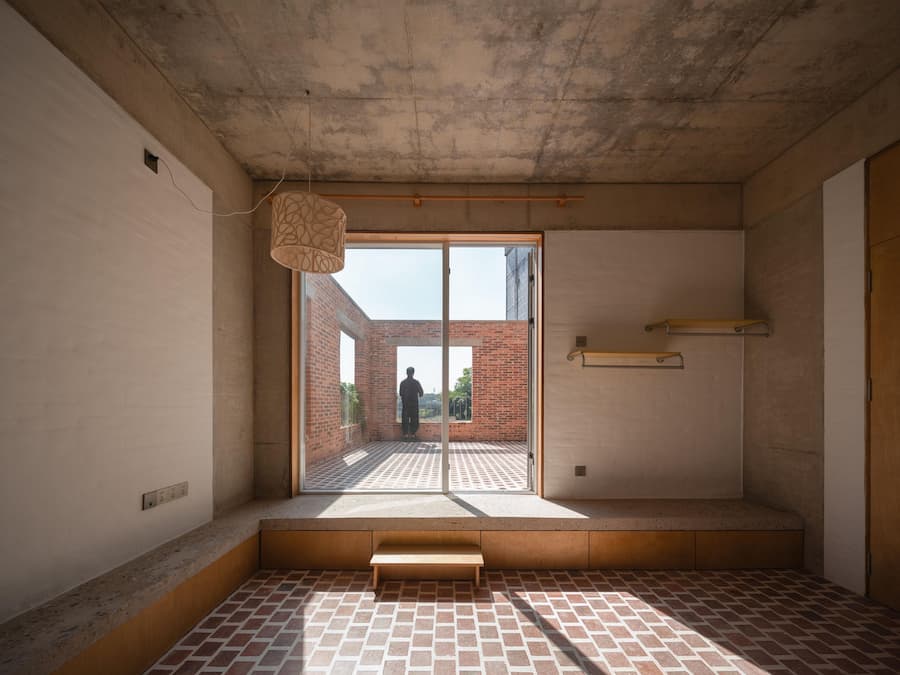
brick floor material detail in interior living space


junction of concrete structure and brick wall detail


brick pattern detail showing material as narrative concept
磚的排列與細部構造,使材料本身成為空間敘事的一部分。


close up of brick and wood material texture


material continuity from interior to exterior space


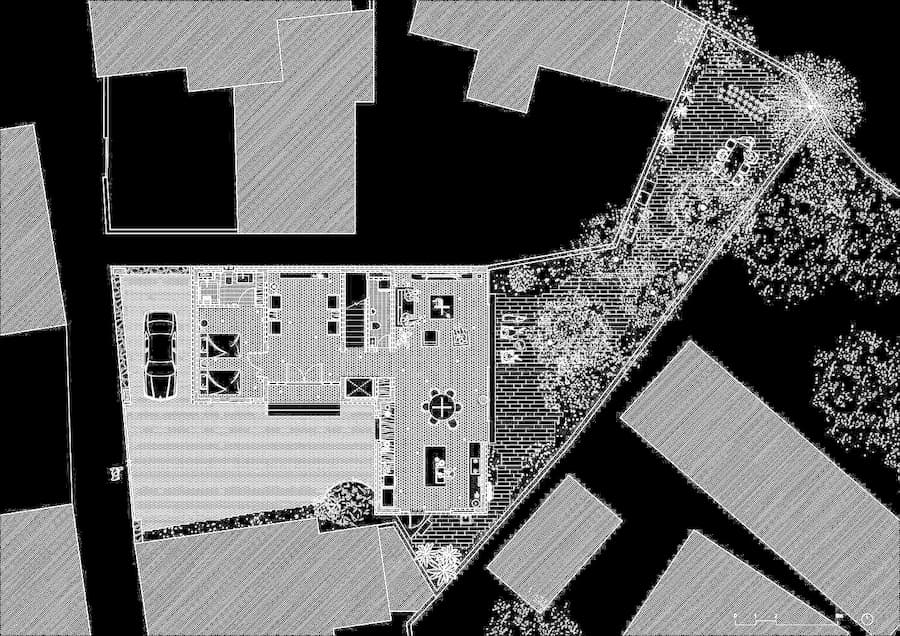
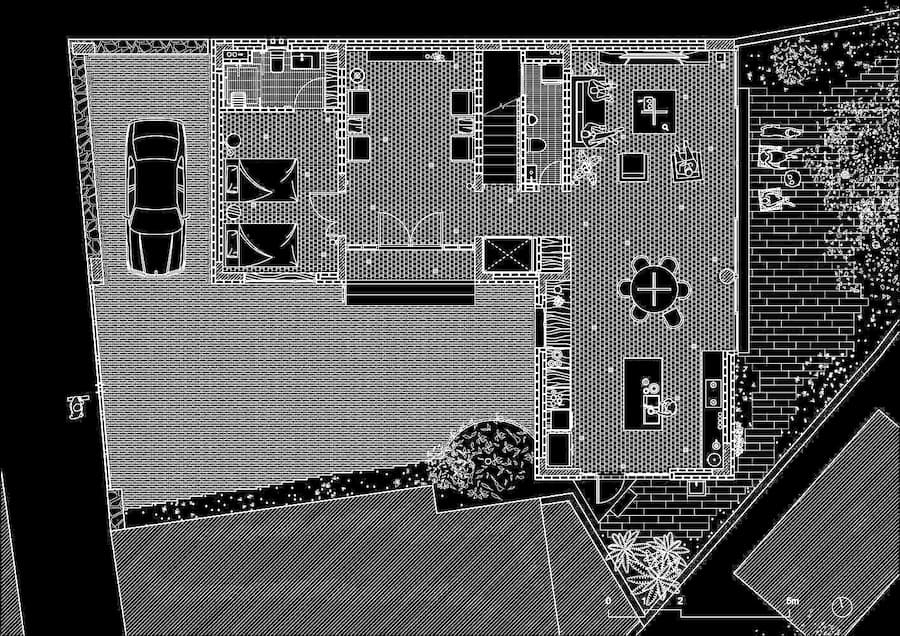
空間佈局在延續原有格局的基礎上進行調整,使傳統生活秩序與當代使用需求得以同時存在,而非相互取代。
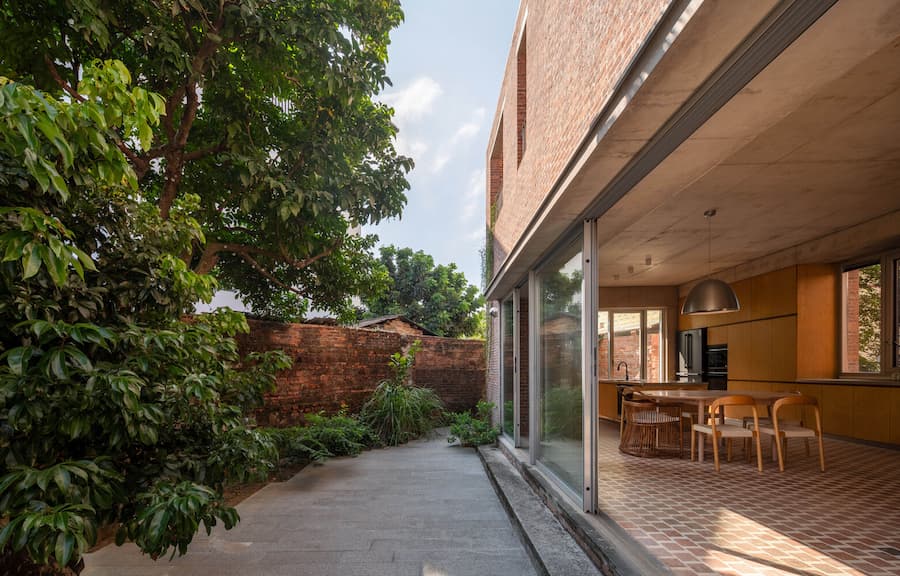
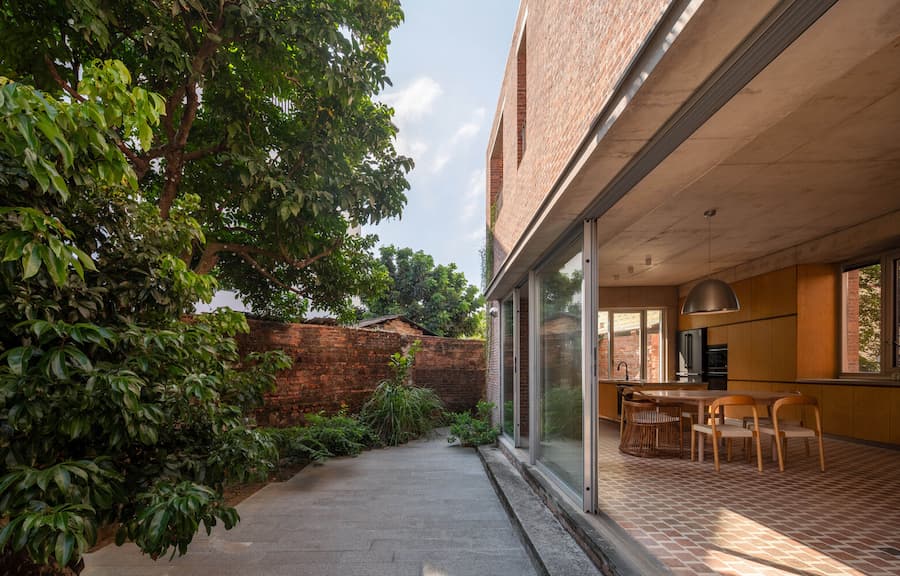
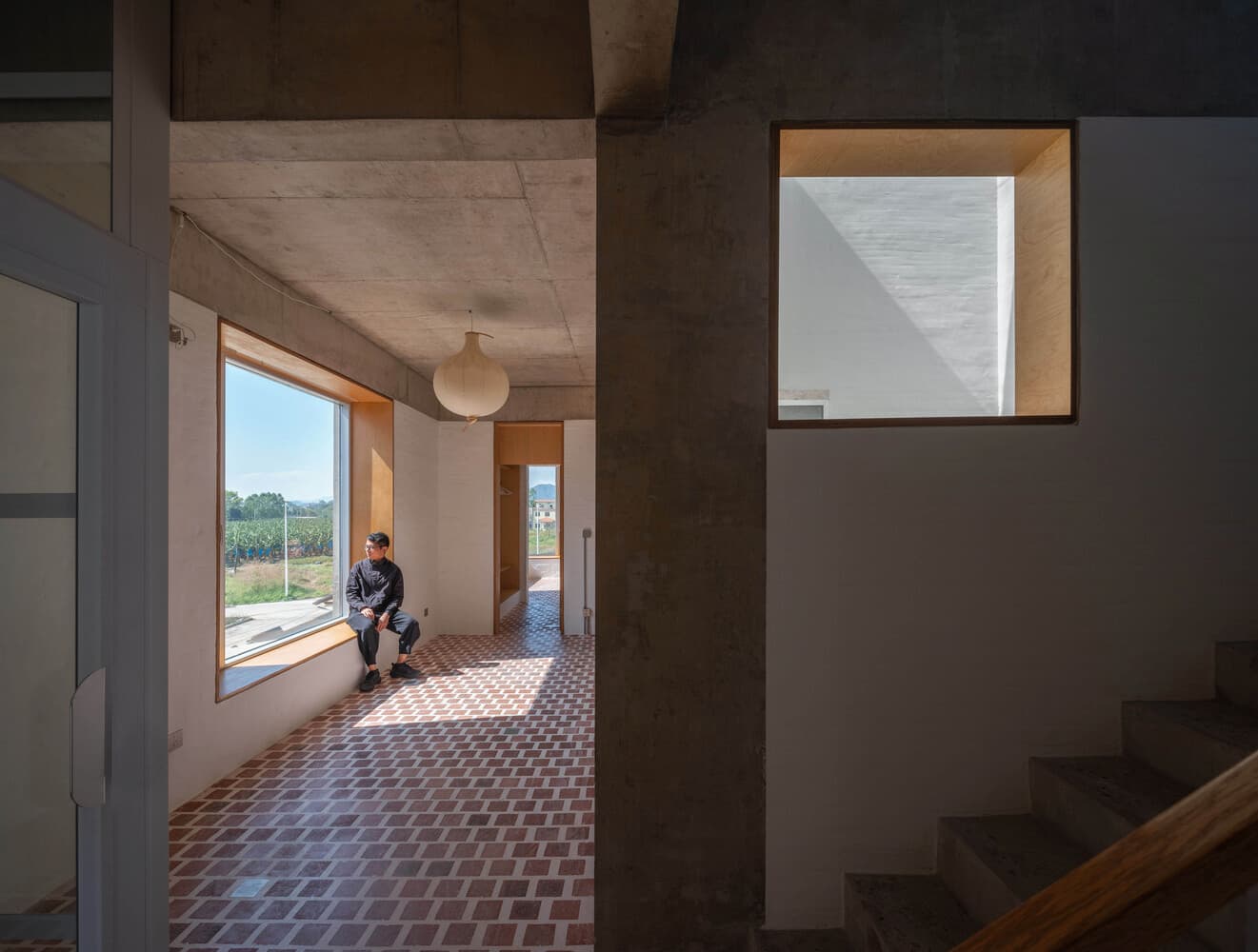
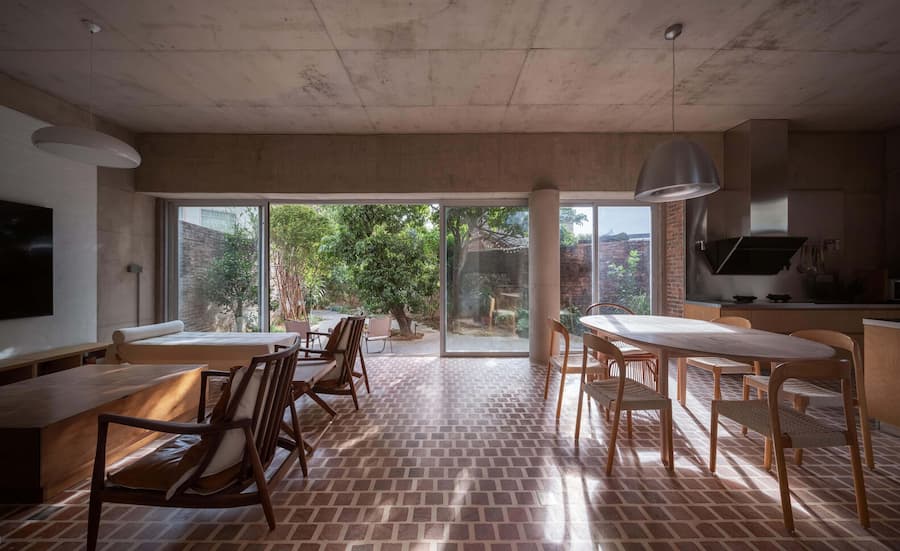
主入口、中央大廳與廚房維持既有位置,回應地方文化與風水脈絡。動線由入口逐步向內推進,串聯起起居、餐飲與聚會空間,並最終過渡至後院,使生活在室內與戶外之間形成連續流動。這種由室內延伸至庭院的配置,使住宅更接近傳統的 courtyard house 類型,強化居住與環境之間的連結。既有的荔枝樹、黃檀樹與老圍牆被保留下來,使時間的痕跡持續滲入新的空間使用之中。
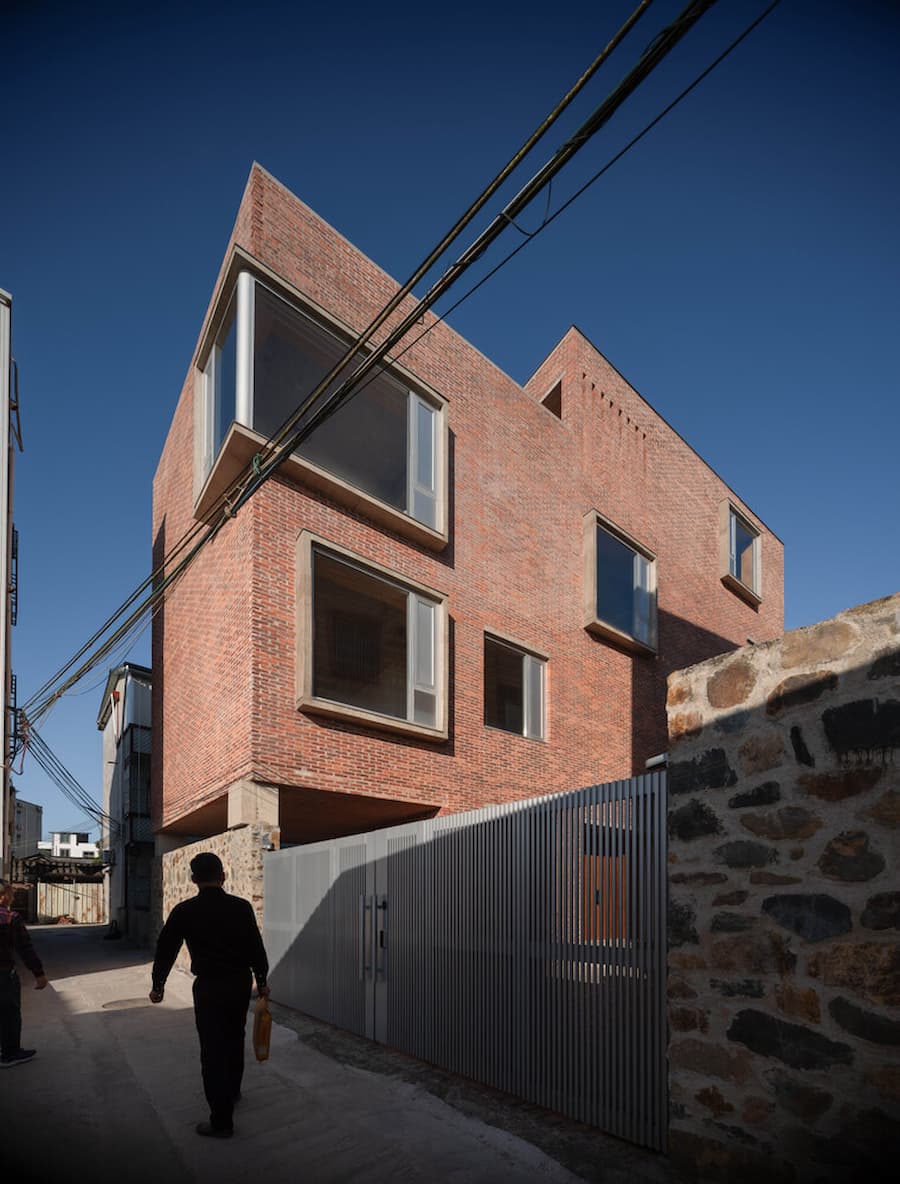
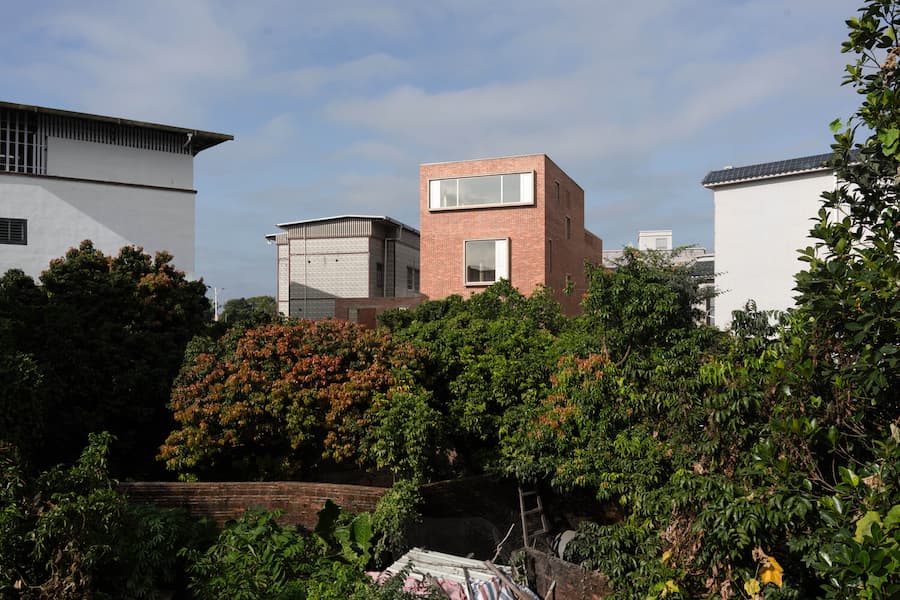
 

street view of brick house with geometric form


overall volume of brick house within village setting


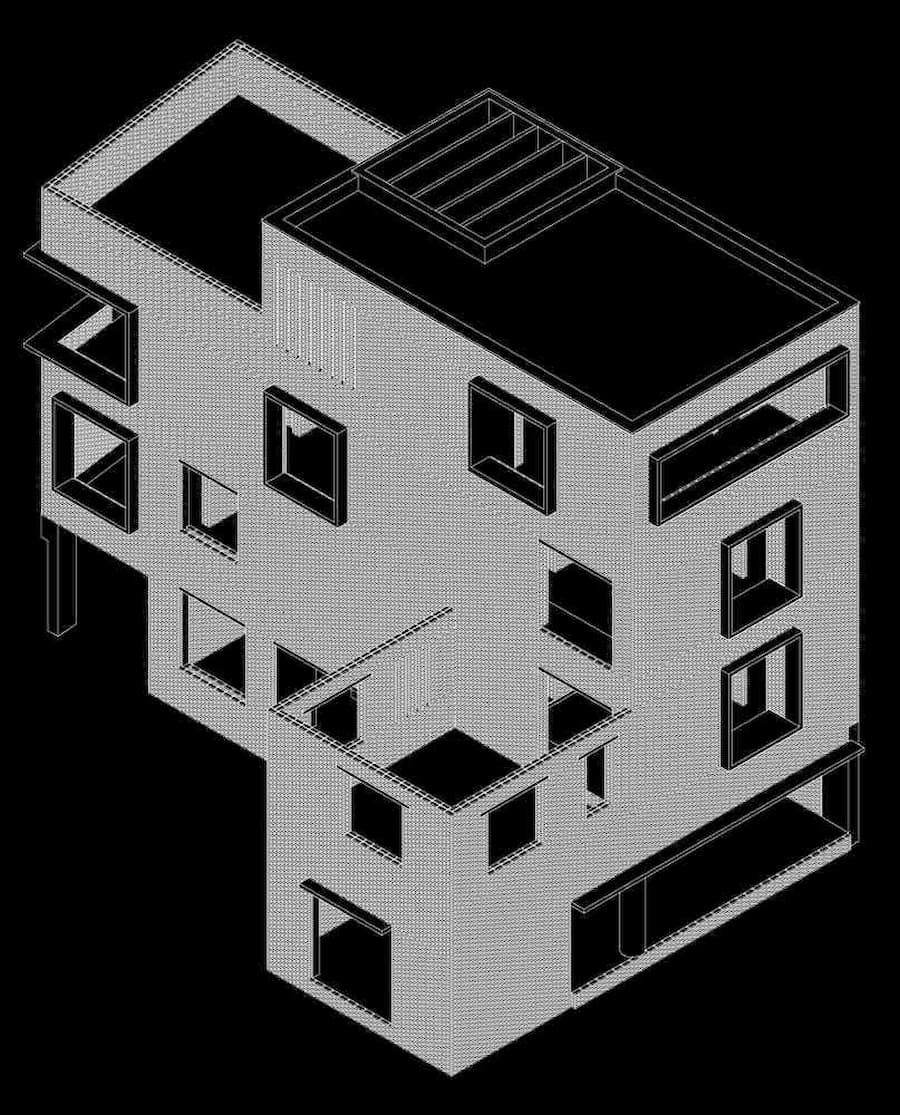
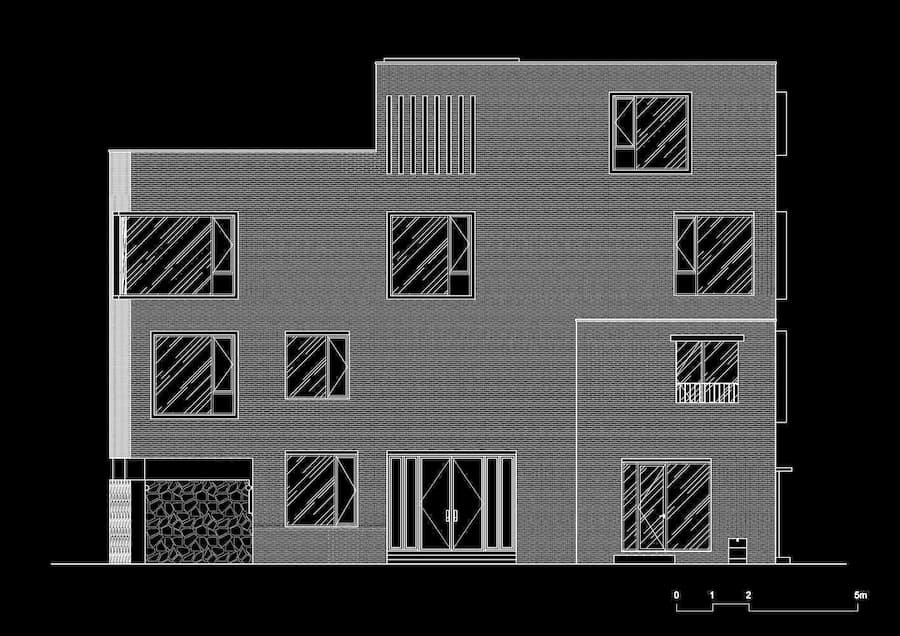
architectural elevation showing opening arrangement
開口與實體之間的配置,反映出室內空間與光線需求的對應關係。


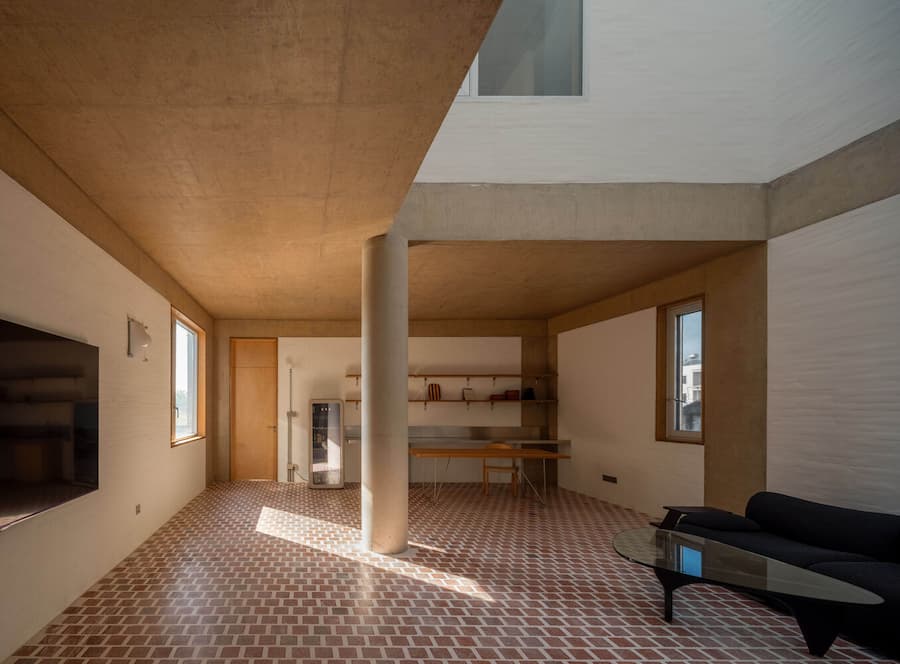
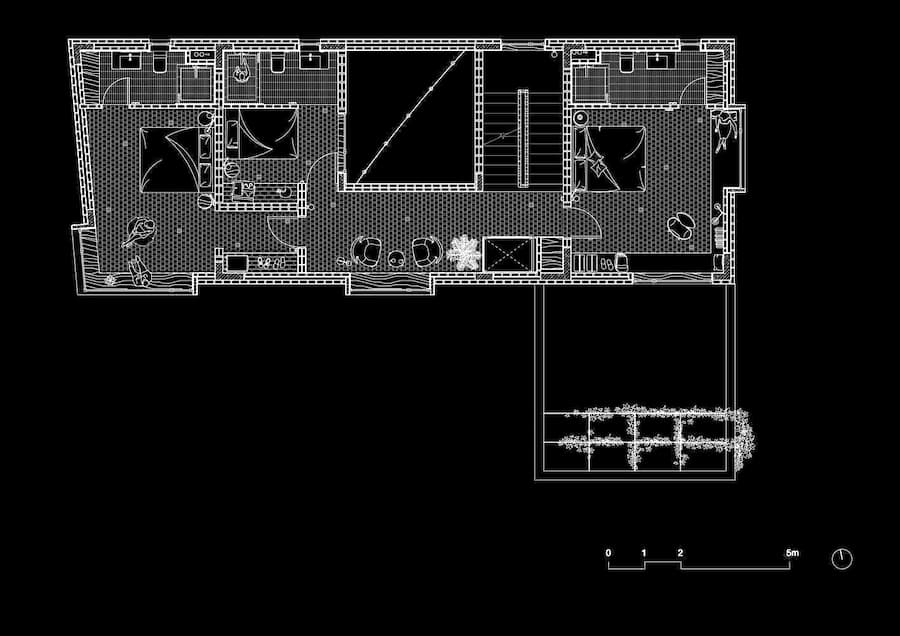
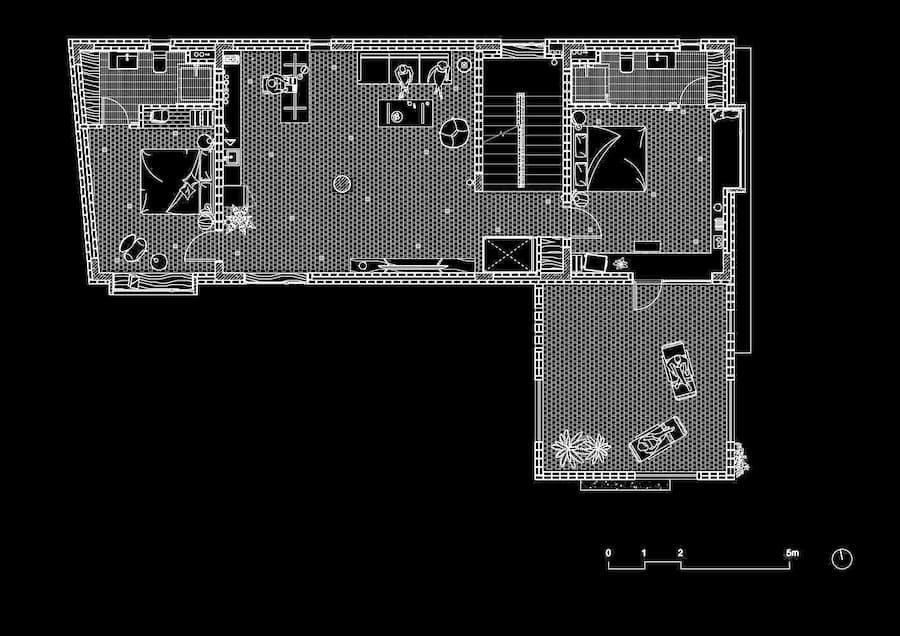
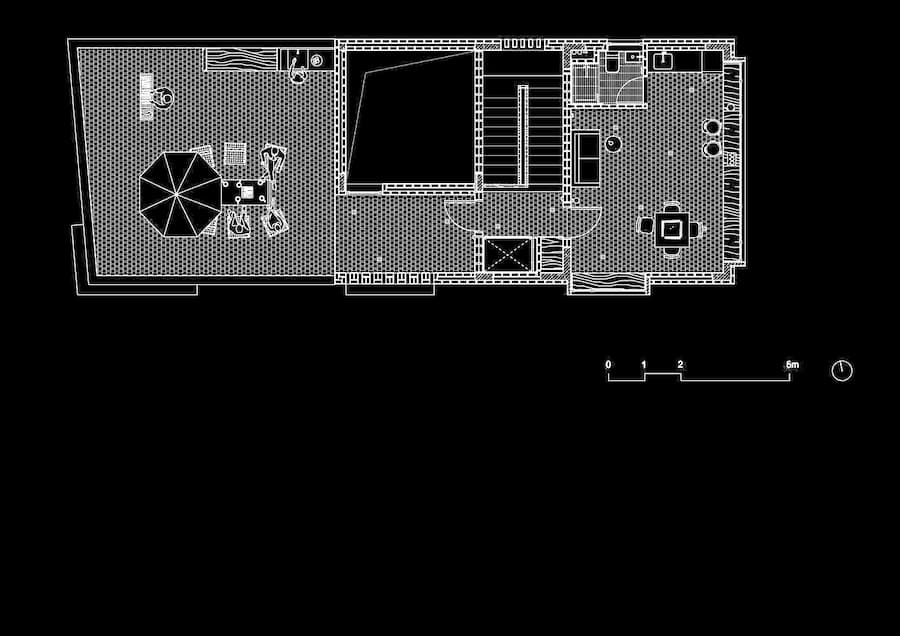
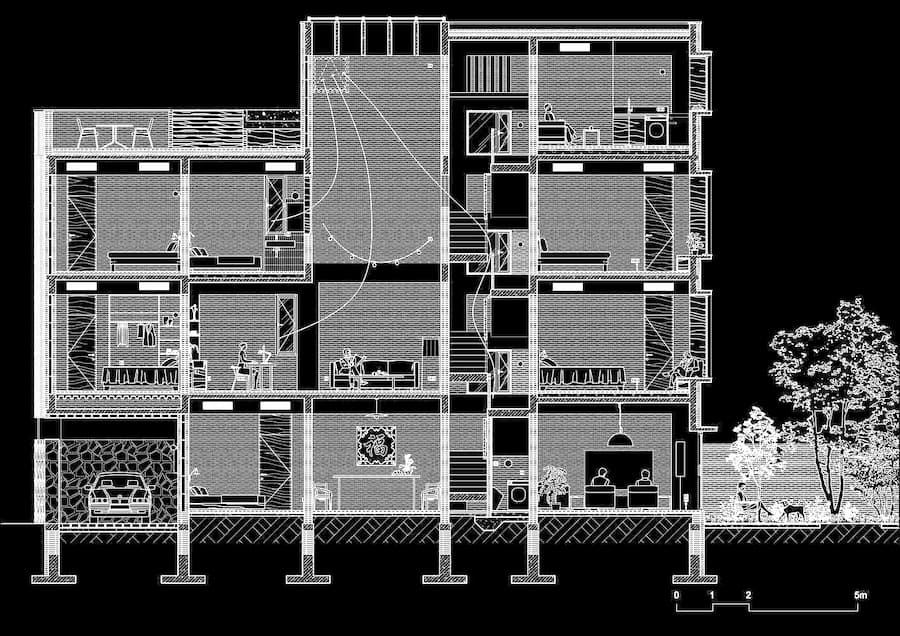
二樓空間轉向更內斂的配置,透過垂直挑空與頂部開口引入間接光,使空間在封閉之中仍保有與天空的聯繫。
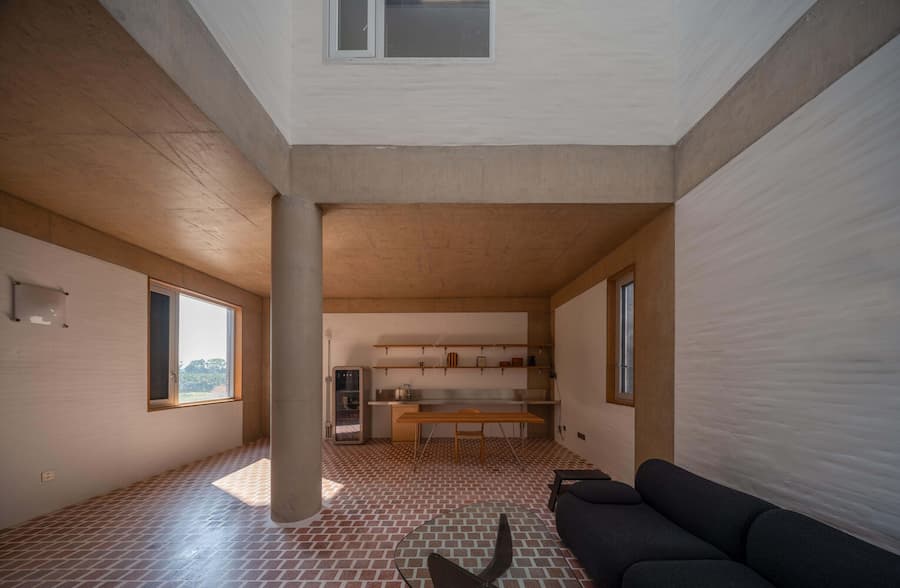
中央大廳、客廳與家庭活動空間構成一個由公共至私密逐步轉換的序列,使居住經驗不再停留於平面,而是在光線、尺度與高度之間被展開與延伸。
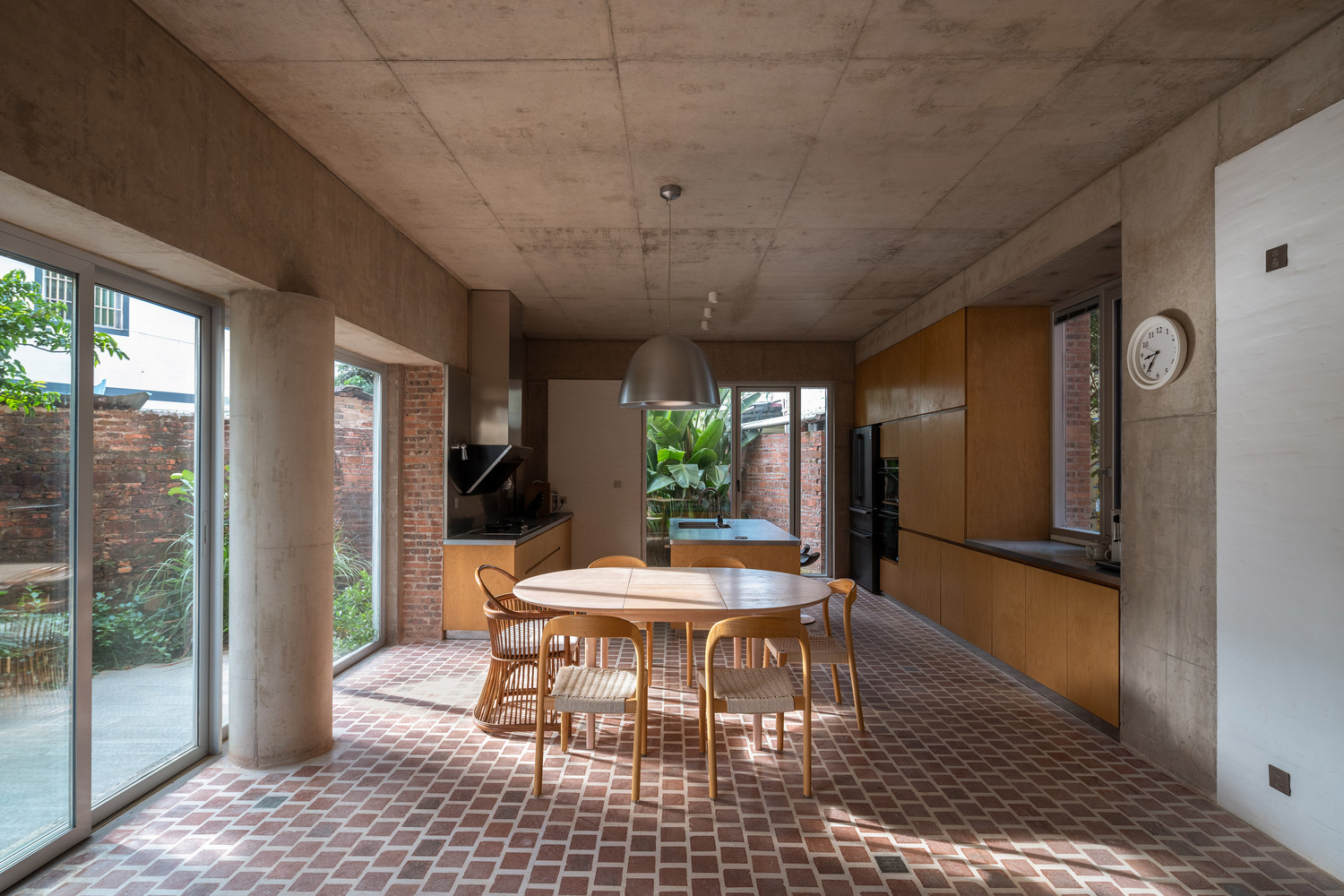
 

brick house massing with layered volumes and openings


brick facade composition with concrete window frames


light and shadow on brick wall surface


brick house exterior detail within rural environment


open living space with clear spatial axis
開放式空間透過軸線串聯,建立清晰而連續的空間關係。


interior space extending toward outdoor terrace


transitional space between interior and courtyard


corridor showing spatial movement and perspective


connected interior spaces forming continuous flow


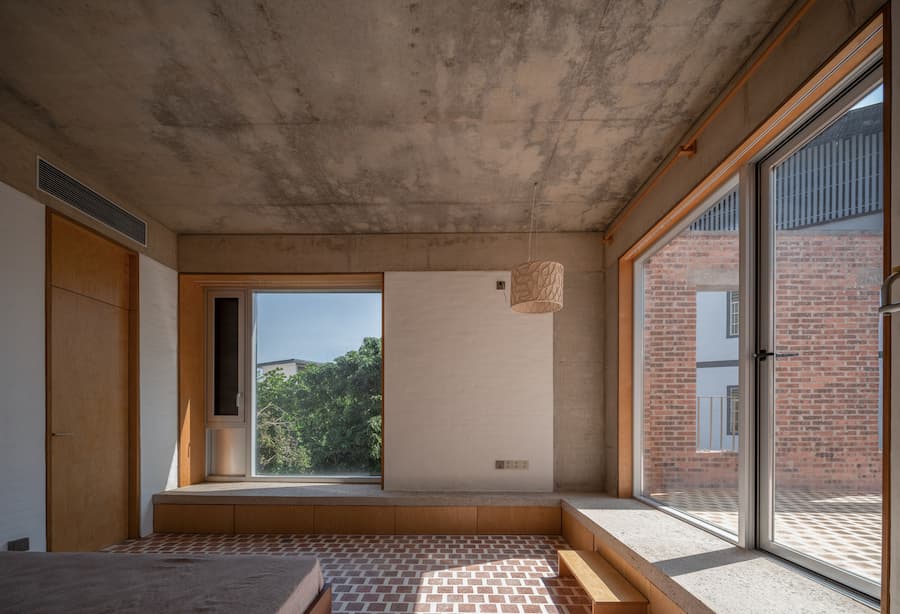
bedroom with soft natural light and window opening
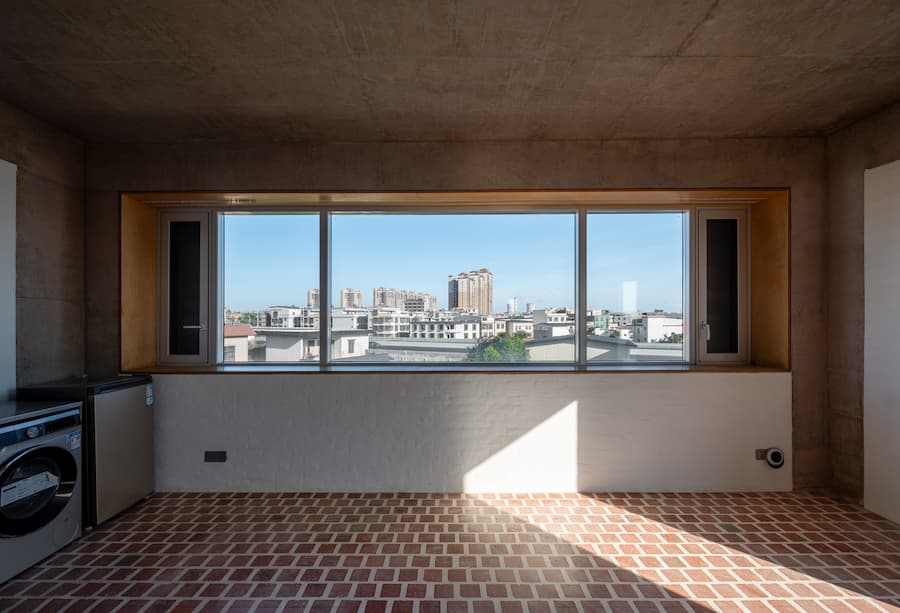
光線沿牆面滑動,使空間在時間中產生細微變化。


natural light entering through upper opening


vertical light court creating layered light condition


floor plan showing spatial layout organization


architectural plan with room distribution


detailed floor plan with circulation paths


plan showing structural and spatial relationship


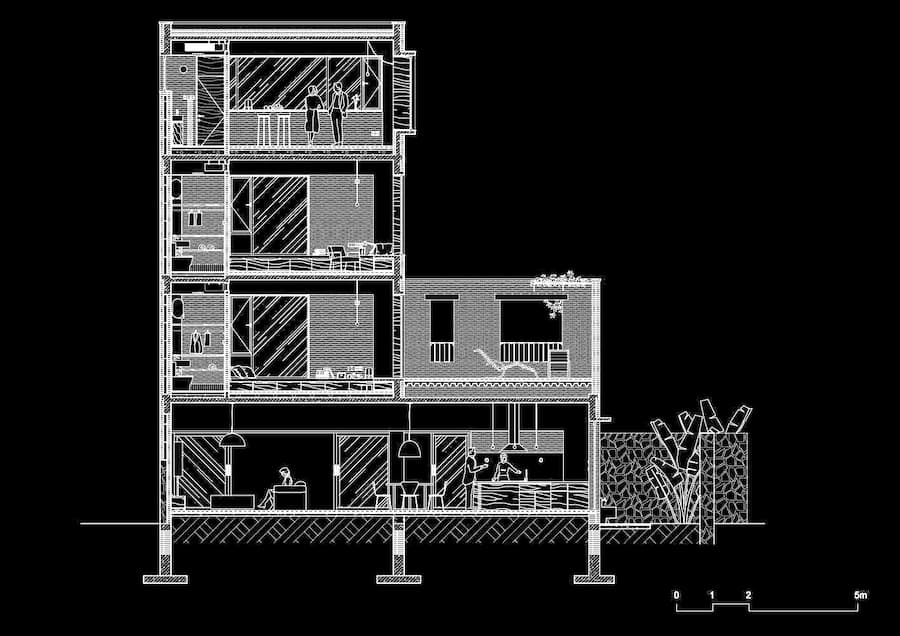
long section showing vertical spatial connection


section drawing showing interior height variation


這座廣東磚造房屋並不依賴形式來建立自身的辨識度,而是透過材料、構造與光的持續運作,回到建築最本質的問題——如何與時間共存。

在這裡,磚不只是被使用,而是不斷累積;空間不只是被填滿,而是持續被重新理解。當建築不再強調被觀看,而是專注於被使用與被記住,它反而建立起一種更穩定且長久的存在方式。
 

courtyard space for daily living and gathering
庭院成為日常活動的延伸,使居住在室內外之間流動。


interior opening toward outdoor living space

Wuhan Ski Resort: A variety of entertainment, sports, and retail facilities groups around a central lake to form a super-large commercial complex

Wuhan Ski Resort

    A variety of entertainment, sports, and retail facilities groups around a central lake to form a super-large commercial complex       1)

Facebook
Twitter
LinkedIn
Tumblr
0 0 votes
Article Rating
Subscribe
Notify of
guest
0 Comments
Oldest
Newest Most Voted
Inline Feedbacks
View all comments
Search