China Tujia Brocade Art Museum
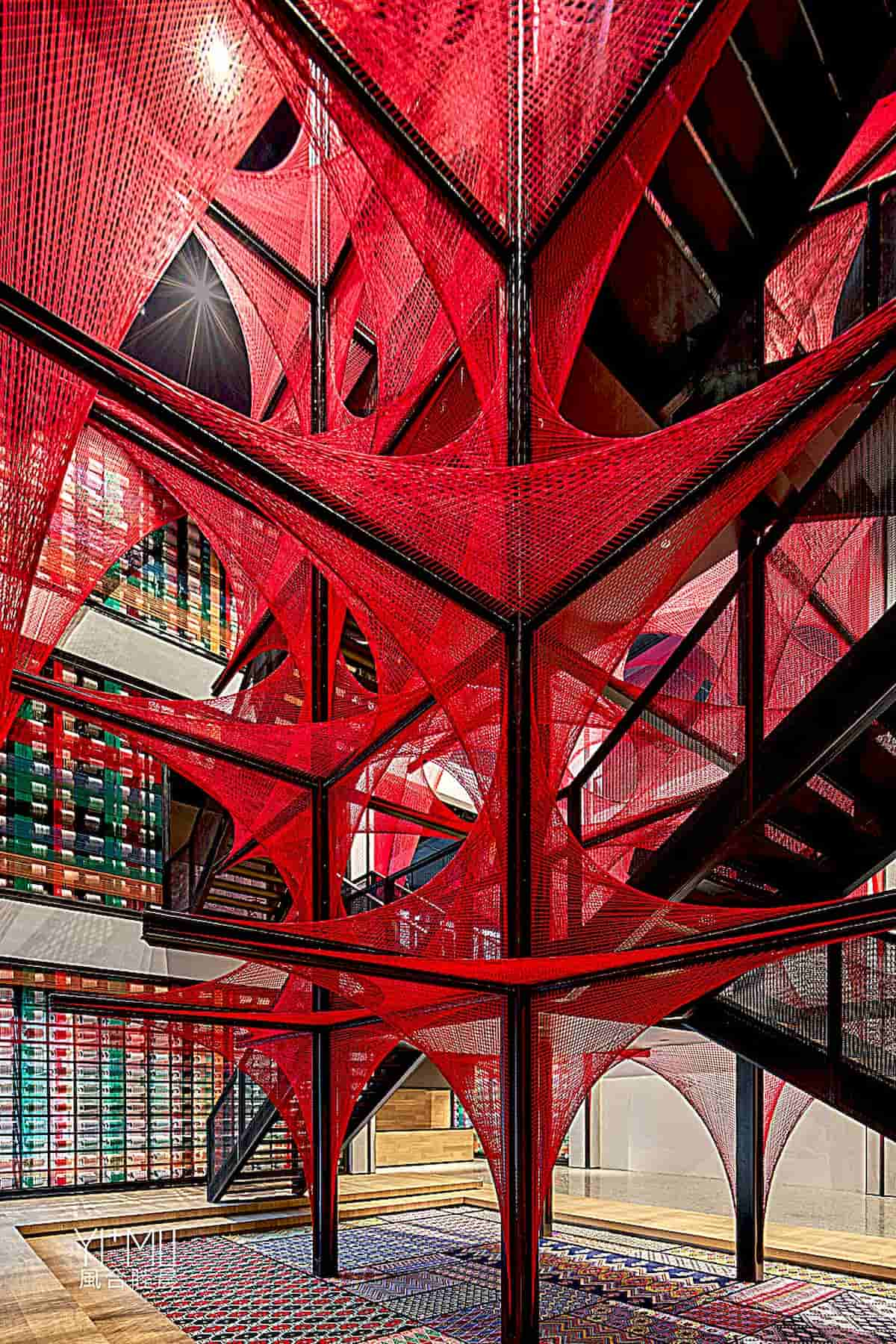
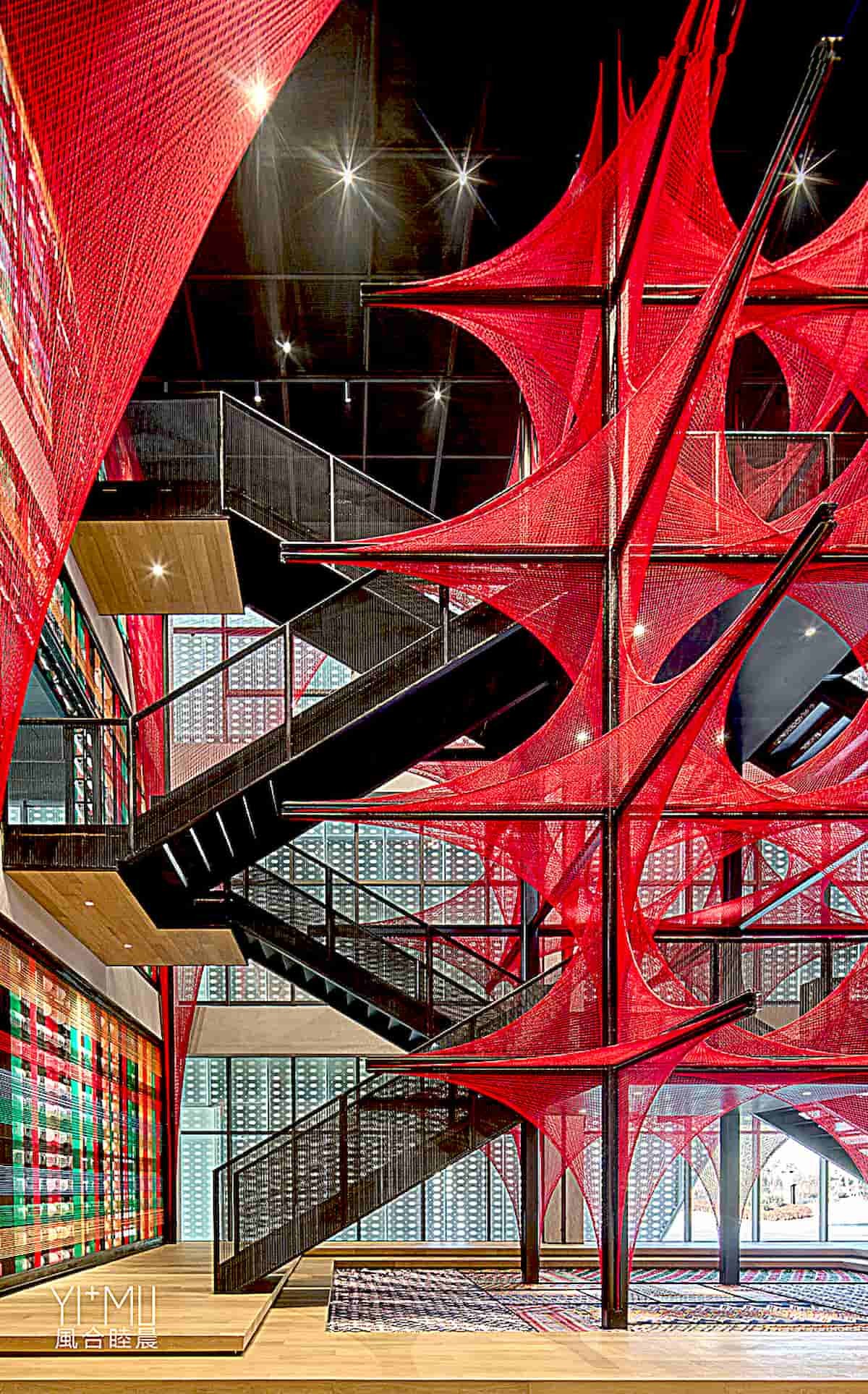
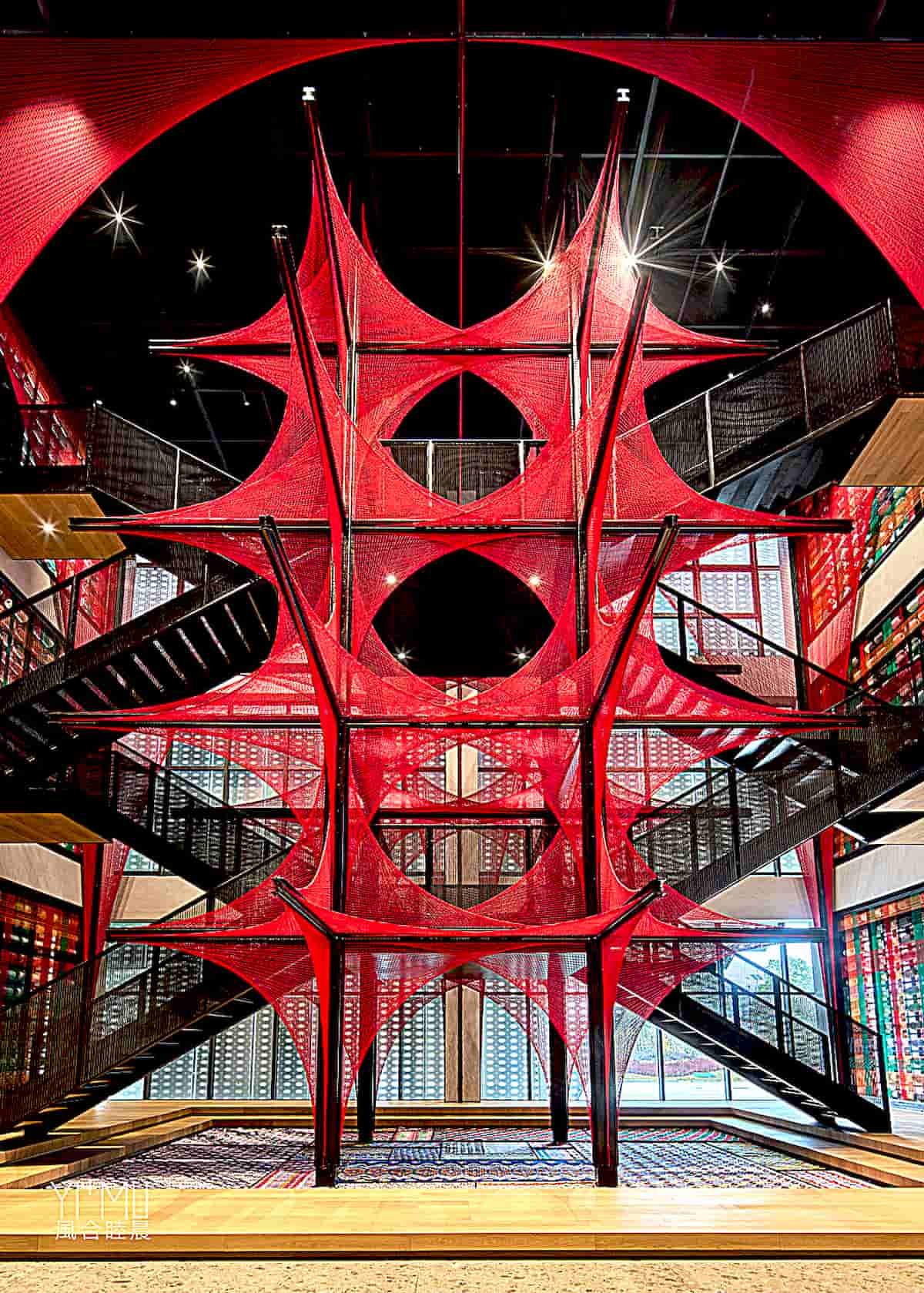
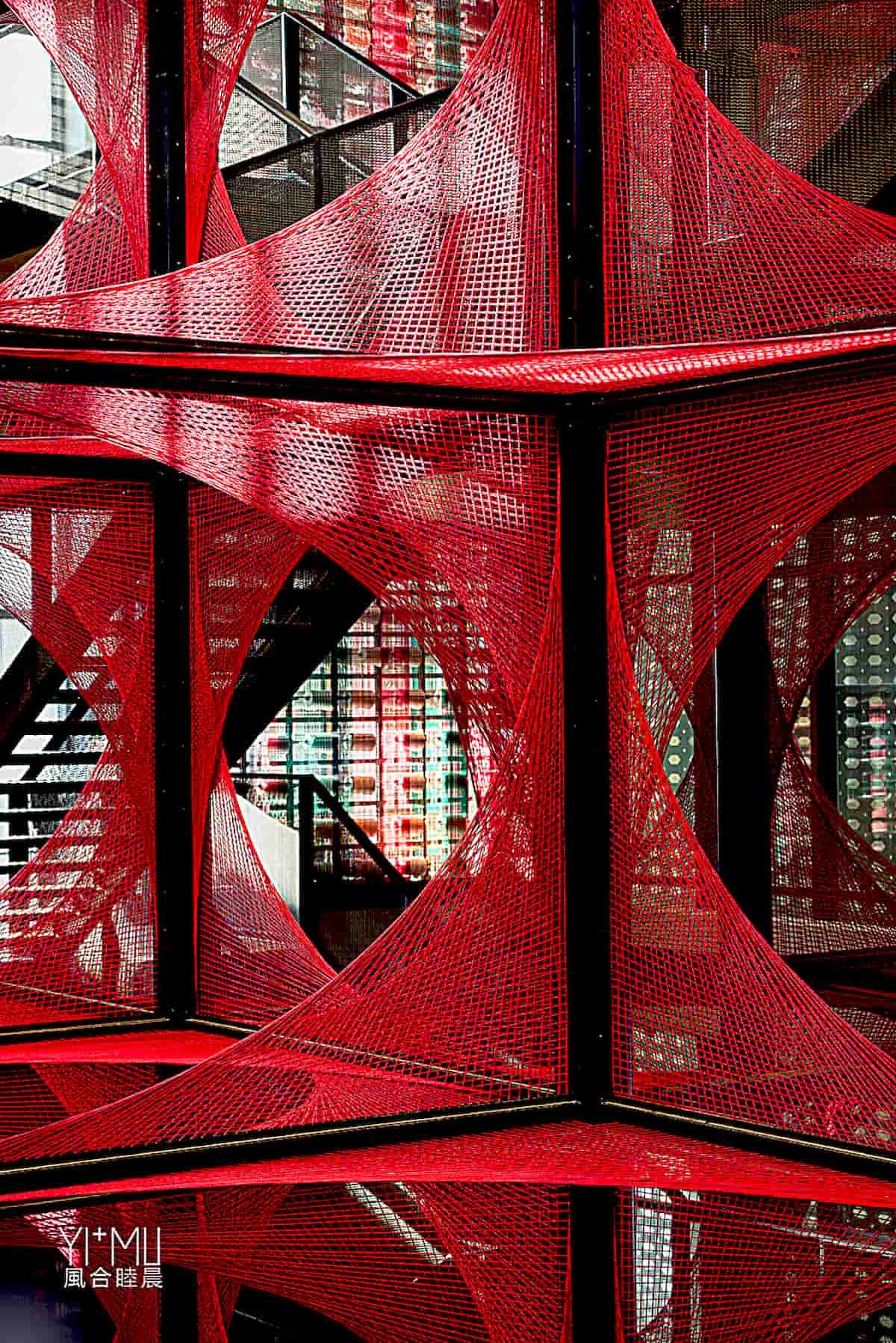
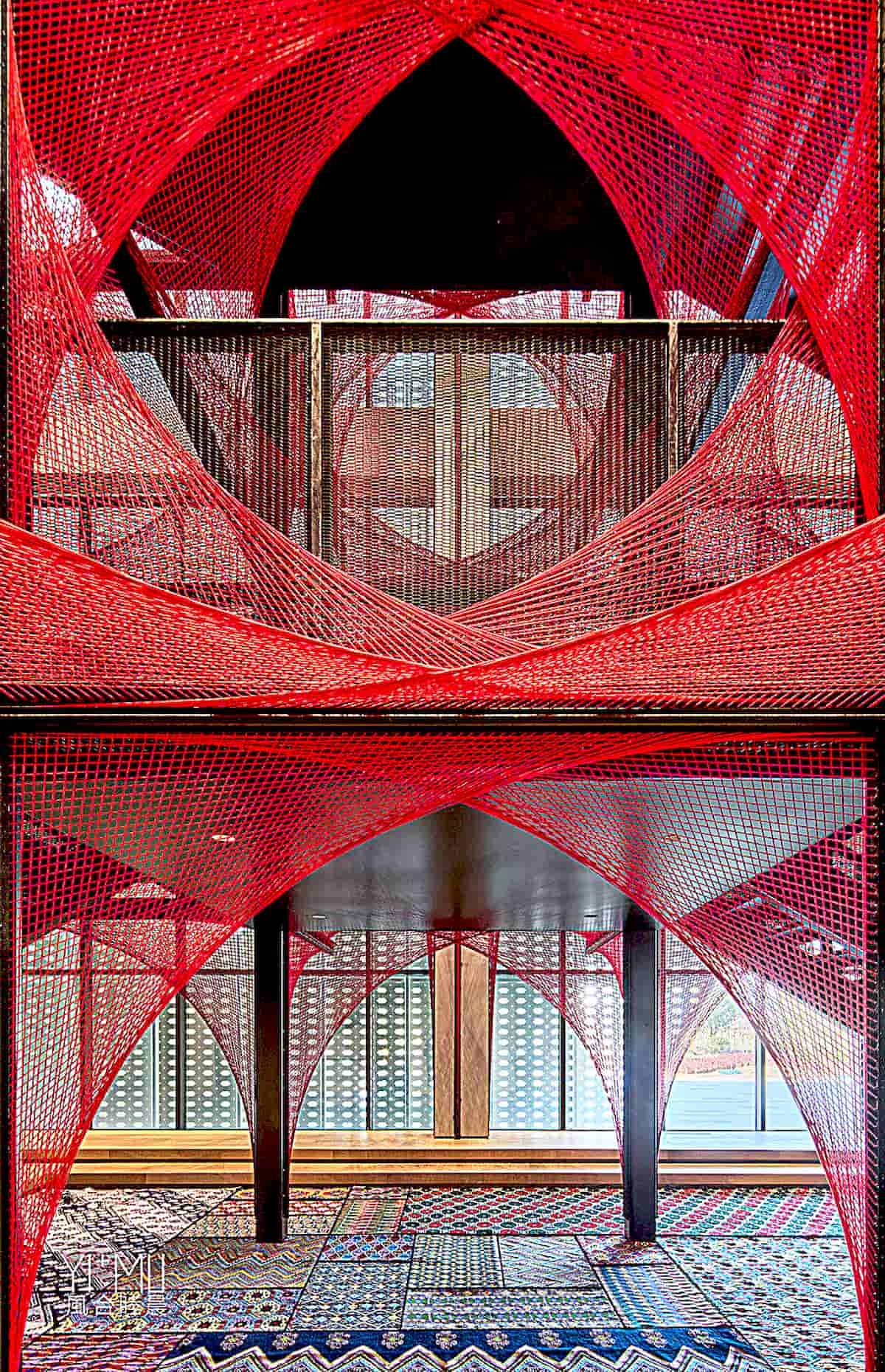
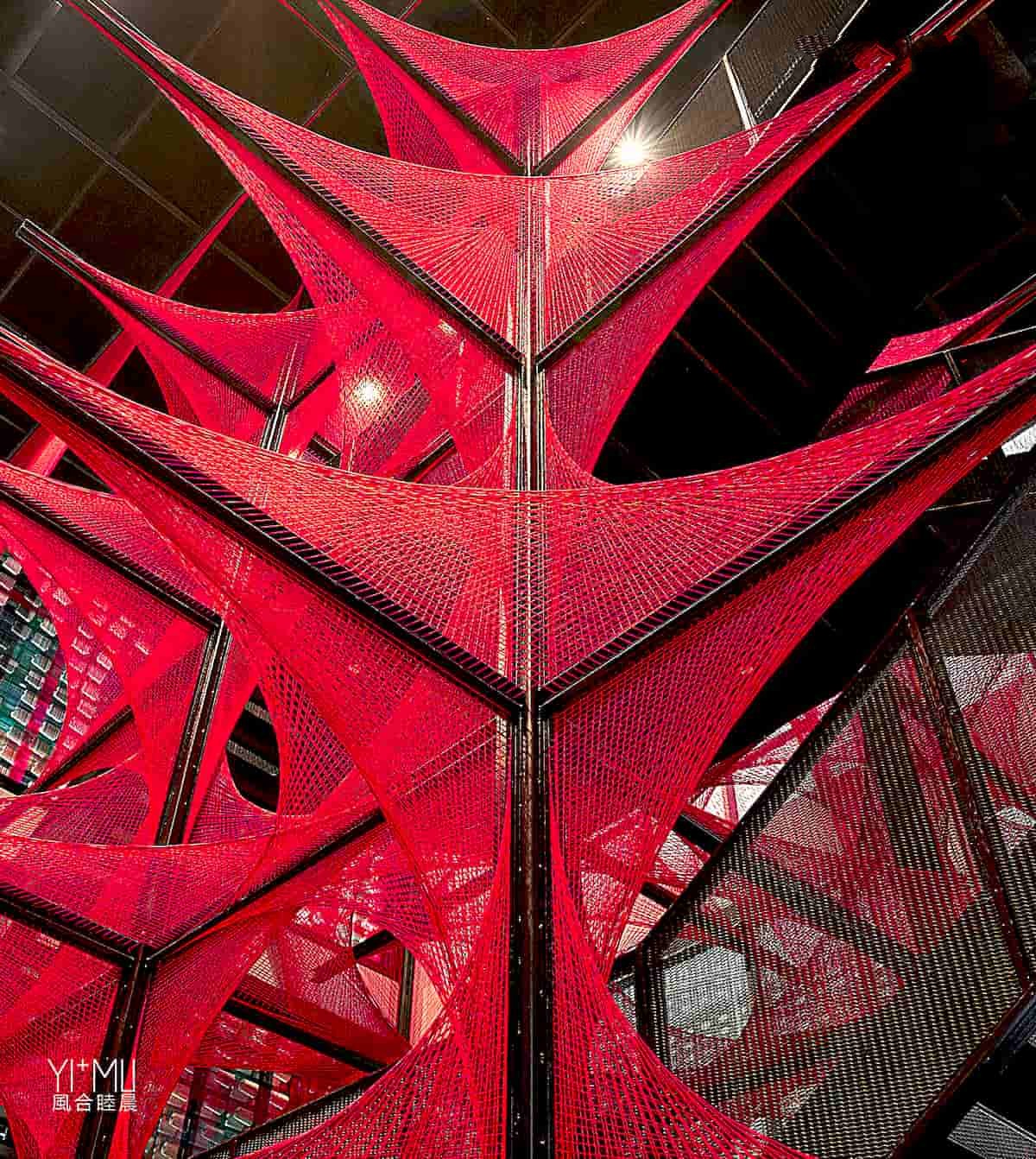
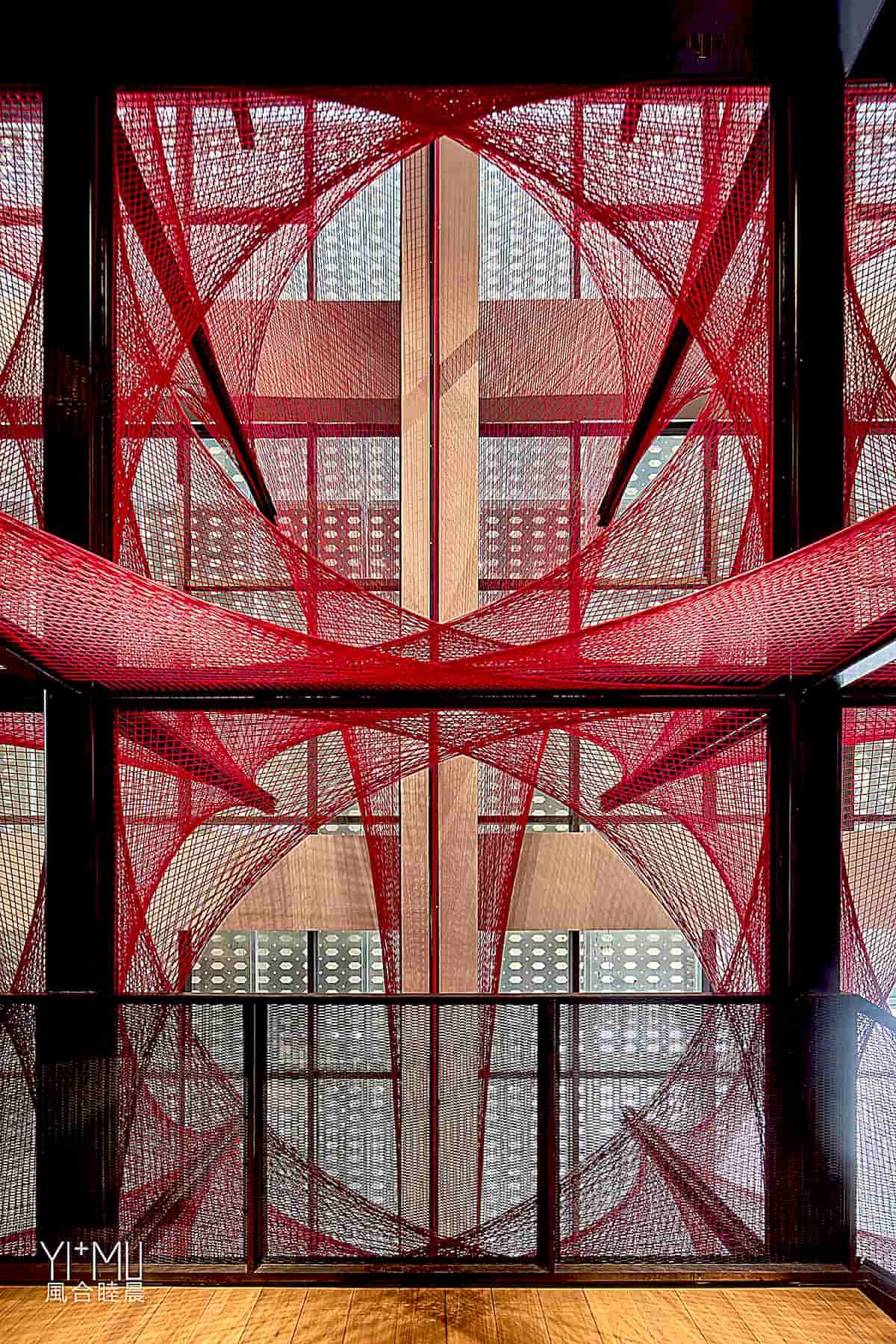
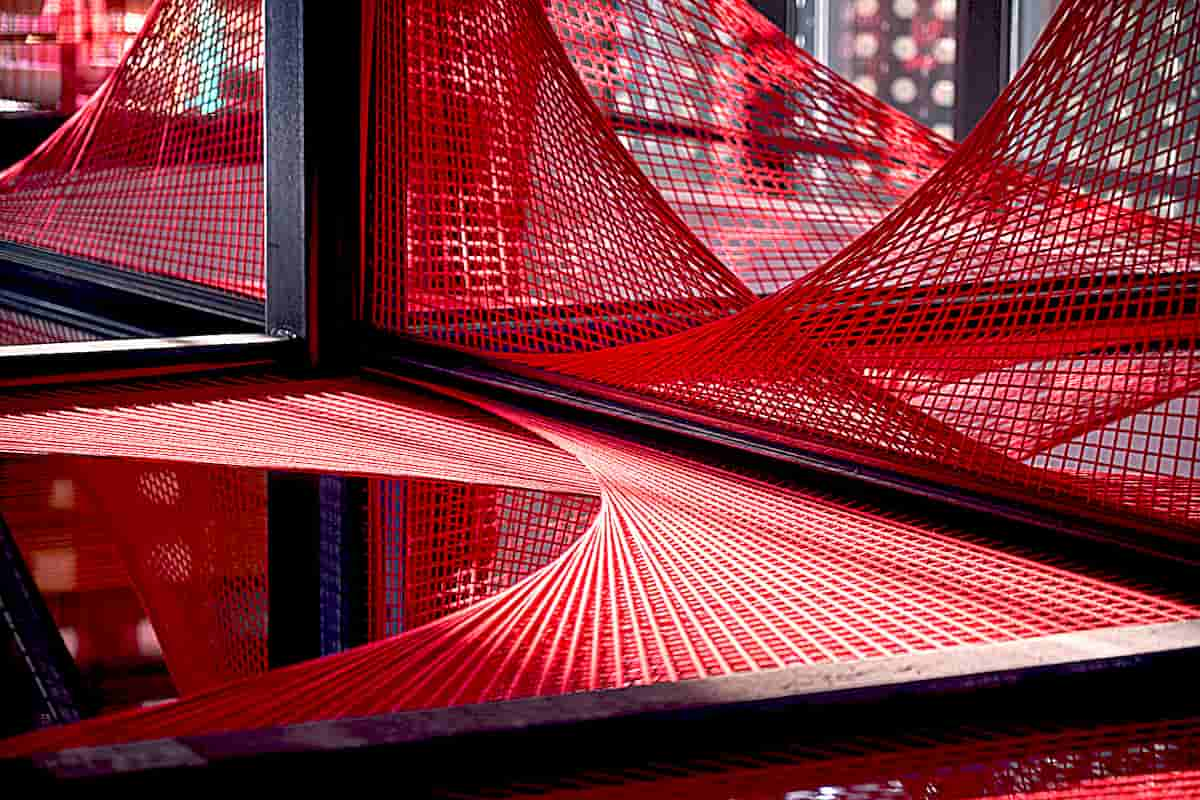
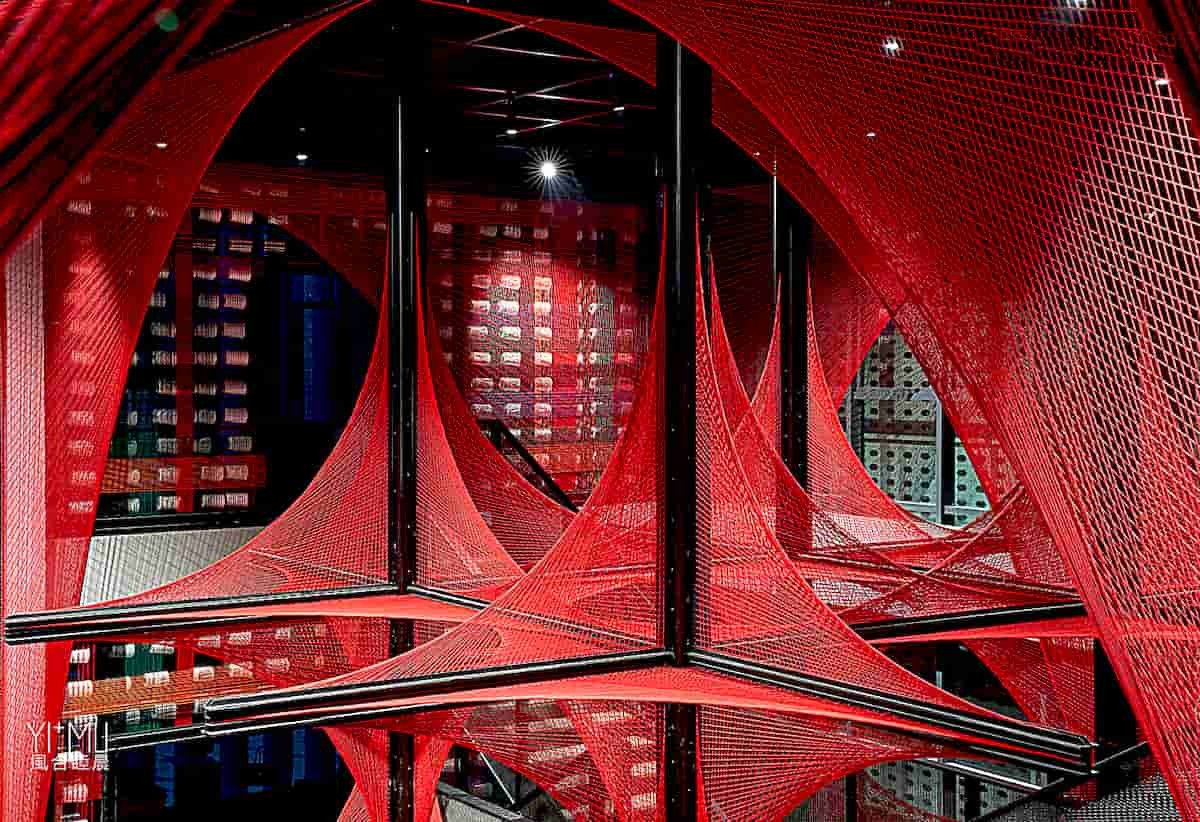
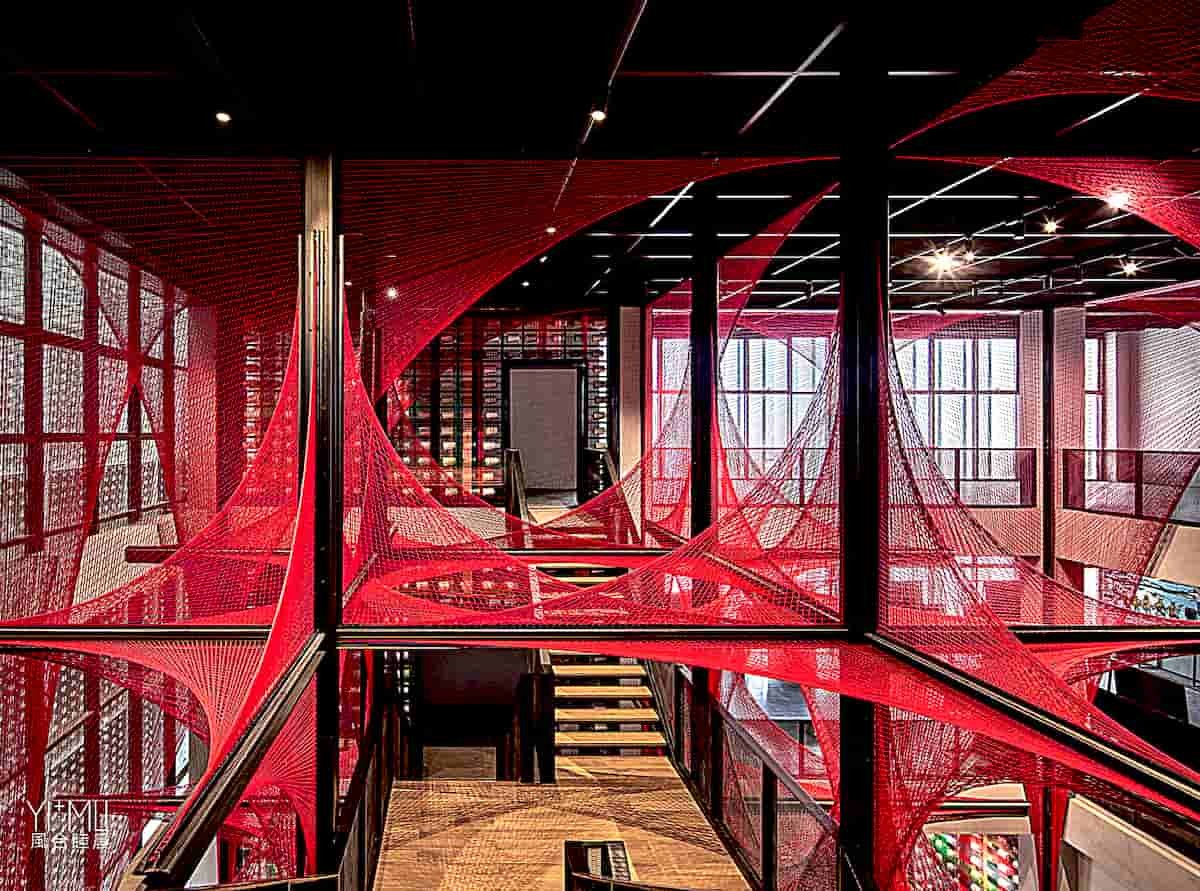
Intricate geometric patterns and rich hues distinguish the woven textiles of China’s Tujia people, who call the Wuling Mountains home in western Hunan. In the nearby city of Zhangjiajie, the new China Tujia Brocade Museum will be dedicated to the art of Xilan Kapu, or Tujia brocade, to celebrate the culture’s distinctive creativity and preserve an endangered craft. In a remarkable architectonic installation called “The Flower of Tujia,” 150,000 meters of red brocade thread creates an awe-inspiring centerpiece for the main space.
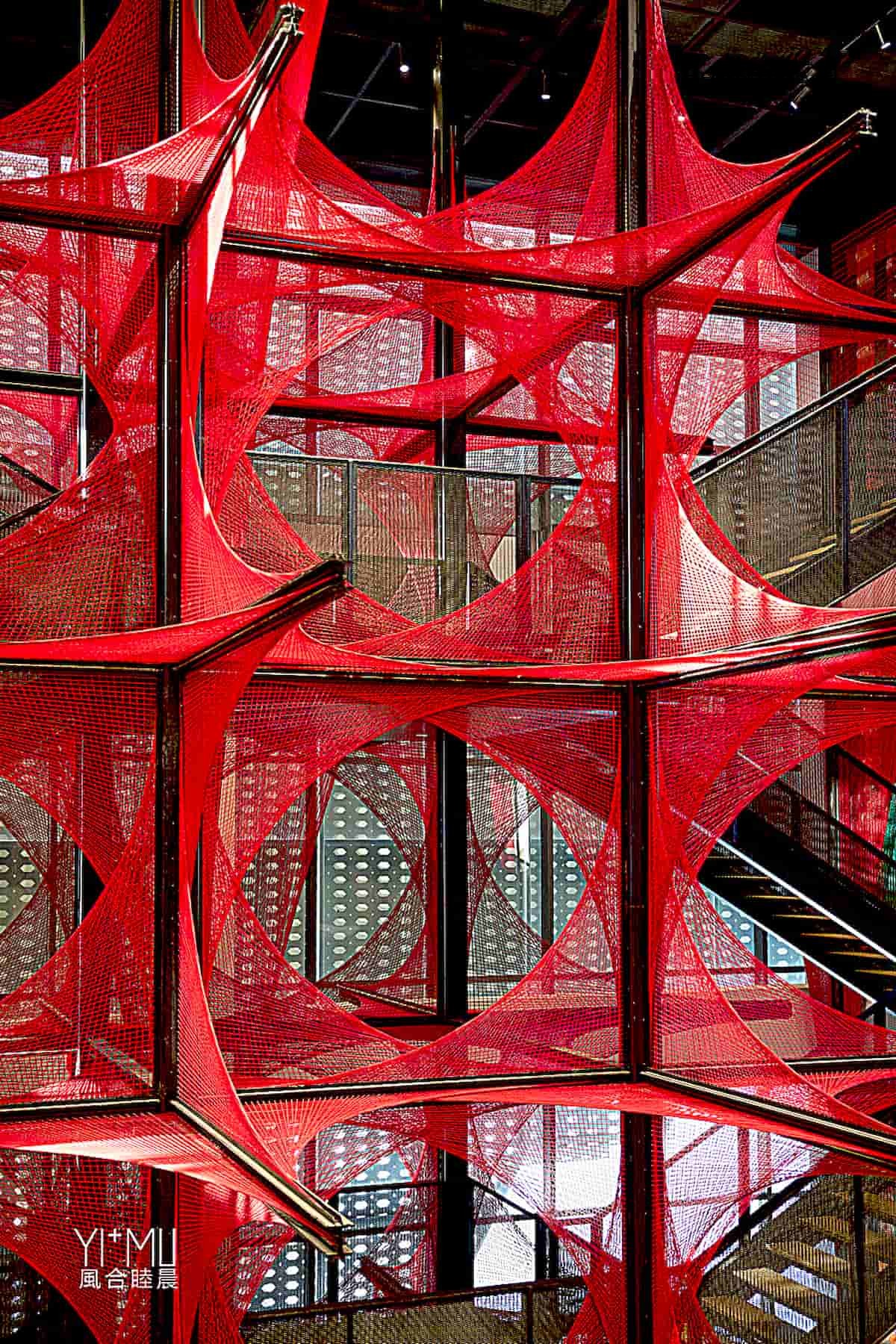
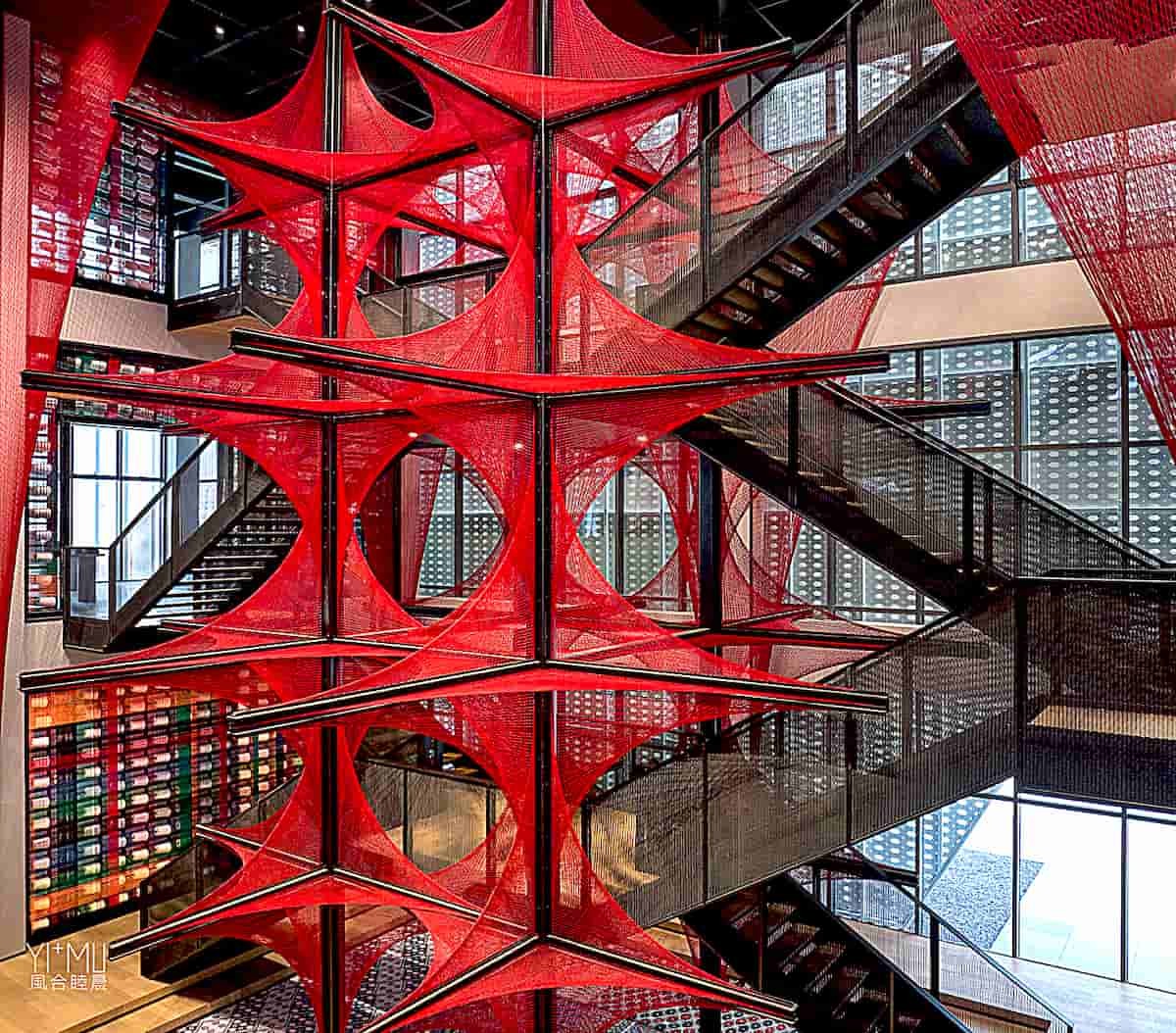
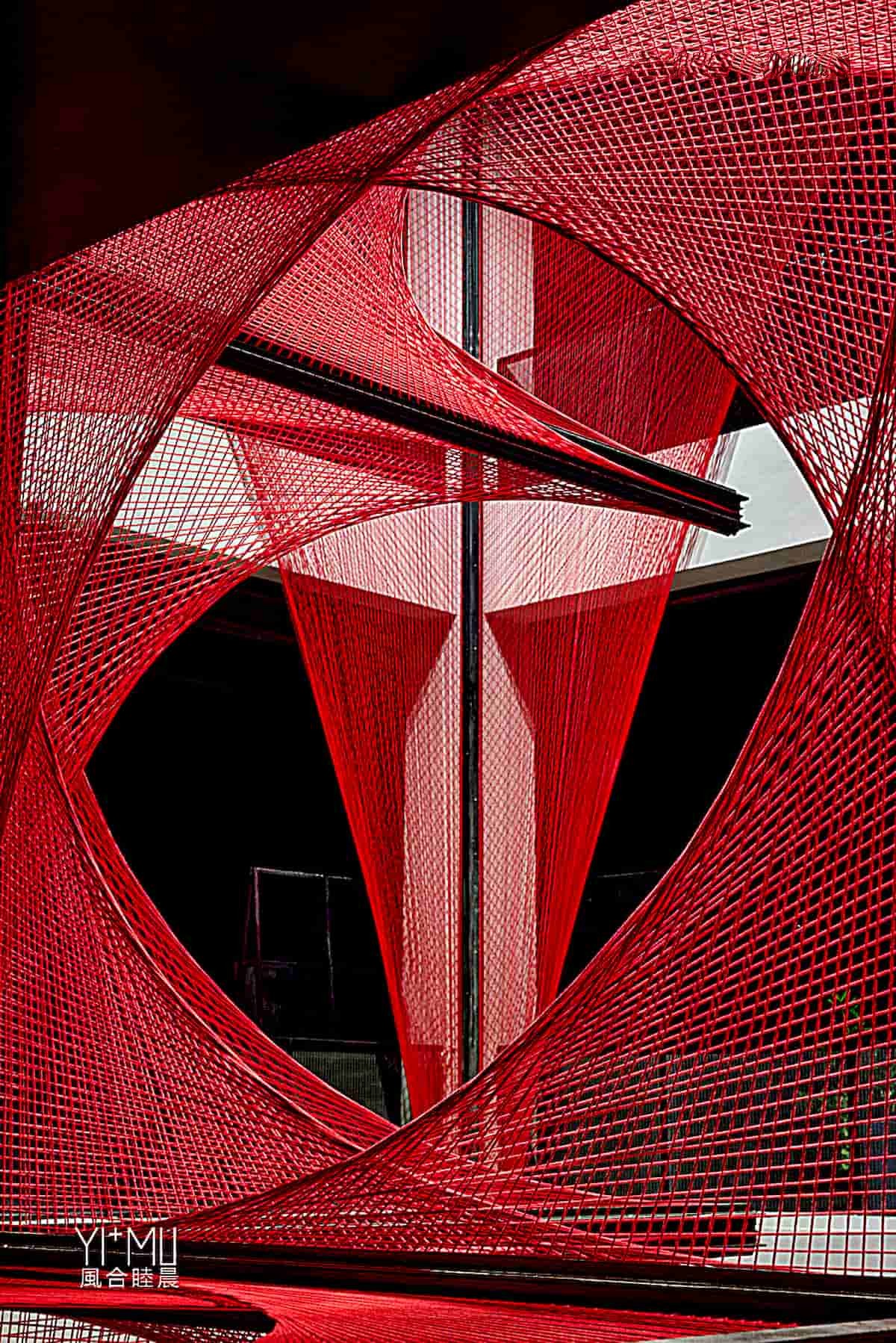
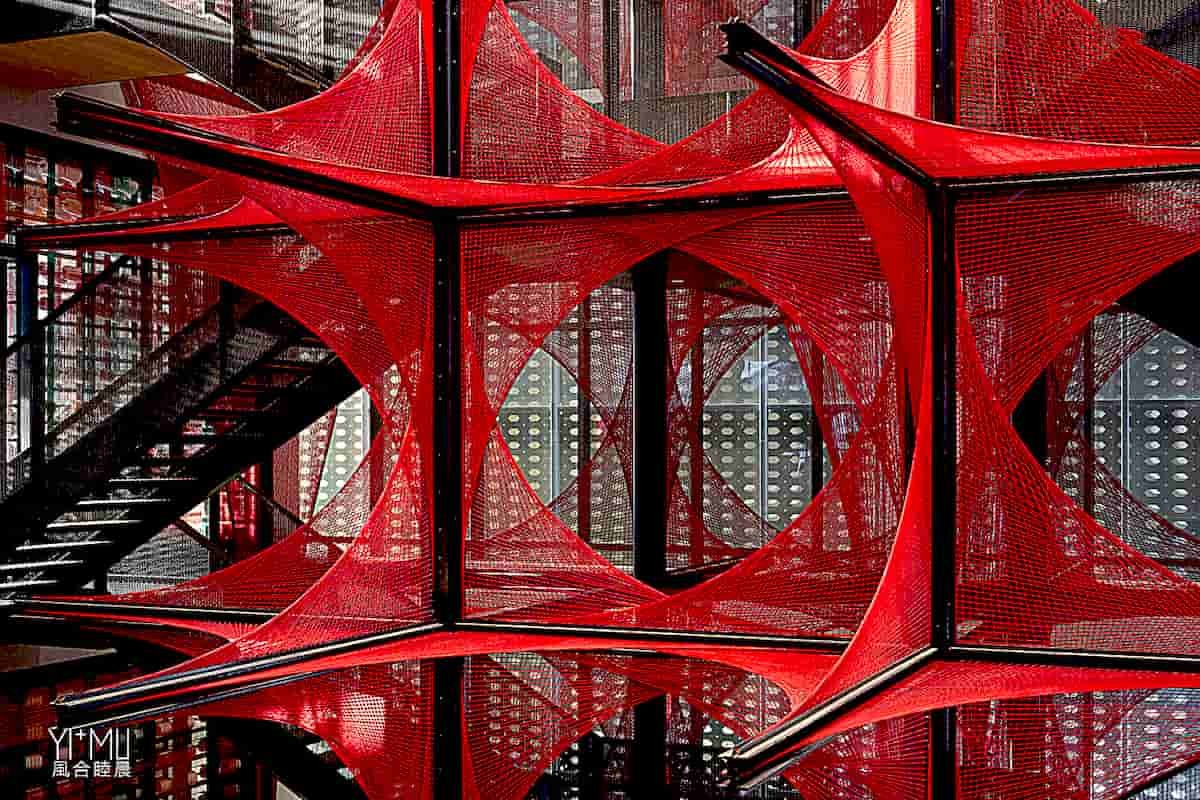
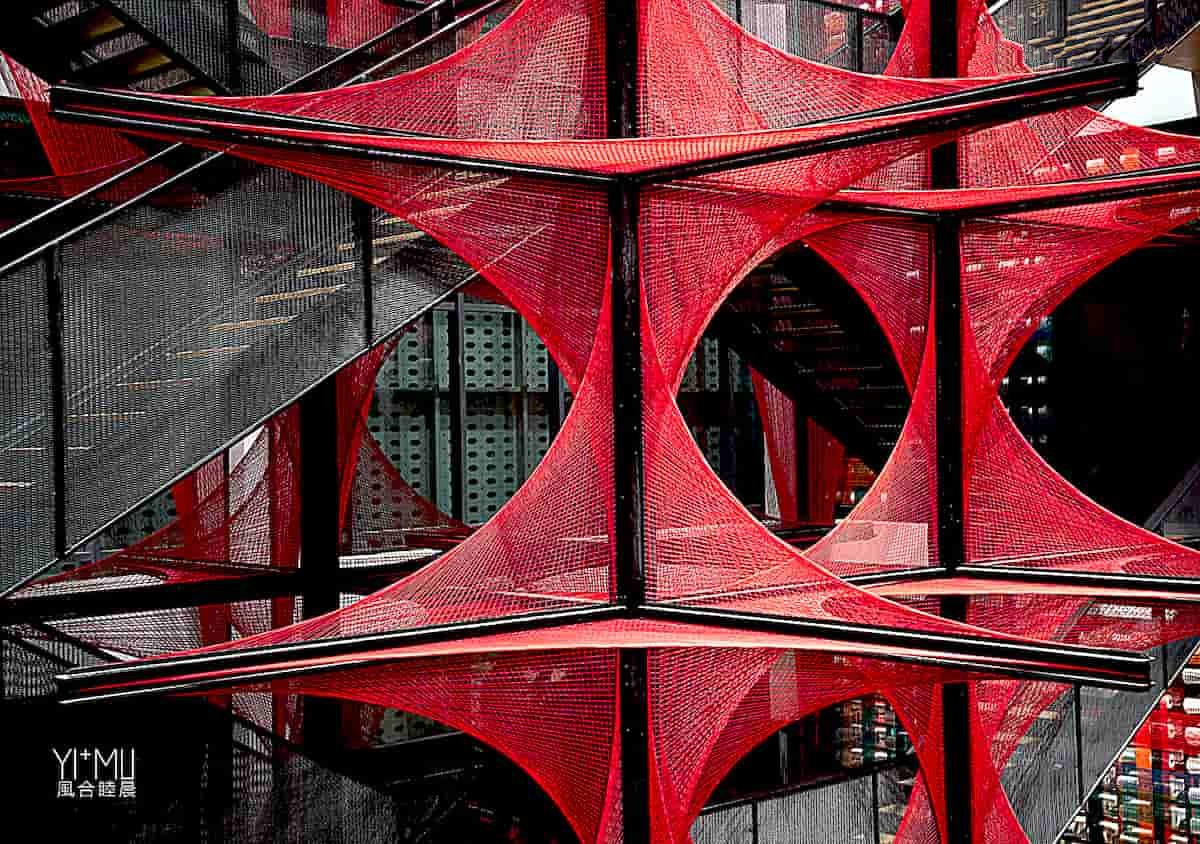
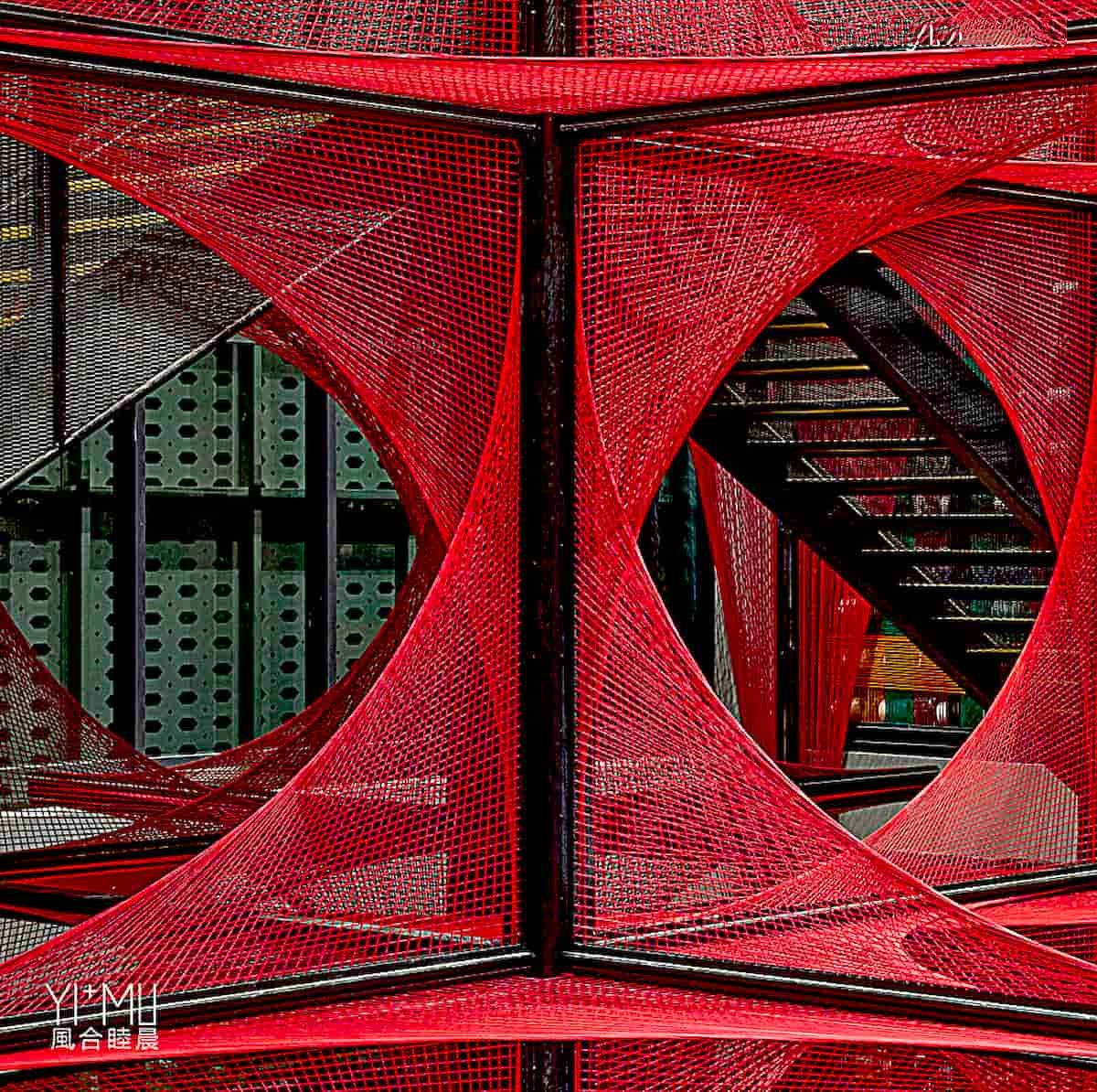
Designed by Yi Chen and Muchen Zhang of Beijing-based design studio YI+MU, the artwork spans more than 1,000 square meters along a grid of 20 beams, allowing the fiber to alternately reveal and conceal the geometry of stairwells and windows as one moves around. “The diamond-shape structure inspired by the iconic pattern of the Tujia brocade is clearly visible from all angles,” the studio says. Symbolically interpreting the 30-step process of Xilan Kapu into a three-dimensional piece, the design unifies and highlights the museum’s interior and sparks a sense of wonder that verges on the spiritual, a key aspect of YI+MU’s philosophy.
The museum building was completed in 2022 and an opening date is yet to be announced. Find more of YI+MU’s projects on the studio’s website.
China Tujia Brocade Art Museum-The Flower of Tujia
_) Culture is the super-genetic memory of human beings; it preserves everything from the past.
–Yury Ivanovich Borisov
_) The way Xilan Kapu, also known as Tujia Brocade, makes people feel is similar to that of the Tujia dialect. That is, they are closely connected to the richness of the land and daily life. Perhaps more importantly though, they are both heading towards extinction if left unprotected.
_) The main area of the China Tujia Brocade Museum in Zhangjiajie, Hunan Province, was completed in 2022. The giant central installation, the “Flower of Tujia,” is 8m wide, 13m tall, and 8m deep.
It is made by 150,000 meters of red brocade threads. It reaches all the way from the floor to the ceiling, compelling people to come closer and explore this traditional handicraft that has remained silent for thousands of years.
_) The China Tujia Brocade Museum is dedicated to the Tujia brocade handicraft, which is considered to be part of the country’s national intangible cultural heritage. Zhangjiajie Guaiyaomei Tujia Brocade asked YI+MU Design Office to design the interior of the museum. It took them four months to complete the central installation. This collaboration between Vancouver, Beijing, and Zhangjiajie is like a flower slowly blooming across time and space.
Central Installation the “Flower of Tujia,” Born out of the earth and passion
_) For the Tujia women who weave these patterns, completing the more than 30 steps to produce Xilan Kapu is like breathing. They weave the ancient Tujia people’s idea of the sun as the fire of life and their burning and peaceful longing for life into the “colorful and visible” Xilan Kapu. This loom technique has been used for thousands of years.
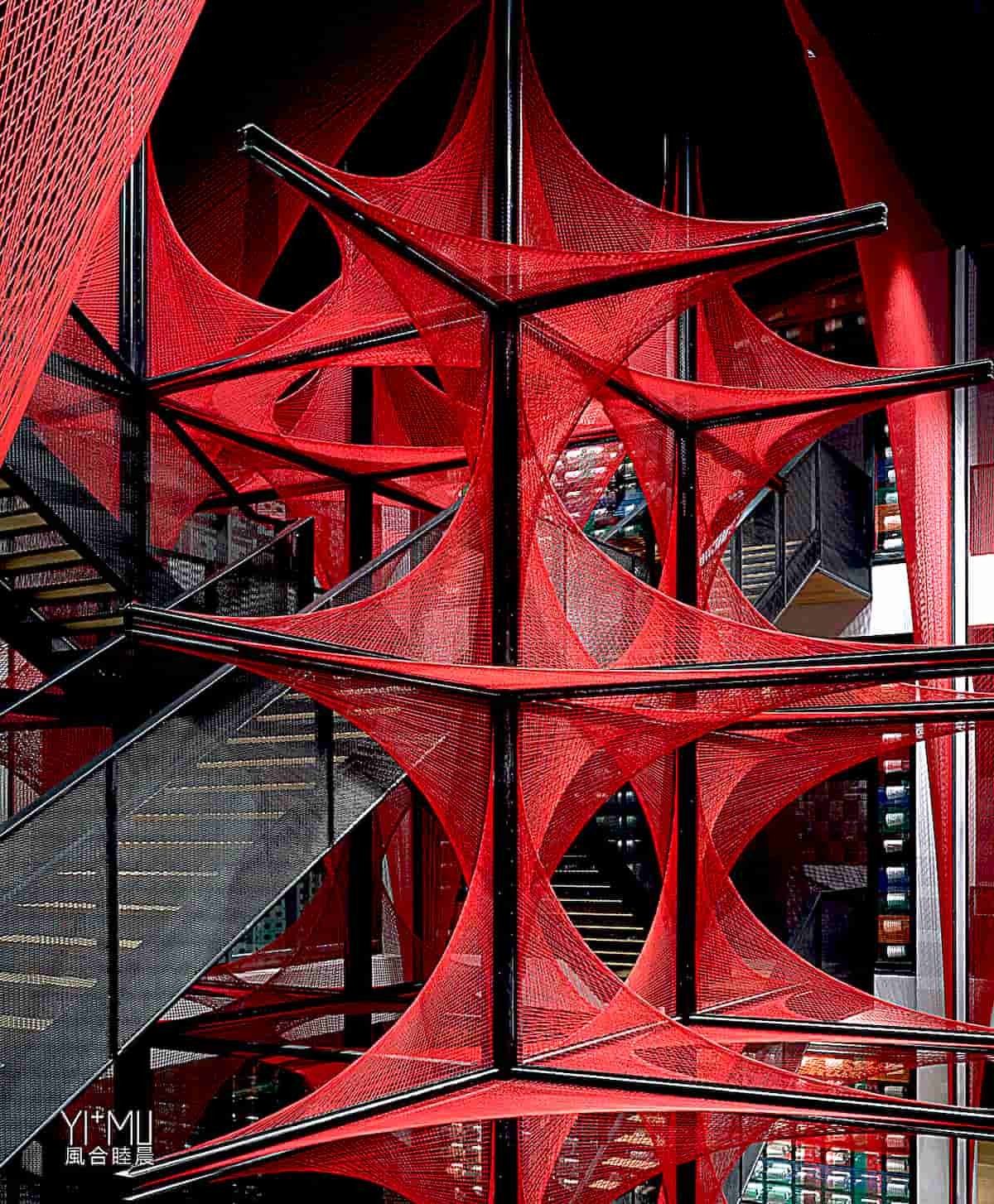
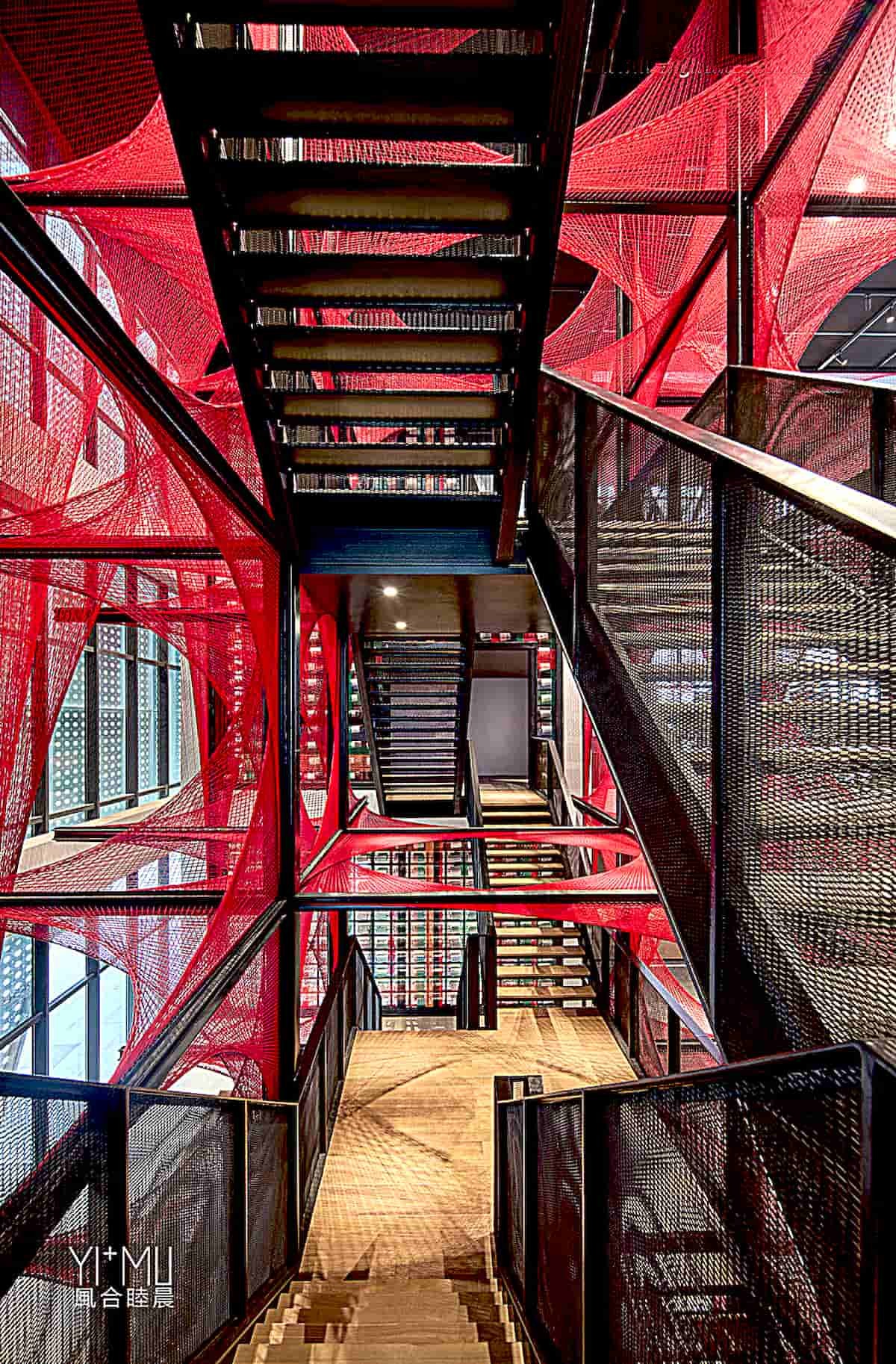
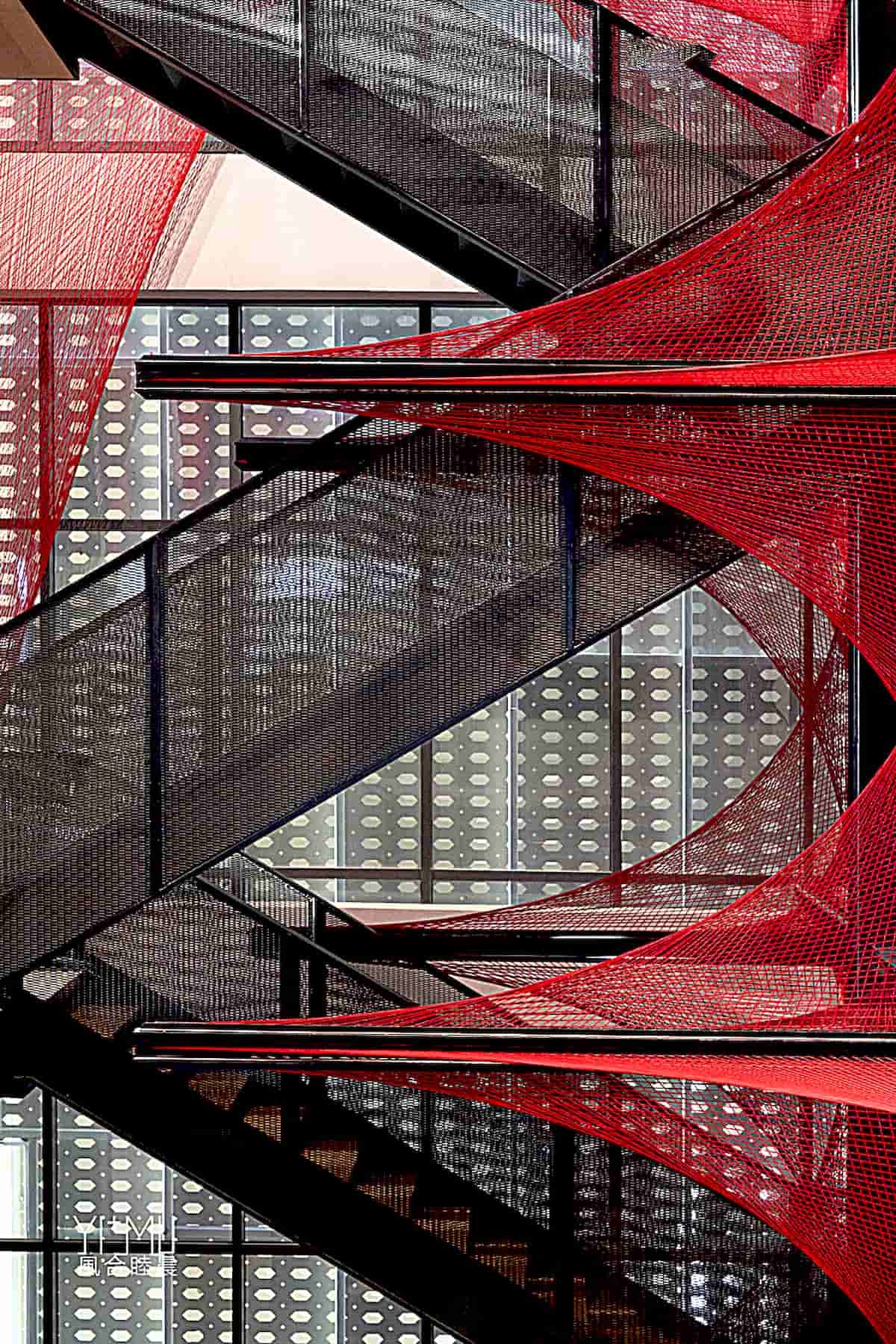
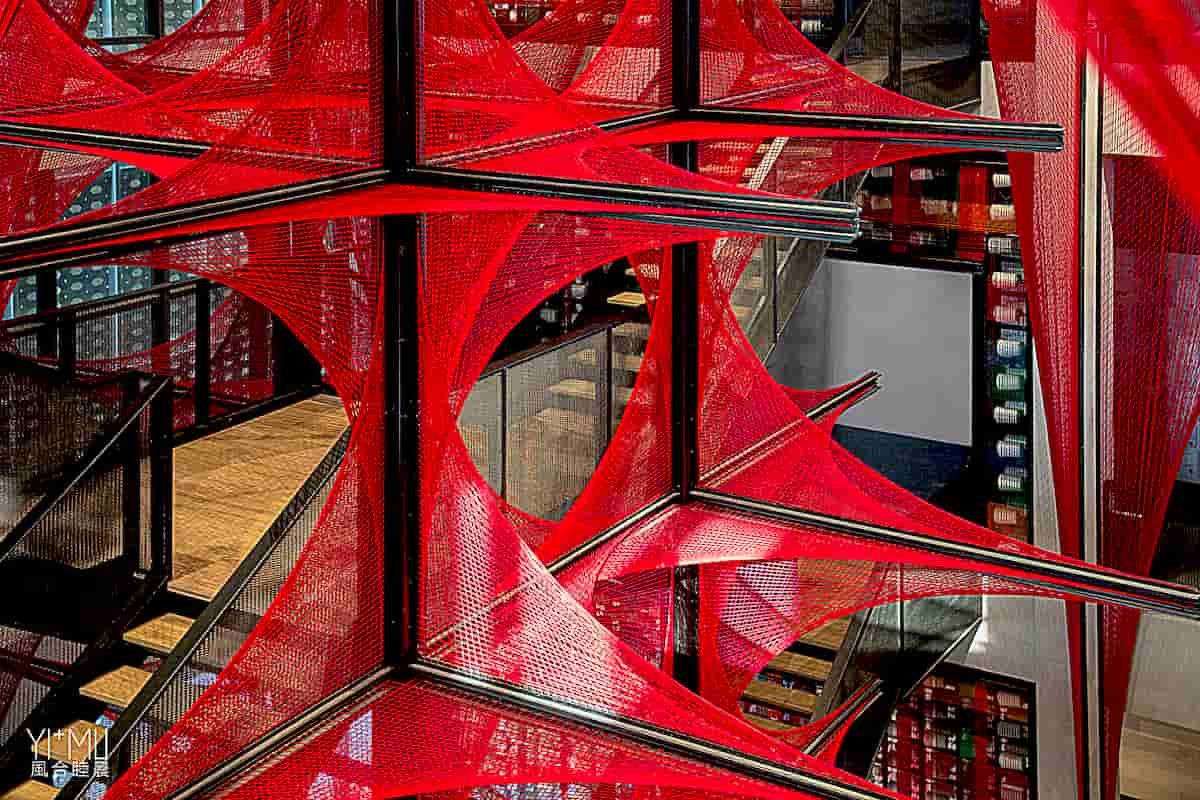
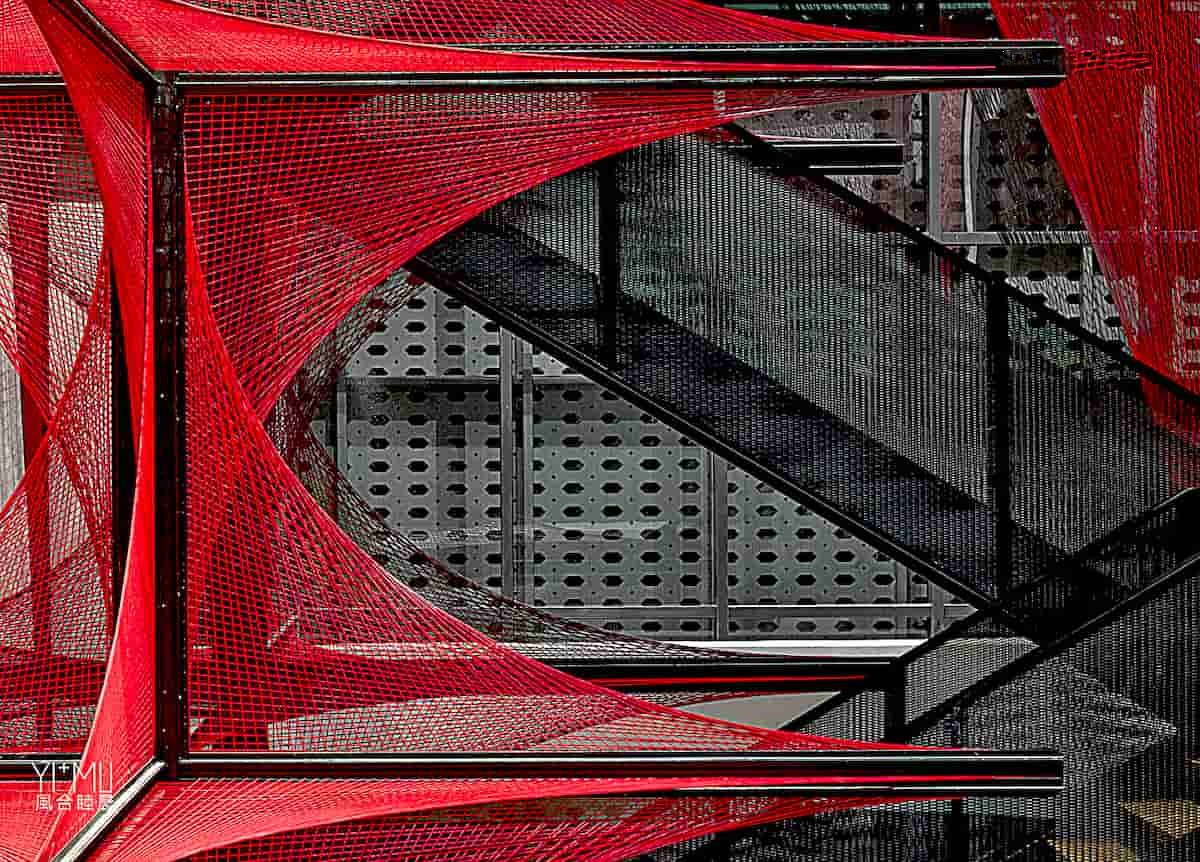
_) Created a symbolic three-dimensional expansion of the single-sided pattern in the 14-meter-high space. The red brocade threads are attached and fixed to the frame, which is made of 20 steel bars. The diamond-shape structure inspired by the iconic pattern of the Tujia brocade is clearly visible from all angles.
_) At the intersection of the black bones and red blood is the inheritance of the Tujia people, whose fire of life bursts out of the earth. The “Flower of Tujia” is blooming, connecting the primitive life scattered in the depths of time to the colorful and energetic commercial society.
Spirit of the Venue From Ancient Legends to New Imaginings
_) The space around the “Flower of Tujia” is even more valuable thanks to the clever combination of the venue, utility, spirit, and artistic attributes.
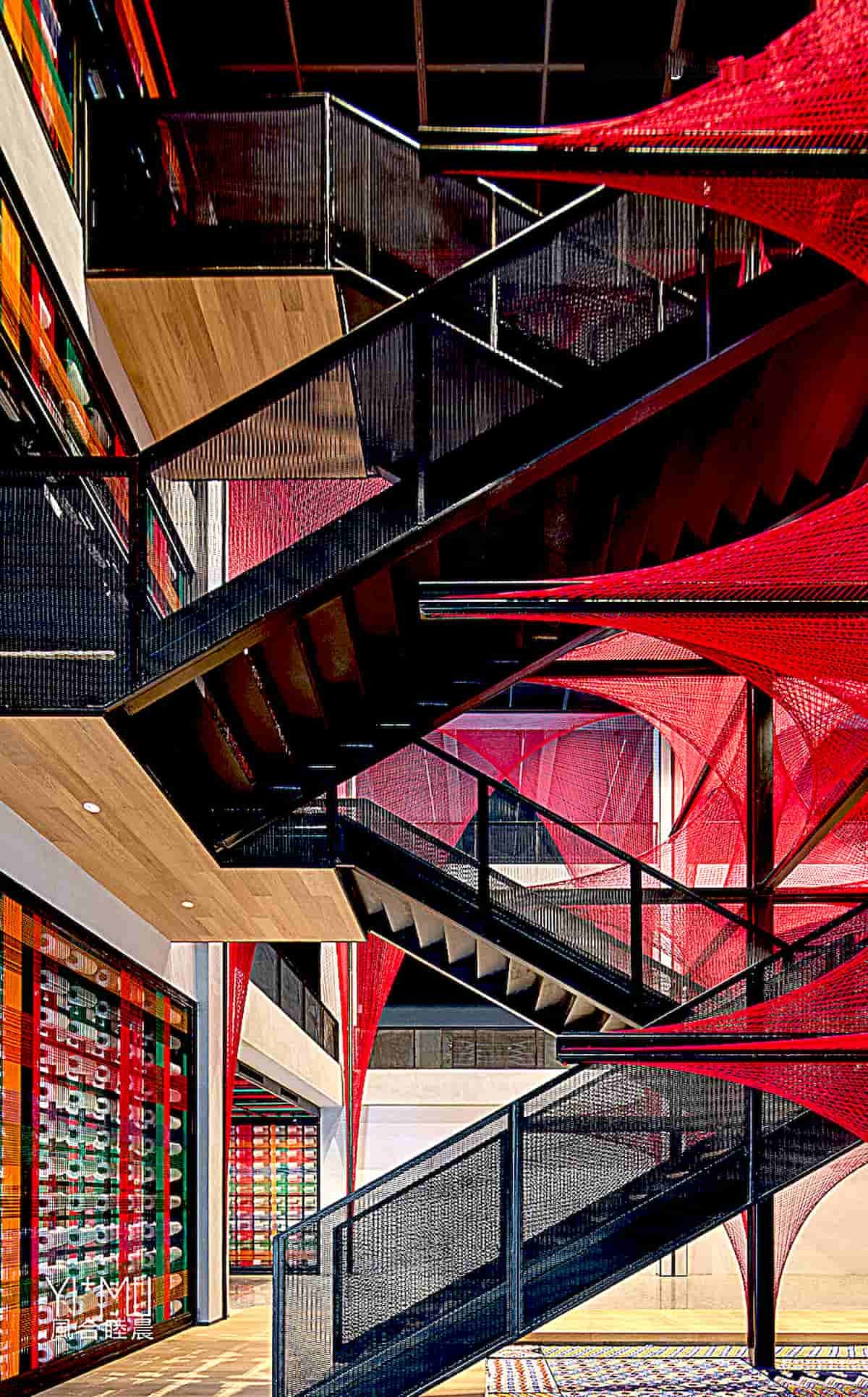
_) A vertical passage is created by two steel staircases, which are connected by two platforms located at the center of the installation, bringing the staircases and the installation together. The linear structure of the industrial staircases is derived from the hexagon found in the Xilan Kapu pattern. It is also used in the hollow shape of the outer steel structure. When the subtle graphics emerge and unfold, the contradiction and tension of the space invite new imaginings.
_) The bottom of the staircases and the installation are raised, and the floor is paved in Xilan Kapu patterns to allow visitors to access the space and sit on the floor. The design also echoes the stilted buildings of the Tujia people and maximizes the space for the entrants to fulfill the spirit of the venue.
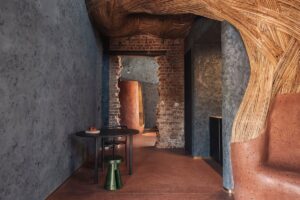
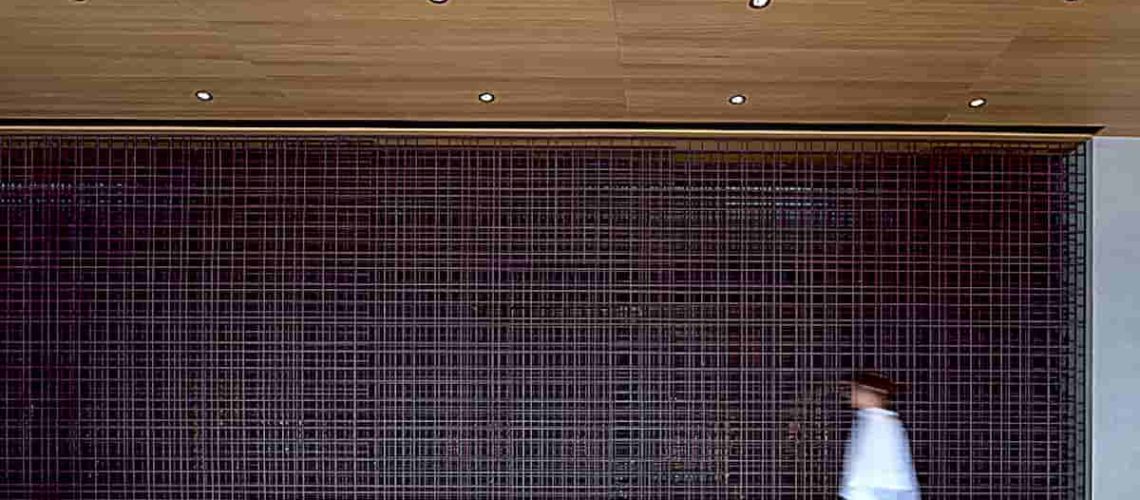
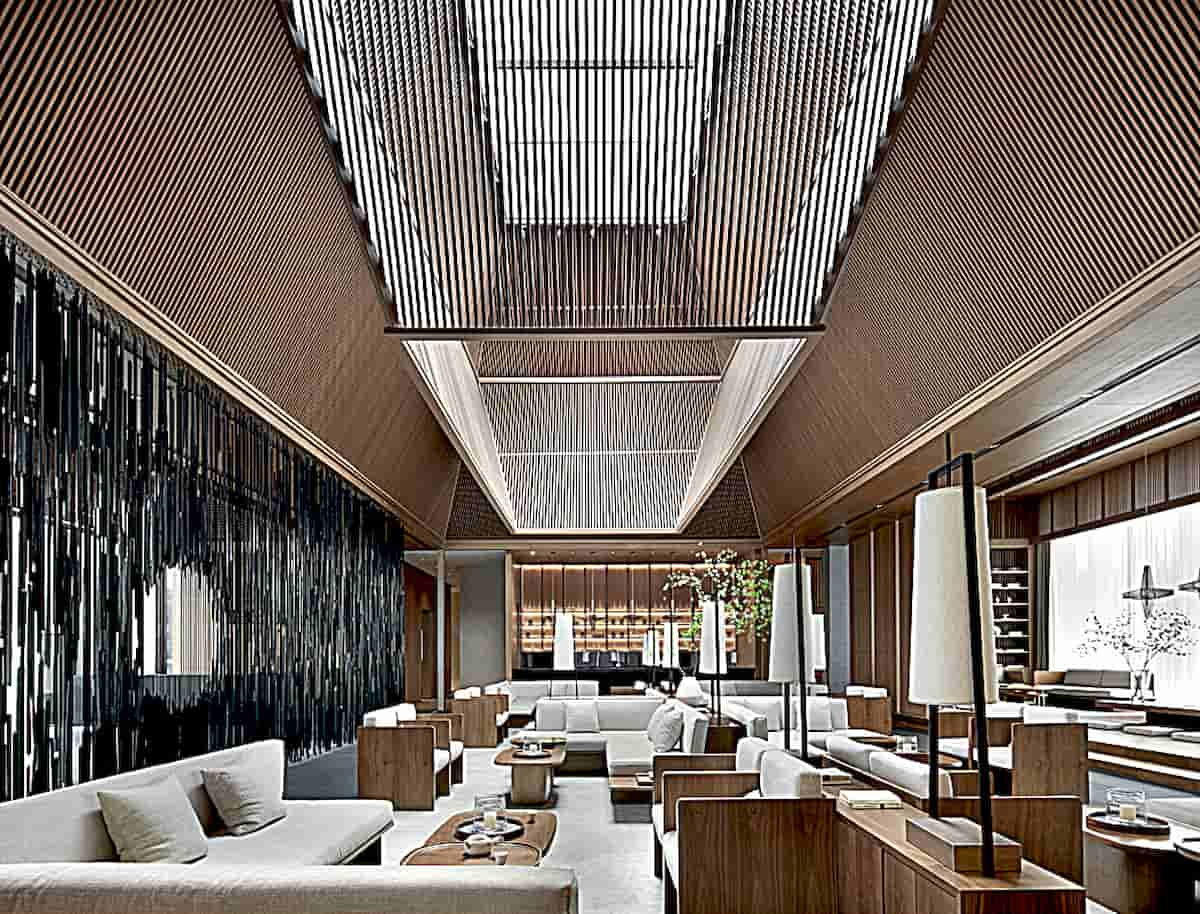
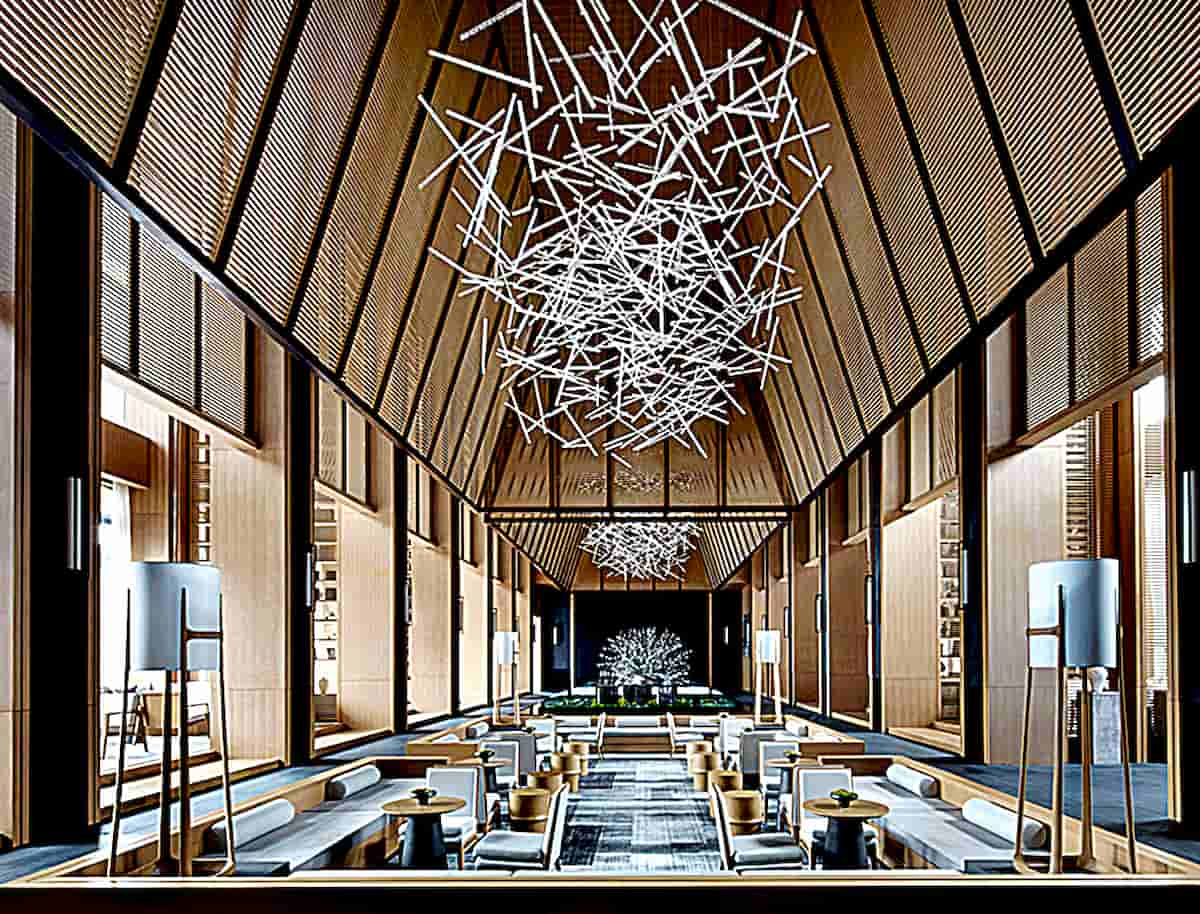
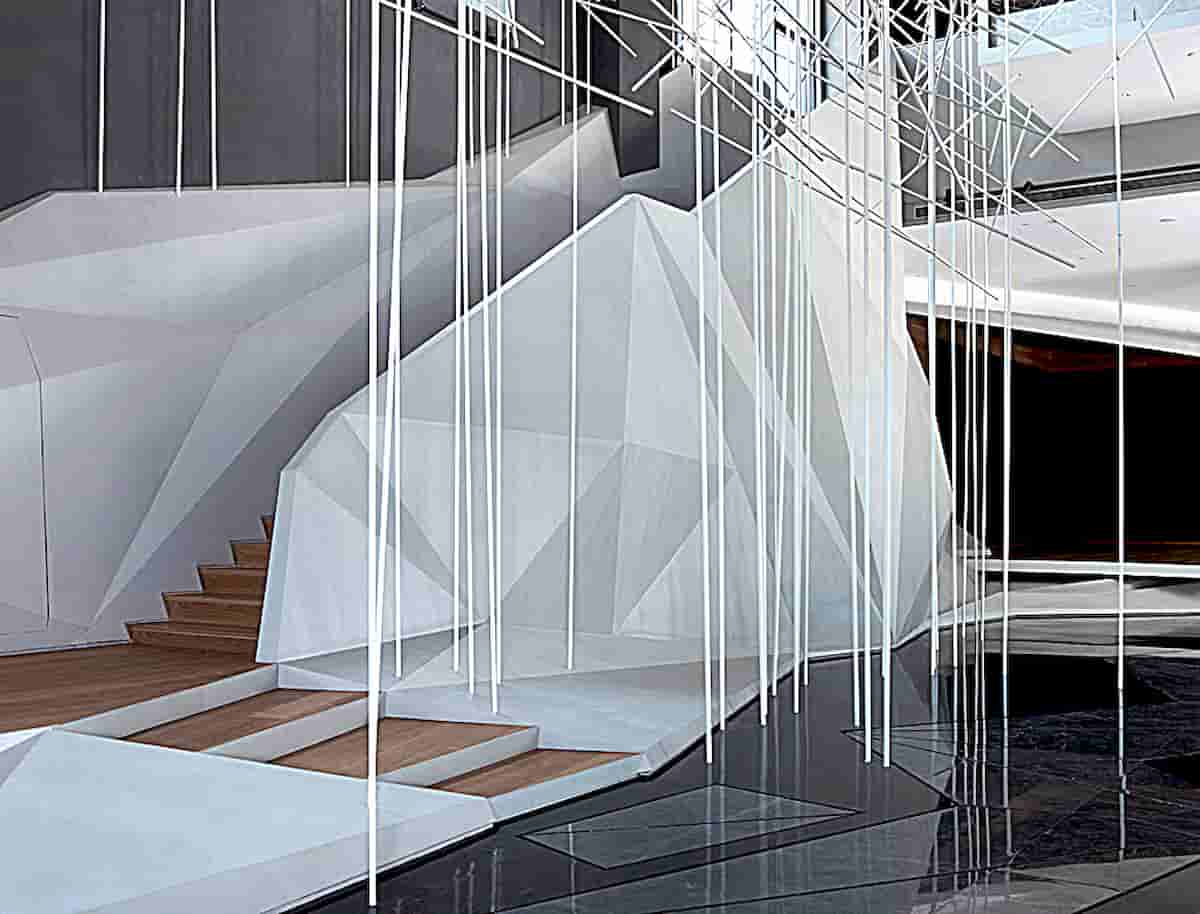
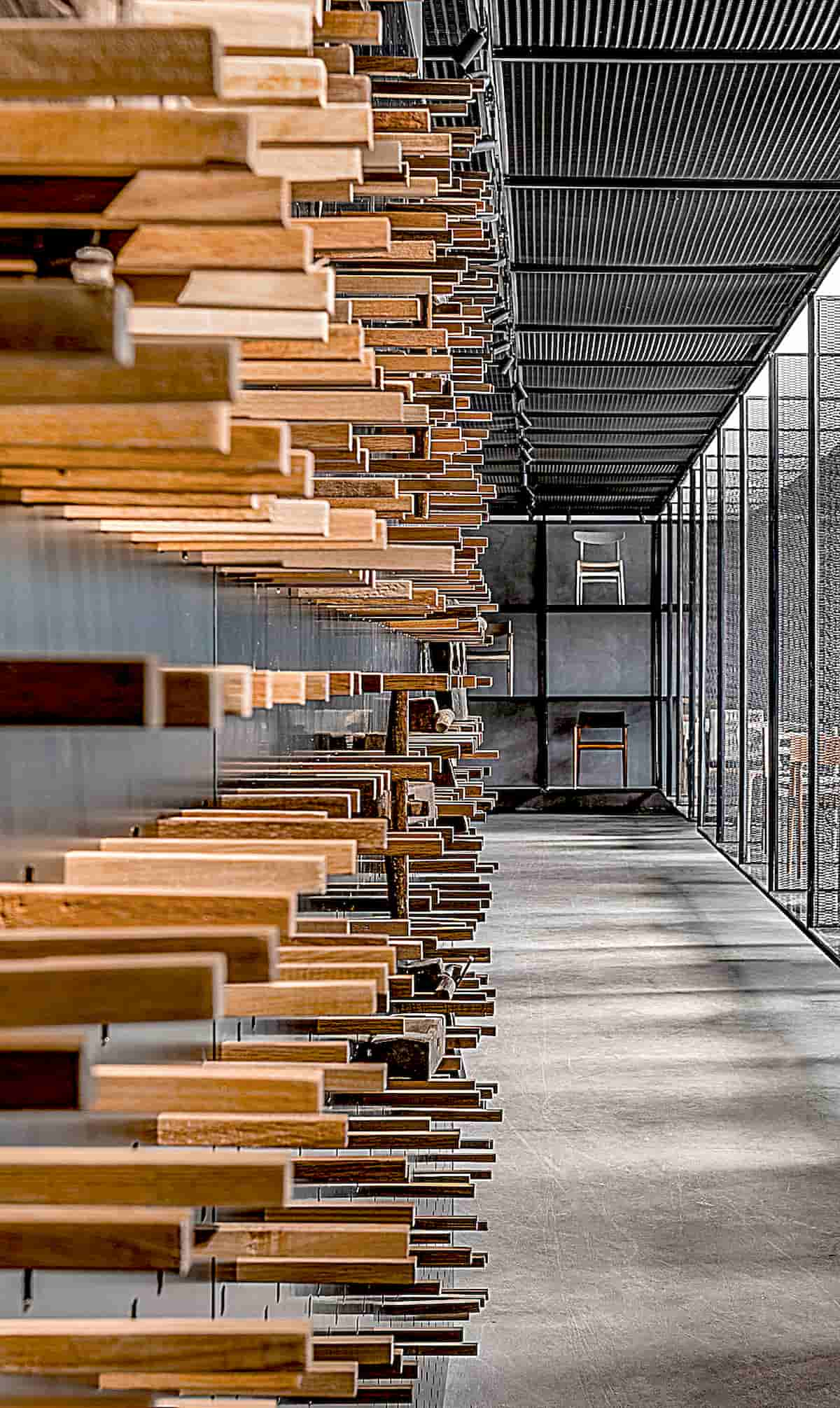
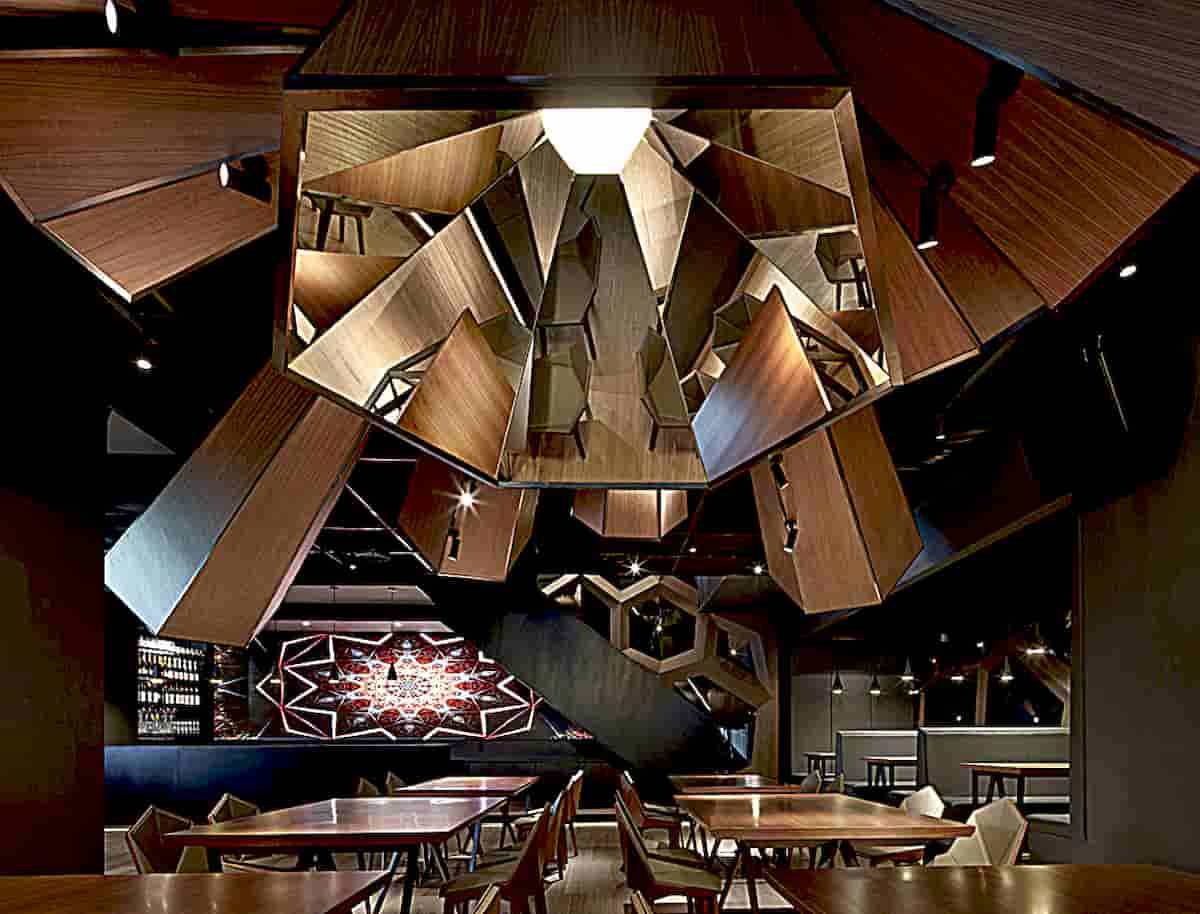
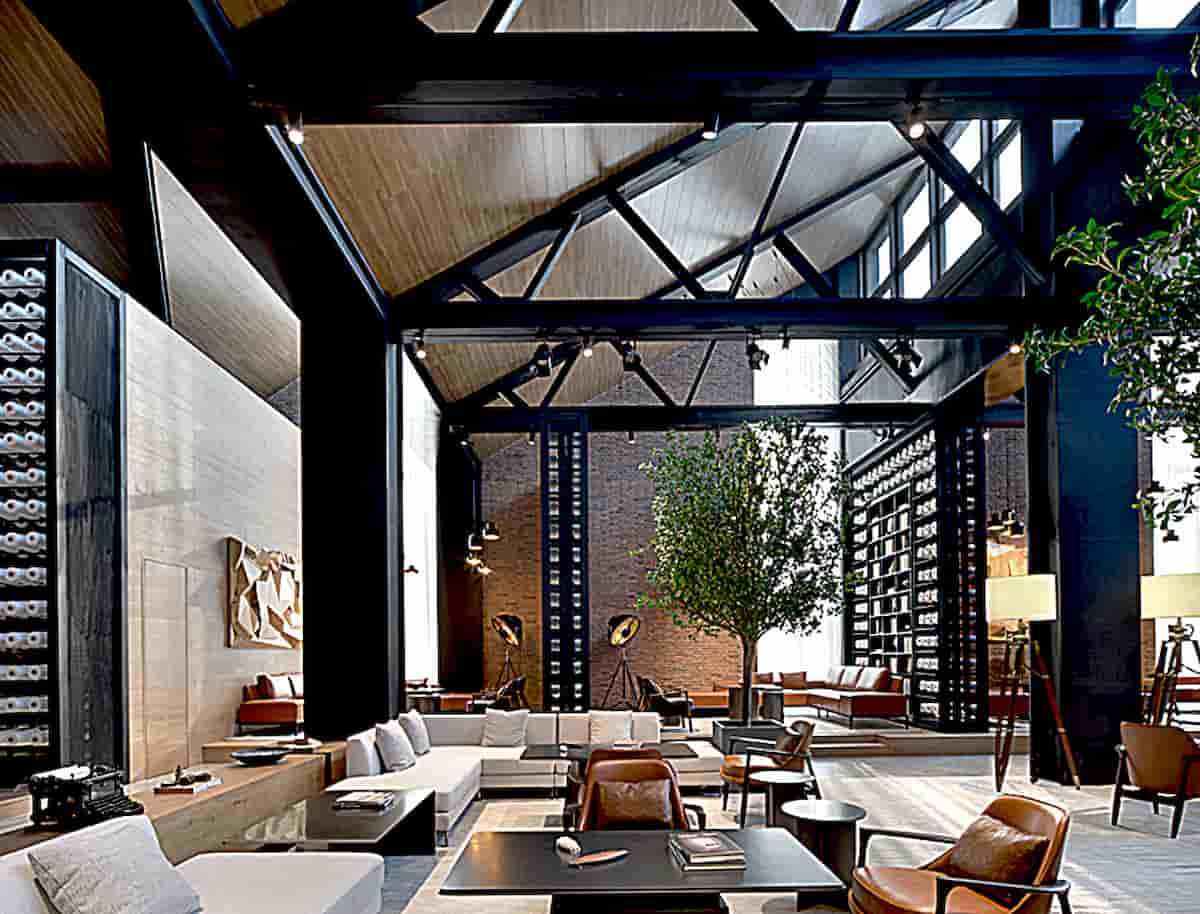
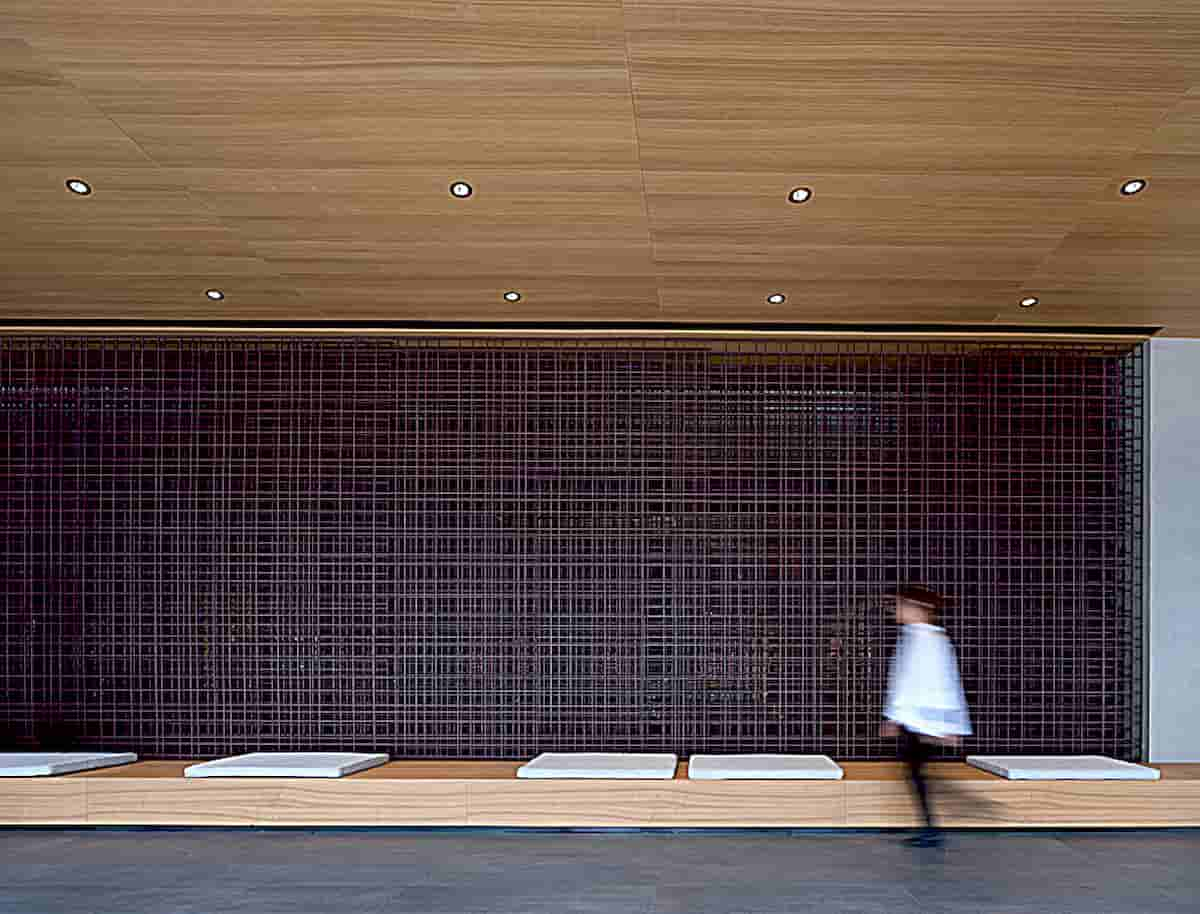
_) Outside the central area, the design incorporates simple materials like white oak, textured paint, metal mesh, and terrazzo. Against the gray-black background, a large number of white spindles intersect with five-color threads across the facade and roof to slightly shield the peripheral space and direct the visual focus to the center.
_) It can be seen when traversing the space that it is free of showy techniques, instead focusing on a concentrated and powerful display. Everything works together to create a space with a clear identity, origin, and aim that is tightly connected with the landscape, culture, and spiritual attributes.
Value of the Space Journey upstream and reshape the language
_) If there is a current, journey upstream.
The rise and fall of an industry is not easily observed by the outside world. Tujia brocade is no exception. The diligence and ingenuity of the women who weave the patterns is reassuring, but there is a gap between traditional crafts and modern life. The modern lifestyle favors efficiency and convenience, regardless of the design, practicality, or mode of operation.
_) The design features modern aesthetics and art forms, skillfully placing traditional skills in the new space. The interest, emotion, progress, and faith that grow along with art will eventually reshape the language and value of the craft.
_) The objects displayed in the museum will be lifeless if they are not passed down to future generations. We need living skills. This is also the original aspiration and hope of the client and YI+MU.
_) “Tujia brocade, Xilan Kapu, beautiful floral cloth, gorgeous pearl Weave, weave, weave, weave, a golden phoenix flies out of the tapestry”
Join 185,000+ subscribers and get the best of art & visual culture from Kanikachic.
Om onvervangbaar te zijn, moet je altijd anders zijn.
Er zijn fascinerende beelden hier, en de fascinerende dag van samen! xo
─────────────────────────────────────────────────────
Per essere insostituibili bisogna sempre essere diverso.
Ci sono immagini affascinanti qui, e l’affascinante giornata di insieme! xo KanikaChic