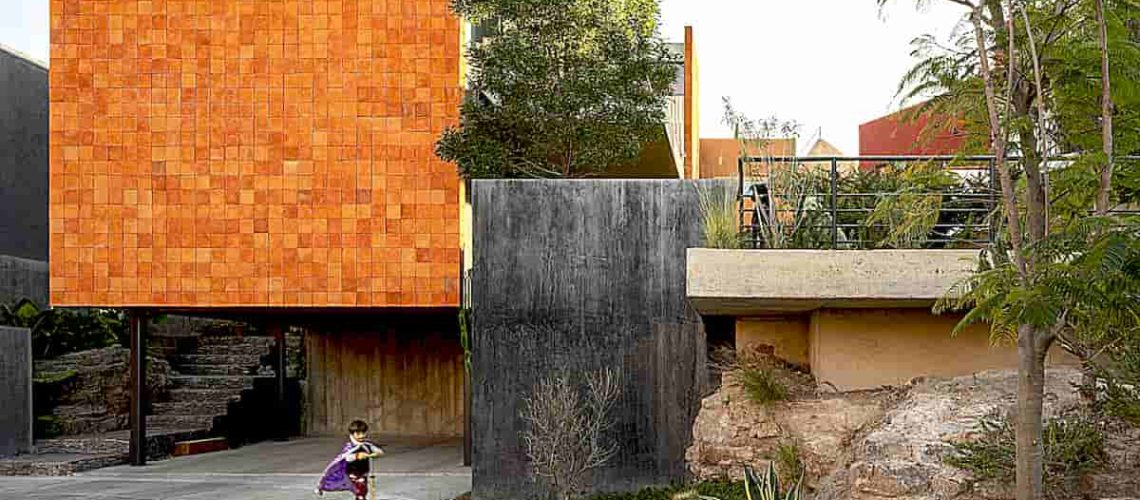
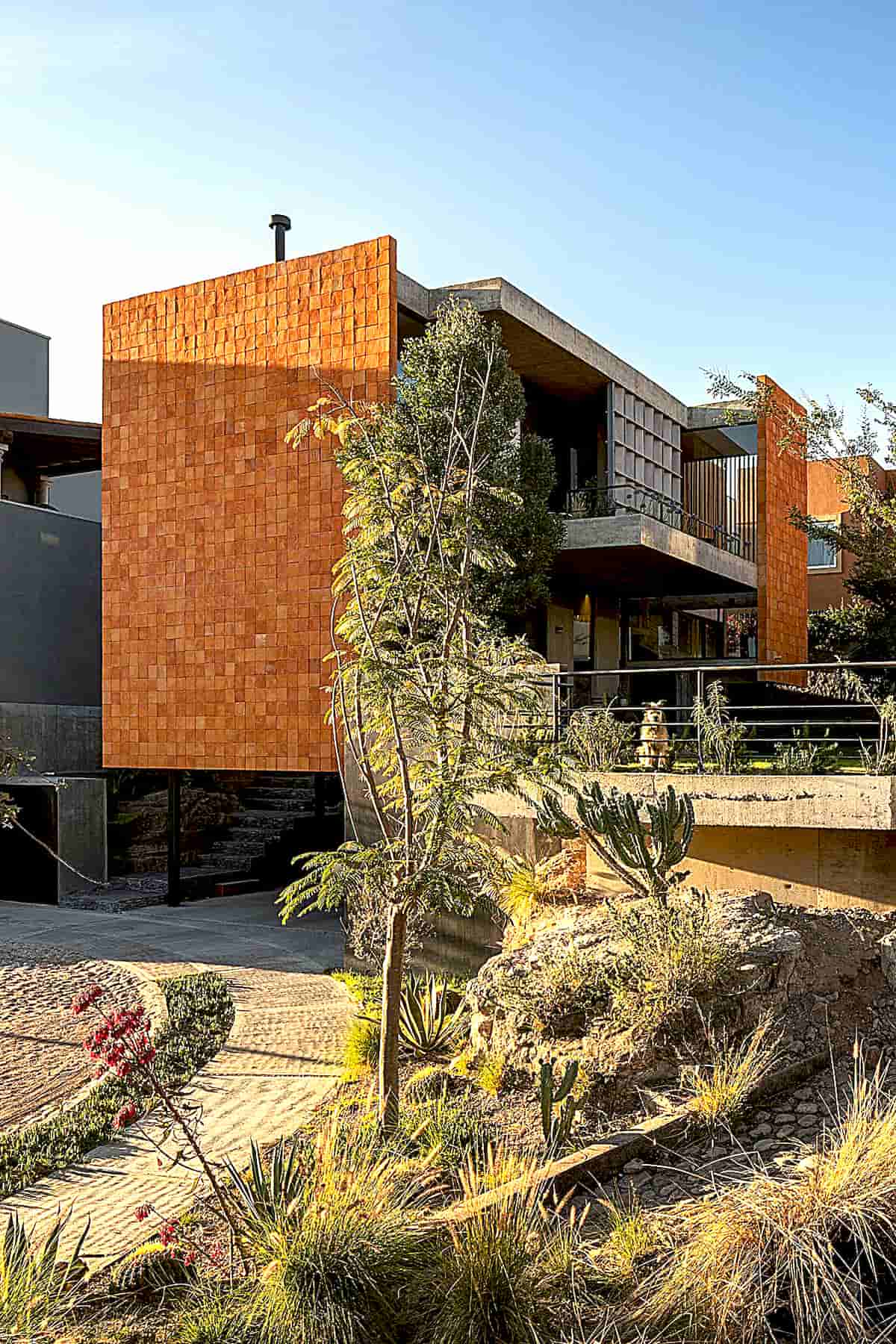
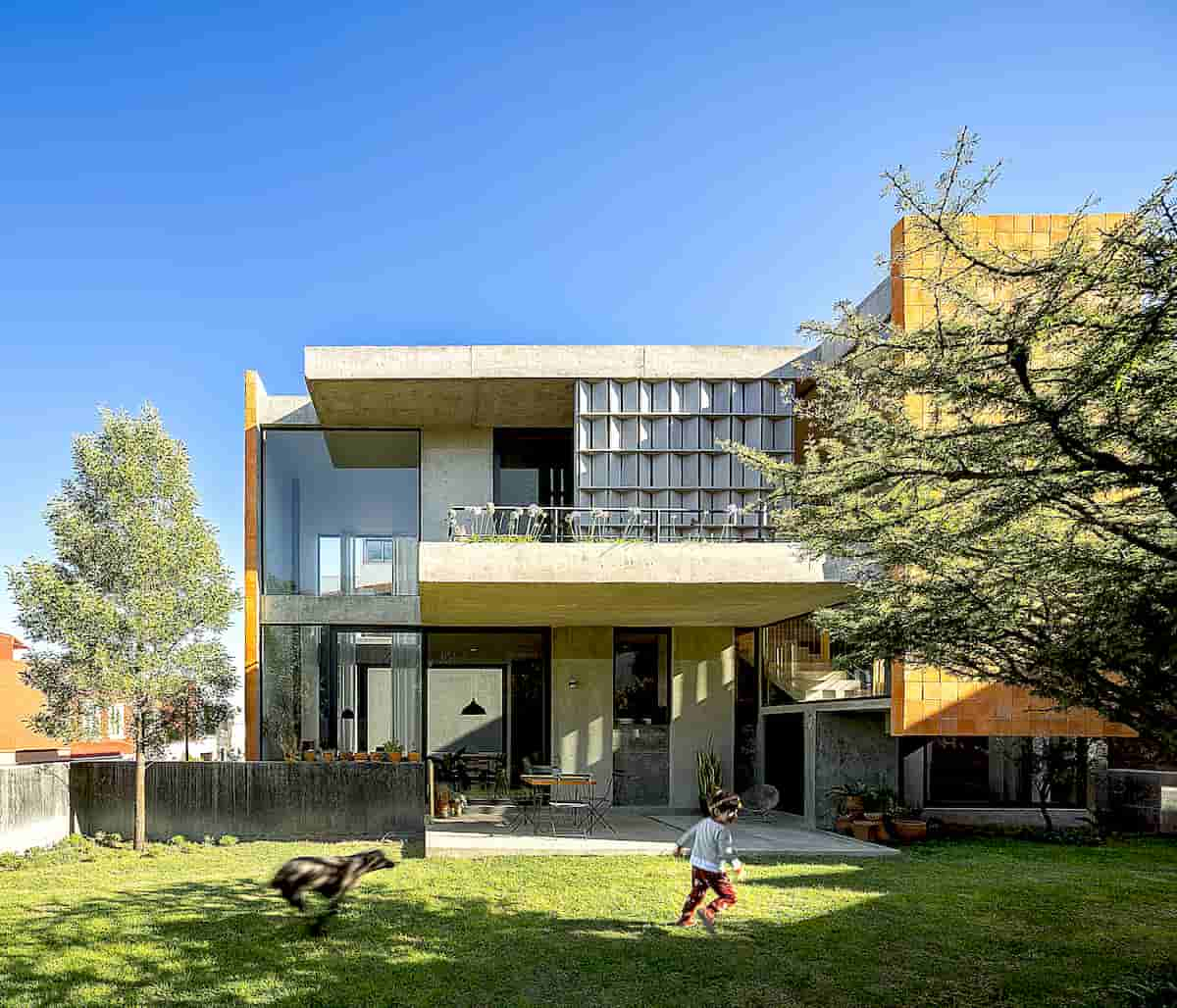
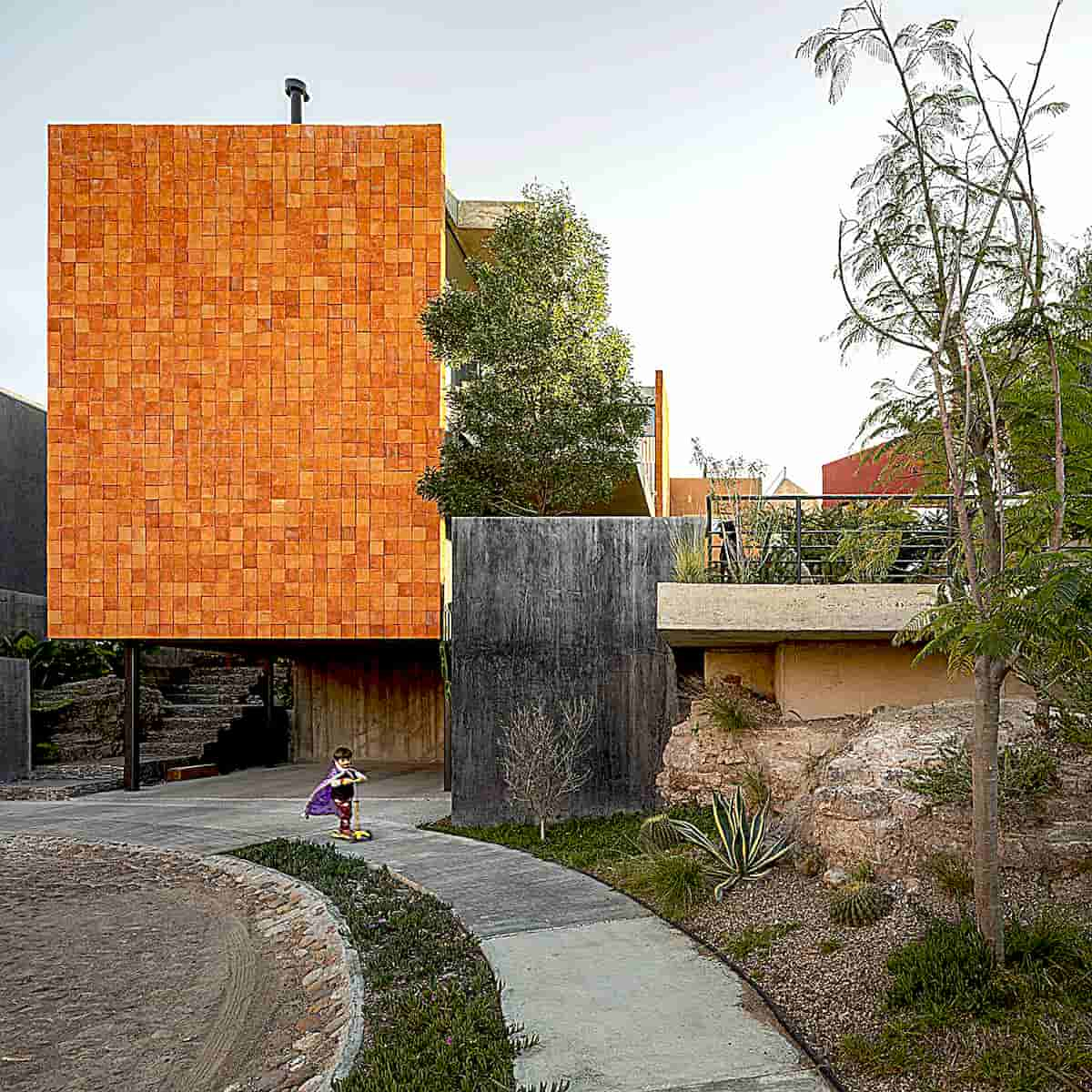
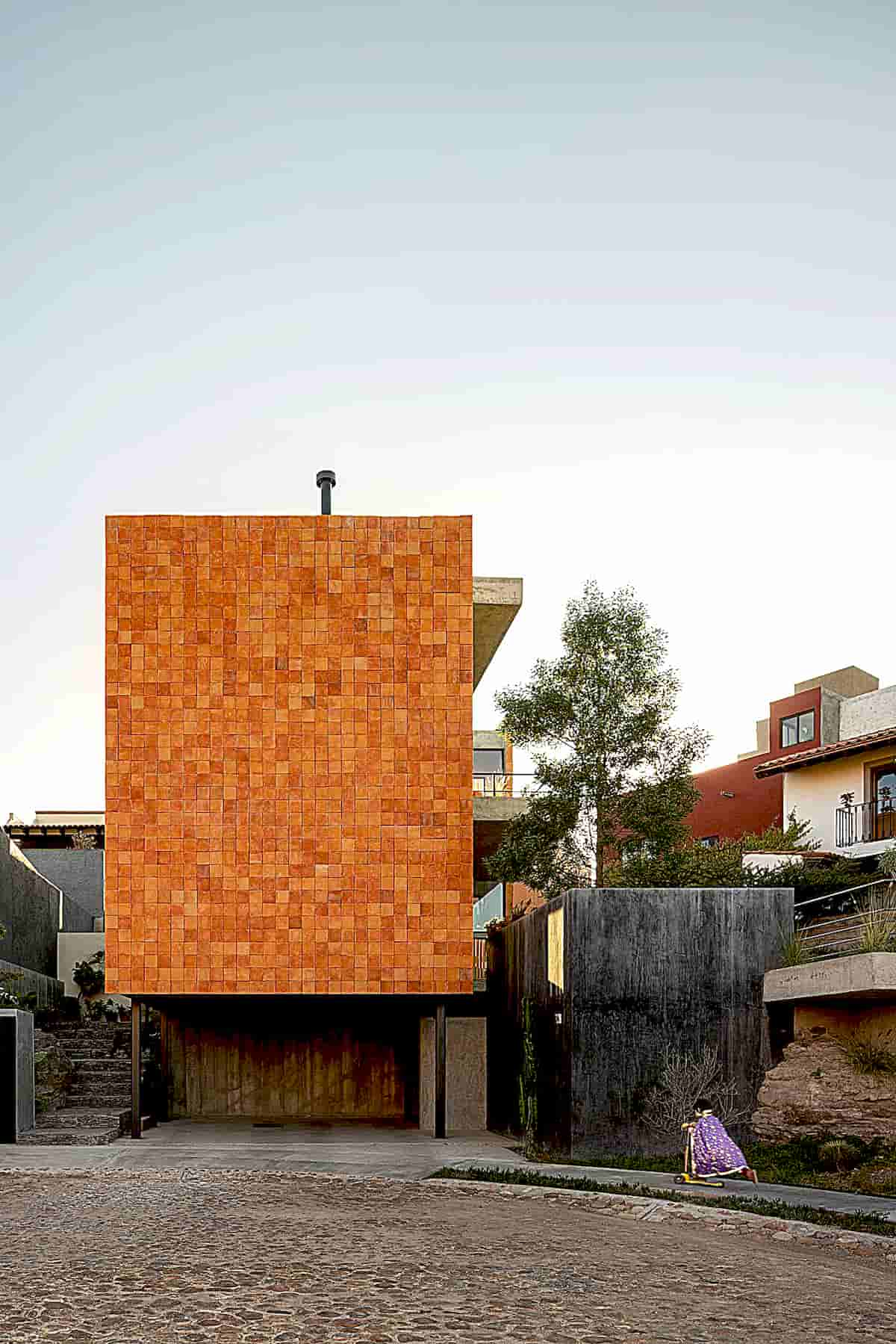
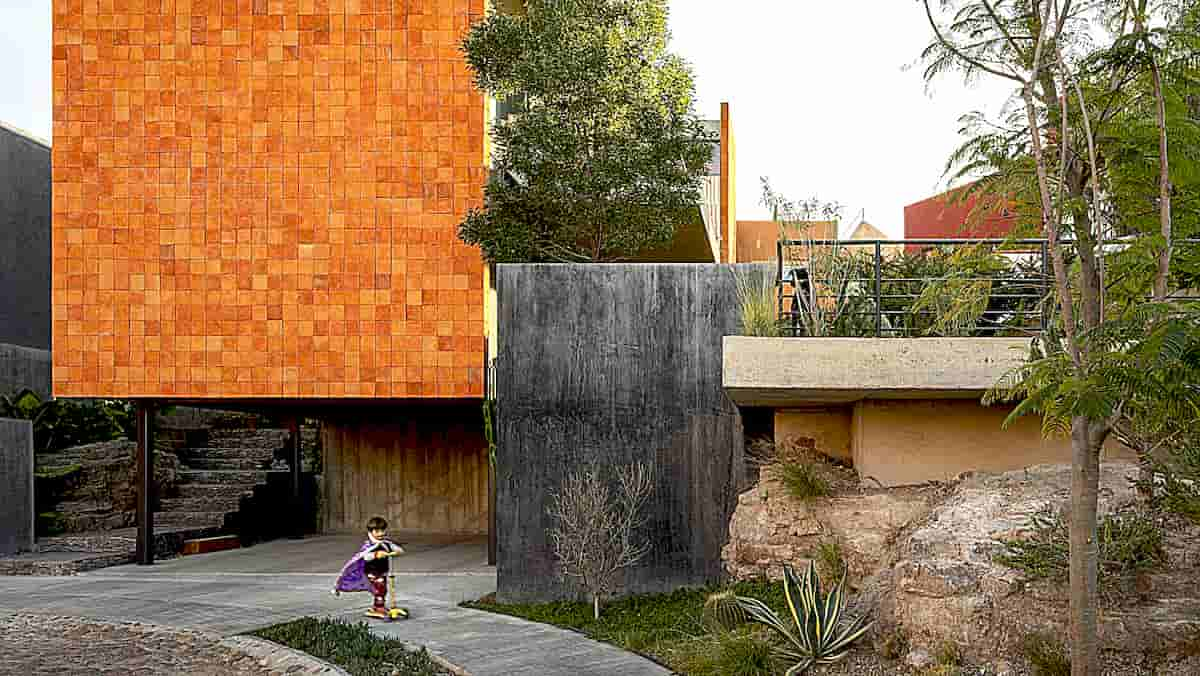
Commissioned to design a family house in a cul-de-sac in the densely built residential neighbourhood of San Miguel de Allende, a colonial-era city in Mexico’s central highlands known for its baroque Spanish architecture, Mexican architect Mauricio Alonso of local practice m aquitecturA had to contend with an awkwardly shaped plot with a steep inclination. His solution: a slim, two-storey, cantilevered building that turns its back to the street, opening up instead out onto an expansive garden that takes over half of the property. Designed as a tight composition of cubic volumes and rectangular planes, the concrete structure is imbued with a sense of lightness thanks to large glass openings with ceramic and steel elements that further enhance its sculptural sensibility.
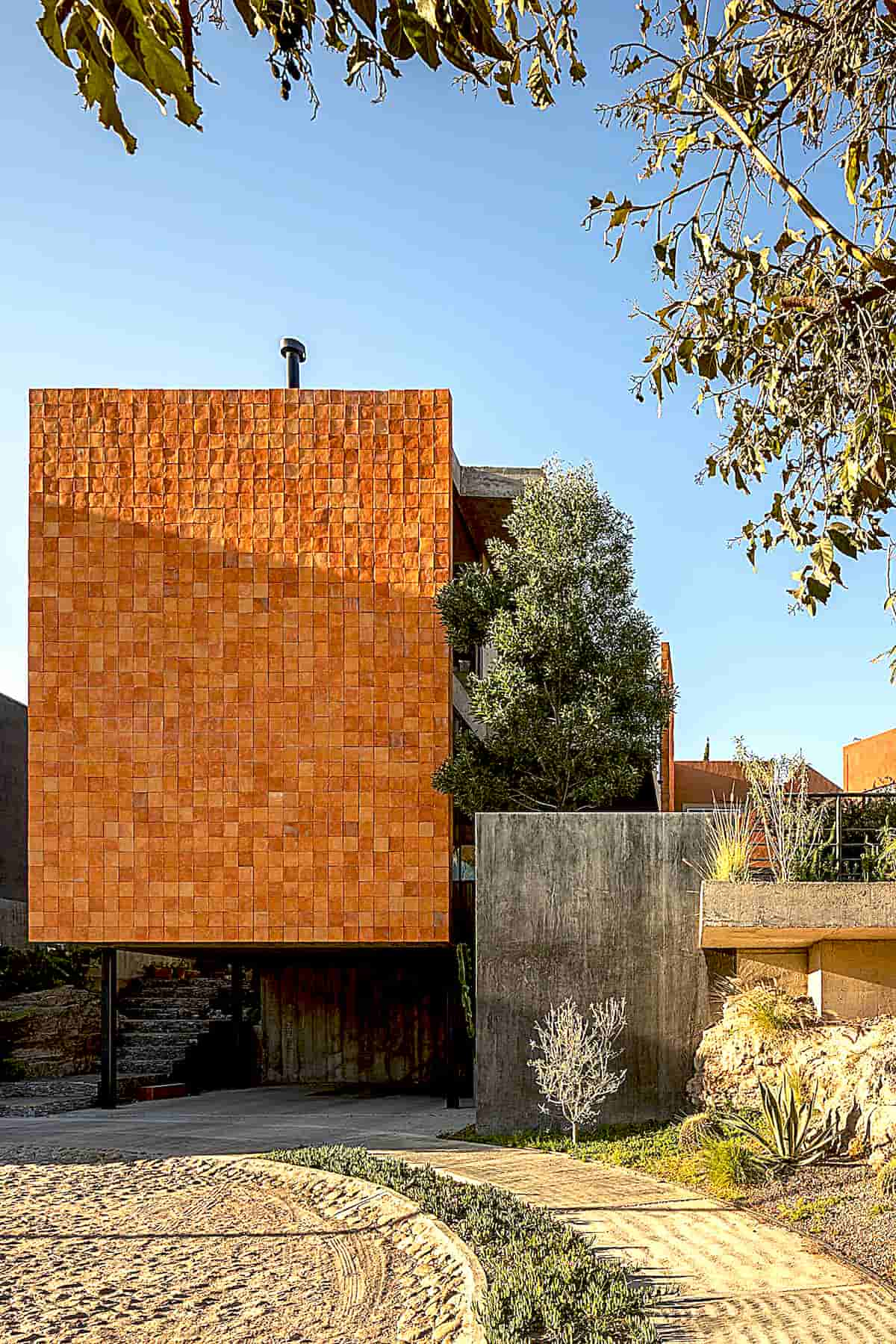
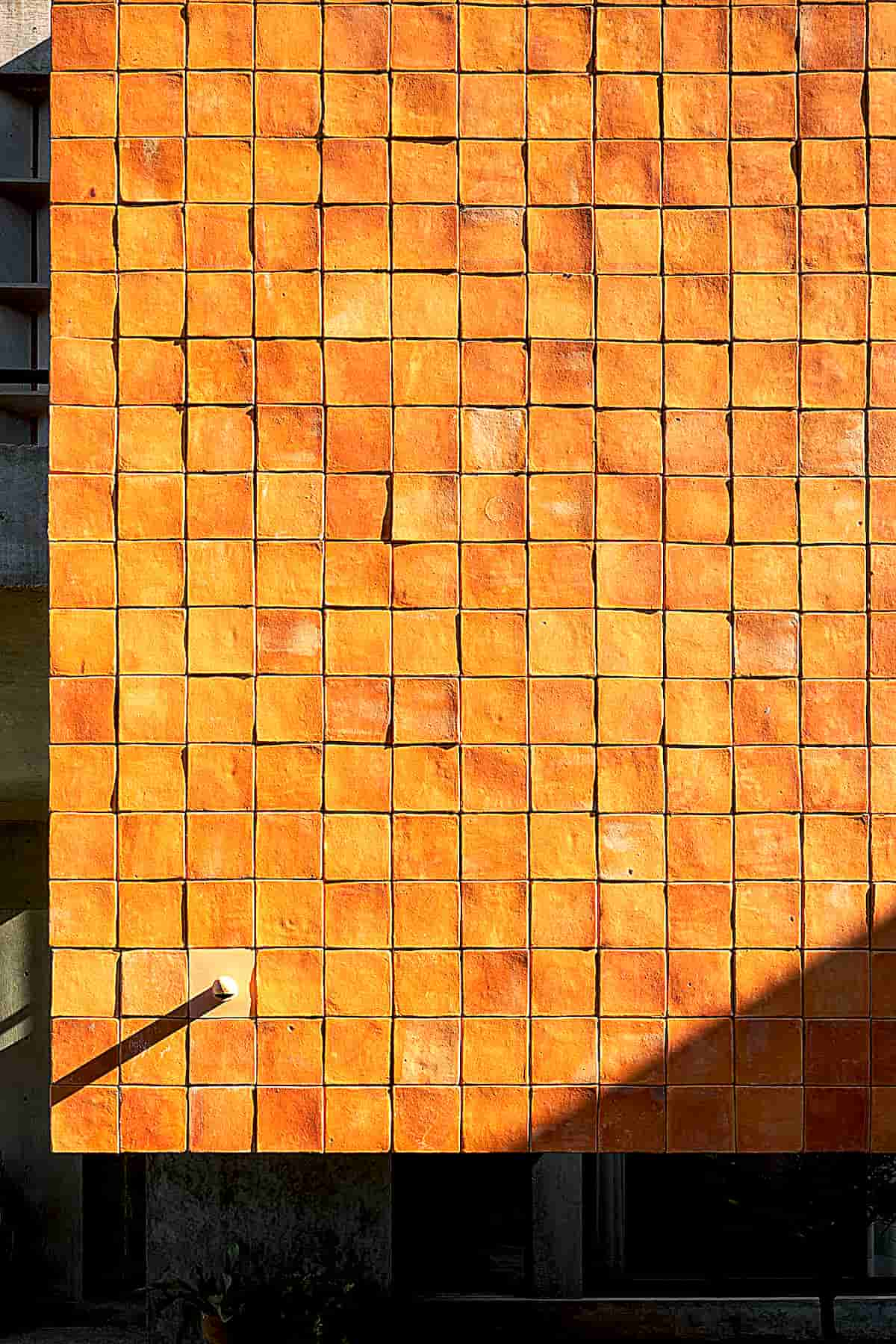
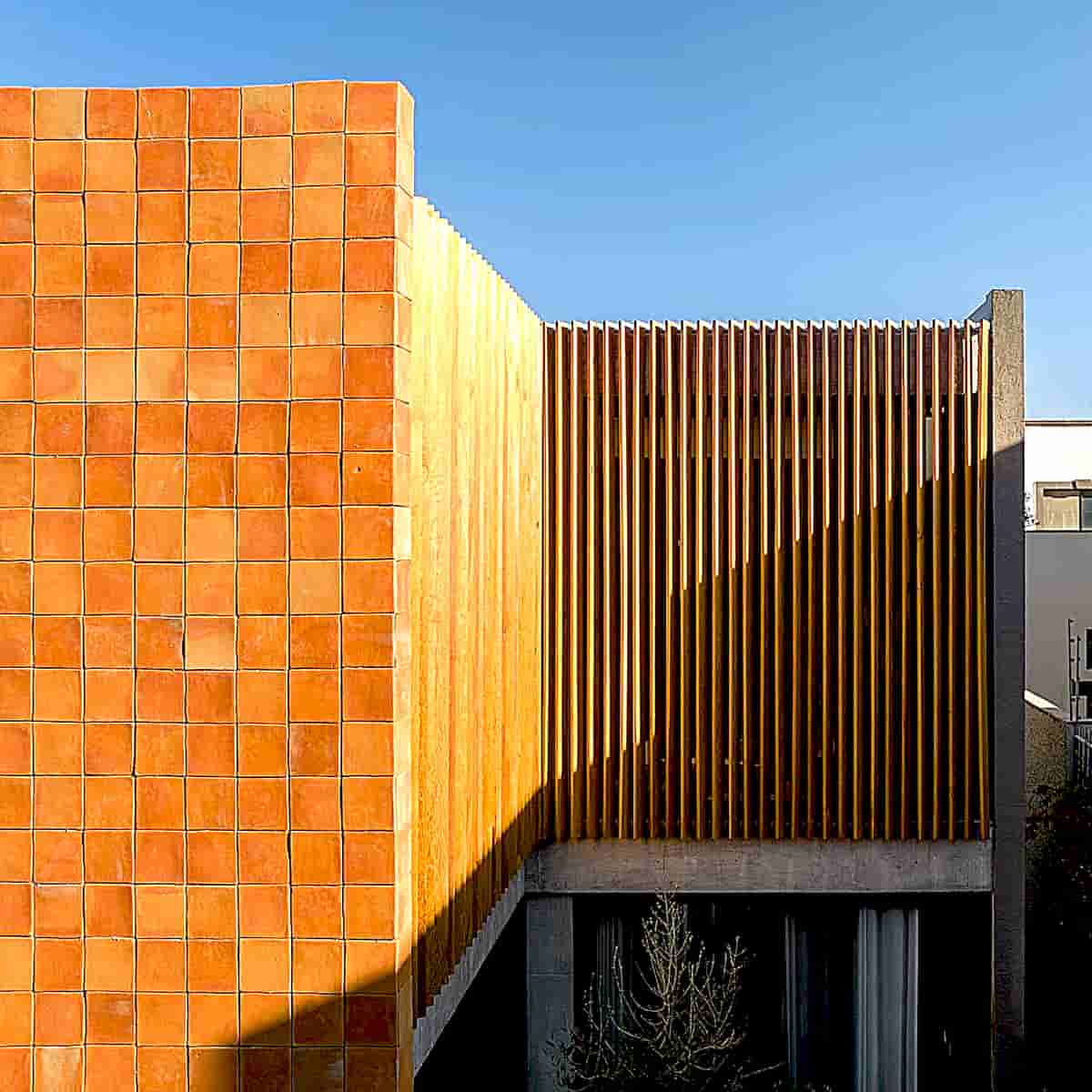
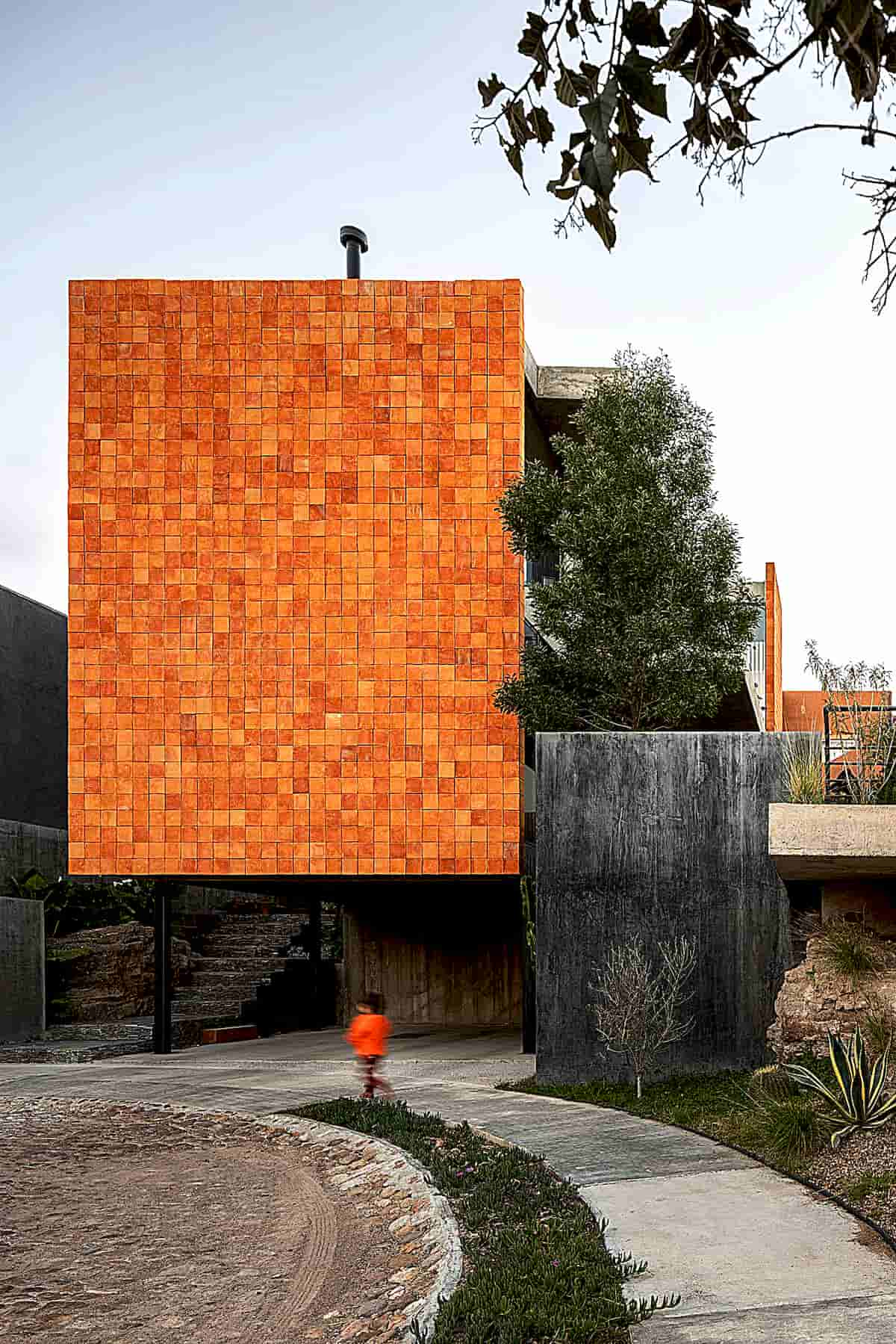
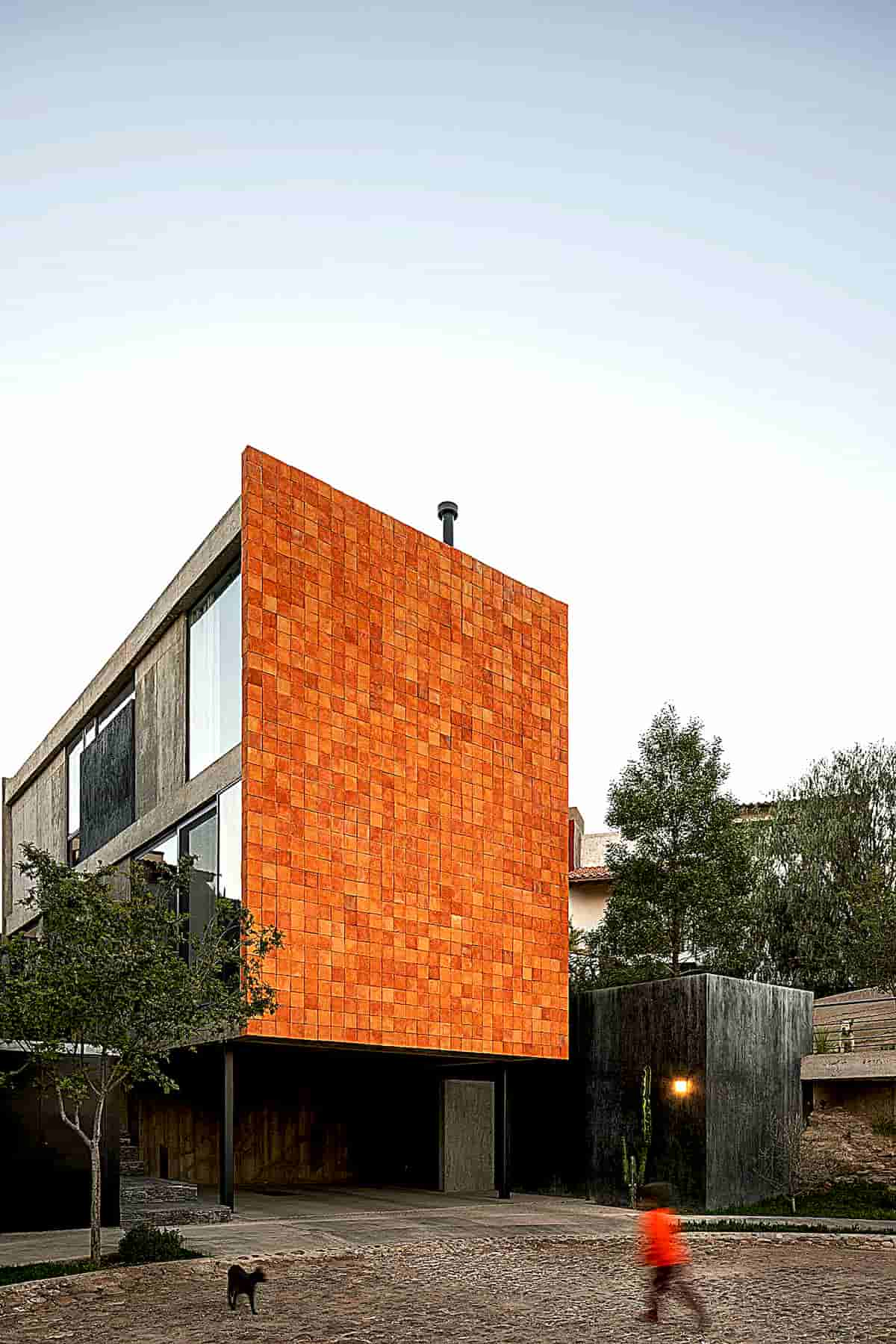
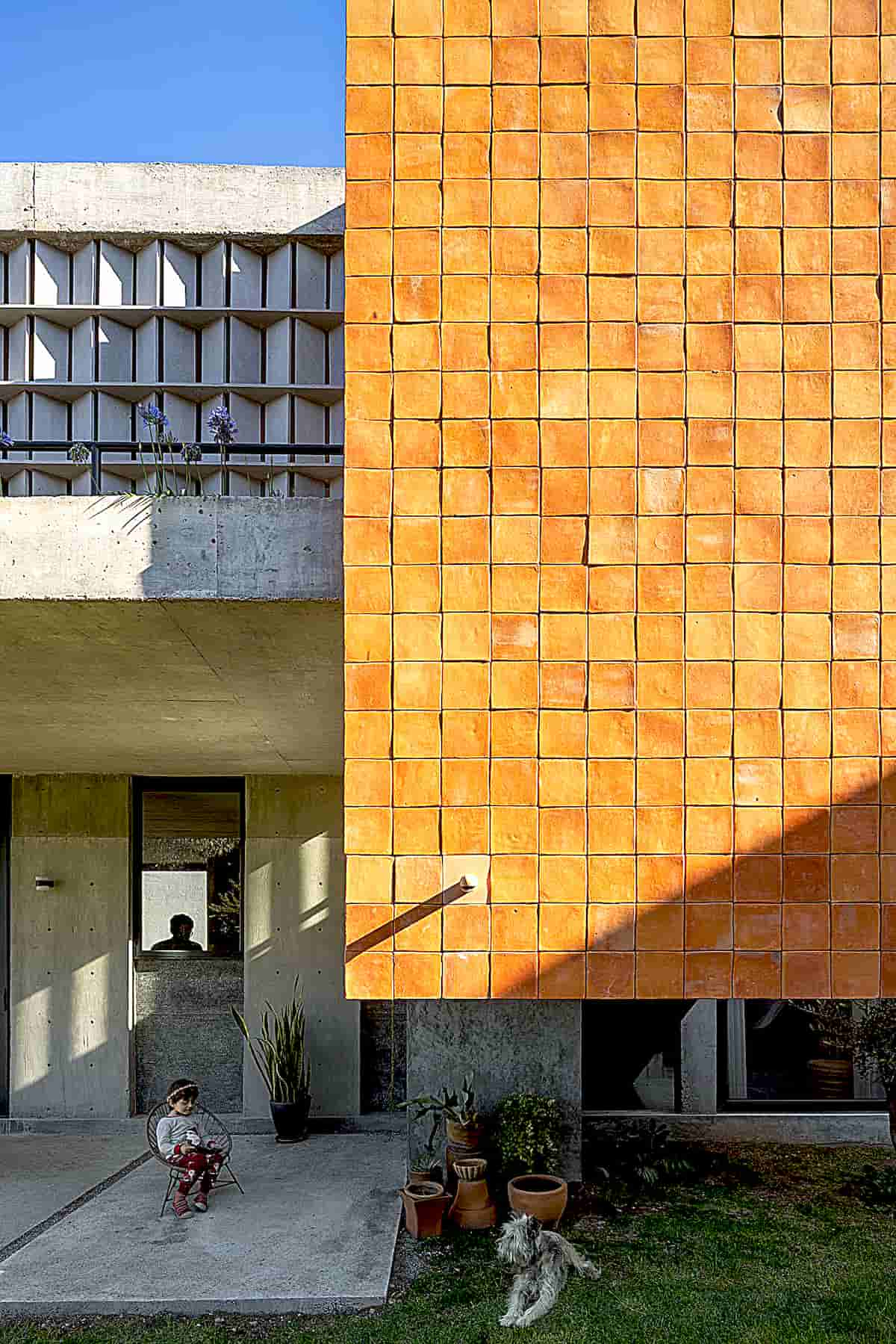
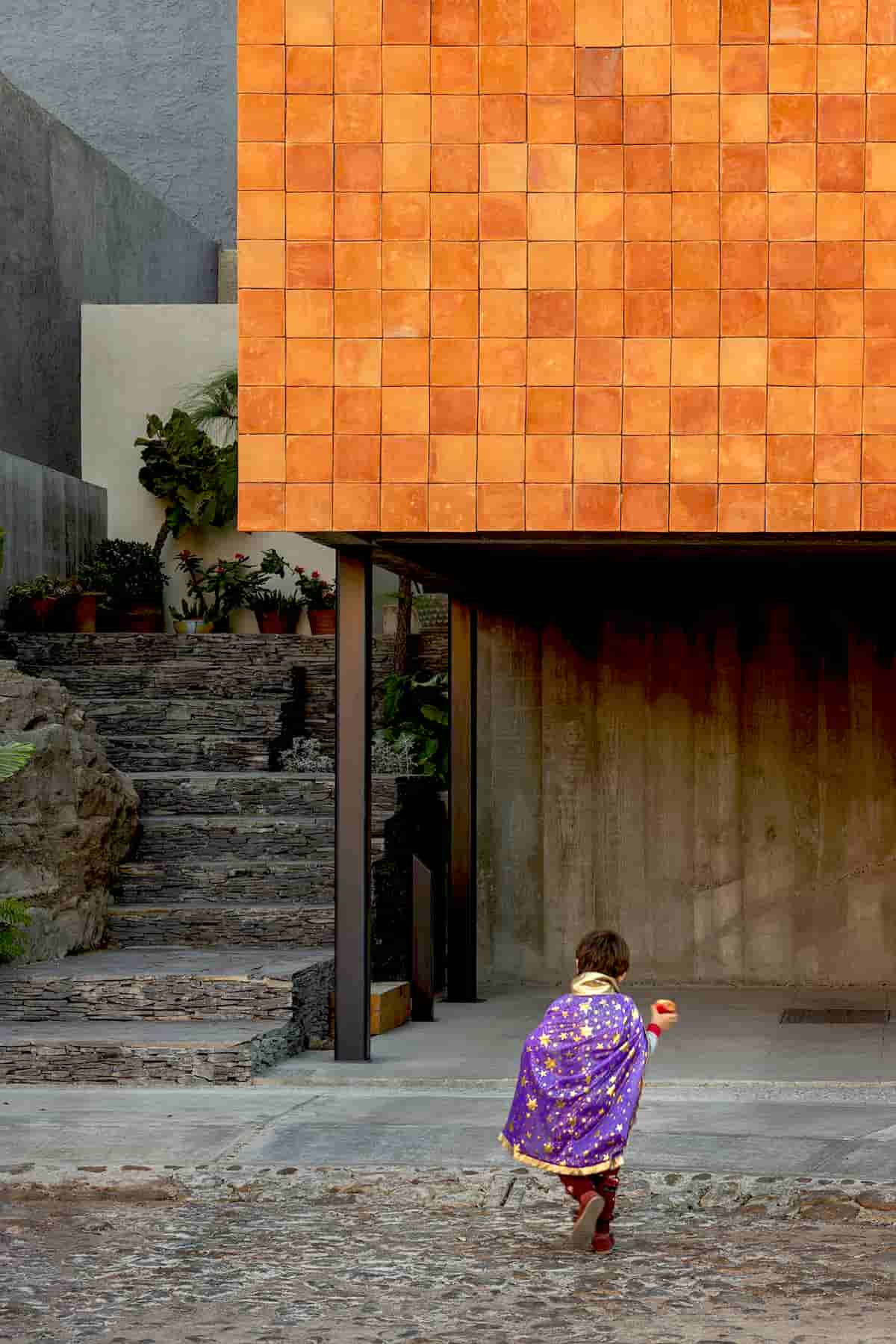
Pulling into the driveway, you are greeted by a blind façade; psupported on two steel columns and clad in square ceramic tiles, a low-cost material that echoes the town’s historic courtyards, the five-metre-high façade is designed to ensure privacy but also makes for a bold architectural statement. A staircase that leads from the street-level parking to the entrance on the first floor is constructed out of locally sourced flagstones, their organic shapes complementing the rectilinear design of the concrete structure.
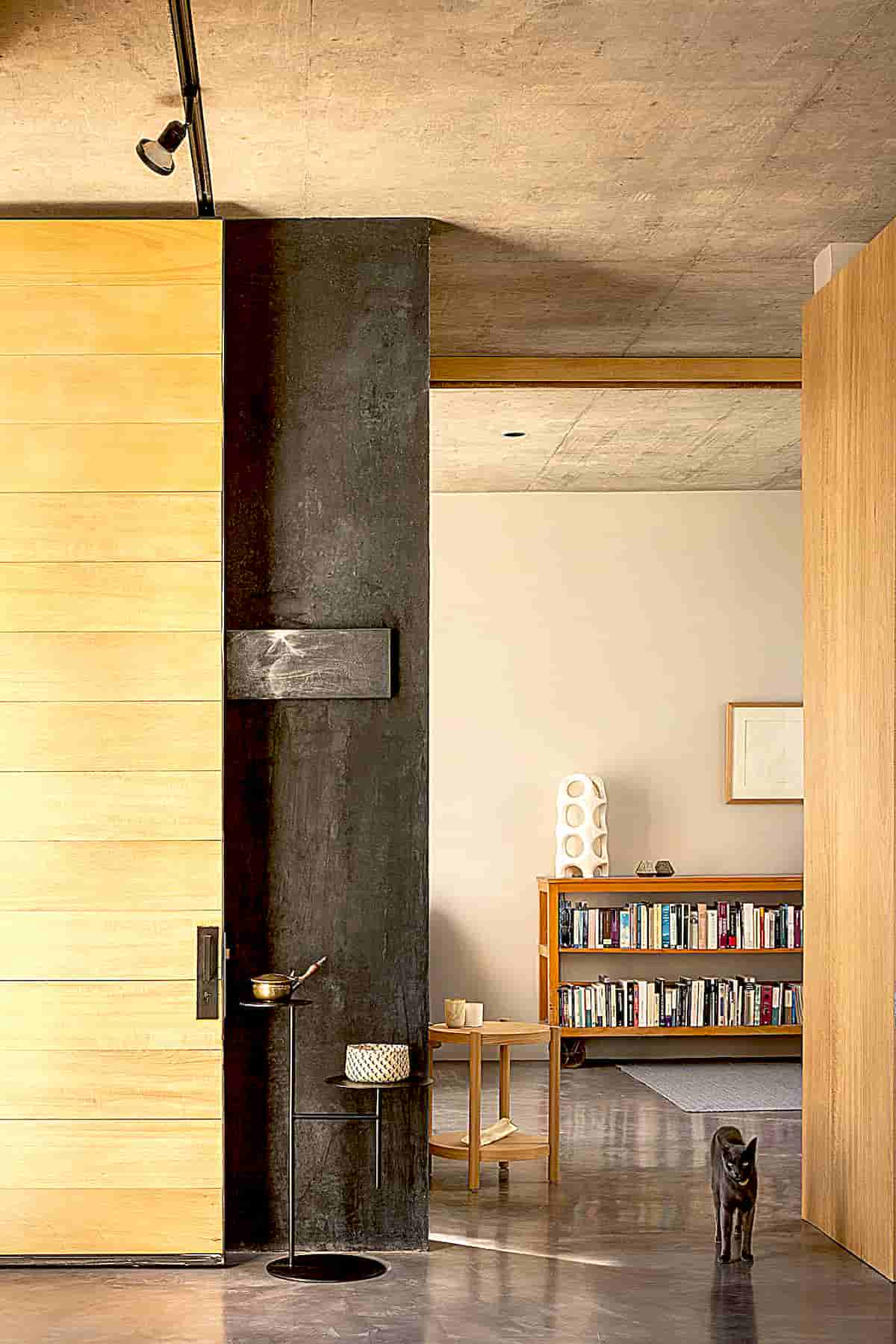
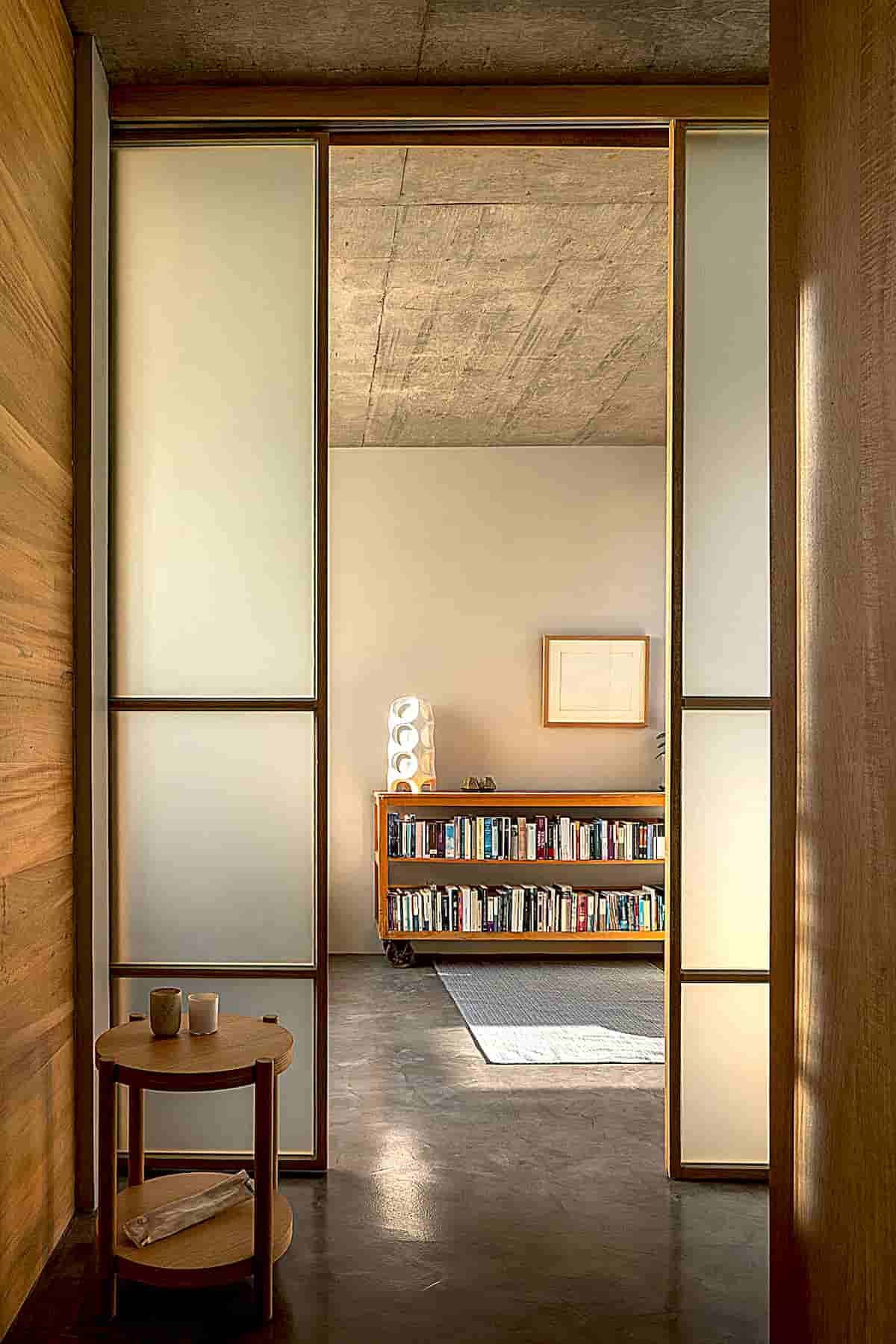
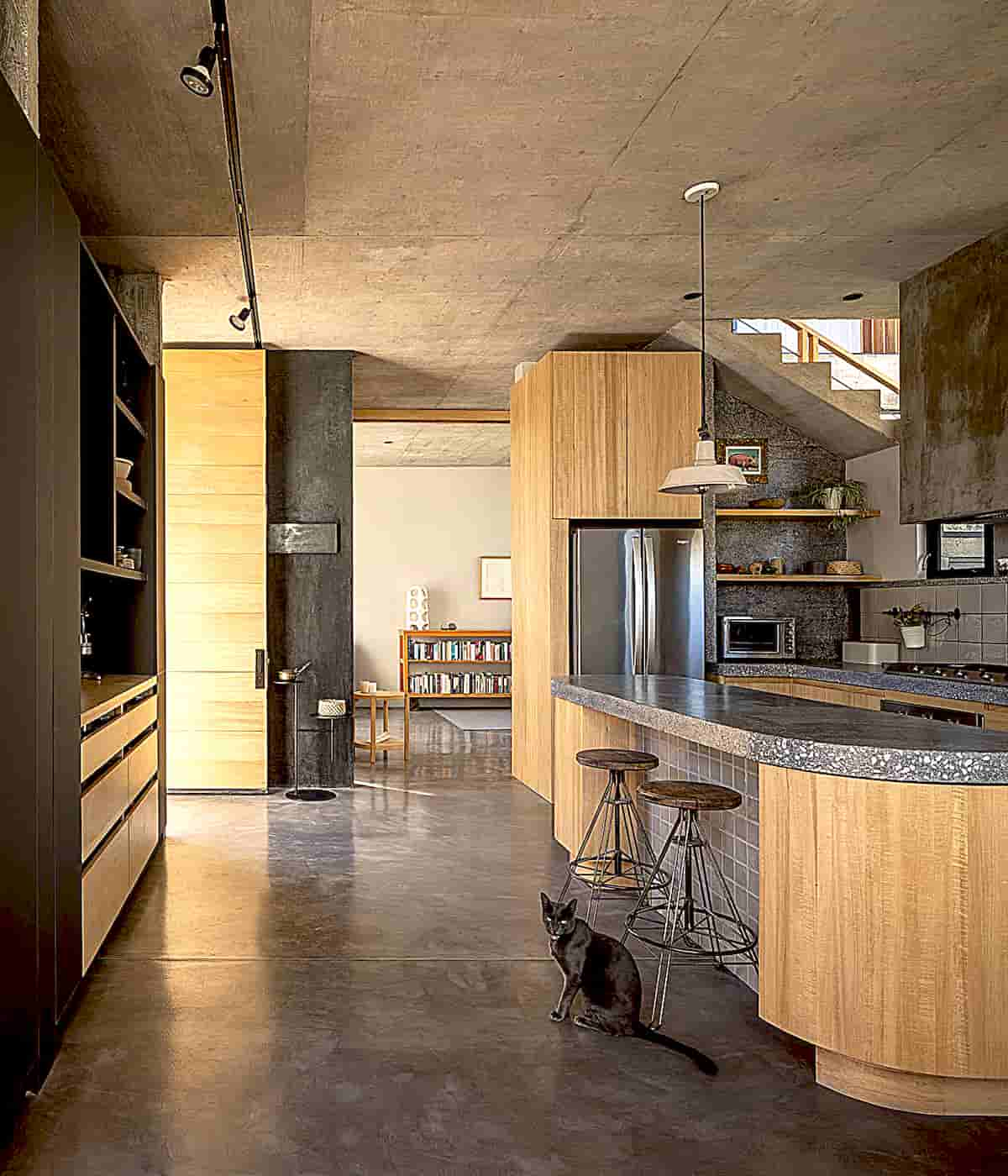
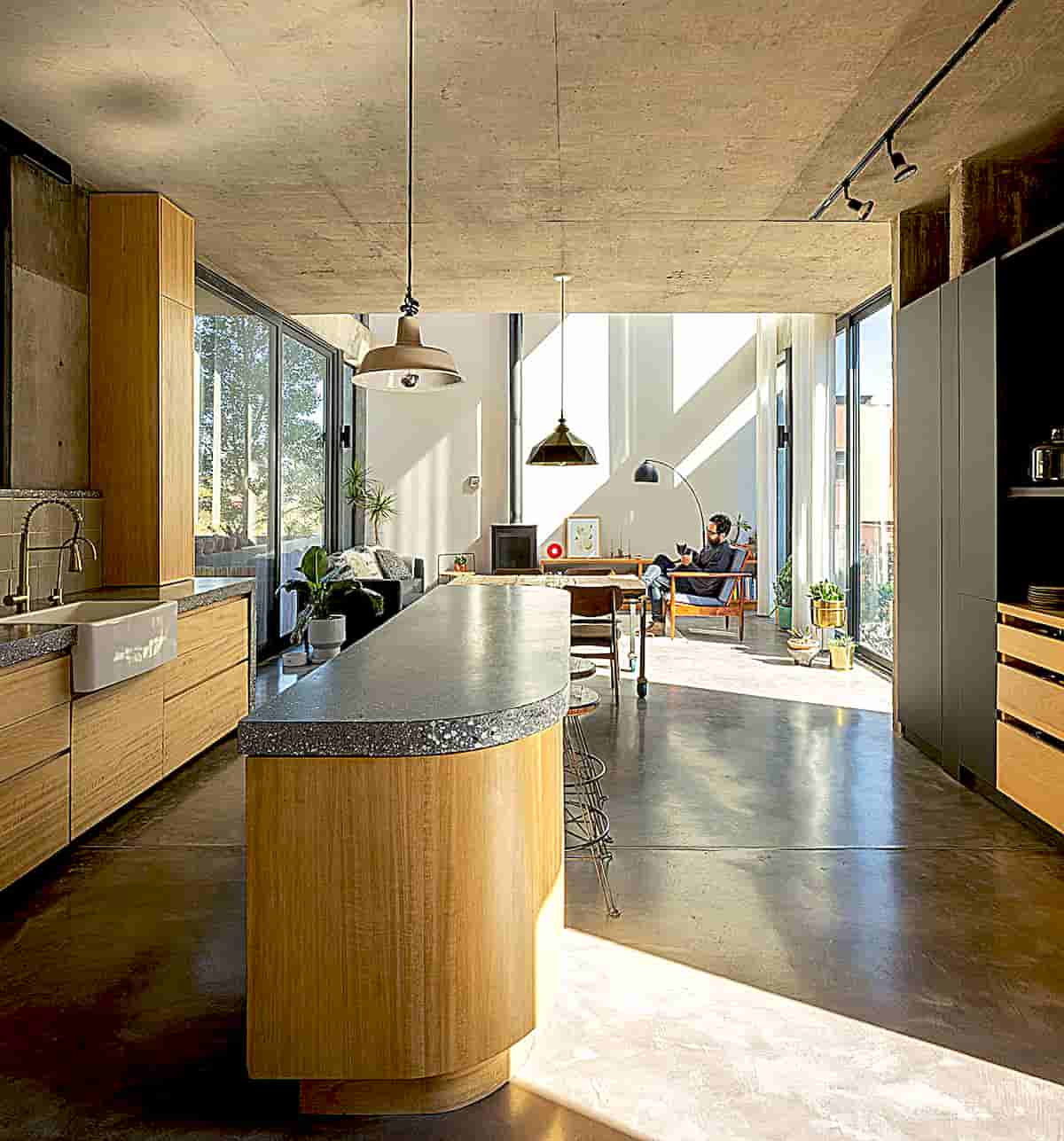
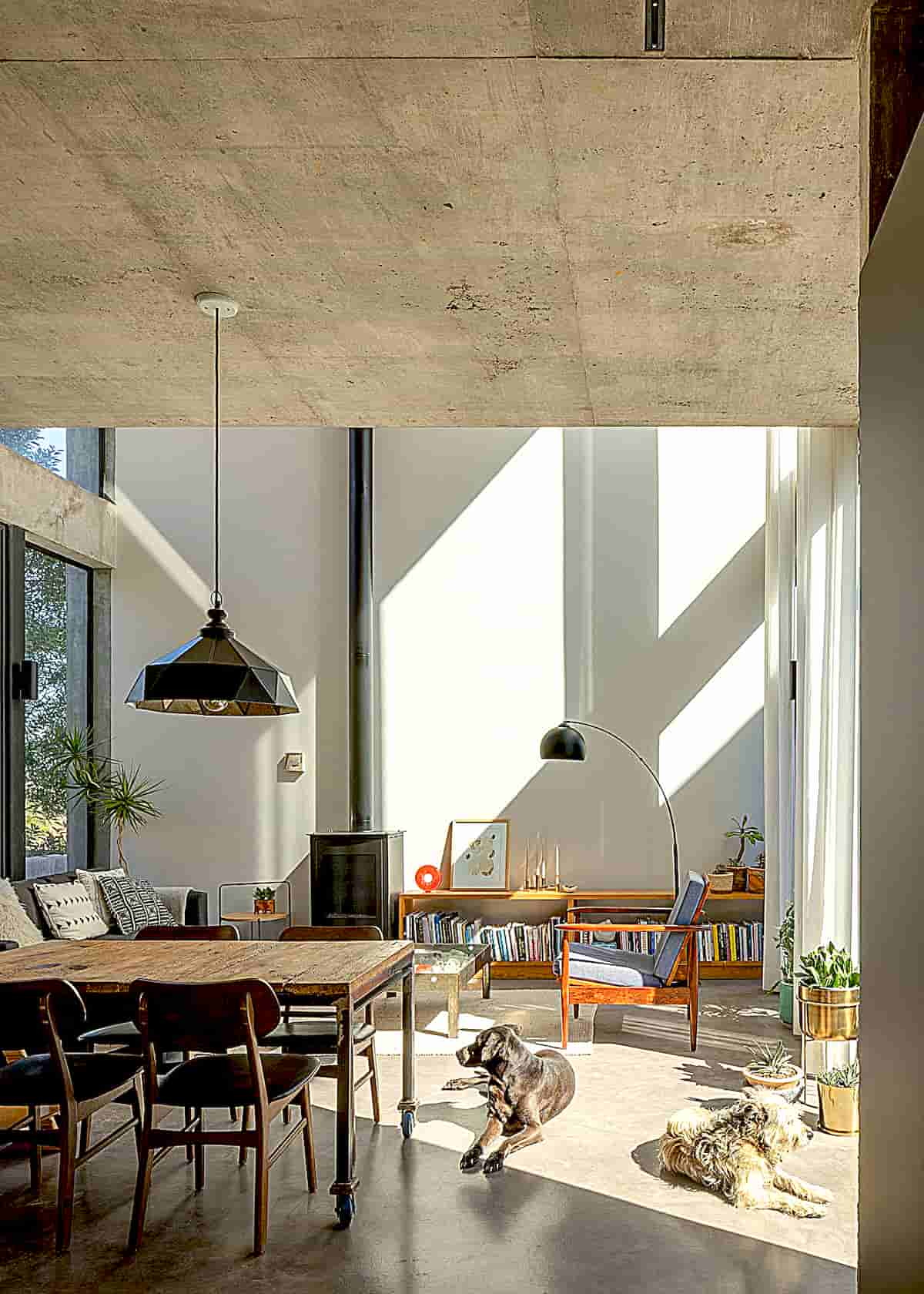
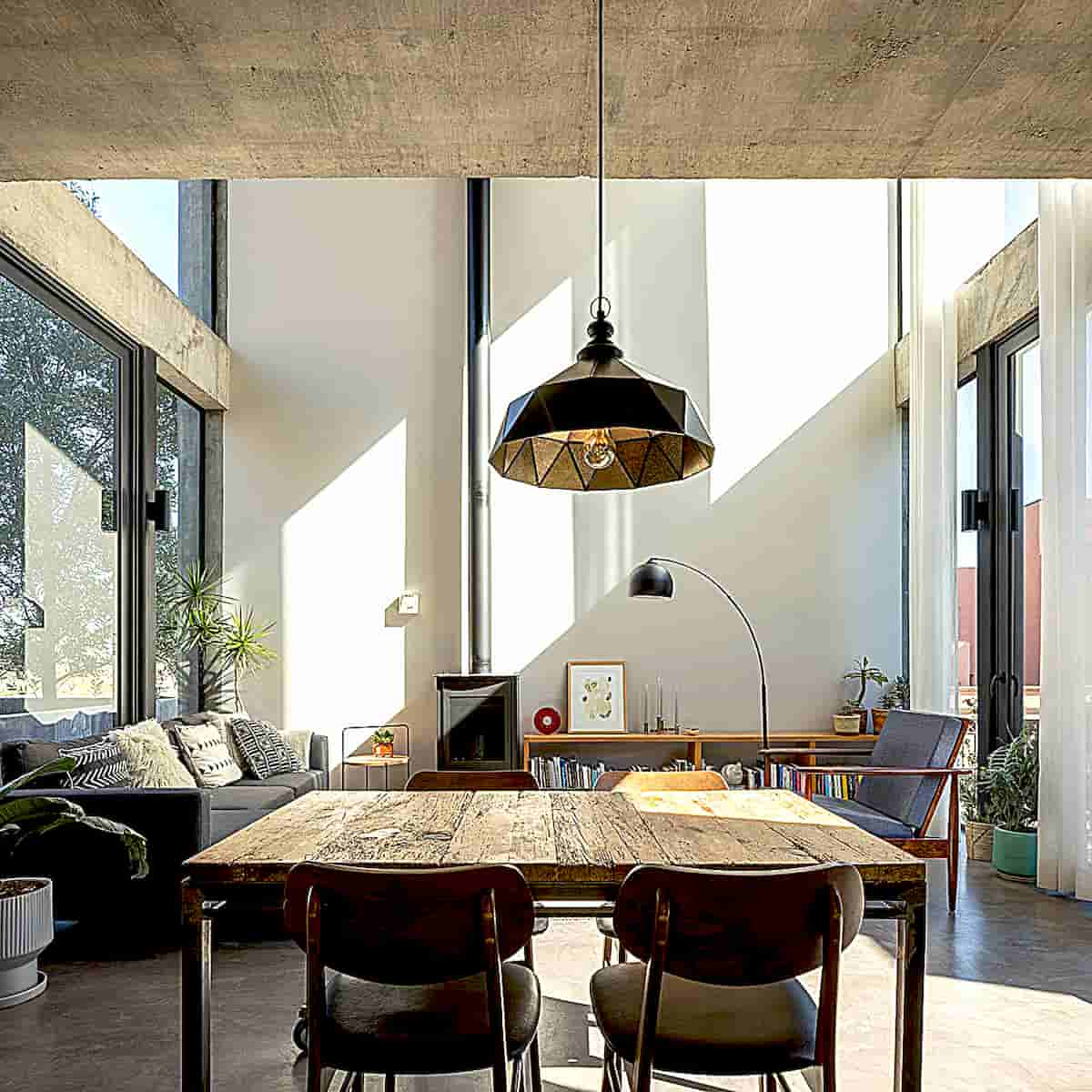
Entering the house through a floor-to-ceiling mahogany door, you step into an open-plan living space centred on a double-height living room with an adjacent dining area, kitchen and study/TV room, the latter delineated by translucent sliding doors that can disappear into the walls. Enveloped in patio doors and windows, the light-filled space enjoys generous views of the garden, which Alonso cleverly extended by designing a concrete platform over the parking level below which is one of the main reasons that he elevated the house in the first place.
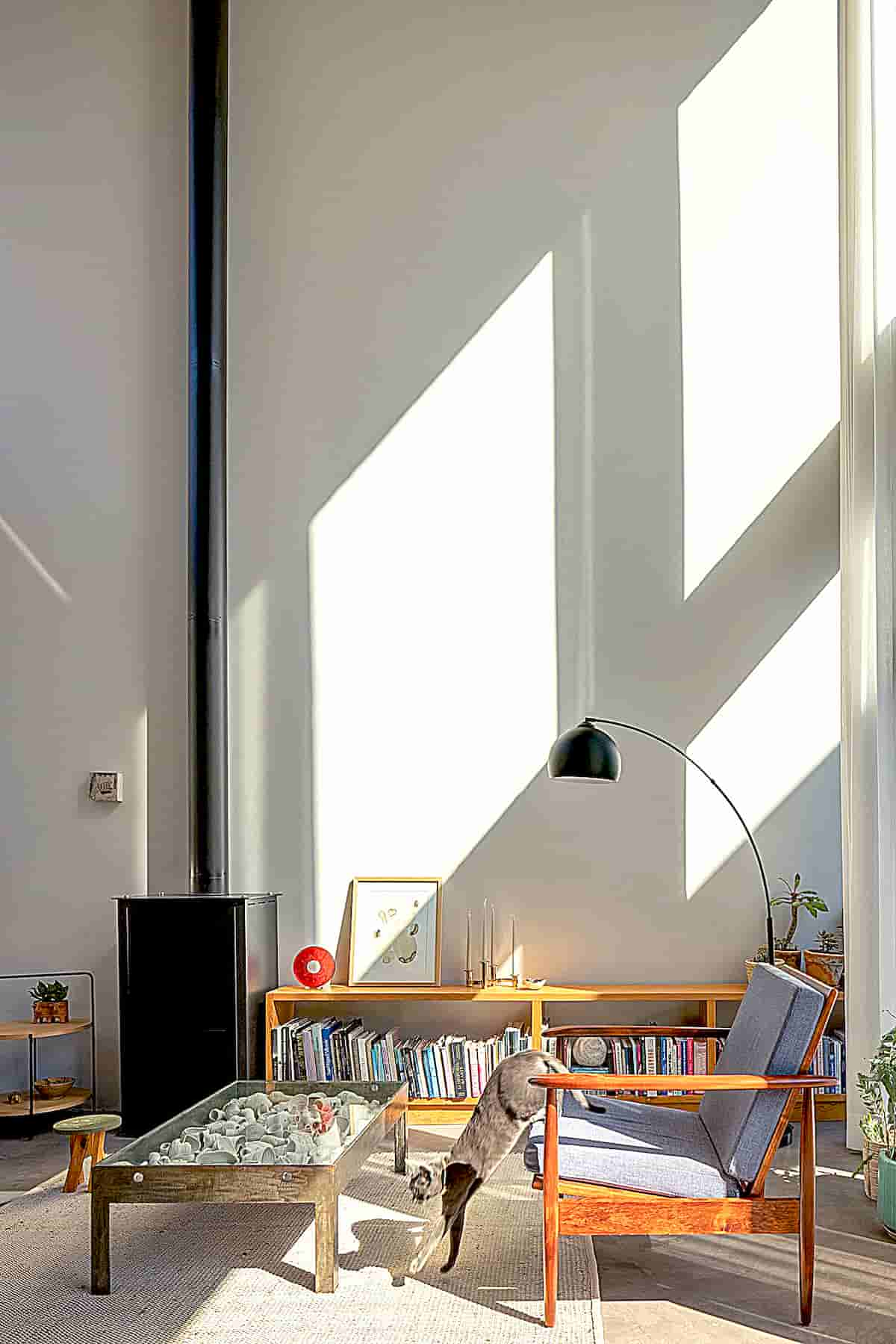
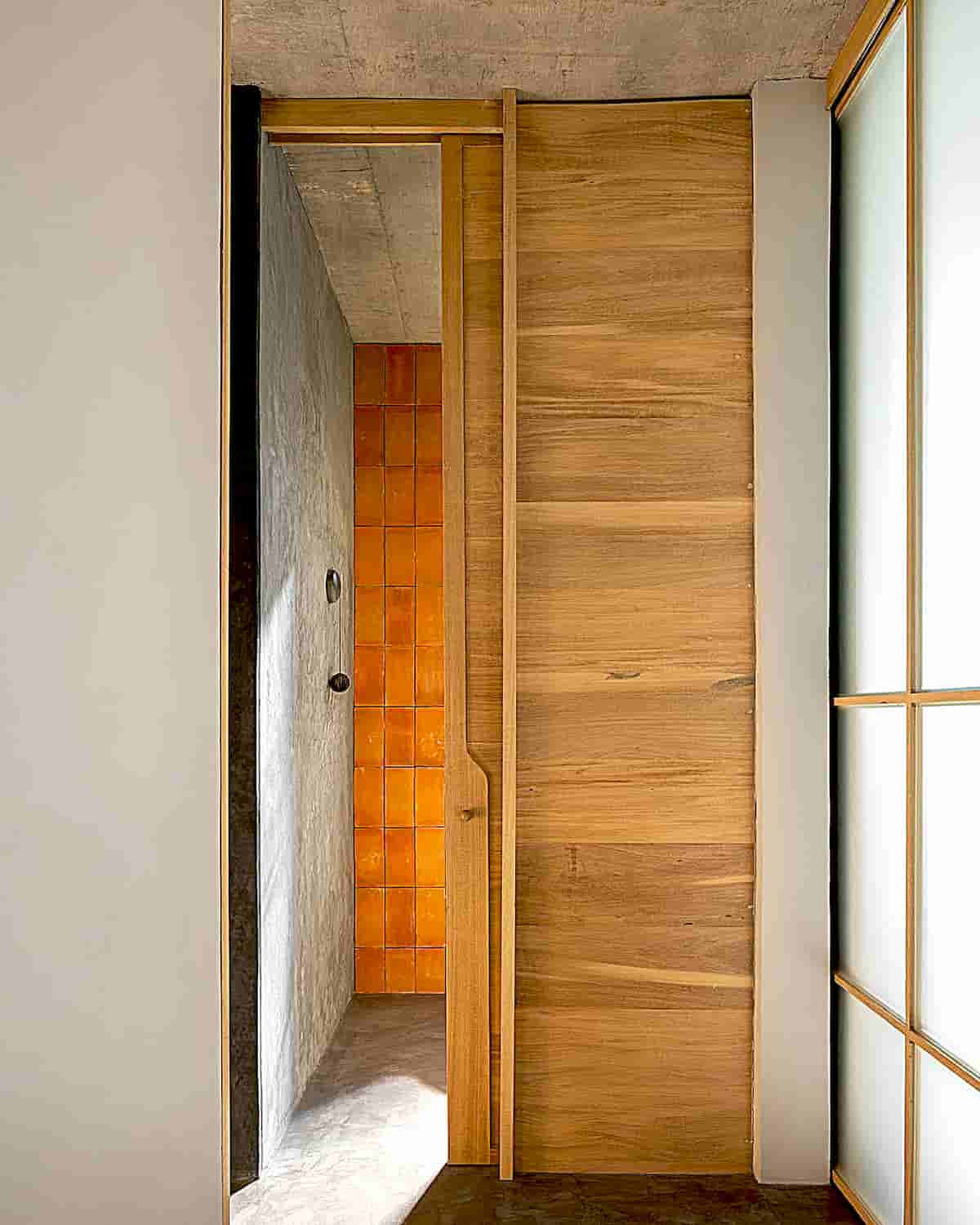
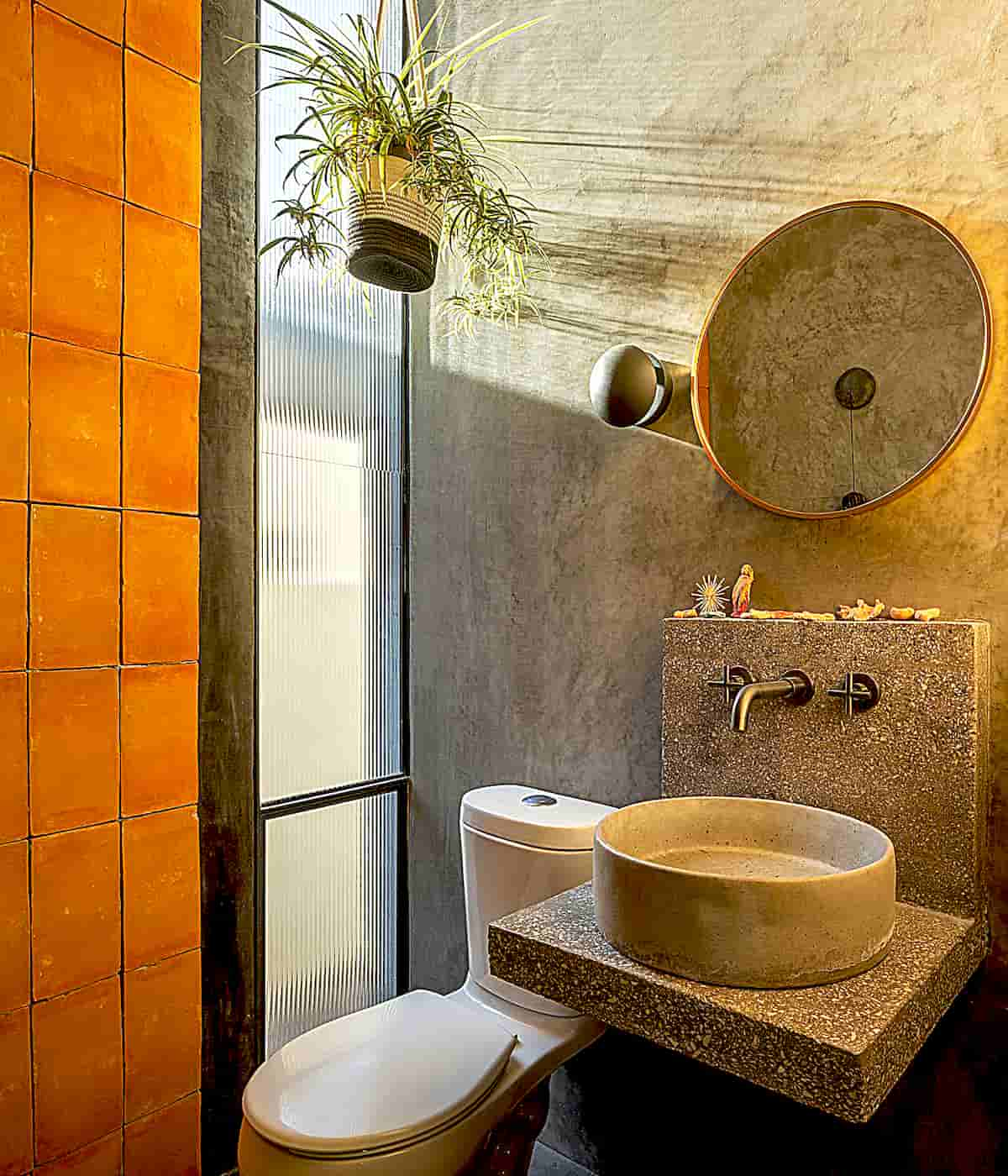
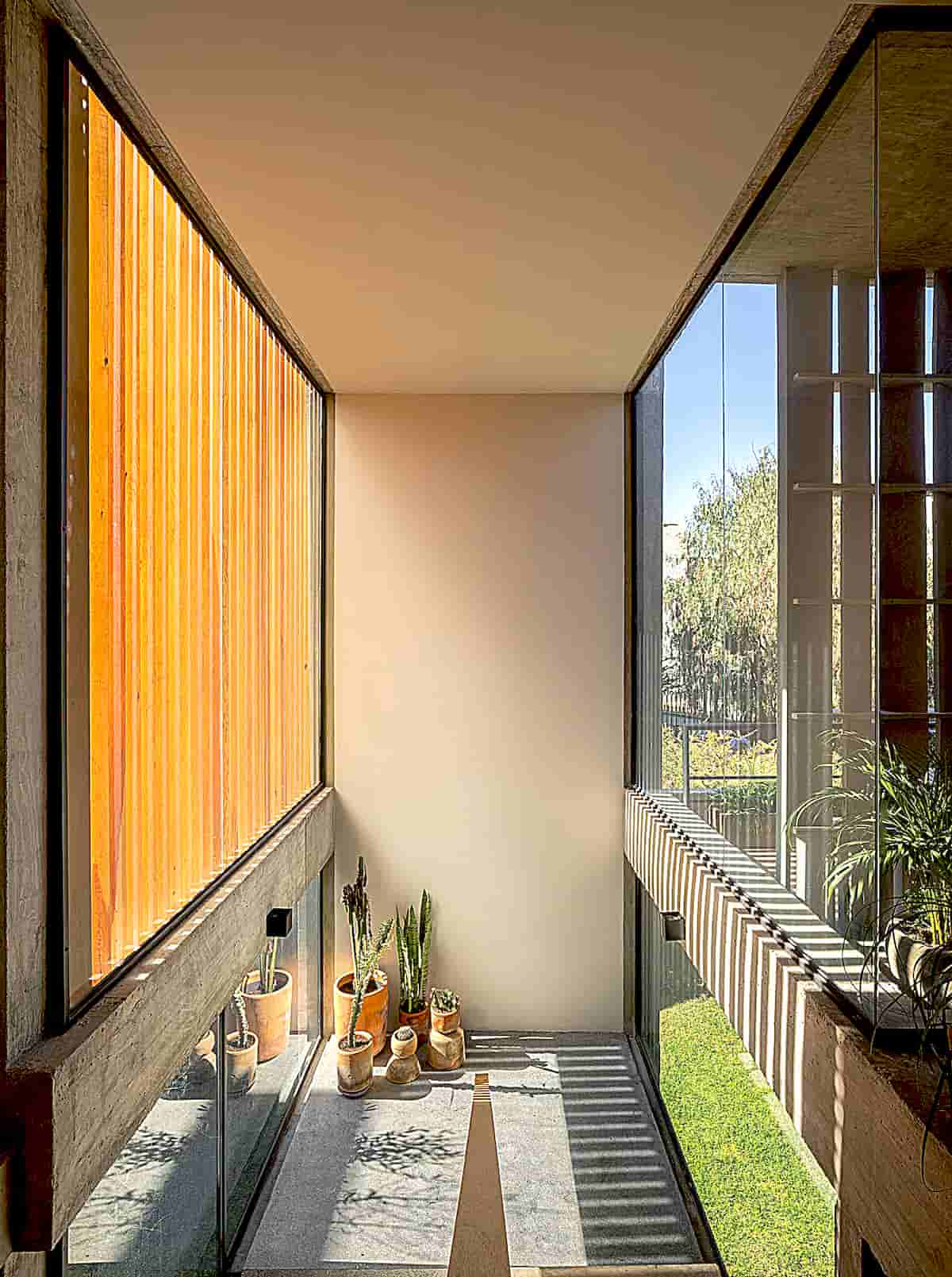
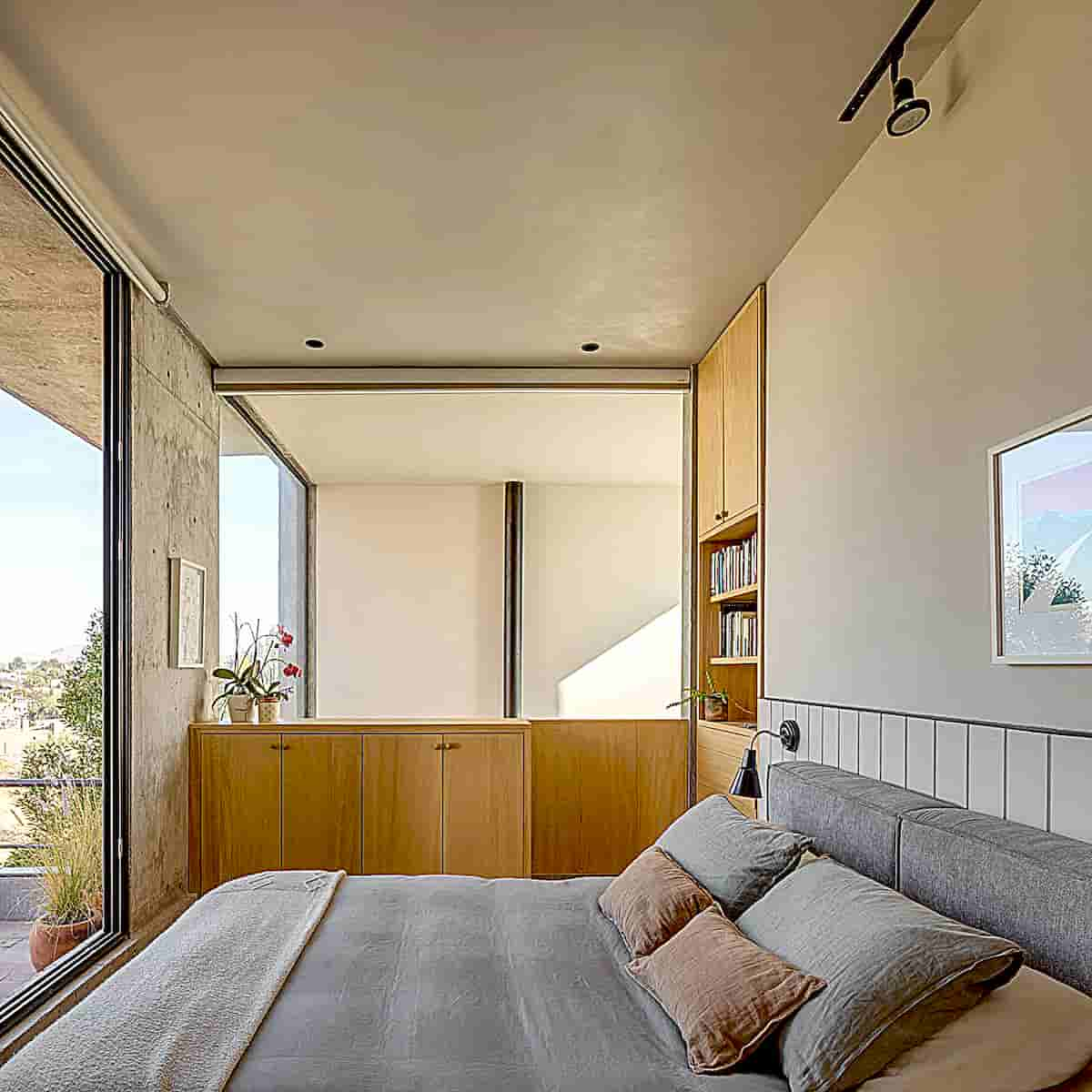
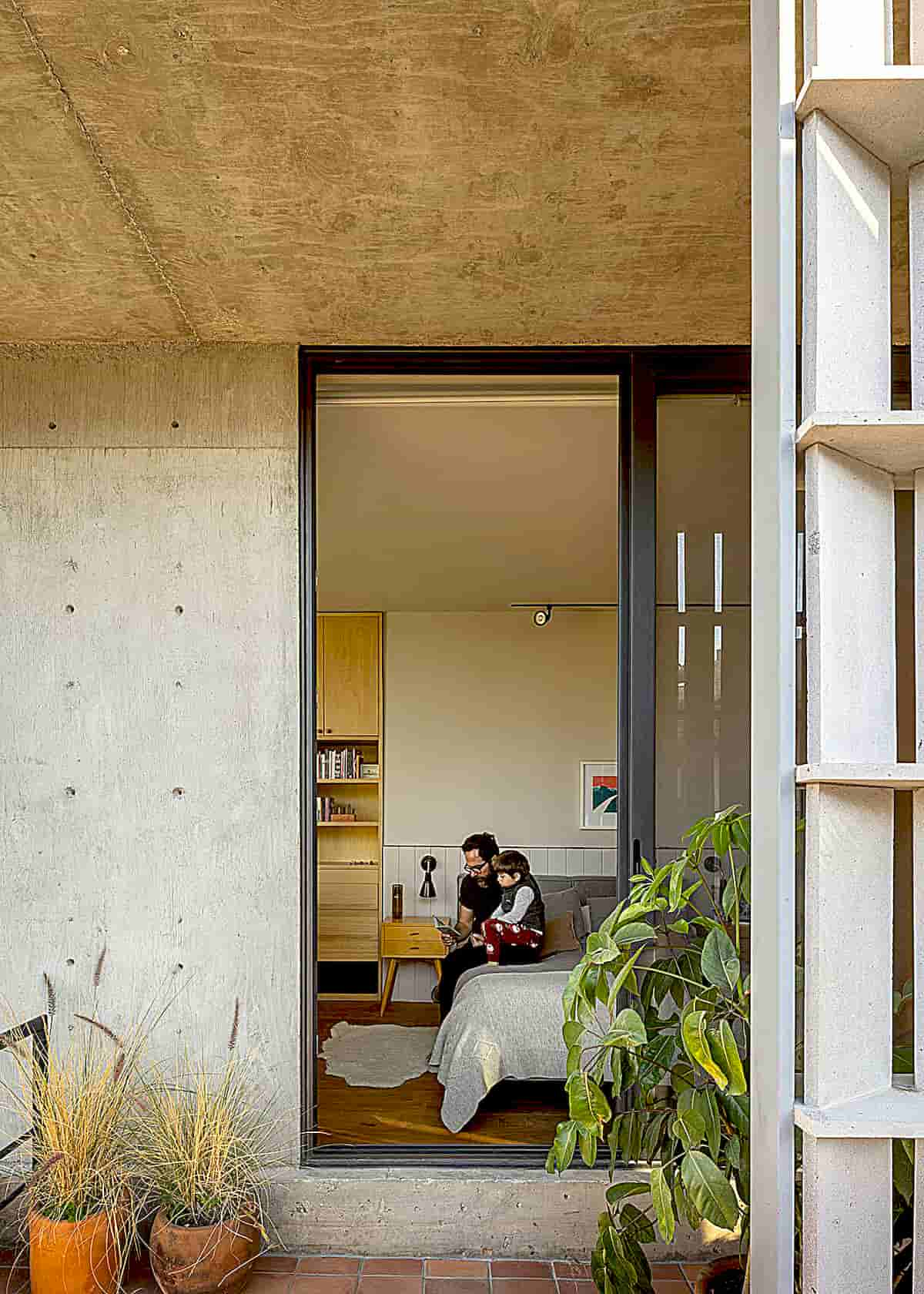
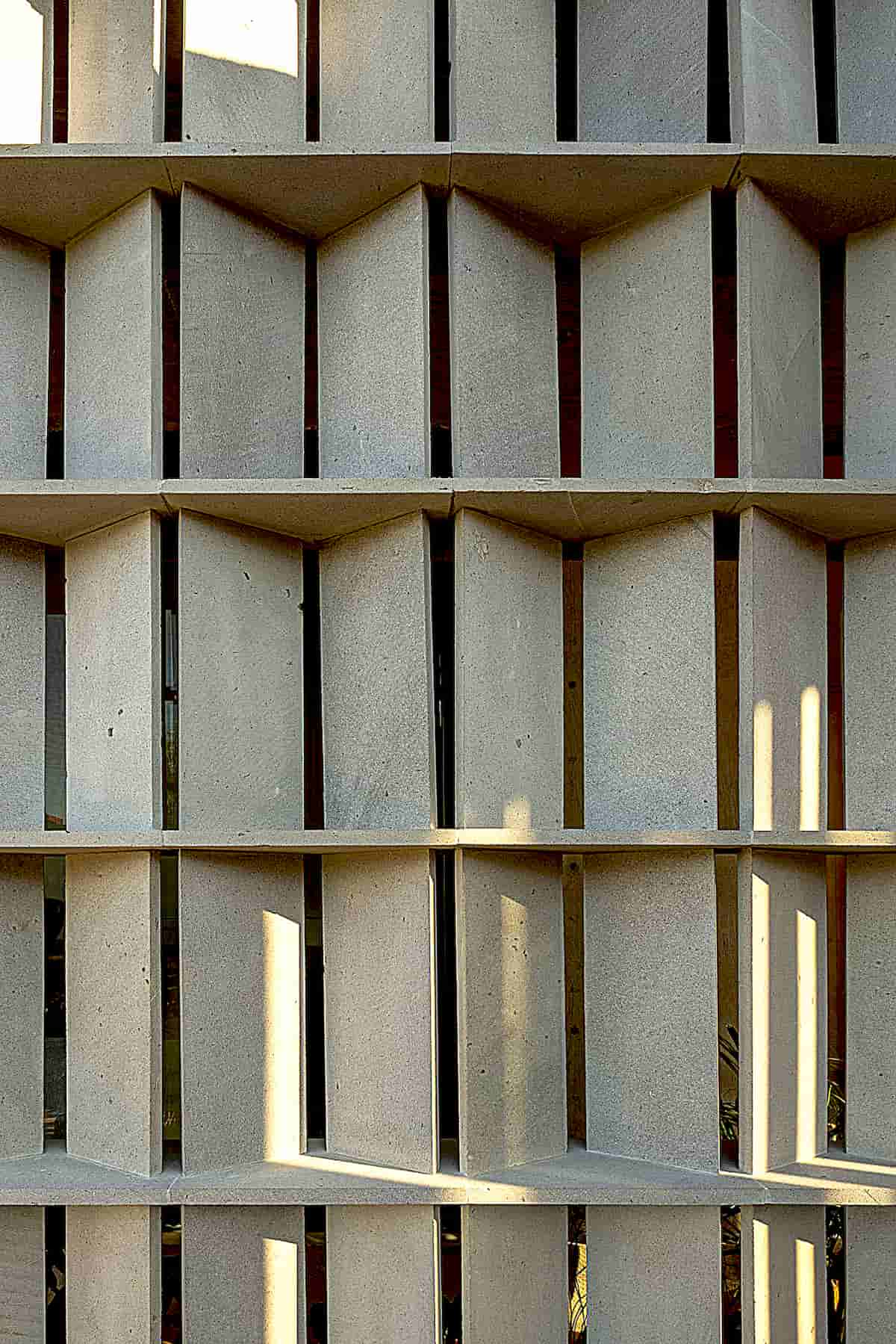
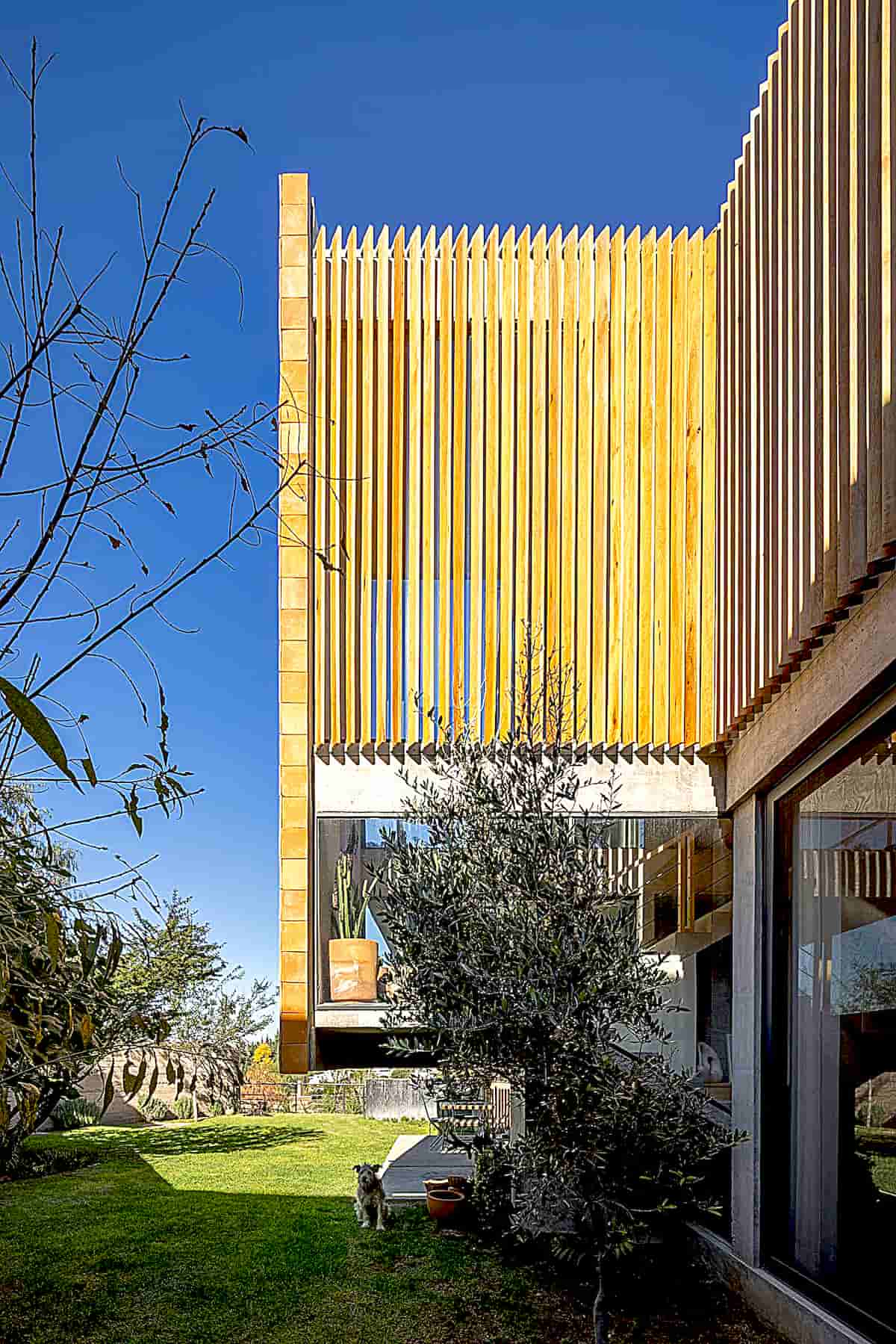
A glass-enclosed staircase that juts out of the main building volume provides a buffer zone between the social areas on the lower level and the family’s private quarters upstairs. Ample natural light and views are also abundant upstairs thanks to floor-to-ceiling windows in both the master and the child’s bedroom. The former opens onto a large terrace where a latticed wall made of angled concrete panels offer both shading and privacy, much the same as the vertical timber slats on the second bedroom.
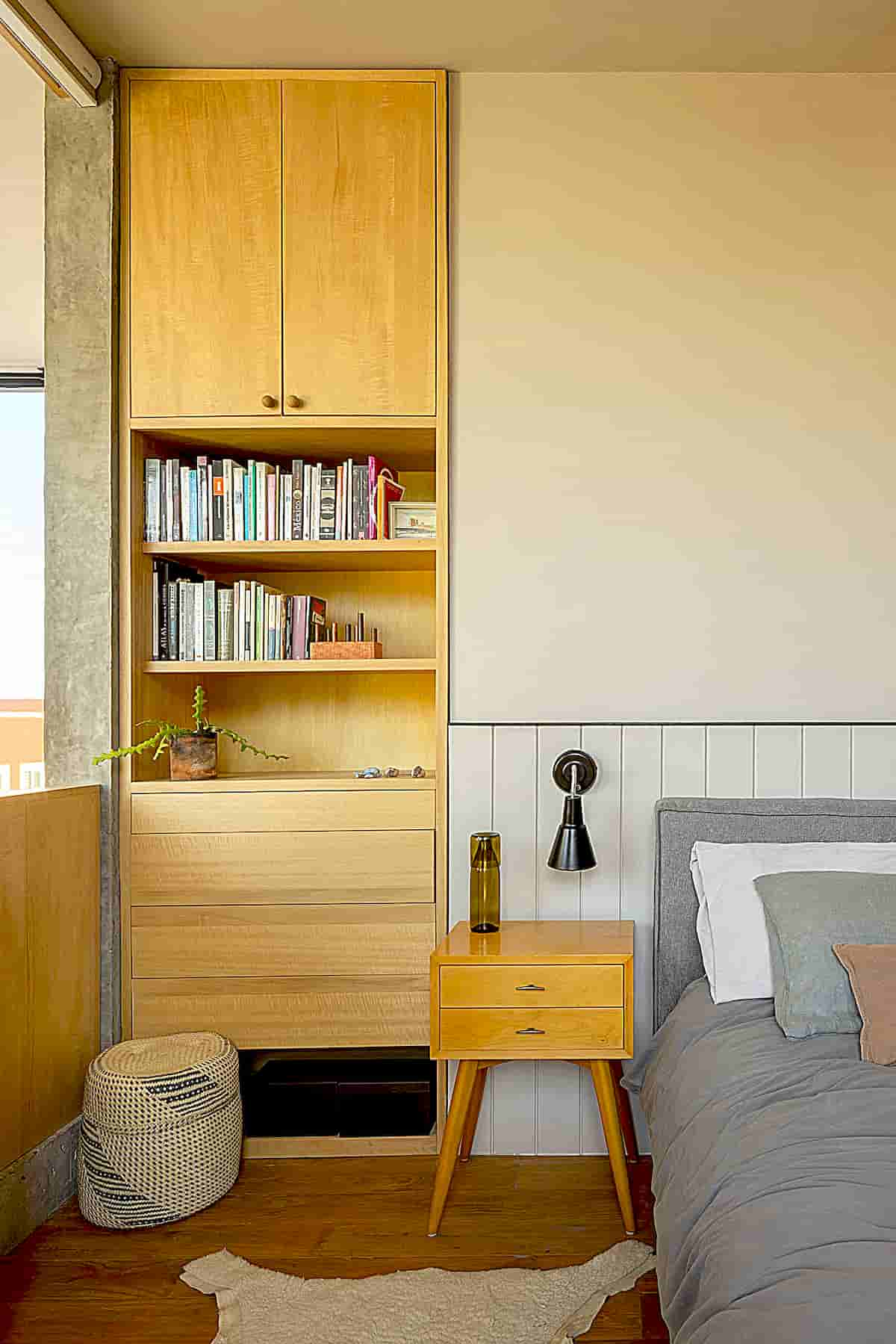
Underpinning a minimalist aesthetic of clean lines and simple forms, the use of materials such as exposed concrete and white mahogany imbue the pared-down interiors with a tactile sensibility with terrazzo and ceramic tiling adding more textures to the mix. The result is a muted yet soulful canvas that comes alive through the interplay of light and shadow as well as the verdant vistas that await at every corner.
Om onvervangbaar te zijn, moet je altijd anders zijn.
Er zijn fascinerende beelden hier, en de fascinerende dag van samen! xo
─────────────────────────────────────────────────────
Per essere insostituibili bisogna sempre essere diverso.
Ci sono immagini affascinanti qui, e l’affascinante giornata di insieme! xo KanikaChic