︳JR’s Dramatic Cave Intervention Emerges from the Center of the Palais Garnier in Paris
︳“Our role as artists is always to search for the light,” says French artist JR (previously) about the second act of his Retour à la Caverne project. “We know this much: You don’t chase away the darkness with more darkness. You chase it away with light, however tiny.”
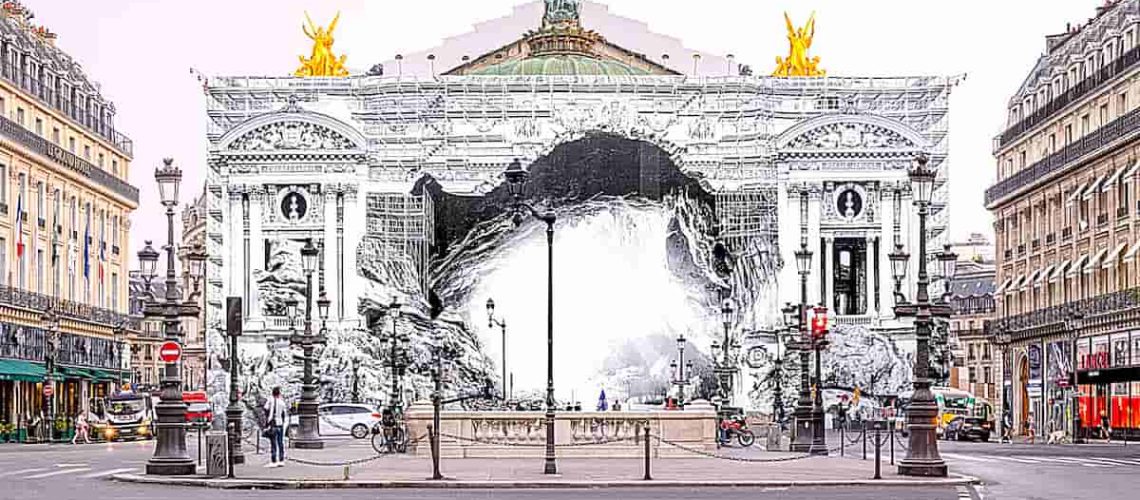
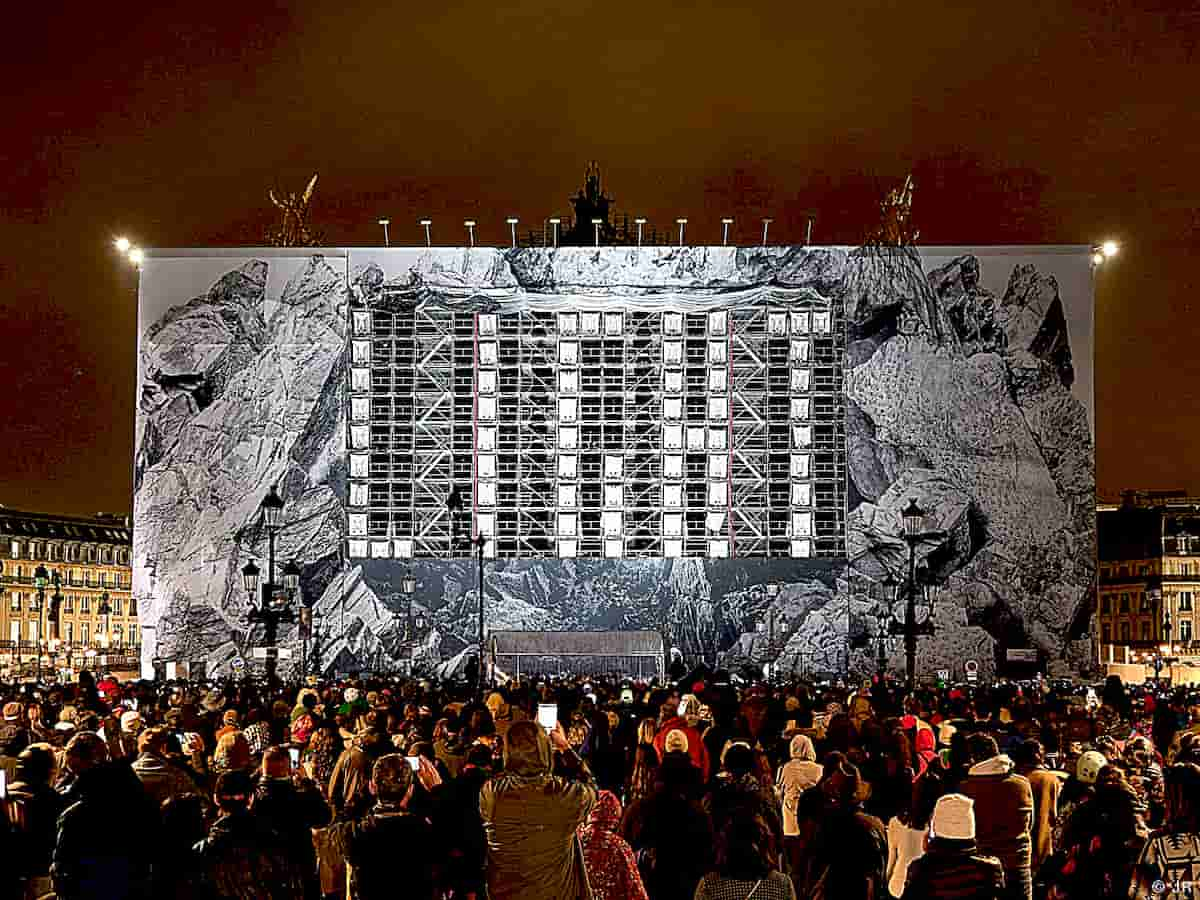
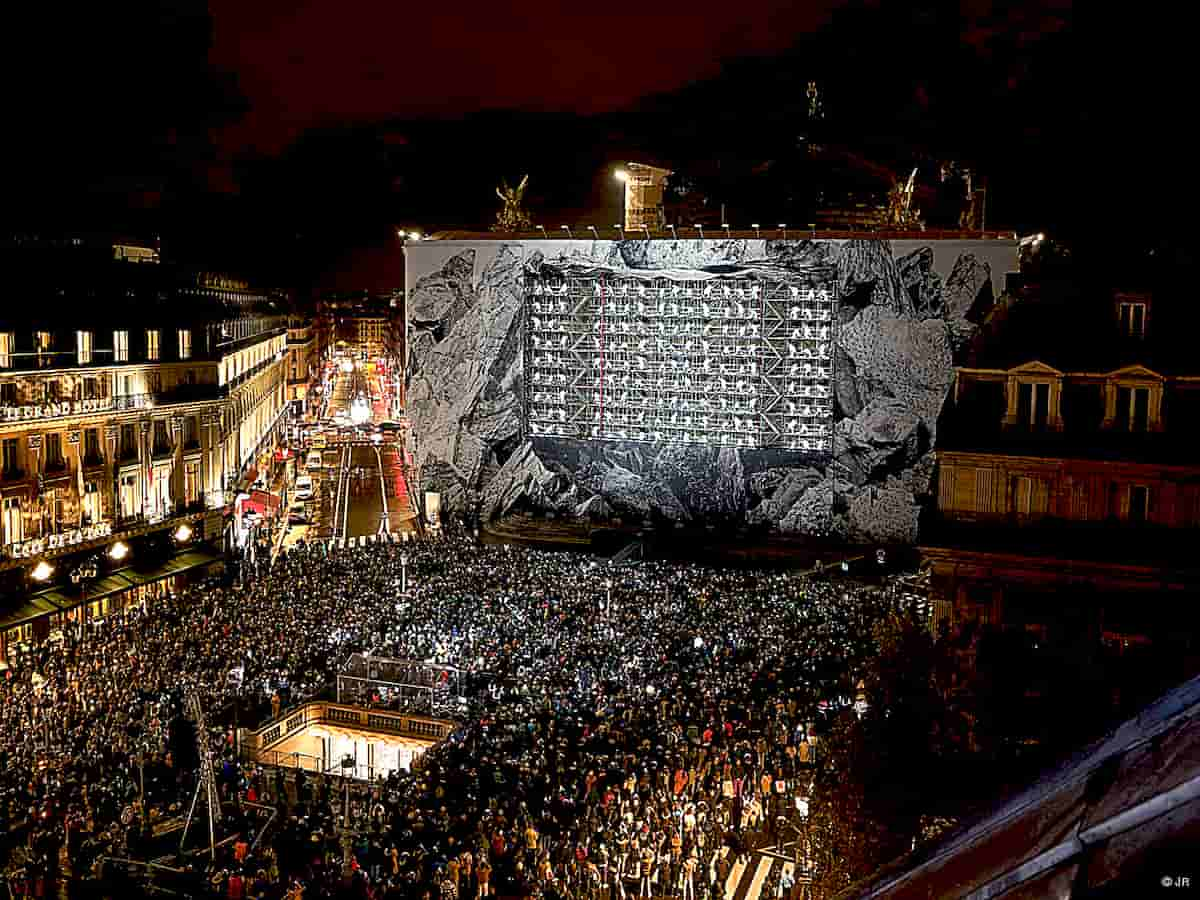
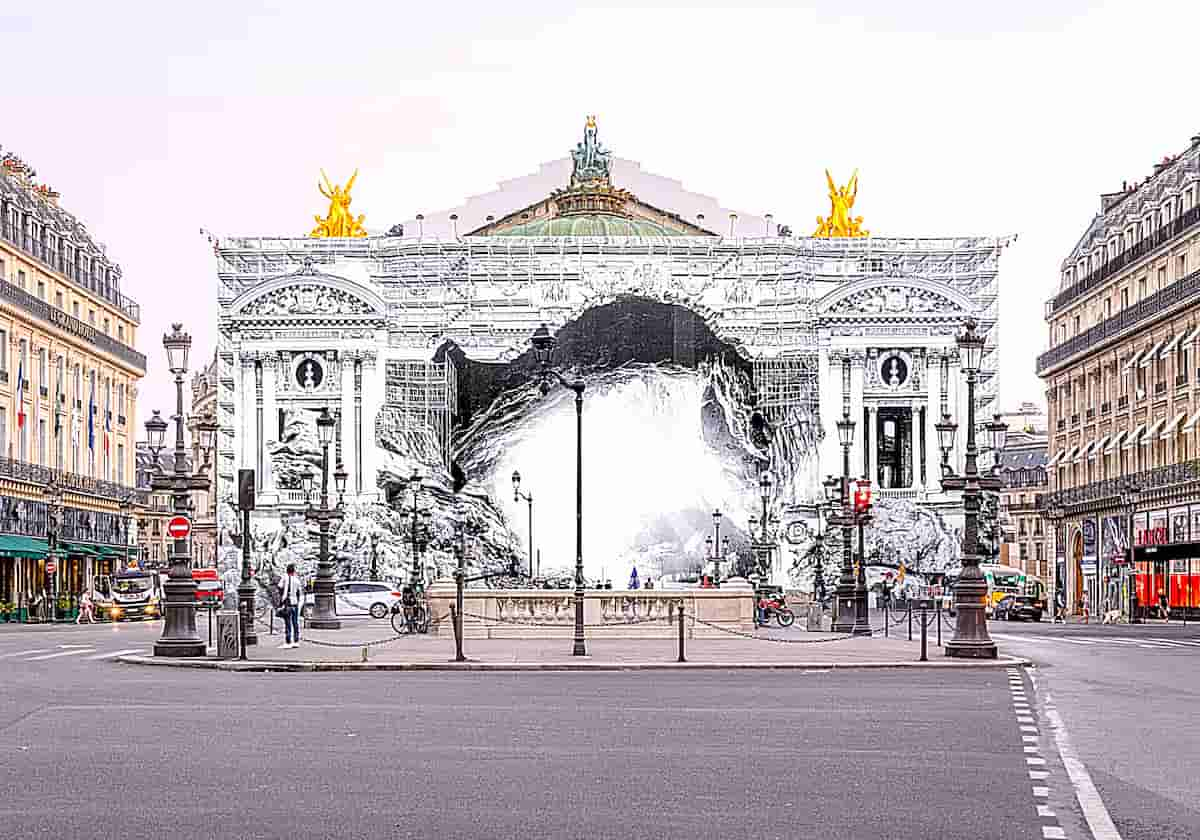
The work he’s referring to, though, is far from tiny. Cloaking Paris’s Palais Garnier while the building is under construction, Retour à la Caverne is an enormous trompe l’oeil facade, the first part of which depicts a cave carved into the grand structure that houses the opera. Illuminated at the center, the temporary piece highlights the physical and metaphorical interactions between light and dark. Broken into two acts like an opera libretto, the work references Plato’s allegory that emerging from the depths of the cave, and from darkness, brings knowledge.
“Act I” debuted earlier this fall with four nights of projected works, while the second part was held on November 12. “Back in September, we invited you to step out of the cave to go and explore. This time, we’re inviting you back inside the cave,” JR said while introducing the work. Whereas “Act I” portrays the cavern gouged into the center of the building, “Act II” switches perspectives, placing the viewers entirely inside the space.
Titled “Chiroptera,” the performance featured choreography by Damien Jalet and music by Thomas Bangalter. More than 150 dancers appeared through an elevated seven-story scaffolding after an eerie introduction by ballerina Amandine Albisson, who appeared to open the cave, causing a plummet into darkness. As with many of JR’s works, the artist asked the crowd to participate by using headlamps and their phones to illuminate the remainder of the performance, revealing the ways light can emerge from collective action.
Om onvervangbaar te zijn, moet je altijd anders zijn.
Er zijn fascinerende beelden hier, en de fascinerende dag van samen! xo
─────────────────────────────────────────────────────
Per essere insostituibili bisogna sempre essere diverso.
Ci sono immagini affascinanti qui, e l’affascinante giornata di insieme! xo KanikaChic