︳Artists Converse with Egypt’s Cultural Legacy in front of the Pyramids of Giza
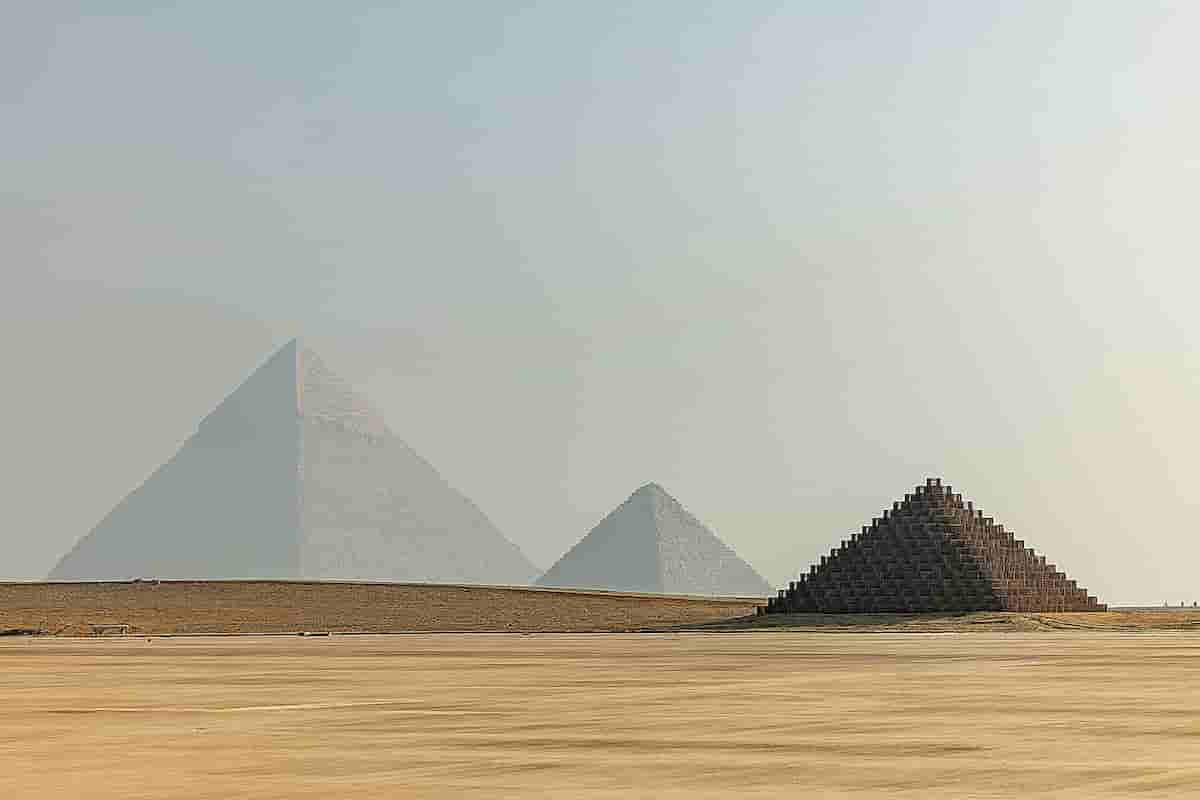
︳The third edition of “Forever is Now”, an ambitious art exhibition at the Giza Plateau in Egypt, brings together a series of large-scale sculptures and installations by 14 contemporary artists from around the world that converse with the monumental Pyramids of Giza and the cultural legacy of the UNESCO world heritage site.
Curated by contemporary arts platform CulturVator – Art D’Égypte, this year’s line-up, the largest to date, points to the interconnectedness of our past and present by exploring connections between the land, traditions, spirituality and technology. Diverse in concept, form and materials, all of the artworks nevertheless share an interactive component, inviting visitors to actively engage with them, offering new ways to experience the iconic monuments that loom in the background. On view until November 18, 2023, the expansive exhibition highlights the importance of cultural exchange among artists and the enduring ability of ancient Egypt’s cultural heritage to inspire both the artistic and public imagination, as Art D’Égypte’s founder Nadine Abdel Ghaffar points out, while seeking to find constant values in an era of rapid technological and cultural change.
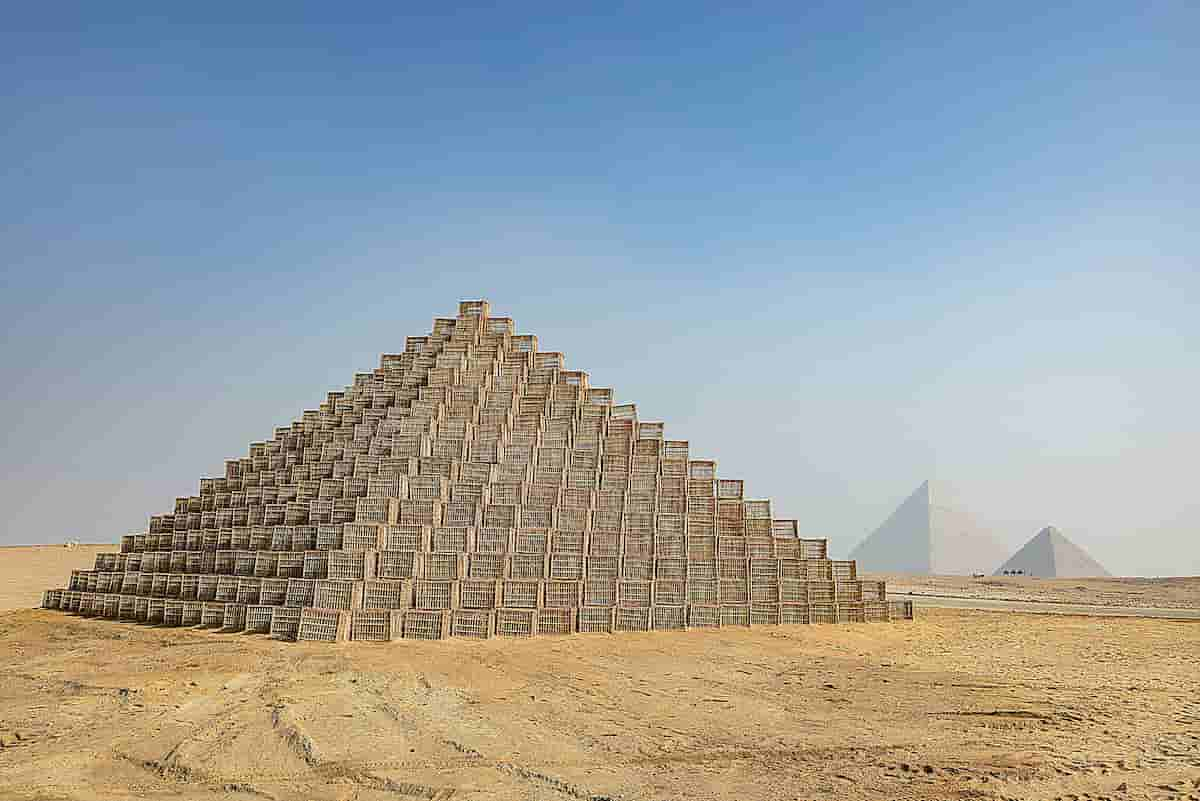
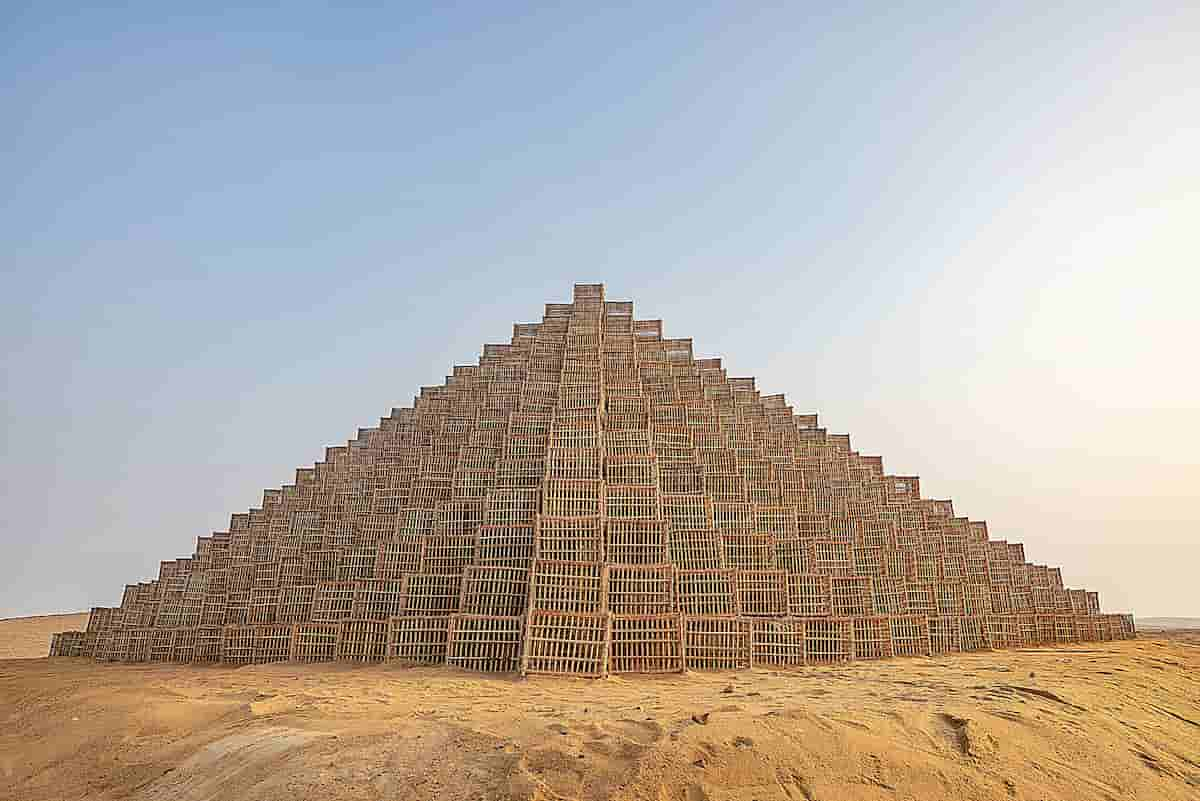
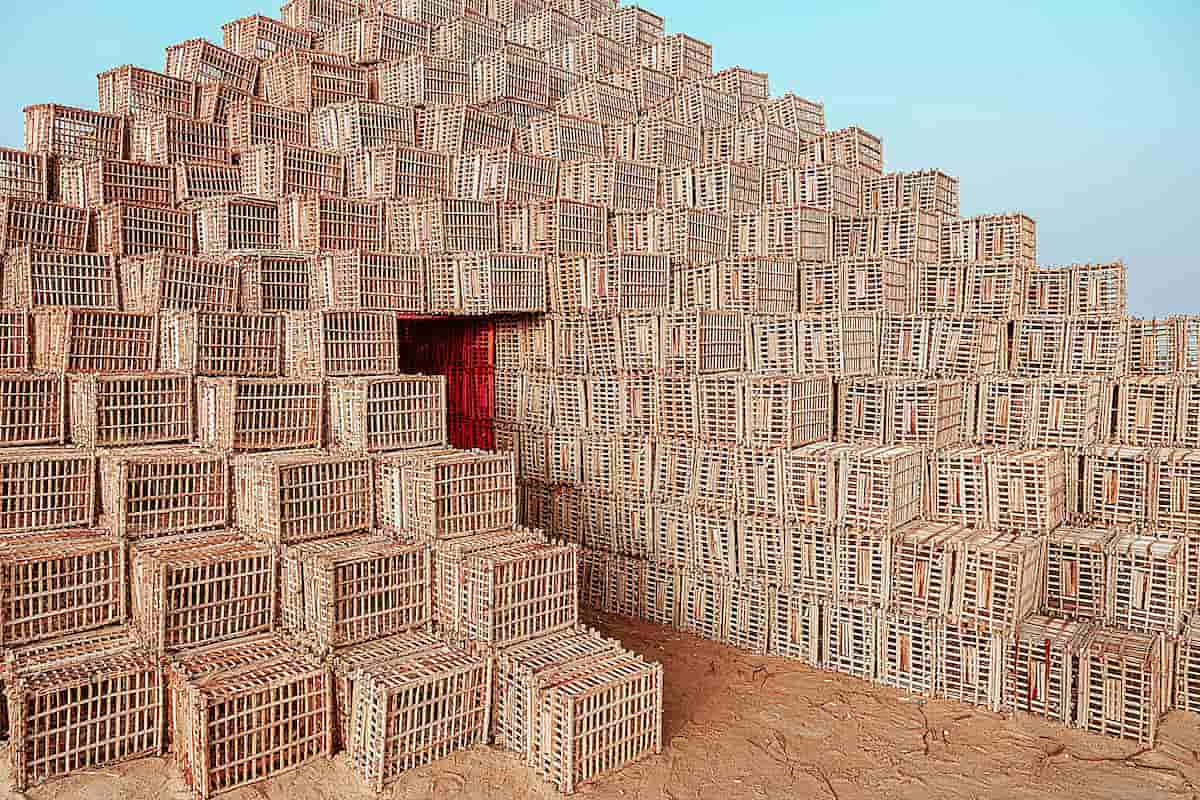
As expected, several artists drew inspiration from the iconic architecture of the Giza Pyramids, most conspicuously Saudi Arabian artist Rashed Al Shashai whose “Translucent Pyramid” competes with the three ancient monuments for attention. Constructed out of wicker baskets, the site-specific installation pays homage to Egypt’s ancient craft of wicker weaving, underscoring the importance of preserving traditional techniques while promoting innovation and creativity.
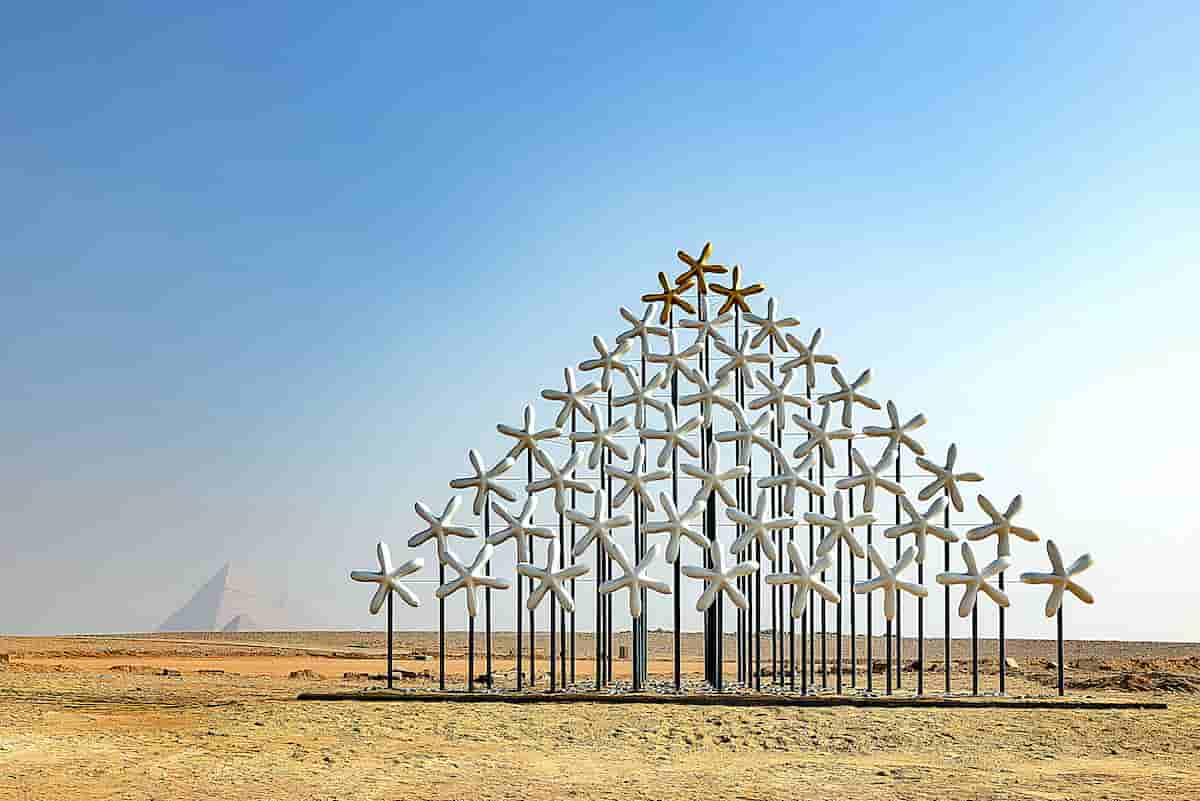
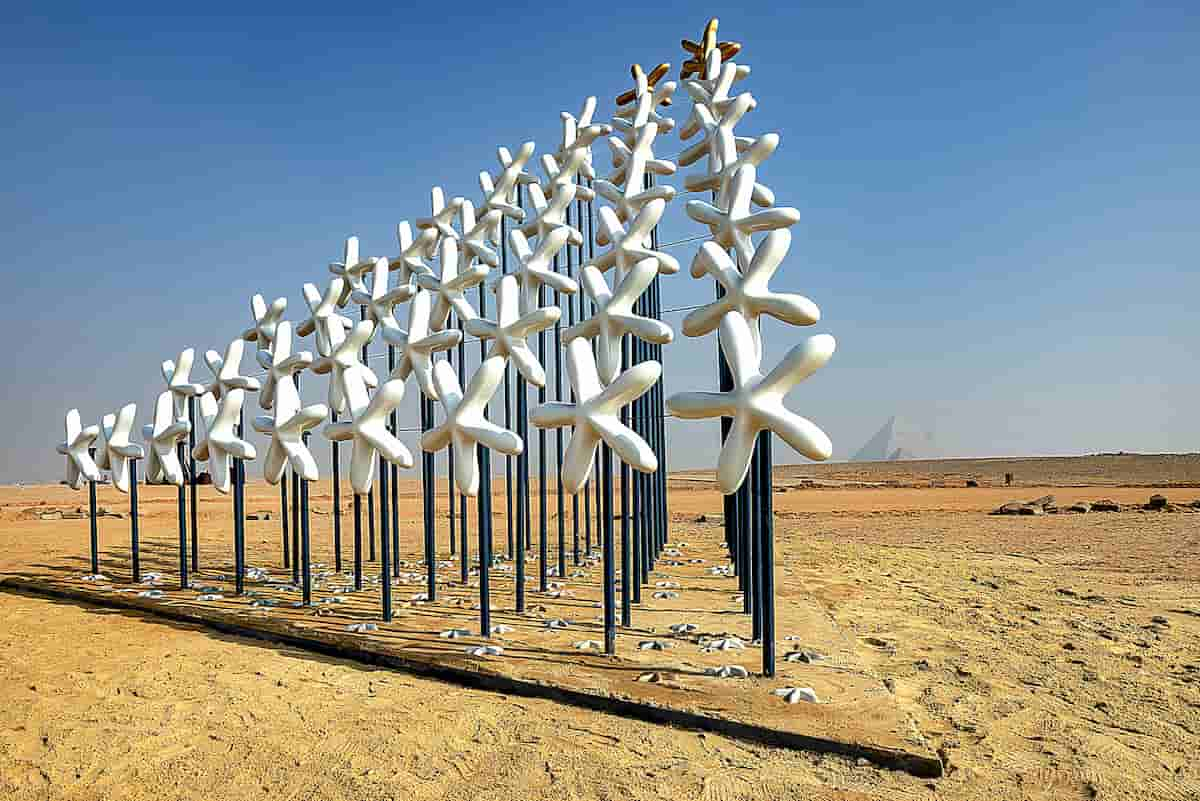
︳Egyptian artist Mohamed Banawy’s 10-metre-high installation, “As Above, So Below (Dome of Starry Sky)”, is also shaped like a pyramid, albeit only when viewed head on from the front. Made out of a matrix of starfish-shaped sculptures mounted on rods, the piece refers to the second verse of the Emerald Tablet, a cryptic Hermetic text said to have been written by the Egyptian god Thoth. The artwork’s name also references the essential laws of balance and harmony which according to ancient Egyptian cosmic philosophy ensure that the world is not consumed by chaos and darkness.
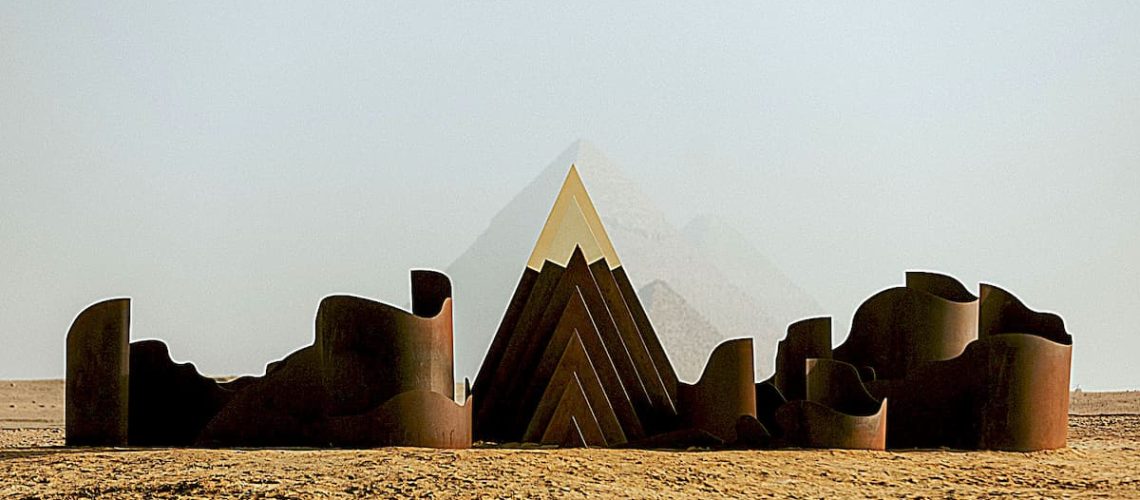
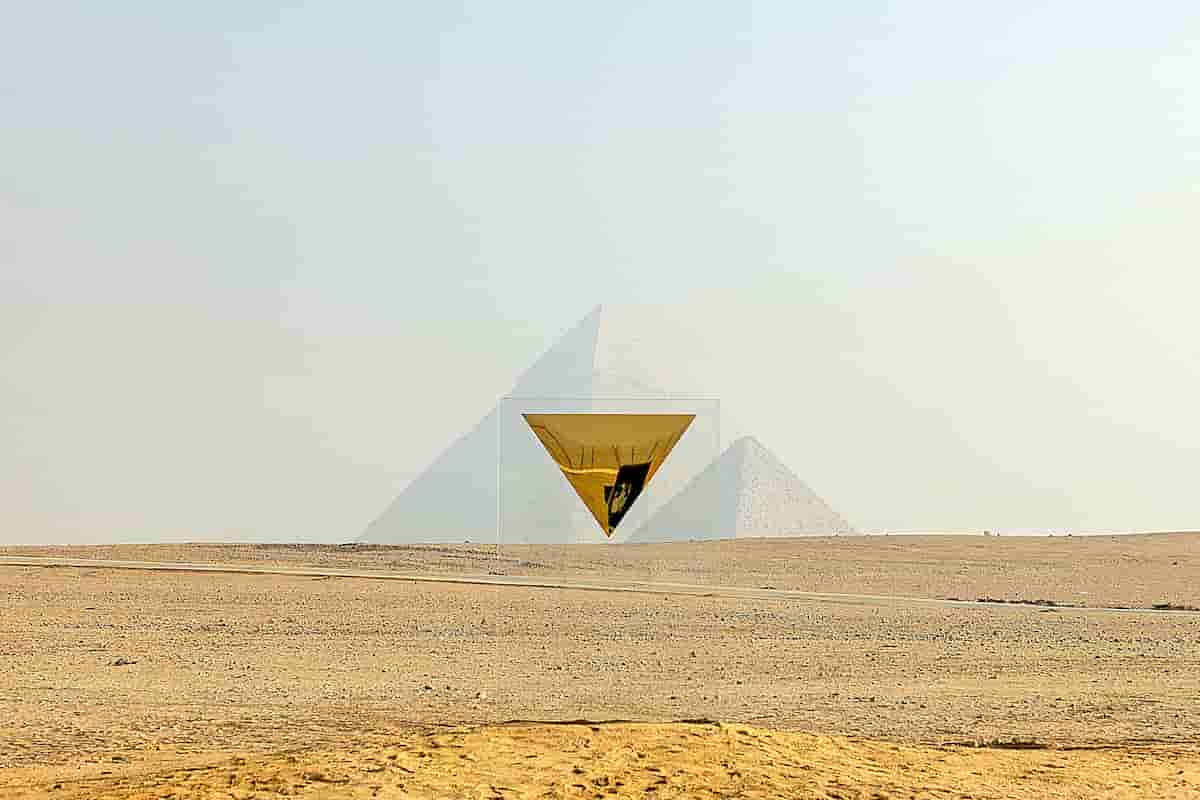
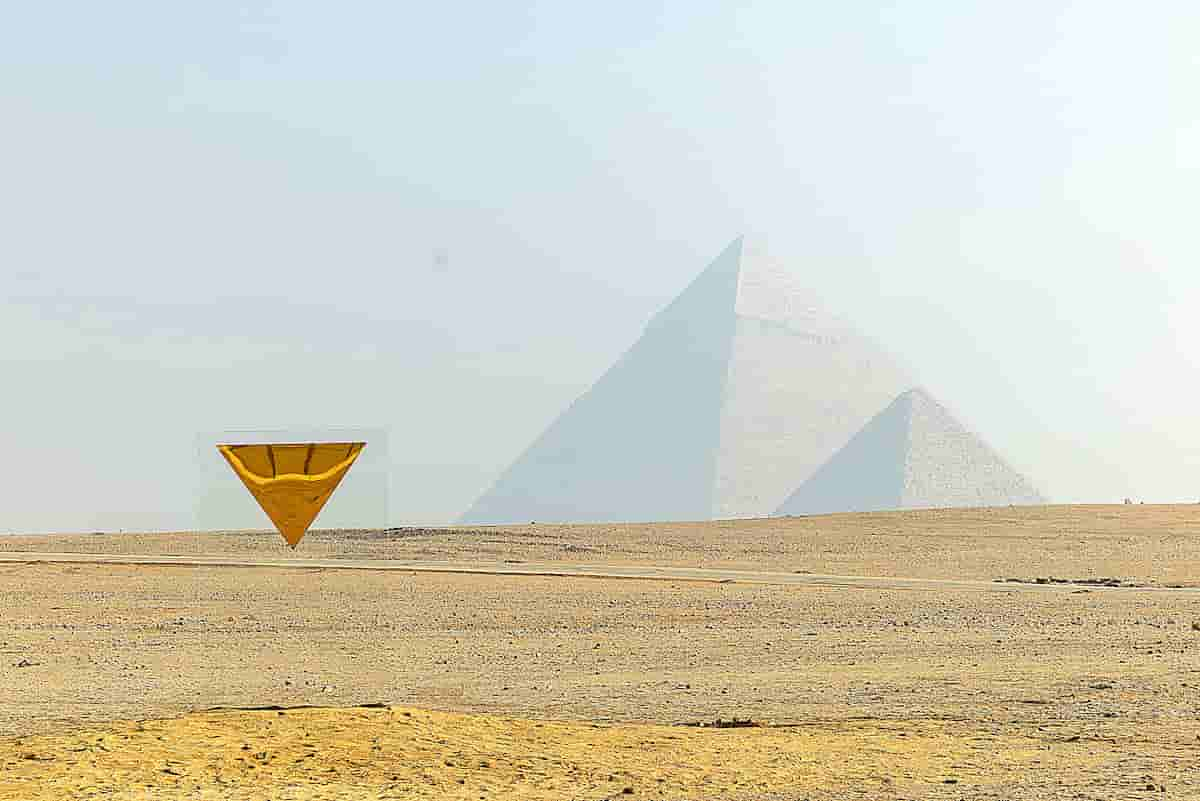
Less grandiose in design, yet equally as potent in inspiring contemplation, is French artist Stephan Breuer’s “TEMPLE •I•”, a suspended golden triangle of pure light that allows visitors to pause and reflect on both the external world and their inner selves. Conceived as a “divine apparition”, the piece is an ethereal symbol of the archaeological site’s spiritual energy.
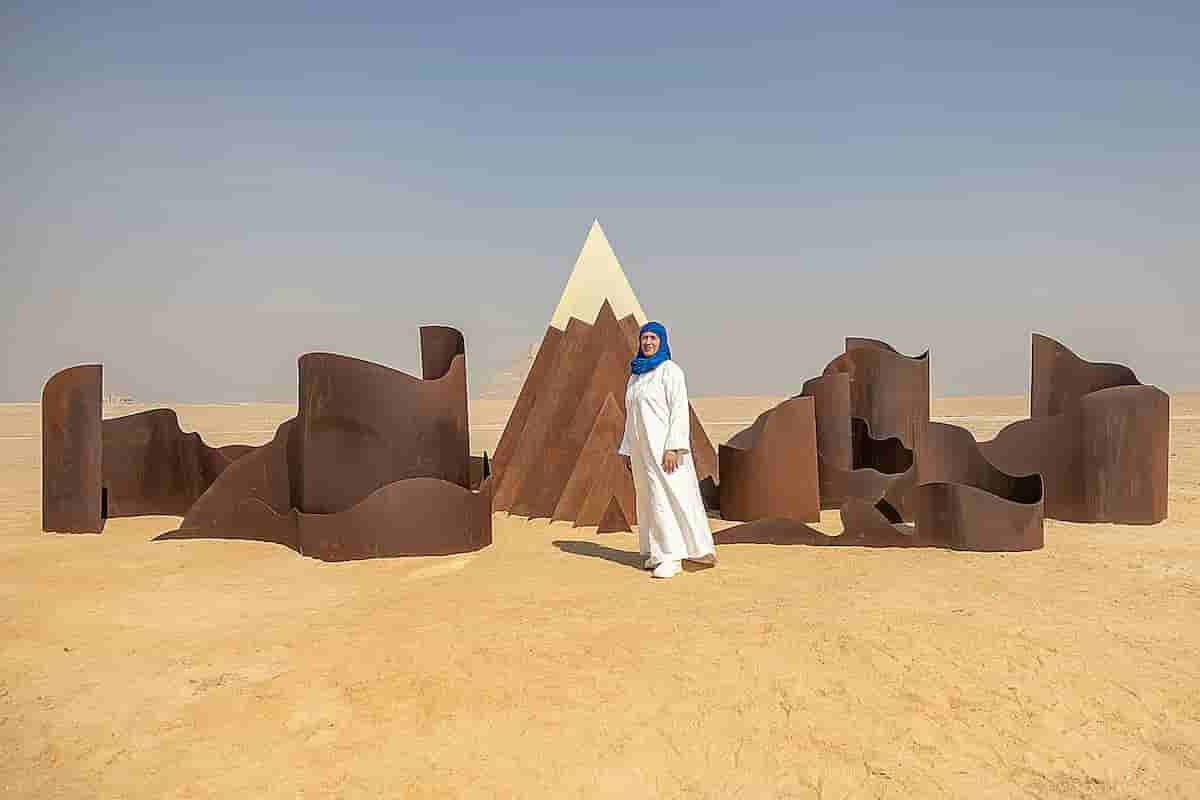
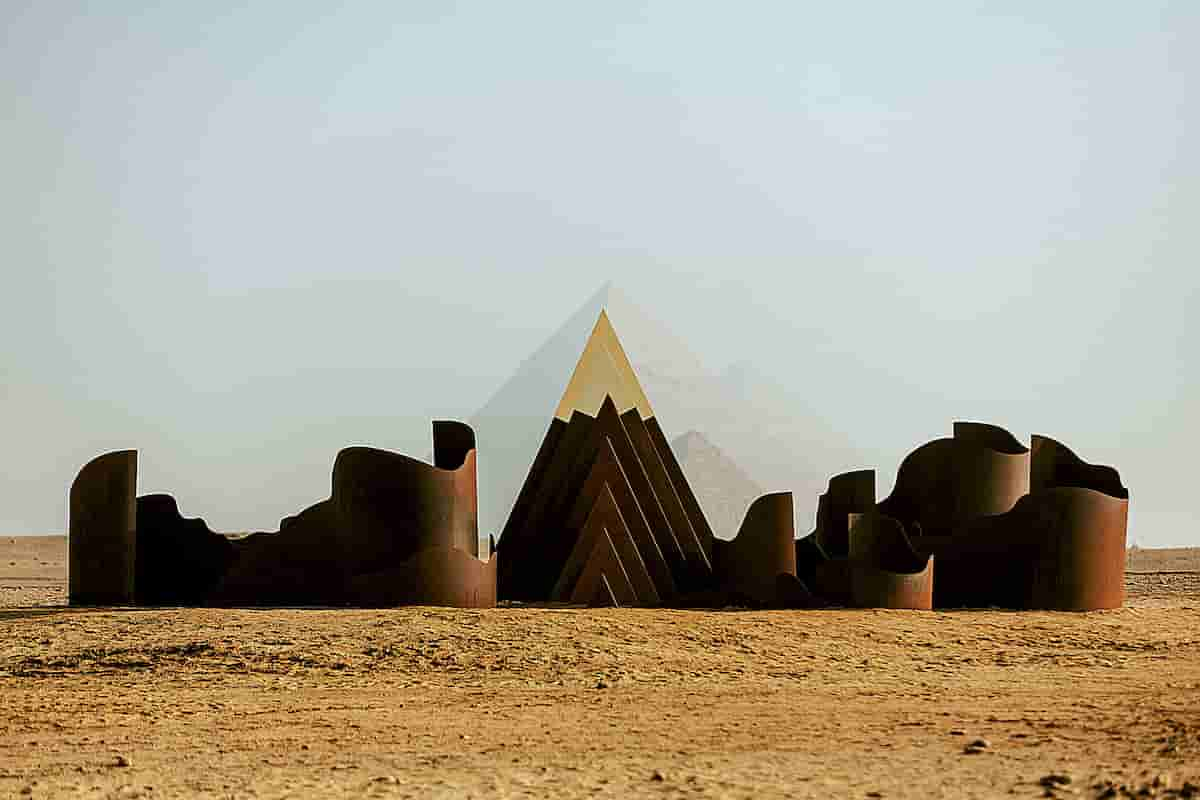
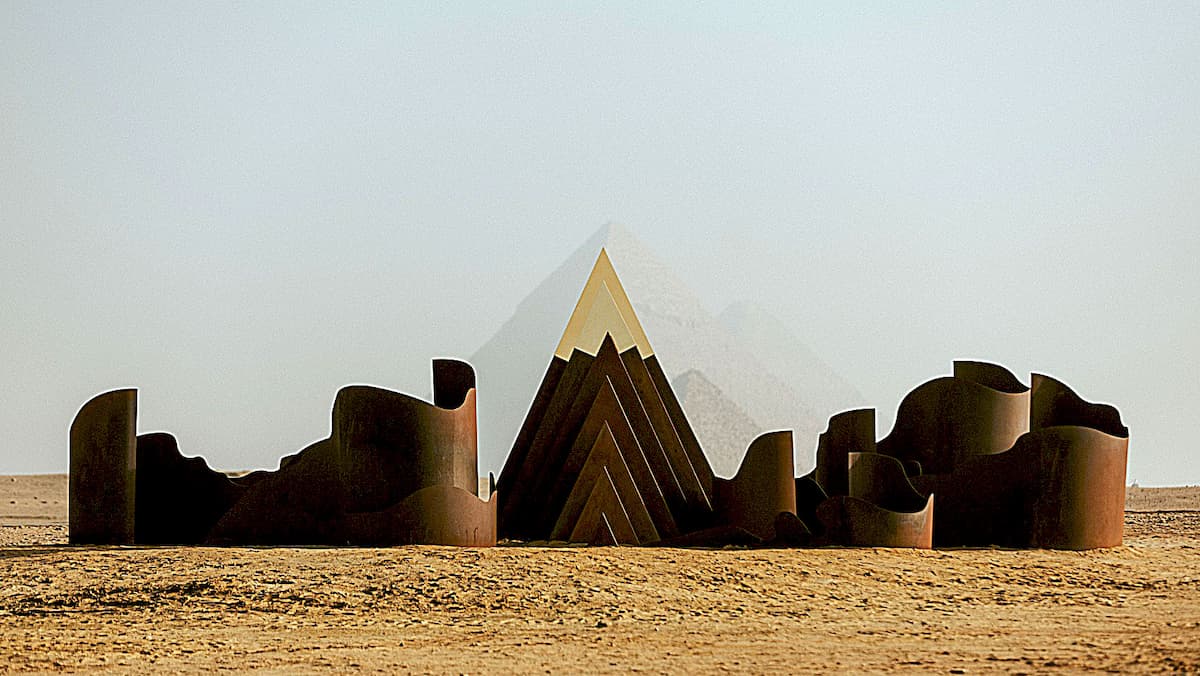
UAE artist Azza Al Qubaisi’s “Treasures” blends the pyramid’s geometric volumes with the organic shapes of the surrounding sand dunes in a maze-like installation that visitors can stroll through. Made out of mild steel and stainless-steel sheets, the earthy-hued metallic landscape that the artist has created juxtaposes the mysteries of the desert landscape with the cultural memories, stories and motifs represented by the ancient monuments.
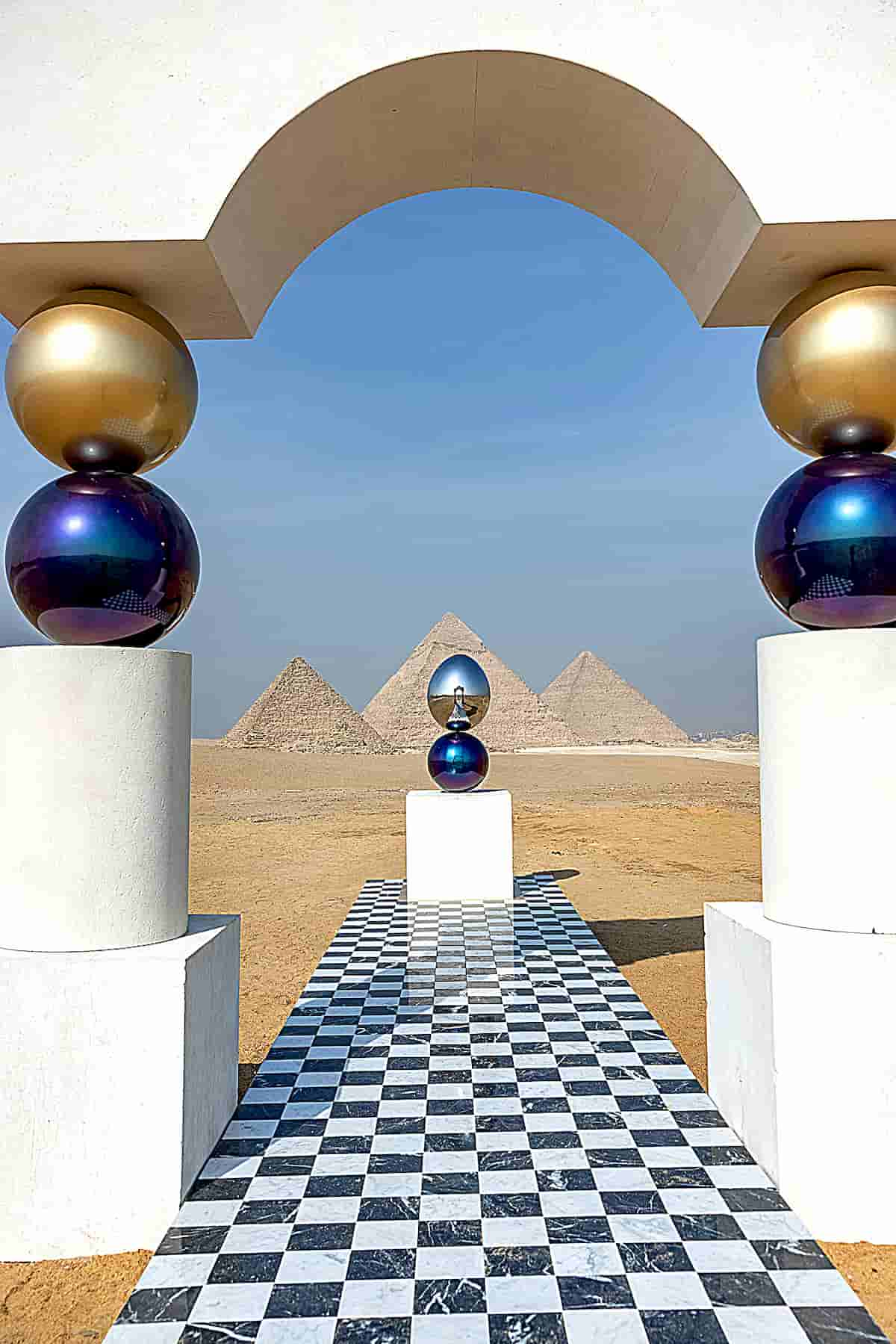
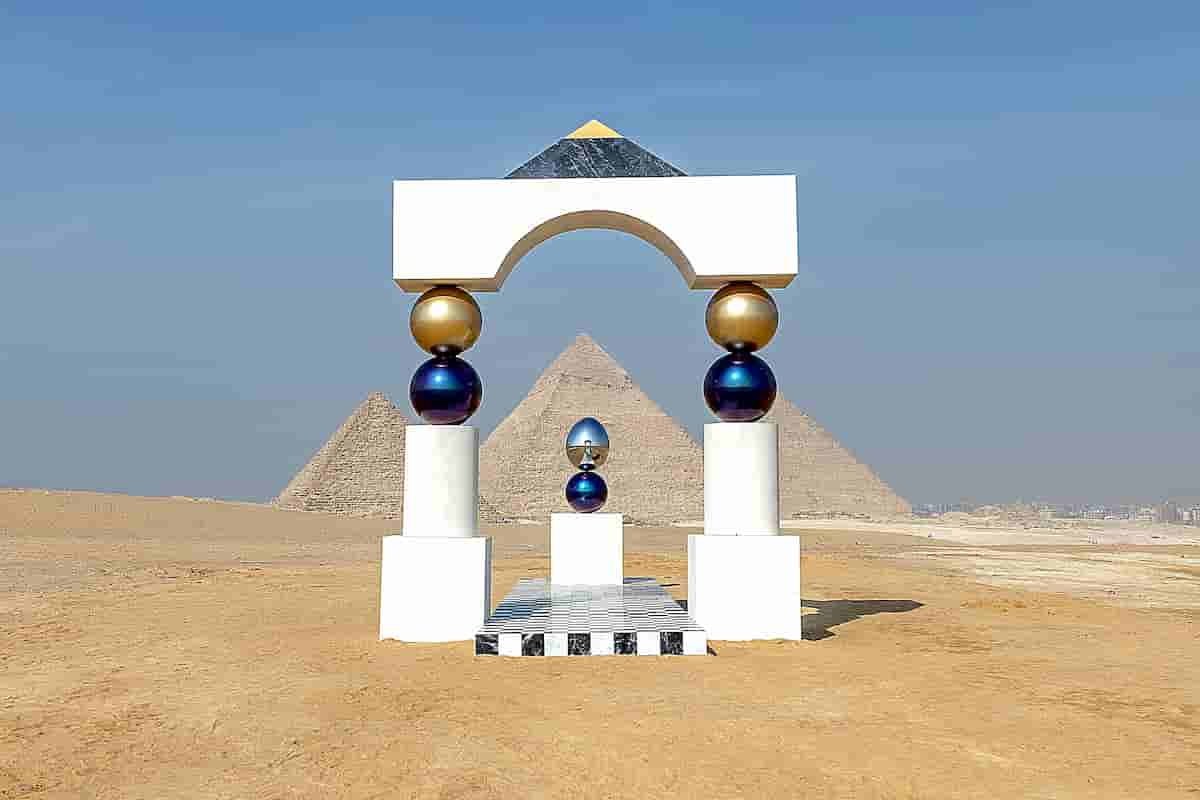
︳A pyramid can also be found atop Argentine artist Pilar Zeta’s “Mirror Gate”, a sculptural portal inspired by Egypt’s ancient mysticism. Blending natural and artificial materials, the ceremonial artwork, described by the artist as “an inter-dimensional gateway between time and space”, is an eclectic composition of symbolic elements, including a checkerboard pathway that represents duality, iridescent blue spheres that represent the sacred beetle, a symbol of rebirth and regeneration, and a mirror egg symbolizing limitless potential and self-exploration.
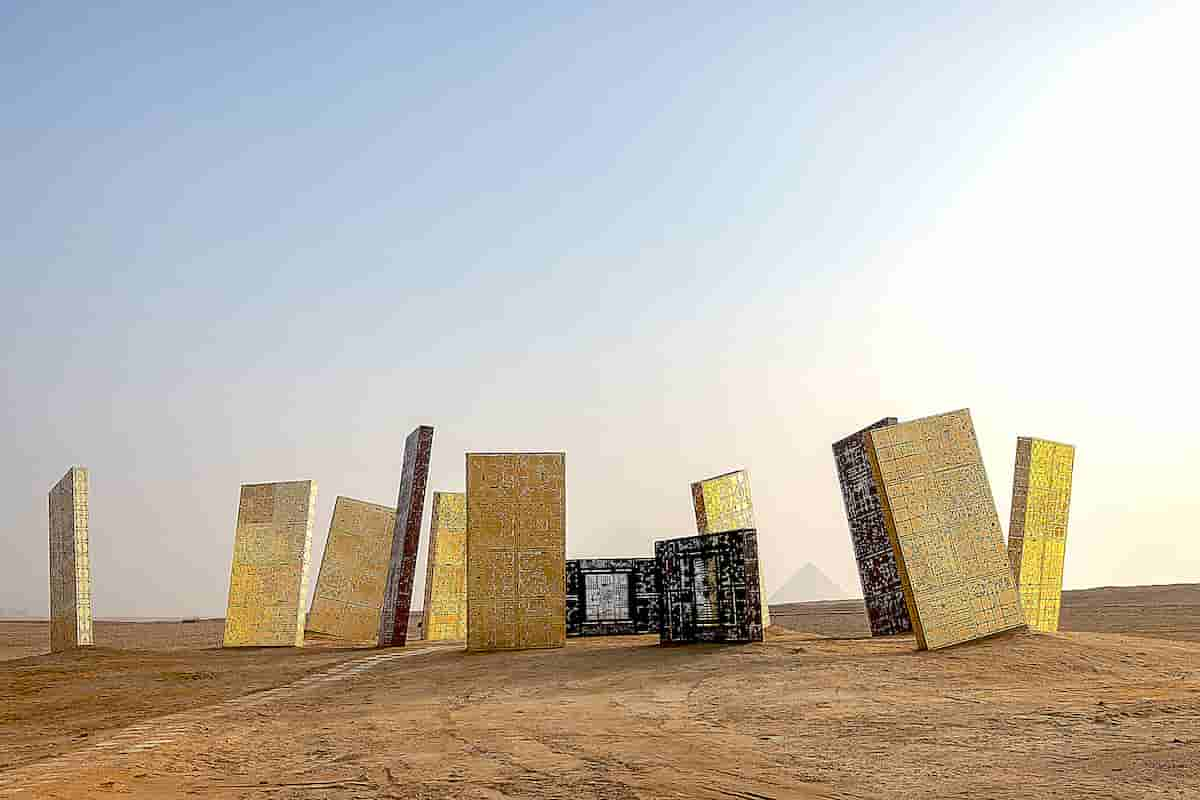
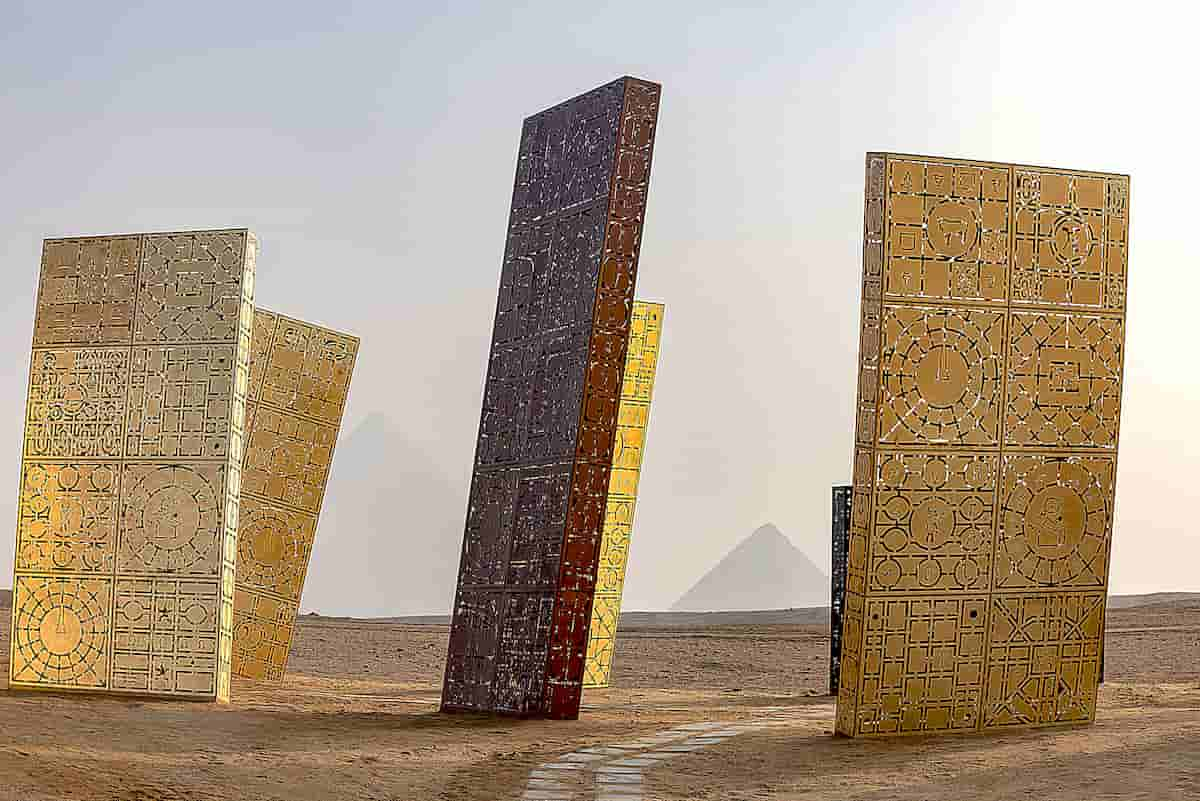
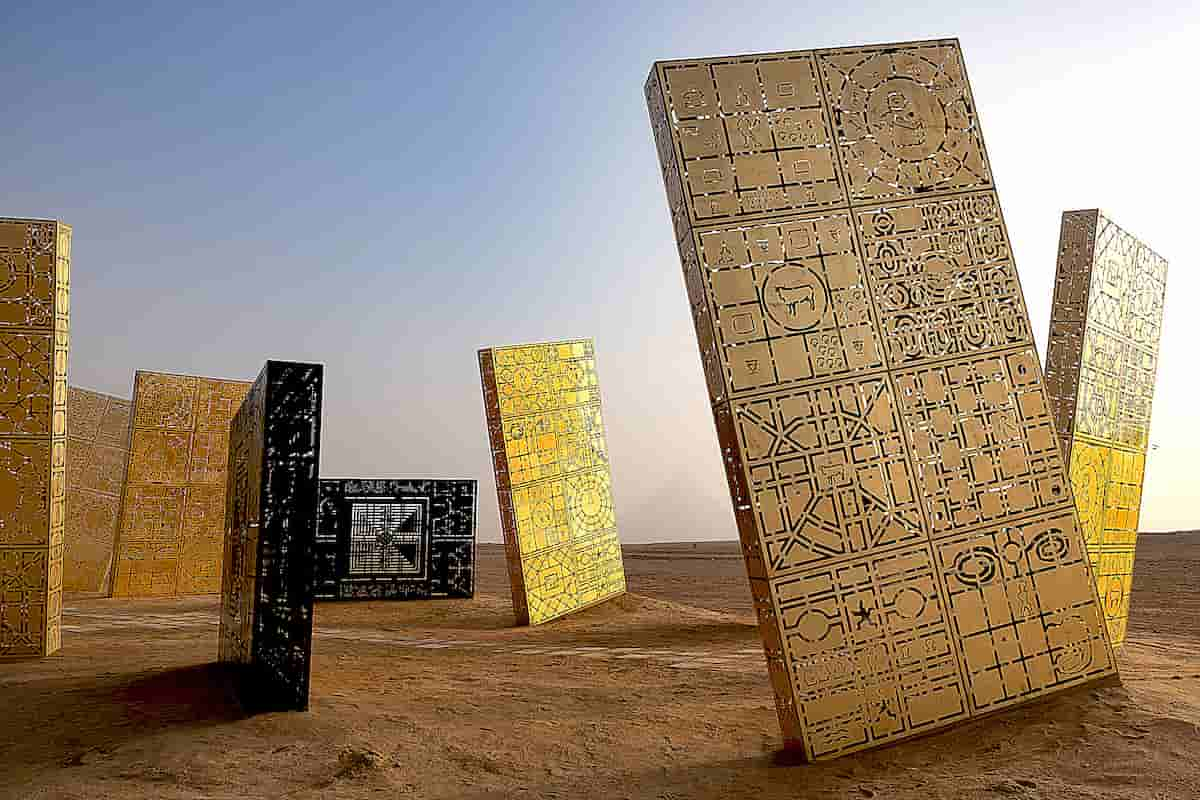
Just as mysterious is Bahraini artist Rashid Al Khalifa’s “Reality is Timeless” installation, a cluster of towering rectilinear volumes that emerge from the ground at various angles. Made of copper and brass perforated panels, the pieces are swathed in elaborate geometric motifs taken from 17th century Jesuit scholar Anthanasius Kircher’s book “Turris Babel” wherein he presents diagrams of an ancient Egyptian labyrinth. Hauntingly futuristic in their design yet steeped in ancient mythological references, the installation plays with notions of timelessness inviting visitors into a setting where the past, present and future come together.
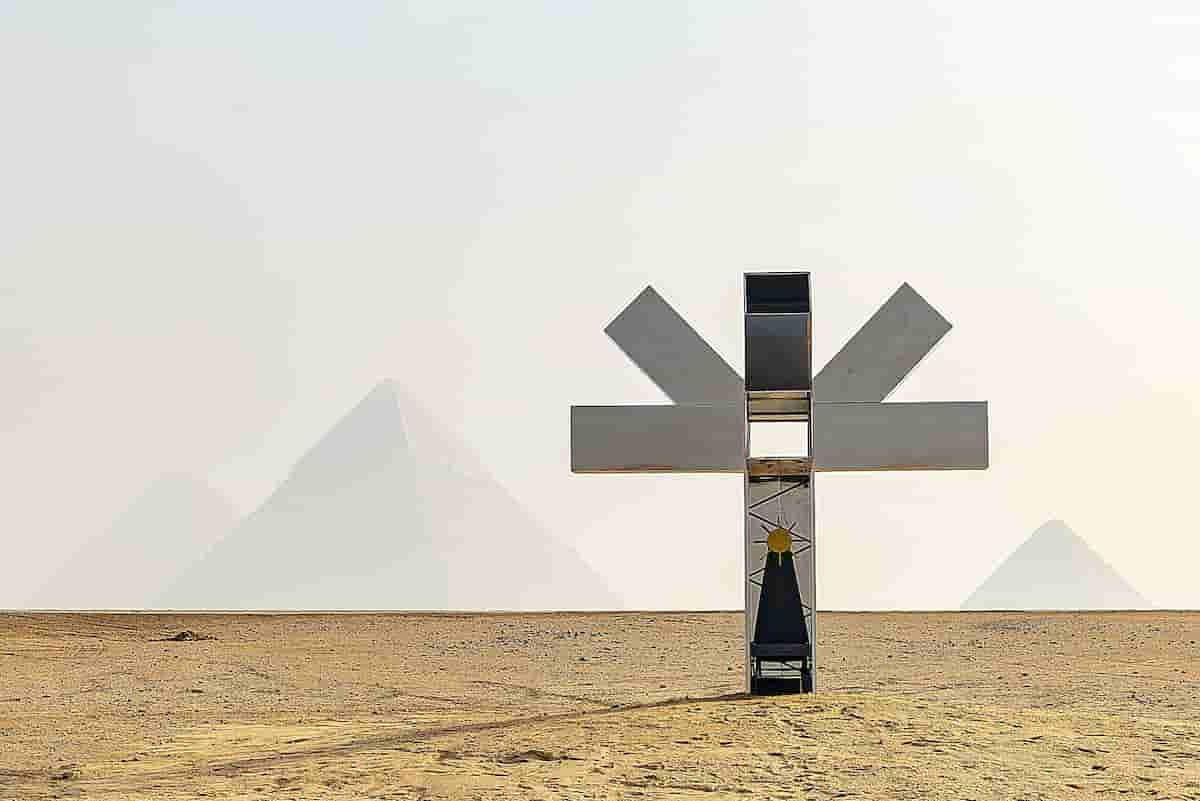
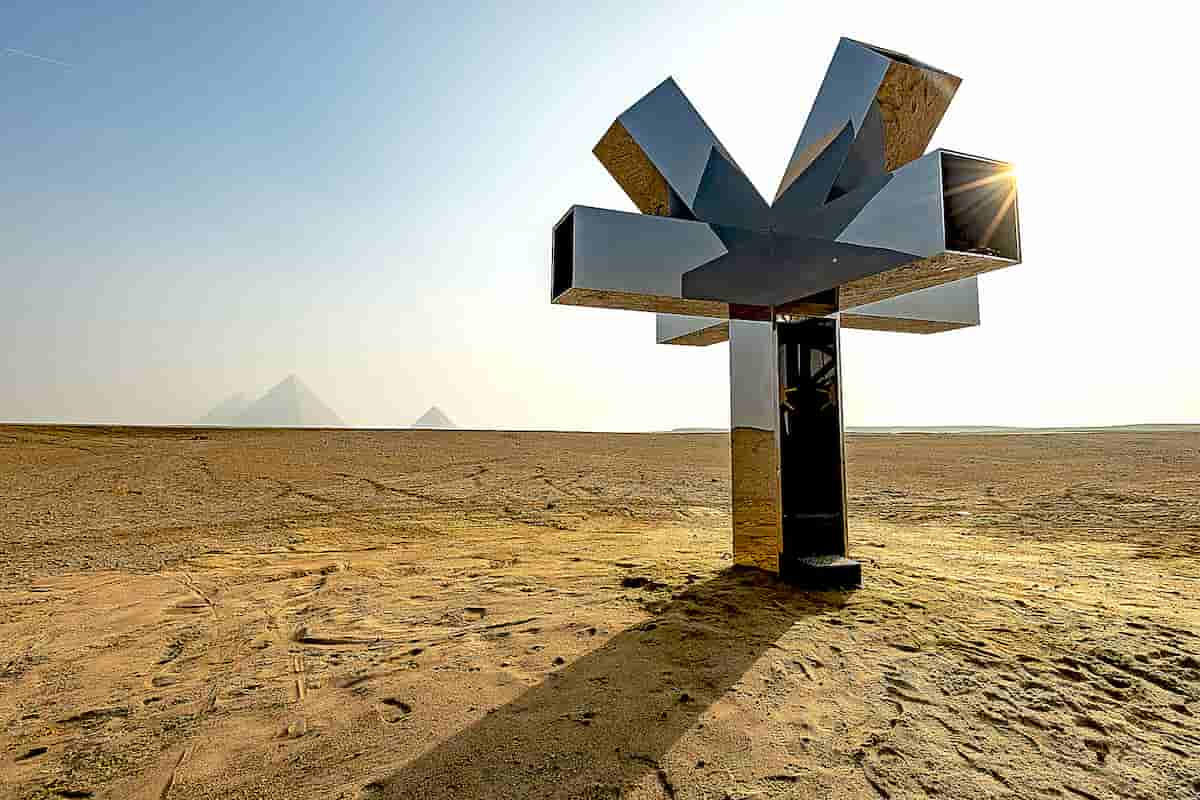
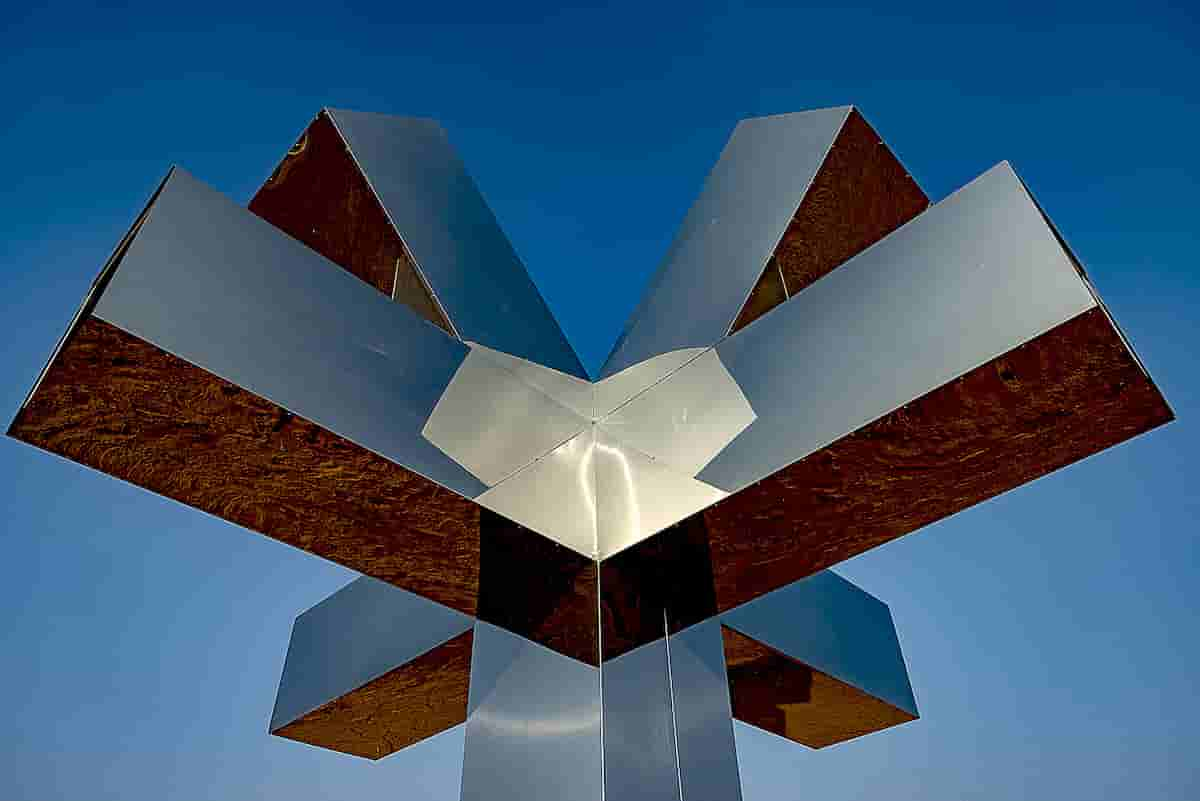
Brazilian artist Artur Lescher explores the relationship between humans and their place in the universe with “Observatory Meta Oiko”, a prismatic sculpture created from reflecting and translucent surfaces that invites visitors to take in the panorama of the pyramids from a different point of view.
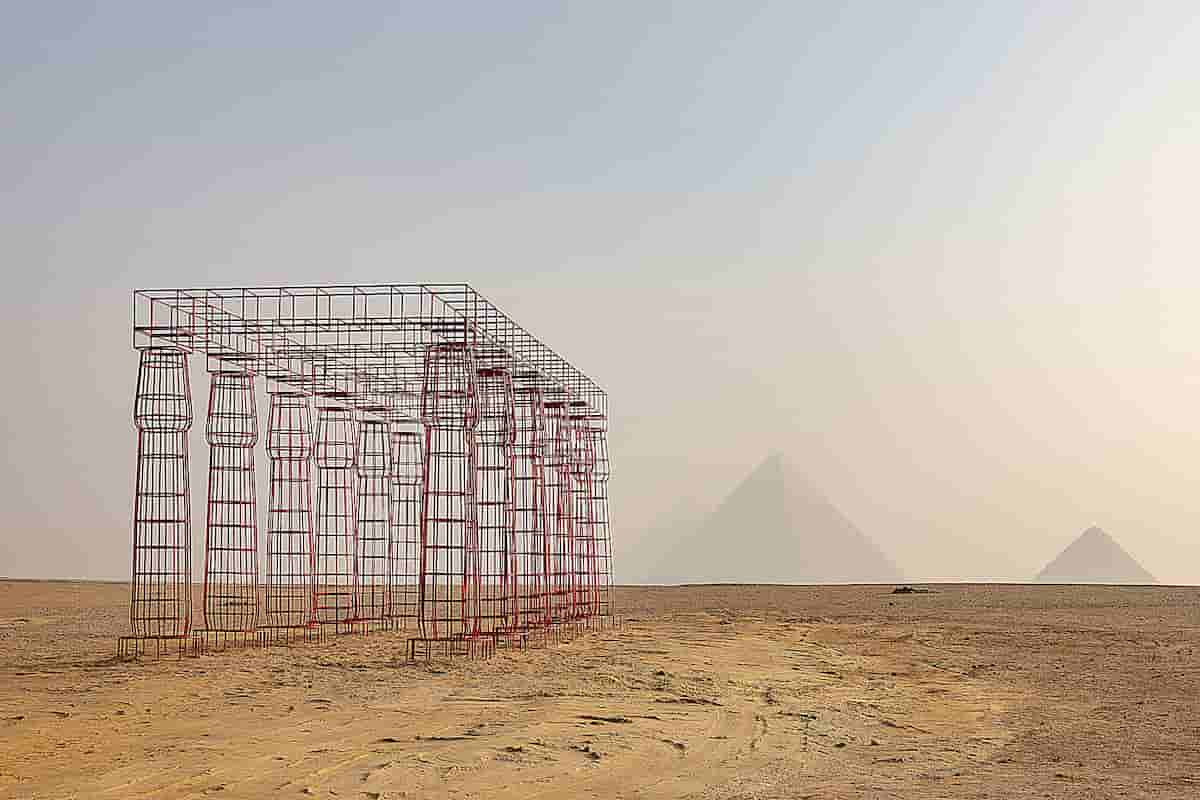
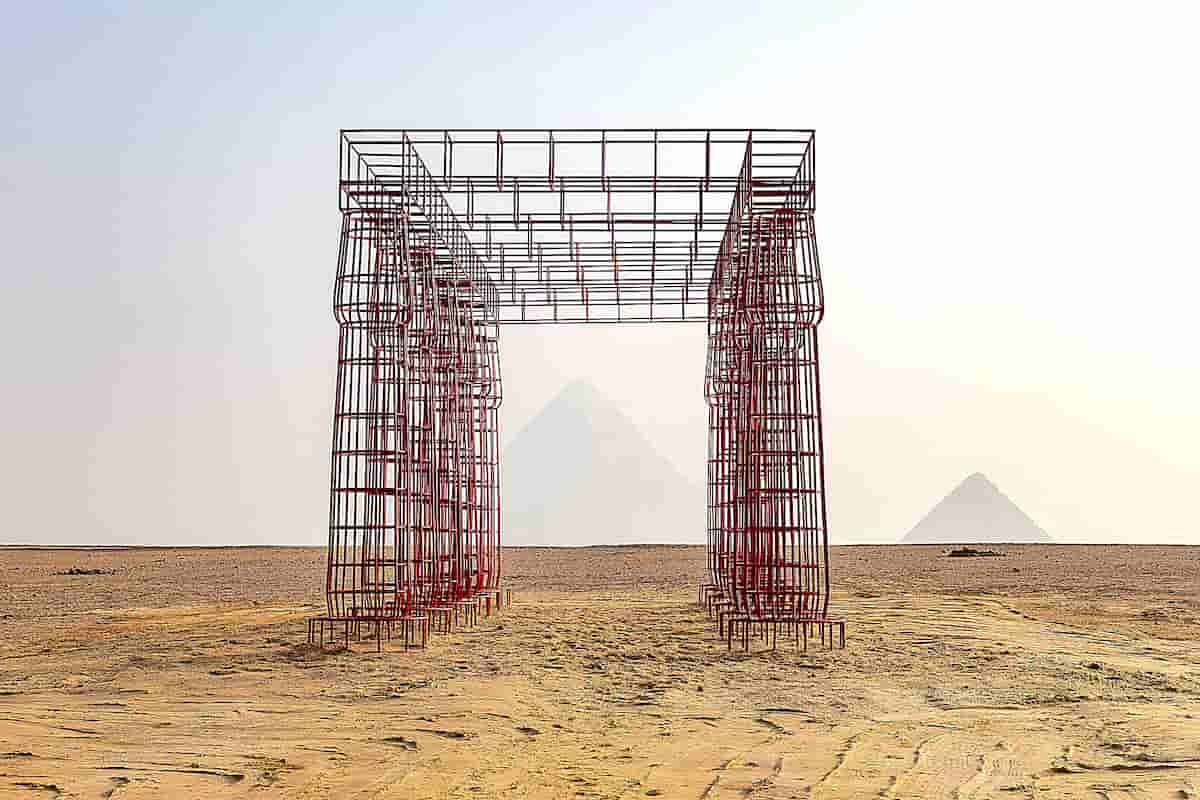
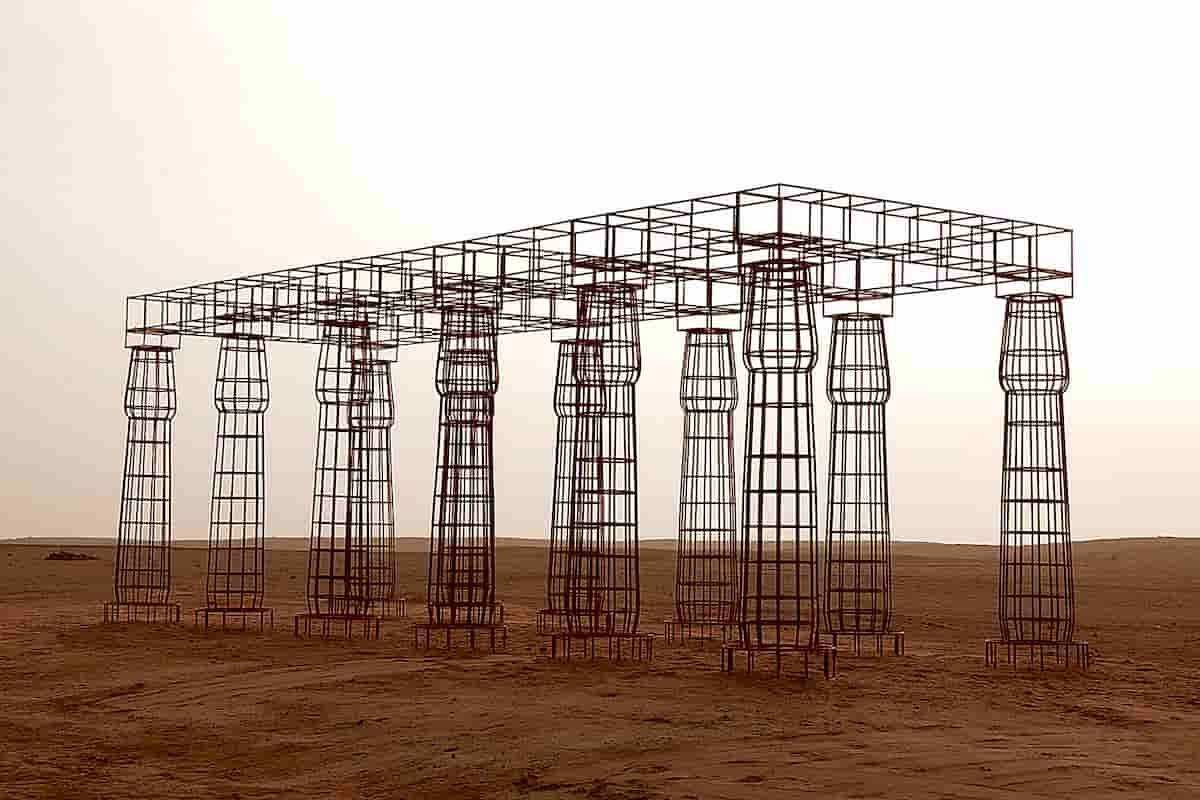
︳Similarly to Pilar Zeta’s “Mirror Gate”, “The Ghost Temple” by Egyptian-British sculptor Sam Shendi also takes the form of a mysterious portal, this time inspired by ancient Egyptian temples. Made from steel rods painted in a vibrant red hue, the ghostly, skeletal temple illustrates the lasting impact of ancient structures long gone by demonstrating how easy it is to conjure them in our imagination and therefore feel their energy.
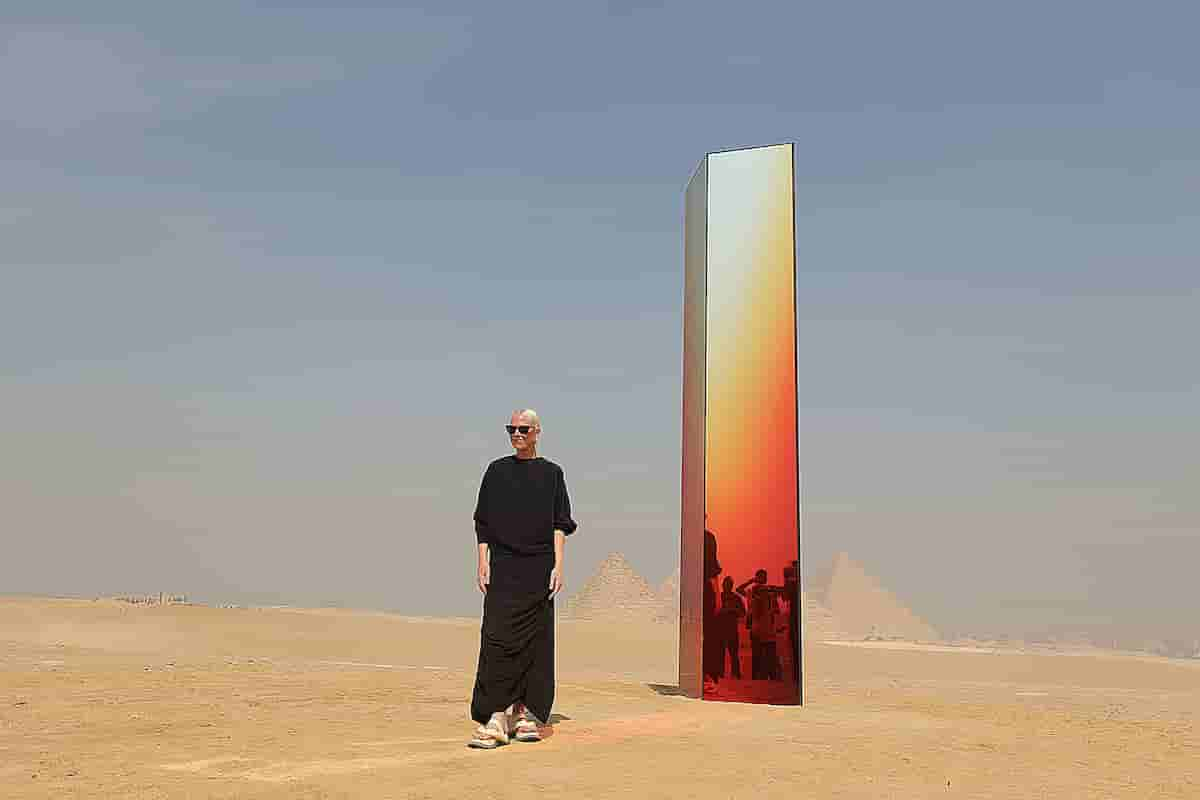
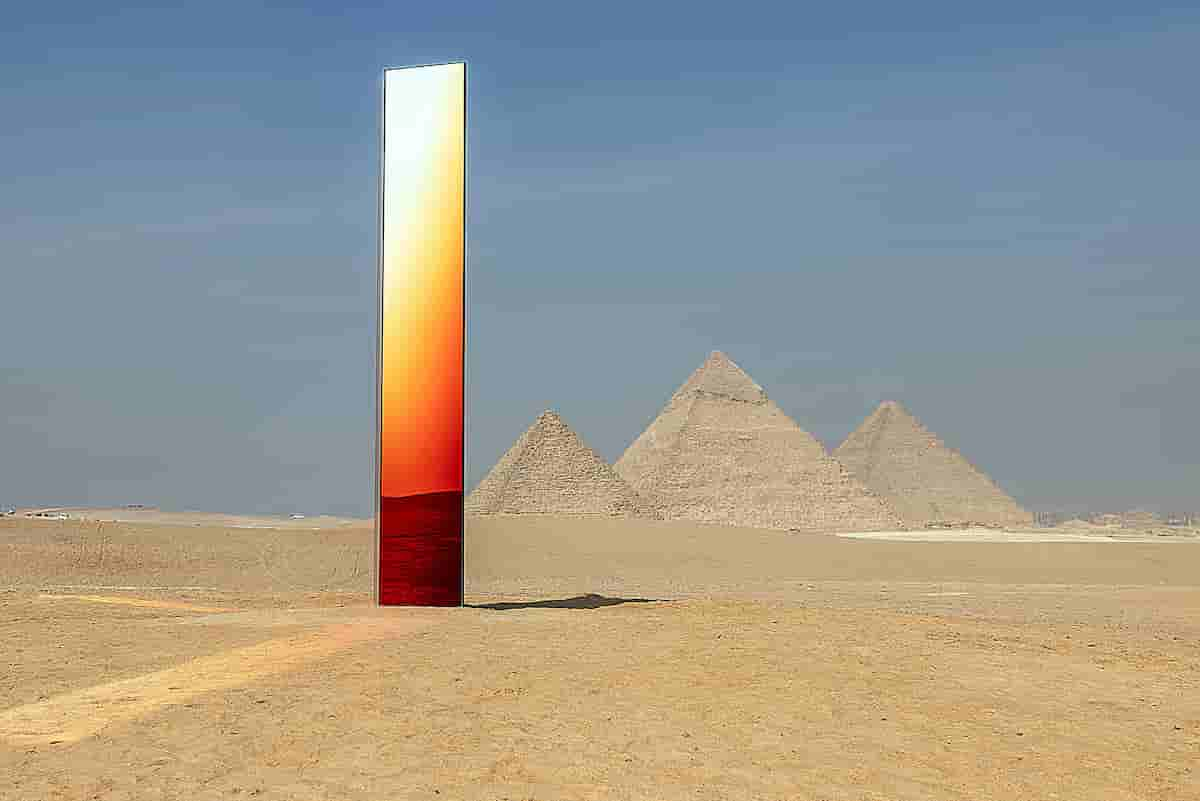
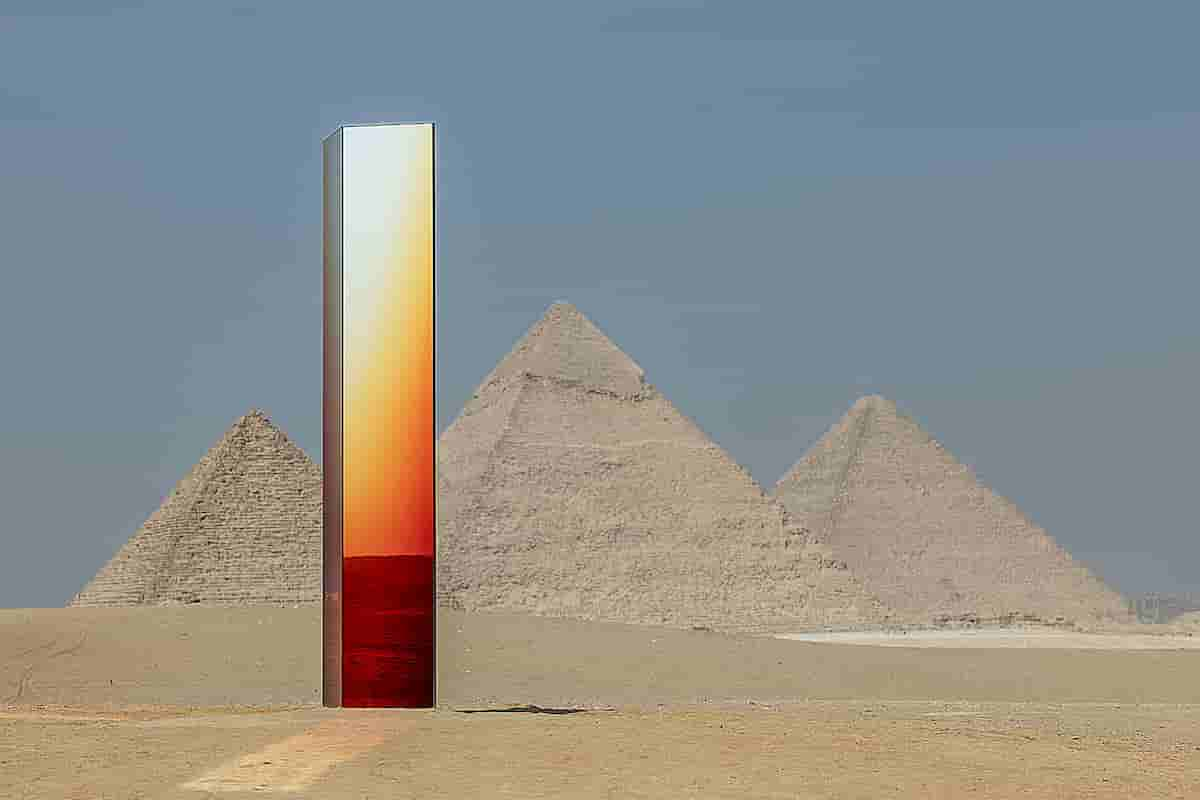
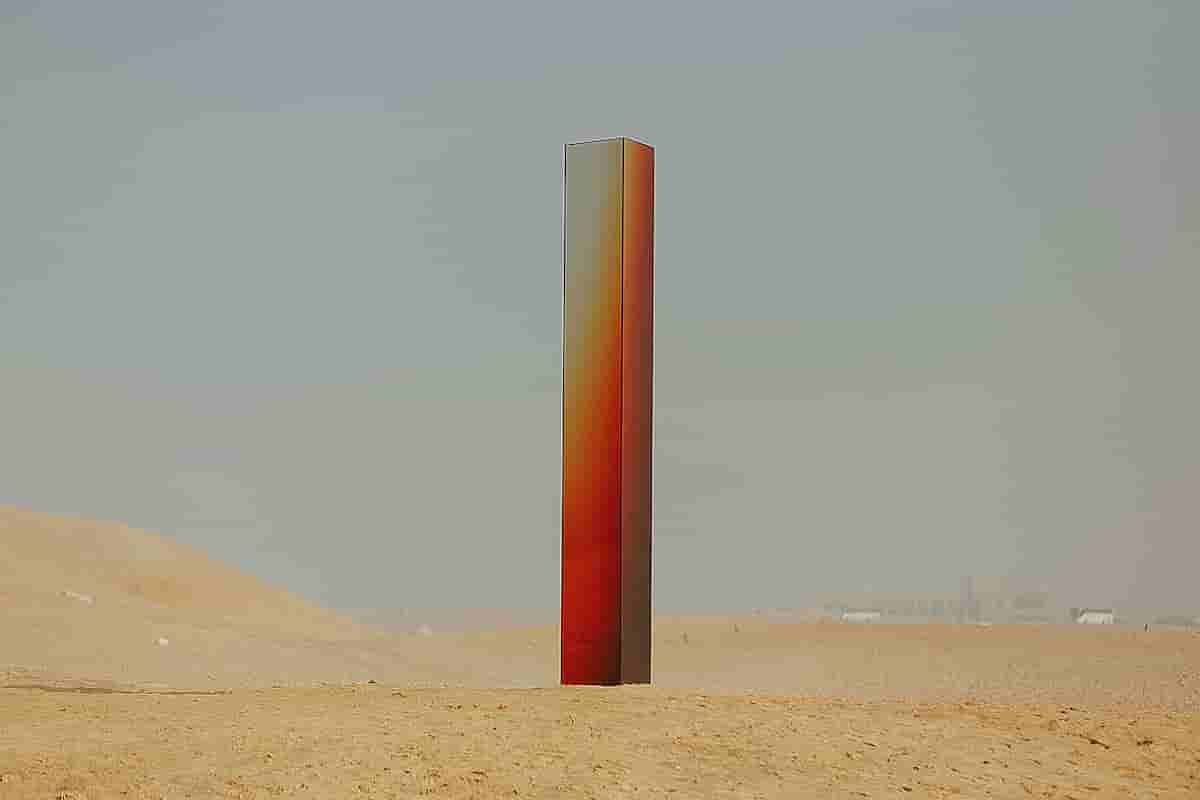
Over four metres high, Dutch designer Sabine Marcelis’ mesmerizing sculpture pays tribute to the sundial which it is believed was originally invented by the Egyptians – the oldest known sundial was made in Egypt in 1500 BC. Named after the Egyptian sun god, “RA”, the artwork is made of laminated solar glass whose red and yellow hues produce an ever-changing footprint of light as the day progresses, while harnessing the sun’s energy so that it can continue to be illuminated after dusk.
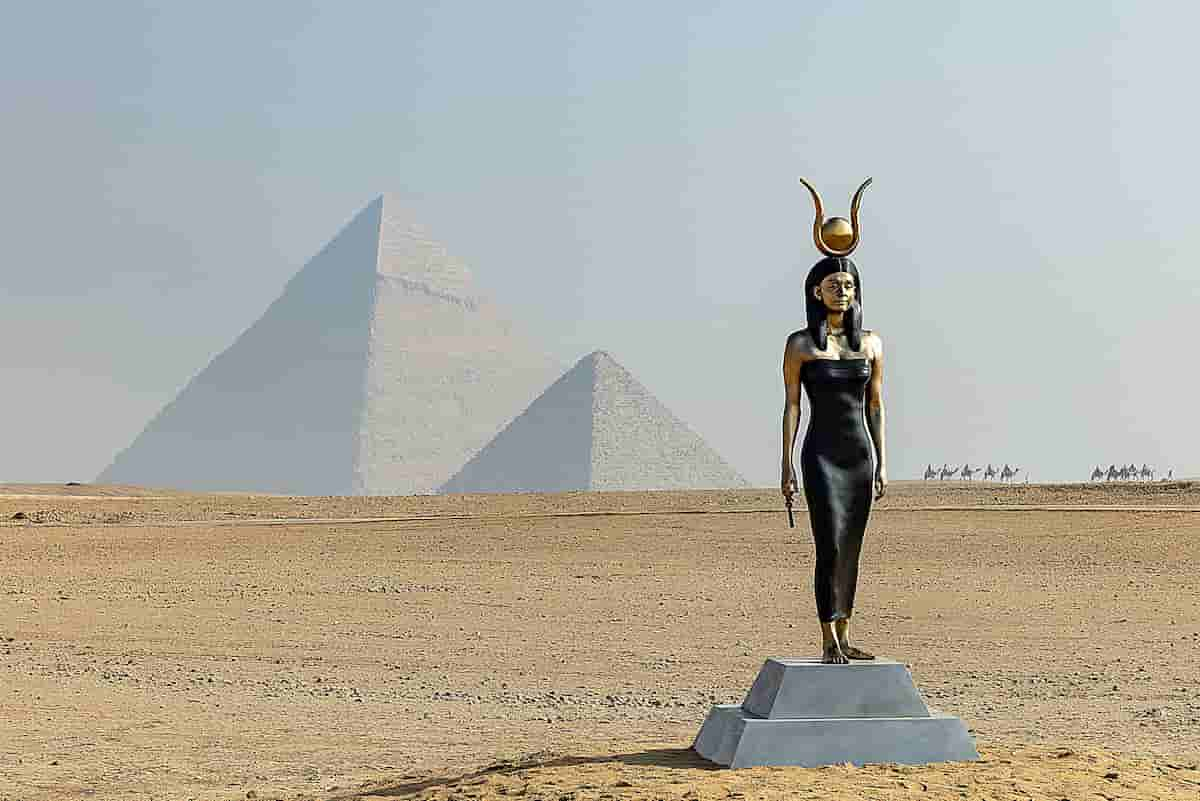
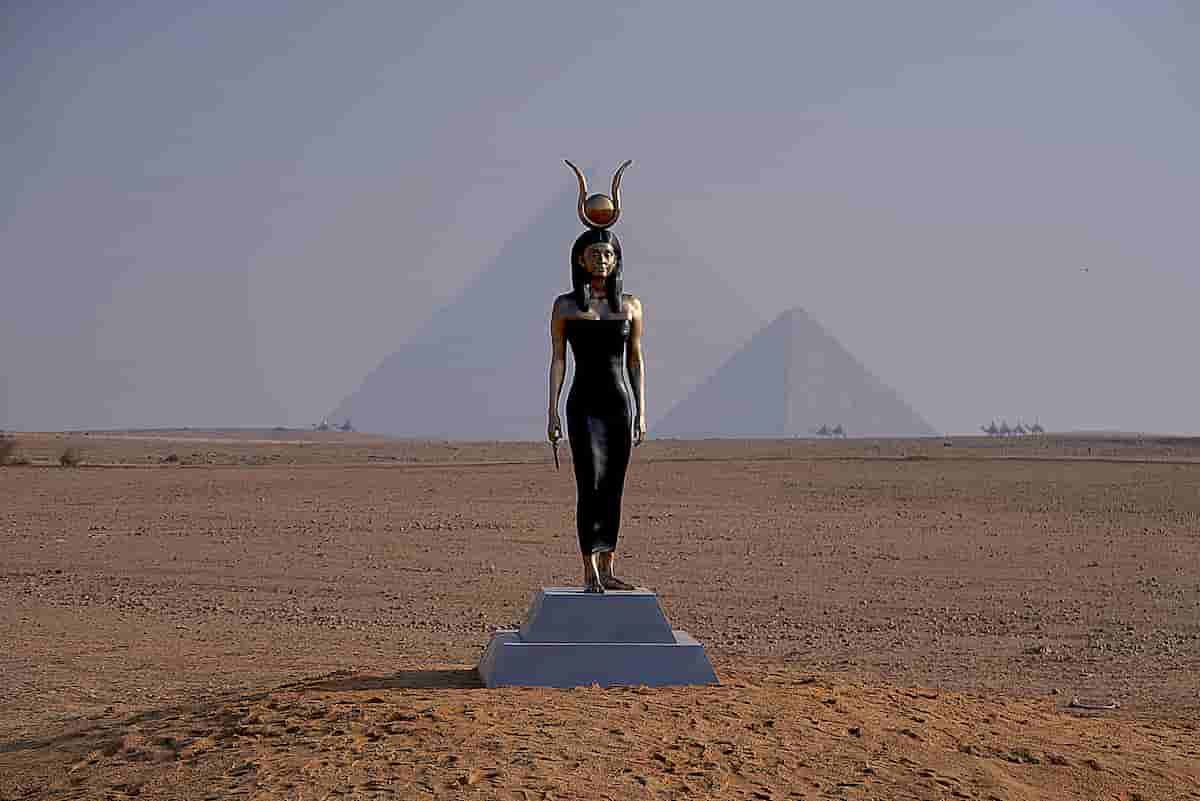
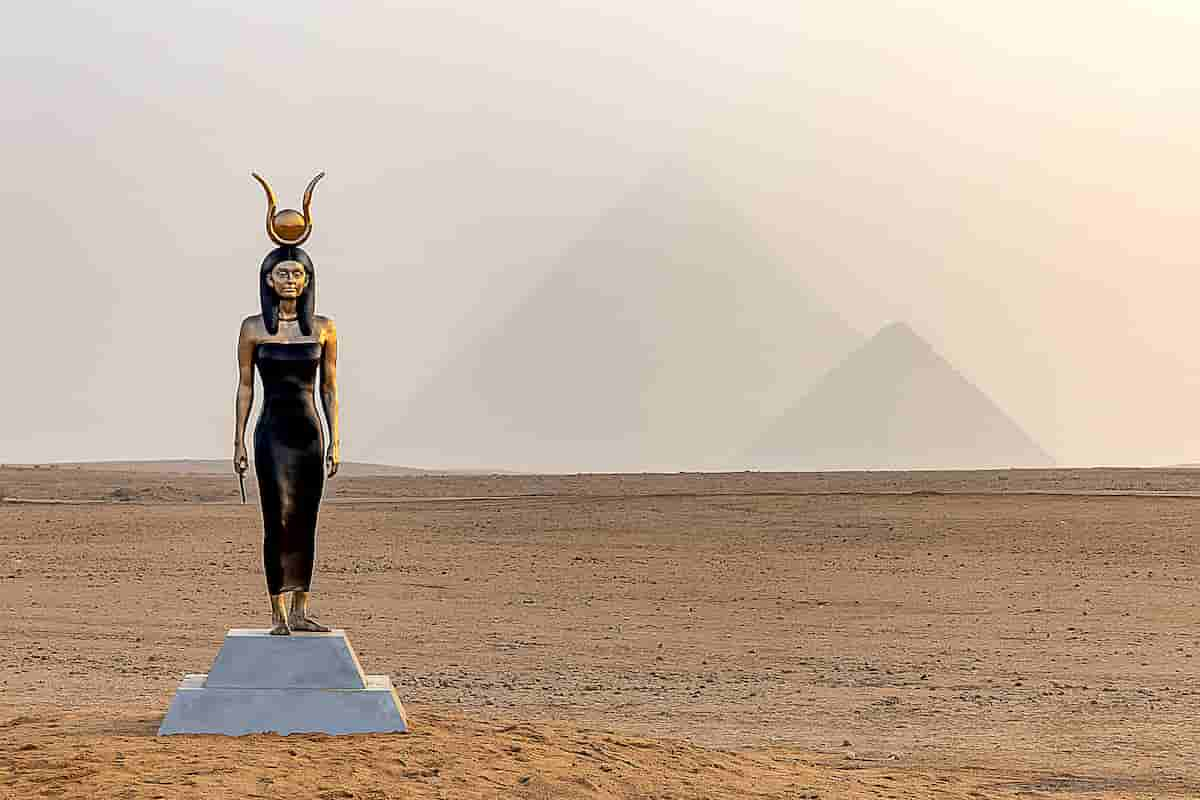
Another ancient Egyptian deity to make an appearance is Hathor, courtesy of American artist Carole Feuerman whose patinated bronze sculpture of the goddess takes the dynamic form of a contemporary woman. Hathor is associated with water and fertility and Feuerman strives to capture the graceful fluidity reminiscent of water.
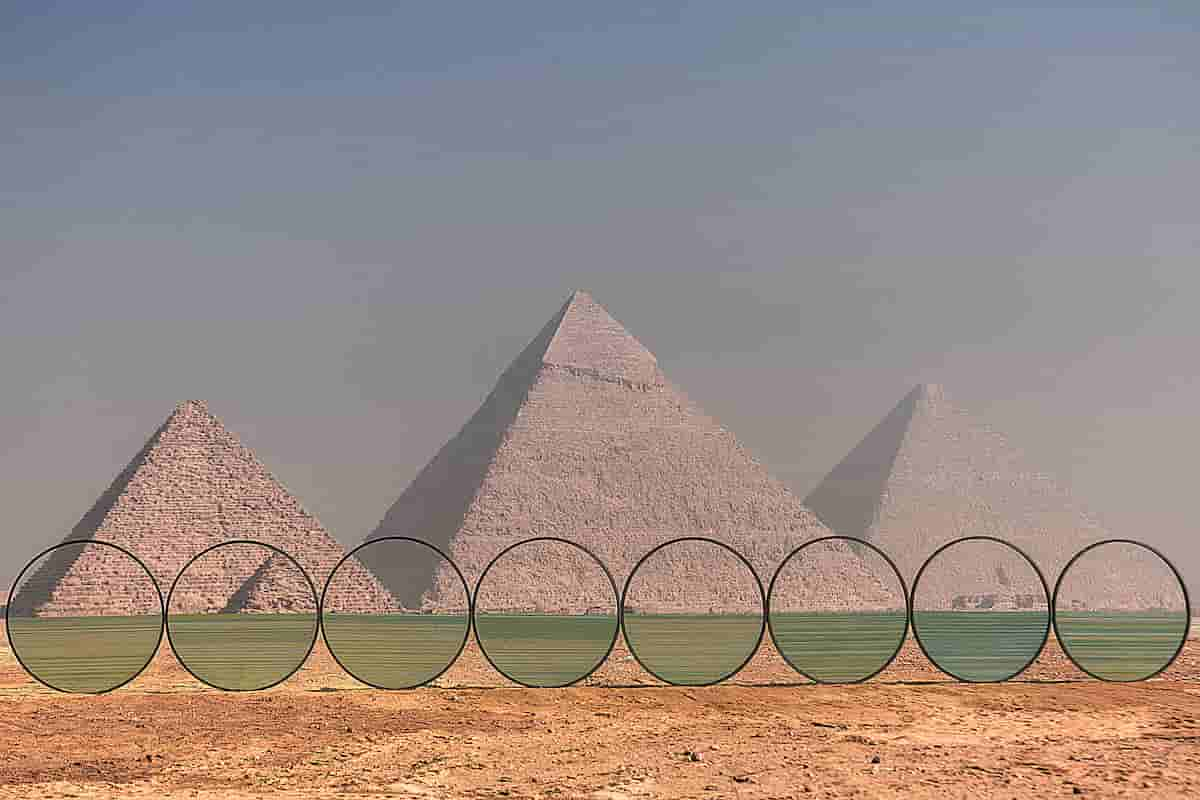
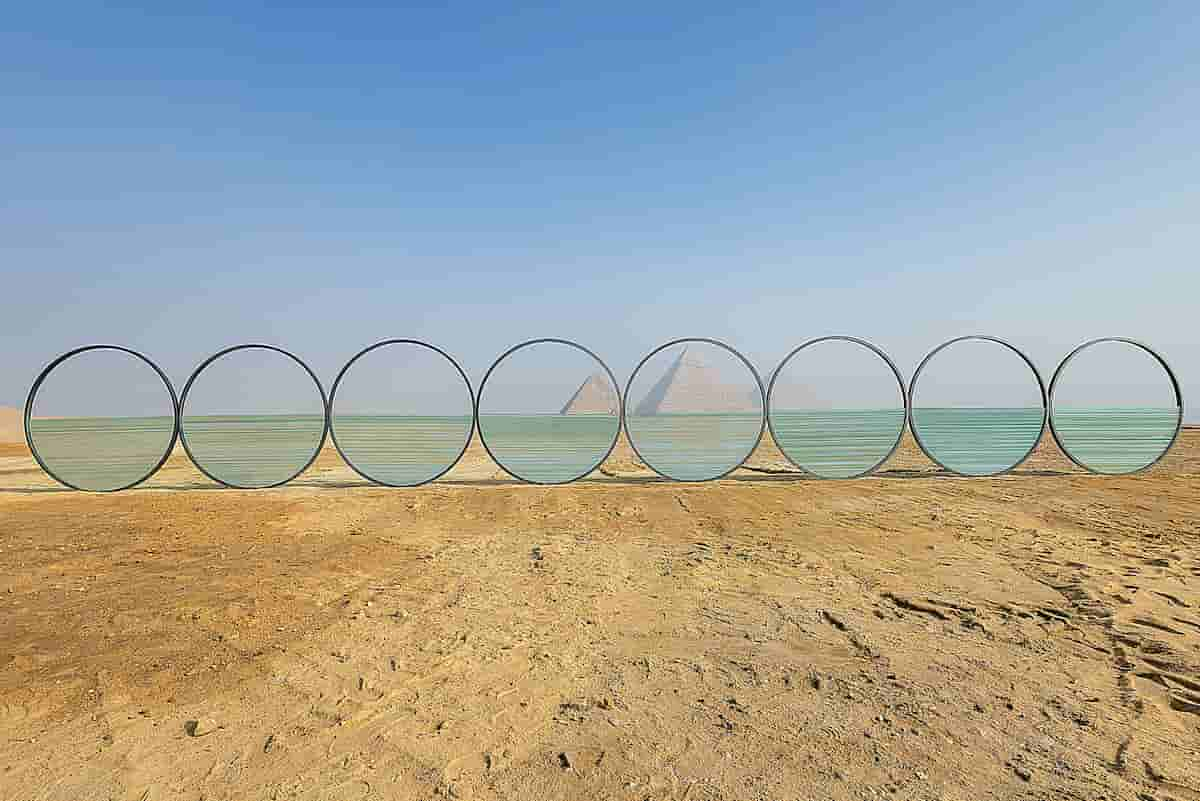
︳Acclaimed Greek artist Costas Varotsos eschews Egyptian mythology focusing instead on the relationship between the Nile River and the Giza Plateau. His installation “Horizon” consists of eight conjoined metallic rings, a nod to the celestial dome and the cycle of life, which have been half-filled with thin layers of glass, the artist’s signature technique. Set against the desert landscape, the glass textures give the impression of water, delineating an illusory horizon that unites the Pyramids with the River Nile.
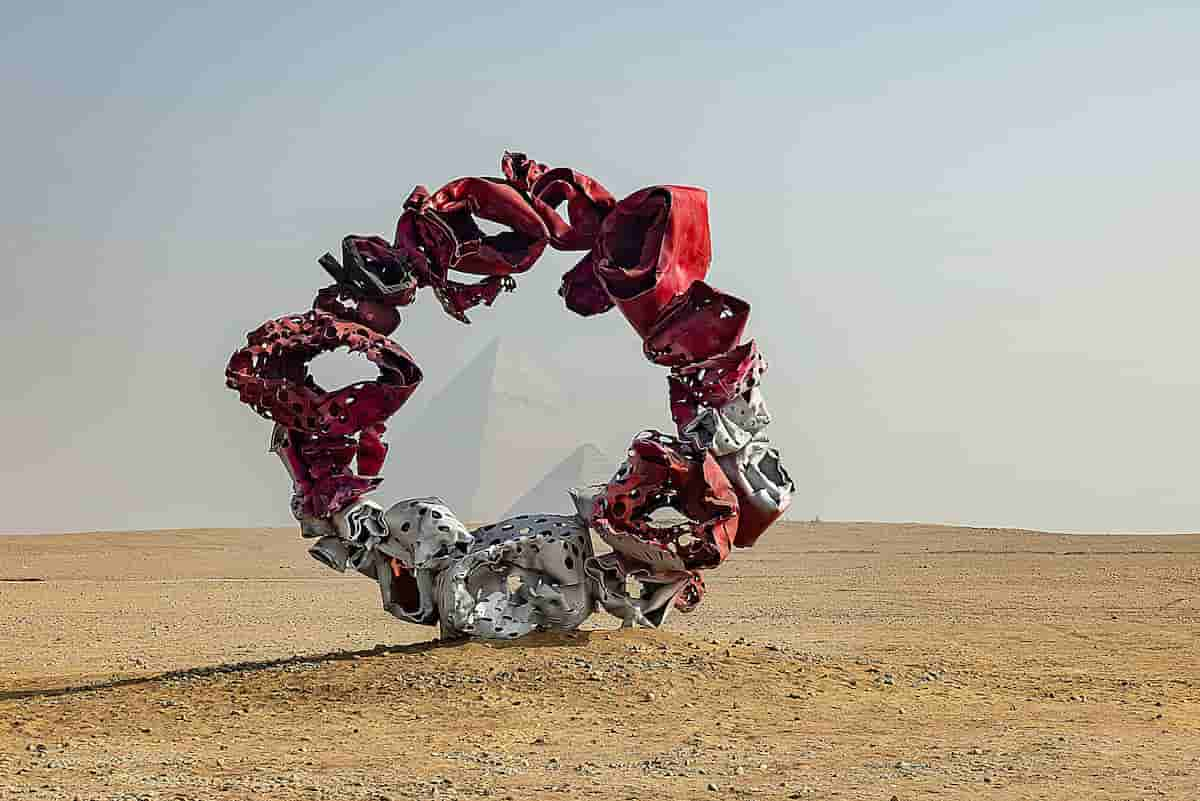
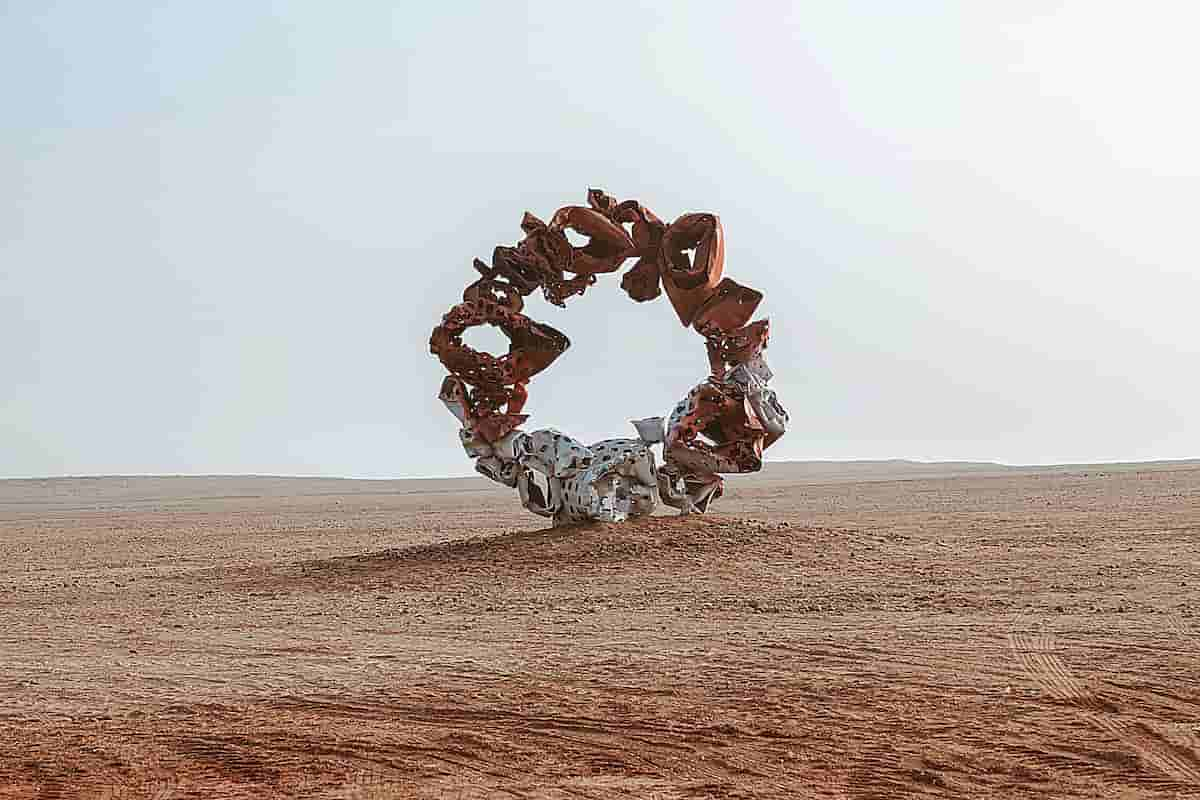
The symbolic resonance of the circle can also be found in Belgian artist Arne Quinze’s circular sculpture “Aurora”. Strategically framing views of one of the Pyramids, the metallic sculpture functions like a “temporal gateway” that bridges, in the artist’s words, “the gap between yesteryears and the tomorrows”. Consisting of abstract, organic-shaped, aluminium pieces squashed together to form a giant ring, the artwork explores the strength and fragility of nature.
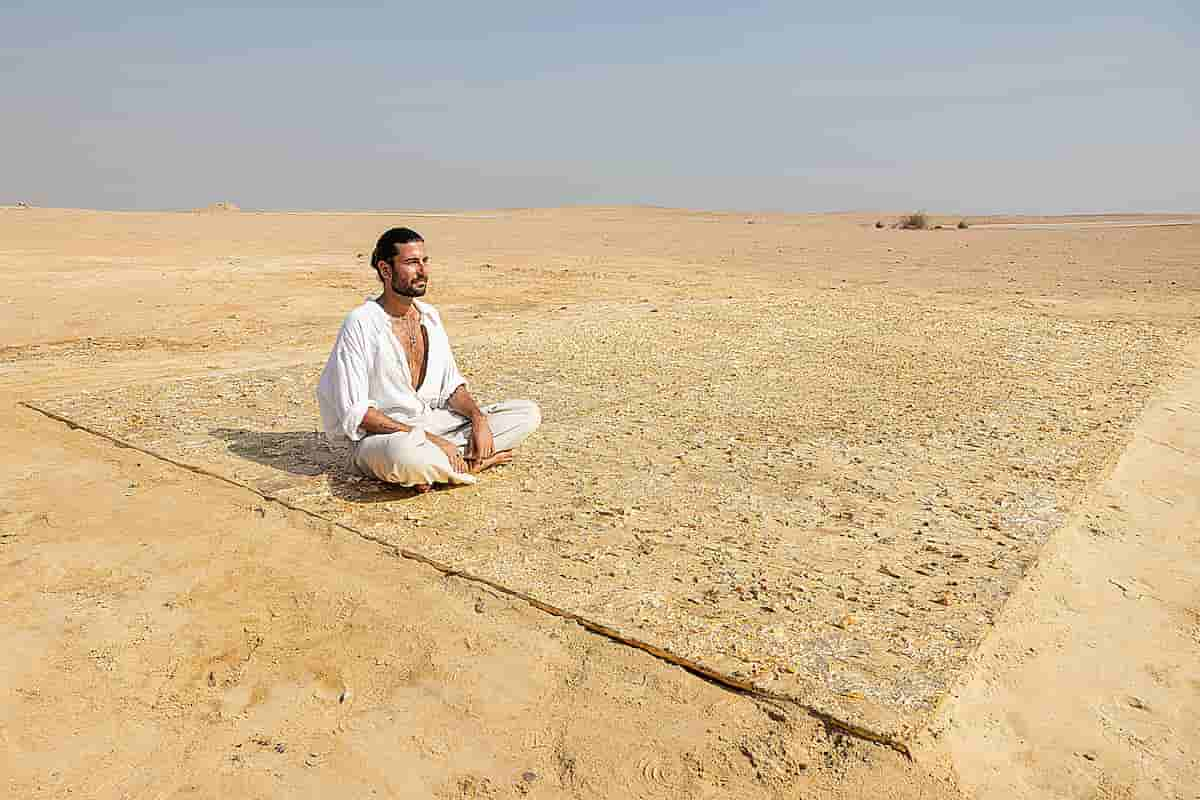
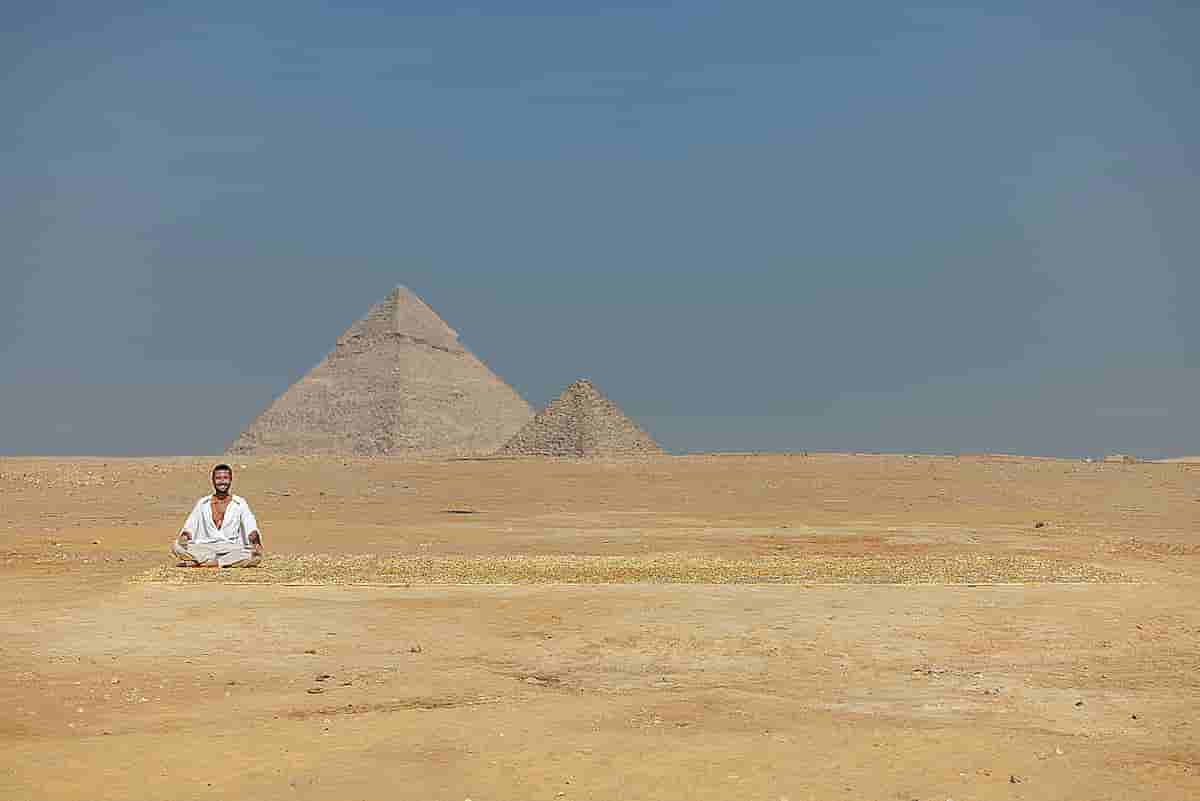
In Greek artist Dionysios’ “Meditation on Light”, the Egyptian sun god converses with Apollo, the Greek god of the sun. Crafted with the help of A.I., the installation takes the form of a textured carpet whose abstract markings, made of a myriad of gold-plated brass leaves on linen, trace the sun’s path from dusk to dawn. Invited to step onto the golden carpet, visitors are immersed in a setting of shimmering light.
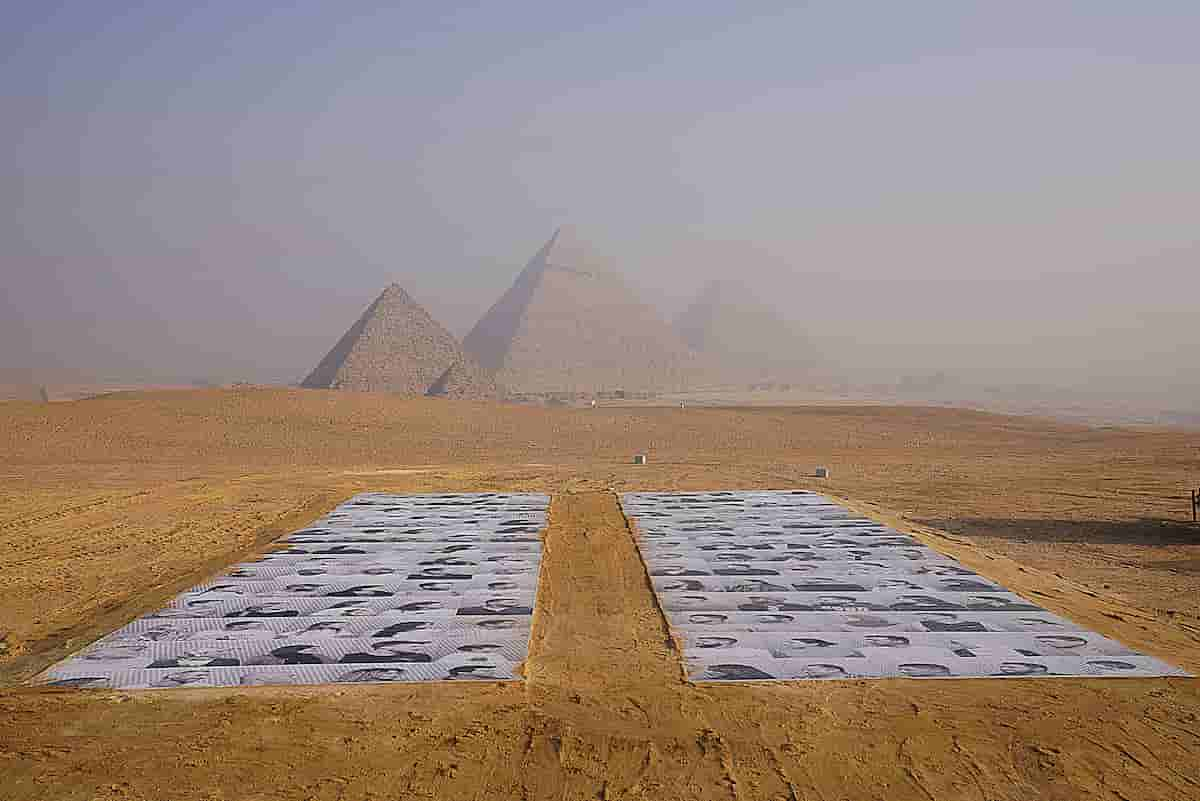
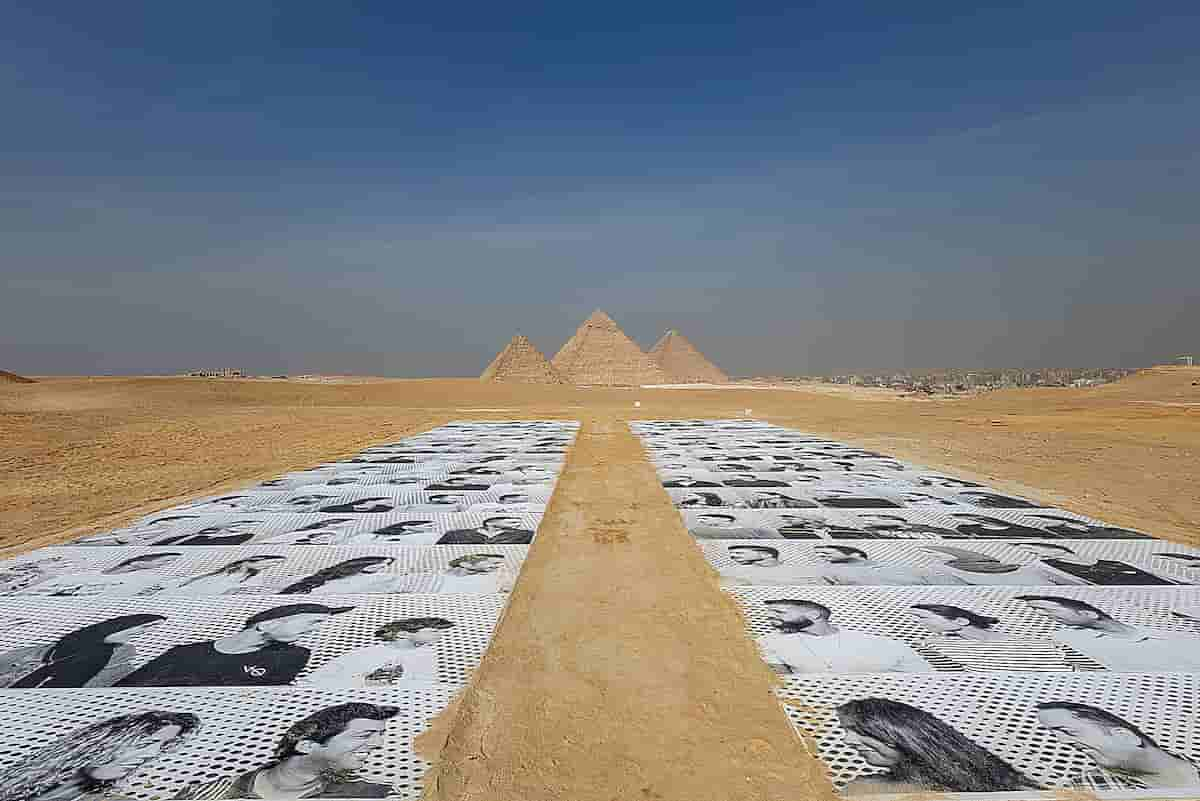
Lastly, French artist JR has created a vast tapestry of black and white portraits derived from his participation in the second edition of “Forever is Now” in 2022 when visitors were invited to enter a pyramid-shaped interactive photobooth to have their portrait taken. This year’s entry from the artist sees 130 of these large-scale portraits, which last year were exhibited individually in front of the Great Pyramid as ephemeral personal statements, forming a 20-metre-long composite artwork that fosters a communal dialogue with the UNESCO world heritage site.
Om onvervangbaar te zijn, moet je altijd anders zijn.
Er zijn fascinerende beelden hier, en de fascinerende dag van samen! xo
─────────────────────────────────────────────────────
Per essere insostituibili bisogna sempre essere diverso.
Ci sono immagini affascinanti qui, e l’affascinante giornata di insieme! xo KanikaChic