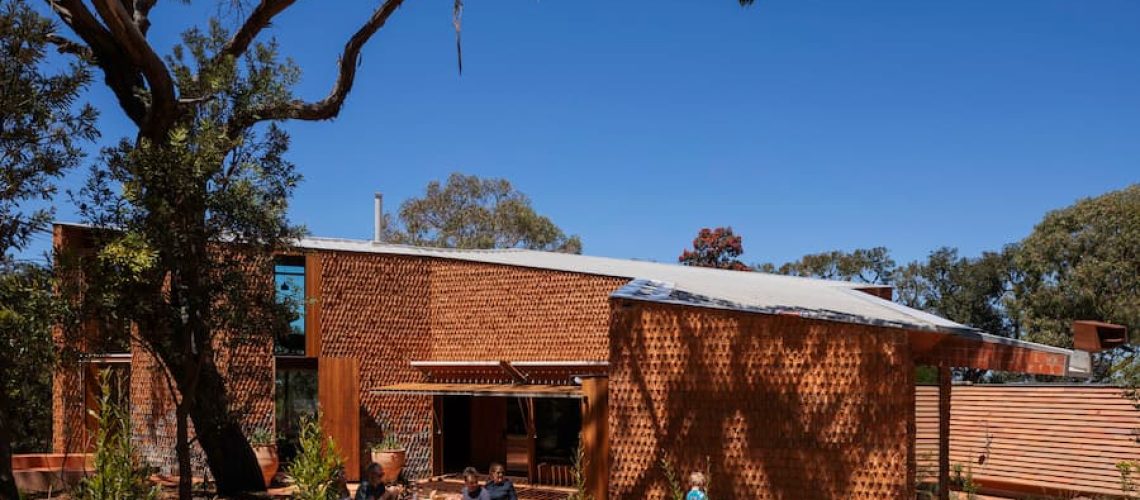
Burnt Earth Beach House replaces a dilapidated beach shack at the end of its operational life in the coastal town of Anglesea in Victoria.
▏Burnt Earth Beach House
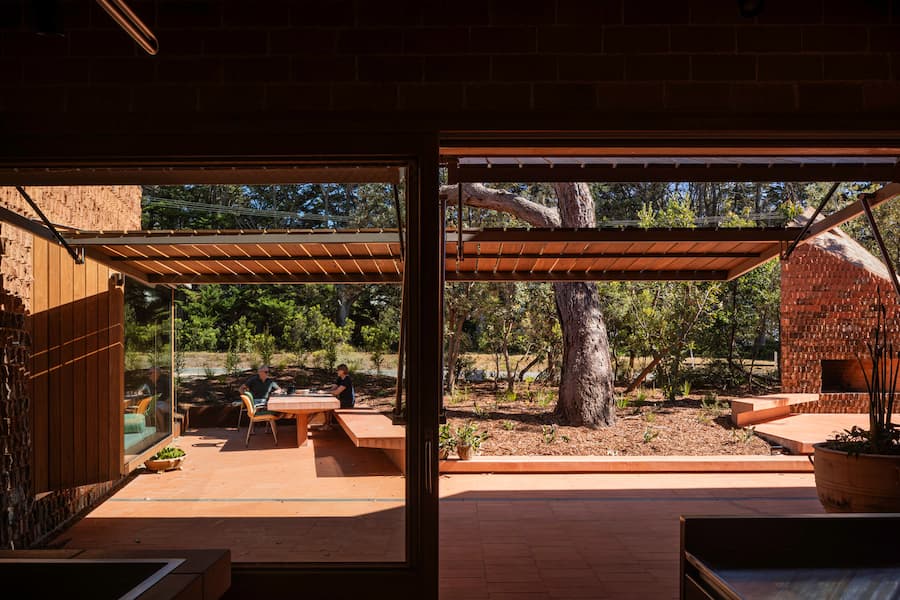
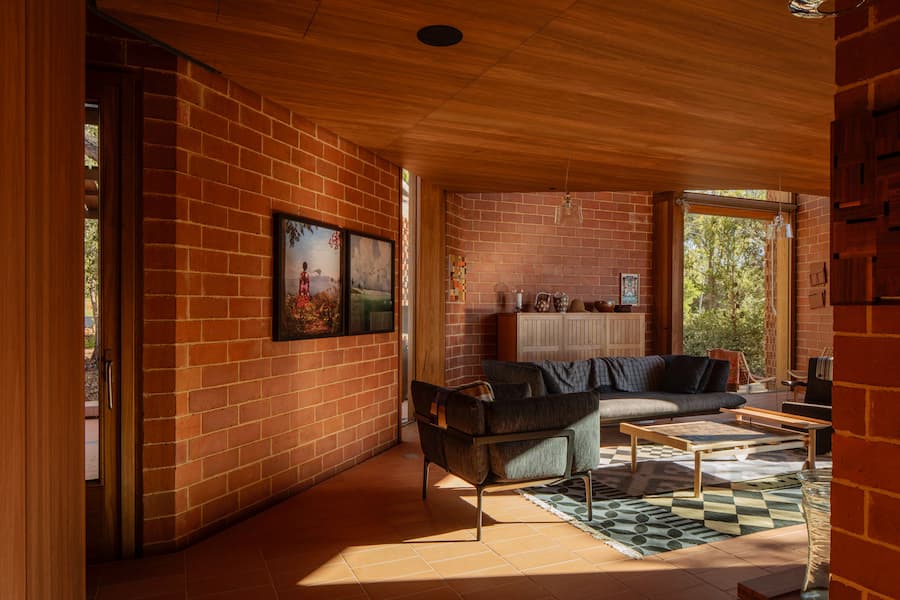
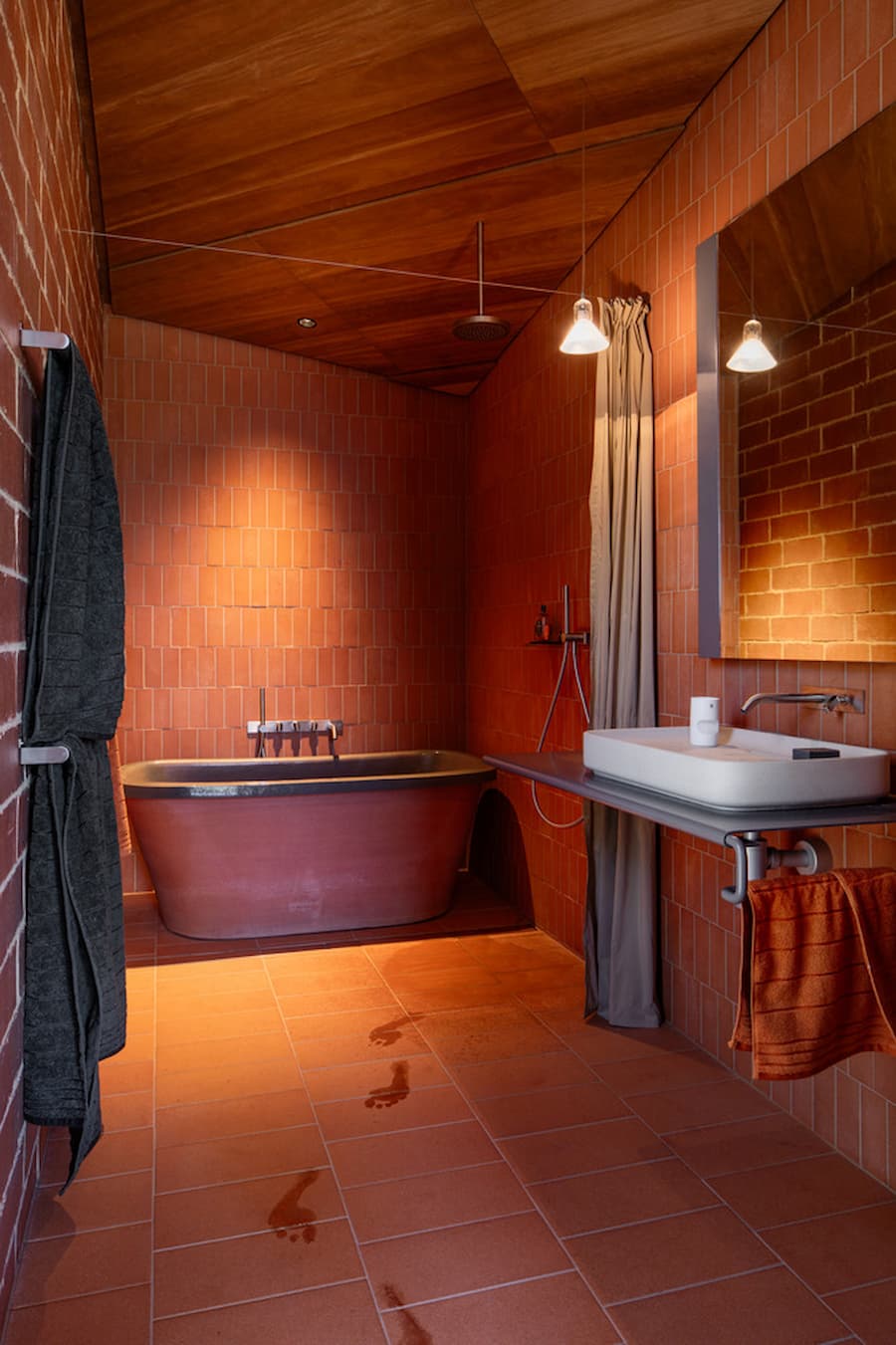
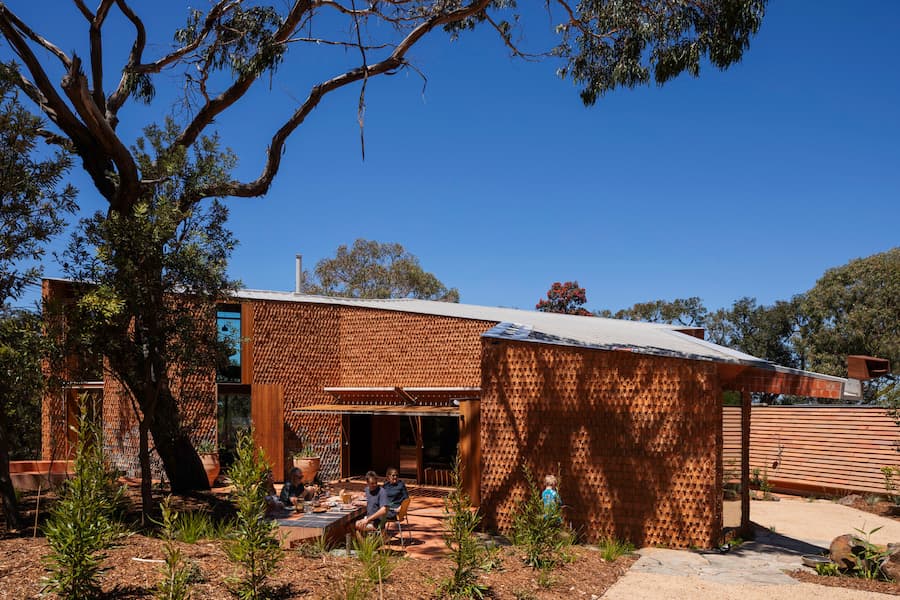
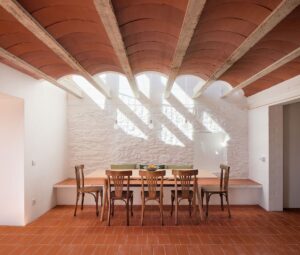
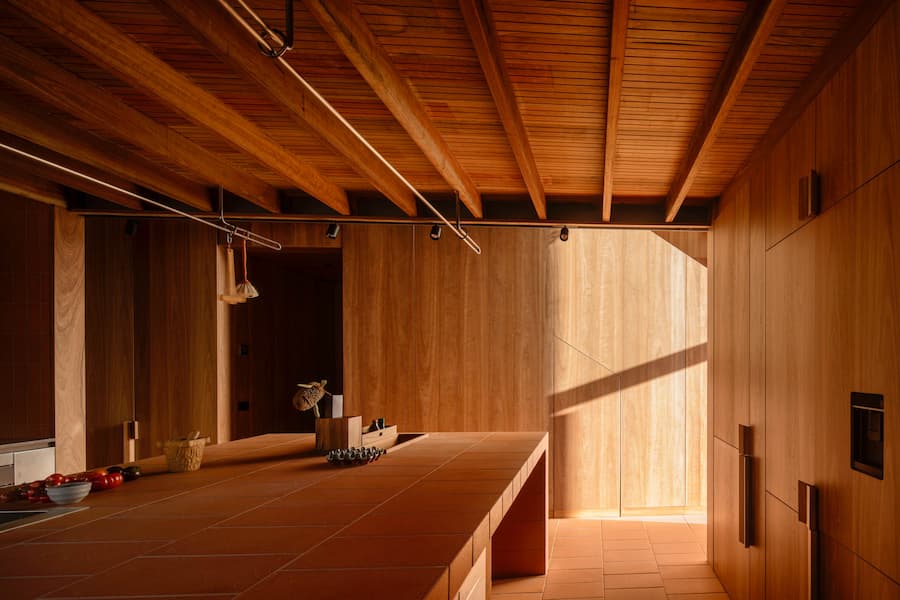
Burnt Earth Beach House replaces a dilapidated beach shack at the end of its operational life in the coastal town of Anglesea in Victoria. It’s a multi-generational home that utilizes terracotta in two primary forms – through the exterior brickwork, and internally to line walls and floors and joinery elements. Having owned the property for several years, a deep and specific understanding of who the house was for and how it would be used gave the conceptual design true form.
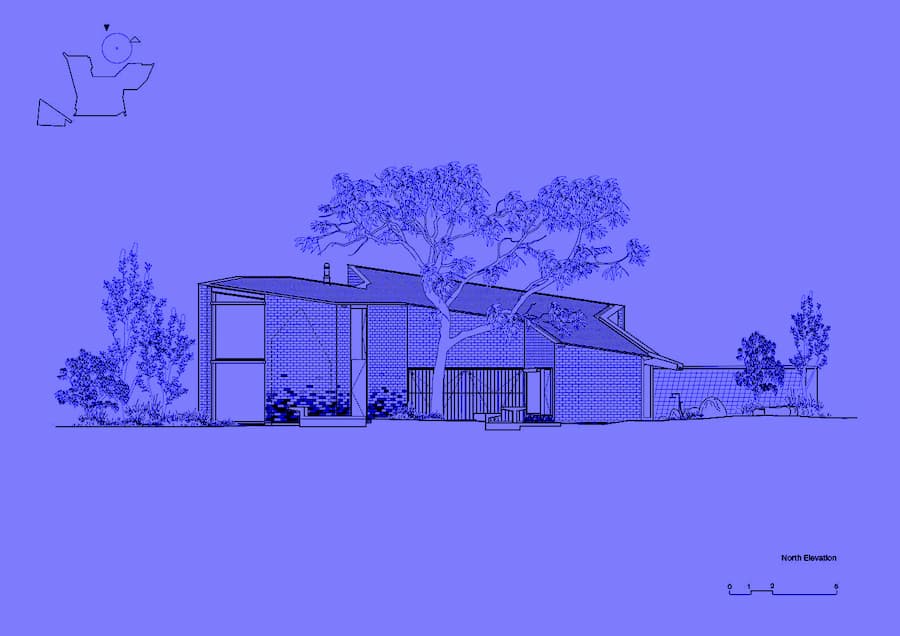
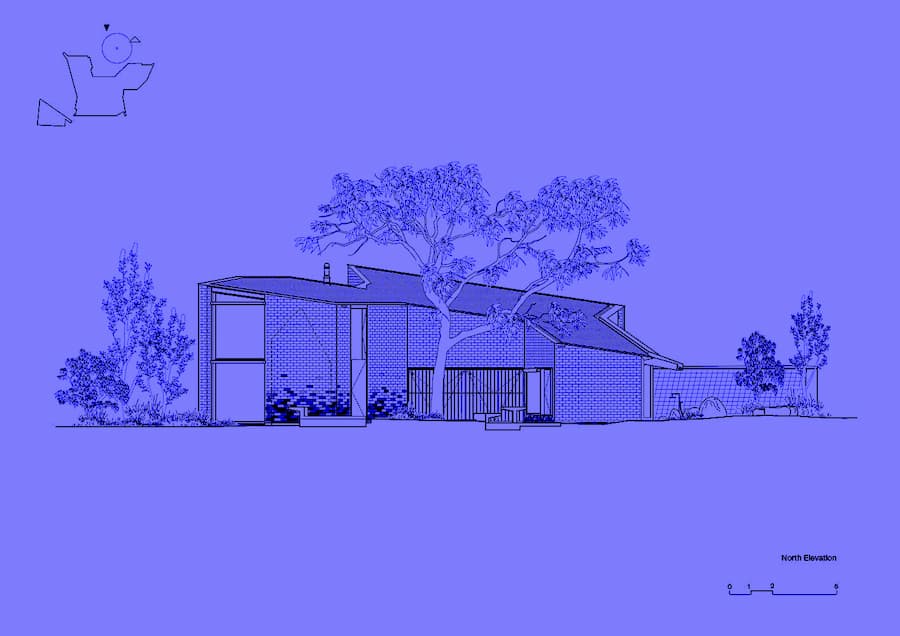
The established Eucalypt to the north of the site provided a focal point for the arrangement of the primary living spaces.
▏Brick Process
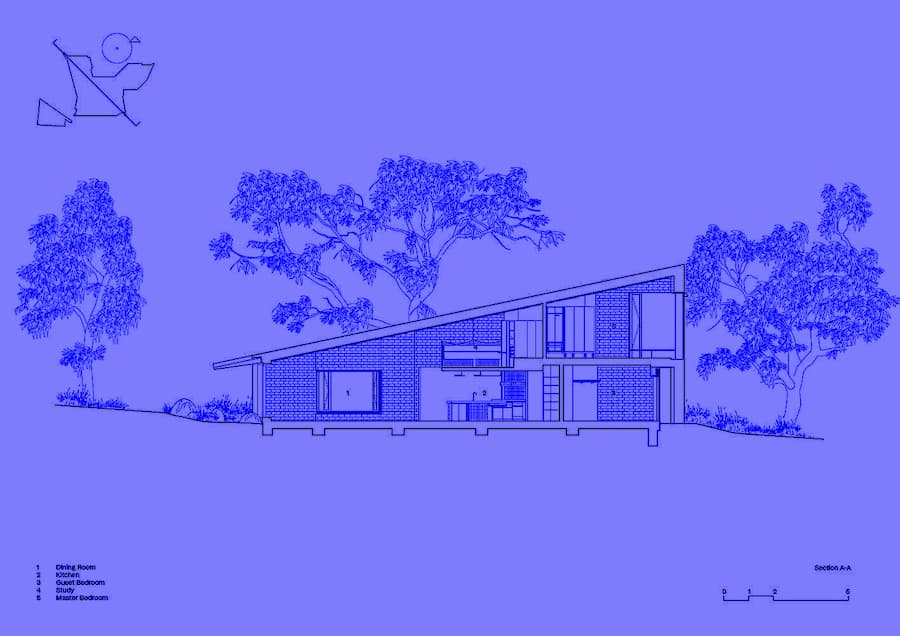
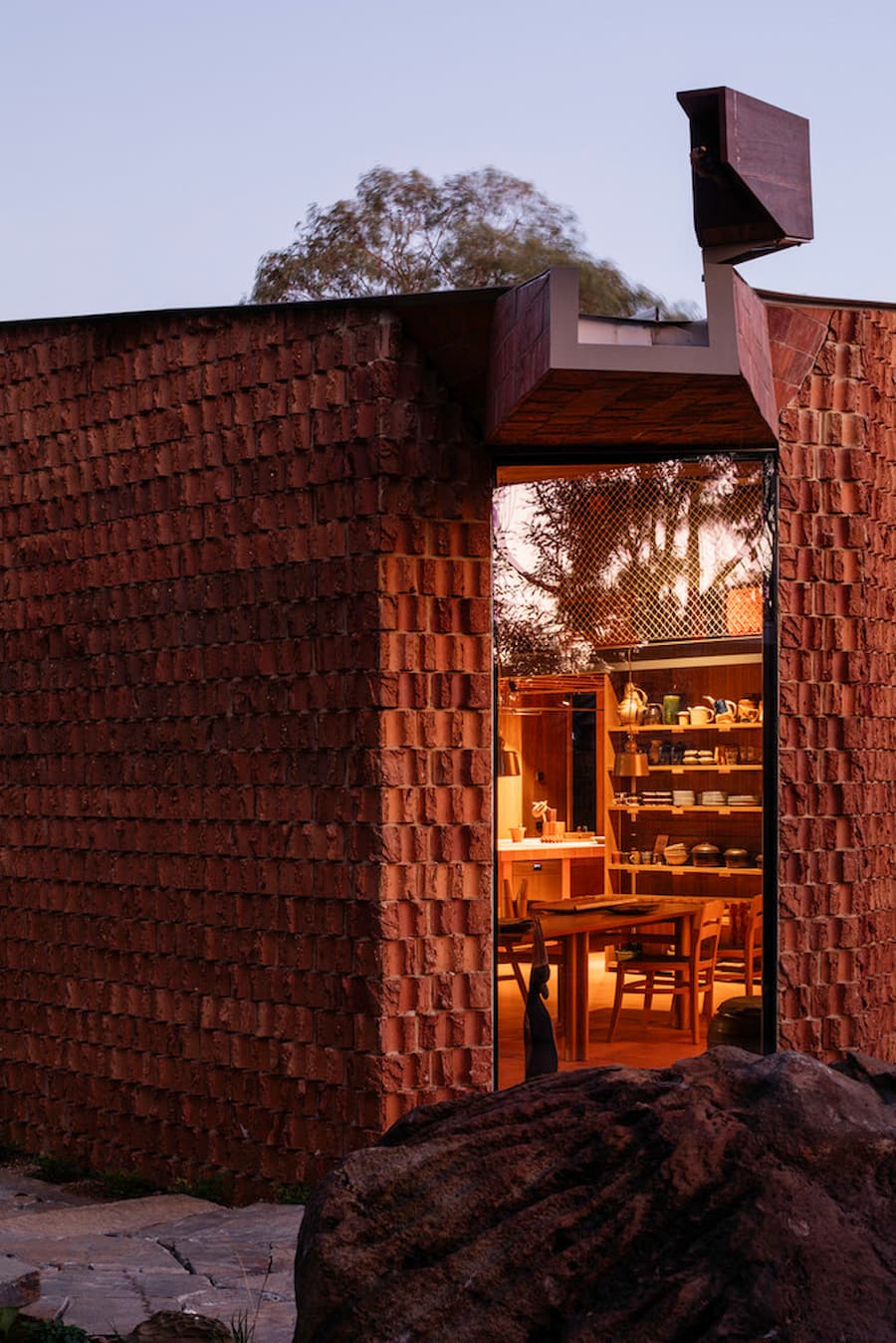
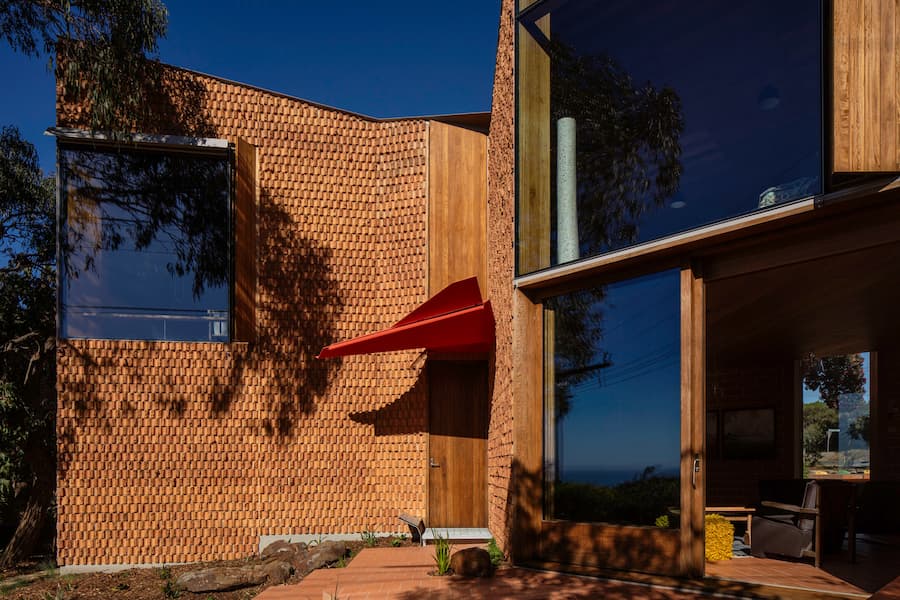
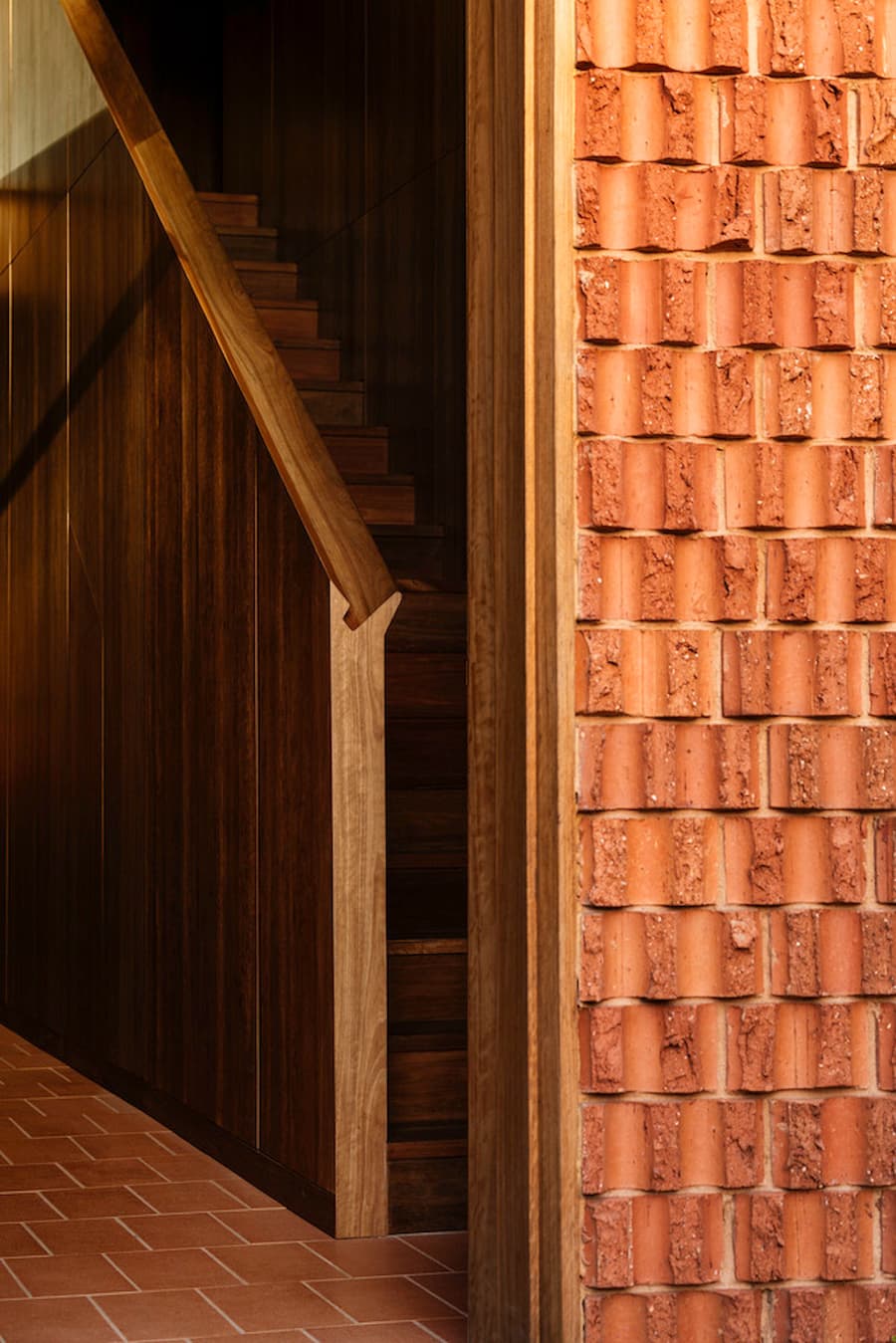
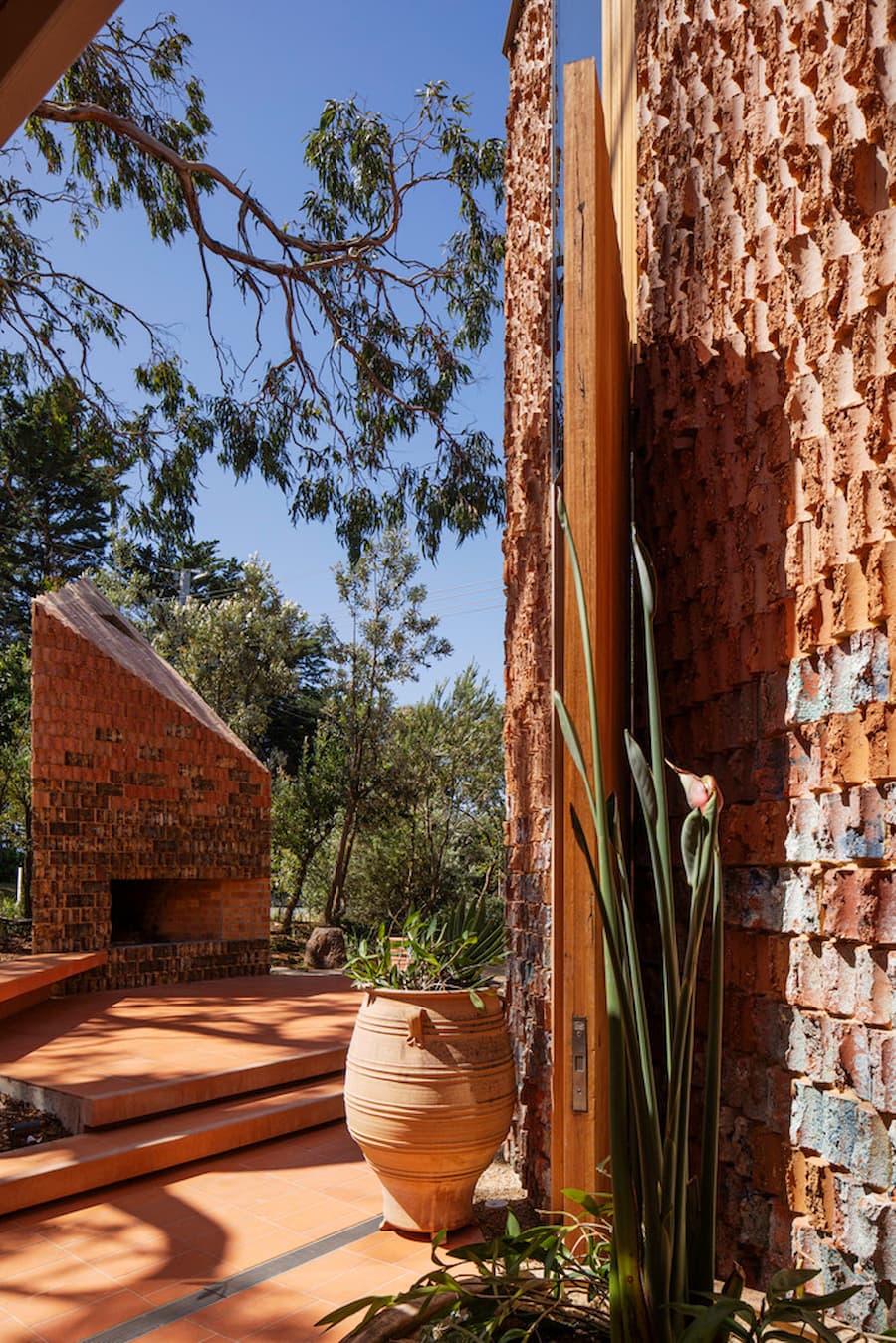
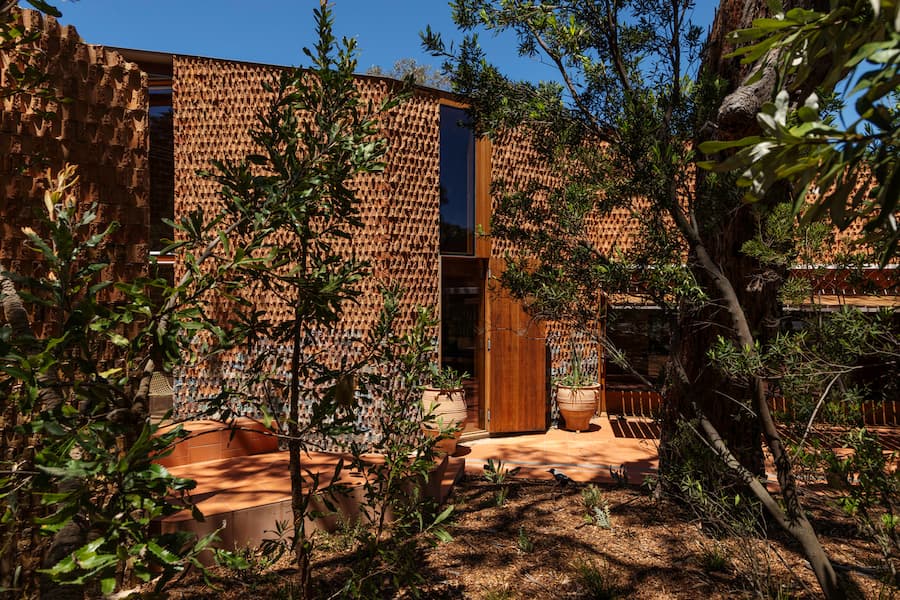
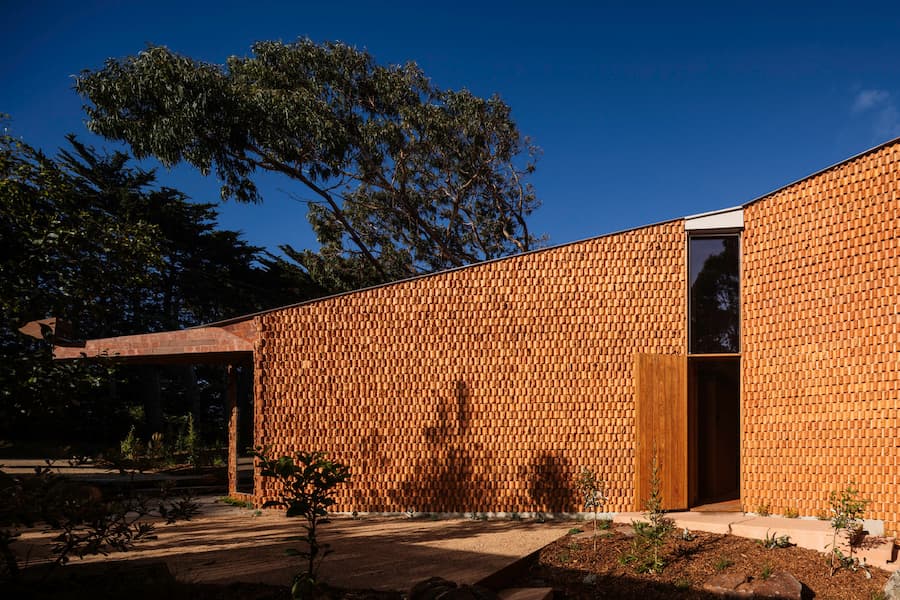
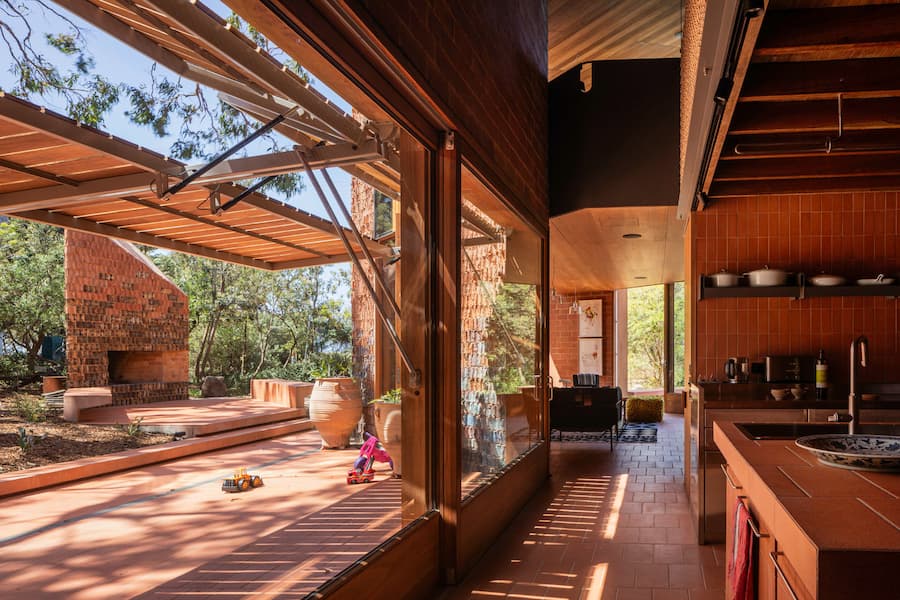
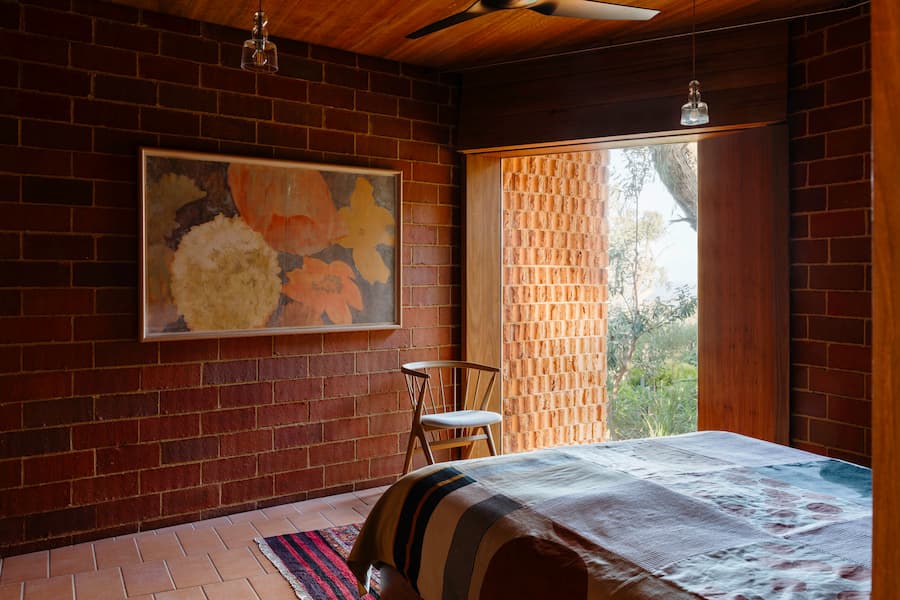
The color and tonality of the cliff edges in Anglesea are expressed in the use of an invented brick]. [The bricks were developed with brickmaker Klynton Krause, a long-time collaborator. The extensive process involved extrusion and hand tearing the brick surface prior to cutting which exposes a raw, rough-hewn texture. A series of glazing experiments are applied to raw clay before a single firing is revealed in different sections of the building. A single fall of the roof across the plan ends in a low point where a terracotta-clad spout discharges water onto a massive rock. Unglazed bricks blend with green and brown glazed bricks which broadly align with the extensive planting of coastal banksias surrounding the property.
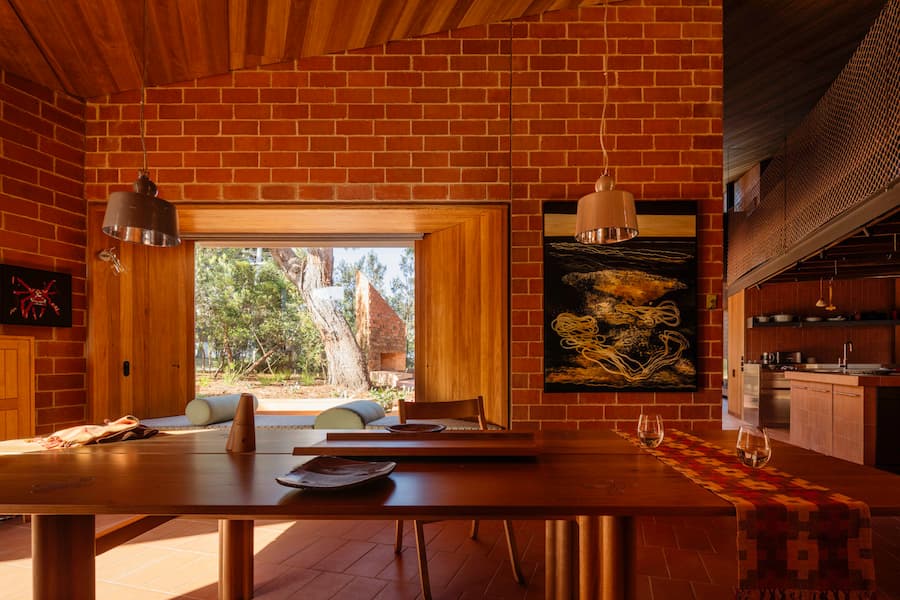
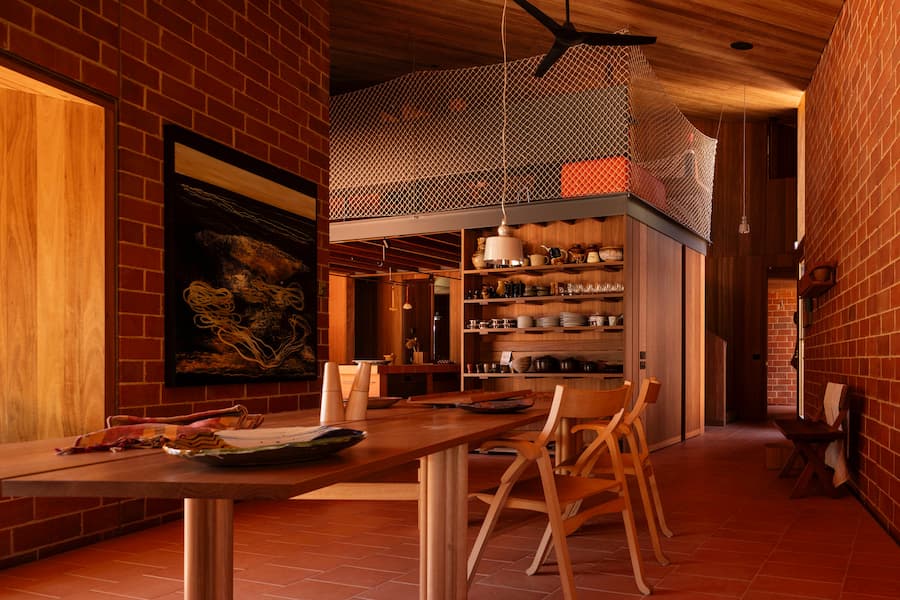
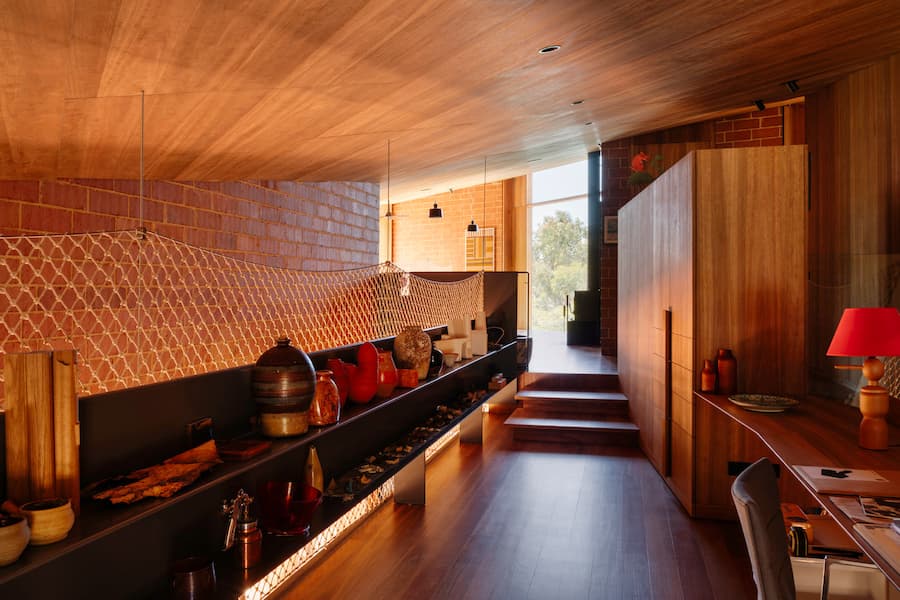
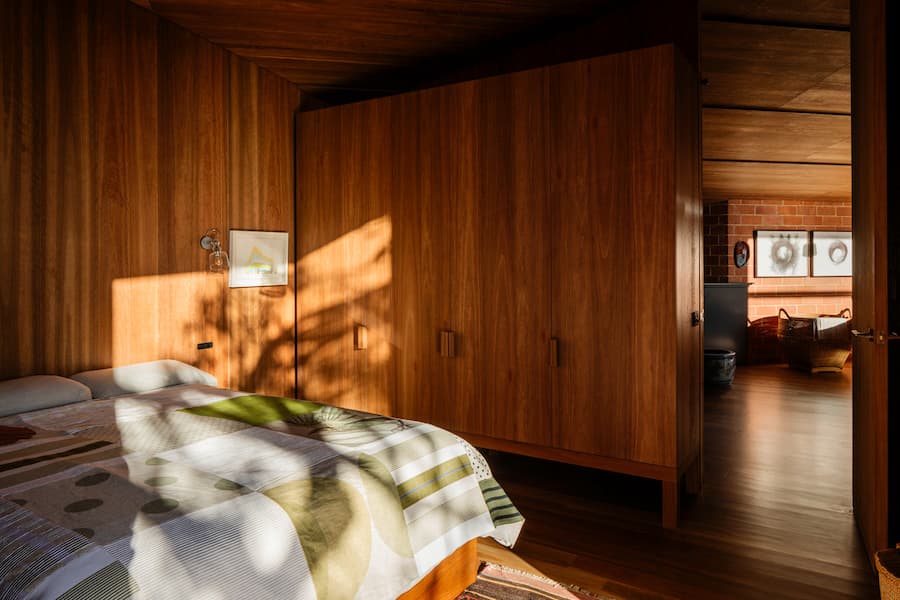
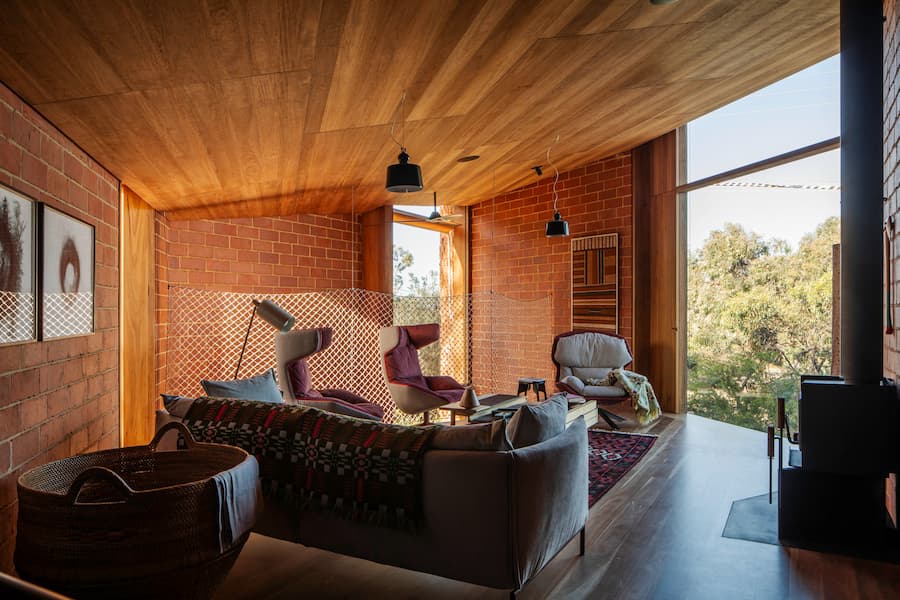
The terracotta tiles are sourced from Cotto Manetti in Chianti, Italy with whom John has a close relationship. As terracotta conducts temperature well, the walls and the concrete slab are heavily insulated and sealed to ensure minimal temperature variation. The house is 100% electric with a heat exchange water system, hydronic heating and solar panels]. [The house is heavily shaded by operable blinds and shutters which modify heat and light into the center of the plan. Spotted gum timber is used carefully in varying formats – recycled (flooring), veneer (joinery) and sparingly as solid (windows and revealed structure in areas)]. [The robust natural materials of the limited palette are durable and will weather to a natural tonality.
▏View Lines and Daylight
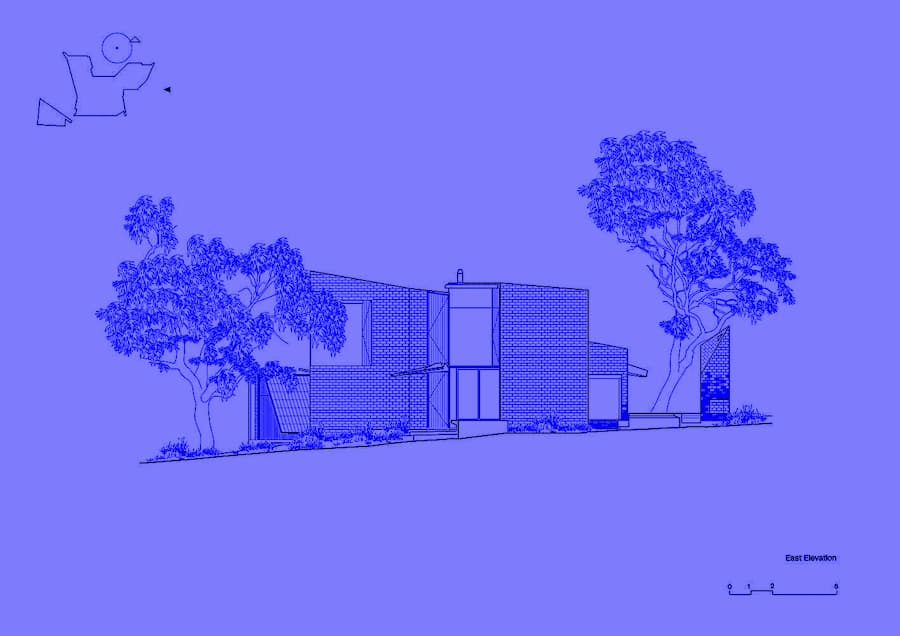
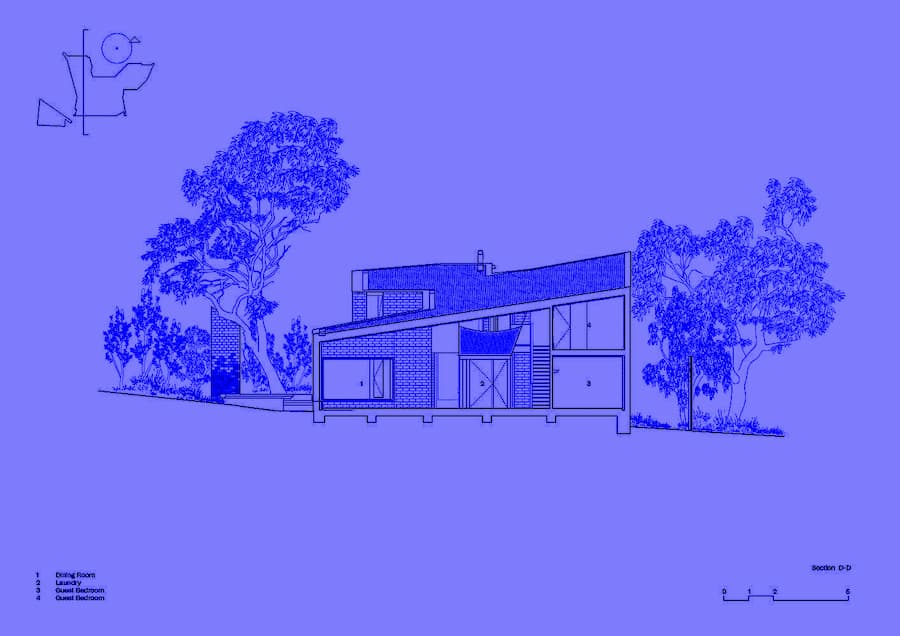
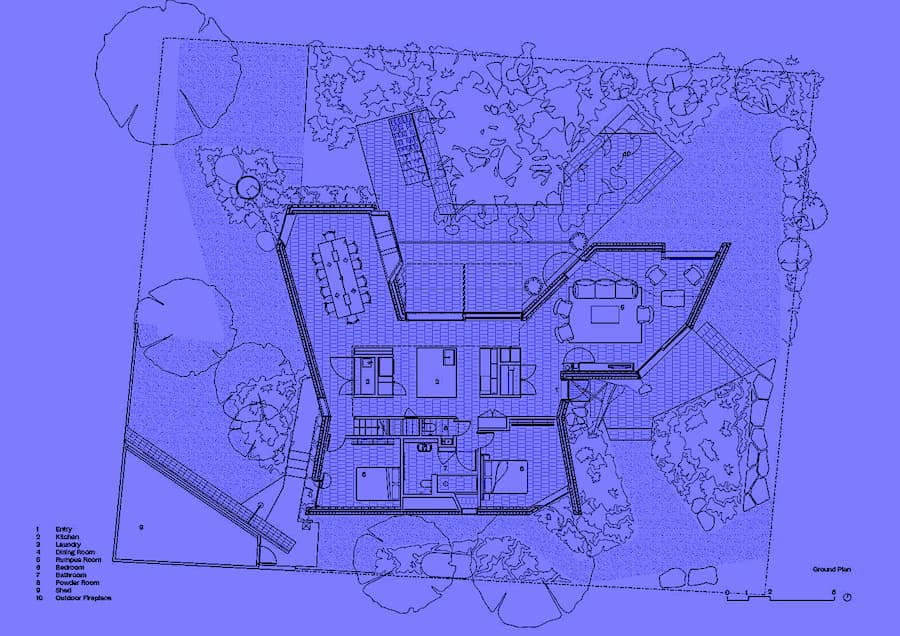
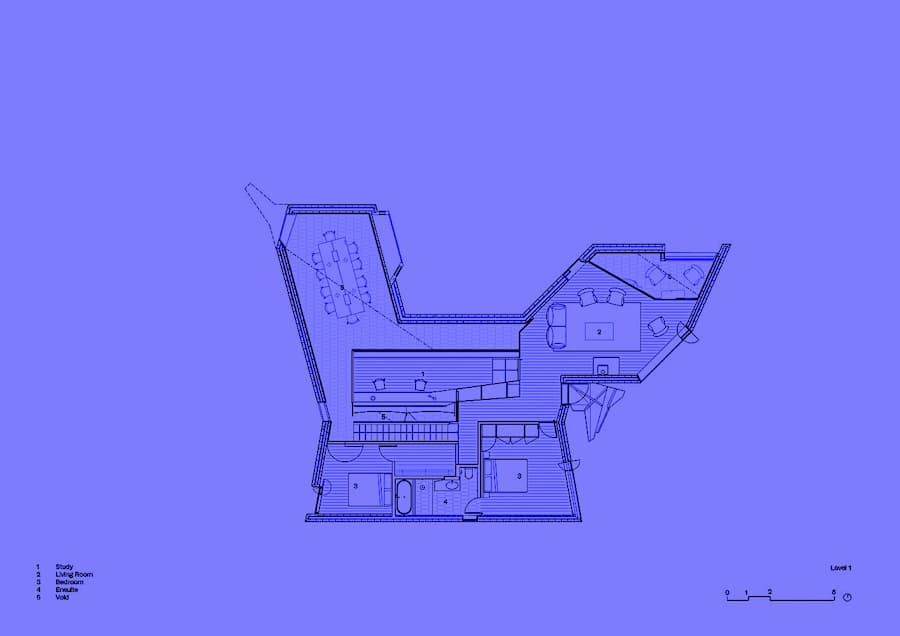
The broadly cruciform plan describes view lines and daylight ingress precisely. Facing north, the views are to the Southern Ocean and the surrounding landscape. The governing lines of the plan mark the center point of the ‘X’ as the island kitchen bench]. [It is both literally and figuratively the heart of this home. From here all social activity spills out into living and dining areas on the ground floor. The external terraces extend out from the inflected arms of the plan and are set around a broad courtyard. Across two levels a variety of spaces come together for sociability and solitude.
▏A Connection for its Inhabitants
The dwelling works as a haven both functionally and aesthetically, providing a connection for its inhabitants to the landscape and to each other. The materials imbue the home with a sense of place, the surrounding landscape further embeds the home in its context. Terracotta is the element that binds it together in an adaptable home for entertaining and seclusion in all seasons.