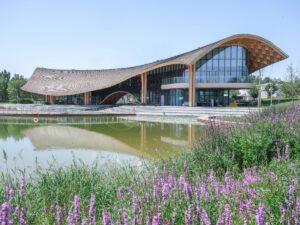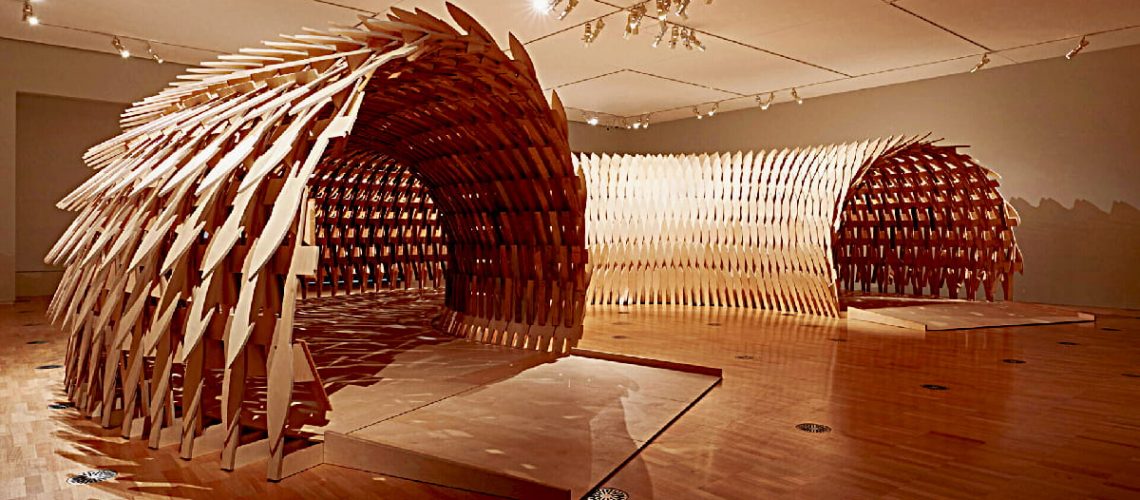
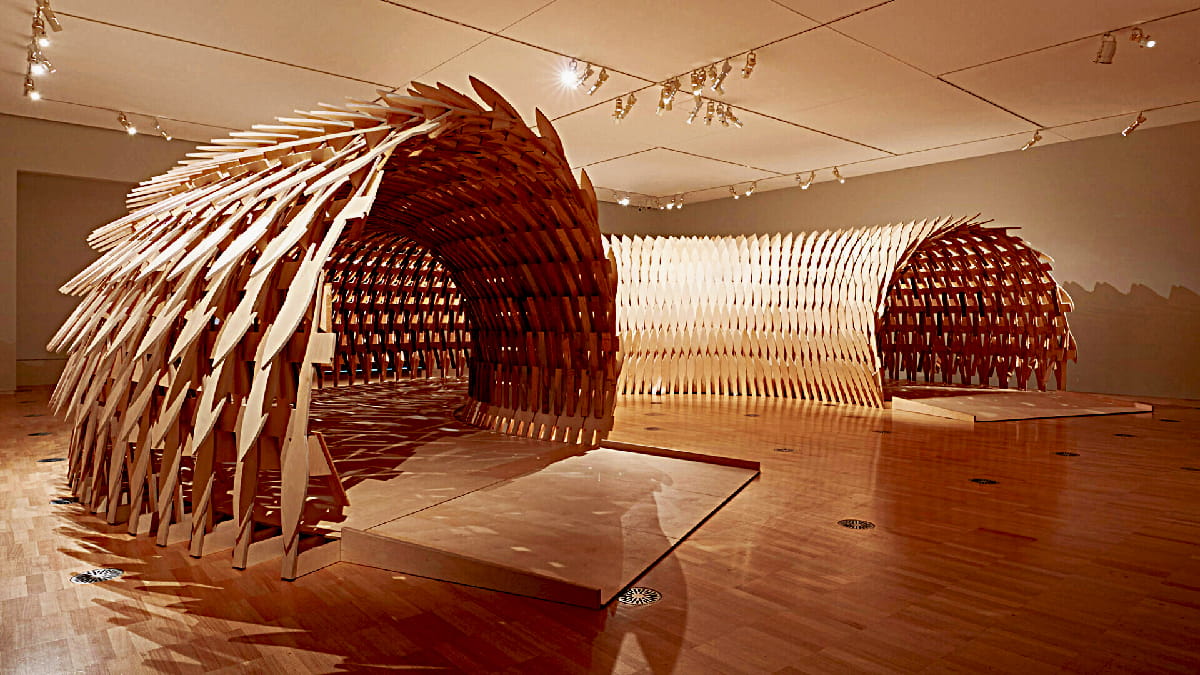
A Curved Pavilion Designed Weaves Wooden Slats into a Tessellating Structure. Wrapping a gallery space at the 2020 NGV Triennial is a bowed pavilion of tessellating wood.
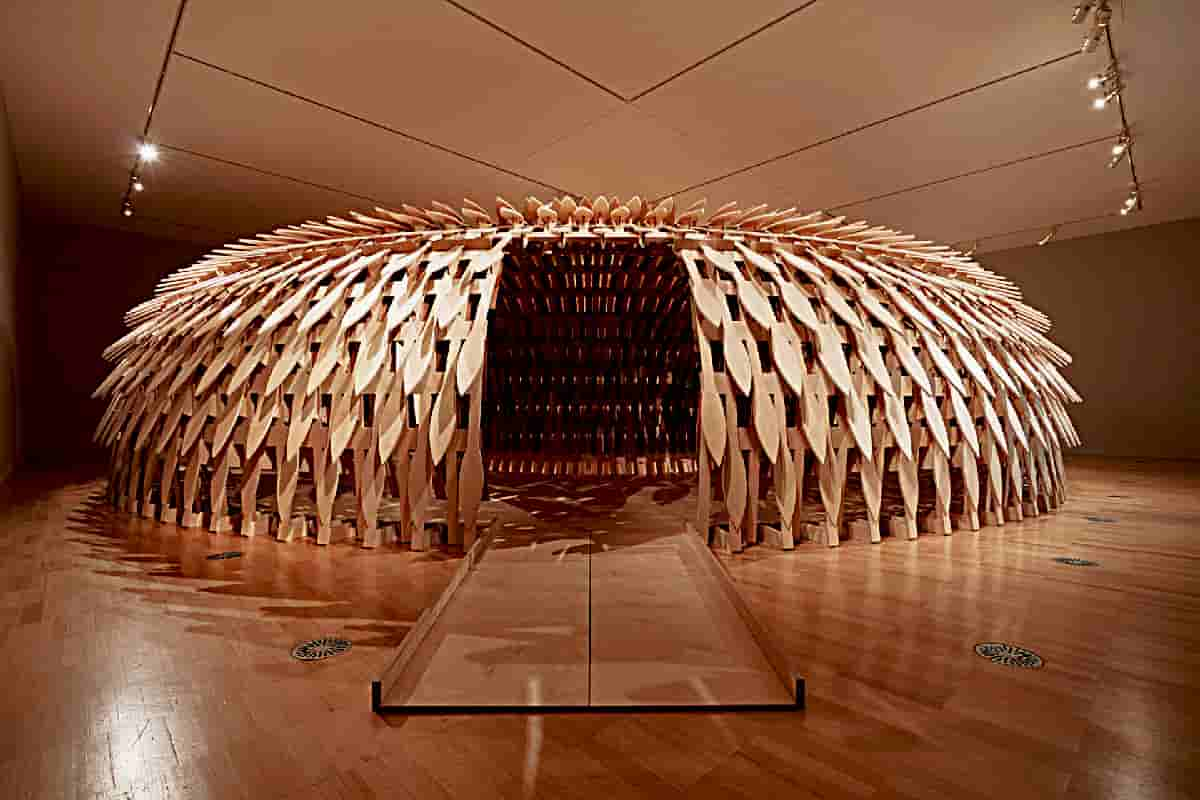
__01 A Curved Pavilion Designed Weaves Wooden Slats into a Tessellating Structure
A curved pavilion designed weaves wooden slats into a tessellating structure. A collaboration between architect Kanika and Australian artist. The large-scale installation is constructed with trees felled at Melbourne’s Royal Botanic Gardens during the millennium drought.
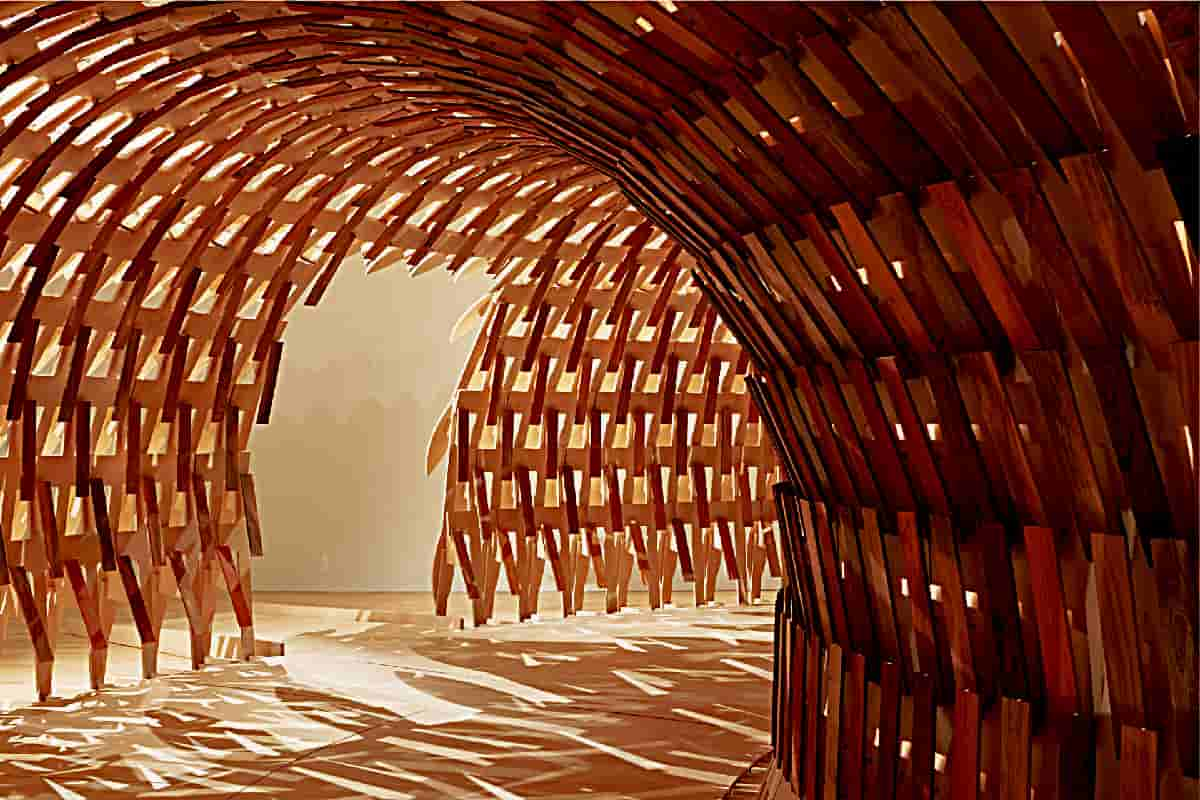
The pointed slats interlock without, and the use of additional supports. A design derived from traditional Japanese joinery, and create a scaly pattern that allows light to stream through. A curved pavilion designed weaves wooden slats into a tessellating structure.
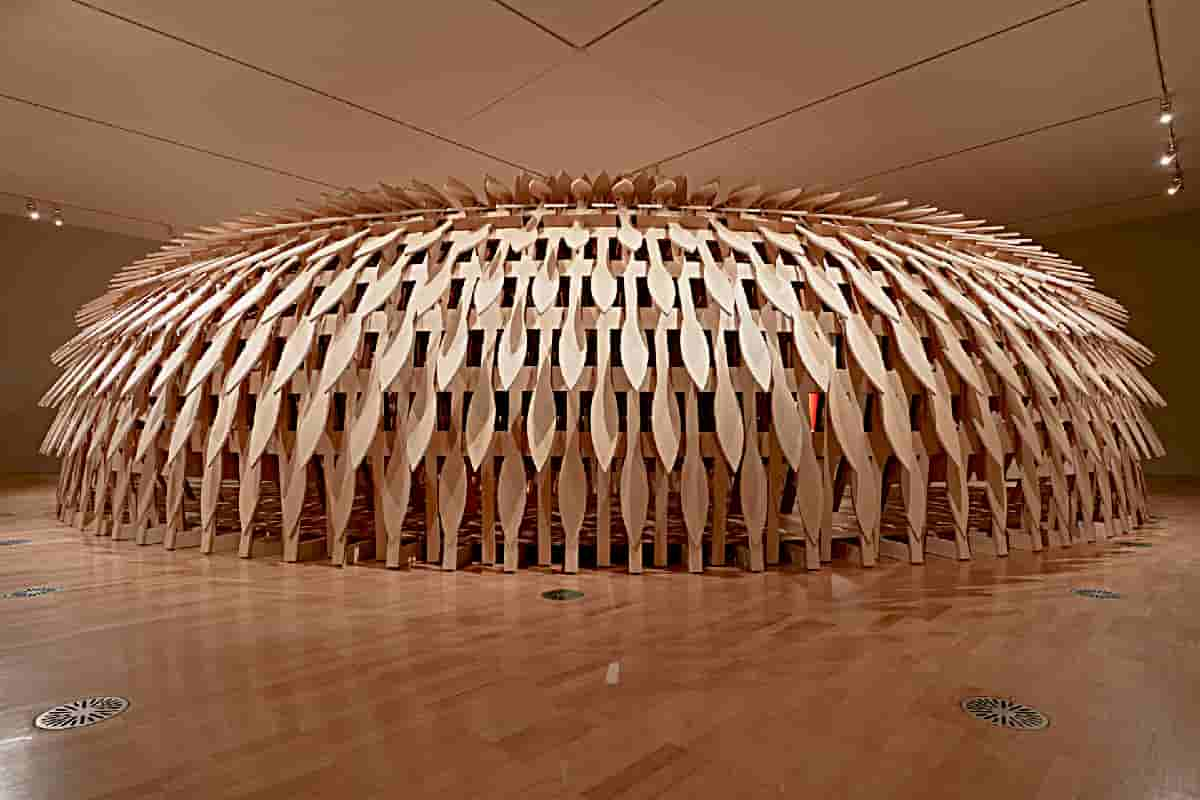
Titled “Botanical Pavilion,” the curved structure features foraged timber
Titled “Botanical Pavilion,” the curved structure features foraged timber. Titled “Botanical Pavilion,” the curved structure features foraged timber. Some of which predates European colonization on the continent—arranged by color rather than species.
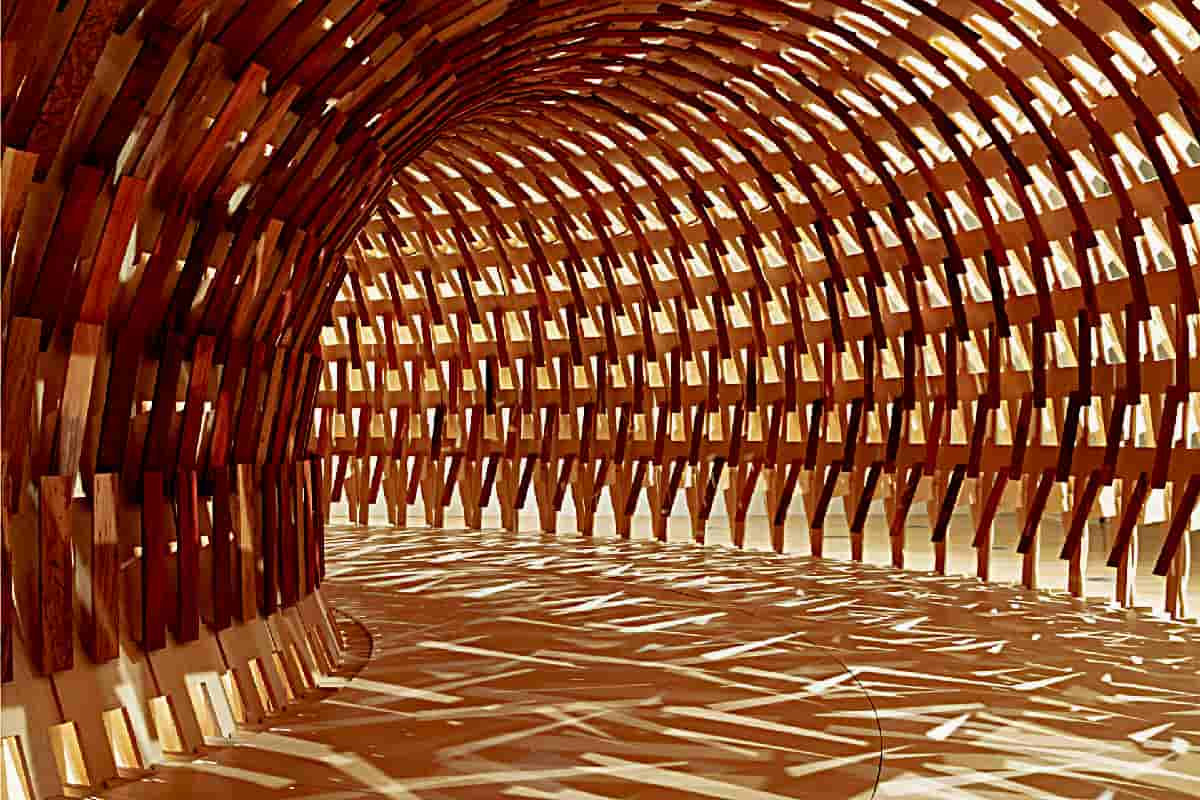
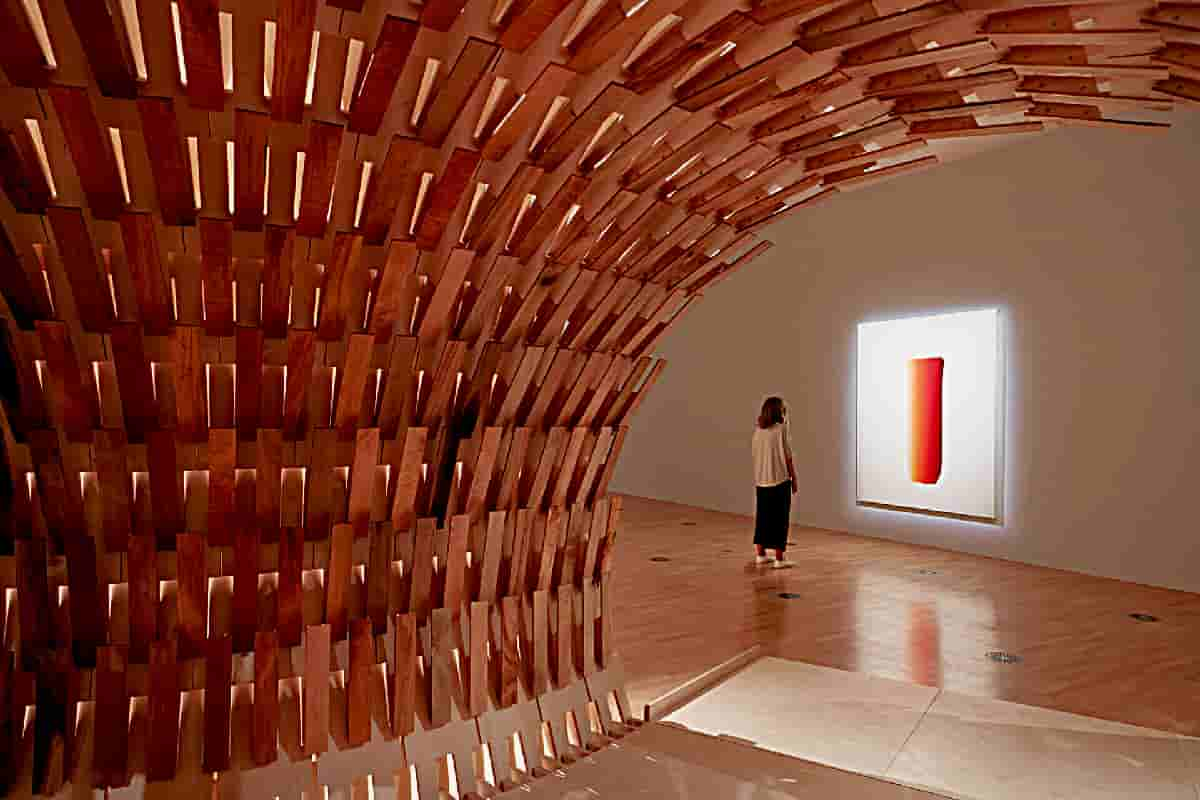
“By prioritizing natural phenomena over scientific order. The designers call into question the reductive nature of science during the colonial era. A mindset at odds with many Indigenous cultural beliefs and knowledge systems,” a statement about the piece says. At both ends, the walkway opens up to reveal artist’s 2017 painting titled “Dialogue.”
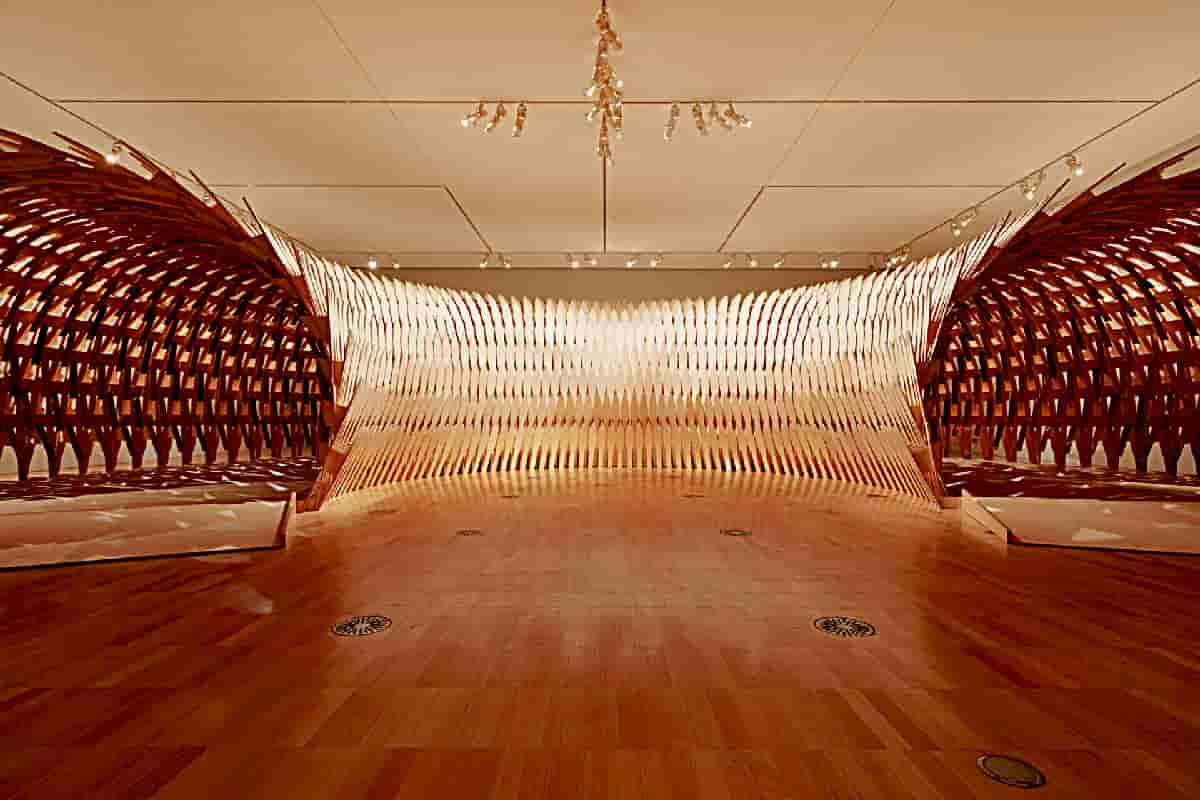
“The semi-circular is shape of the pavilion. Invites the visitor into a journey to explore the space and experience the various essences of wood. The porous structure is assembled like a tridimensional. Puzzle without the use of metal connections to be able to reassemble it in a different location.”
__ Text editing/Tekstbewerking: Taylor Ting Kanika
KanikaChic is the world’s most snatched iconic cultural and creative social network sites(SNSs)
KanikaChic creates the snatched of the global cultural and creative social network sites(SNSs) of the iconic big hit the tt-Artstudio.
KanikaChic is the world’s most snatched iconic cultural and creative social network sites(SNSs). KanikaChic creates the snatched of the global cultural and creative social network sites(SNSs) of the iconic big hit the tt-Artstudio. KanicChic has nomad creation studios in both Antwerp, Belgium and Milan, Italy, which collect the top-notch art, design, crafts, trendy and fashion life, architecture, and W4Porn. The cross-domain compiled critics develops the most trendy and iconic, tt-Artstudio in the art and cultural social network, A.K.A. ChicHOUSE. It is also the mostly visited cultural social network website.
Om onvervangbaar te zijn, moet je altijd anders zijn.
Er zijn fascinerende beelden hier, en de fascinerende dag van samen! xo KanikaChic
─────────────────────────────────────────────────────
Per essere insostituibili bisogna sempre essere diverso.
Ci sono immagini affascinanti qui, e l’affascinante giornata di insieme! xo KanikaChic